Artwork
Zinia
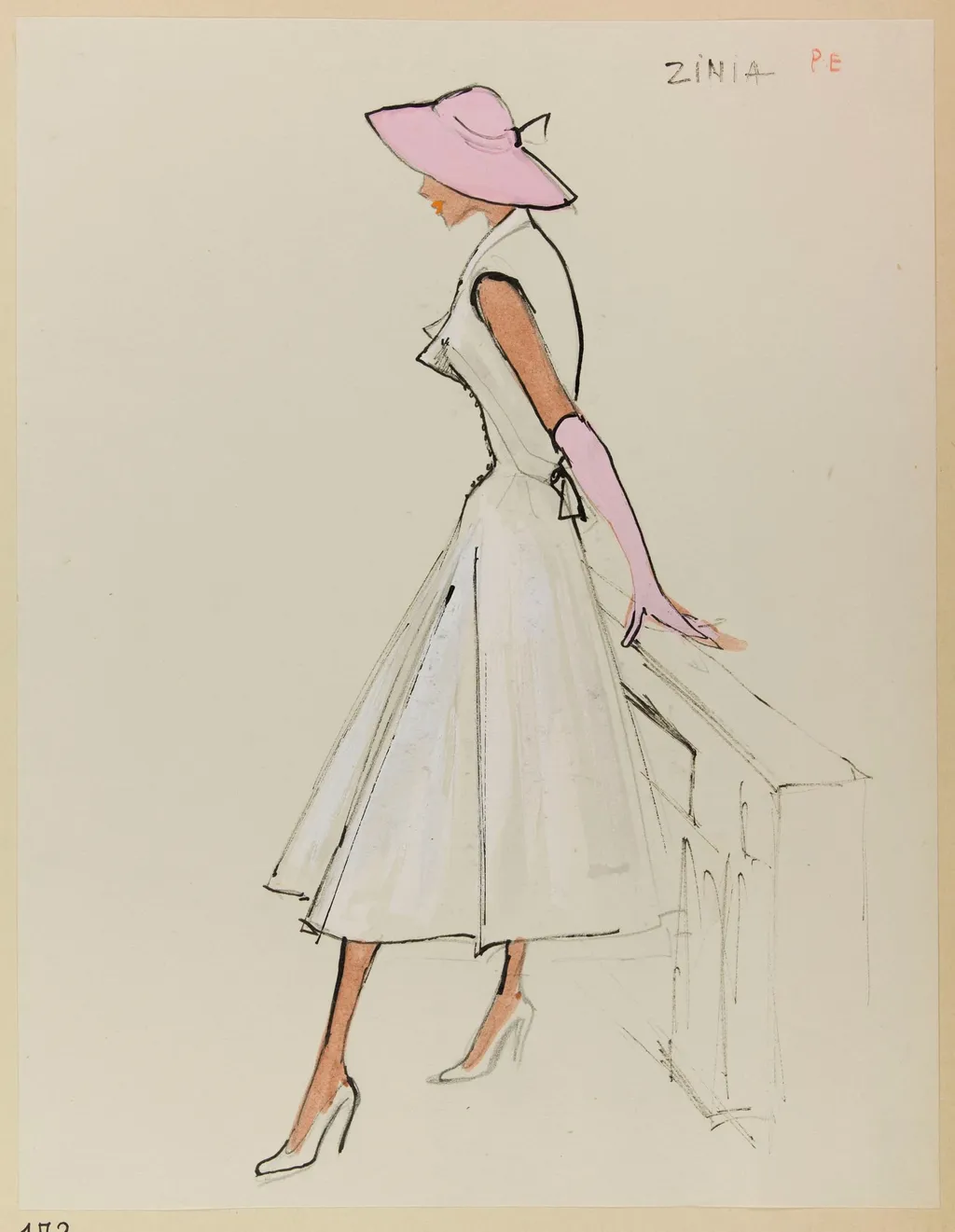
Zinia is a drawing by Marie-Louise Carven. It dates from 1953 and is held in the collection of the Palais Galliera - Musée de la Mode de la Ville de Paris.
About this work
Overview
Created around 1953 by French designer Marie-Louise Carven, Zinia is a pencil sketch capturing a woman in motion.
Created around 1953 by French designer Marie-Louise Carven, Zinia is a pencil sketch capturing a woman in motion. Executed with swift, fluid lines, it reflects Carven’s approach to design as both art and practical craft. The drawing, part of the Museum of Ethnography’s collection, belongs to a series of preparatory studies used to develop garments for her emerging prêt-à-porter line, which helped democratize Parisian fashion.
Subject & Meaning
The figure depicts a woman walking sideways, dressed in a loose, ankle-length dress and a wide-brimmed pink hat. Her posture is relaxed, one hand lightly holding the hem of her skirt, suggesting ease and everyday movement. The name 'Zinia' inscribed in the corner likely identifies the garment rather than the model, indicating Carven’s habit of naming designs to evoke mood or character, aligning with her focus on wearable elegance.
Technique & Style
The sketch is rendered in loose, spontaneous pencil strokes with minimal shading along the limbs to suggest volume. The absence of detailed facial features and the emphasis on fabric flow reflect a focus on silhouette and movement rather than portraiture. The quickness of execution points to its function as a working note, intended for quick reference in the atelier, not as a finished illustration.
History & Provenance
Marie-Louise Carven founded her fashion house in 1945 and was among the first Paris couturiers to develop a ready-to-wear collection. Zinia emerged during this pivotal shift toward accessible fashion. The sketch entered the Museum of Ethnography’s holdings as part of a broader effort to document the material culture of 20th-century dressmaking, preserving design processes alongside finished garments.
Context
In the early 1950s, Parisian fashion was redefining itself after wartime austerity. Carven’s designs catered to petite figures and emphasized lightness, movement, and affordability. Zinia exemplifies this ethos, capturing a garment meant for daily life rather than formal occasions.
Its informal style contrasts with the highly polished illustrations typical of haute couture, reflecting a new democratic ideal in fashion.
Legacy
Zinia stands as a quiet testament to the shift from exclusive couture to accessible design. Carven’s sketches like this one helped bridge the gap between artistic vision and mass production. Today, such drawings are valued not for their finish, but for their insight into the creative decisions that shaped modern womenswear and the everyday aesthetics of postwar Europe.
Artist & collection
Artist
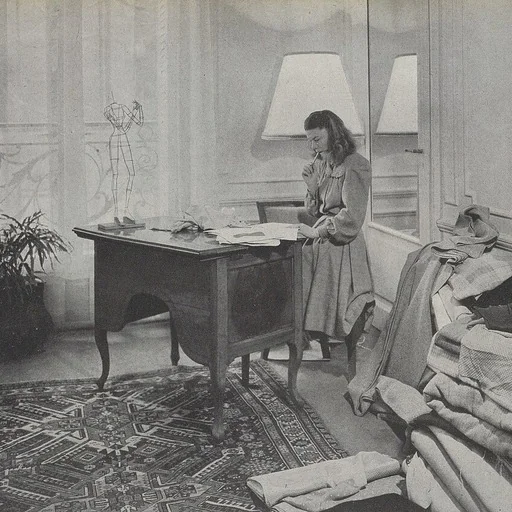
Marie-Louise Carven (31 August 1909 – 8 June 2015), born Carmen de Tommaso, was a French fashion designer who founded the house of Carven in 1945.
Museum
Palais Galliera - Musée de la Mode de la Ville de Paris
Continue through works from the same source collection.
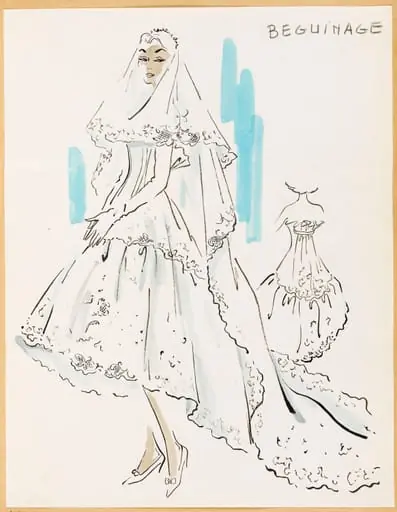
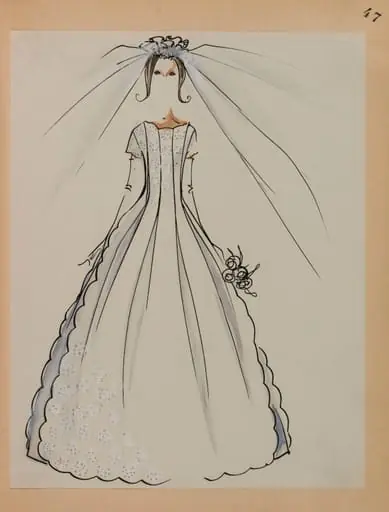 Robe de mariée festonnée et son voile
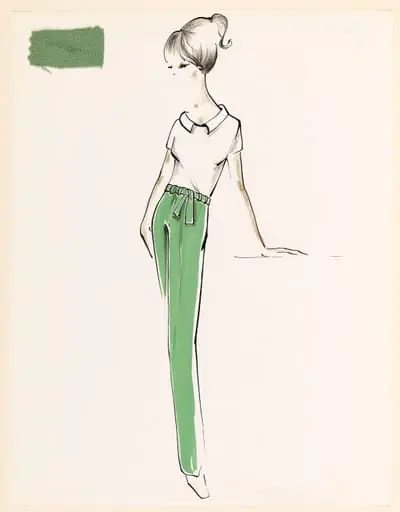 Haut blanc à manches courtes et pantalon vert à ceinture nouée
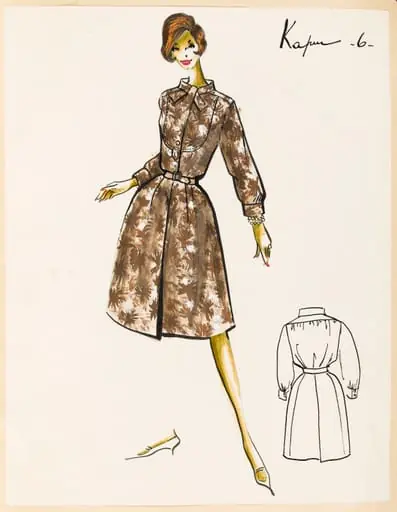 Kapur
Kapur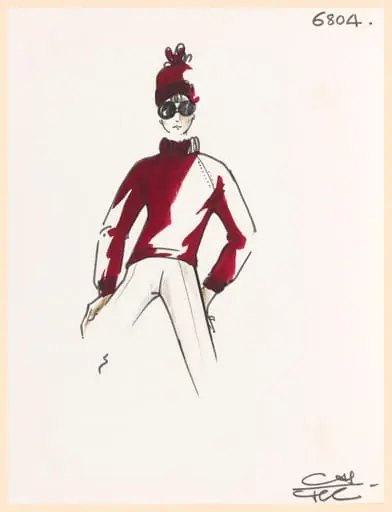 Pull-over à manches longues pourpre, bonnet assorti, pantalon et lunettes de soleil
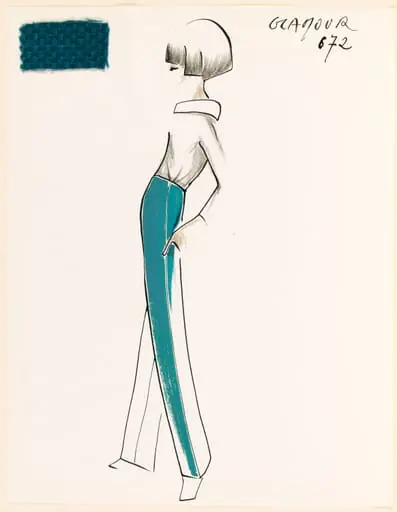 GLAMOUR
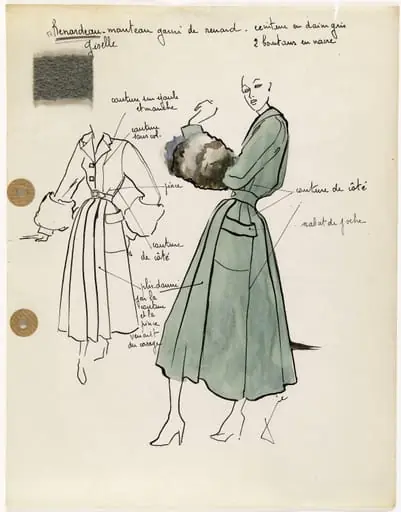 'Renardeau'
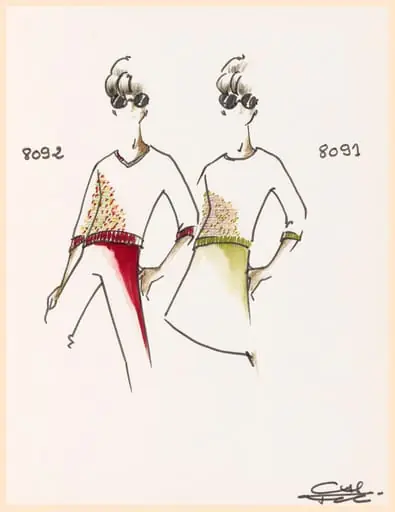 Pull-over à manches trois quarts et à encolure V à motifs multicolores, pantalon cerise et lunettes de soleil
 Béguinage