Artwork
Podul Dâmbovița
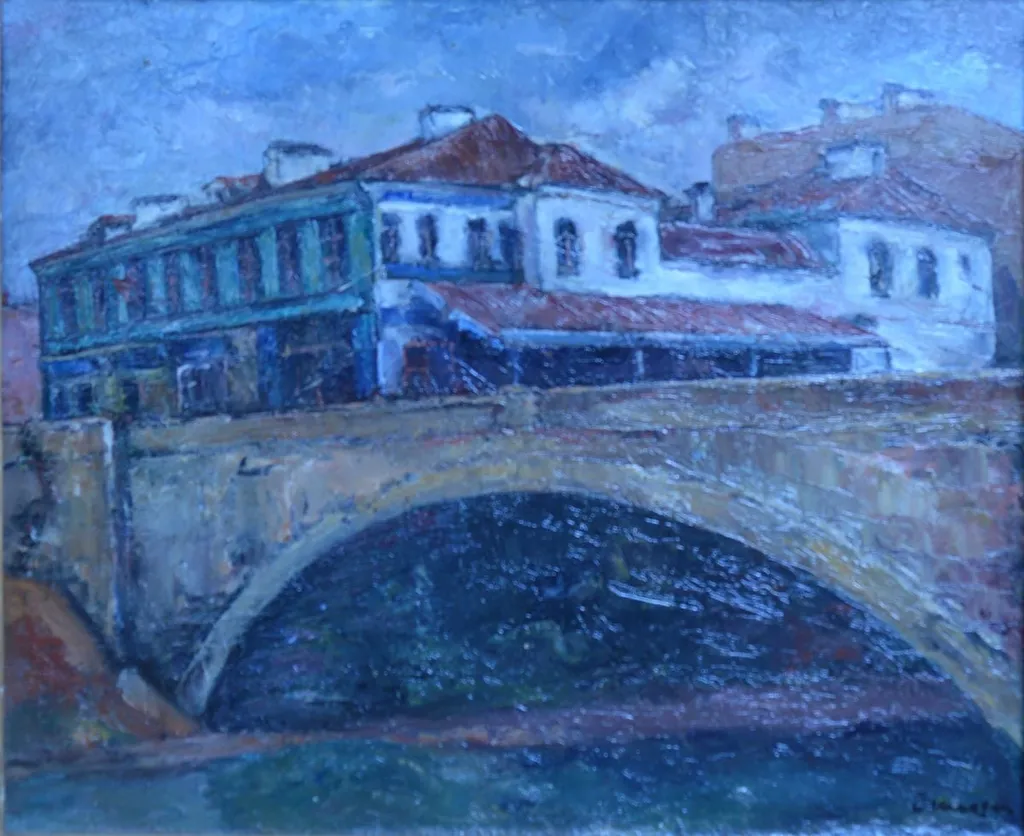
Podul Dâmbovița is an unspecified painting by Marius Bunescu. It is held in the collection of the Bucharest Municipality Museum.
About this work
Overview
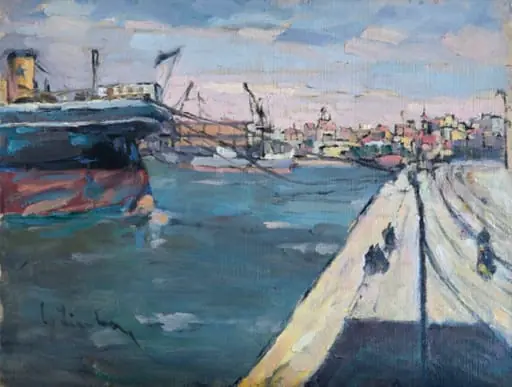
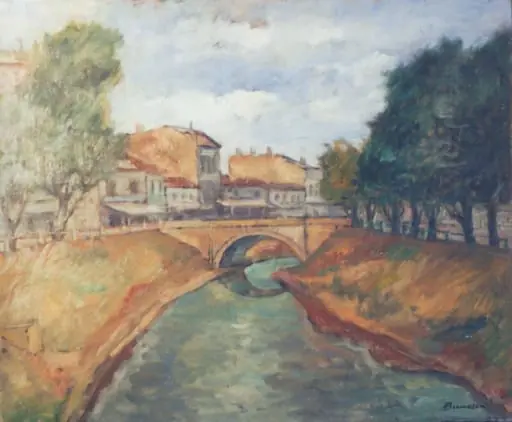
The composition centers on the structure as it crosses the water, flanked by a row of modest buildings in the distance.
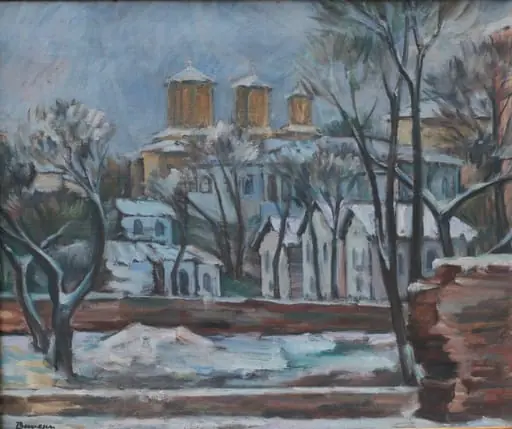
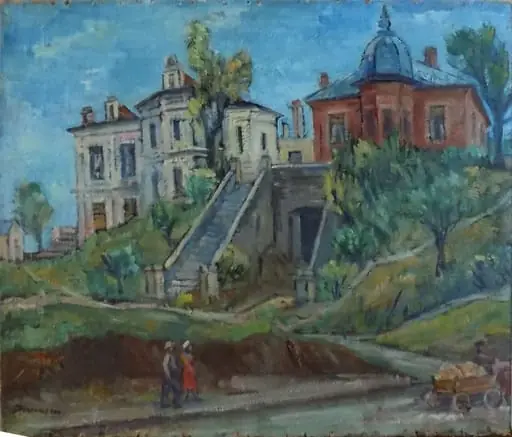
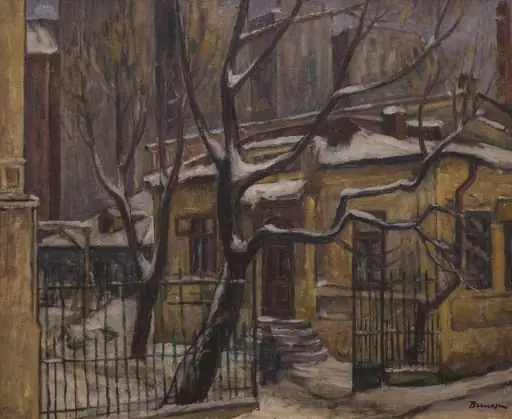
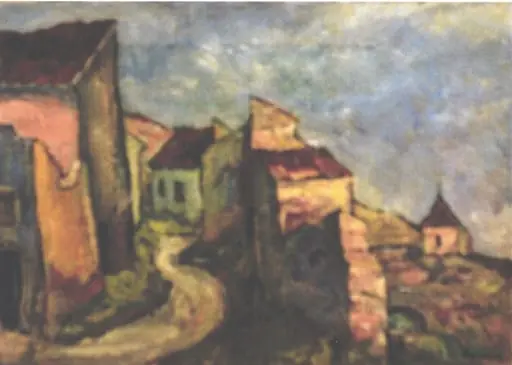
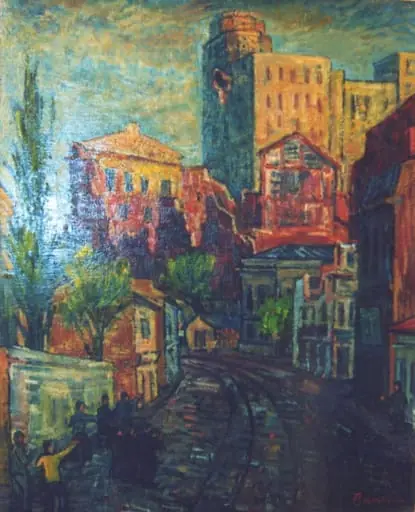
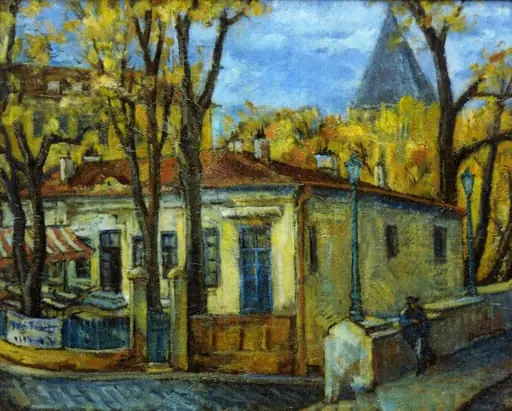
The painting captures a view of Podul Dâmbovița, a bridge over the Dâmbovița River in Bucharest. The composition centers on the structure as it crosses the water, flanked by a row of modest buildings in the distance. The scene is rendered with restrained tones, emphasizing quiet observation over dramatic flourish. Light and shadow are carefully modulated to suggest spatial depth and a hazy, atmospheric quality.
Subject & Meaning
The bridge and its surrounding urban fringe serve as quiet witnesses to everyday life in 19th-century Bucharest. Rather than celebrating grandeur, the work focuses on the ordinary, infrastructure, architecture, and the subtle interplay of environment and human presence. The absence of figures invites contemplation of place itself, framing the bridge as both a functional link and a quiet emblem of urban continuity.
Technique & Style
The artist employs a muted palette dominated by earth tones and soft blues, with white highlights defining architectural forms. Light is diffused, suggesting overcast conditions or early morning haze. Subtle gradations in tone, rather than sharp contrasts, model the bridge and buildings, creating a sense of volume without overt chiaroscuro. Brushwork is restrained, favoring atmospheric cohesion over detail.
History & Provenance
The work originates from a period when Romanian artists began turning to local landscapes and urban scenes as subjects worthy of serious depiction. Though specific ownership records are sparse, the painting aligns with a broader 19th-century movement to document national topography. It likely emerged from academic or private circles in Bucharest, reflecting a growing interest in indigenous scenery.
Context
During the mid-1800s, Romania was undergoing cultural consolidation, with artists increasingly rejecting foreign models in favor of homegrown themes. Podul Dâmbovița, as a real and recognizable landmark, became a symbol of this shift. The painting’s quiet realism reflects a broader trend: the elevation of the mundane into the realm of artistic expression, away from historical or mythological grandeur.
Legacy
The painting contributes to a foundational visual record of Bucharest’s urban fabric before rapid modernization. Its understated approach influenced later generations of Romanian painters who sought to capture the character of everyday spaces. Though not widely exhibited, it remains a quiet reference point in the development of national landscape painting, valued for its sincerity over spectacle.
Artist & collection
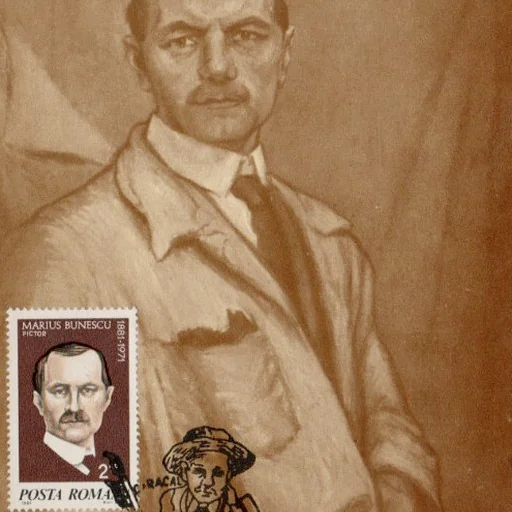
Artist
Marius Bunescu (15 May 1881 – 31 March 1971) was a Romanian painter, organizer of the National Museum of Art, and director of the Anastase Simu Museum.