Artwork
Bombardment of Algiers, in Support of the Ultimatum to Release White Slaves, 26-27 August 1816
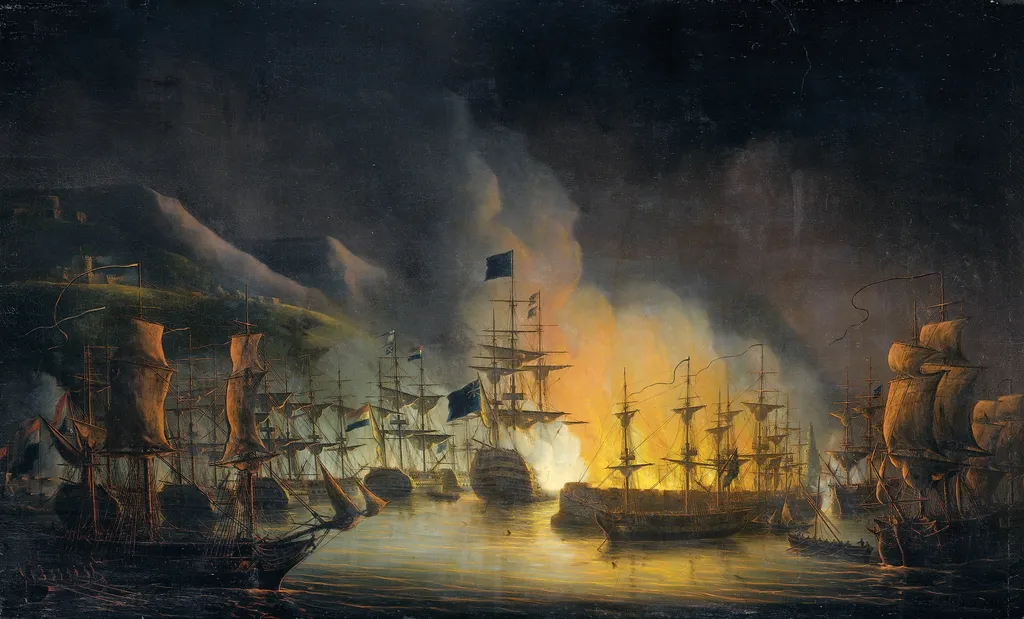
Bombardment of Algiers, in Support of the Ultimatum to Release White Slaves, 26-27 August 1816 is an oil painting by Martinus Schouman. It dates from 1823 and is held in the collection of the Rijksmuseum.
About this work
Subject & Meaning
By situating the scene within a marine genre, Schouman aligns the military operation with the broader narrative of European naval supremacy and moral duty.
The work portrays the 1816 naval attack on Algiers as a punitive response to Barbary corsair captivity of Europeans, framing the bombardment as a moral and diplomatic ultimatum aimed at securing the liberation of enslaved white Christians. Schouman emphasizes the destructive force of British naval artillery against the coastal fortifications, while the composition underscores themes of imperial retribution and humanitarian advocacy. The painting thus serves as a visual record of early 19th-century European anti-slavery sentiment expressed through military action.
The depiction draws on contemporary engravings of the event, using dramatic lighting and shattered fortifications to symbolize both the vulnerability of Christian captives and the perceived righteousness of the Allied intervention. By situating the scene within a marine genre, Schouman aligns the military operation with the broader narrative of European naval supremacy and moral duty.
The work’s meaning is rooted in its historical context: the 1816 Bombardment of Algiers was part of a broader European effort to combat piracy and address the issue of white slavery in the Mediterranean, reflecting contemporary diplomatic tensions and abolitionist concerns.
Technique & Style
The work is executed in oil paint on canvas, a standard support for marine paintings of the period. According to the cataloguing data, the canvas measures 95.0 cm in height by 159.5 cm in width, giving the composition a markedly horizontal format suited to its panoramic subject. The painting is classified as marine art, and its broad dimensions would have accommodated an expansive depiction of the naval bombardment.
No further details regarding specific technique, handling, condition, or stylistic qualities are documented in the available sources.
Context
Martinus Schouman's 1823 oil painting Bombardment of Algiers, in Support of the Ultimatum to Release White Slaves, documents the 1816 naval assault on Algiers aimed at liberating enslaved Europeans. The work entered the Rijksmuseum collection in Amsterdam and remains on display there, exemplifying Dutch marine art of the early nineteenth century. Schouman's composition combines dramatic seascape with symbolic political messaging, reflecting contemporary abolitionist debates.
Scholarship on the painting emphasizes its hybrid genre, merging historical narrative with maritime tradition while advancing humanitarian advocacy. The artwork's provenance and conservation are documented by the Rijksmuseum, which provides technical details on its dimensions and materials.
Legacy
The painting’s visibility in the Rijksmuseum collection has helped maintain Schouman’s reputation as a specialist in marine subjects, and the work is frequently cited in studies of early 19th‑century Dutch maritime art. Its depiction of the 1816 Bombardment of Algiers is referenced in historical surveys of the period, reinforcing the artwork’s role as a visual record of European naval actions in the Mediterranean.
Overview
This 1823 oil painting by Martinus Schouman commemorates a pivotal naval event. Titled 'Bombardment of Algiers, in Support of the Ultimatum to Release White Slaves, 26-27 August 1816', it captures the intensity of the British bombardment of Algiers. The work is part of the Rijksmuseum's collection.
History & Provenance
Created in 1823, seven years after the event, the painting reflects a period of reflection on naval victories. It has been preserved in the Rijksmuseum, ensuring its availability for historical and artistic study.
Artist & collection

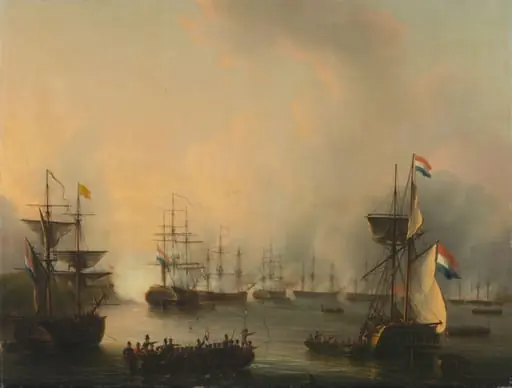 The Bombardment of Palembang, Sumatra, 24 June 1821
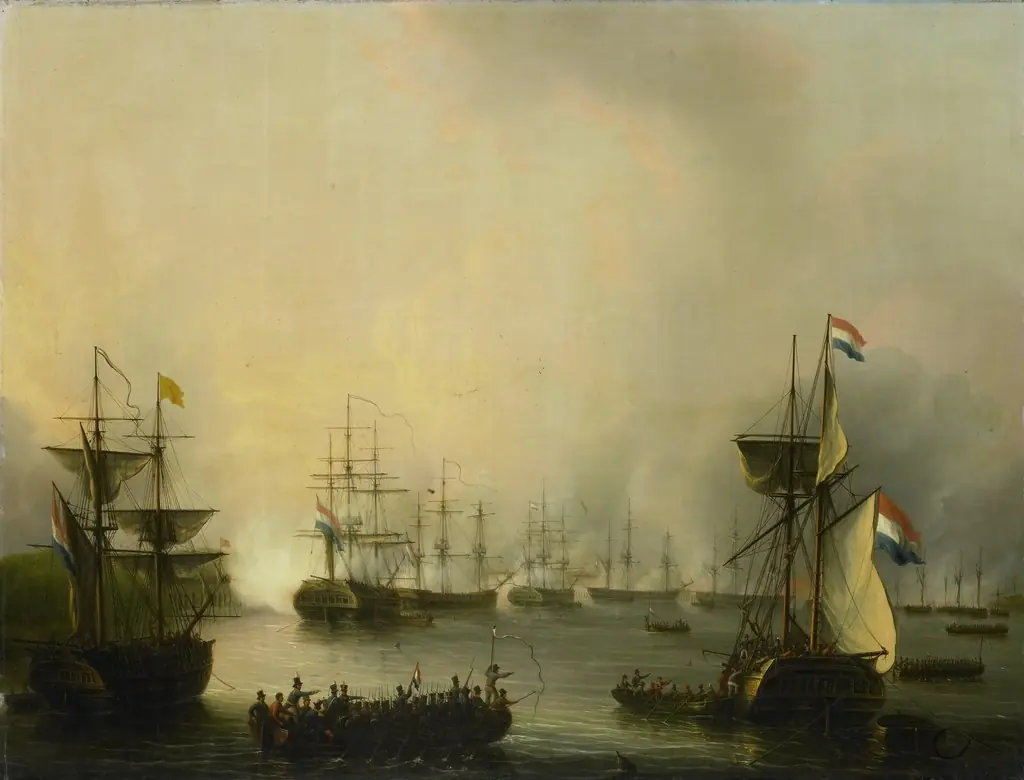 Bombardment of Palembang, Sumatra, by the Dutch Fleet, 24 June 1821
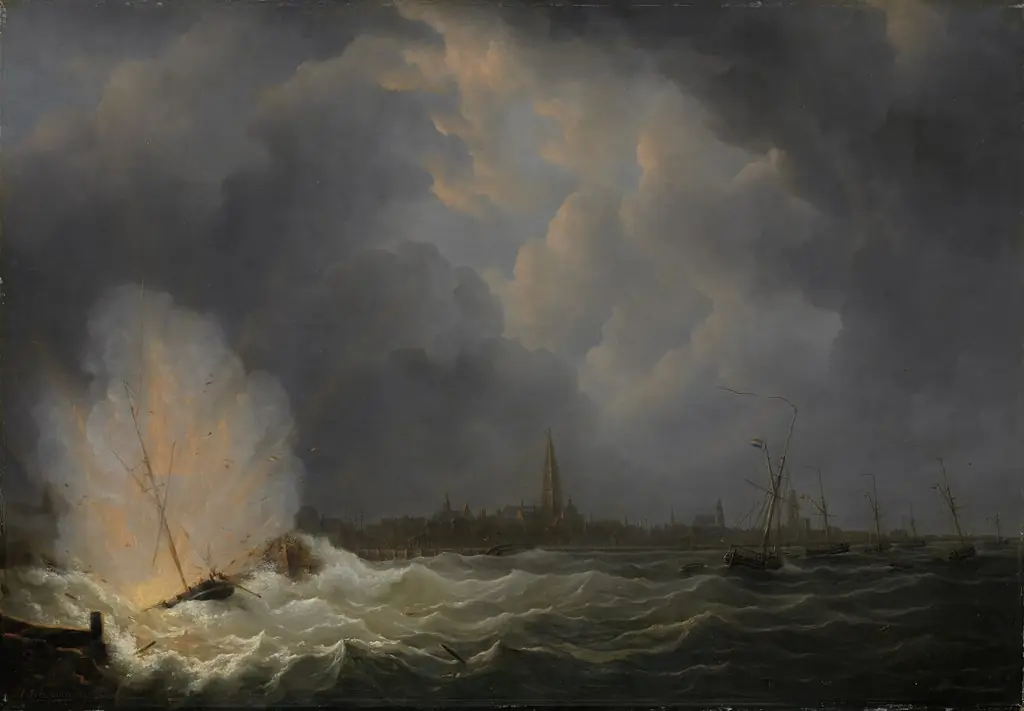 Explosion at Antwerp of Dutch Gunboat No. 2, Commanded by Jan van Speyk, 5 February 1831
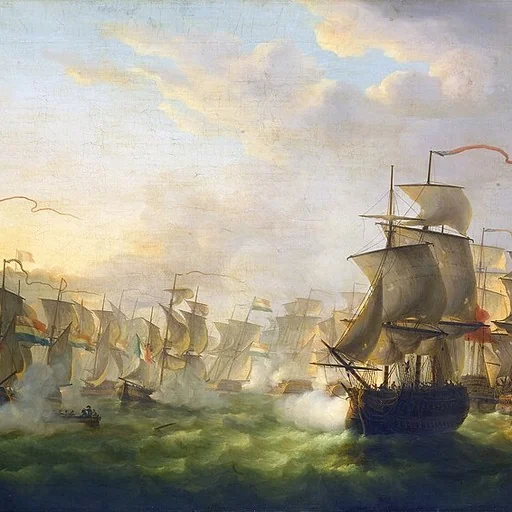
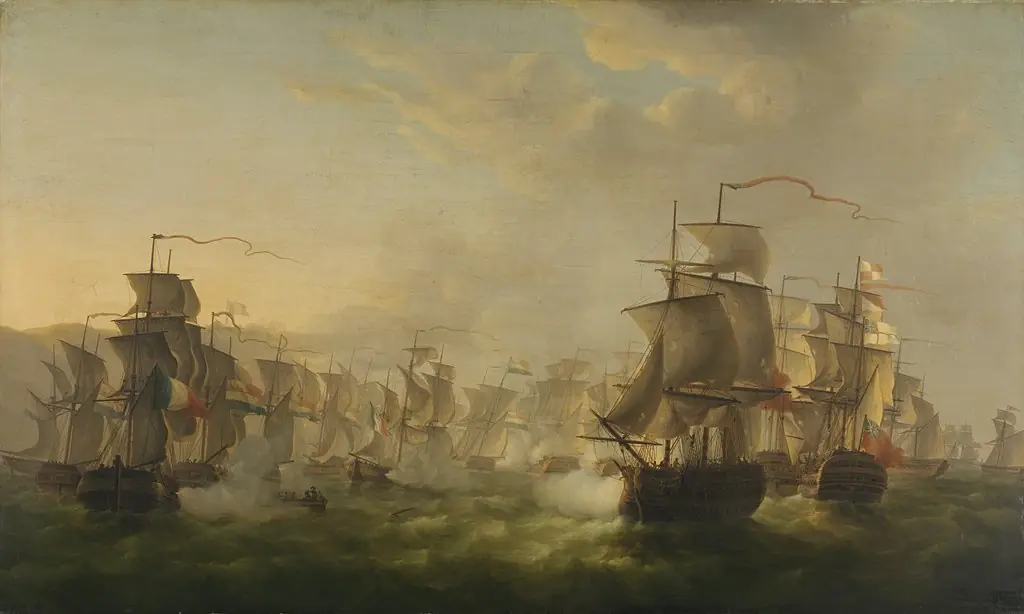 The Encounter of the Dutch and the English Fleet during the Voyage of the Dutch Flotilla to Boulogne, 1805
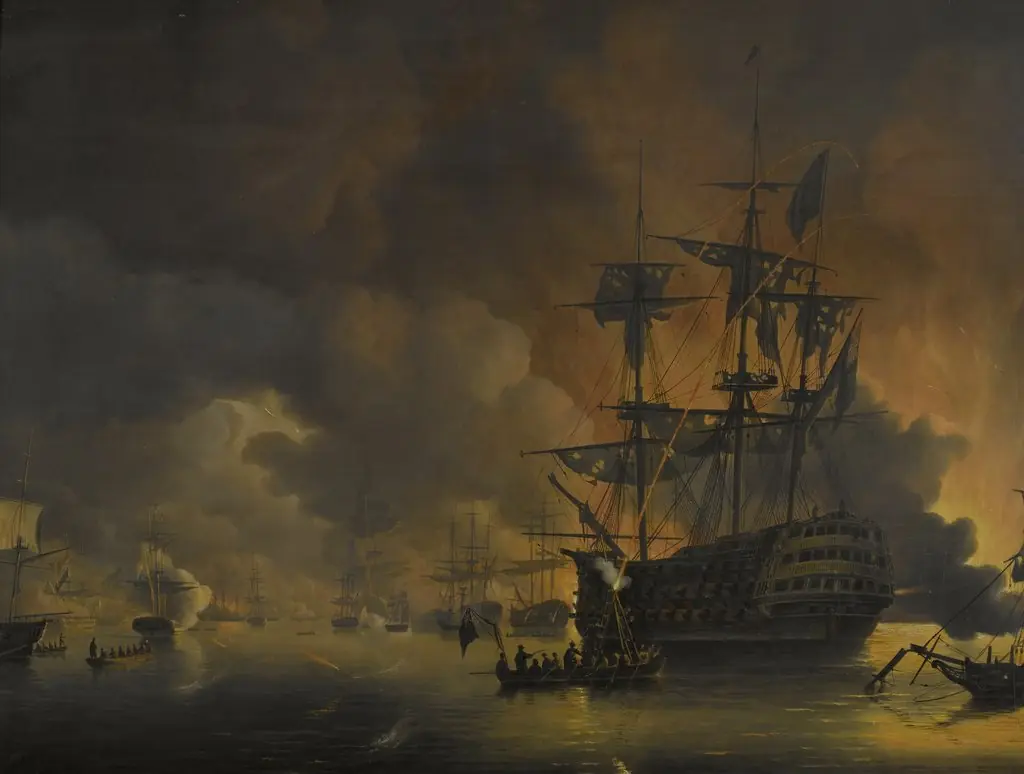
- The fire on the Wharves of Algiers, shortly after the commencement of the Bombardment by the Anglo-Dutch Fleet, 27 August 1816
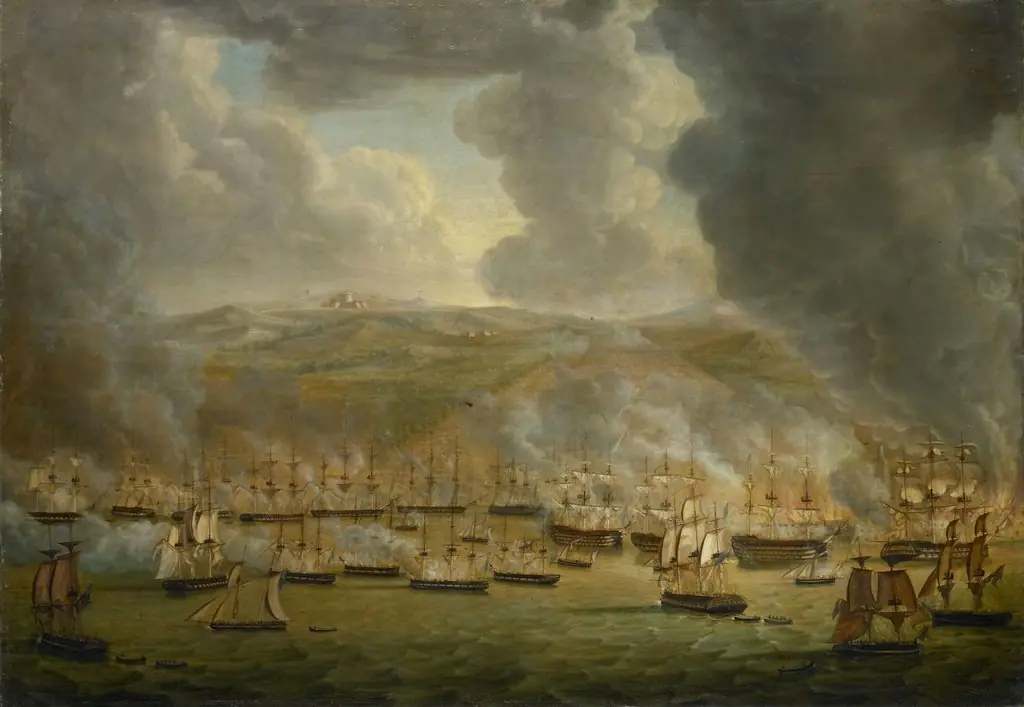 Bombardment of Algiers by the United Anglo-Dutch Naval Squadron, 1816
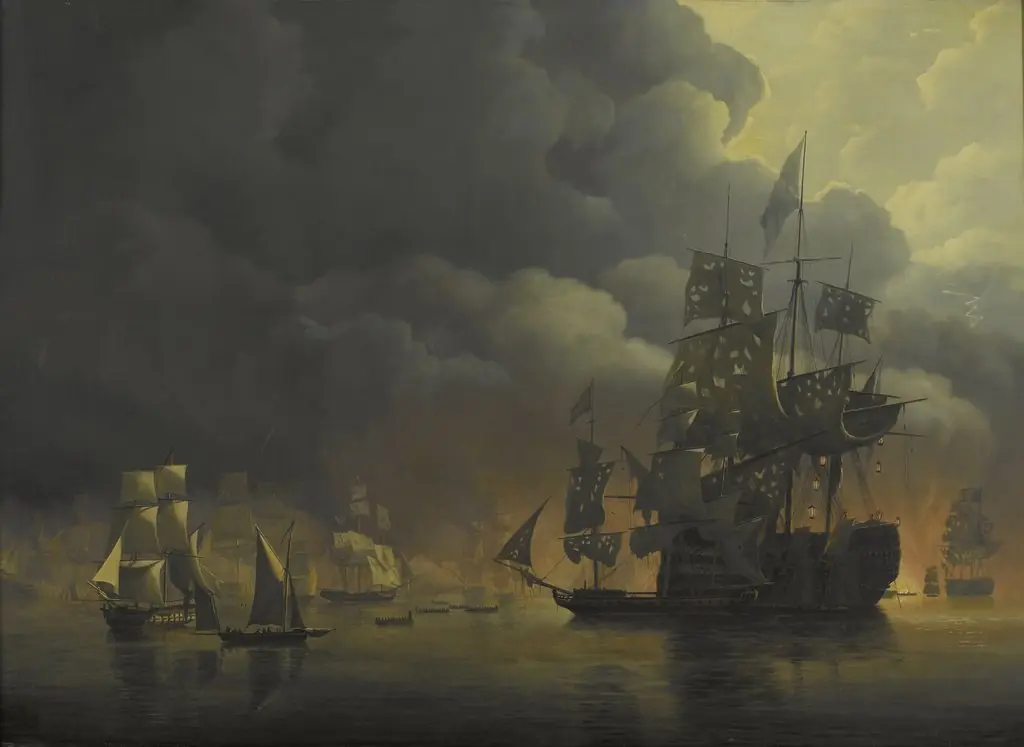 The Anglo-Dutch Fleet under Lord Exmouth and Vice Admiral Jonkheer Theodorus Frederik van Capellen putting out the Algerian Strongholds, 27 August 1816
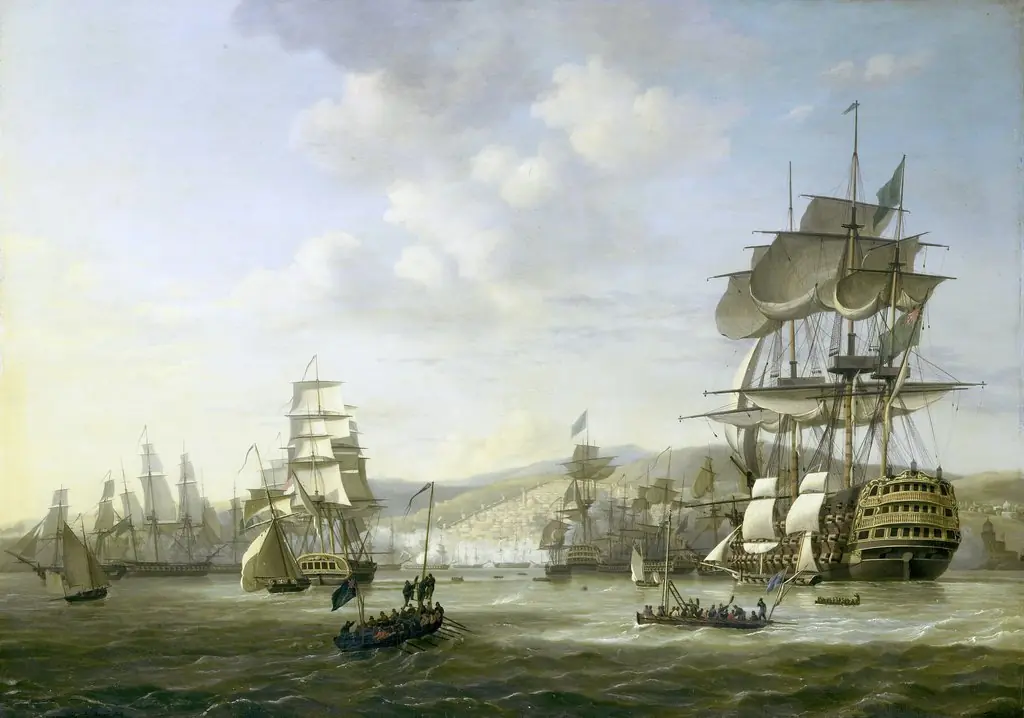 The Anglo-Dutch Fleet in the Bay of Algiers Backing up the Ultimatum to Release the Christian Slaves, 26 August 1816
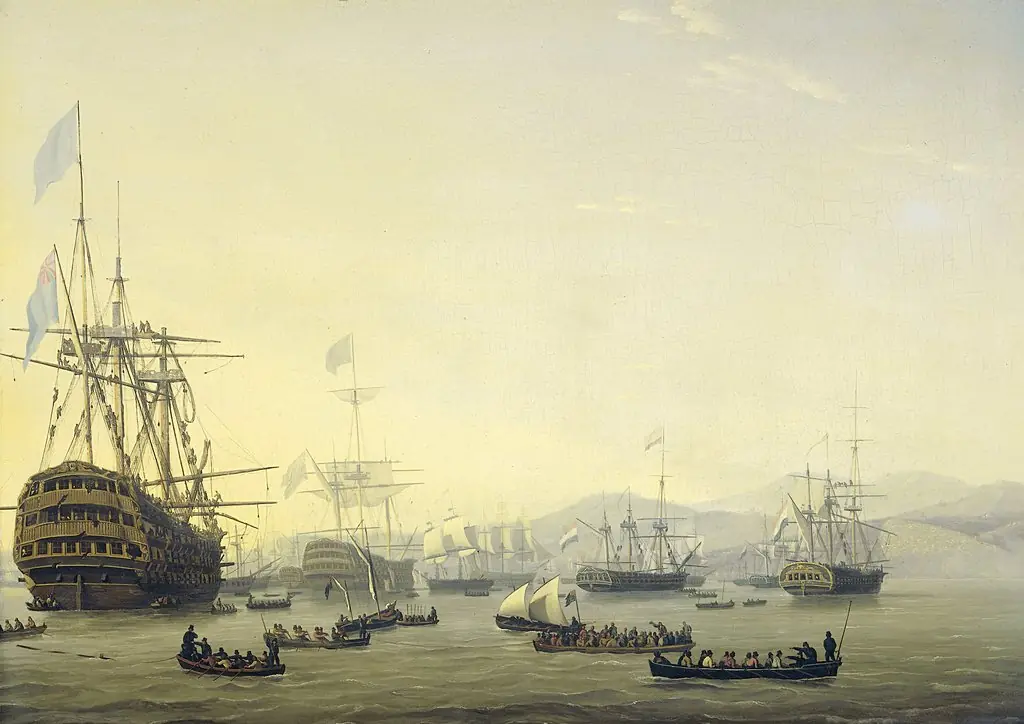 Council of War on board the 'Queen Charlotte', commanded by Lord Exmouth, prior to the Bombardment of Algiers, 26 August 1816
 Council of War on board the 'Queen Charlotte', commanded by Lord Exmouth, prior to the Bombardment of Algiers, 26 August 1816