Artwork
The Bombardment of Palembang, Sumatra, 24 June 1821
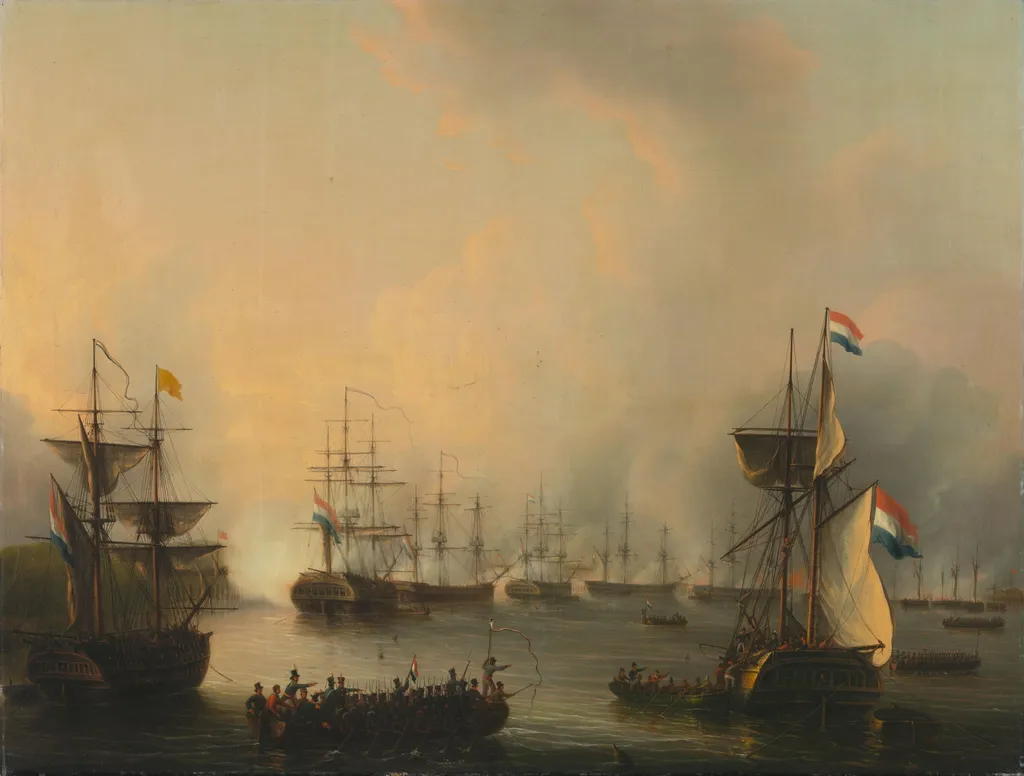
The Bombardment of Palembang, Sumatra, 24 June 1821 is an unspecified painting by the Dutch Golden Age artist Martinus Schouman. It dates from 1834 and is held in the collection of the Rijksmuseum. The canvas portrays the Dutch naval assault on Palembang, a coastal settlement on Sumatra, that took place on 24 June 1821.
About this work
The artist likely witnessed it or heard firsthand accounts, since details like the ship rigging and smoke feel accurate.
You see Dutch warships firing cannons at a coastal city under a smoky sky. Small boats row between the ships, and the shore is crowded with buildings and palm trees.
This painting shows a real battle from 1821, when the Dutch attacked Palembang in Indonesia. The artist likely witnessed it or heard firsthand accounts, since details like the ship rigging and smoke feel accurate. It’s rare to see colonial warfare depicted this directly from the time.
For more works like this, explore the Rijksmuseum.
Subject & Meaning
The Bombardment of Palembang, Sumatra, 24 June 1821 depicts a naval attack on the city of Palembang in Sumatra, reflecting Dutch colonial military engagements in the Indonesian archipelago during the early 19th century. As a marine painting by Martinus Schouman, it aligns with his specialization in maritime scenes and naval warfare, drawing on his background as the son of a shipper and his training in marine art to render the event with technical accuracy and historical context. The work symbolizes 19th-century European imperial power and naval dominance, particularly the Netherlands' involvement in regional conflicts such as the Padri War, though specific symbolic interpretations are not detailed in the sources.
The painting’s subject underscores themes of exploration, conflict, and the expansion of European influence in Southeast Asia, consistent with Schouman’s broader oeuvre of seascapes and naval battles. His documented participation in documenting contemporary naval events, such as the Bombardment of Algier (1816) and the explosion of the cannon boat under Jan van Speijk (1831), situates this work within a tradition of documenting maritime power and colonial encounters.
Context
Martinus Schouman (1770–1848) was a Dutch marine painter whose work exemplifies early 19th-century landscape and naval art in the Northern Netherlands. His painting The Bombardment of Palembang, Sumatra, 24 June 1821, reflects the era's colonial military engagements and his specialization in dramatic maritime scenes. Schouman trained under Aert Schouman, joined the Dordrecht artists' society Pictura, and was active in Brussels, where he influenced pupils including Jan de Greef and Johannes Christiaan Schotel.
His works, such as naval battles and river vistas, are held in institutions like the Rijksmuseum and Dordrechts Museum, underscoring his significance in Dutch art history.
Overview
The canvas portrays the Dutch naval assault on Palembang, a coastal settlement on Sumatra, that took place on 24 June 1821. Warships line the shoreline under a haze of smoke, their cannons discharging toward the town while small craft navigate the waters between the larger vessels.
Technique & Style
The artist renders the scene with meticulous attention to naval detail, capturing the rigging, masts, and cannon smoke in a realistic manner. A muted palette of earth tones and grays conveys the somber atmosphere, while the composition balances the massive ships against the delicate rowboats and the bustling townscape.
History & Provenance
Created shortly after the 1821 engagement, the painting likely draws on either the artist’s direct observation or contemporary eyewitness reports, as suggested by its precise depiction of the vessels. It entered the collection of the Rijksmuseum, where it remains part of the institution’s holdings on Dutch maritime history.
Own this work as a print
Artist & collection

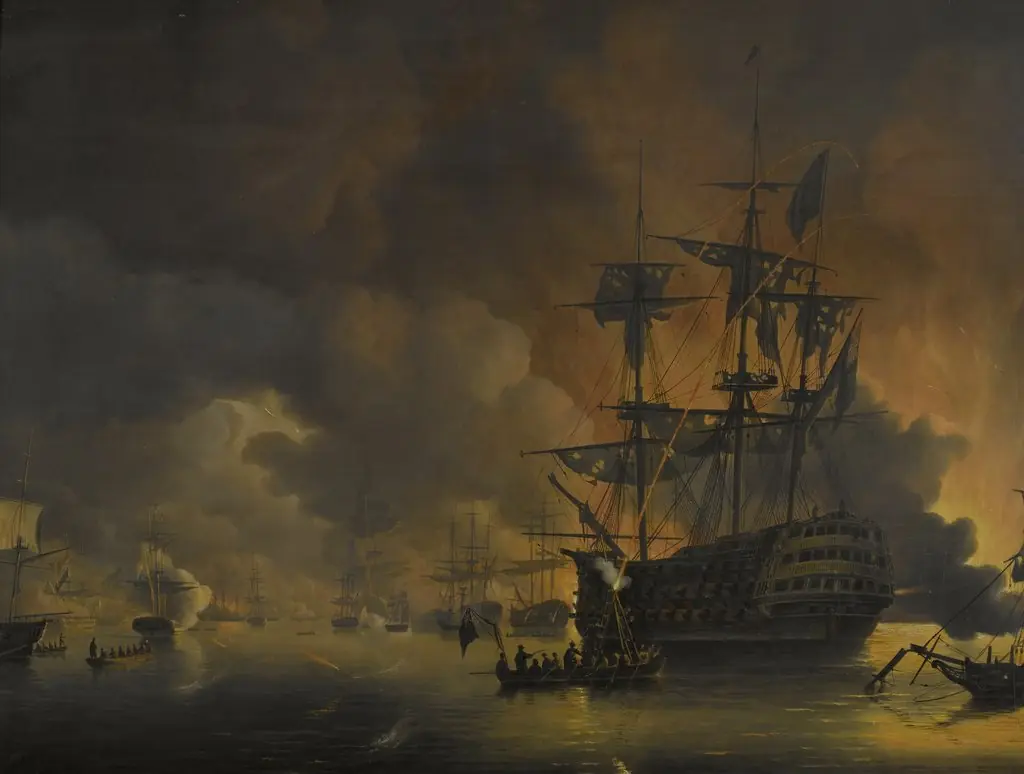 The fire on the Wharves of Algiers, shortly after the commencement of the Bombardment by the Anglo-Dutch Fleet, 27 August 1816
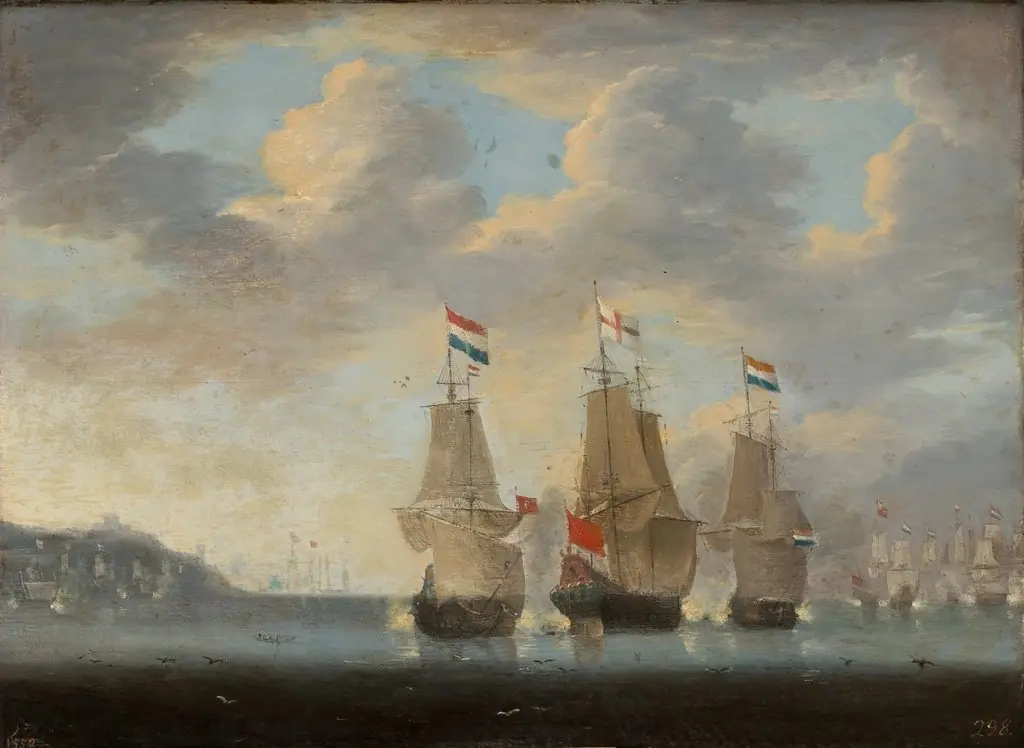 Naval Battle
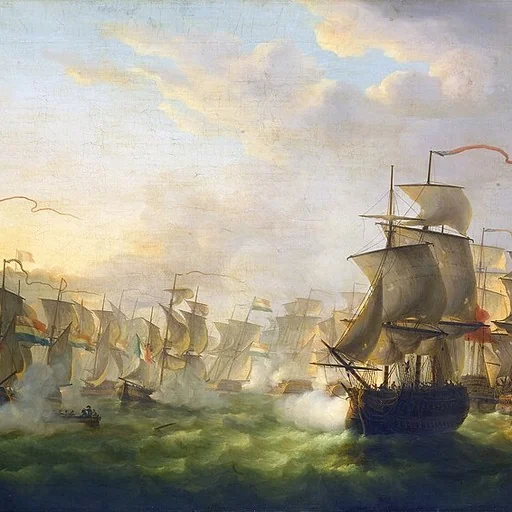
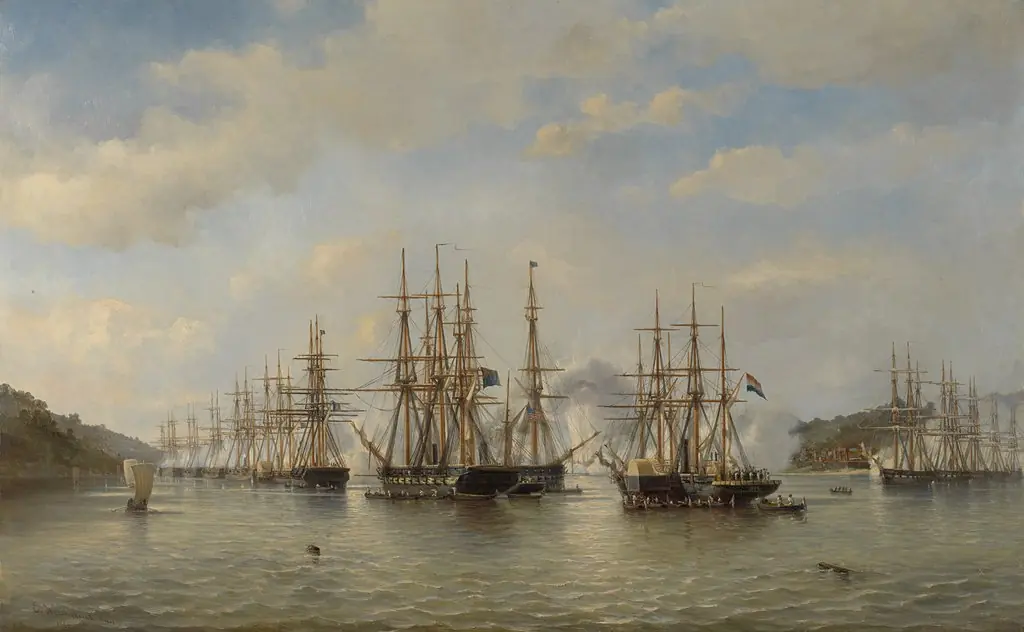 Dutch, English, French and American Squadrons in Japanese Waters during the Expedition under the Command of the French Captain Constant Jaurès, September 1864
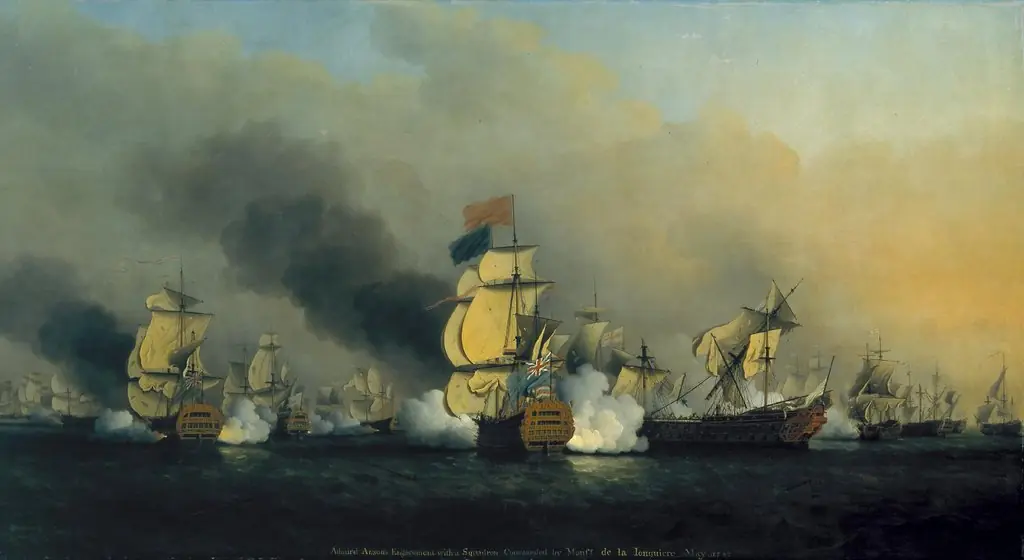 Admiral Anson's Action off Cape Finisterre 1747
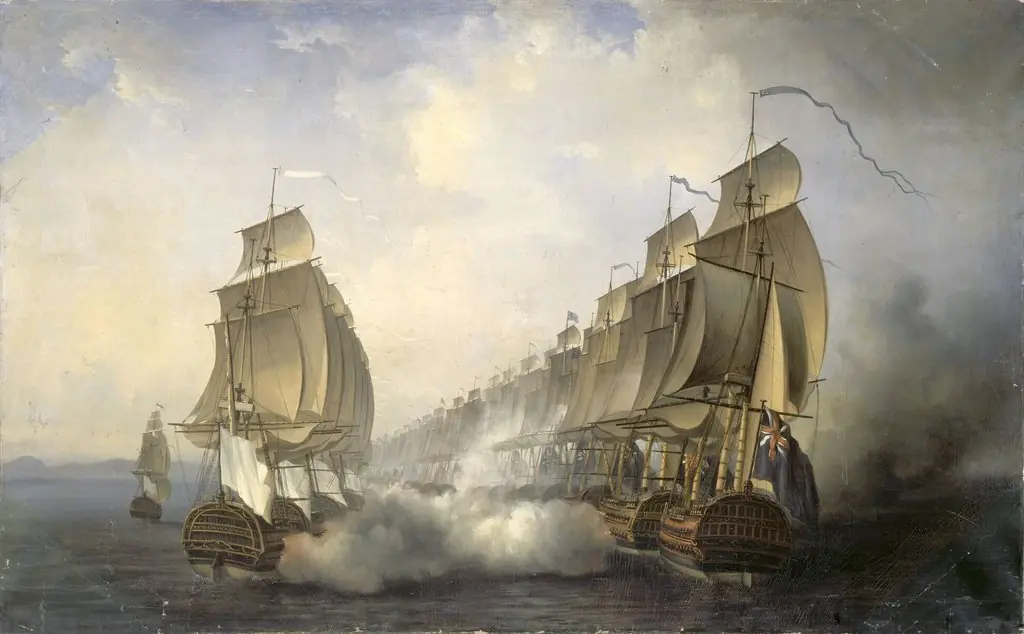 Naval battle of Gondelour, june 20, 1783
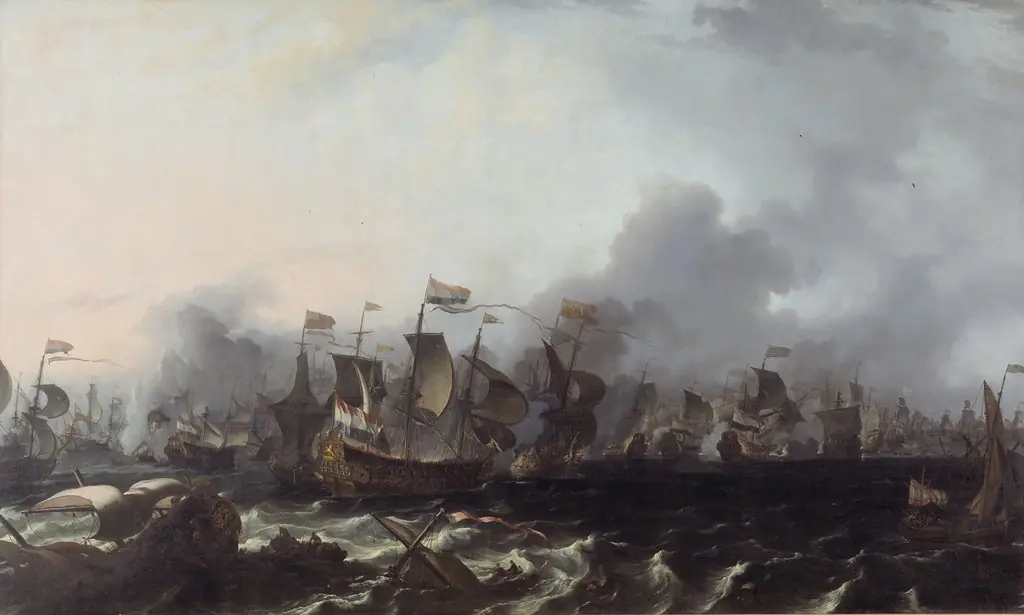 The Four Day's Battle, 11-14 June 1666
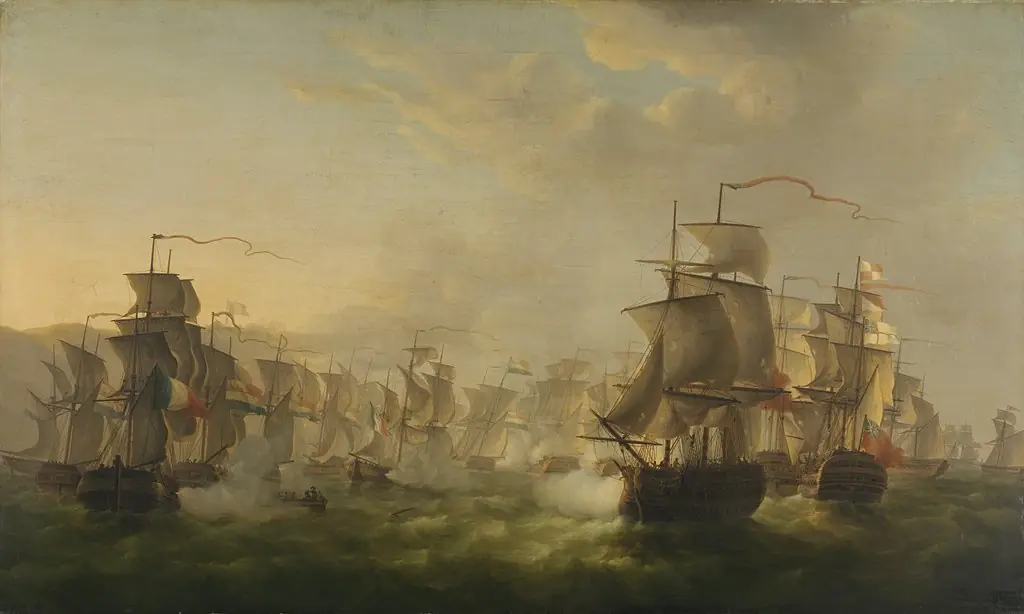 The Encounter of the Dutch and the English Fleet during the Voyage of the Dutch Flotilla to Boulogne, 1805