Artwork
Kitchen Scene
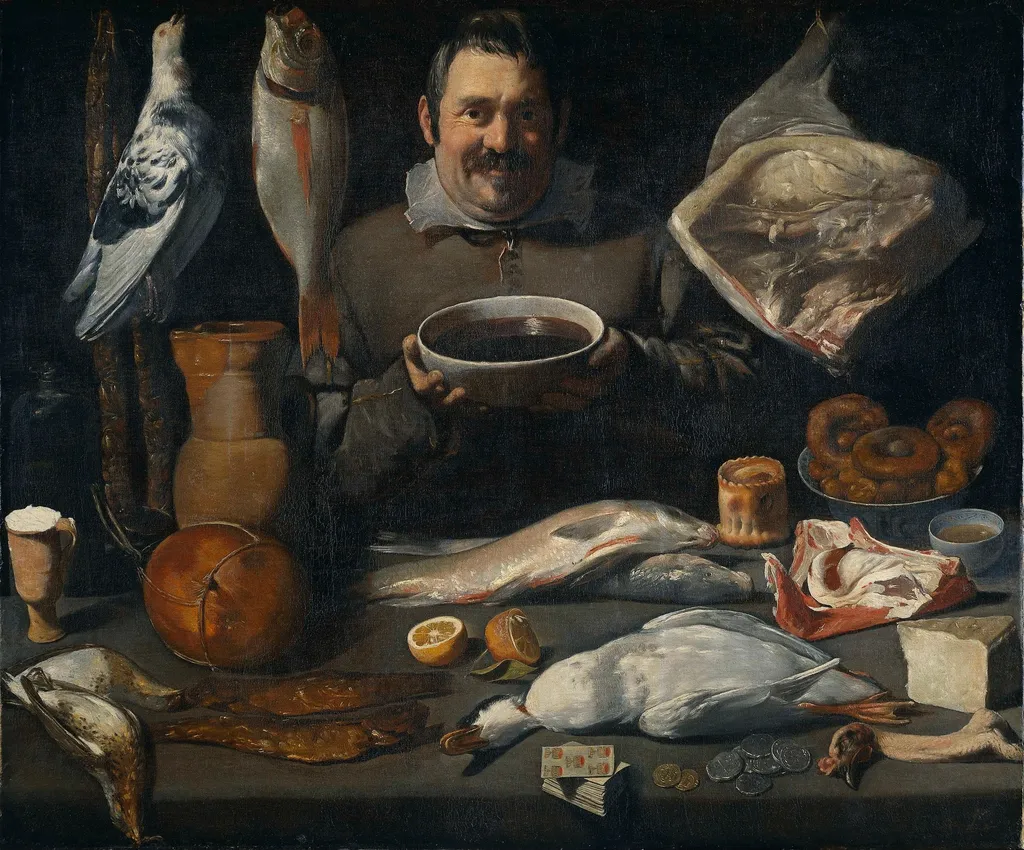
Kitchen Scene is an oil painting by the Dutch Golden Age artist Master of the Amsterdam Bodegón. It dates from 1617 and is held in the collection of the Rijksmuseum.
About this work
Technique & Style
The still-life genre’s conventions are evident in the careful rendering of textures and the subdued palette, with earthy browns and muted greens predominating.
The work is painted in oil on canvas, a medium consistent with early-17th-century Dutch still-life practice. The handling combines smooth, blended passages for reflective surfaces with crisp, detailed brushwork in the foreground utensils and foodstuffs, creating a tactile contrast. Compositionally, the scene arranges everyday kitchen objects along a diagonal that recedes toward a darkened back wall, while a window on the left introduces a light source that models forms and casts subtle shadows.
The still-life genre’s conventions are evident in the careful rendering of textures and the subdued palette, with earthy browns and muted greens predominating.
History & Provenance
The painting is dated 1617 and attributed to the Master of the Amsterdam Bodegón, indicating it was created in the early seventeenth century within the still-life tradition of the Spanish Netherlands.
The work entered Dutch public collections by the twentieth century, with later records listing it in the Rijksmuseum and the Museum Boijmans Van Beuningen. It was included in the exhibition El Siglo de Oro. The Age of Velázquez, which situates its ownership and display within the broader cultural context of Golden Age Spanish and Flemish art.
The painting Kitchen Scene, dated 1617, is associated with the collections of the Rijksmuseum and Museum Boijmans Van Beuningen. While specific inventory numbers are not provided in the available records, the work has been linked to the Master of the Amsterdam Bodegón, Alexandro Loarte, and Diego Velázquez. The piece was included in the exhibition El Siglo de Oro.
The Age of Velázquez, which highlights its historical presentation within major institutional contexts. The artwork is executed in oil paint on canvas and measures 100 cm in height by 122 cm in width.
Context
Created in 1617, Kitchen Scene is attributed primarily to the Master of the Amsterdam Bodegón, though scholarship has also considered connections to Alexandro Loarte and Diego Velázquez. The work is categorized within the still-life tradition of the Dutch Golden Age, reflecting the era's focus on domestic interiors and material culture. Its historical significance is underscored by its inclusion in the major exhibition El Siglo de Oro.
The Age of Velázquez, which contextualizes the painting alongside the broader Spanish and Dutch artistic developments of the early 17th century. The piece is currently associated with the collections of the Rijksmuseum and the Museum Boijmans Van Beuningen.
Overview
Kitchen Scene is a 17th-century oil painting depicting a domestic interior. Created in 1617 by the Master of the Amsterdam Bodegón, it is now part of the Rijksmuseum's collection.
Subject & Meaning
The painting portrays a seated figure holding a bowl amidst a cluttered table laden with fish (whole and gutted), bread, oranges, a clay pot, a mug, a pitcher, and scattered coins. The scene conveys a sense of everyday life, focusing on the mundane aspects of food preparation.
Legacy
While specific influences or direct artistic descendants are not highlighted in the provided information, the painting's adherence to and successful execution of chiaroscuro and realism place it within the continuum of Dutch Masters' contributions to Western art.
Own this work as a print
Artist & collection
Artist
Master of the Amsterdam Bodegón
This painter made quiet, everyday scenes in 17th-century Holland. Their one known piece in our collection is Kitchen Scene from 1617, a small oil painting full of pots, bread, and simple utensils bathed in soft light.…

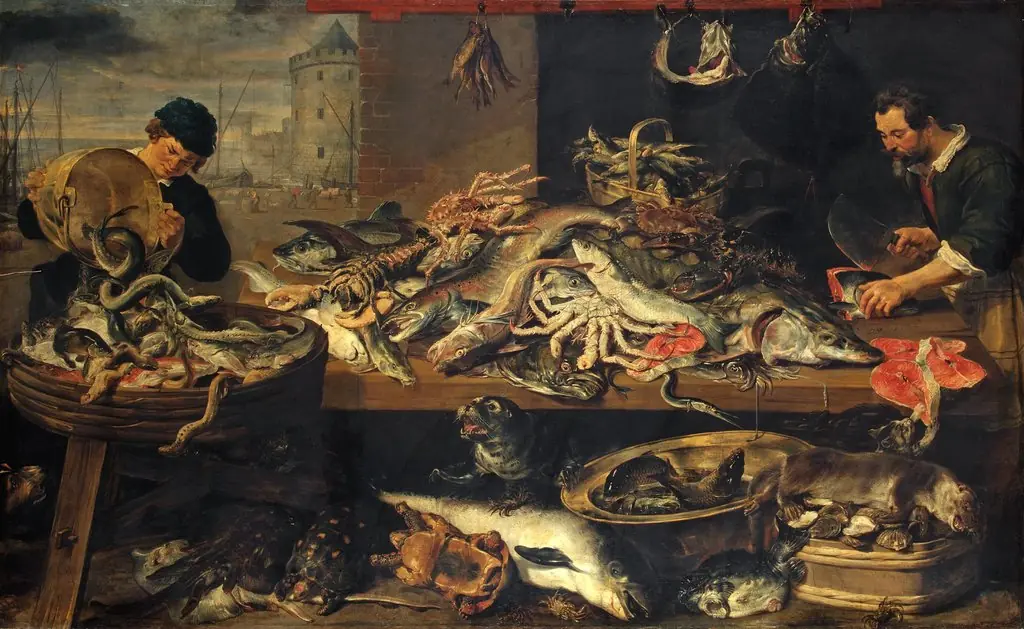 Fish Market
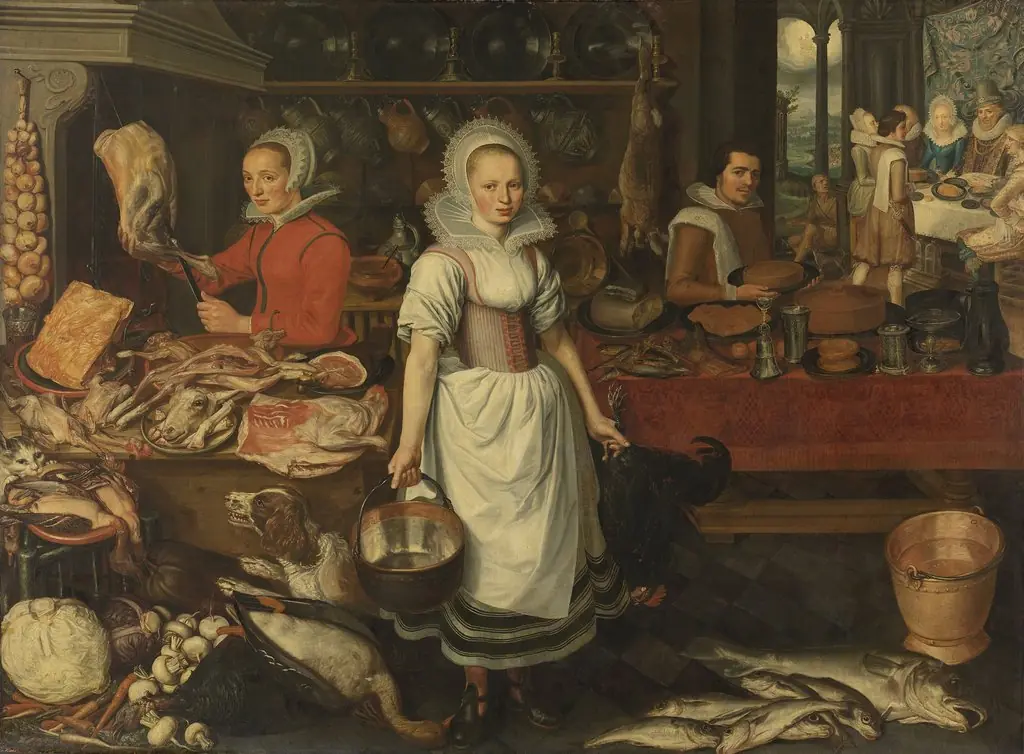 Kitchen Scene with the Parable of the Rich Man and Poor Lazarus
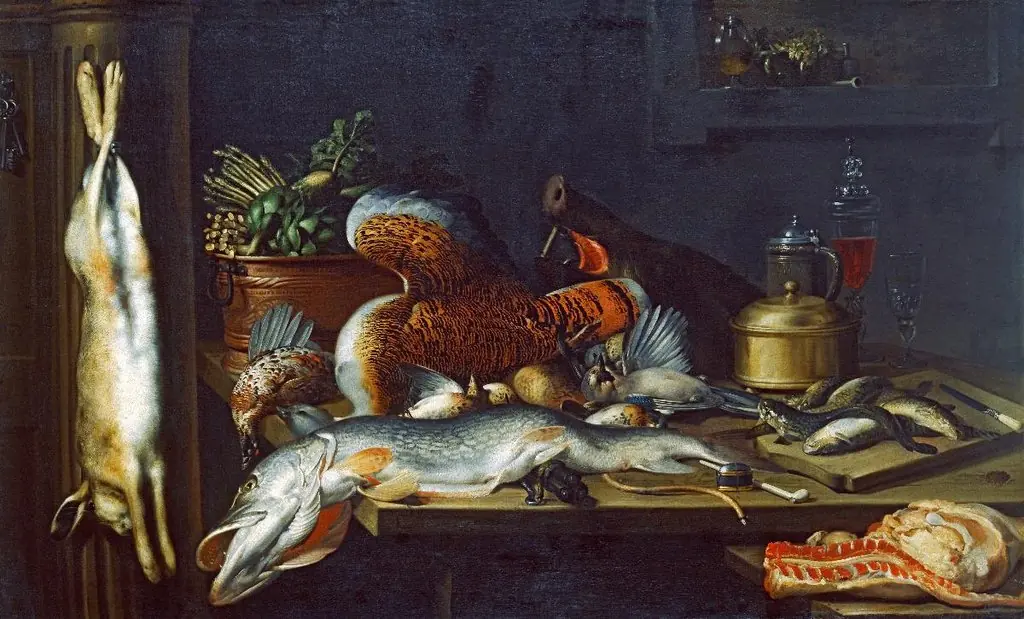 Grosses Küchenstück
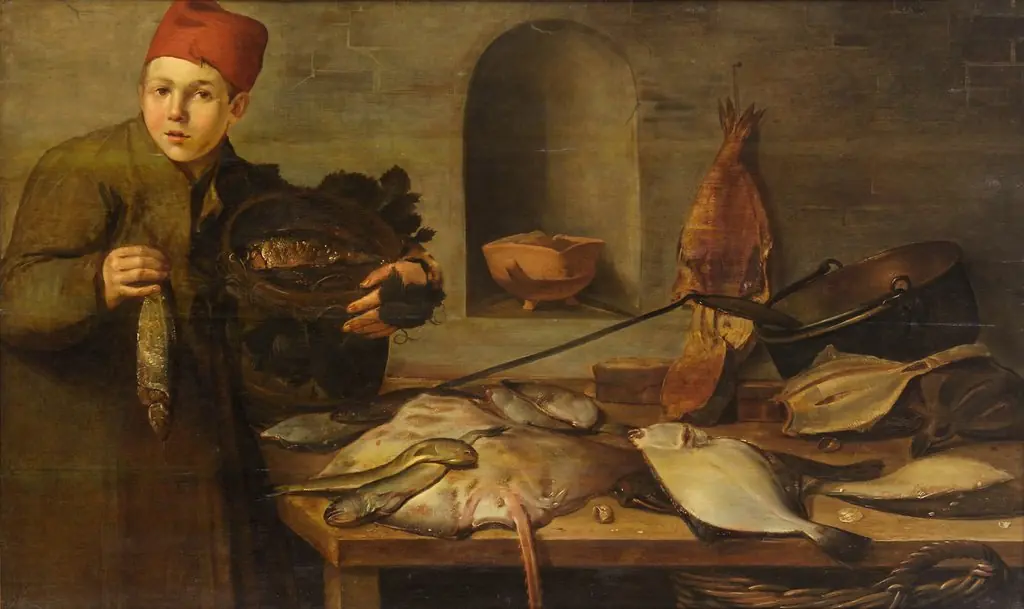 Boy, Selling Fish
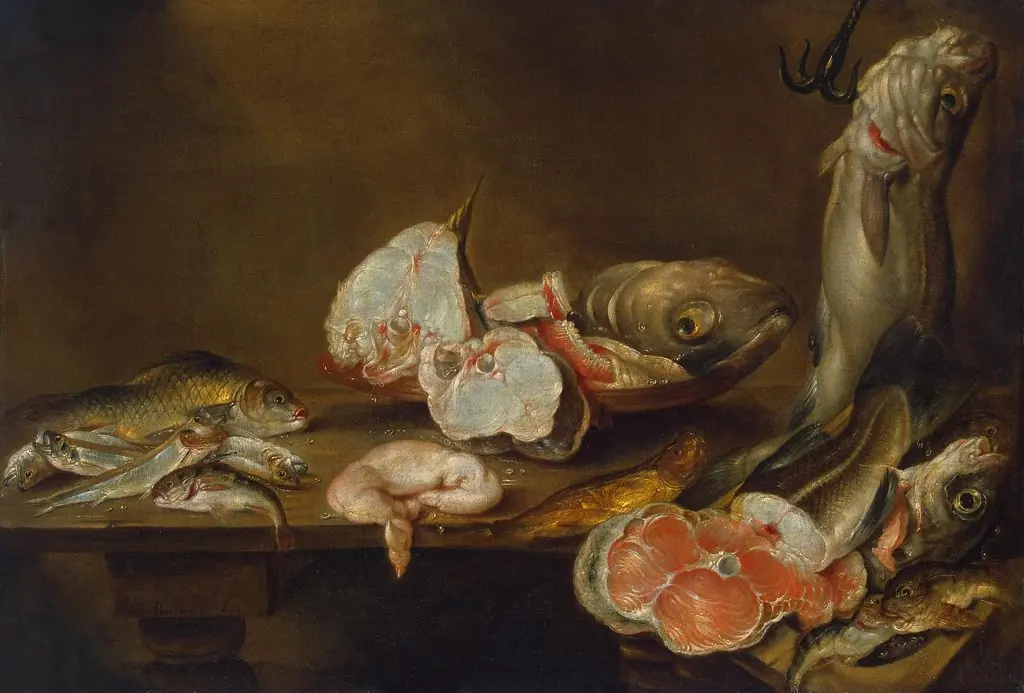 Fish and Dead Game
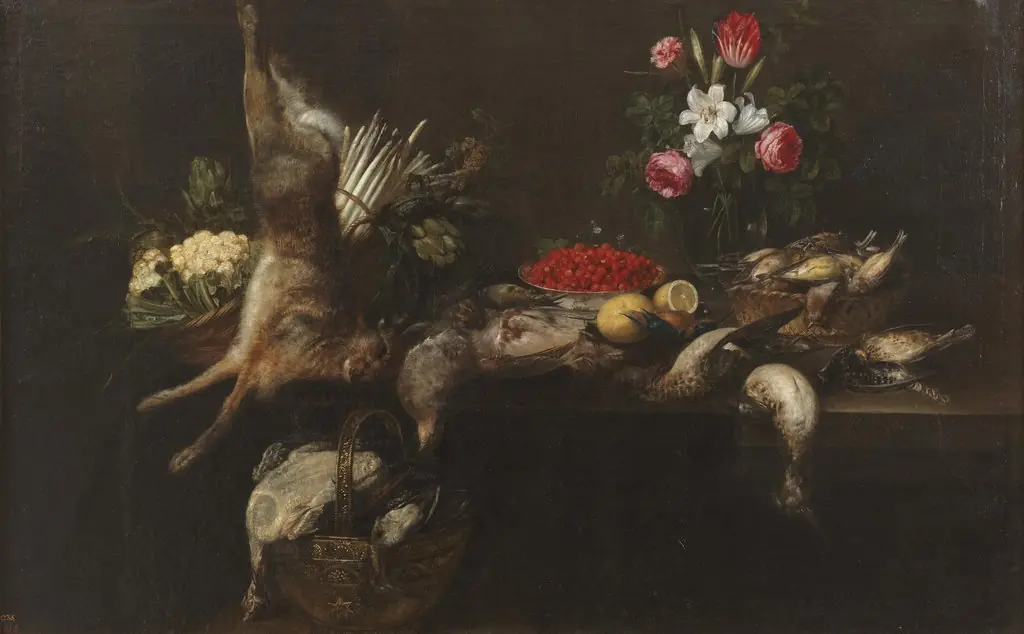 Pantry
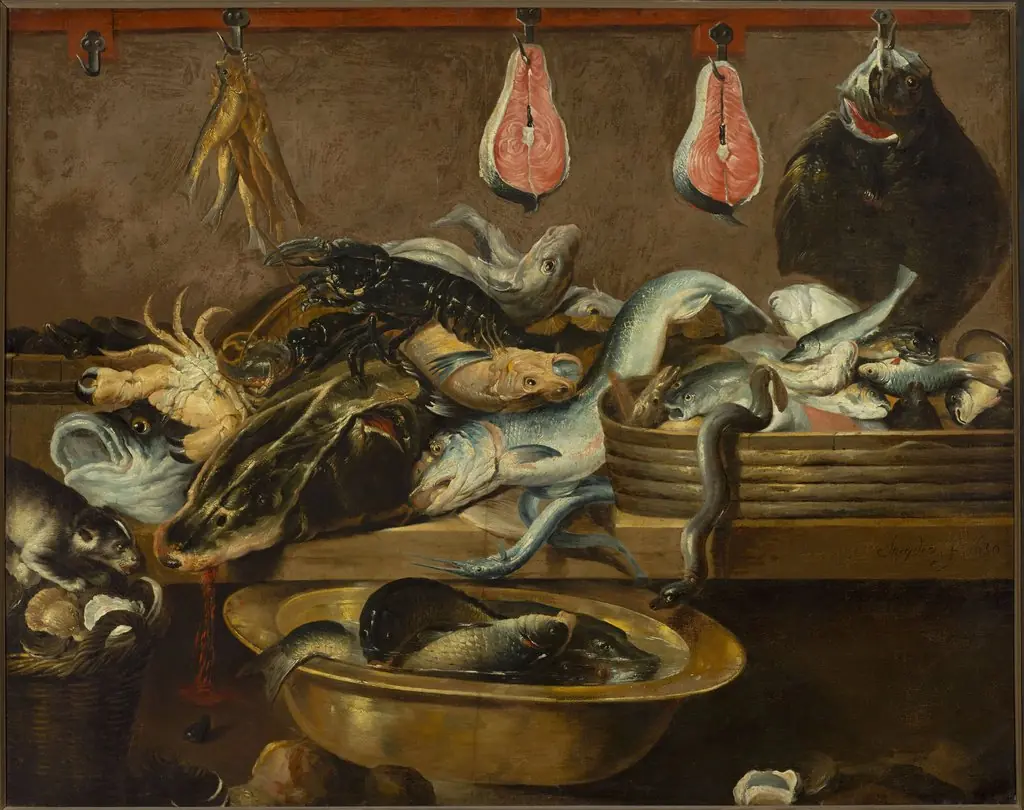 Fish stand
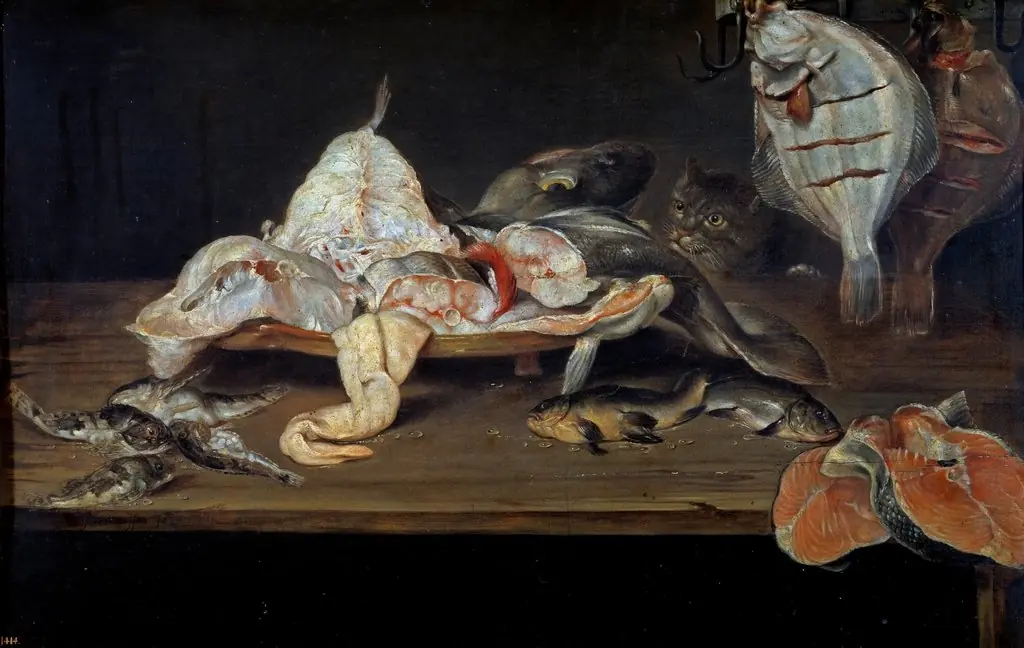 Still life with fish and a cat behind the table
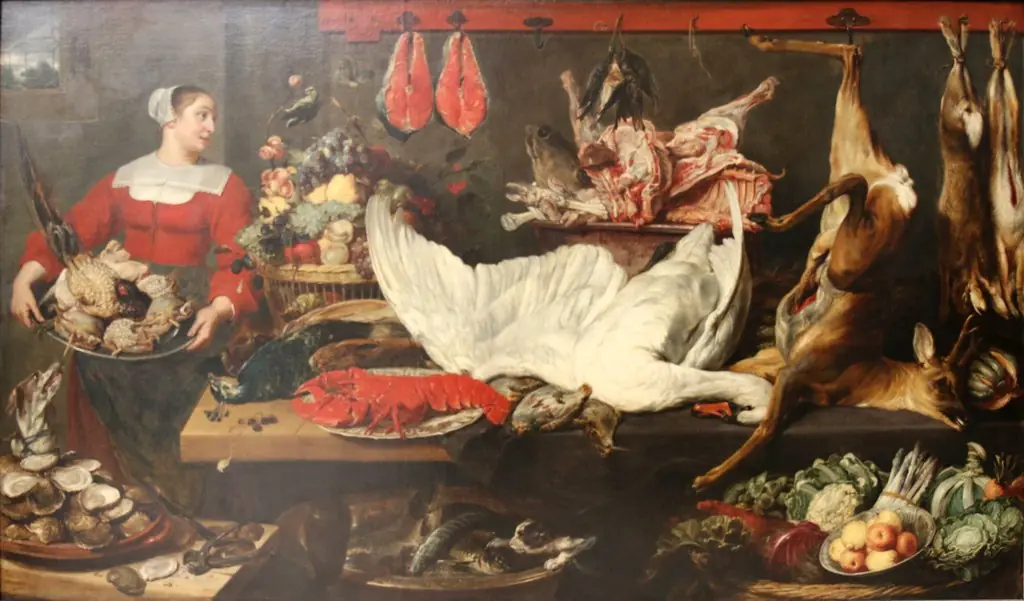 Kitchen interior with a servant girl holding a plate with poultry and a table with an abundance of game, fish, fruit and vegetables
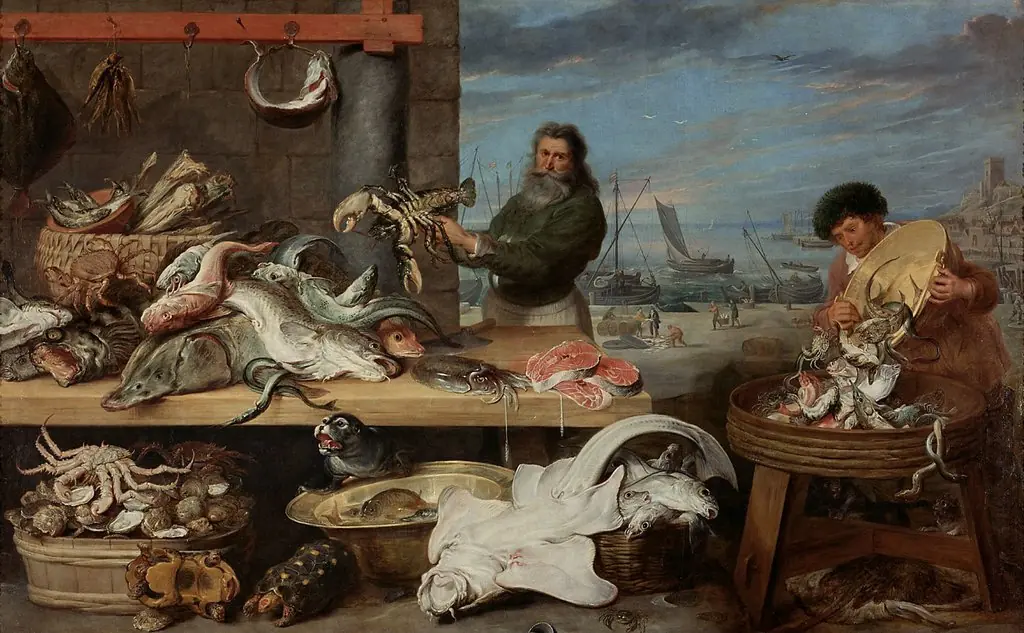 Fish market