Artwork
The Basilica of Constantine, Rome
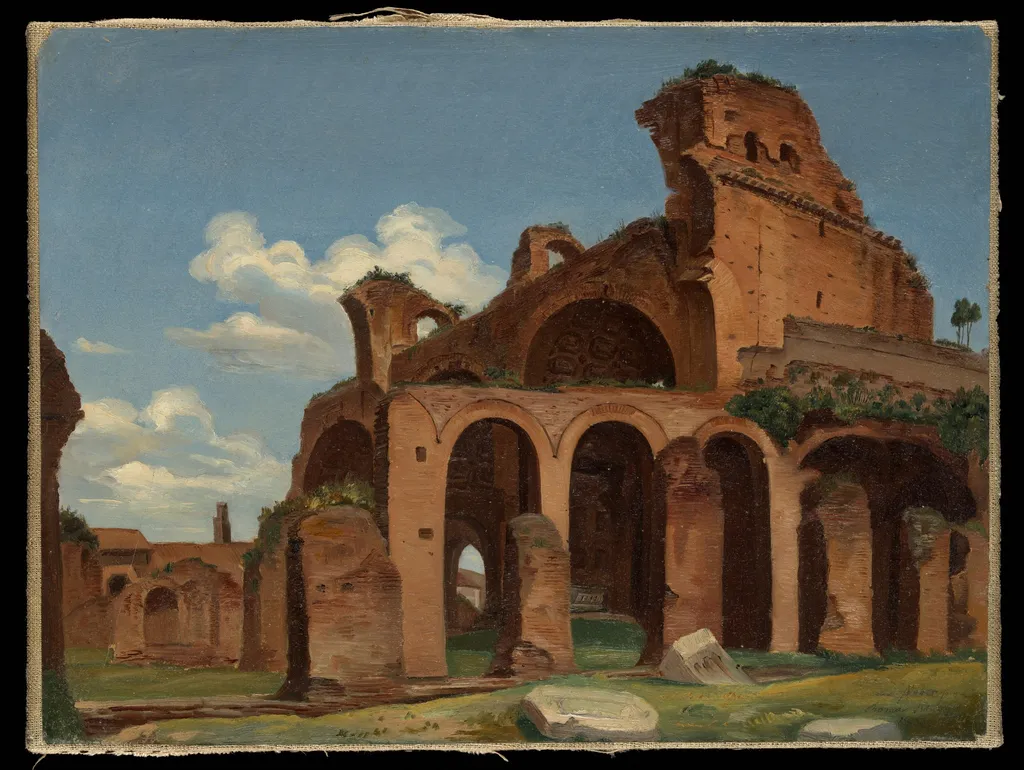
The Basilica of Constantine, Rome is an unspecified painting by Michael Neher. It dates from 1830 and is held in the collection of the Metropolitan Museum of Art.
About this work
History & Provenance
It was first exhibited publicly at the 1830 Paris Salon before entering the museum's holdings, where it remains on display as part of the permanent collection.
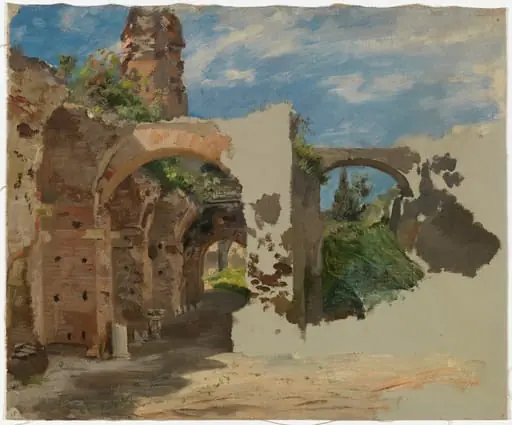
The Basilica of Constantine in Rome was painted by Michael Neher in 1830. It entered the collection of the Metropolitan Museum of Art, where it remains on view. The work depicts the ruins of the basilica and measures 28.9 cm by 38.4 cm.
The painting is part of the Metropolitan Museum of Art's collection in New York and has been on view in the museum's European Paintings galleries since its acquisition. It was first exhibited publicly at the 1830 Paris Salon before entering the museum's holdings, where it remains on display as part of the permanent collection.
The work measures 28.9 cm in height and 38.4 cm in width.
Context
The painting The Basilica of Constantine, Rome by Michael Neher was created in 1830 and is housed in the Metropolitan Museum of Art, where it has been part of the collection since its acquisition. It portrays the ruins of a basilica and reflects Neher's focus on historical architectural subjects, situating his work within the broader 19th-century European tradition of depicting antiquities and classical fragments.
Scholarship on the work emphasizes its role in the Romantic fascination with ruins and its contribution to the visual documentation of Rome's architectural heritage during the 1800s. As part of Neher's oeuvre, it complements his other landscape and architectural paintings that blend topographical accuracy with atmospheric effects, illustrating the intersection of art, archaeology, and cultural memory in the period.
Overview
Michael Neher, a Munich‑born painter trained at the Academy under Matthias Klotz, completed the work titled The Basilica of Constantine, Rome in 1830. Though primarily employed as a scene painter for theatres, Neher traveled in Italy and produced a series of architectural views, of which this depiction of the ancient basilica is a representative example. The painting belongs to the collection of the Metropolitan Museum of Art.
Subject & Meaning
The canvas presents the ruined structure traditionally identified as the Basilica of Maxentius, often linked with Constantine’s later use, set against a clear blue sky. Crumbling arches and weathered stone blocks dominate the composition, while modest vegetation sprouts from the fissures, suggesting the passage of time and nature’s reclamation of the once‑grand edifice.
Technique & Style
Neher renders the scene in a topographical manner, emphasizing precise architectural detail over dramatic narrative. Careful modeling of light creates uneven illumination across the stone surfaces, producing deep shadows that convey both solidity and decay. The palette is restrained, with muted earth tones for the masonry contrasted by the bright sky and occasional green of the vegetation.
Own this work as a print
Artist & collection
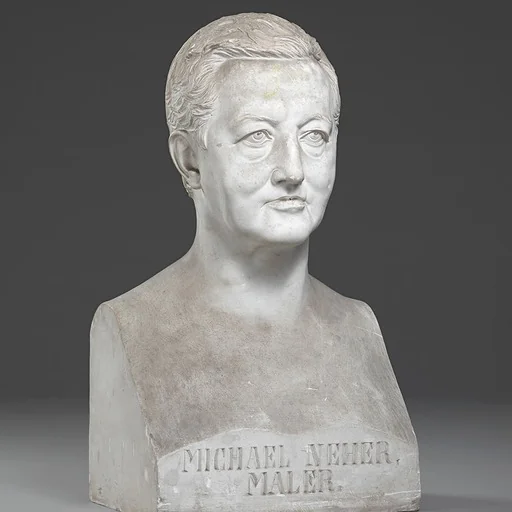
Artist
Michael Neher (1798 at Munich – 1876 in Munich), the son of Joseph Neher, a citizen and painter of that city, but of a family from Biberach.

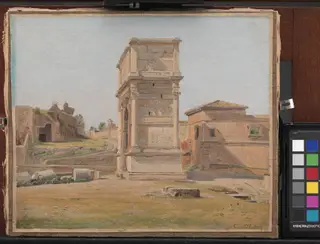 The Arch of Titus in Rome
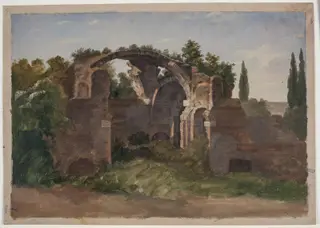 Ruiner. Caracallas termer i Rom?
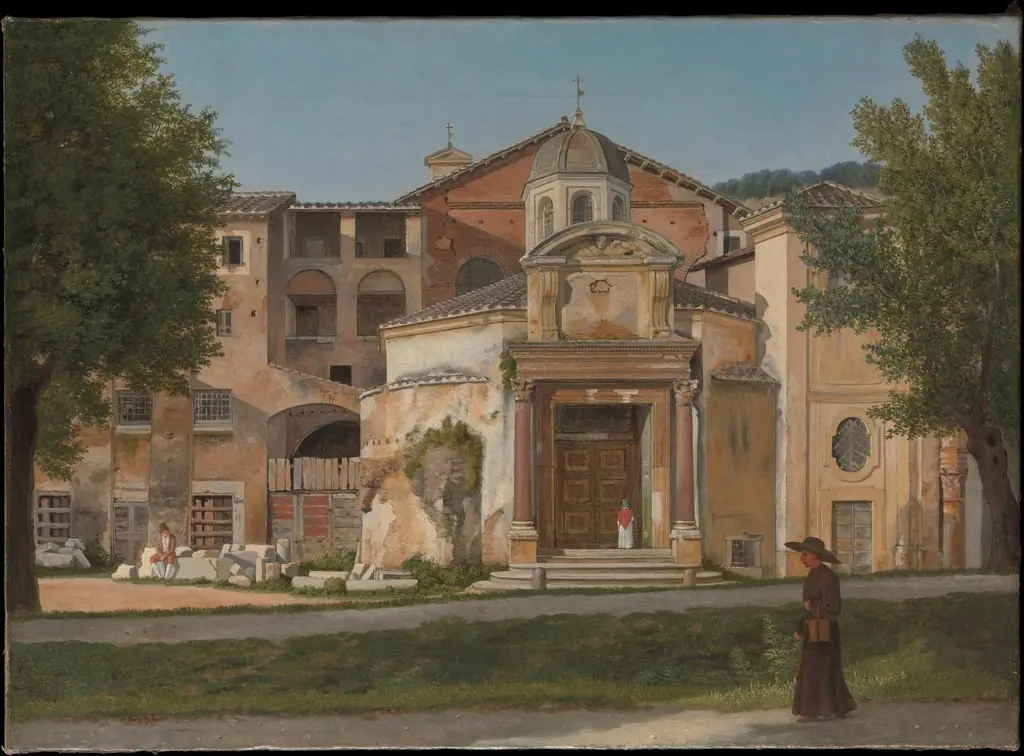 A Section of the Via Sacra, Rome (The Church of Saints Cosmas and Damian)
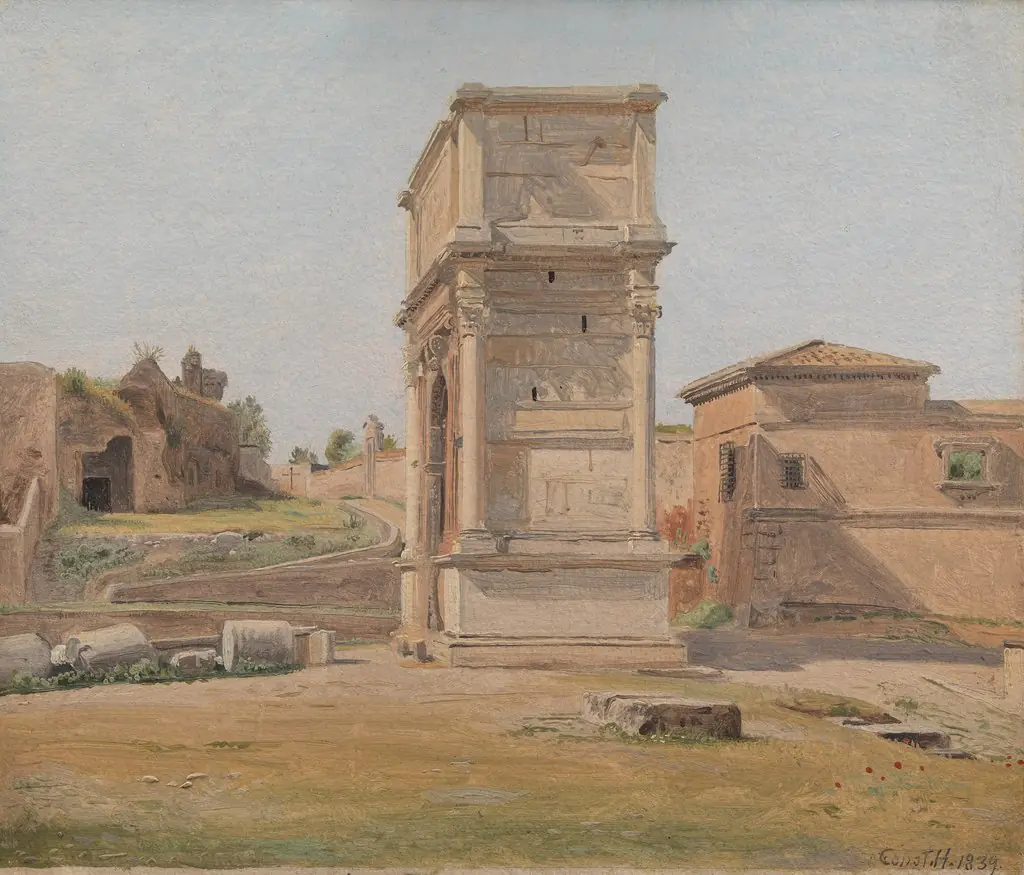 The Arch of Titus in Rome
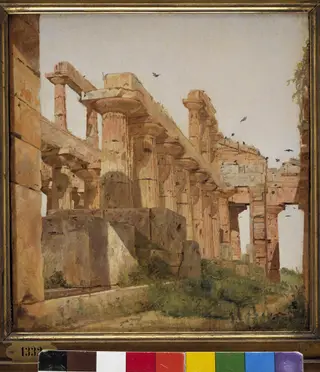 The Temple of Hera at Paestum, Italy
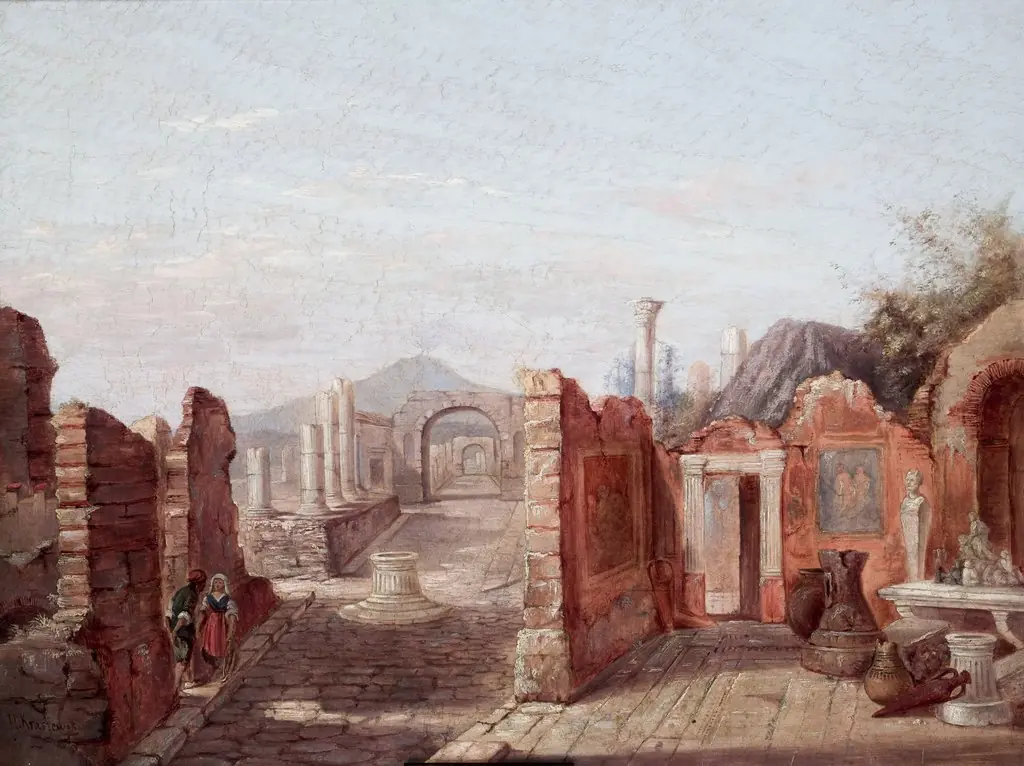 Ruins of Pompeii
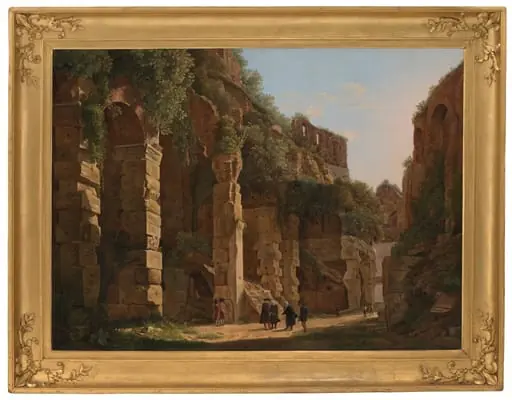 Inside the Colosseum
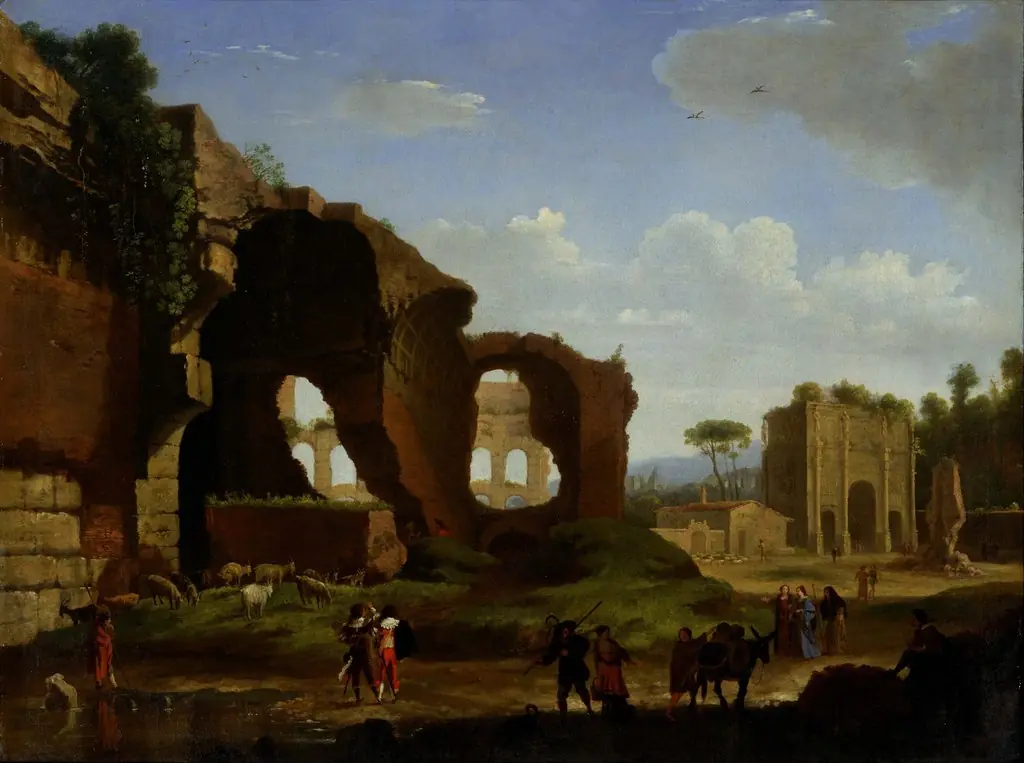 A Roman View of the Ruins of the Temple of Venus and Rome with the Colosseum and the Arch of Constantine
 Roomalaisia raunioita, harjoitelma