Artwork
The Basilica of Constantine with a Doric Colonnade
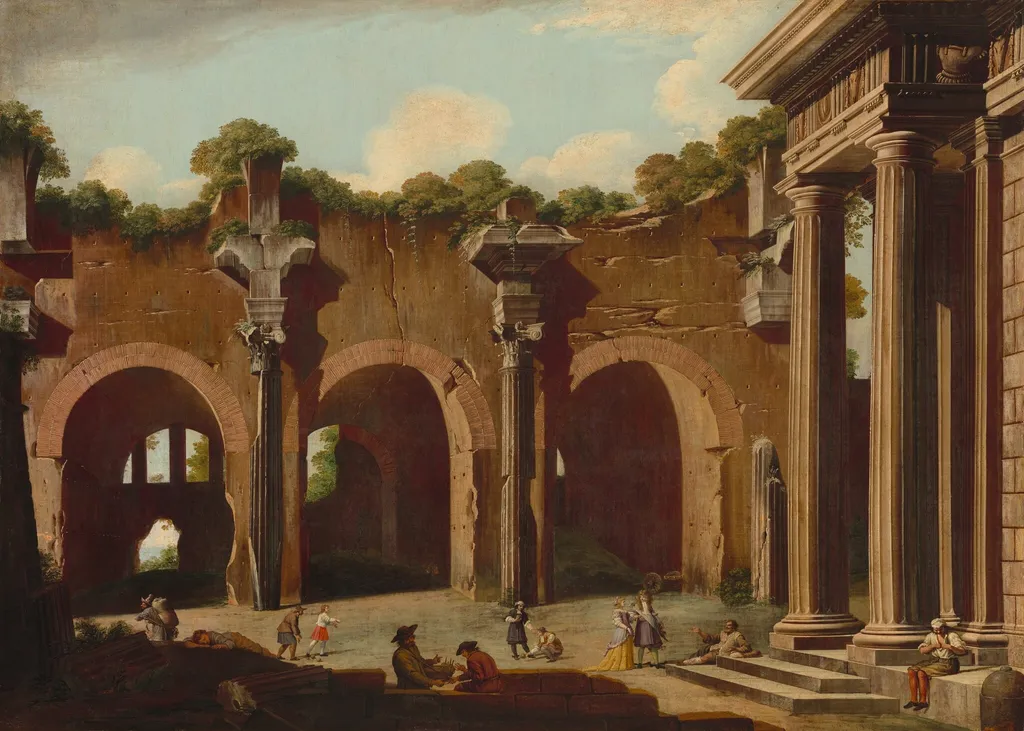
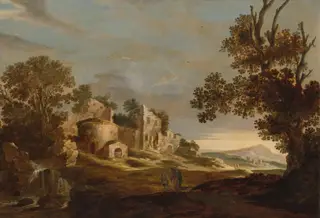
The Basilica of Constantine with a Doric Colonnade is an oil painting by the Barbizon school artist Niccolò Codazzi. It dates from 1688 and is held in the collection of the National Gallery of Art.
About this work
Technique & Style
Classified as a landscape painting, the piece depicts architectural ruins, specifically featuring a Doric colonnade and the remains of a basilica.
Niccolò Codazzi executed The Basilica of Constantine with a Doric Colonnade in 1687 using oil paint applied to a canvas support. The work measures 97.6 cm in height and 135 cm in width. Classified as a landscape painting, the piece depicts architectural ruins, specifically featuring a Doric colonnade and the remains of a basilica.
The composition is rendered in oil, a medium that allows for the detailed modeling of stone textures and atmospheric depth characteristic of the artist's veduta style.
History & Provenance
The Basilica of Constantine with a Doric Colonnade is an oil on canvas landscape painting by Niccolò Codazzi dated 1687.
The documented ownership chain begins with Joseph F. McCrindle (1923–2008), a collector based in New York. Following his death, the painting entered the National Gallery of Art in Washington, D.C. as part of McCrindle's bequest, where it remains in the collection.
No information is provided regarding the original commission or the circumstances under which Codazzi produced the work in 1687.
The painting is held by the National Gallery of Art in Washington, D.C. It entered the collection through the bequest of Joseph F. McCrindle [1923–2008] of New York, a collector whose holdings were transferred to the institution after his death. No exhibition history beyond its acquisition by the NGA is documented in the available sources.
Context
The work entered the National Gallery of Art collection through the bequest of Joseph F. McCrindle, establishing its provenance within the institution's holdings. Scholarship situates this 1687 landscape painting within Codazzi's Roman vedute tradition, reflecting his precise architectural draftsmanship and influence on veduta painters. The painting's Doric colonnade exemplifies his fascination with classical architecture, a recurring motif in his oeuvre.
Its placement within the National Gallery of Art's collection underscores its significance as part of a major repository of European art.
Legacy
The painting's reputation grew through scholarly attention to Codazzi's vedute, influencing later landscape artists who valued his precise architectural framing. Its inclusion in the National Gallery of Art's collection cemented its standing in American art history, and the work continues to be cited in studies of 17th-century Italian vedute. The legacy of the piece reflects Codazzi's role in shaping veduta as a genre, particularly through his integration of classical architectural elements such as the Doric colonnade.
The painting entered the National Gallery of Art through the bequest of Joseph F. McCrindle, ensuring its preservation and public access.
The work's influence can be traced to later artists who adopted Codazzi's compositional strategies and his treatment of light on classical ruins.
Overview
Niccolò Codazzi’s 1688 oil on canvas, titled The Basilica of Constantine with a Doric Colonnade, depicts a decayed courtyard framed by broken arches and towering columns. The composition balances a muted sky with warm earth tones, while figures in contemporary 17th‑century dress animate the space, strolling, seated, and conversing amid the ruins.
Subject & Meaning
The work presents the remnants of the ancient Basilica of Constantine, emphasizing the passage of time through its crumbling architecture. The presence of casually dressed figures suggests a juxtaposition of past grandeur and present everyday life, inviting viewers to contemplate the endurance of history within a lived environment.
Own this work as a print
Artist & collection


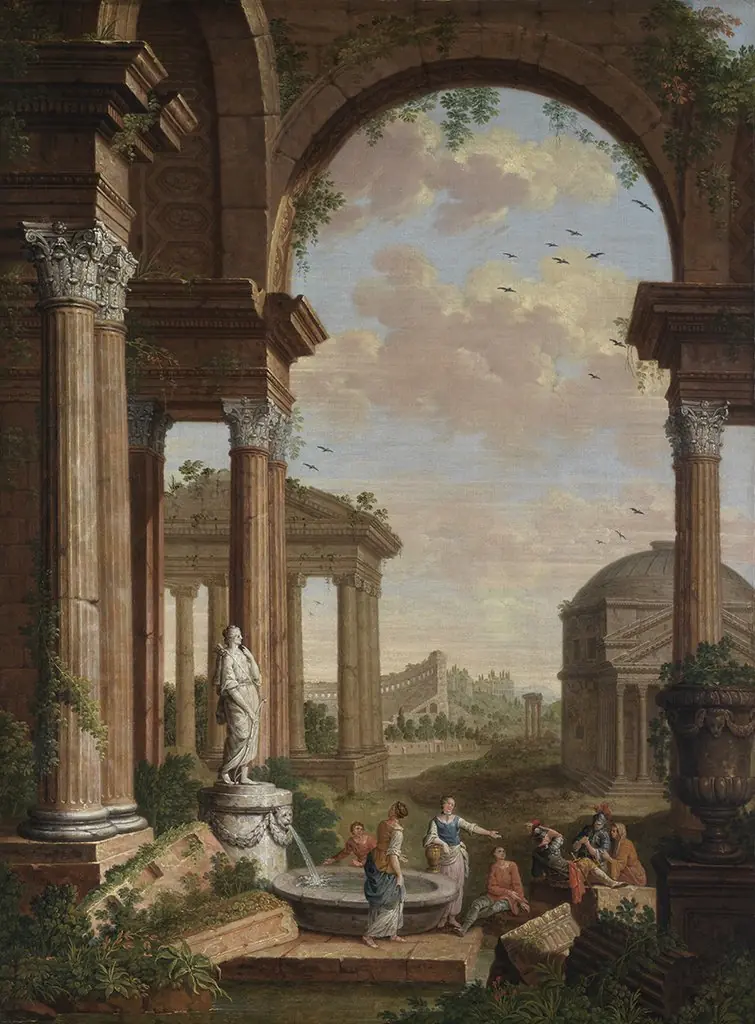 Landscape with Roman Ruins
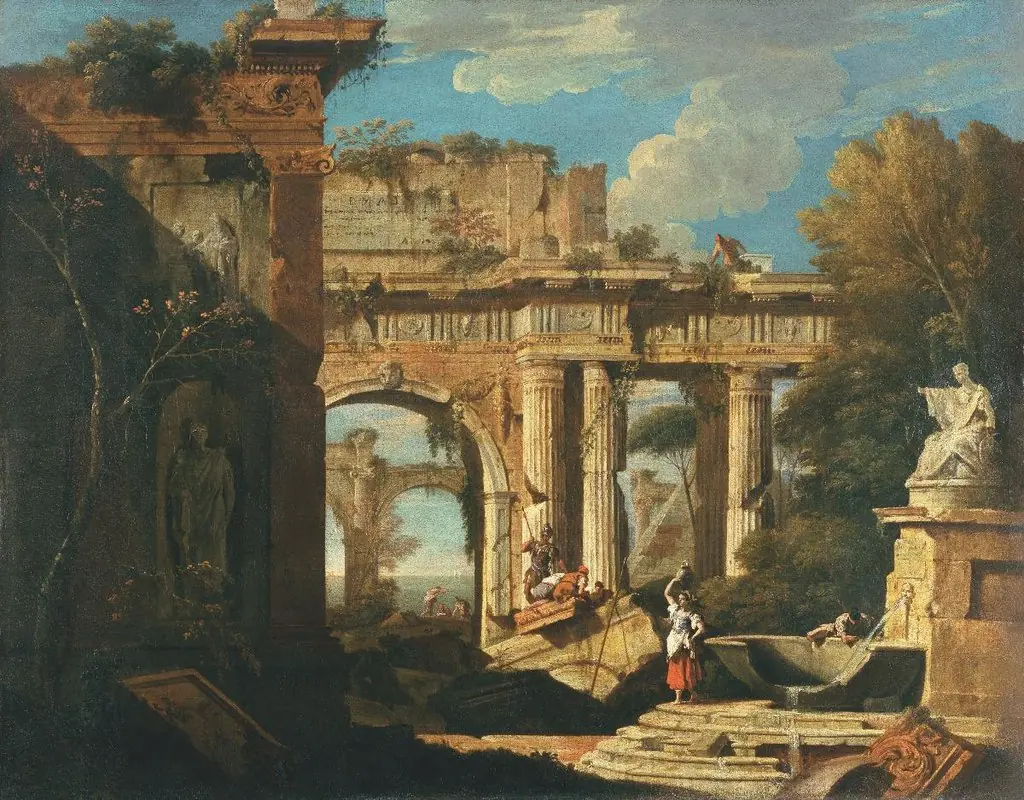 Capriccio con rovine romane
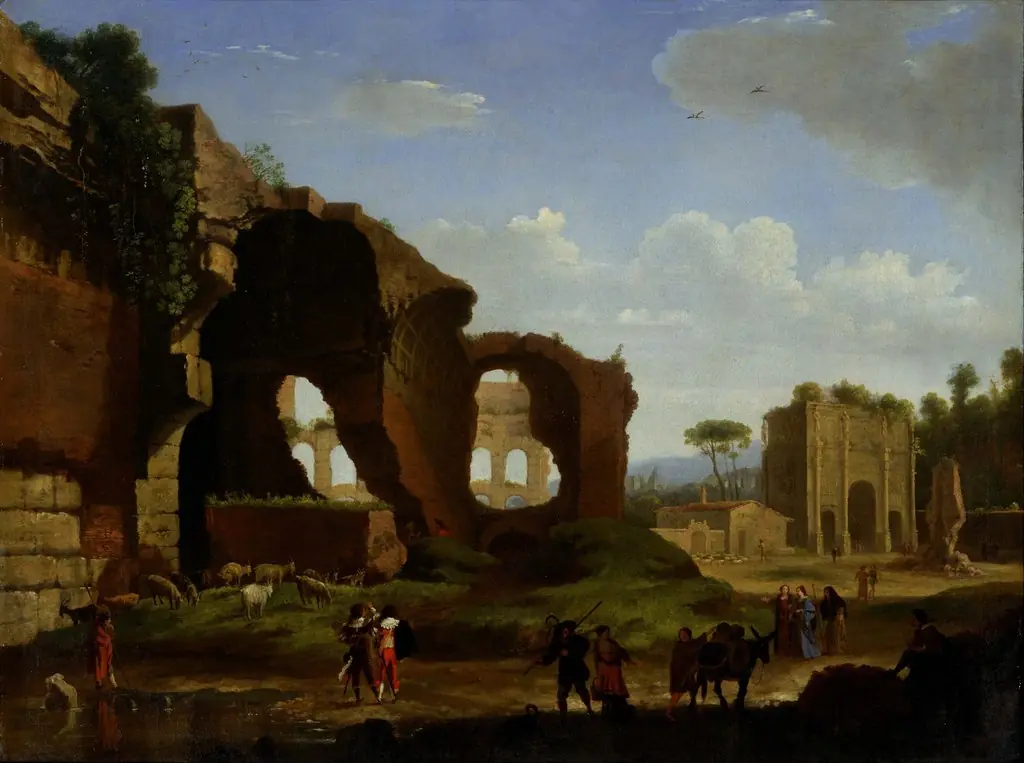 A Roman View of the Ruins of the Temple of Venus and Rome with the Colosseum and the Arch of Constantine
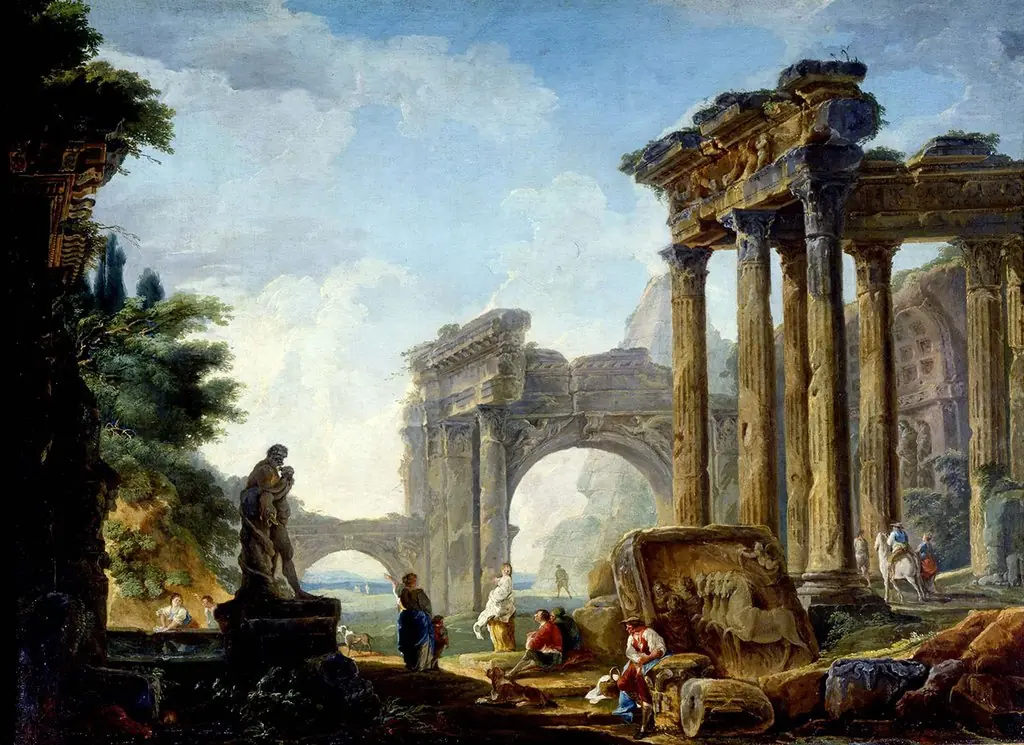 Paysage avec ruines romaines
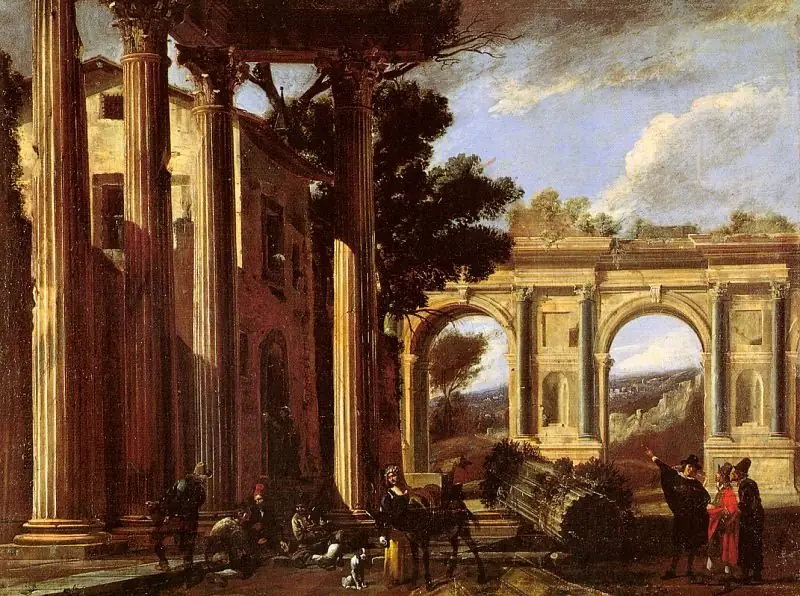 Architectural View
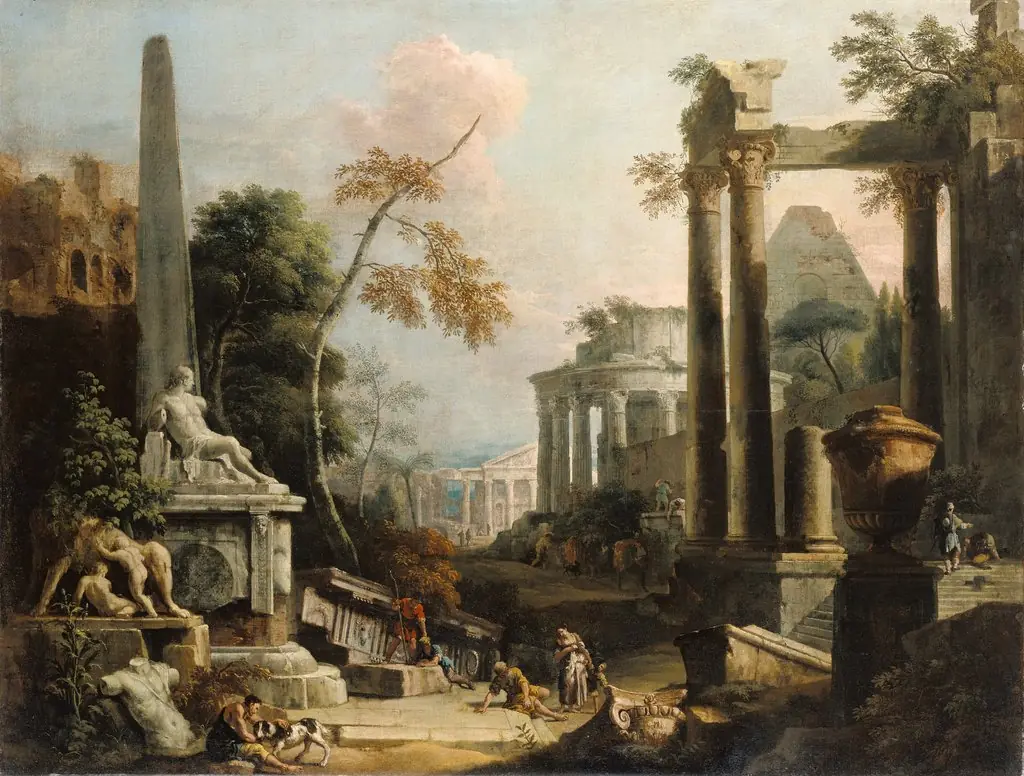 Landscape with Classical Ruins and Figures
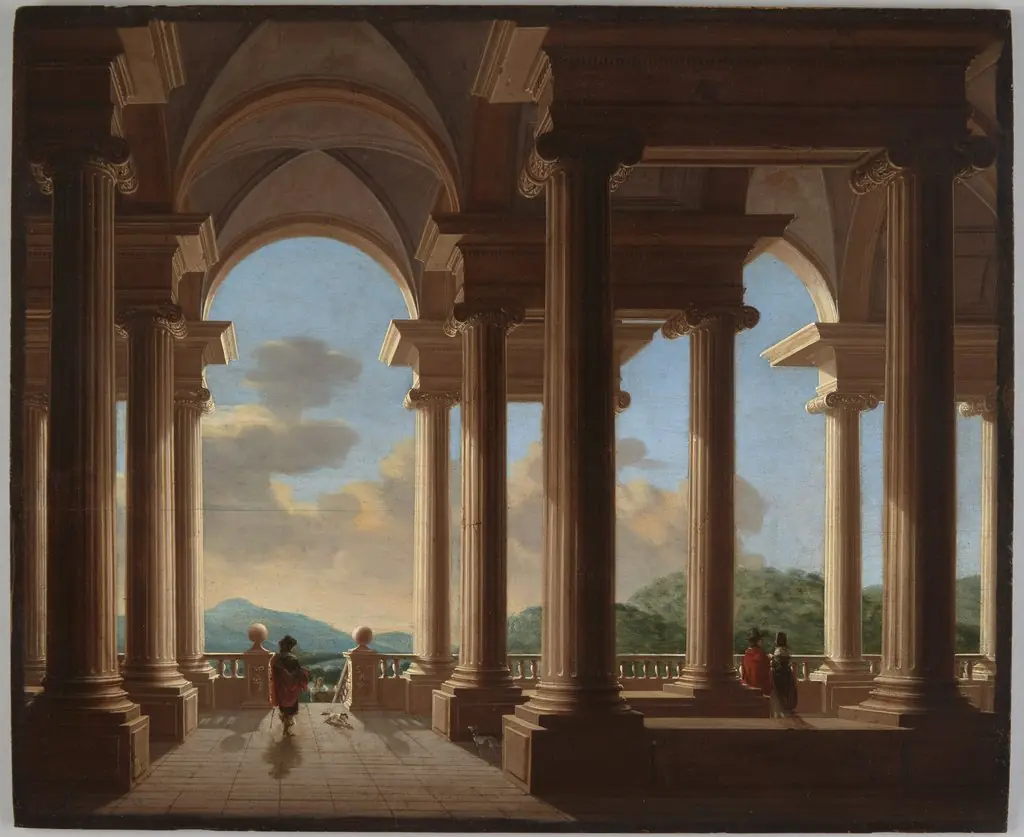 Terrace with a Colonnade
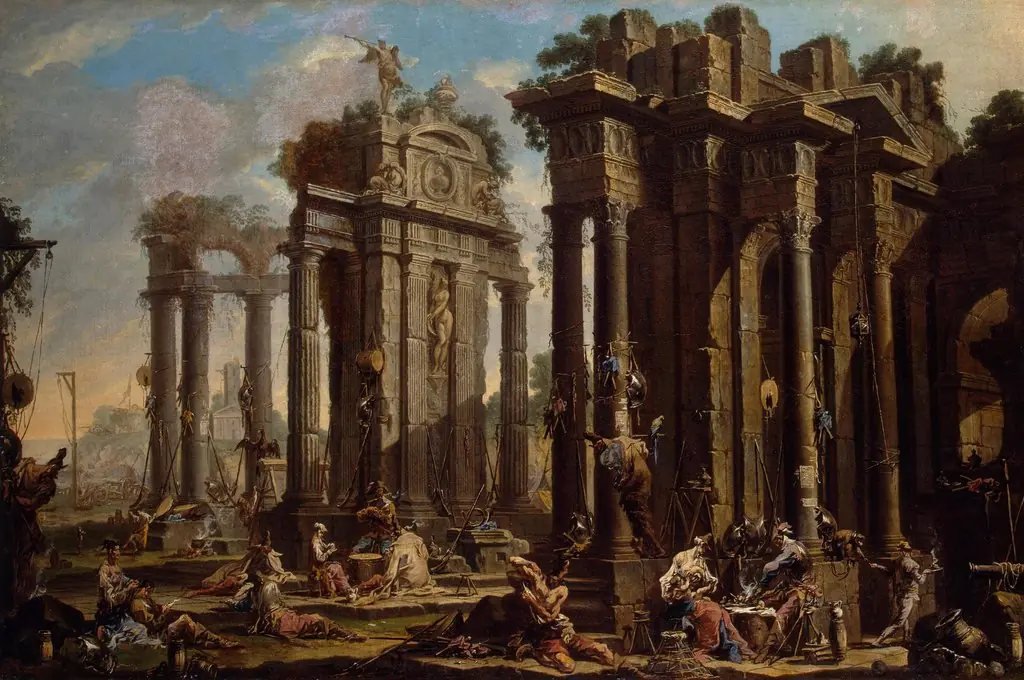 Halt of the Brigands
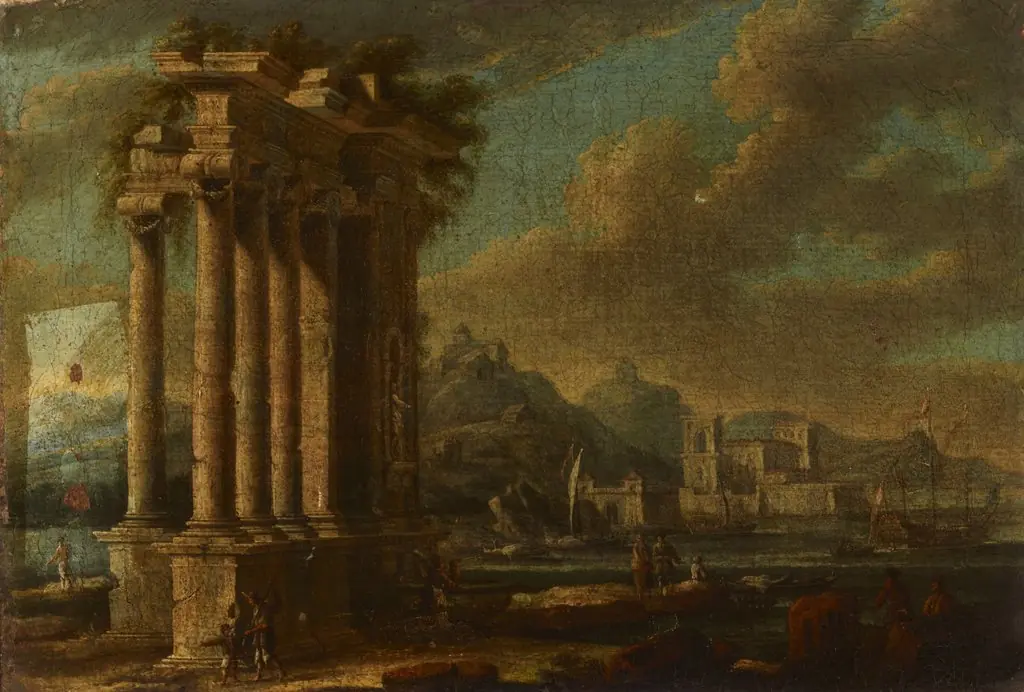 Maritime Landscape with Ruins
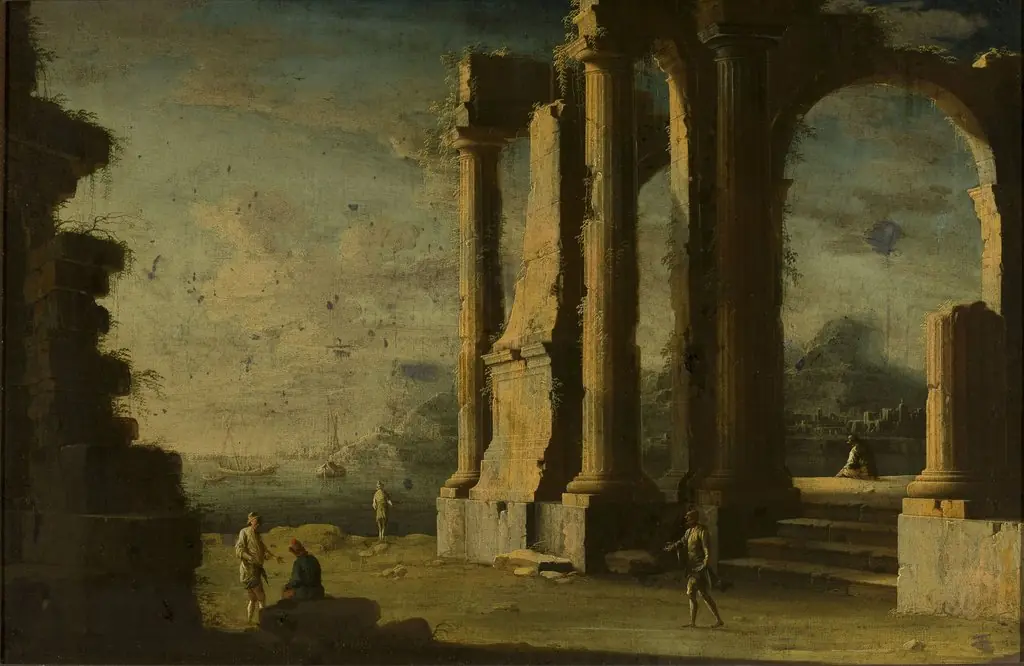 Sea bay
- View of Rome
 Landscape with Journey to Emmaus