Artwork
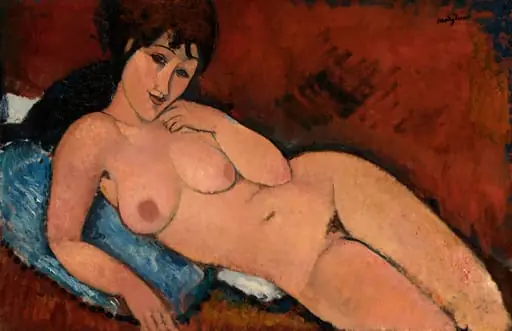
Nude on a Divan
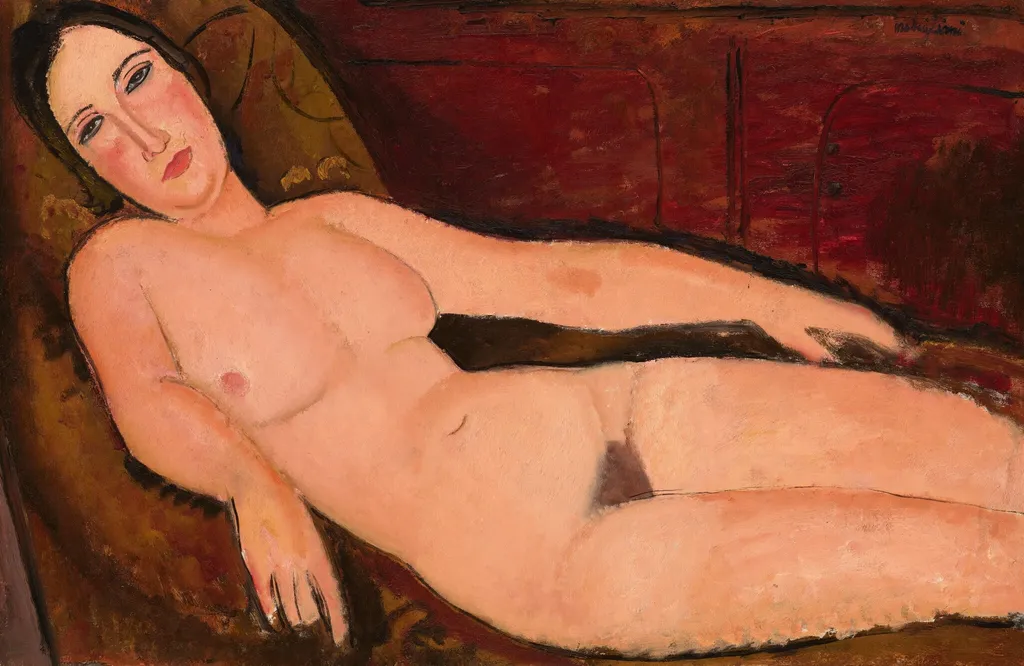
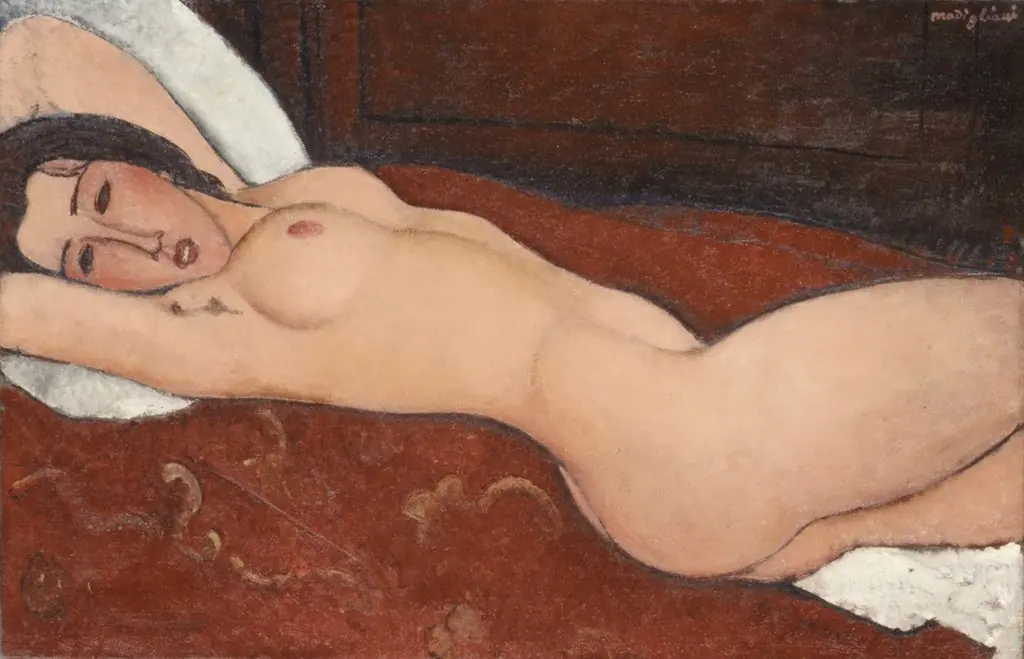
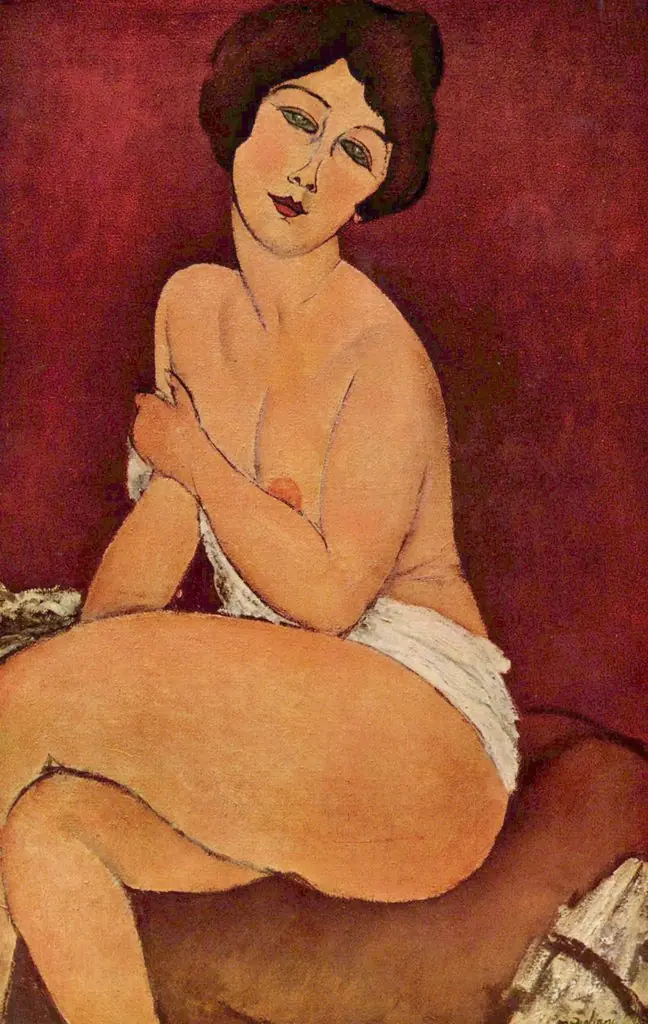
Nude on a Divan is an oil painting by Amedeo Modigliani. It dates from 1918 and is held in the collection of the National Gallery of Art.
- Inscription
- Inscribed:upper right: modigliani
About this work
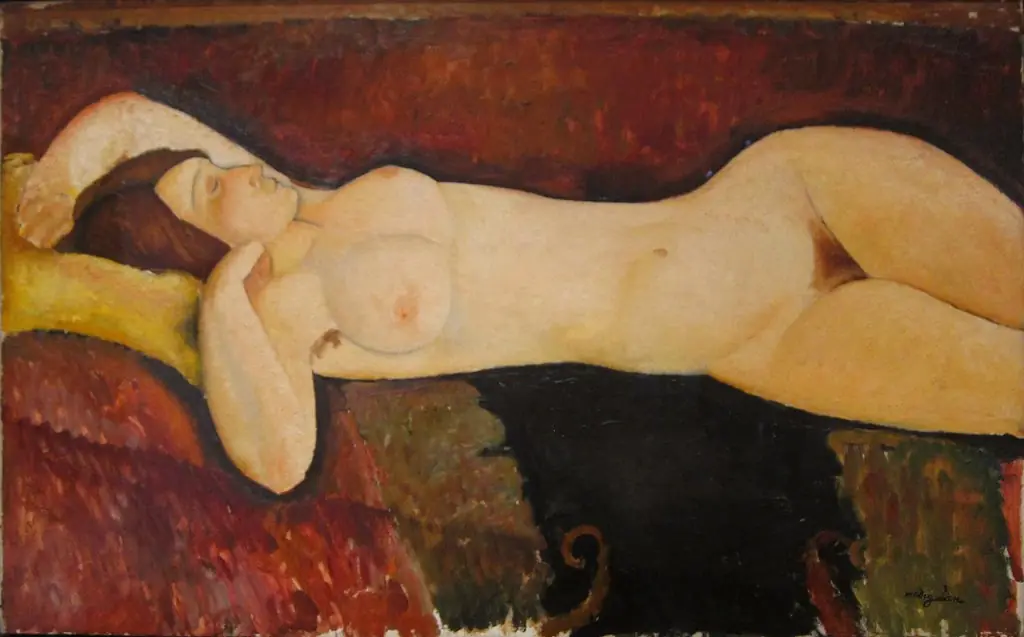
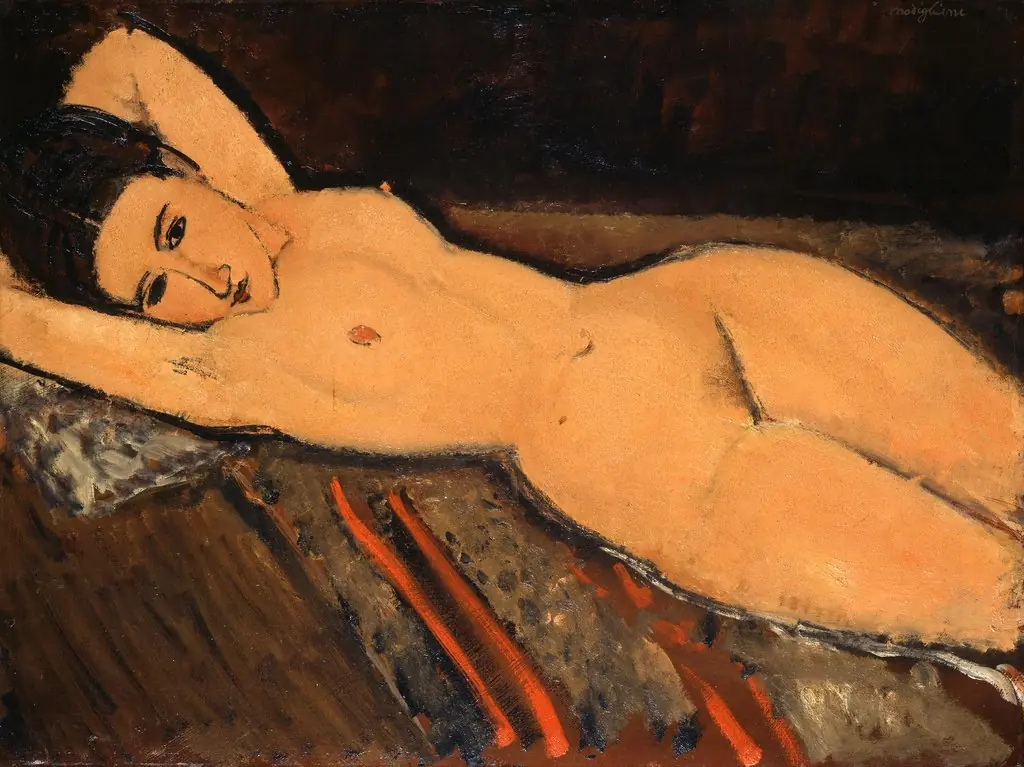
A woman lies nude on a couch, her body long and softly drawn, her dark eyes meeting yours. Modigliani painted this in 1918, working in the flat, stretched shapes he was known for, with warm, quiet color and soft edges that keep the figure gentle and alive. To see more, look up Amedeo Modigliani.
Subject & Meaning
The work is categorized as a genre nude, a tradition that Modigliani revisits to explore sensuality and modern representation of the female form.
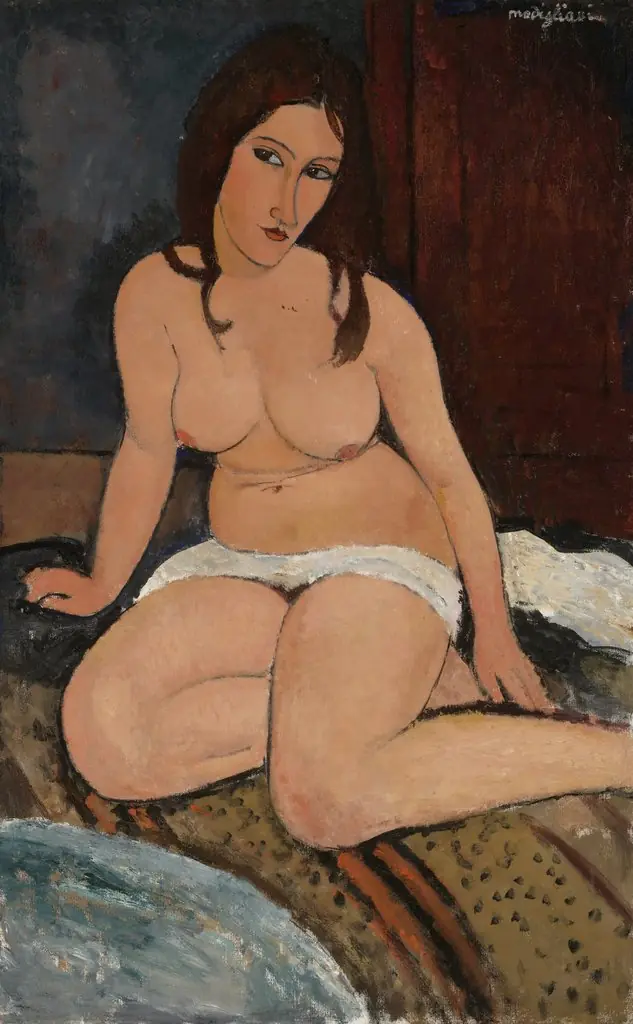
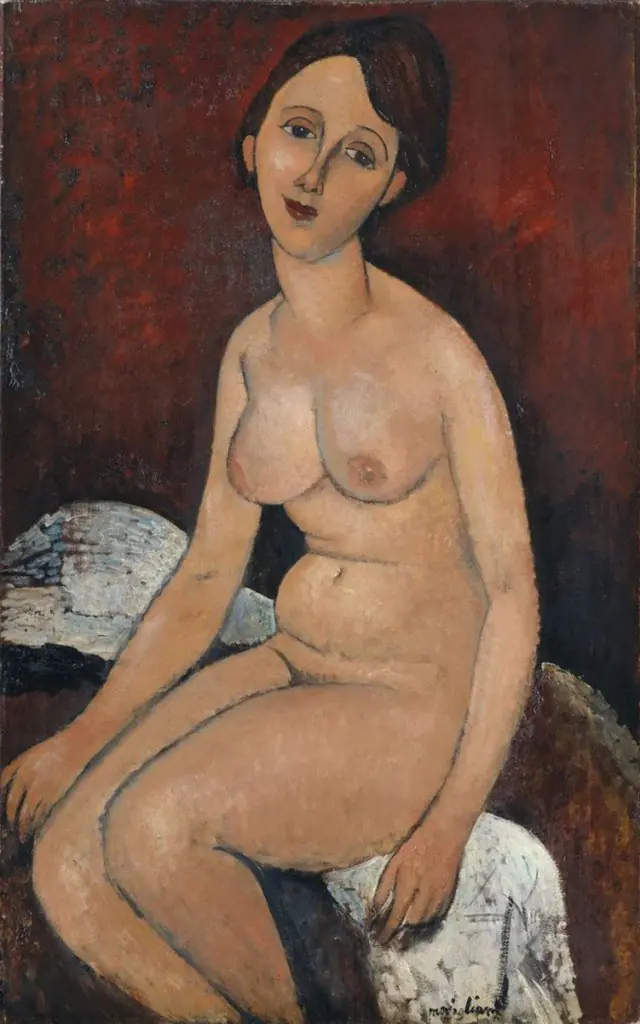
The painting shows a seated female nude reclining on a couch, her torso turned slightly toward the viewer. The composition emphasizes the curve of the mons pubis and the contours of the hips, presenting the body as the central subject. Modigliani renders the figure with simplified volumes and a muted palette, characteristic of his late portraiture.
The work is categorized as a genre nude, a tradition that Modigliani revisits to explore sensuality and modern representation of the female form. Its subject is thus a contemporary, intimate depiction of a woman’s anatomy, framed within the artist’s interest in elongated, stylized figures.
History & Provenance
The work was painted by Amedeo Modigliani in 1918. By June 1929 it had entered the Parisian collection of André de Coppet, who had acquired it through Galerie Lalot. De Coppet sold the painting that year to the American collector Chester Dale, who thereafter owned it in New York until his death in 1962. Dale bequeathed the canvas to the National Gallery of Art, Washington, D.C., where it remains.
Amedeo Modigliani's Nude on a Divan (1918) is currently held in the collection of the National Gallery of Art in Washington, D.C. The work entered the museum's holdings in 1963 as a bequest from Chester Dale (1883–1962), who had originally purchased the painting from Galerie Lalot in Paris in June 1929. Prior to Dale's acquisition, the canvas was owned by Andre de Coppet in Paris and Madame Castaing at the Château de Leves. The National Gallery of Art lists the painting within its permanent collection, where it remains on view or in storage as part of the Dale bequest. The artwork is cataloged as an oil on canvas measuring 60.2 by 91.7 centimeters.
Legacy
Painted in 1918, the work exemplifies Modigliani’s mature handling of the nude, presenting a stylized couch and a focused rendering of the mons pubis. After passing through the hands of Madame Castaing and Andre de Coppet, it was sold in June 1929 to Chester Dale, who later bequeathed it to the National Gallery of Art in 1963. Since then the canvas has been part of the museum’s permanent collection in Washington, D.C., where it is frequently cited in scholarship on early modernist portraiture and the artist’s exploration of sensual form.
Its continued display underscores its recognized place within Modigliani’s oeuvre and the broader study of 20th‑century nude painting.
Overview
Created in 1918, Nude on a Divan is an oil on canvas by Amedeo Modigliani that exemplifies the artist's mature style during his final years in Paris. The work depicts a female figure reclining on a divan, rendered with the elongated, sinuous contours characteristic of Modigliani's oeuvre. Her body is simplified into fluid, rhythmic forms, emphasizing a sense of softness and volume through warm, earthy tones.
The figure's gaze is direct and unblinking, featuring the artist's signature almond-shaped eyes, which convey a quiet intensity rather than overt emotion. Composed with a flattened perspective and soft, blurred edges, the painting minimizes background detail to focus entirely on the subject's physical presence. This piece belongs to a series of nudes Modigliani produced between 1916 and 1919, a period where he sought to reconcile the sensuality of the human form with a modernist abstraction.
The work reflects his unique synthesis of African sculpture influences, Renaissance portraiture, and contemporary French modernism, securing its place as a definitive example of his contribution to early 20th-century art.
Technique & Style
Modigliani's distinctive artistic vocabulary is evident in the painting's execution. He employed a technique of soft, blended edges, which contributes to the figure's gentle and lifelike presence. The artist's characteristic use of flattened, elongated forms is apparent, complemented by a palette of warm, subdued colors that enhance the overall quietude of the composition and the figure's serene demeanor.
Own this work as a print
Artist & collection

Artist
Amedeo Clemente Modigliani (US: ; Italian: ; 12 July 1884 – 24 January 1920) was an Italian painter and sculptor of the École de Paris who worked mainly in France.