Artwork
Chaim Soutine
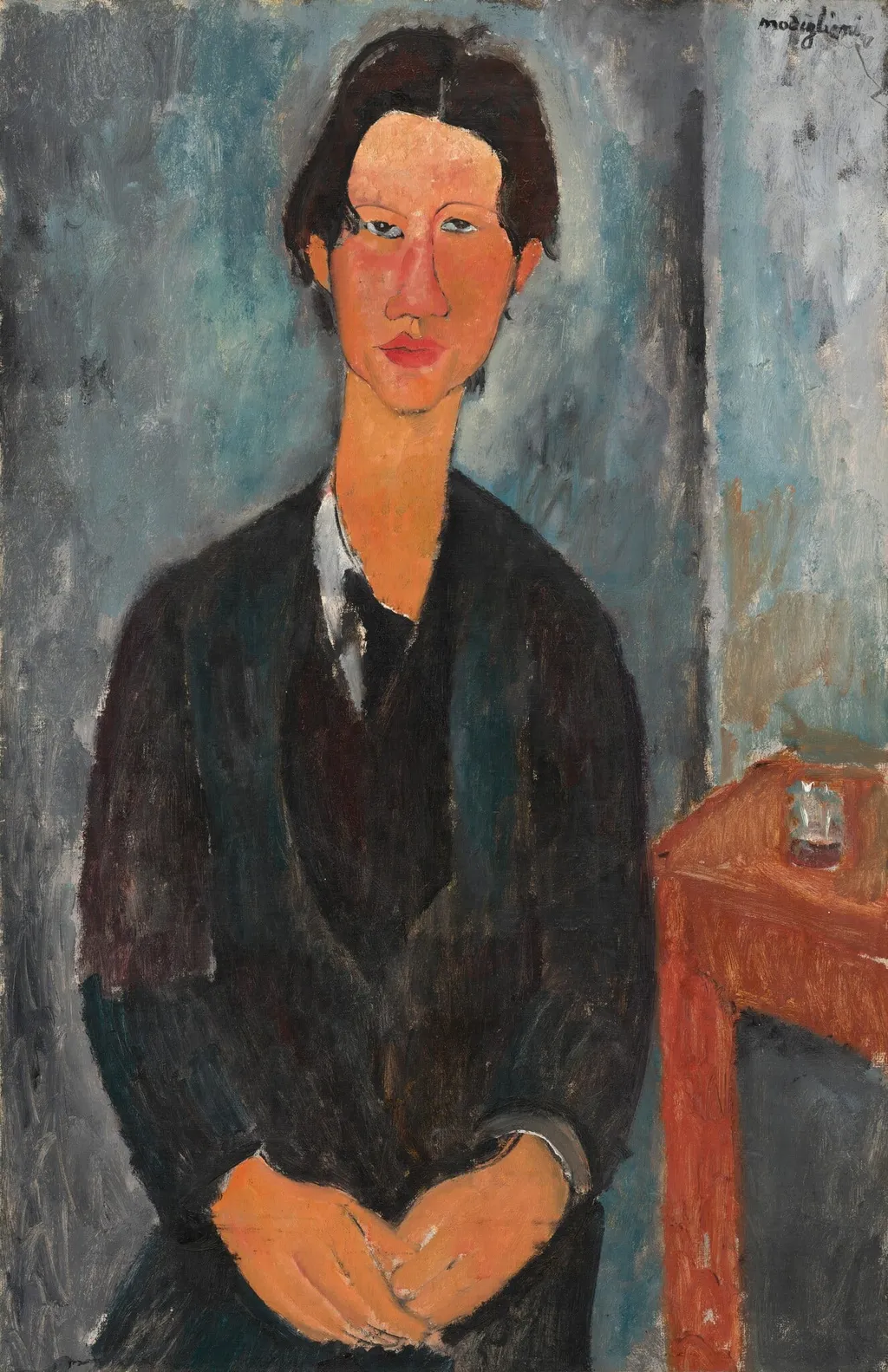
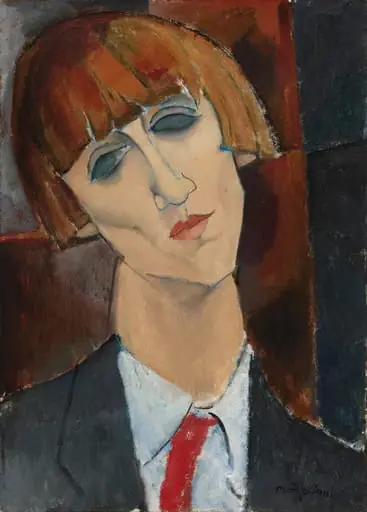
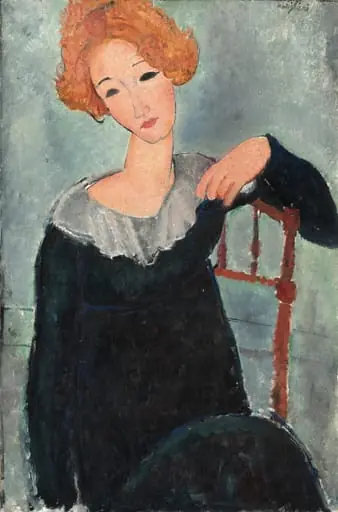
Chaim Soutine is an oil painting by Amedeo Modigliani. It dates from 1918 and is held in the collection of the National Gallery of Art.
- Inscription
- Inscribed:upper right: modigliani
About this work
Subject & Meaning
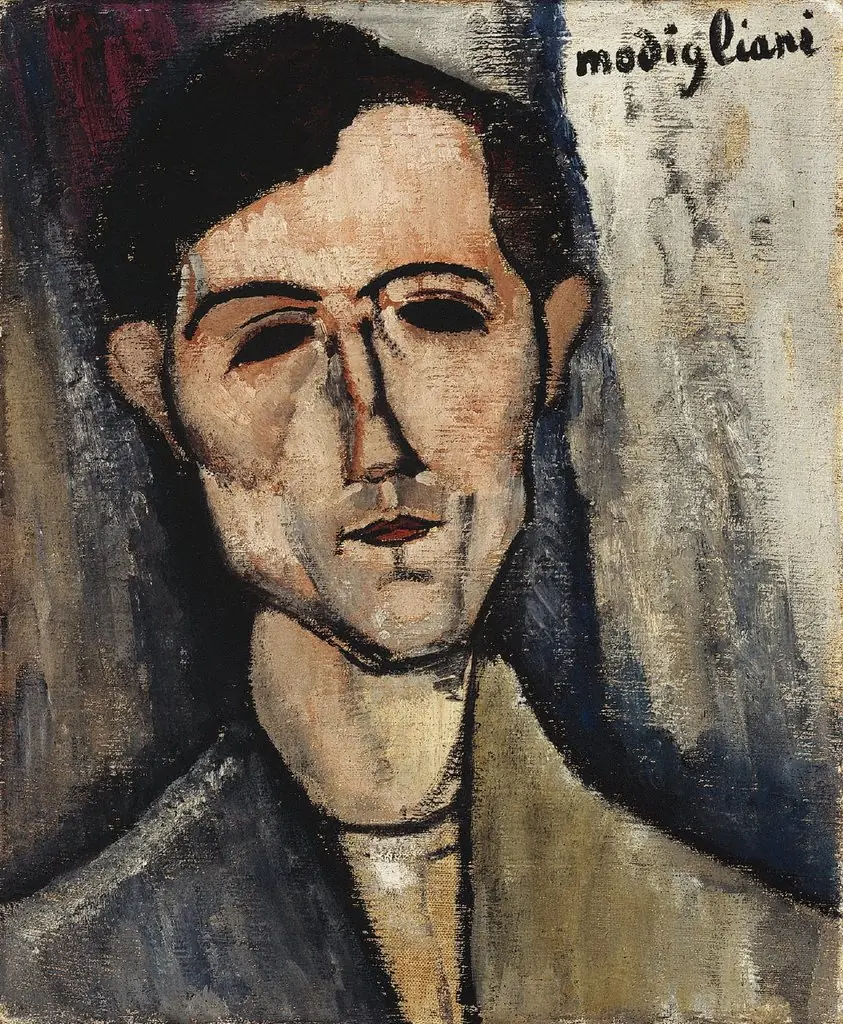
Despite the somber expression, the softness of the color palette is viewed as a representation of the painter's deep affection for his model.
Executed in 1916, this oil painting depicts the Russian artist Chaïm Soutine, a close friend of the creator, Amedeo Modigliani. The subject is portrayed with disheveled clothing and heavily marked facial features, diverging from Modigliani's typical convention of leaving eyes blank; here, the eyes are rendered as half-closed. This specific anatomical treatment is interpreted as conveying the despair and distress shared by both men, characterizing them as 'cursed artists' living in poverty in Paris.
Despite the somber expression, the softness of the color palette is viewed as a representation of the painter's deep affection for his model. The work functions as an intimate document of the bond between two struggling contemporaries within the Parisian art scene.
History & Provenance
The work, a portrait of Chaim Soutine painted by Amedeo Modigliani in 1916, was created as an independent portrait rather than a commissioned piece. Its early ownership passed from Léopold Zborowski in Paris to Jacques Netter, then to Étienne Bignou, who facilitated its sale in 1928 to the London dealers Reid & Lefèvre, with a half‑share held by de Hauke & Co. in New York. The painting was resold on 21 May 1929 through Bignou to collector Chester Dale, who later bequeathed it to the National Gallery of Art in Washington, D.C., where it remains in the museum’s collection.
The painting has been part of the National Gallery of Art in Washington, D.C., since 1963, when it entered the collection as part of the bequest of Chester Dale (1883–1962), the American collector who had owned it. Its earlier provenance traces through several dealers and collectors: from Léopold Zborowski (1889–1932) in Paris, to Jacques Netter in Paris, then in 1928 through Étienne Bignou in Paris to Alex Reid & Lefèvre in London, with a half share later held by de Hauke & Co. in New York. On 21 May 1929 it was sold through Bignou to Chester Dale in New York, with archival records from the Lefèvre archives at the Hyman Kreitman Research Centre, Tate Britain, documenting the transaction.
No further exhibition history beyond its current display at the National Gallery of Art is recorded in the available sources.
Context
The 1916 oil portrait of Chaim Soutine by Amedeo Modigliani, now in the National Gallery of Art in Washington, D.C., exemplifies the close friendship between the two Parisian modernists and the shared ‘maudits’ condition they experienced. Scholarship highlights the work’s distinctive rendering of Soutine’s gaze, the meticulously worked eyes, and the subdued palette as visual cues to both artists’ financial hardship and emotional intensity. The painting’s provenance, from Léopole Zborowski to Chester Dale’s bequest, underscores its circulation among avant‑garde collectors.
Critical reception has emphasized its role as a bridge between Modigliani’s stylised portraiture and the expressive realism later associated with Soutine, situating the portrait within the broader narrative of early‑twentieth‑century trans‑national artistic networks.
Legacy
The 1916 oil on canvas portrait of Chaim Soutine by Amedeo Modigliani measures about 92 × 60 cm and portrays the sitter with a direct gaze and pronounced facial features, reflecting the artists’ close friendship and precarious circumstances in Paris. The work entered the National Gallery of Art, Washington, D.C., through Chester Dale’s 1963 bequest and has been part of the museum’s collection since then. Its composition, noted for the treatment of eyes and muted palette, continues to inform scholarship on Modigliani’s portraiture and the dynamics of early‑20th‑century avant‑garde circles.
Overview
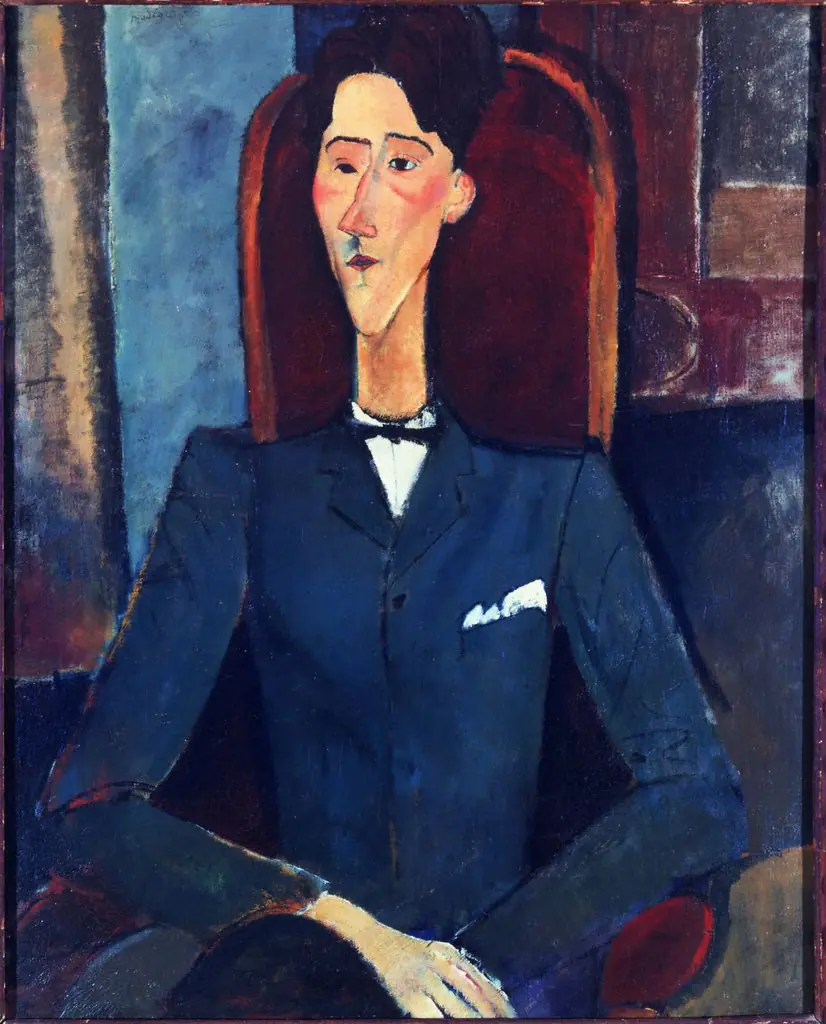
This oil on canvas painting by Amedeo Modigliani depicts his friend and fellow artist, Chaïm Soutine. The portrait presents Soutine seated, dressed in a suit, and engaging the viewer with a direct gaze. Created as part of Modigliani's extensive series of portraits featuring his acquaintances, this work exemplifies his consistent focus on the individuals within his immediate social and artistic circle in early 20th-century Paris.
Technique & Style
Modigliani rendered this portrait in oil on canvas, employing a direct and unadorned approach characteristic of his work. The composition is simple, focusing intently on Soutine's seated figure and his direct engagement with the viewer. This artistic choice highlights Modigliani's preference for depicting his subjects without extraneous detail, instead emphasizing their individual presence through a clear, focused presentation. The simplicity aims to capture the essence of the sitter.
Own this work as a print
Artist & collection

Artist
Amedeo Clemente Modigliani (US: ; Italian: ; 12 July 1884 – 24 January 1920) was an Italian painter and sculptor of the École de Paris who worked mainly in France.