Artwork
On the Clyde, 1917-1918: Lifting an Oil Tank into a Train Ferry
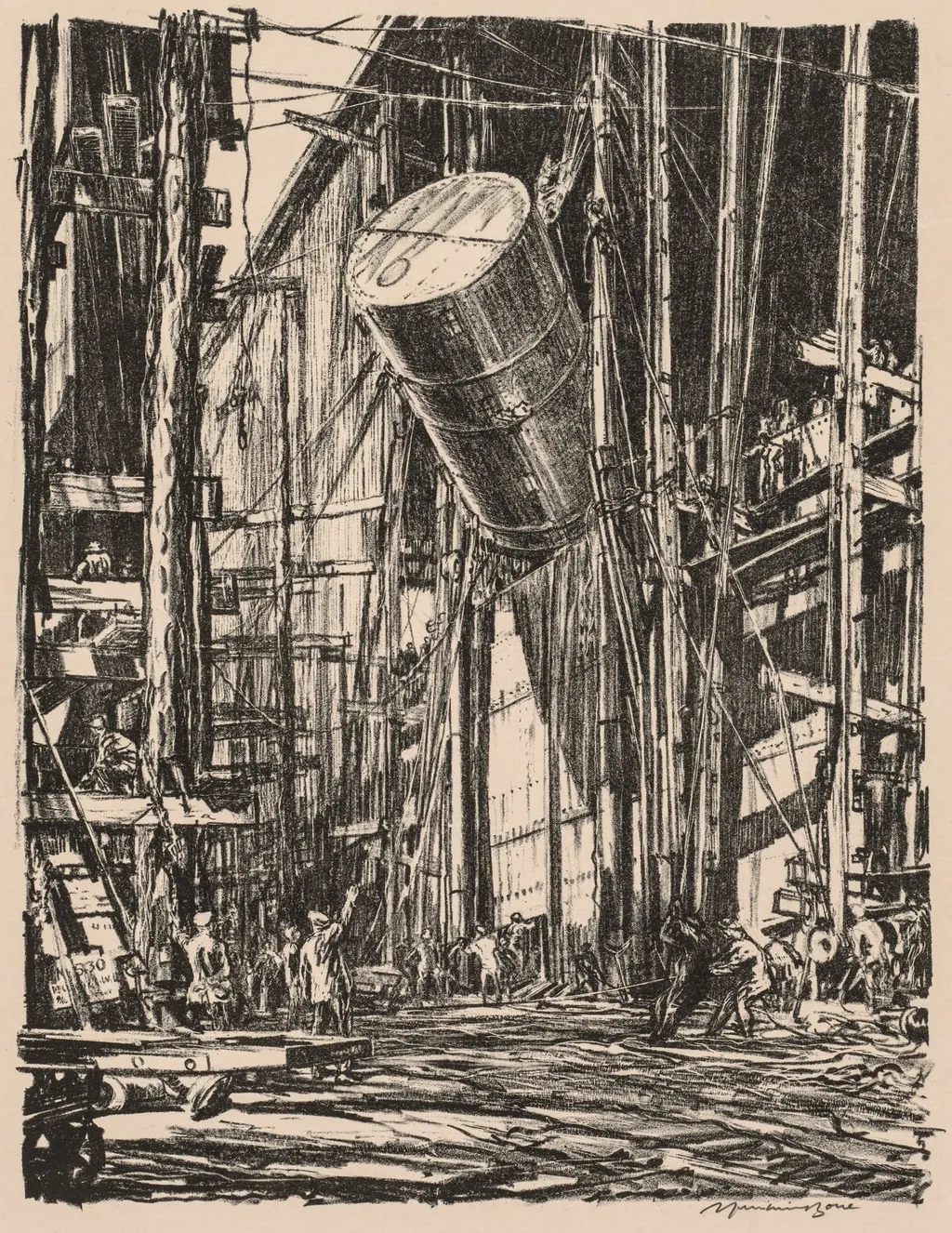
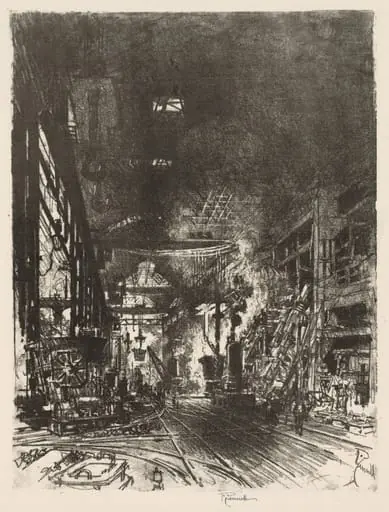
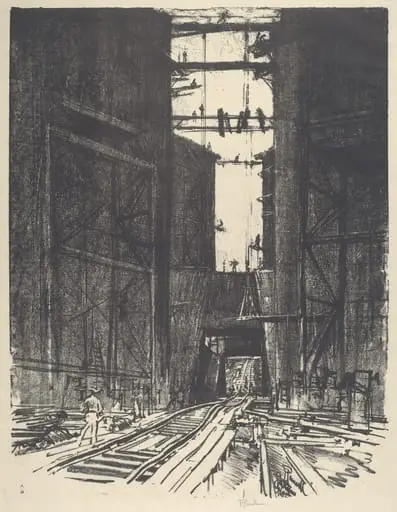
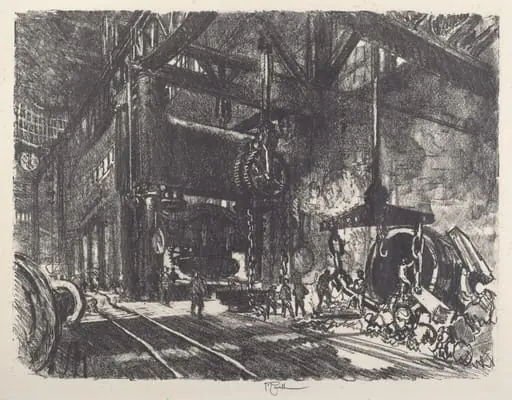
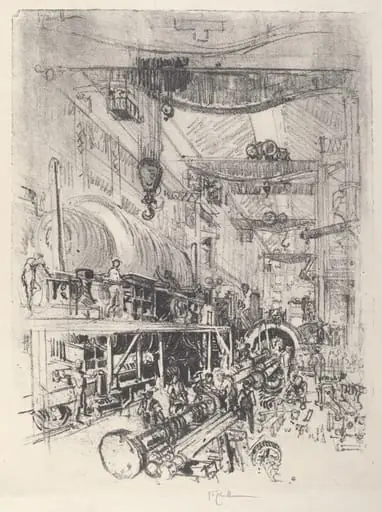
On the Clyde, 1917-1918: Lifting an Oil Tank into a Train Ferry is a print by Muirhead Bone. It dates from 1918 and is held in the collection of the Cleveland Museum of Art.
- Accession no.
- 1923.229
- Credit line
- Dudley P. Allen Fund
About this work
Overview
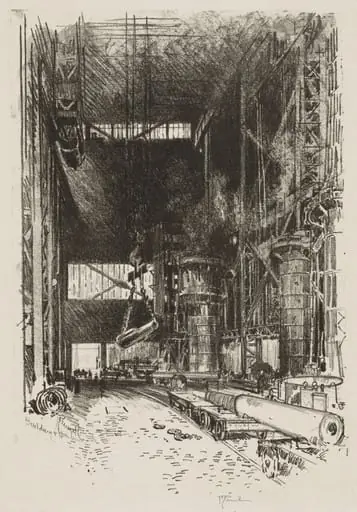
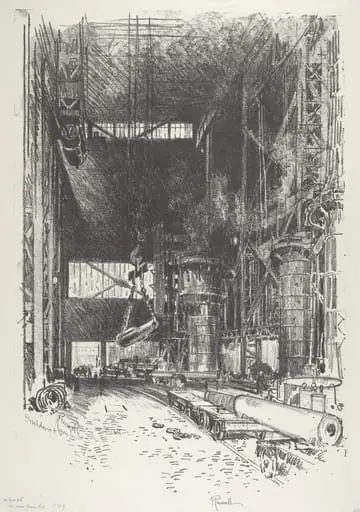
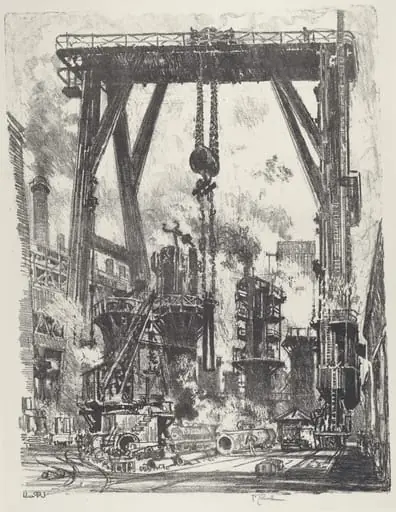
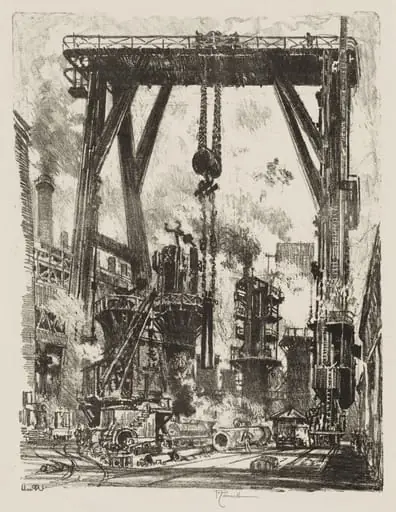
The scene portrays the logistical effort of loading an oil tank onto a train ferry, reflecting the critical role of Scottish shipyards in the war effort.
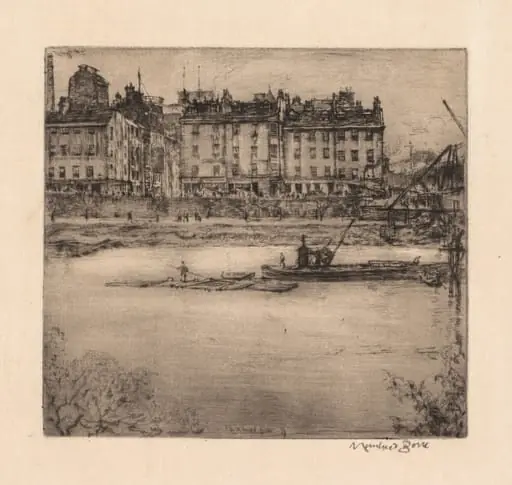
Created in 1918, this print by Scottish artist Muirhead Bone captures a moment of industrial labor on the River Clyde during World War I. Bone, recognized for his precise etchings of architecture and machinery, documented wartime production as an official war artist. The scene portrays the logistical effort of loading an oil tank onto a train ferry, reflecting the critical role of Scottish shipyards in the war effort.
Subject & Meaning
The image centers on the physical labor of moving a massive cylindrical oil tank between dock and vessel. Workers are shown in varied positions, on the ground, atop the tank, and aboard the ferry, emphasizing coordinated effort. The subject underscores the quiet heroism of industrial labor during wartime, where infrastructure and supply chains became as vital as frontline combat. No grand gestures are depicted; meaning emerges from the accumulation of focused, mundane tasks.
Technique & Style
Bone employed etching to achieve fine detail and tonal contrast, using chiaroscuro to model forms and suggest depth. Lines are crisp yet varied in weight, defining machinery, figures, and architectural elements with clarity. The composition directs attention to the tank’s center, surrounded by overlapping figures and structures that convey spatial complexity without clutter. His method aligns with the Etching Revival’s emphasis on craftsmanship and observational accuracy.
History & Provenance
The print was produced during Bone’s tenure as a British war artist, commissioned to record industrial and military activity. It was created in 1918, near the end of the war, and entered The Cleveland Museum of Art’s collection through established acquisition channels. Its preservation reflects early 20th-century interest in documenting the home front’s contribution to the war, particularly in industrial regions like the Clyde.
Context
The Clyde was among Britain’s most vital shipbuilding centers, producing vessels and transporting war materials. In 1917–1918, demand for oil to fuel naval and military operations surged, making the movement of storage tanks a routine but essential task. Bone’s work situates this labor within the broader narrative of industrial mobilization, capturing how civilian infrastructure supported the war machine.
Legacy
Bone’s prints from this period remain important records of wartime industry, valued for their documentary precision and restrained aesthetic. Unlike propagandistic imagery, his work avoids glorification, instead offering a quiet testament to labor and engineering. His approach influenced later generations of artists documenting industrial and social change, establishing a precedent for observational realism in modern printmaking.
Own this work as a print
Artist & collection
Artist
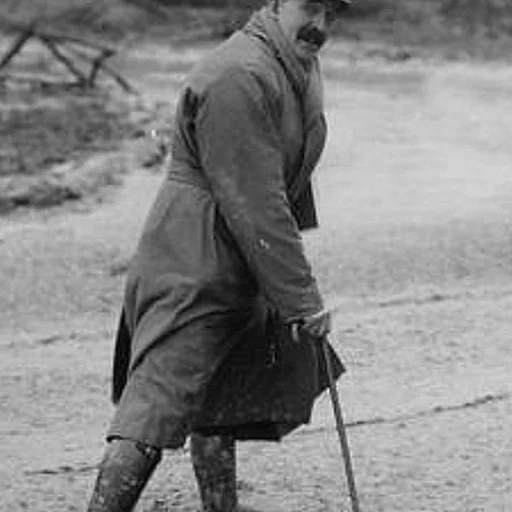
Sir Muirhead Bone (23 March 1876 – 21 October 1953) was a Scottish etcher and watercolourist who became known for his depiction of industrial and architectural subjects and his work as a war artist in both the First and Second World Wars.