
Subject
Factory
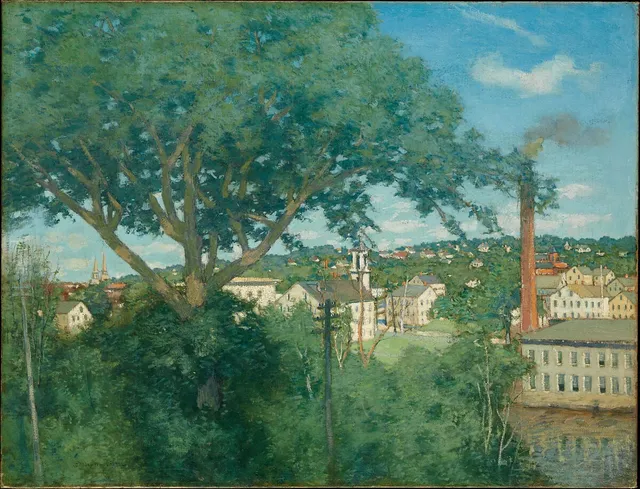
Factory is a subject in art. The gallery holds 57 works in this subject in art, including works by Camille Pissarro, Julian Alden Weir and Paul Cézanne.
A factory, manufacturing plant or production plant is an industrial facility, often a complex consisting of several buildings filled with machinery, where workers manufacture items or operate machines which process each item into another. They are a critical part of modern economic production, with the majority of the world's goods being created or processed within factories.
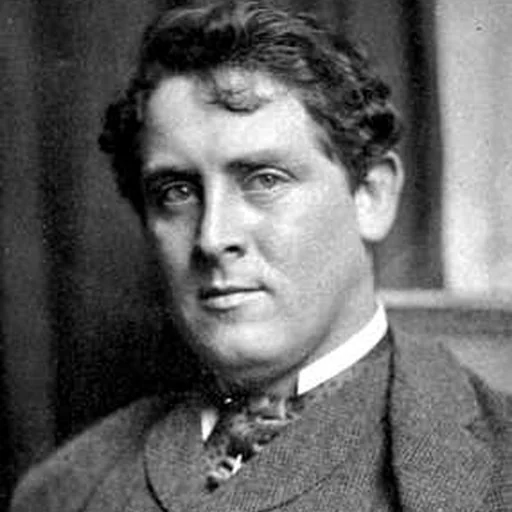
Key artists

Overview
A factory, also known as a manufacturing or production plant, is an industrial facility where workers operate machinery to manufacture items or process raw materials into finished goods. As the critical site of modern economic production, the factory is characterized by a complex of buildings filled with heavy equipment and organized around the division of labor. The concept emerged as a distinct spatial and economic entity separate from the household or small workshop, driven by the capital and space requirements of the Industrial Revolution. Today, the factory remains the primary engine of global manufacturing, producing the vast majority of the world's goods.
Iconography & meaning
In visual culture, the factory carries heavy social and economic symbolism, representing the shift from agrarian and craft-based livelihoods to mechanized, industrialized society. The separation of the workspace from the domestic sphere turned the factory into a symbol of routine, evolutionized labor, and the social stratification between laborers, overseers, and owners. Iconographically, features such as the chimney, the sprawling shed roof, and the assembly line have become emblematic of industrial power, while also signifying the displacement of traditional artisans and the resulting social distress of the working class. The factory thus embodies both the promise of mass productivity and the alienation of the modern wage worker.
Across movements & periods
The treatment of the factory in art and historical record tracks its architectural and economic evolution. Early production concentrated in the household or small workshop before evolving into the manufacture, which relied on manual labor with minimal machinery. During the early Industrial Revolution in the late 18th century, factories were typically tall, multi-story buildings. By the late 19th century, the introduction of steam power and line-shafting allowed for a transition to lower, sprawling single-story halls with shed roofs. The Second Industrial Revolution brought the assembly line and mass production, a concept further revolutionized in the early 20th century by Henry Ford. By the late 20th century, the factory in Western art shifted again, reflecting automation, industrial robots, and the decentralization of production into smaller, specialized units or offshored facilities.
Notable depictions
While the collection holds numerous works depicting the motif, the historical and canonical development of the factory itself highlights several foundational sites that have defined its representation. The Venice Arsenal, founded in 1104, stands as an early prototype of the modern factory, mass-producing ships using prefabricated, interchangeable parts centuries before the Industrial Revolution. In England, Richard Arkwright's Cromford Mill, established in 1771, and John Lombe's Silk Mill, founded in 1721, represent the earliest true factories. On the European continent, Johann Gottfried Brügelmann's textile factory in Ratingen, founded in 1783, and the Hard spinning mill in Winterthur, founded in 1801, marked the spread of the factory system beyond Britain.
Legacy
The factory system fundamentally restructured modern society, replacing independent artisans and cottage industries with a model of centralized, mechanized production. This transition caused profound social distress among displaced craftsmen, leading to historical doubts about the necessity of factory production. Over time, the factory's legacy has continued to evolve through rationalization, globalization, and automation. In Western Europe, the number of factory workers has declined significantly, while productivity has surged through work intensification and technological advancement. The physical and social space of the factory, once the center of urban working-class life, has largely been outsourced to low-wage countries or replaced by highly specialized, automated facilities, leaving a cultural afterlife that grapples with deindustrialization and the transformation of labor.
Works
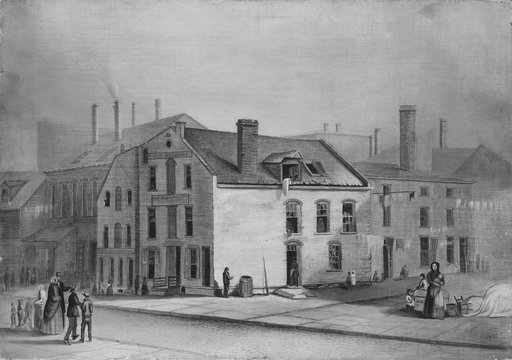
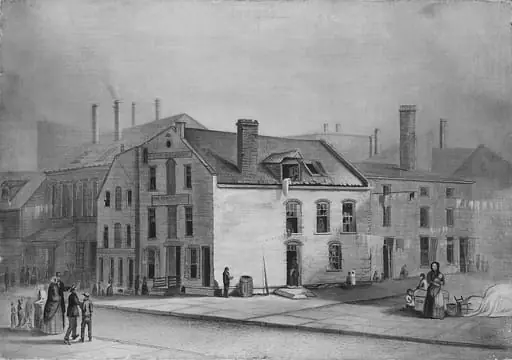 Old Brewery, Five Points Mission, New York
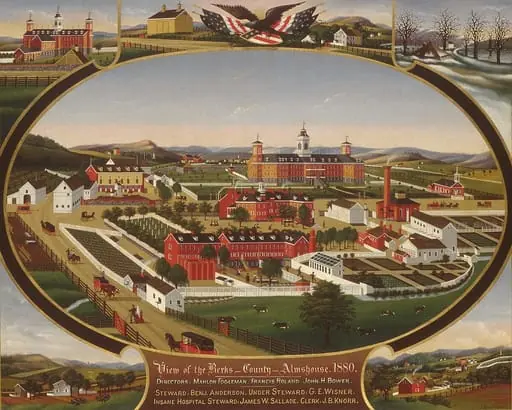 Berks County Almshouse, 1880
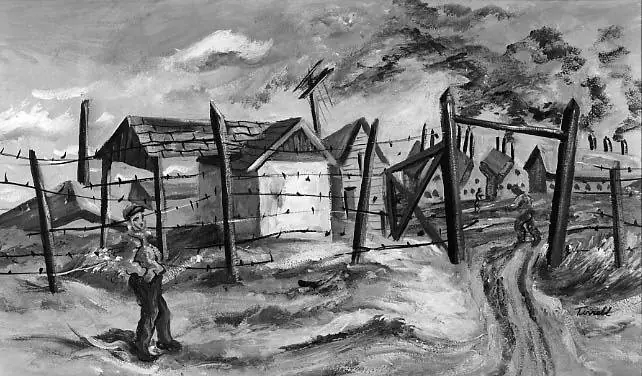 Industrial Landscape
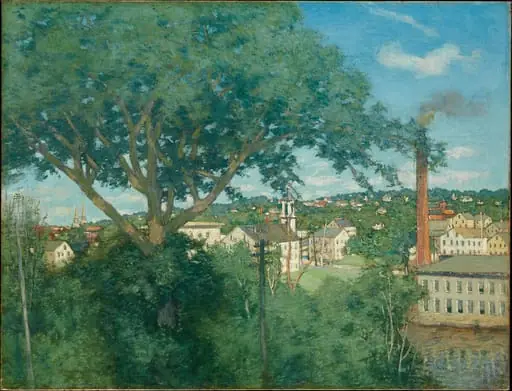 The Factory Village
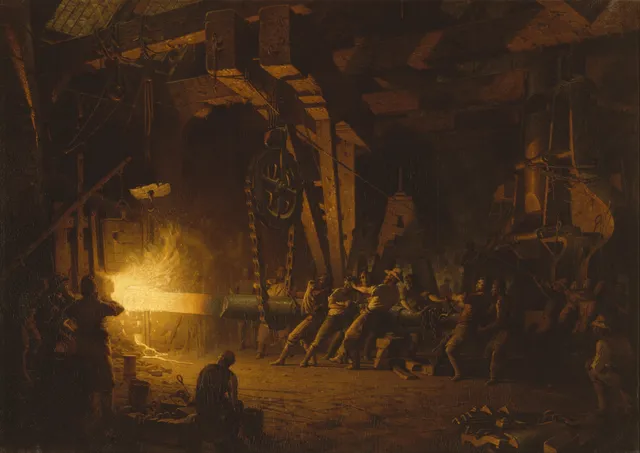
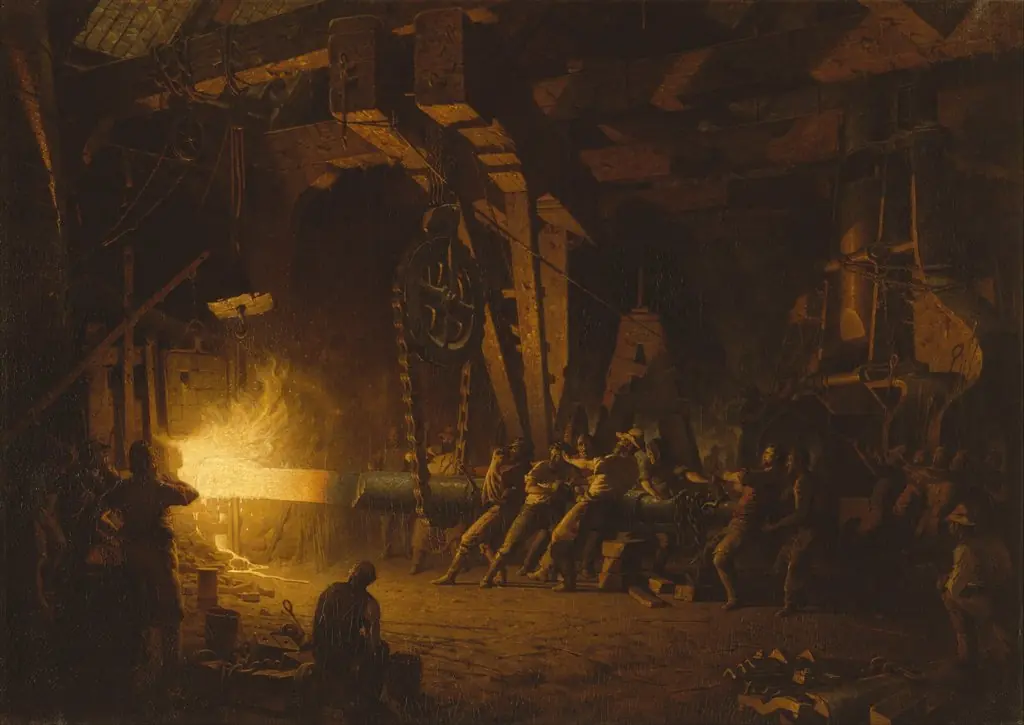 Forging the Shaft
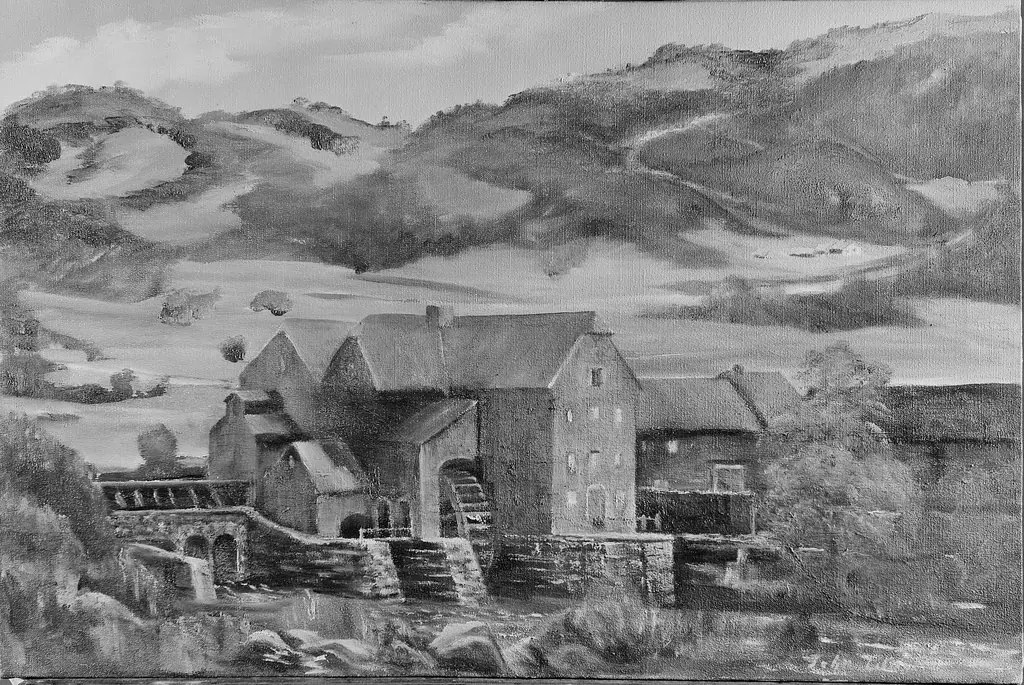 The Old Factory
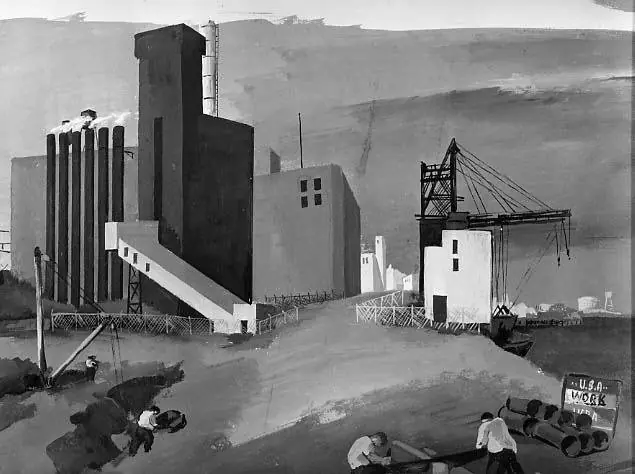 Waterfront
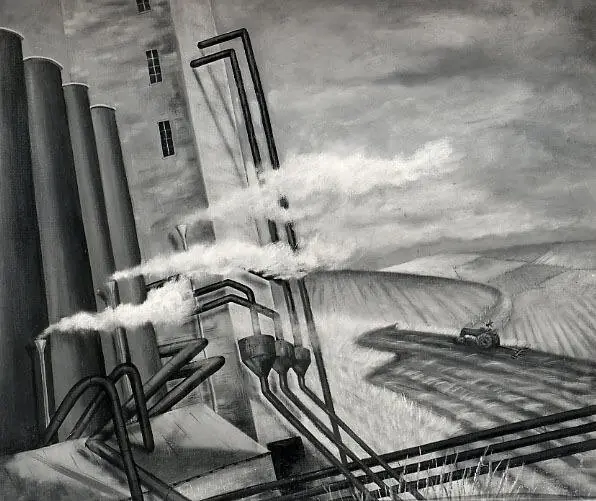 National Defense
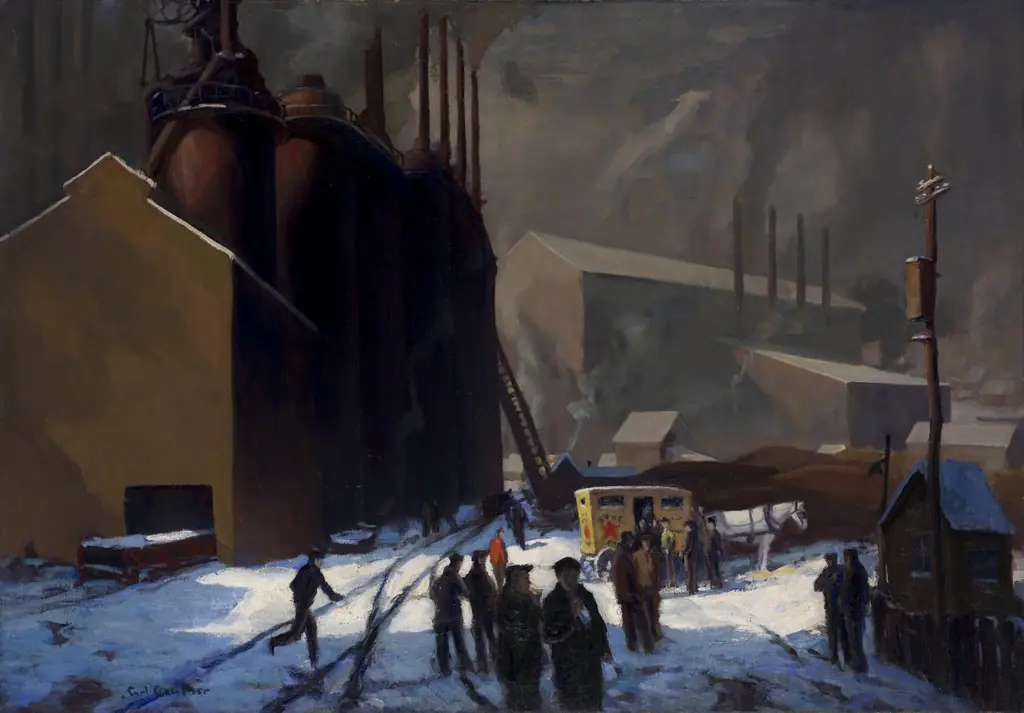 The Pie Wagon
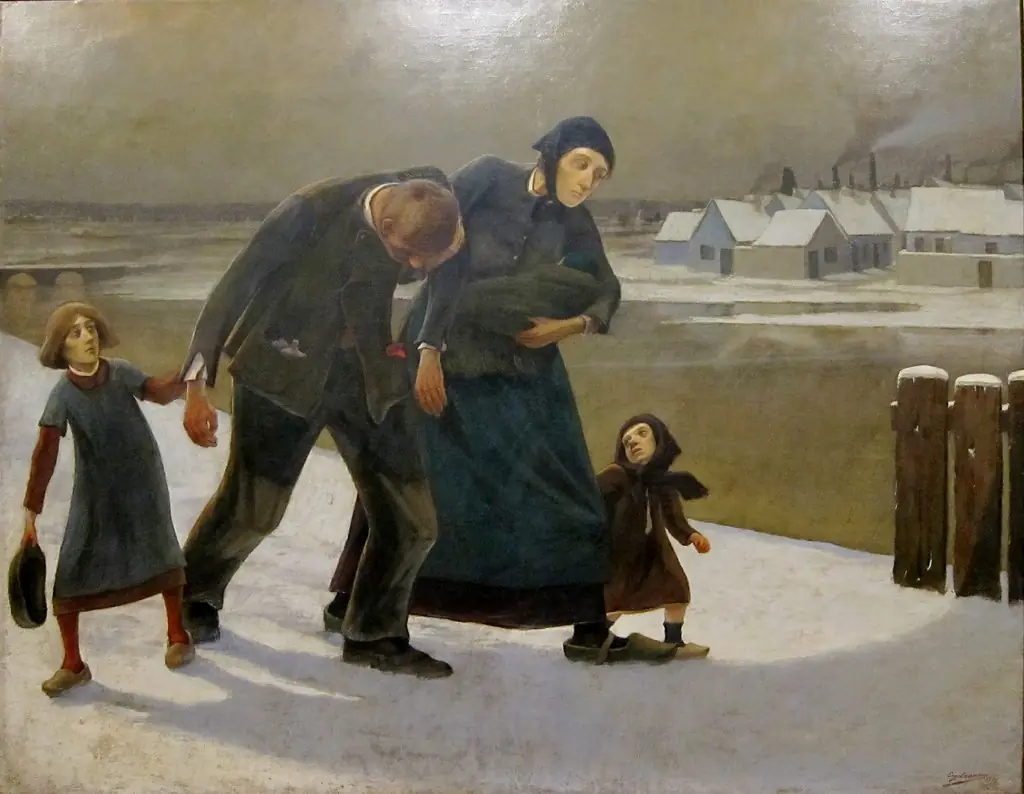 The Drunkard
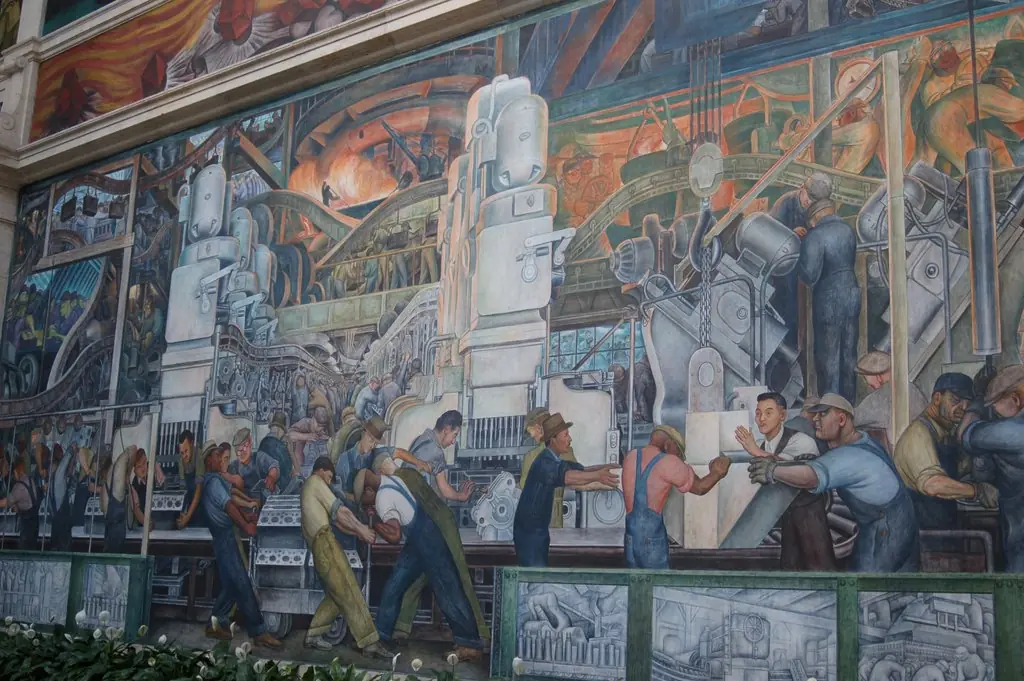 Man and Machinery
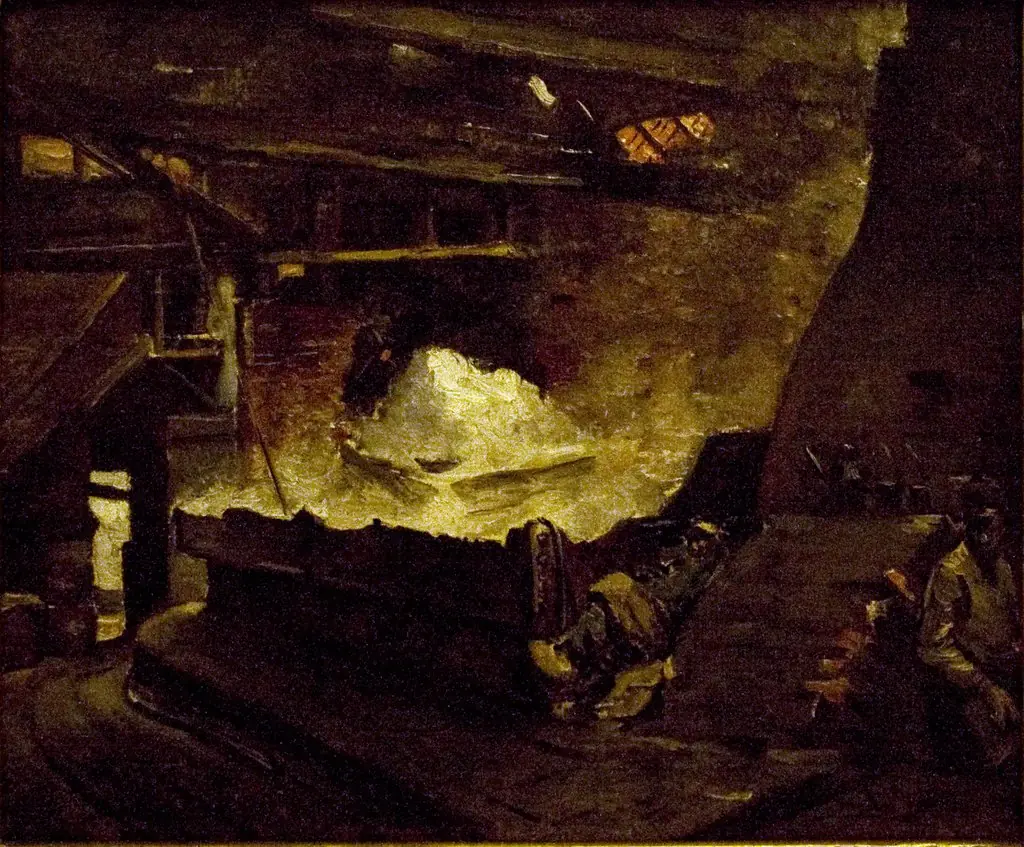 In a Salt Refinery at Rupelmonde
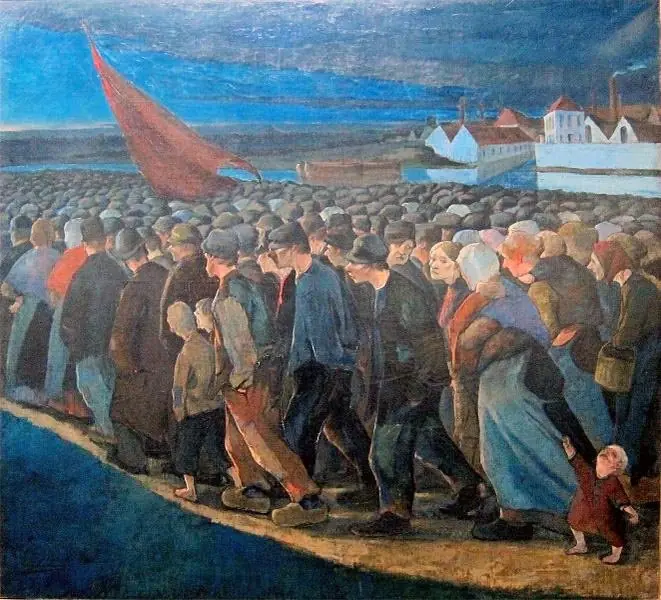 Un soir de grève
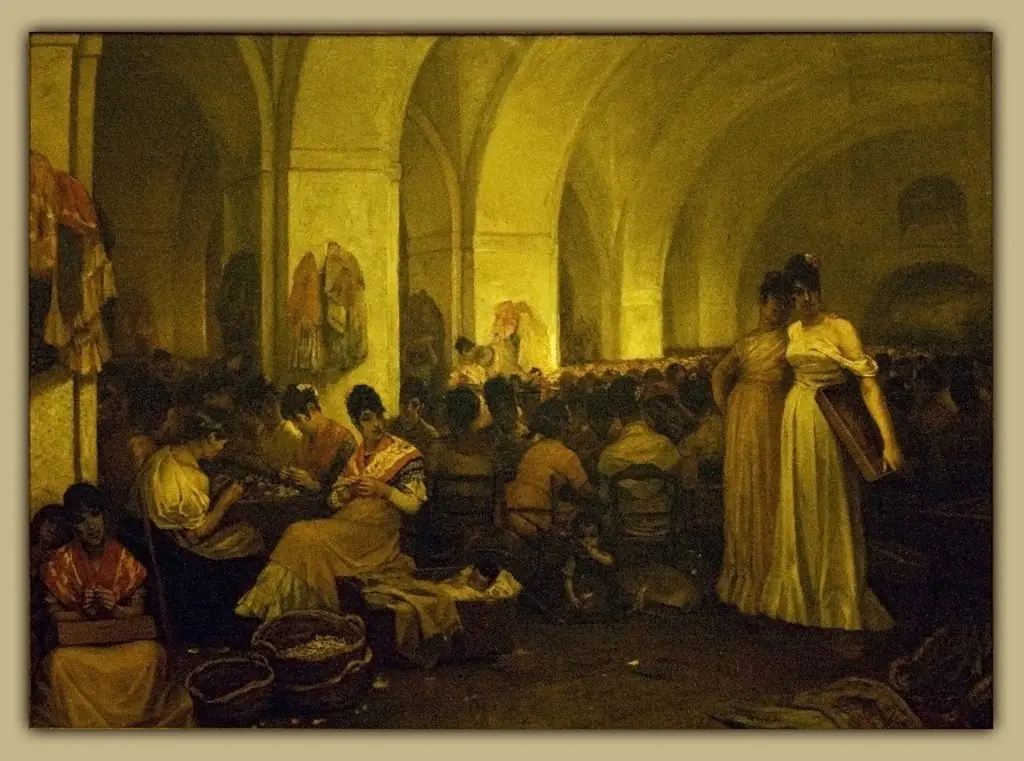 Tobacco Factory, Seville
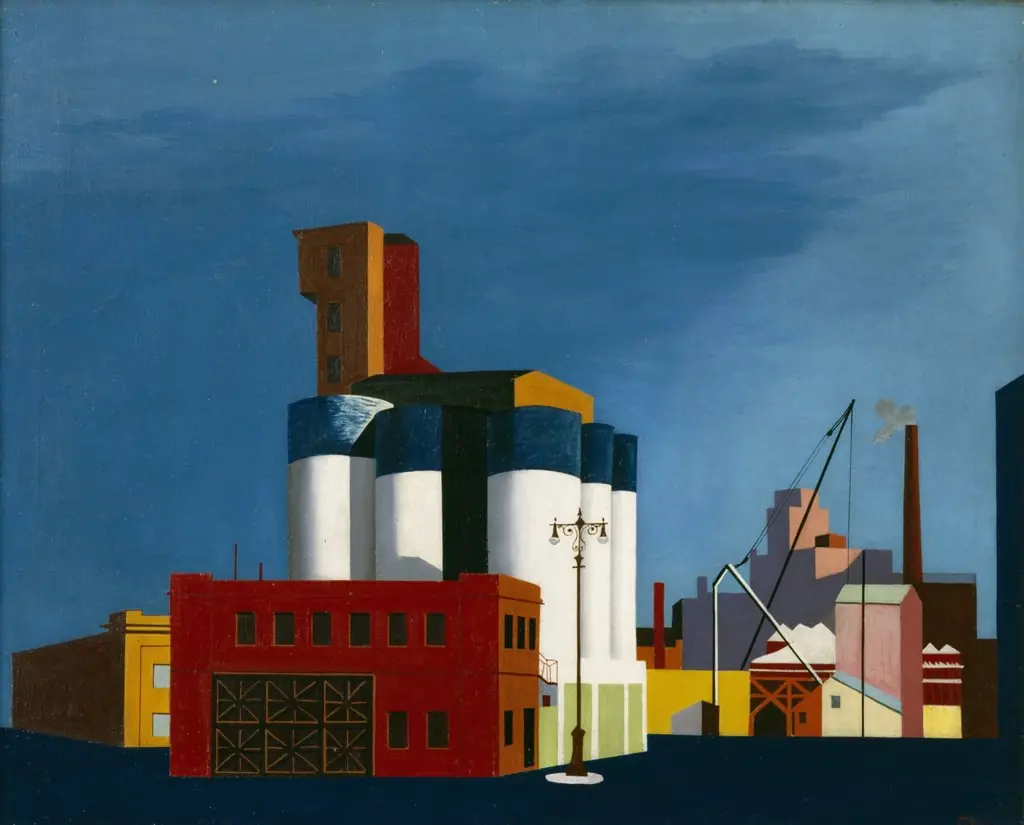 Waterfront
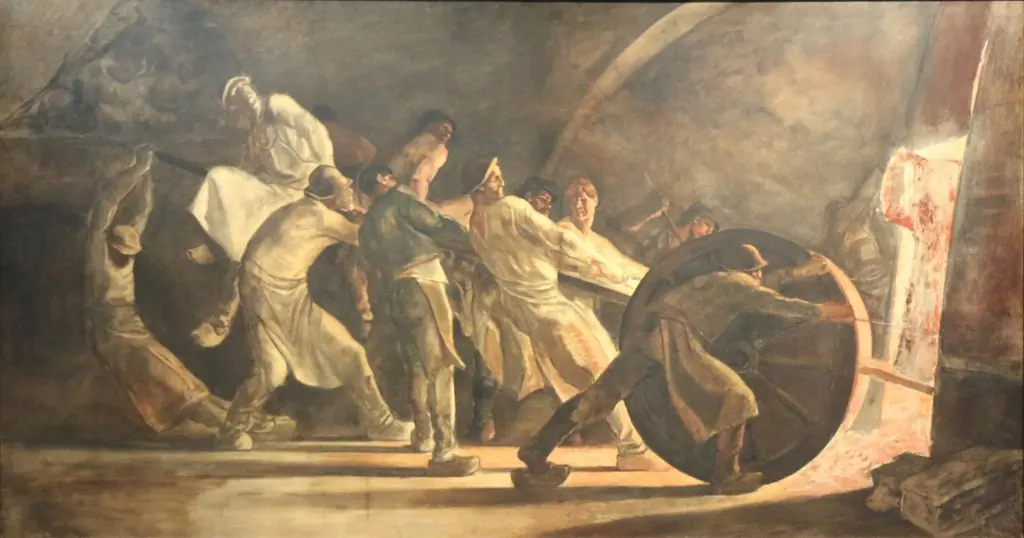 Removal of a Broken Crucible
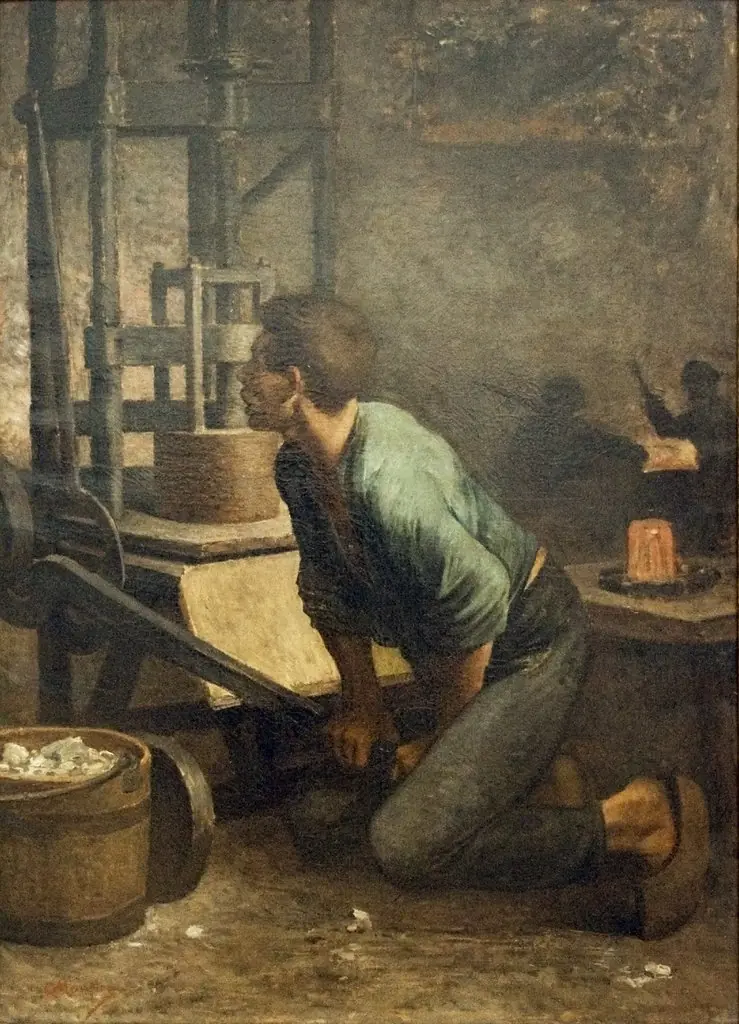 Man at the Press
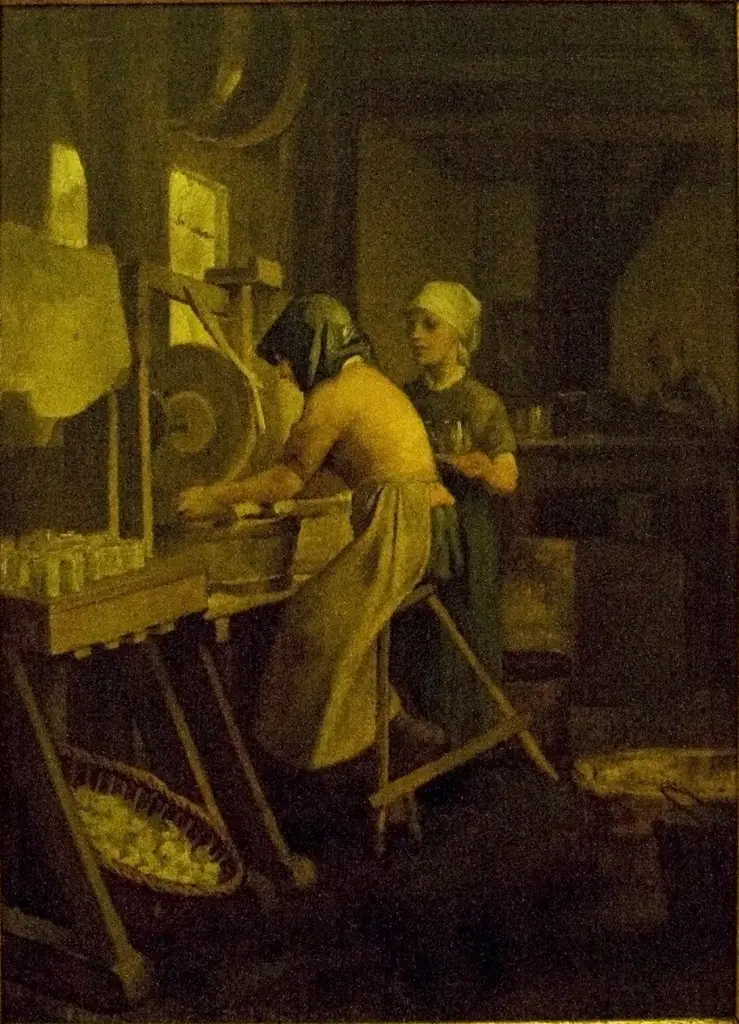 Women Working in a Glass Factory
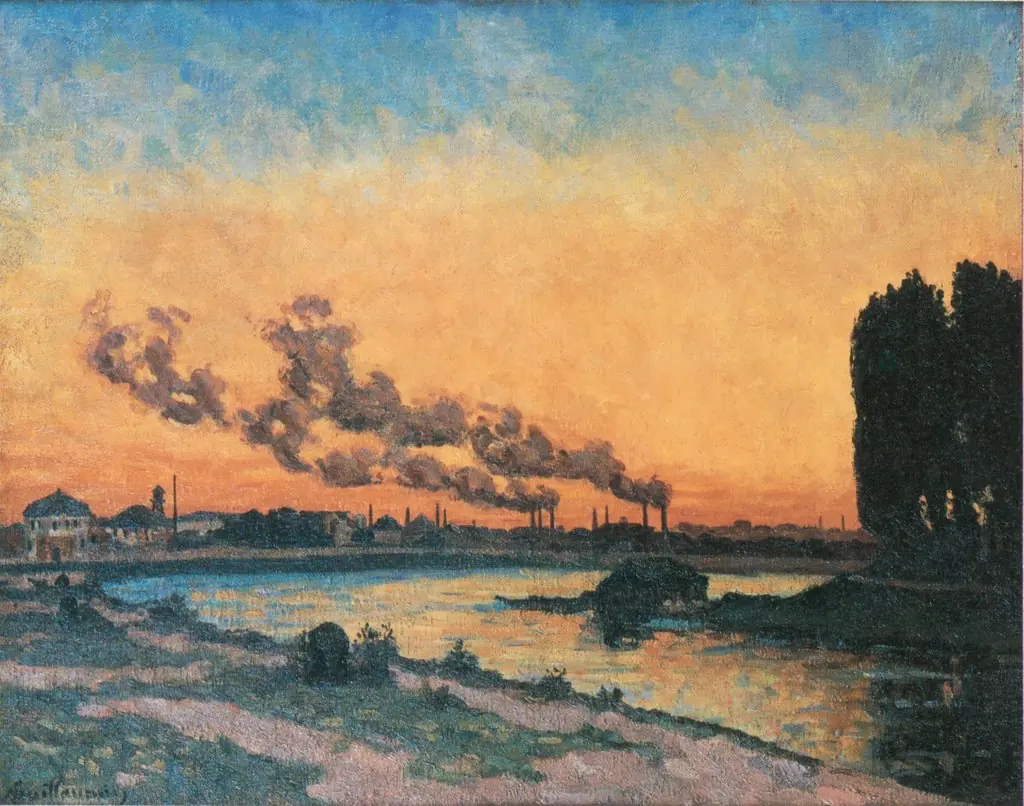 Soleil couchant à Ivry
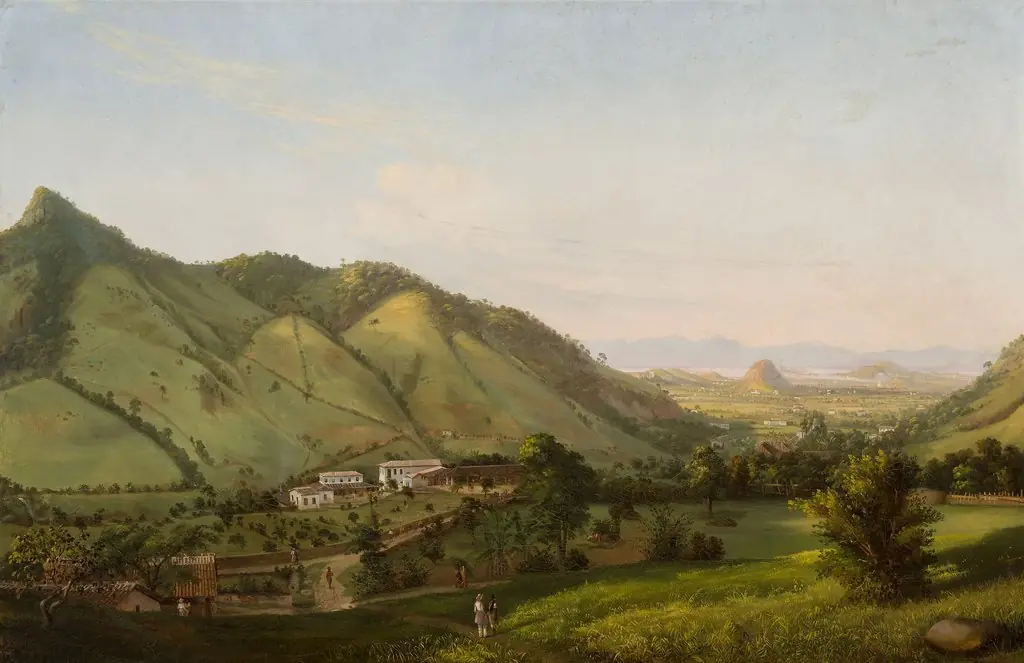 Meuron factory in Andaraí, Río de Janeiro
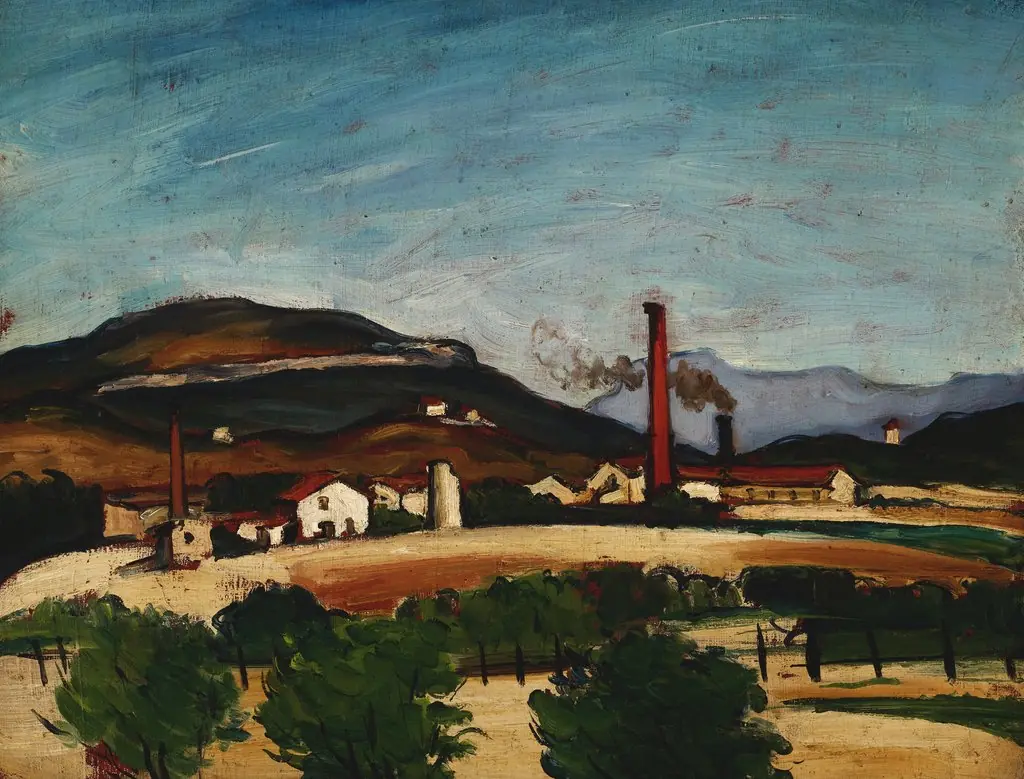 Factories near Mont de Cengle
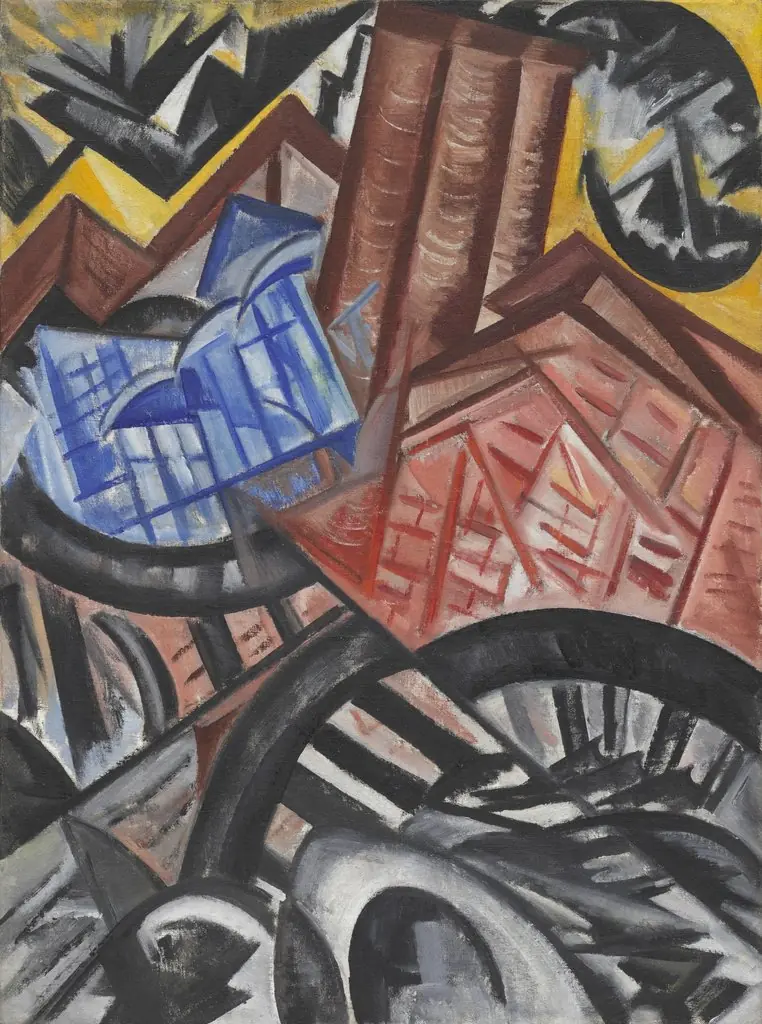 Factory and the Bridge
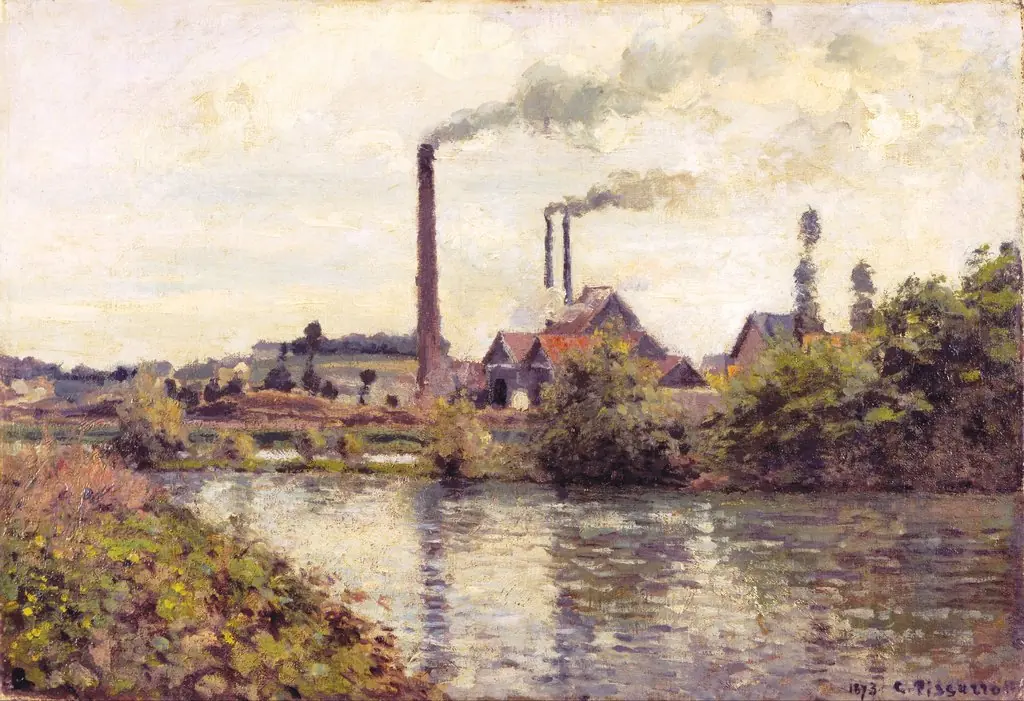 The Factory at Pontoise
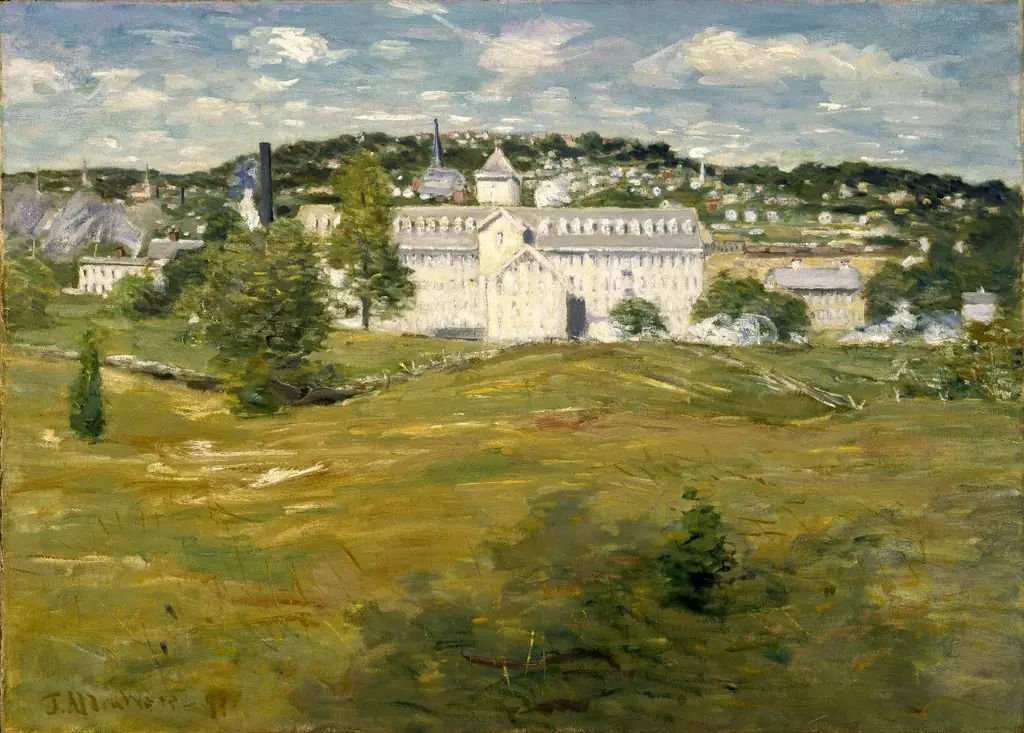 Willimantic Thread Factory
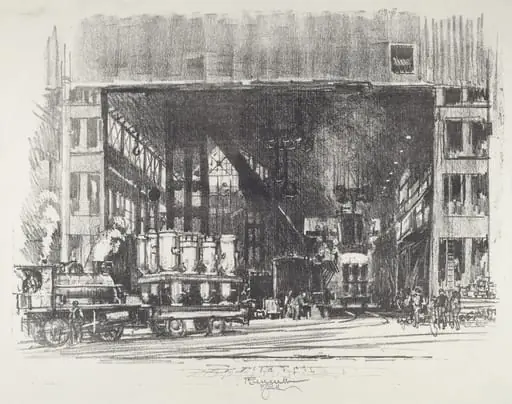 The Urns, Casting Big Shells
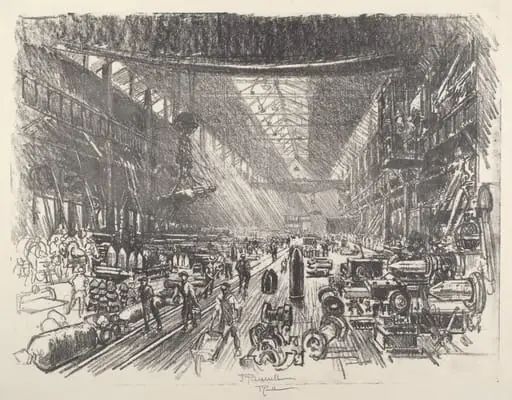 Shell Factory, No.I
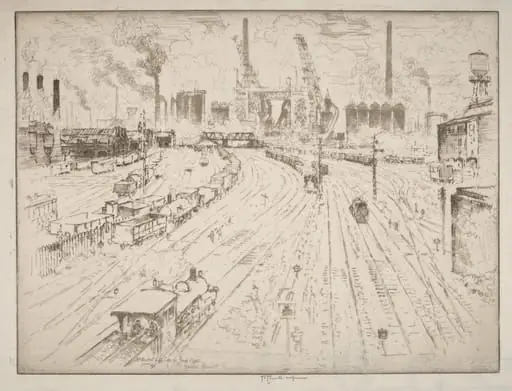 Tracks, Oberhausen
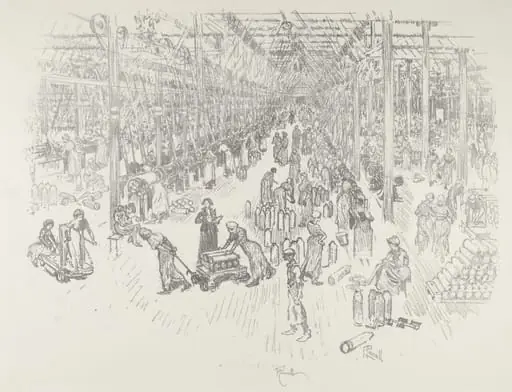 The Bay of the Thousand Girls
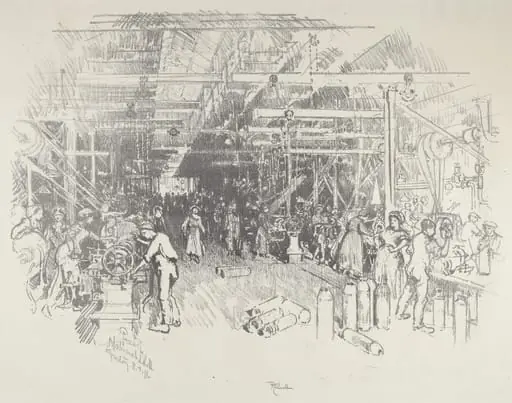 The Shell Factory
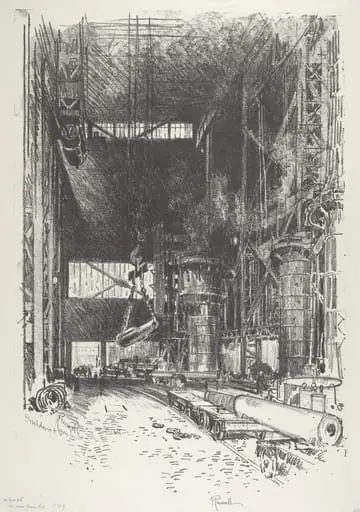 The New Gun-Pit
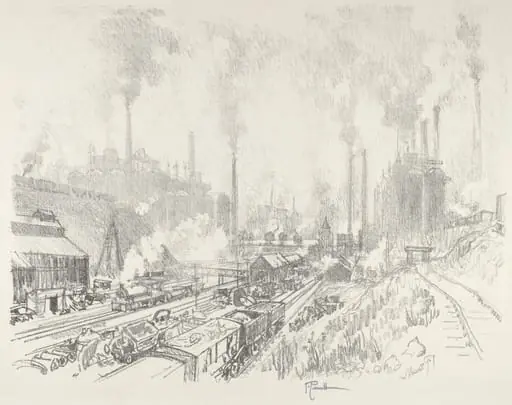 In the Land of Iron and Steel
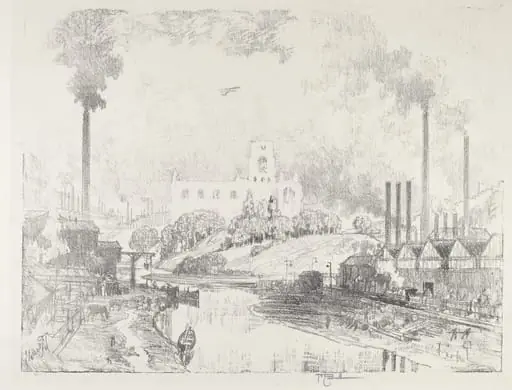 Peace and War
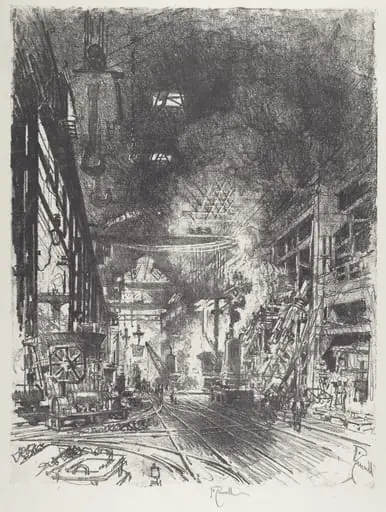 Within the Furnaces
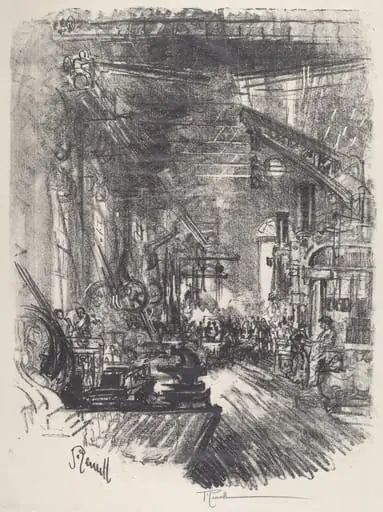 The Forges
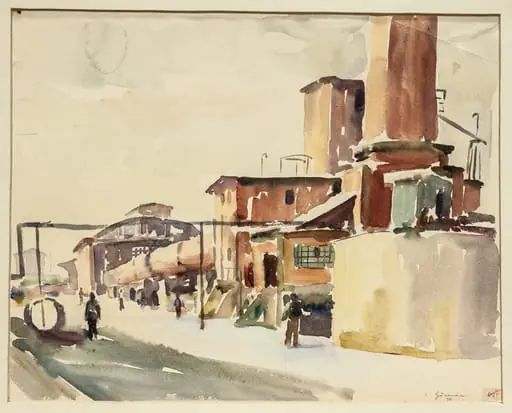 Fabrica „Cimentul păcii”
 Peisaj industrial pe Valea Bistriței
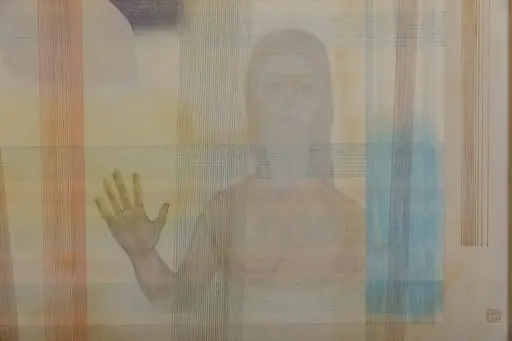 Culorile Săvineștilor
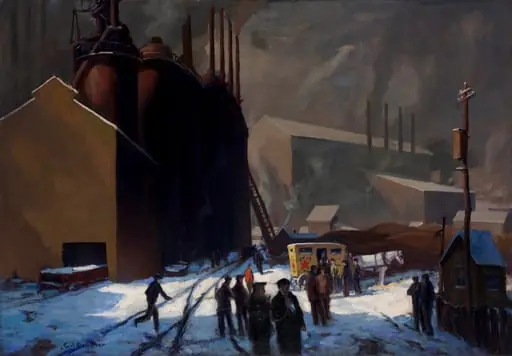 The Pie Wagon
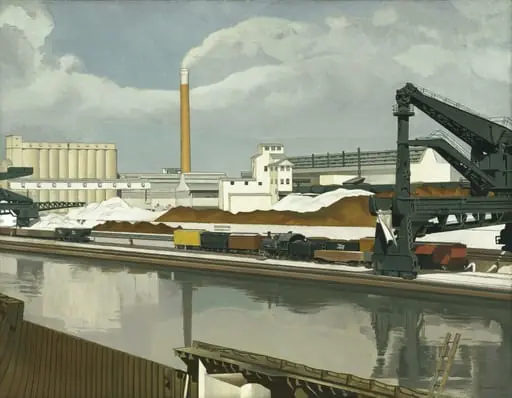 Untitled
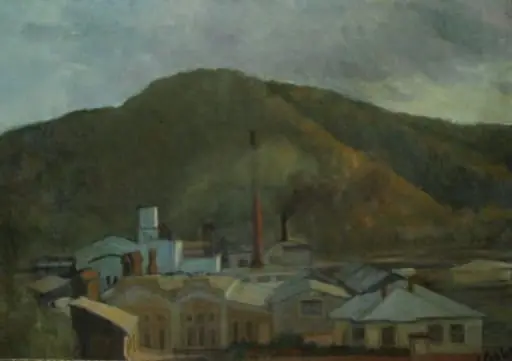 Peisaj pe valea Bistriței
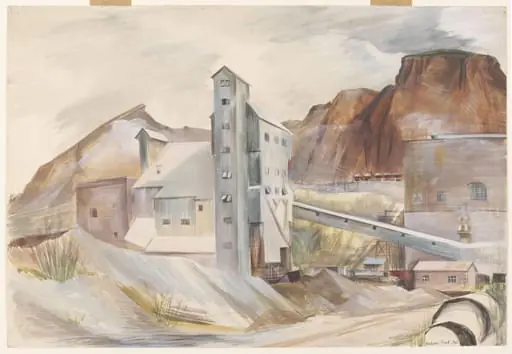 Limestone Quarries at Cauldron Low
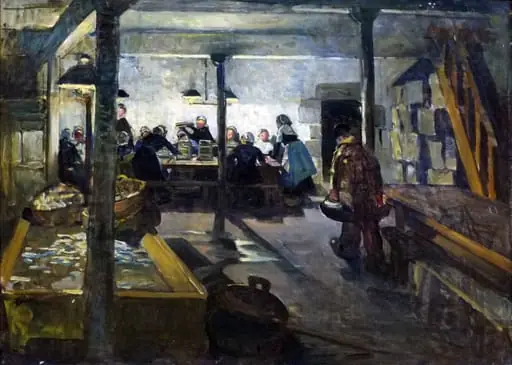 Fabrica de conserve
 Textila Roșie
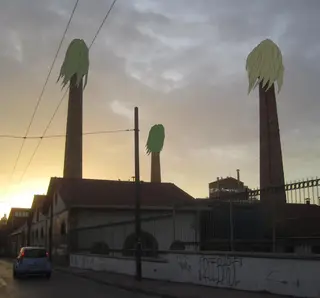 Άτιτλο
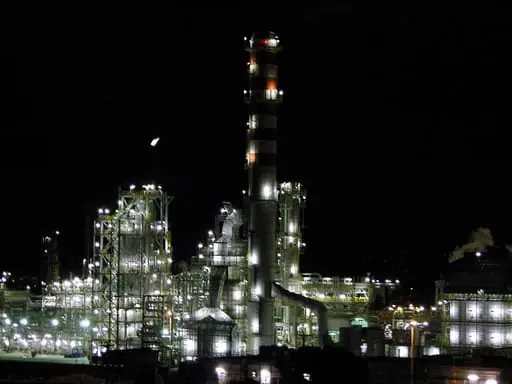 Άτιτλο
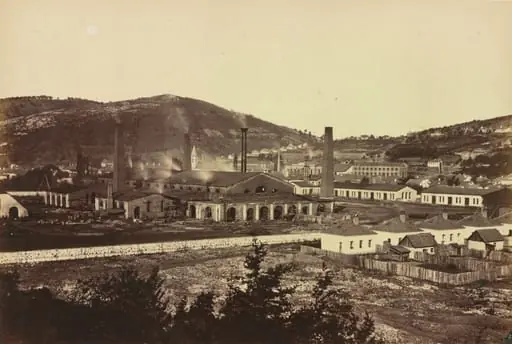 Ironworks in Reschitza
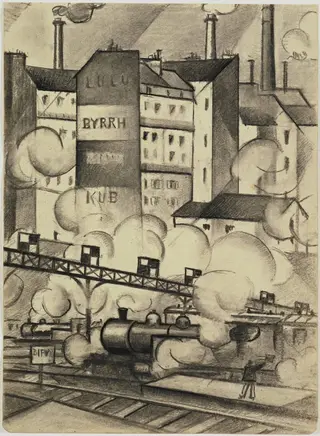 Untitled
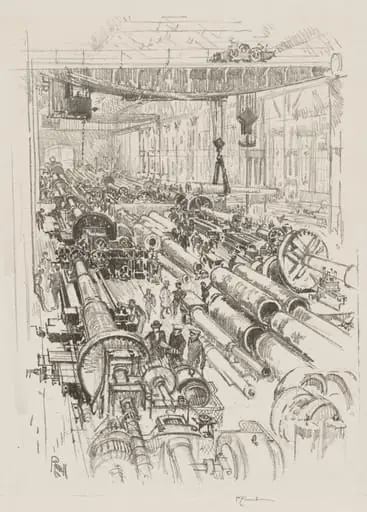 English War Work: The Gun Shop
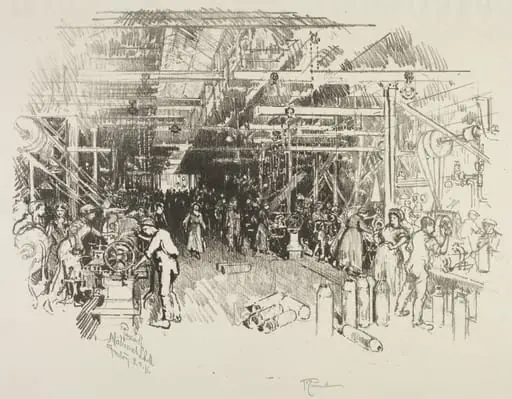 English War Work: The Shell Factory
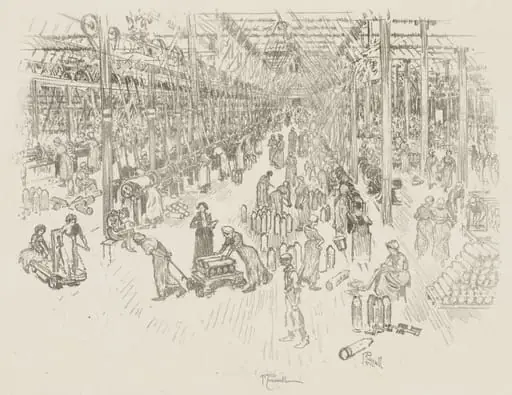 English War Work: The Bay of the Thousand Girls
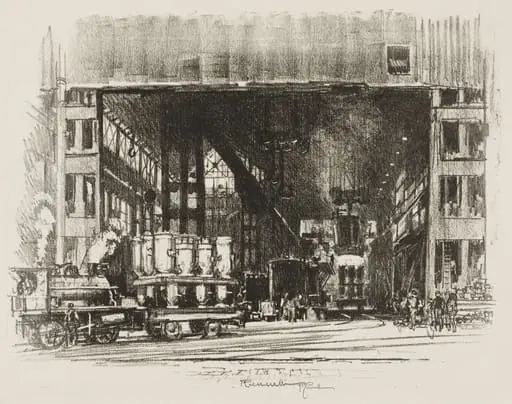 English War Work: The Urns, Casting Big Shells
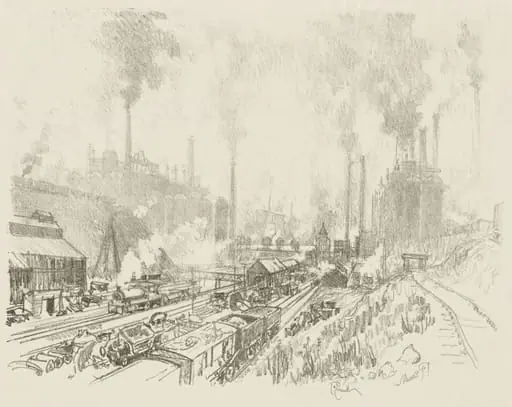 English War Work: In the Land of Iron and Steel
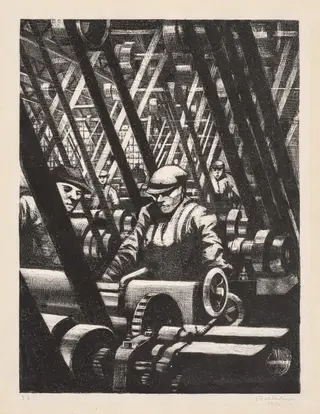 Building Aircraft: Making the Engine
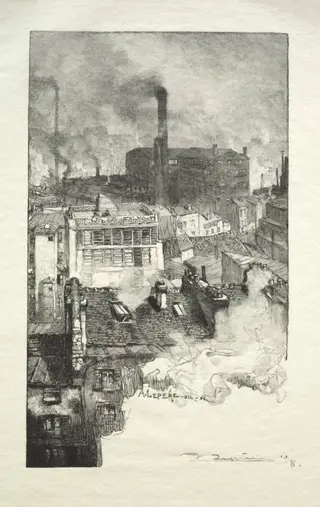 Quartier des Gobelins
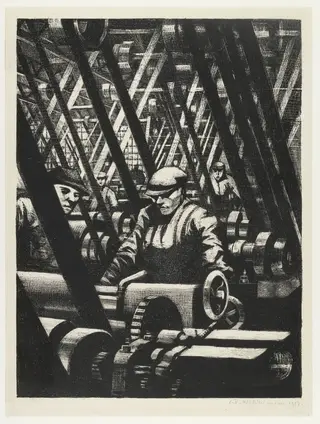 Untitled
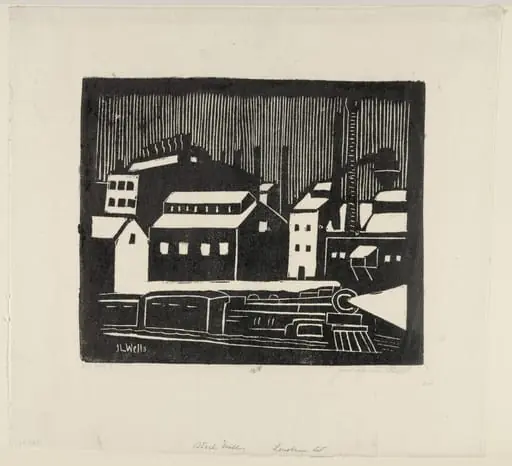 Untitled
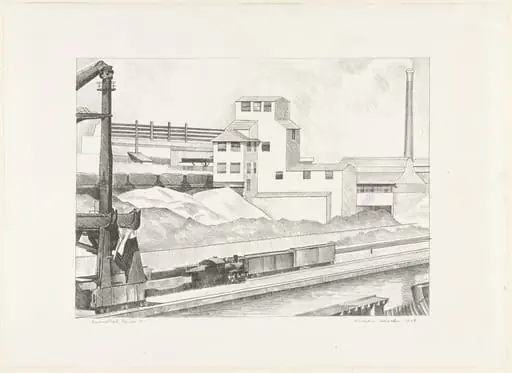 Untitled
Frequently asked questions
What is Factory?
Factory is a subject in art. A factory, manufacturing plant or production plant is an industrial facility, often a complex consisting of several buildings filled with machinery, where workers manufacture items or operate machines which process each item into another.
How many Factory works does Artifact World Gallery have?
Artifact World Gallery holds 57 public-domain Factory works, all free to view and download.
Who are the key Factory artists?
Key Factory artists in the collection include Camille Pissarro, Julian Alden Weir and Paul Cézanne.
Where can I see Factory works?
Factory works in the collection are held by Cleveland Museum of Art, National Gallery of Art and Metropolitan Museum of Art.