Artwork
The Death of the Virgin
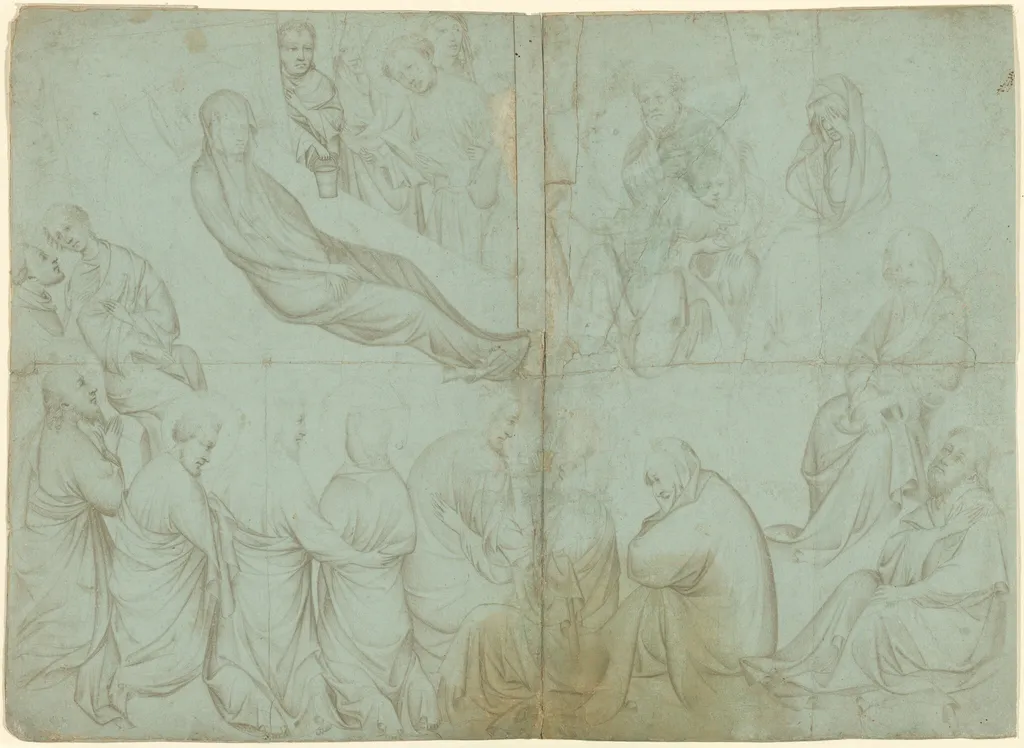
The Death of the Virgin is a silver drawing by Netherlandish 14th Century. It dates from 1390 and is held in the collection of the National Gallery of Art. This drawing, executed in silverpoint on blue-green prepared paper, depicts the moment of the Virgin Mary’s death surrounded by mourners.
About this work
The woman on the bed appears to be the central figure, and the others seem to be mourning or paying their respects.
This painting is a drawing of a group of people gathered around a woman lying on a bed. The woman is covered in a cloth, and the people around her are dressed in robes. The drawing is done in silverpoint on blue-green prepared paper.
The people in the drawing are shown in various poses, some kneeling, others standing. The woman on the bed appears to be the central figure, and the others seem to be mourning or paying their respects. The drawing is detailed, with intricate lines and shading that give the figures depth and texture.
The drawing is a poignant depiction of a moment of loss and grief. For more on the artist's use of chiaroscuro, look up Netherlandish 14th Century.
Overview
This drawing, executed in silverpoint on blue-green prepared paper, depicts the moment of the Virgin Mary’s death surrounded by mourners. Unlike painted altarpieces of the period, it is a small-scale, intimate study rendered with fine metallic lines. The cool-toned ground enhances the subtle tonal gradations of the silver, creating a quiet, reverent atmosphere suited to its contemplative subject.
Subject & Meaning
The scene illustrates the Dormition of the Virgin, a traditional moment in Christian devotion when the Virgin Mary passes away surrounded by apostles. Her still form, shrouded in cloth, anchors the composition, while the surrounding figures express grief through bowed heads, clasped hands, and lowered gazes. The absence of overt drama emphasizes spiritual solemnity over emotional spectacle, aligning with devotional practices of the time.
Technique & Style
Silverpoint, a precise and unforgiving medium, demands steady hand and careful planning. The artist used fine, continuous lines to model forms with subtle shading, exploiting the paper’s faint blue-green hue to suggest ambient light and shadow. The restrained palette and linear clarity reflect Netherlandish draftsmanship, where detail serves emotional restraint rather than theatrical effect.
History & Provenance
The drawing’s origins are tied to late 14th-century Netherlandish workshops, likely created as a preparatory study or private devotional object. Its survival is rare, as silverpoint works on paper are fragile and easily lost. Early records are sparse, but its style aligns with anonymous artists active in the Low Countries before the rise of oil painting dominance.
Context
In the late 1300s, devotional imagery focused on personal piety and the humanity of sacred figures. Drawings like this, though not intended for public display, circulated among religious communities as aids to meditation. The emphasis on quiet mourning reflects broader trends in Northern European spirituality, where inner reflection outweighed grandeur in religious expression.
Legacy
This work exemplifies the transition from manuscript illumination to independent drawing in Northern Europe. Though not widely known in its time, it contributes to the understanding of how early Netherlandish artists explored emotional depth through line and tone. Its preservation offers insight into the private devotional practices that preceded the Reformation’s iconoclastic shifts.
Artist & collection
Artist
This artist worked in the late 1300s, when artists drew with delicate silver wire on blue-green paper.

- Scenes from the Life of Saint Peter
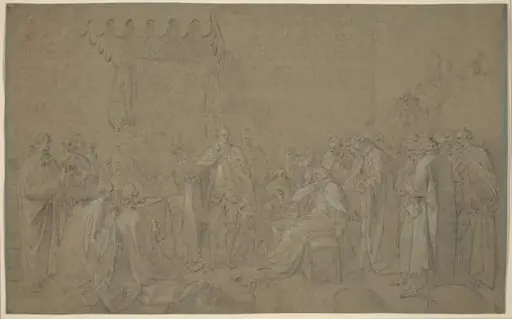 Study for "The Death of the Earl of Chatham"
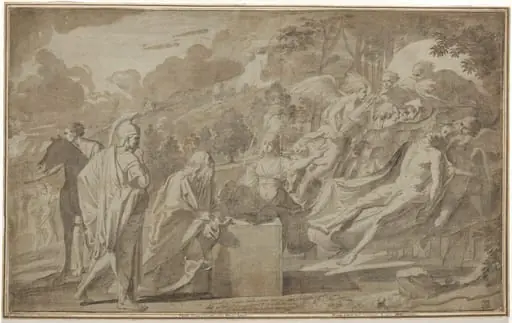 The Prophecy of Basilides
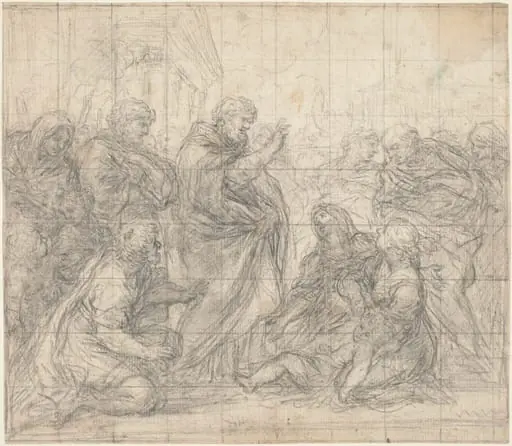 Saint Zenobius Resuscitating a Child
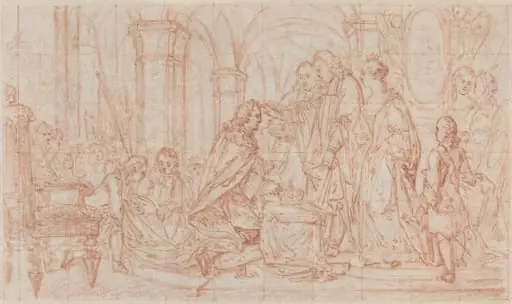 Ceremony of Consecration
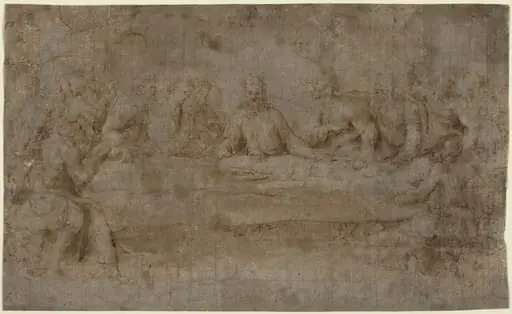 The Last Supper
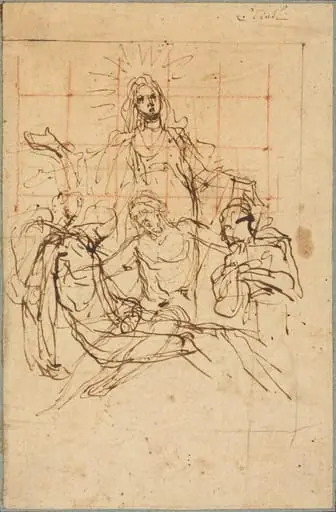 The Pietà (recto)
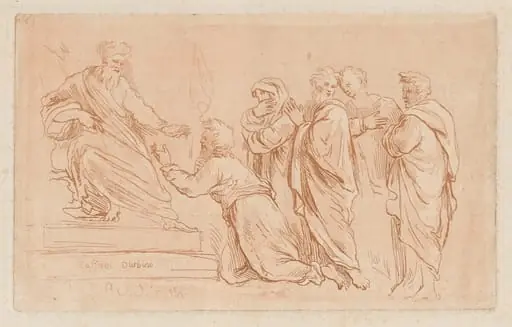 Adonias Imploring the Grace of Solomon or Jeroboam Kneeling before Rehoboam
![Study for a Monument to a Clergyman [recto and verso], by John Flaxman](https://artifactworldgallery.com/img/john-flaxman--study-for-a-monument-to-a-clergyman-recto-and-verso--c5e3374976ecf5f9-w320.webp) Study for a Monument to a Clergyman [recto and verso]
Study for a Monument to a Clergyman [recto and verso] Tribute Money
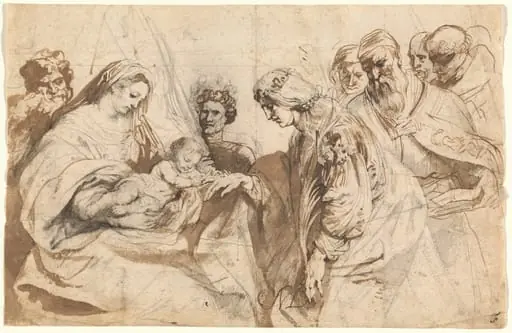 The Mystic Marriage of Saint Catherine
 Studies of an Apostle Guided by an Angel and the Adoration of the Shepherds