Artwork
Praça da Alegria
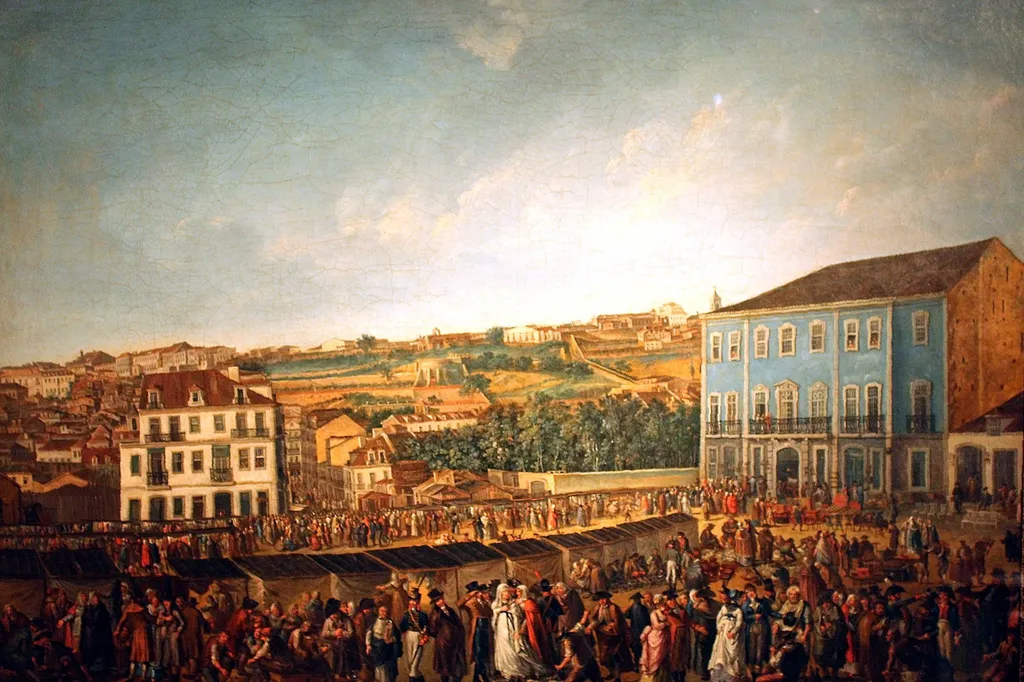
Praça da Alegria is an unspecified painting by Nicolas-Louis-Albert Delerive. It dates from 1800 and is held in the collection of the National Museum of Ancient Art.
About this work
Overview
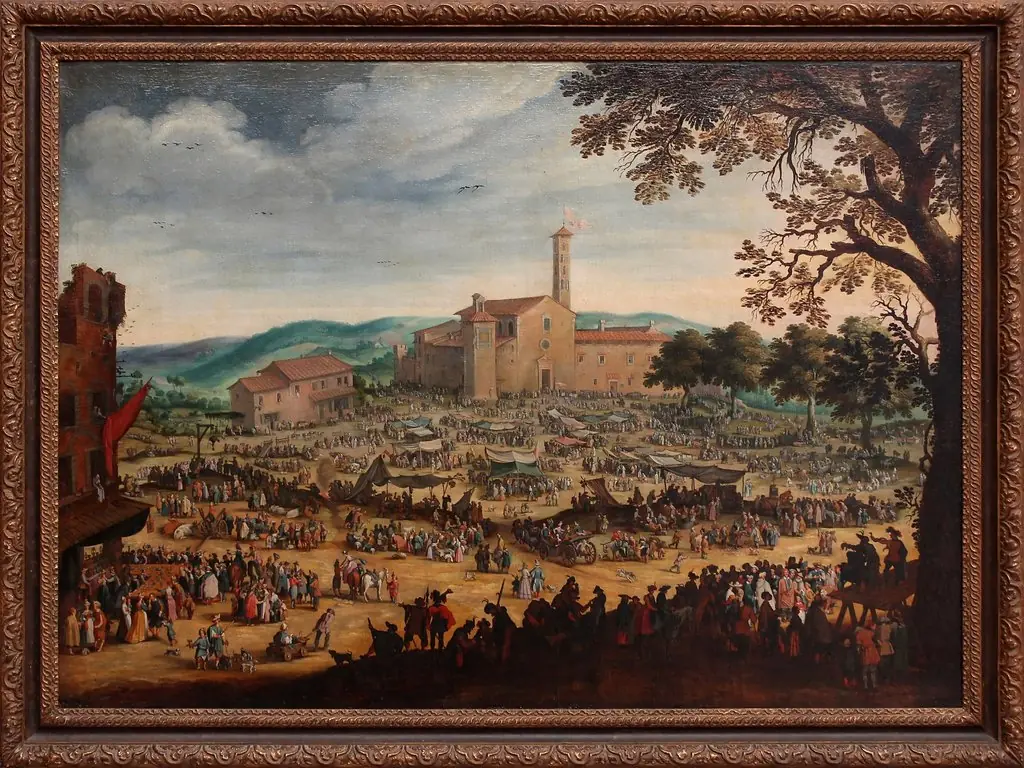
Beyond the foreground, a row of buildings and a tree‑lined hill recede, all under a light‑blue sky mottled with clouds.
Praça da Alegria, painted in 1800 by Nicolas‑Louis‑Albert Delerive, depicts a lively urban marketplace. The composition is filled with figures in contemporary dress, clustered around stalls topped with dark roofs, while a prominent blue‑facaded building with numerous windows anchors the right side. Beyond the foreground, a row of buildings and a tree‑lined hill recede, all under a light‑blue sky mottled with clouds.
Subject & Meaning
The work captures the everyday activity of a public square, emphasizing the social interaction of merchants and townspeople. By portraying a crowded scene of trade and movement, Delerive highlights the communal rhythm of market life, suggesting both the economic vitality and the social fabric of early‑19th‑century urban environments.
Technique & Style
Executed in oil on canvas, the painting employs a warm palette dominated by browns, tans, and muted earth tones, which contrast with the vivid blue of the central building. Delerive’s brushwork balances detailed rendering of individual figures with broader, atmospheric treatment of the background, creating depth while maintaining a cohesive, bustling atmosphere.
History & Provenance
Created in the year 1800, the canvas entered the collection of Portugal’s National Museum of Ancient Art, where it remains on display. Its acquisition reflects the museum’s broader effort to represent European genre scenes of the period, preserving a visual record of everyday public spaces from the turn of the century.
Own this work as a print
Artist & collection
Artist
Nicolas-Louis-Albert Delerive (1755–1818) was an artist, born in Lille.

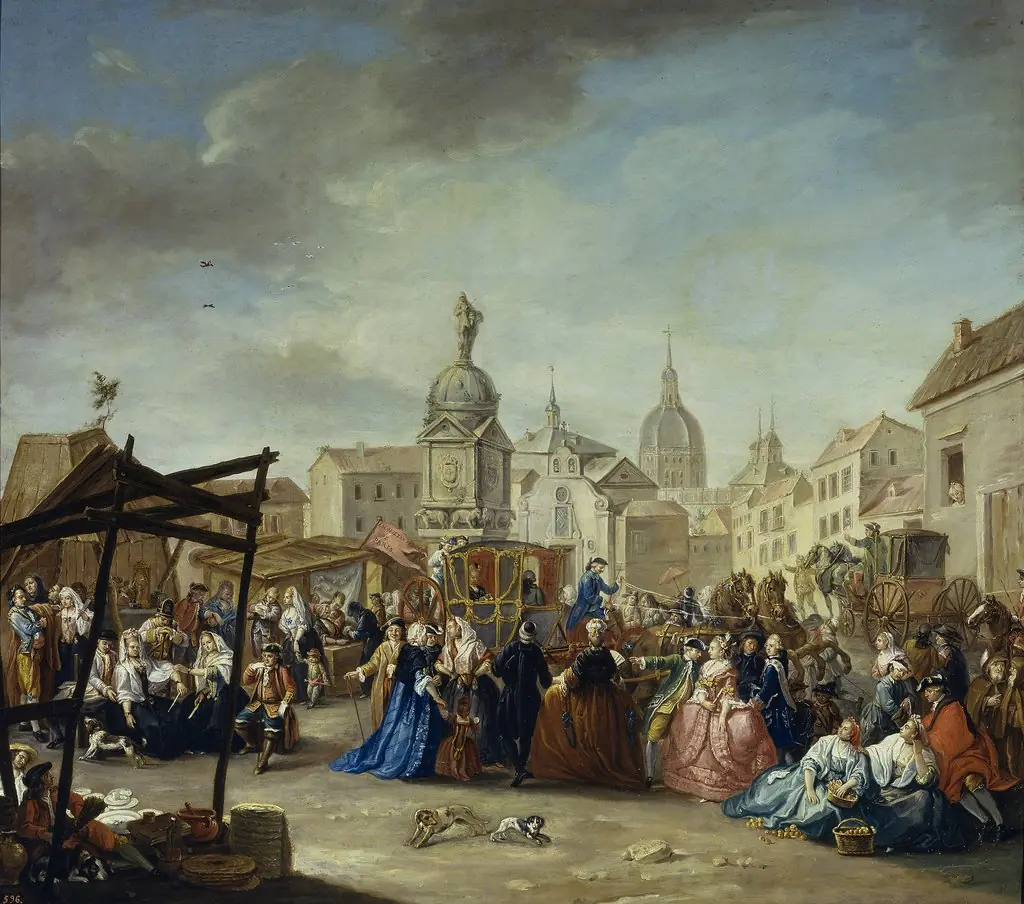
- "Madrid Fair in Cebada Square"
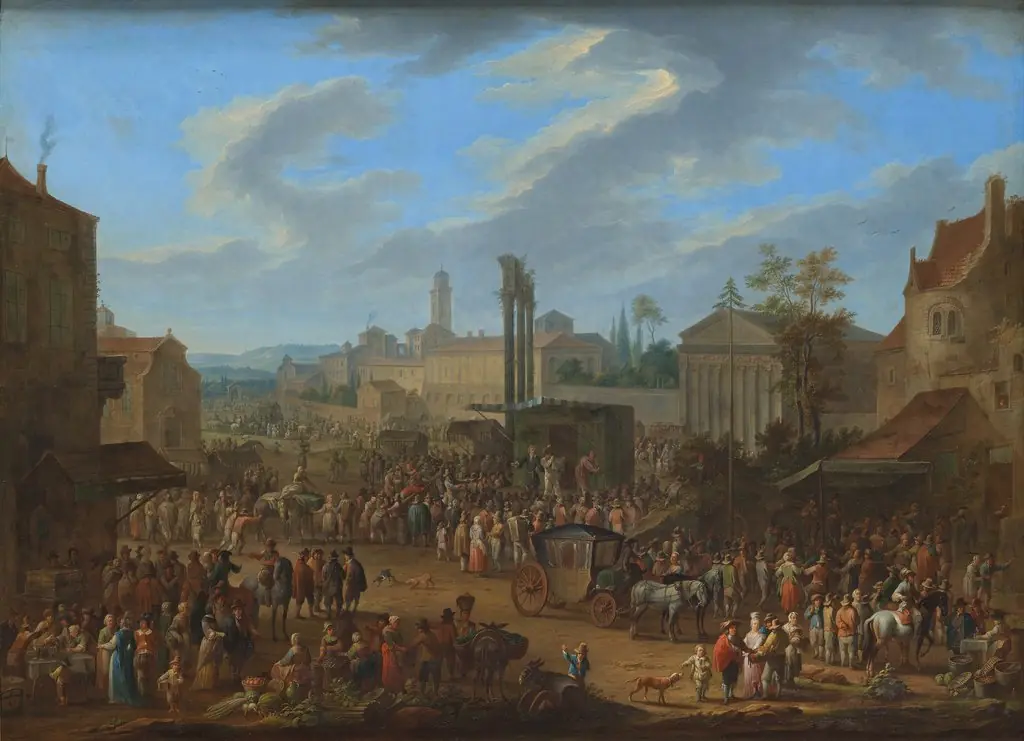 Market with temple and maypole
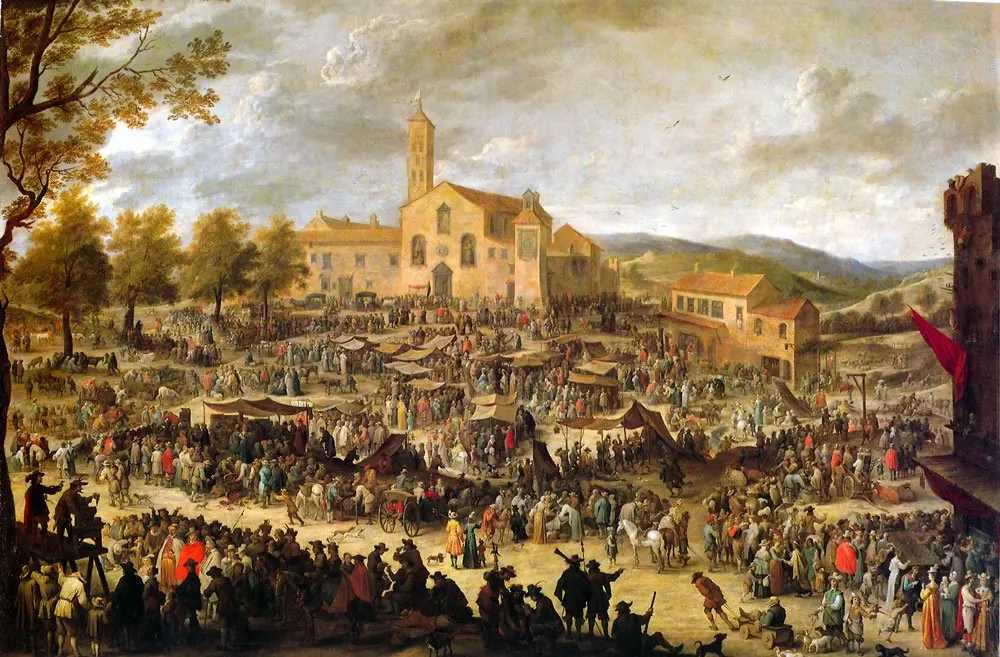 Annual Fair at Santa Maria Dell'Impruneta in Florence
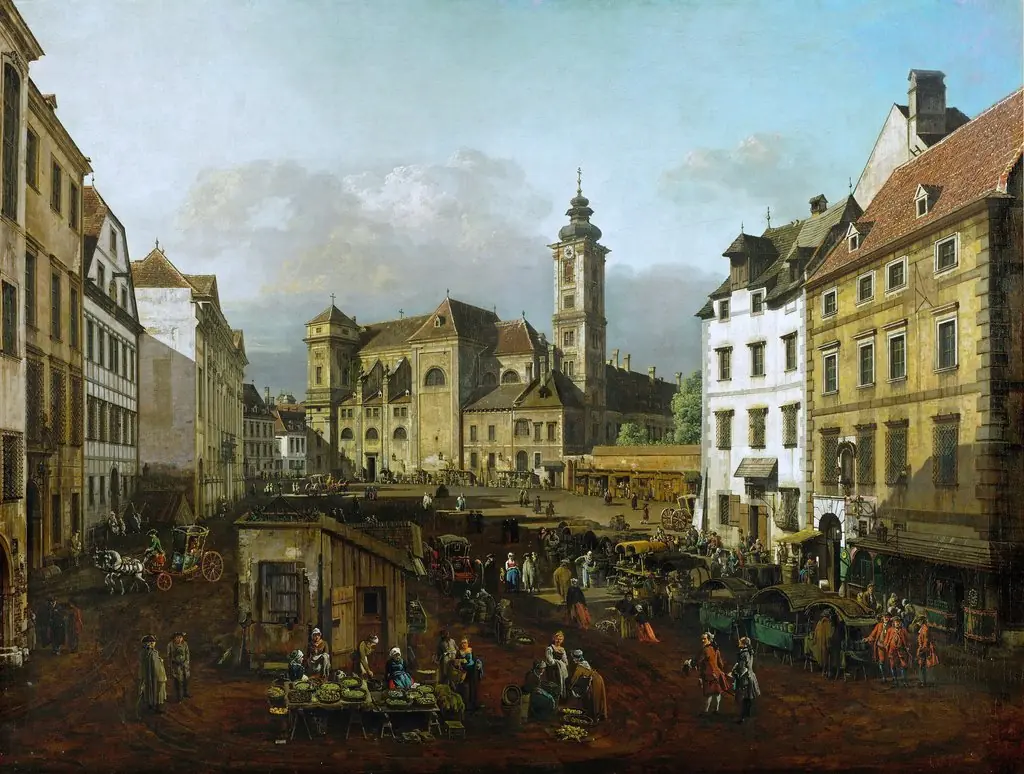 The Freyung in Vienne, from the South-East
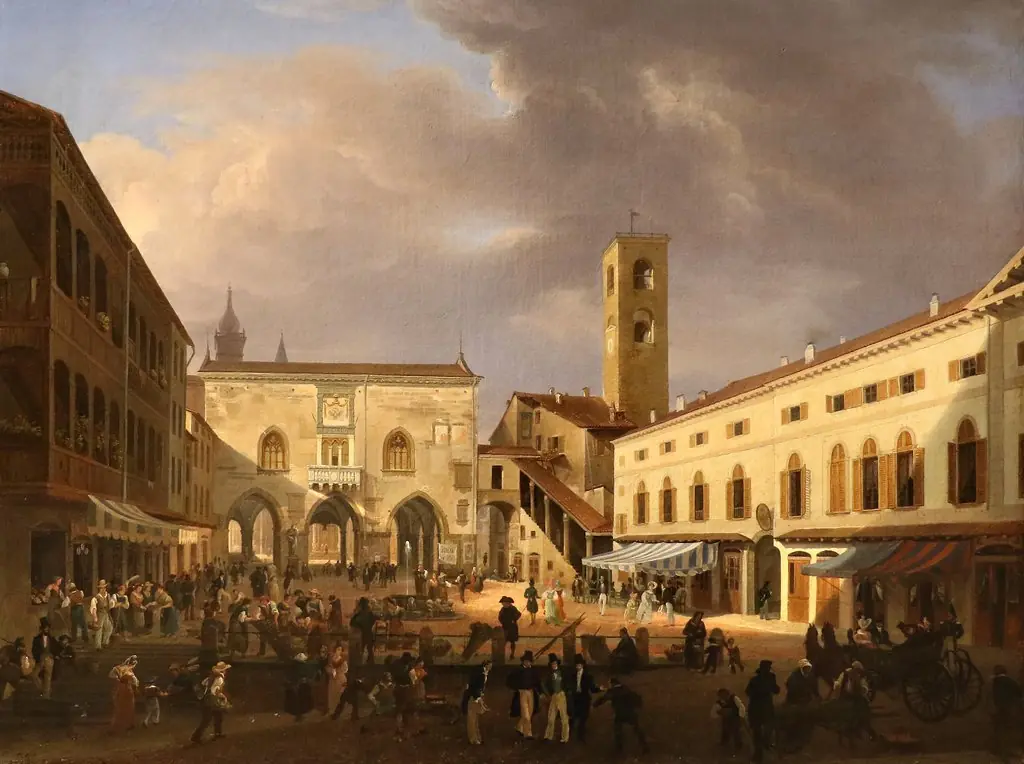 Piazza grande in Bergamo Alta
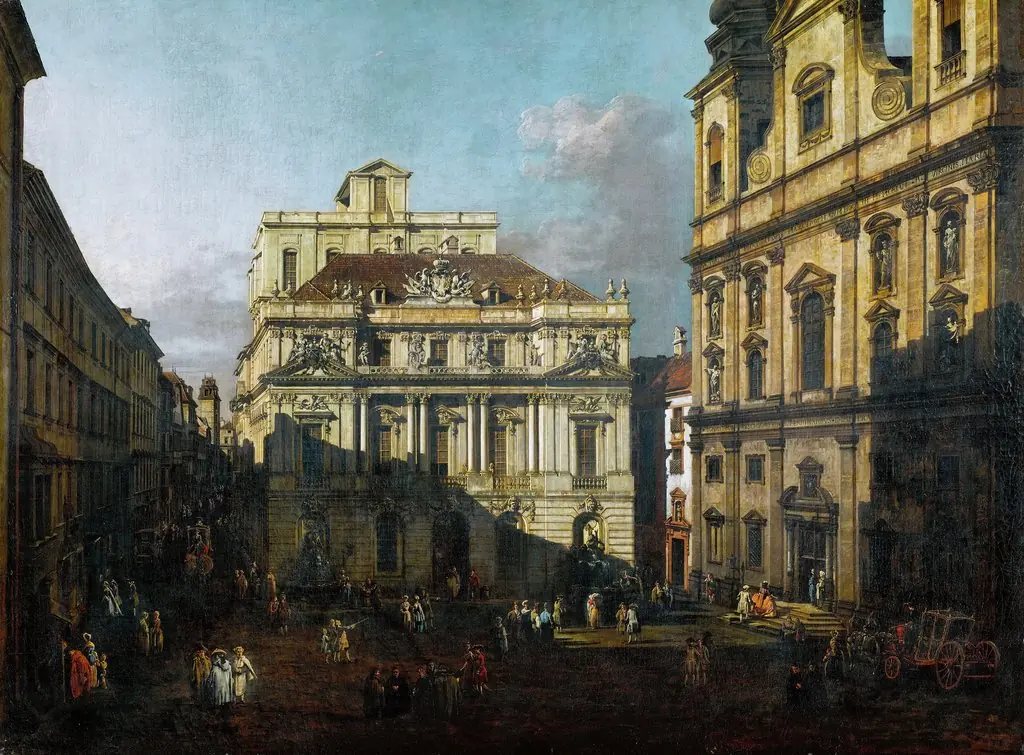 Universitätsplatz in Vienna
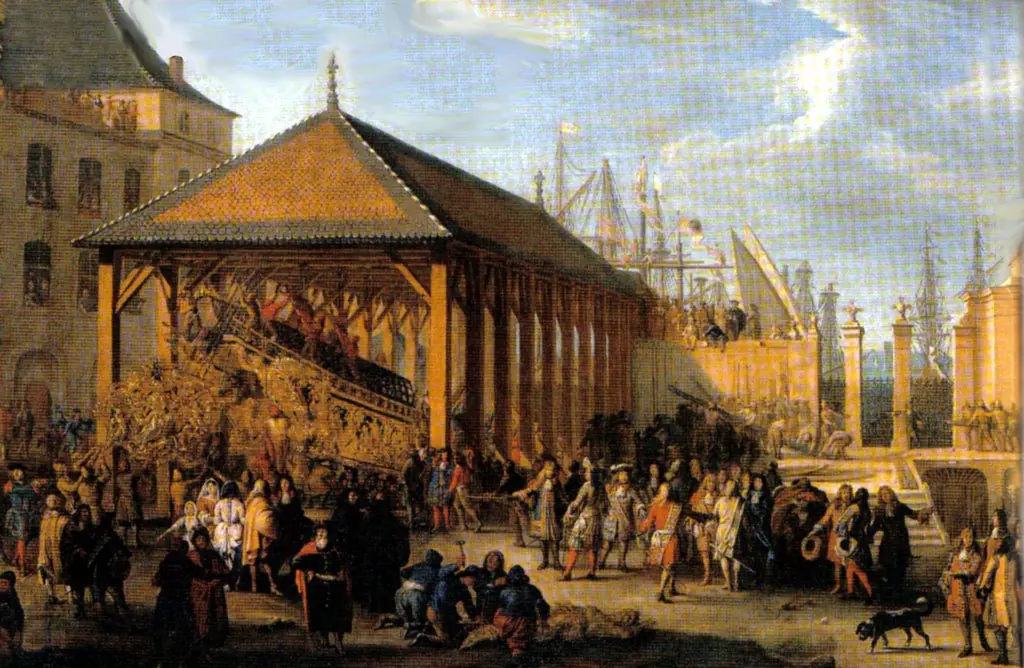 Le Marquis de Seignelay et le duc de Vivonne visitent la galère Réal dans l'arsenal de Marseille vers 1677.
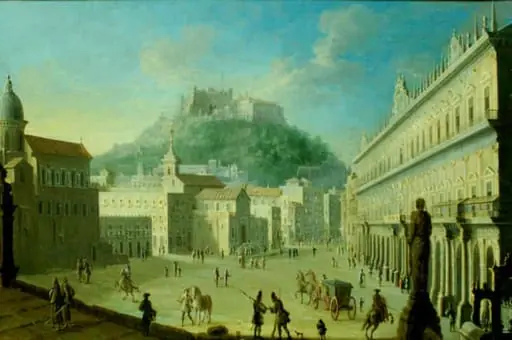 Oraș cu cetățuie
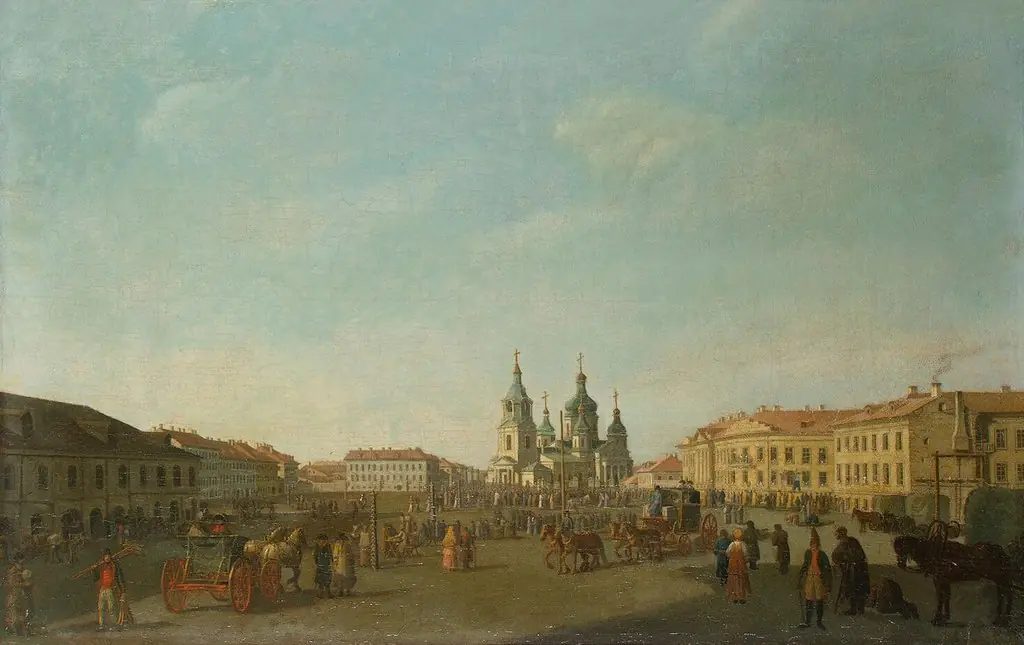 View of Sennaya Square in St Petersburg
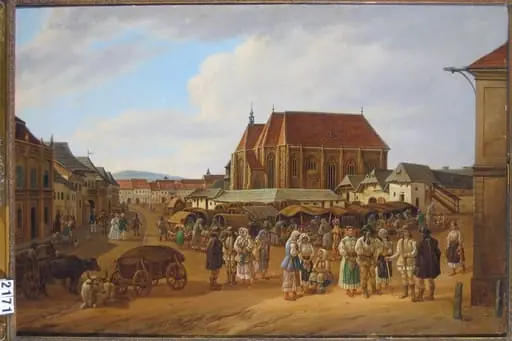 Biserica din Piața Mare din Cluj
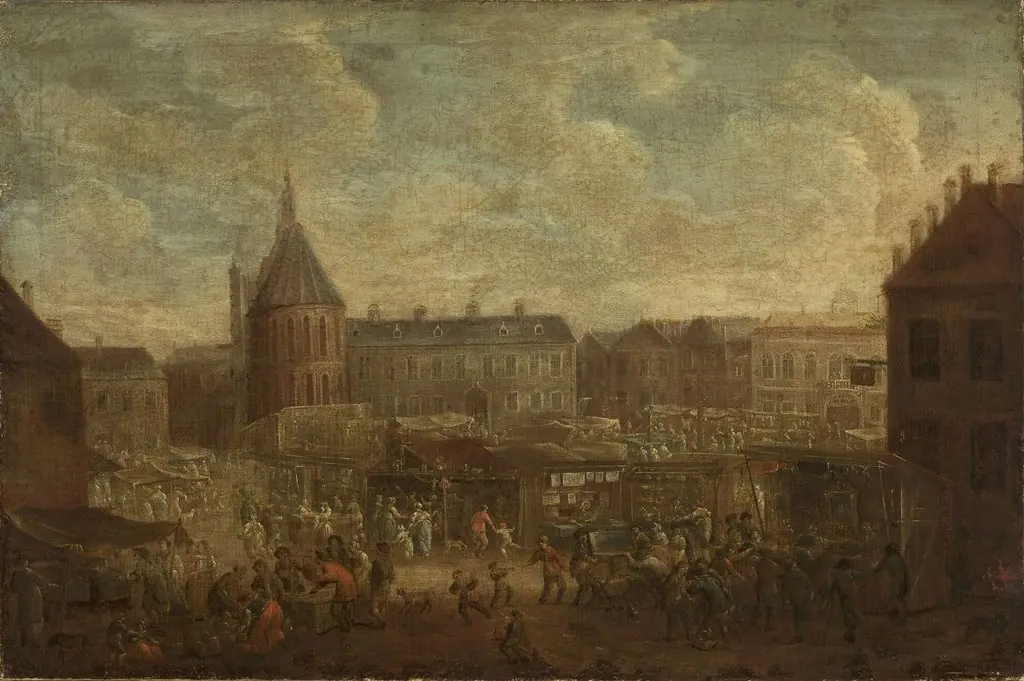 Marketplace in a town
 The Fair at Impruneta