Period
Ancient
Ancient is an art period of the -3500–500 period. The gallery holds 22 works in this period, including works by Nina M. Davies, Norman de Garis Davies and Danuta Małachowska.
The art-historical "Ancient" period spans human creativity from the earliest written records to the close of the classical world—roughly the fourth millennium BCE through the fall of Rome. It begins with the first urban civilizations of the Nile and of Mesopotamia between the Tigris and Euphrates, where art arose not as decoration but as an instrument of religion, kingship, and the afterlife. In Egypt, painting and relief flourished above all in the service of the dead: officials of the New Kingdom (c. 1550–1070 BCE) commissioned vivid scenes for their rock-cut chapels in the Theban Necropolis on the west bank of the Nile, opposite modern Luxor.
Ancient art is defined less by individual expression than by enduring conventions. Egyptian painters used the "composite" view—head, legs, and feet in profile, but eye and shoulders frontal—so that each part of the body and each object appeared from its most recognizable angle. Scenes were ordered into horizontal registers whose lower borders served as ground lines, and depth was suggested by overlapping or stacking figures. Unlike royal tombs, the tombs of the nobles dwell on earthly life: ploughing, food preparation, craftsmen, banquets, and tribute-bearing foreigners. Many such scenes survive to us through the meticulous facsimiles in this collection by Nina M. Davies (1881–1965) and Norman de Garis Davies (1865–1941), including *Syrians Bringing Vessels and Weapons* from the Tomb of Rekhmire (TT100, Dynasty 18, c. 1504–1425 BCE) and *Foreigners* from the Tomb of Menkheperraseneb.
Most ancient makers are anonymous, but classical Greece gives us the first named masters. Phidias oversaw the sculptural program of the Parthenon, while Polykleitos codified ideal male proportion in his *Canon*, embodied in the *Doryphoros* (Spear-Bearer), whose lost bronze original dates to about 440 BCE. The Classical period (c. 480–323 BCE) balanced idealized beauty with naturalism; the ensuing Hellenistic age (323–31 BCE) pursued movement and emotion.
The legacy of ancient art is foundational. The Greek canon of proportion and naturalism shaped Roman art and, through the Renaissance, the entire Western tradition. The Davies facsimiles carry a second legacy: made before color photography, with the same hues and brush orientation as the originals, they preserve the condition of fragile Theban tombs as they stood a century ago.
Key artists
Works
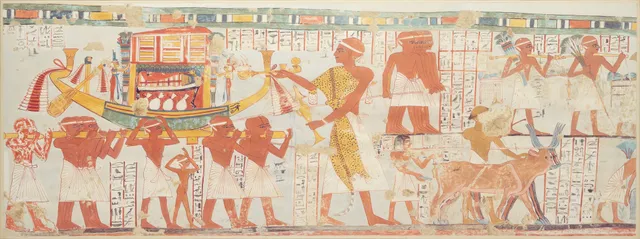
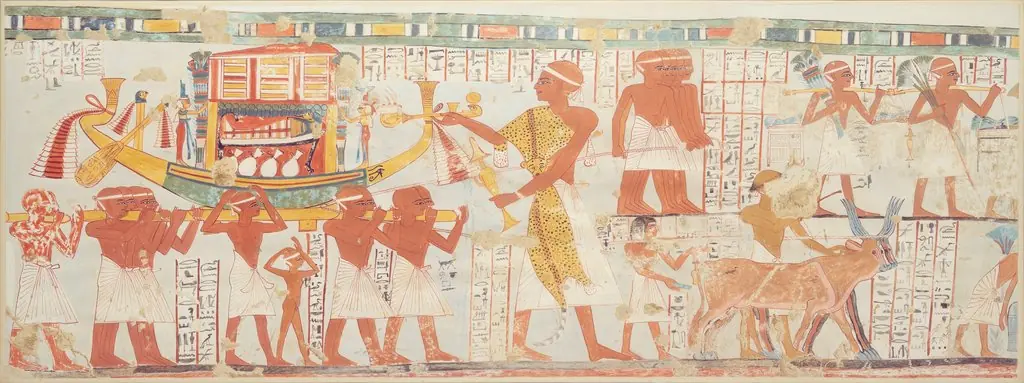 Nakhtamun's Funeral Procession, Tomb of Nakhtamun
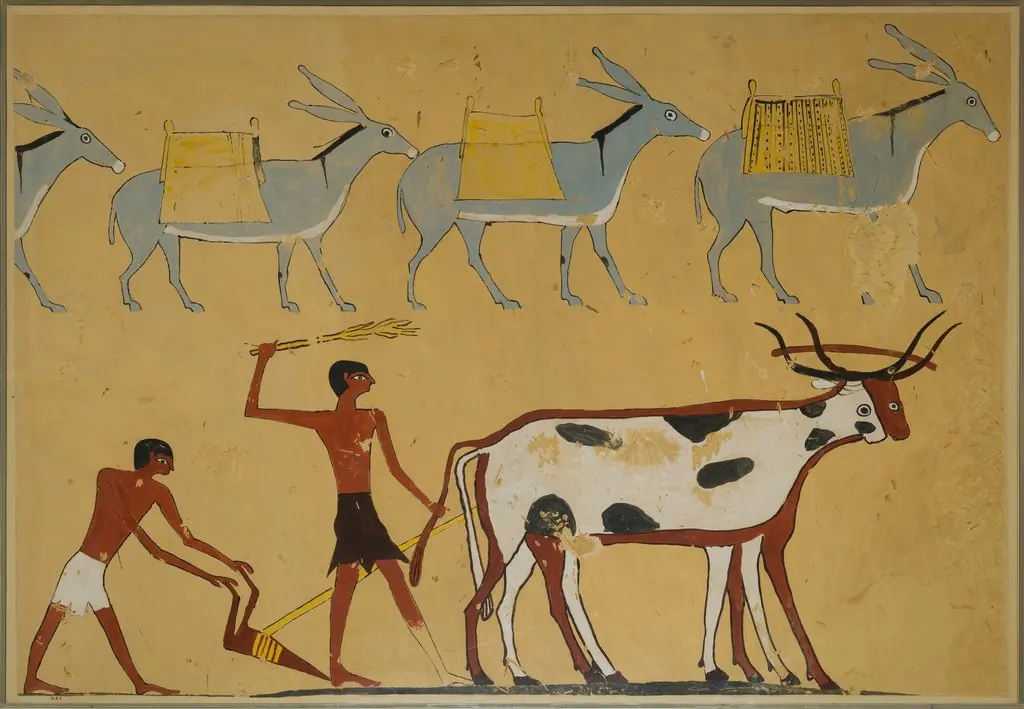 Laden Donkeys and Ploughing, Tomb of Djar
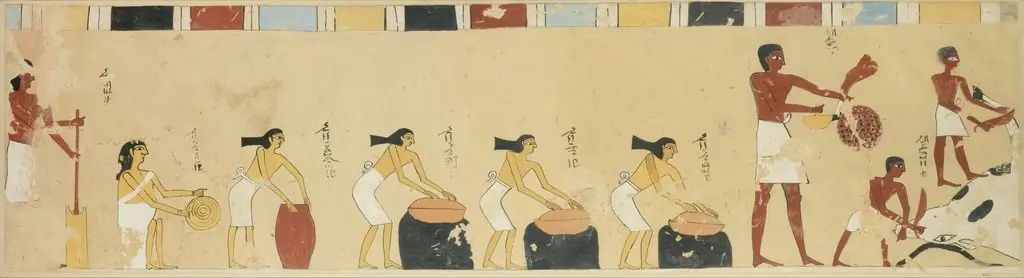 Women Preparing Food, Tomb of Djari
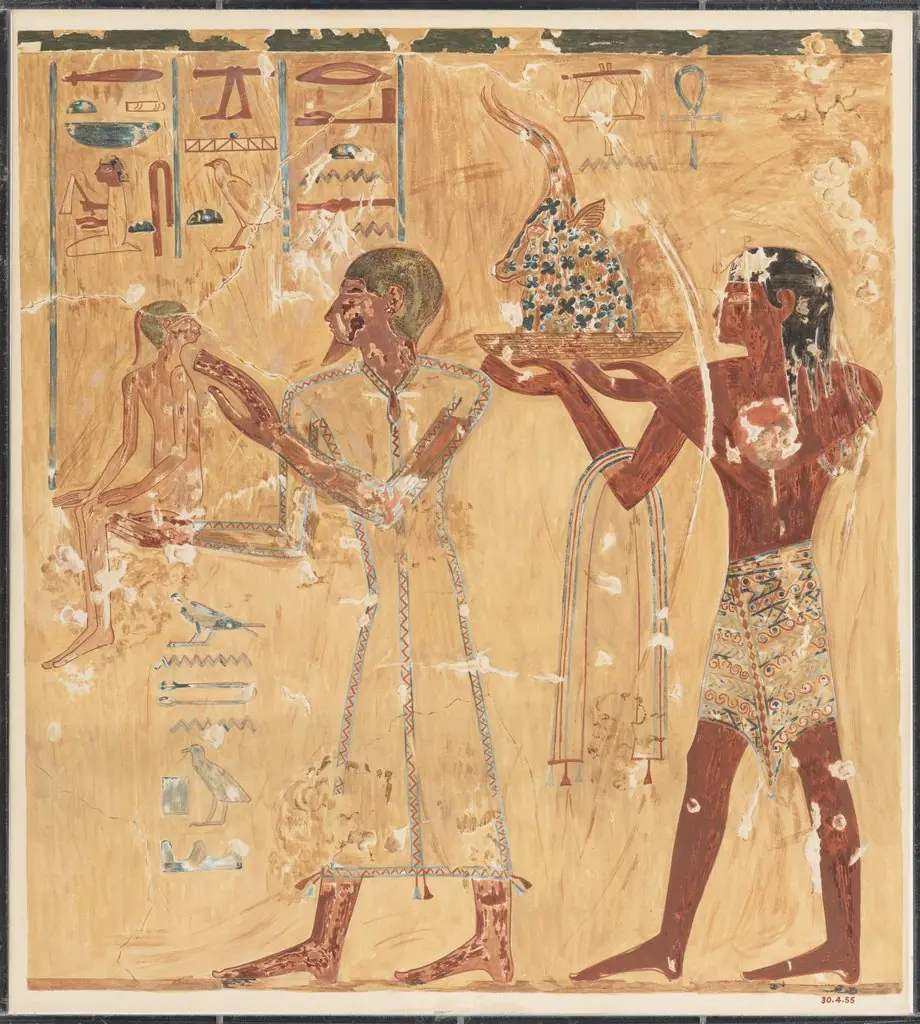 Foreigners, Tomb of Menkheperraseneb
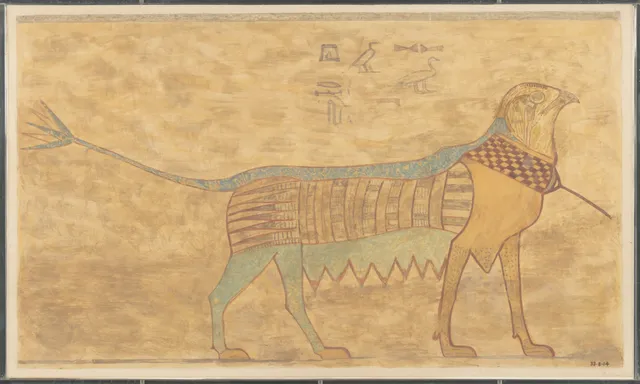
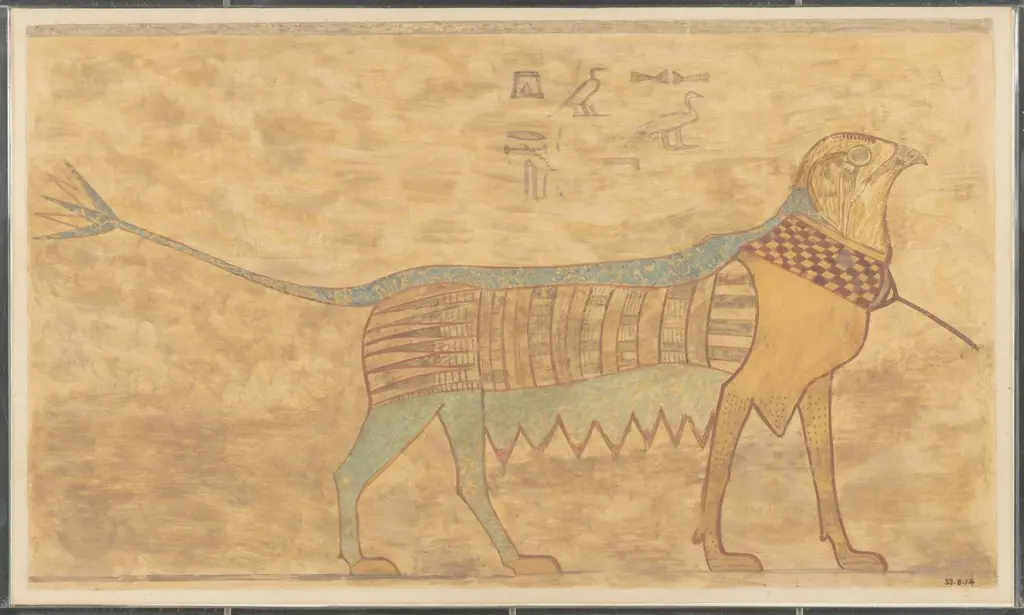 Detail of a Griffin, Tomb of Khety
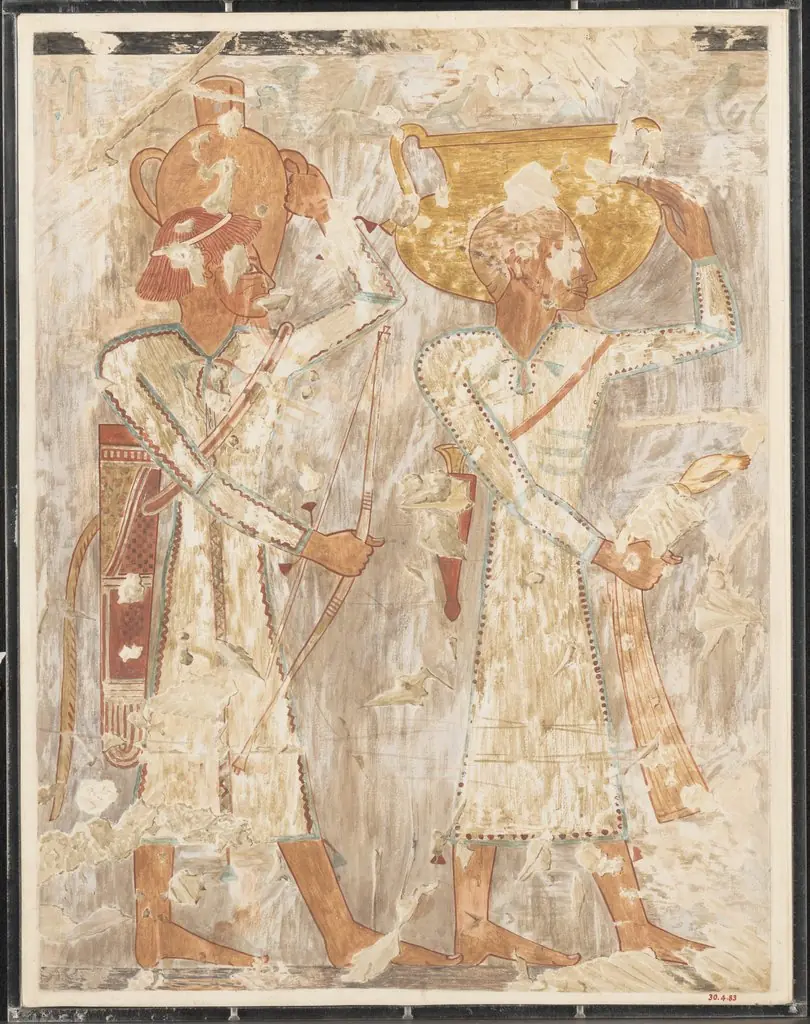 Syrians Bringing Vessels and Weapons, Tomb of Rekhmire
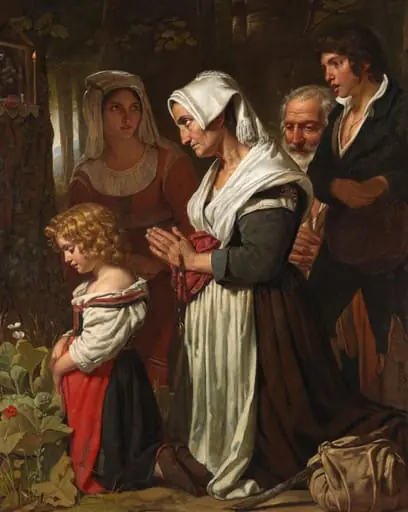 Godsvrucht
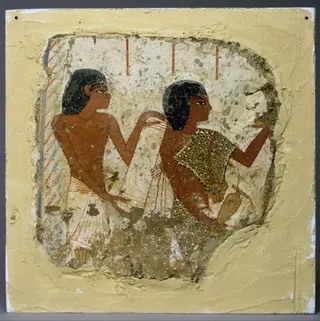 Tomb painting depicting two priests, one holding a papyrus roll and the other a vase for libations (...
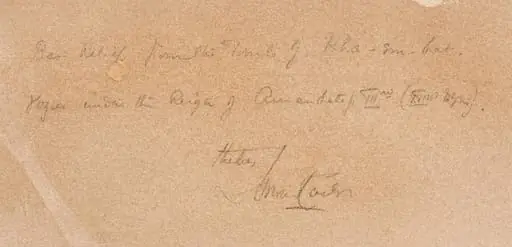 Untitled
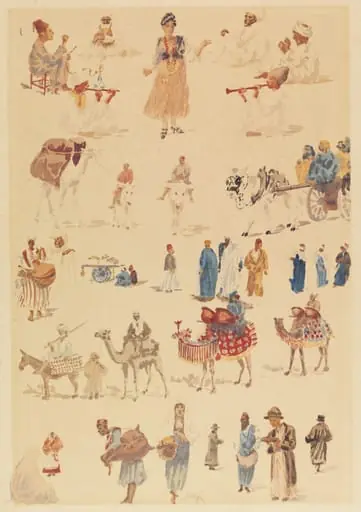 Egyptian Types
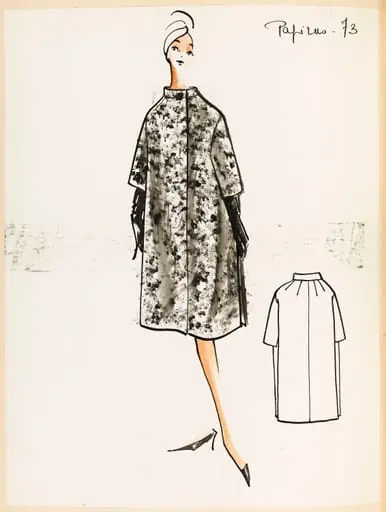 Papyrus
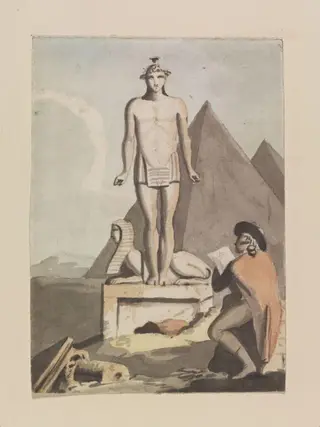 An Artist sketching Egyptian Antiquities
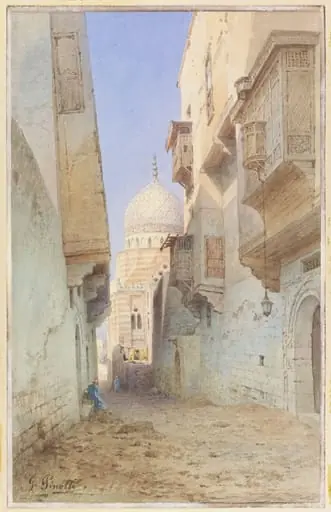 Street Scene in Cairo, with the dome of a tomb
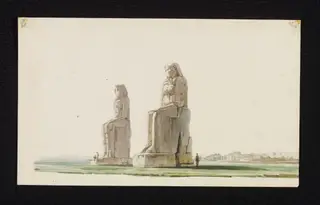 Colosses de memnon a gourna (thébes)
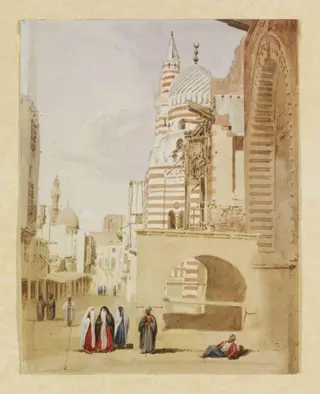 Bab al-Wazir street and the mosque of Aytmish al-Bajasi, Cairo
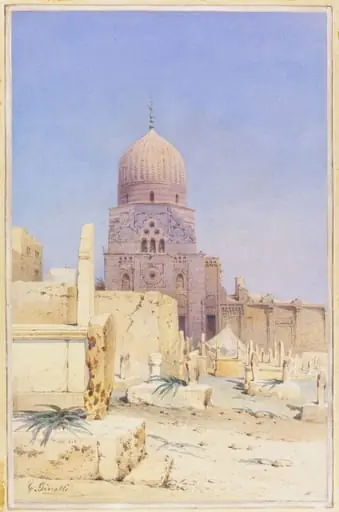 Mosque/Tomb in Cairo
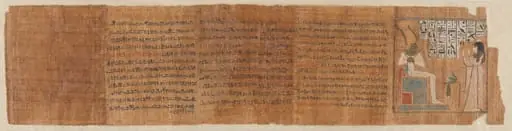 Funerary Papyrus of Tayuhenutmut
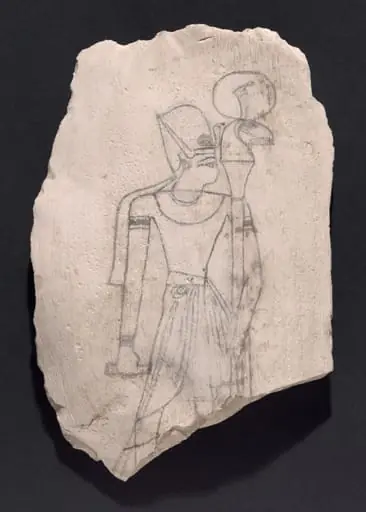 Ostracon with a Drawing of a King
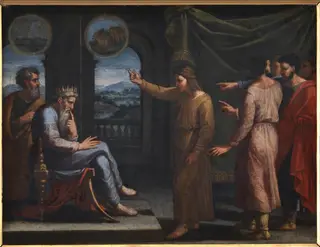 Joseph Interprets Pharaoh's Dream
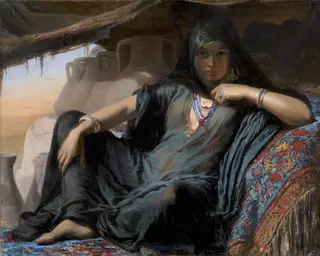 An Egyptian Pot Seller at Gizeh
 Wall painting: four Nubians armed with shields
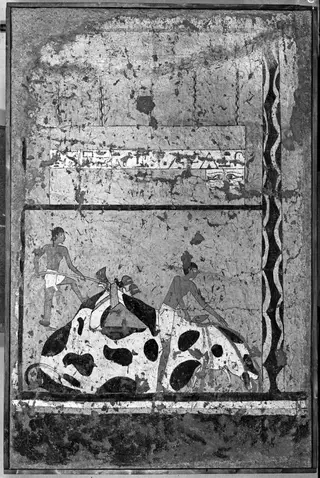 Wall painting: below, a sacrifice; above, a coffin
Frequently asked questions
What is Ancient?
Ancient is an art period. Human history from the earliest records through the fall of the Western Roman Empire (c.
How many Ancient works does Artifact World Gallery have?
Artifact World Gallery holds 22 public-domain Ancient works, all free to view and download.
Who are the key Ancient artists?
Key Ancient artists in the collection include Nina M. Davies, Norman de Garis Davies and Danuta Małachowska.
When did Ancient take place?
Ancient dates from -3500–500.
Where can I see Ancient works?
Ancient works in the collection are held by Victoria and Albert Museum, Metropolitan Museum of Art and Statens Museum for Kunst.