Artwork
Nilson - Malerei, Arlesheim.
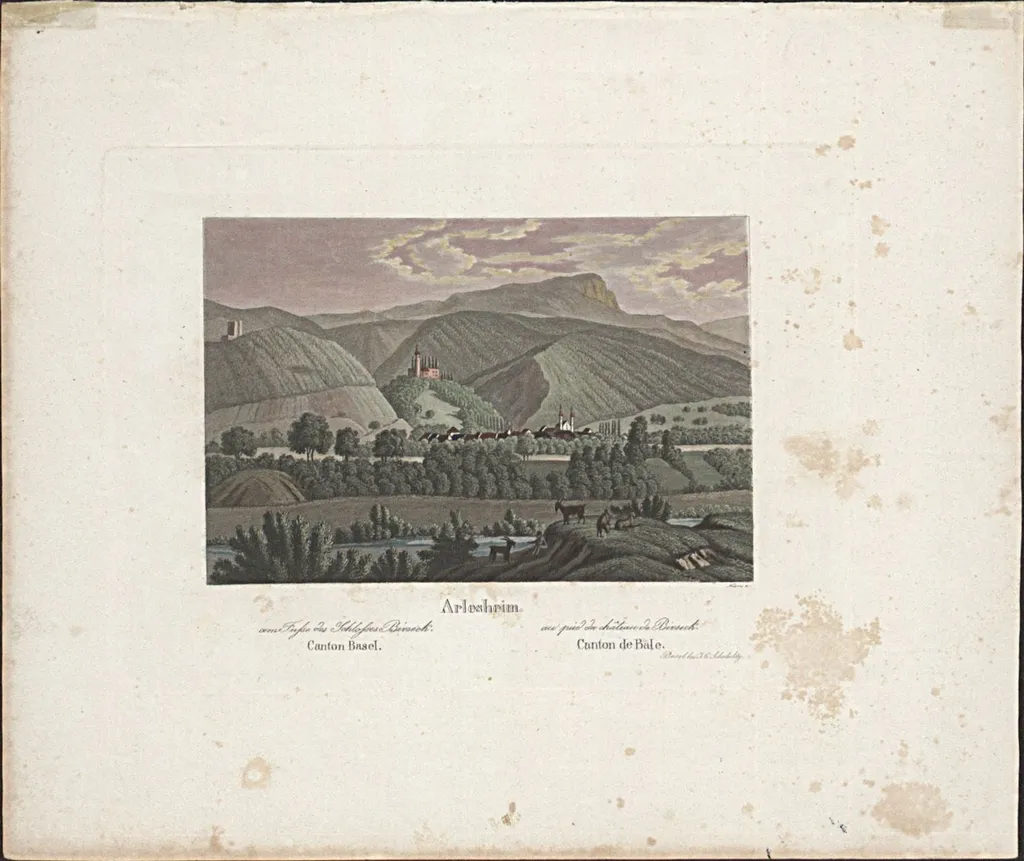
Nilson - Malerei, Arlesheim. is a print by Nilson. It is held in the collection of the Archaeology and Museum Baselland.
About this work
Overview
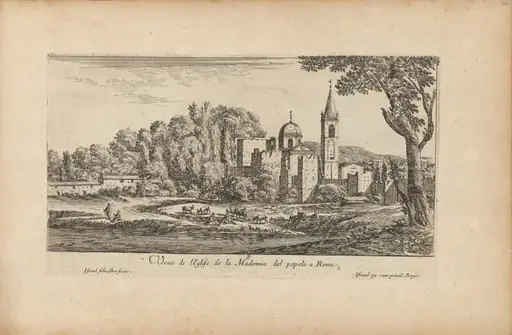
This landscape painting, attributed to Nilson, depicts a quiet rural scene in Arlesheim. Rolling hills, scattered trees, and distant architecture evoke a sense of stillness. The composition is restrained, with no focal point dominating the view, allowing the atmosphere to take precedence over narrative detail. The work is held in the collection of the Museum of Ethnography.
Subject & Meaning
The scene presents an uneventful pastoral setting: grazing animals, soft terrain, and a faint outline of a religious or civic structure on the horizon. There is no human activity visible, reinforcing a mood of solitude and timelessness. The absence of dramatic elements suggests an intention to capture quietude rather than commemorate a specific event or location.
Technique & Style
The painting employs a muted palette of greens, browns, and grays, with subtle tonal shifts to suggest depth and texture. Brushwork is soft and blended, avoiding sharp contours. Clouds in the sky are rendered with light, wispy strokes, contributing to the overall sense of calm. The technique favors atmospheric harmony over detailed realism.
History & Provenance
The work is documented as part of the Museum of Ethnography’s collection, though its origin and acquisition history are not widely recorded. Its presence in an ethnographic institution, rather than a fine arts museum, may reflect its use as a cultural artifact representing regional life, rather than as a work of artistic significance.
Context
Created in the context of 19th-century European landscape traditions, the painting aligns with regional tendencies to depict rural tranquility without idealization. Its placement in an ethnographic collection suggests it may have been collected as a representation of local environment and daily rhythms, rather than as a celebrated artistic achievement.
Legacy
The painting remains a quiet example of regional landscape representation, preserved for its documentary qualities rather than its innovation. It contributes to the museum’s broader collection of visual materials illustrating rural life, but has not entered broader art-historical discourse.
Artist & collection
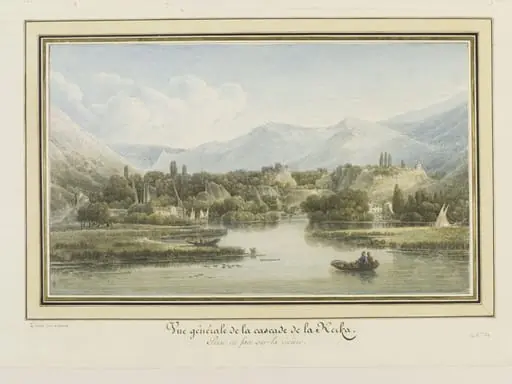
- Voyage Pittoresque et Historique de l'Istrie et de la Dalmatie
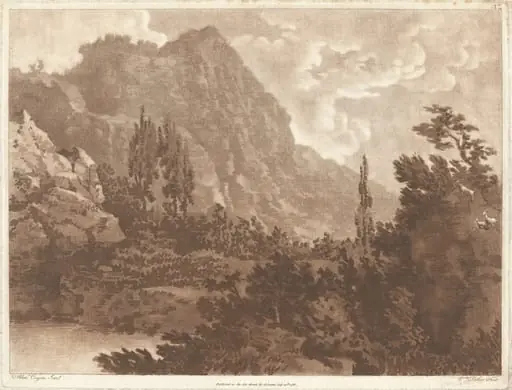 A second drawing done from the same blot
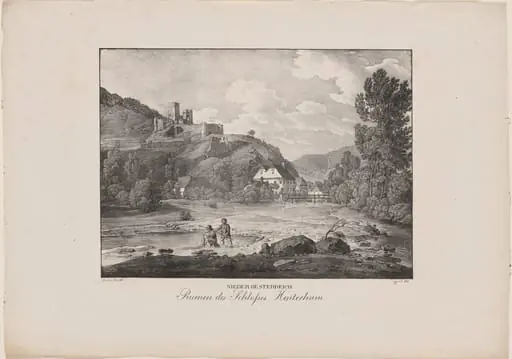 Nieder-Oesterreich, Ruinen des Schlosses Hinterhaus (Lower Austria, Ruins of Hinterhaus Castle)
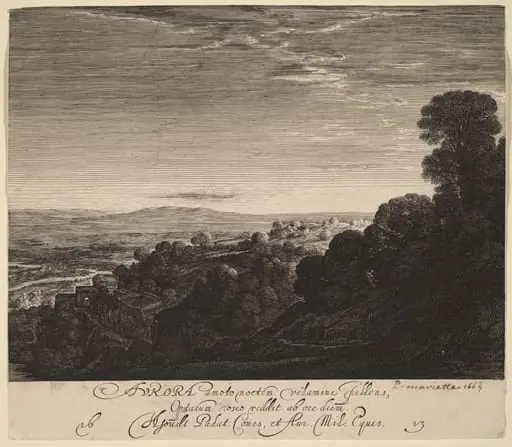 Landscape at Dawn: Aurora
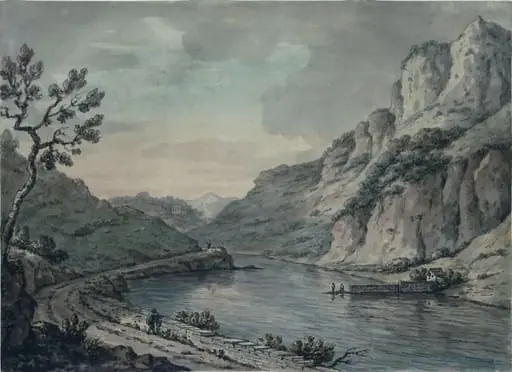 Lake Scenery
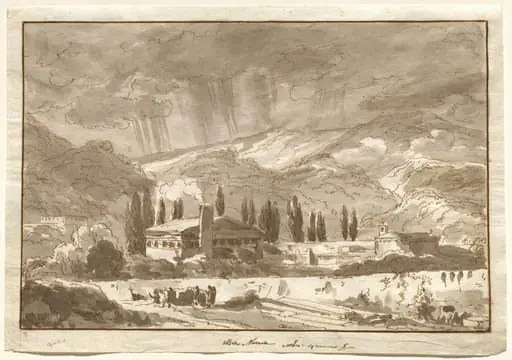 A Storm over the Mountains near Nocera
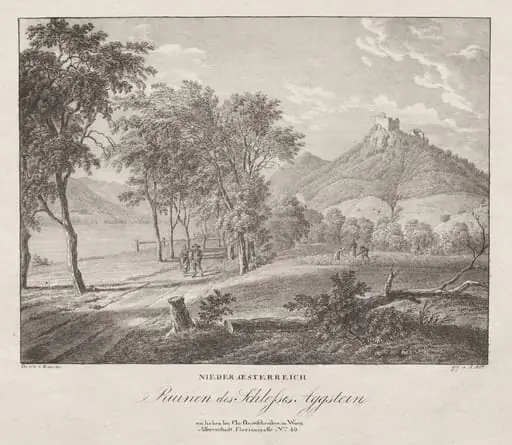 Nieder-oesterreich, Ruinen des Schlosses Aggenstein
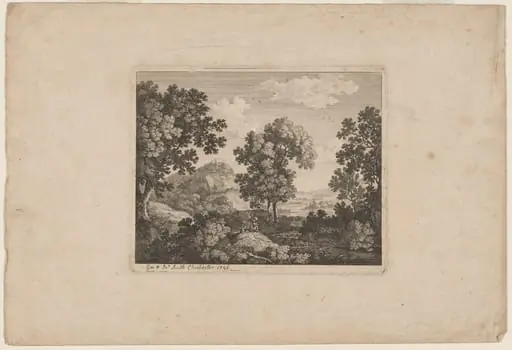 Landscape with Travellers
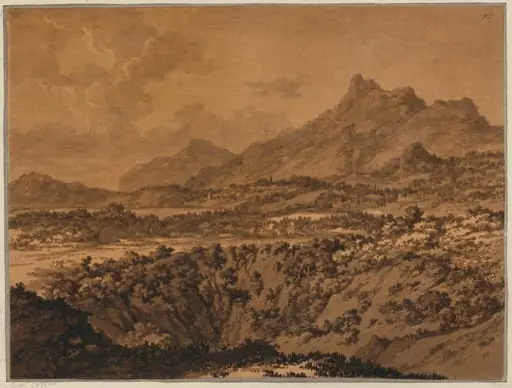 Mountain Landscape with a Hollow
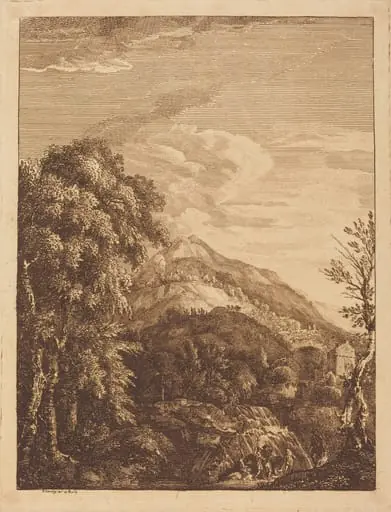 Mountainous Landscape with a Waterfall, Round Tower, Castle, and Banditti
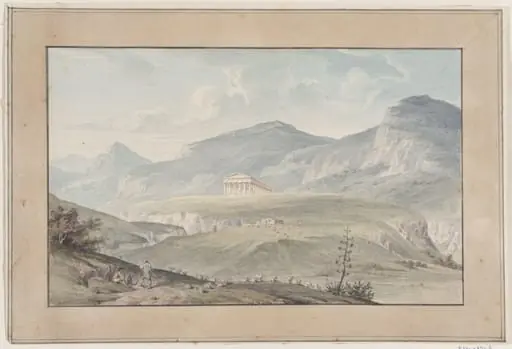 Temple of Segesta in Sicily
 Veue de l'Eglise de la Madonna del popolo à Rome