Artwork
Barbering, Tomb of Userhat
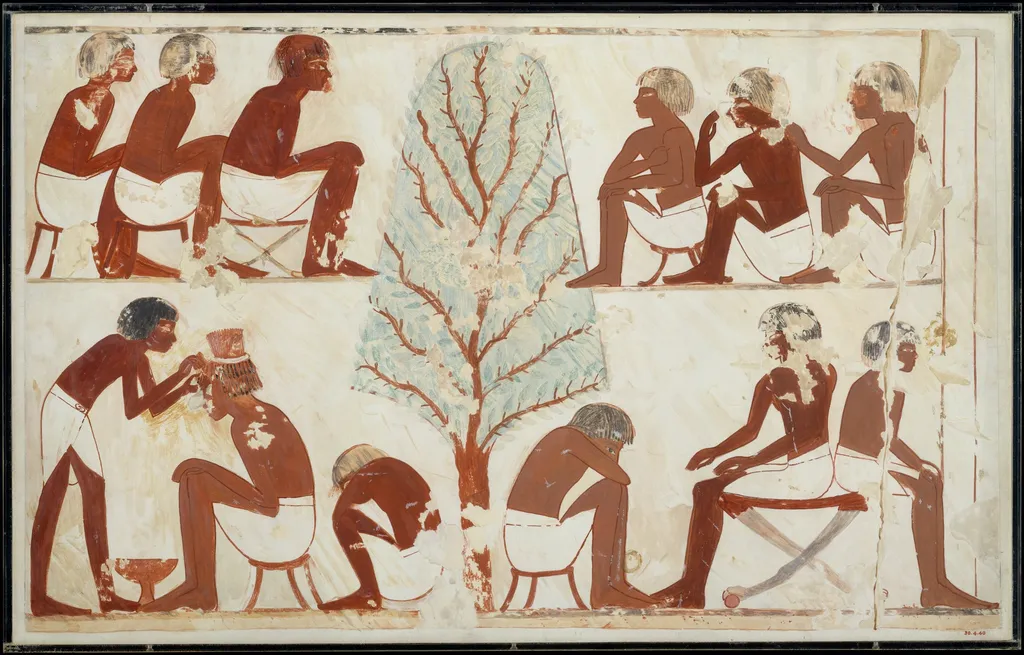
Barbering, Tomb of Userhat is an unspecified painting by Nina M. Davies. It dates from 1427 and is held in the collection of the Metropolitan Museum of Art. Nina M.
About this work
Subject & Meaning
The iconography of the barber’s tools and the act itself may symbolize purification and the maintenance of order in both life and the afterlife.
The painting shows a male figure engaged in the act of shaving another man's head, a practice associated with personal grooming and ritual cleansing in ancient Egyptian culture. Depicted within the context of the Tomb of Userhat, the scene reflects contemporary concerns with appearance and social presentation, suggesting that grooming held significance even in funerary settings.
The iconography of the barber’s tools and the act itself may symbolize purification and the maintenance of order in both life and the afterlife. By placing this activity in a tomb, the artist underscores its role in preparing the deceased for a well-ordered existence beyond death.
The work is attributed to Nina M. Davies and is housed in the Metropolitan Museum of Art, where it is catalogued as part of the museum’s Egyptian collection.
History & Provenance
Barbering, Tomb of Userhat is a painted facsimile created by Nina M. Davies in 1427. The work replicates a scene from the tomb of Userhat (TT 56), an ancient Egyptian burial site. The facsimile is held in the collection of the Metropolitan Museum of Art, where it is catalogued as object number 30.4.40.
Barbering, Tomb of Userhat is part of the Metropolitan Museum of Art's collection and is accessioned under the inventory number 30.4.40. The work was created in 1427 and has been exhibited at the museum, where it is cataloged as a painting by Nina M. Davies depicting a man in the act of barbering. Its presence in the Met's collection underscores its significance within the tomb chapel of Userhat in Thebes.
Overview
Nina M. Davies, an early‑20th‑century Egyptologist and illustrator, produced the work titled Barbering, Tomb of Userhat in 1427. The piece records a scene from the burial chamber of the official Userhat, showing a barber at work. It is part of the Metropolitan Museum of Art’s collection and exemplifies the scholarly copying practice of the Davies duo.
Technique & Style
Rendered with flat, unmodulated red lines against a light background, the figures are stylized and rigid, reflecting the conventions of ancient Egyptian wall painting. The lack of shading, the uniform treatment of hair and clothing, and the central bare tree that bisects the scene all echo the formal visual language of the period.
Context
The original tomb scene would have been part of Userhat’s mortuary chapel, where everyday activities were depicted to ensure their continuation after death. Barbering, a routine yet essential service, was thus immortalized alongside other daily tasks in Egyptian funerary art.
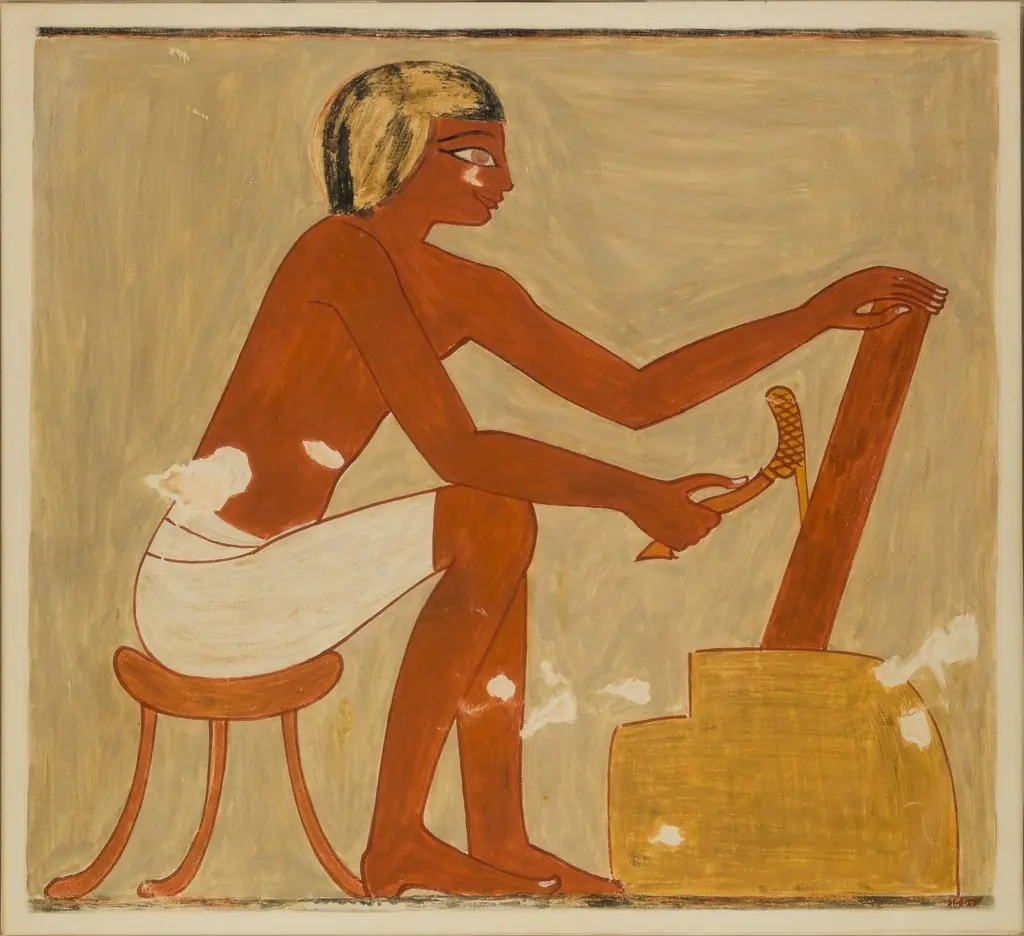
Artist & collection
Artist
The Egyptologists Nina M. Davies (6 January 1881 – 21 April 1965) and Norman de Garis Davies (1865–5 November 1941) were a married couple of illustrators and copyists who worked in the early and mid-twentieth century…

 Menna and Family Hunting in the Marshes, Tomb of Menna
 Amenhotep III and his Mother, Mutemwia, in a Kiosk
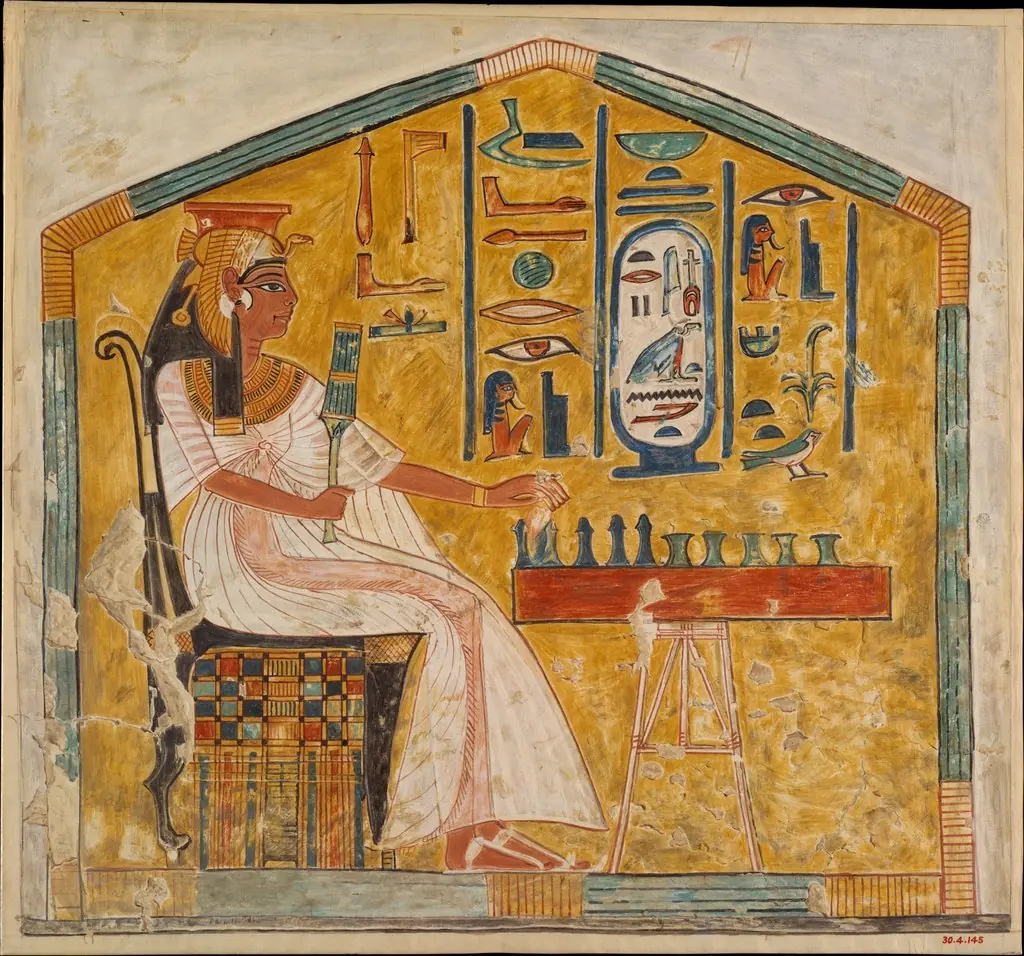 Queen Nefertari Playing Senet
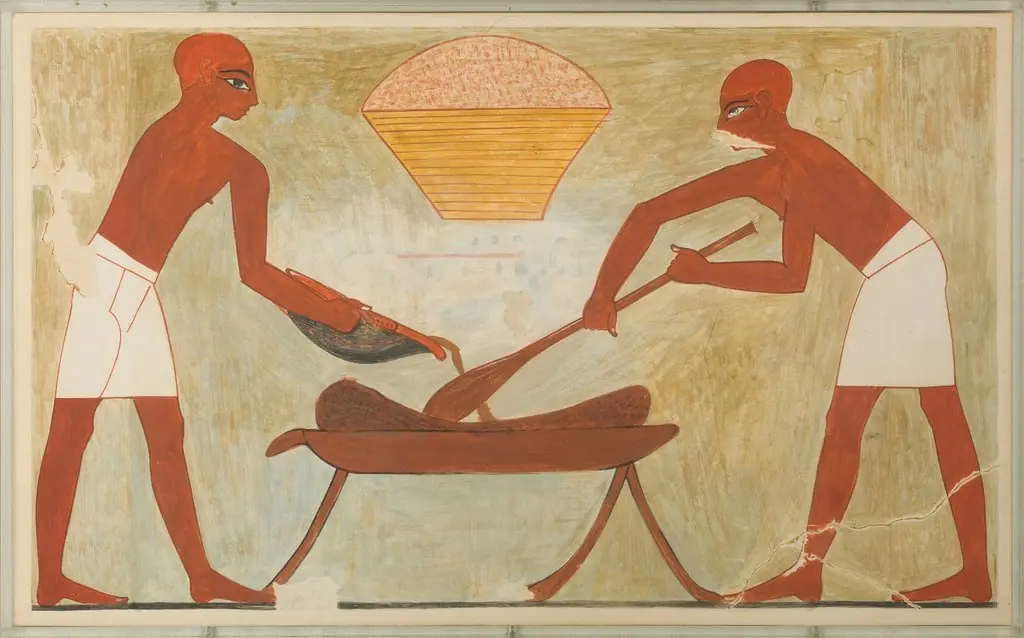 Preparing Dough, Tomb of Rekhmire
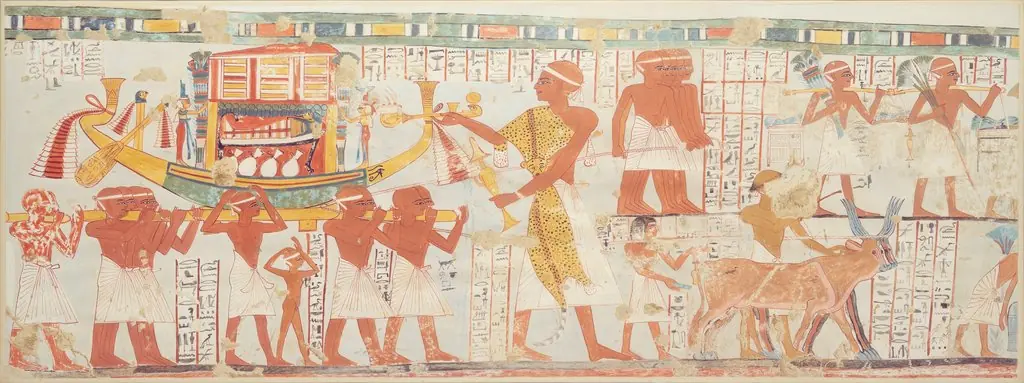 Nakhtamun's Funeral Procession, Tomb of Nakhtamun
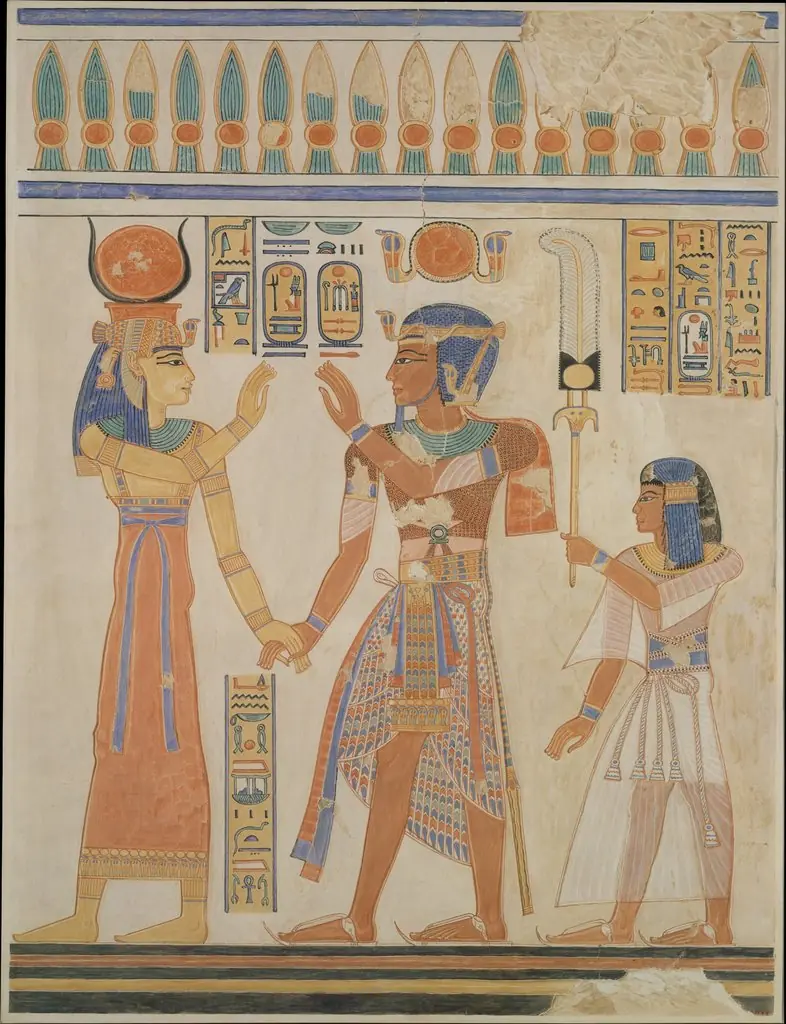 Ramesses III and Prince Amenherkhepeshef before Hathor
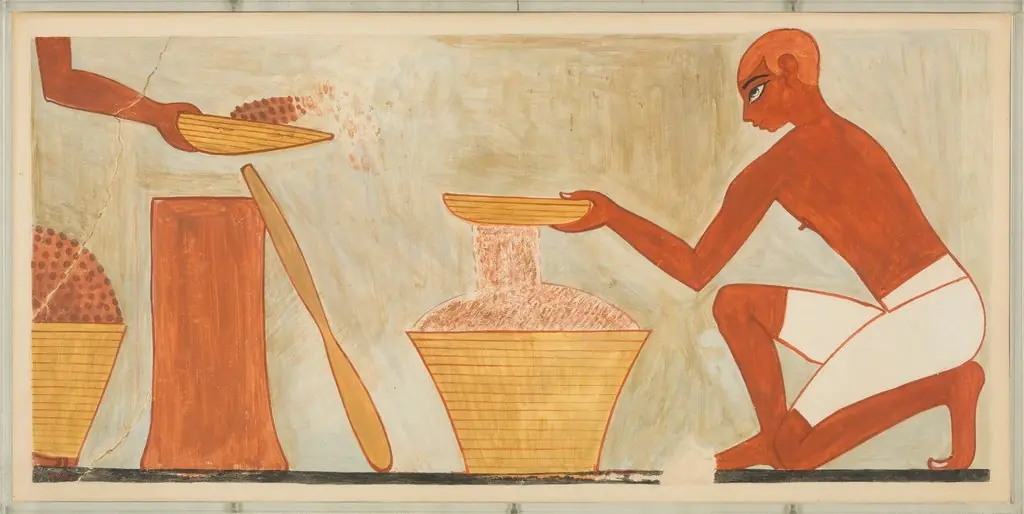 Sifting Meal, Tomb of Rekhmire
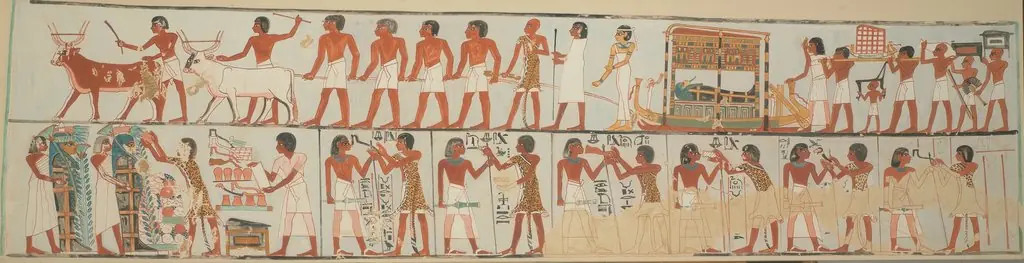 Funeral Procession, Tomb of Pairy
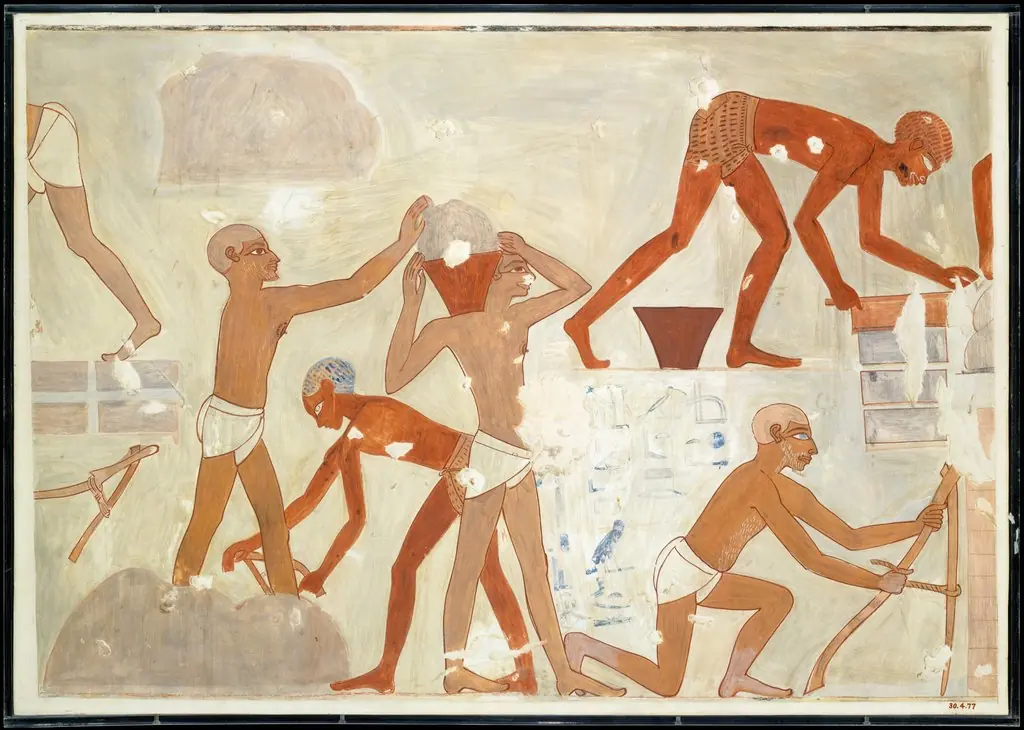 Brickmakers, Tomb of Rekhmire
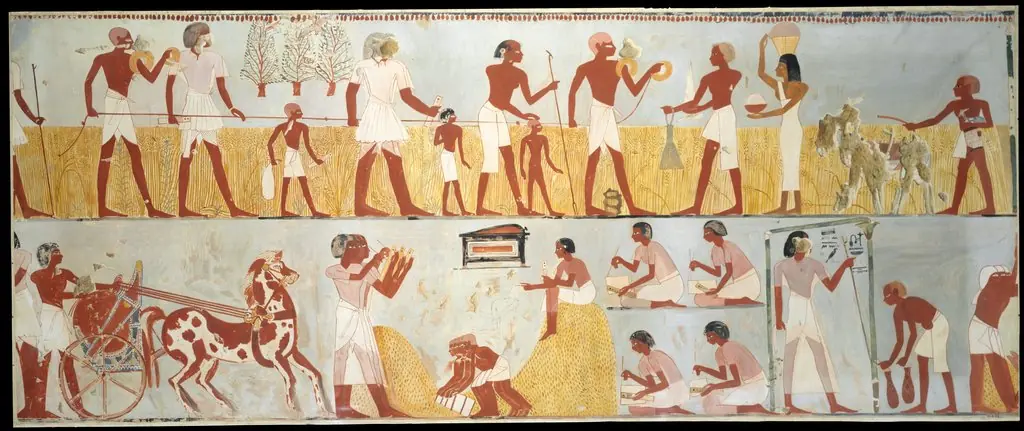 Harvest Scenes, Tomb of Menna
 Craftsmen, Tomb of Nebamun and Ipuky
 Winemaking, Tomb of Ipuy
 Casting Metal, Tomb of Rekhmire
 Wood and Leather Craftsmen, Tomb of Hapu
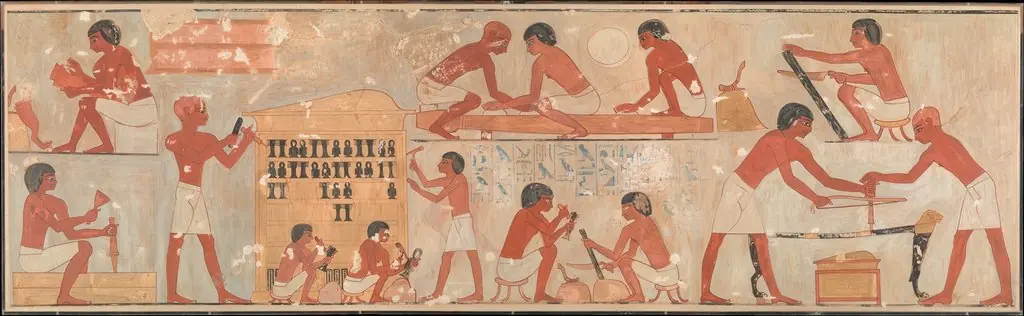 Carpenters at Work, Tomb of Rekhmire
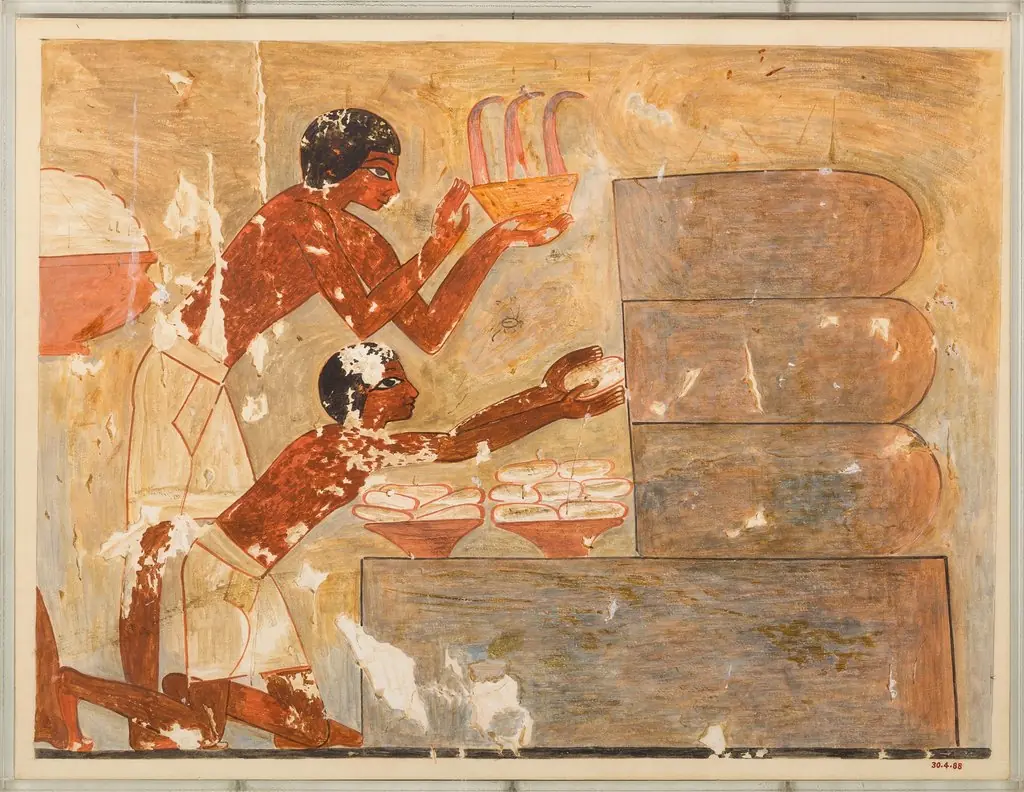 Gathering Honey, Tomb of Rekhmire
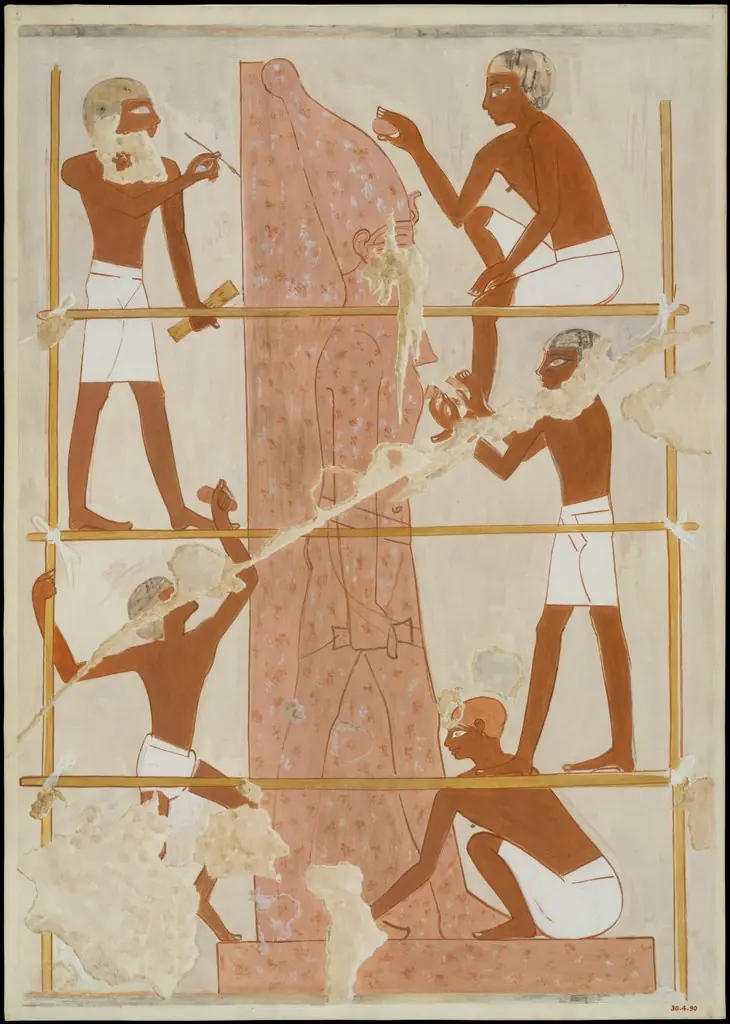 Sculptors at Work, Tomb of Rekhmire
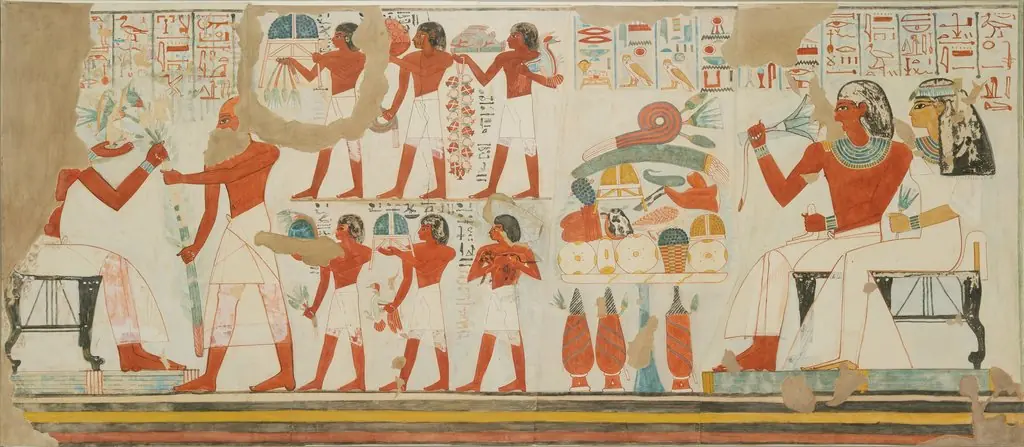 Offerings Made to the Deceased and his Wife, Tomb of Djehutyemheb