Artwork
Spring Day in Lofoten
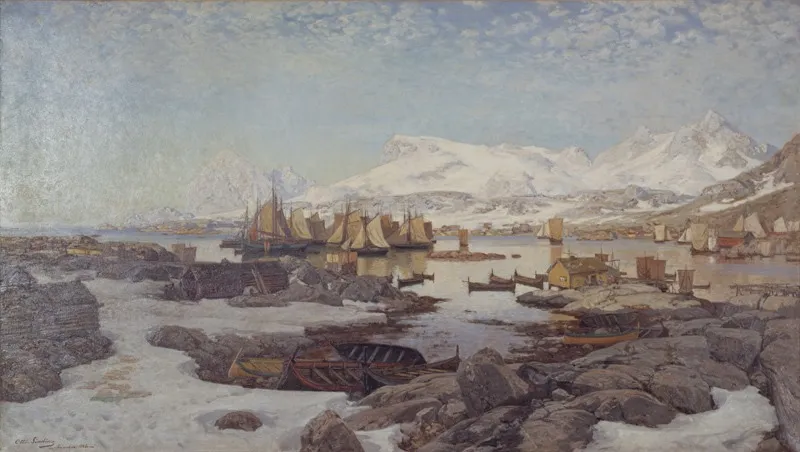
Spring Day in Lofoten is an oil painting by the Naturalist artist Otto Sinding. It dates from 1892 and is held in the collection of the Statens Museum for Kunst. Created in 1892, this oil painting portrays a tranquil harbor in Norway’s Lofoten archipelago.
About this work
Overview
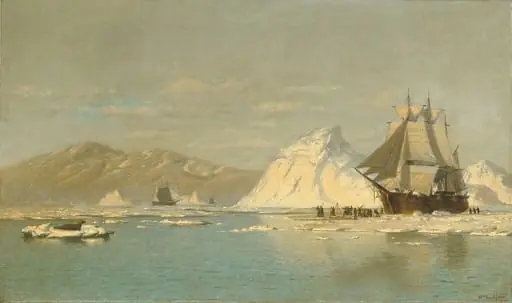
Created in 1892, this oil painting portrays a tranquil harbor in Norway’s Lofoten archipelago. Boats and ships rest in placid water beside rocky, snow‑touched shorelines, while a distant mountain range rises beneath a pale sky dotted with clouds. The composition balances human activity with the stark, wintry landscape, offering a quiet glimpse of coastal life in early spring.
Subject & Meaning
The juxtaposition of warm vessel tones against cool surroundings hints at a harmonious coexistence between people and the landscape.
The work focuses on a harbor scene, a recurring motif that links community and nature. Vessels of varying sizes suggest both local fishing and broader maritime traffic, while the surrounding snow and mountains underscore the harsh yet beautiful environment of northern Norway. The juxtaposition of warm vessel tones against cool surroundings hints at a harmonious coexistence between people and the landscape.
Technique & Style
Executed in oil, the painting employs a naturalist approach, emphasizing careful observation of light, atmosphere, and texture. The artist contrasts warm hues on the boats with cooler blues and grays of water, rock, and sky, creating visual equilibrium. Subtle modeling of light and shadow gives depth to the water’s surface and the rugged terrain beyond.
History & Provenance
The piece was produced by Otto Sinding, a Norwegian artist noted for landscapes, folk scenes, and historic subjects. It entered the collection of Denmark’s Statens Museum for Kunst, where it remains part of the museum’s holdings of 19th‑century Scandinavian art.
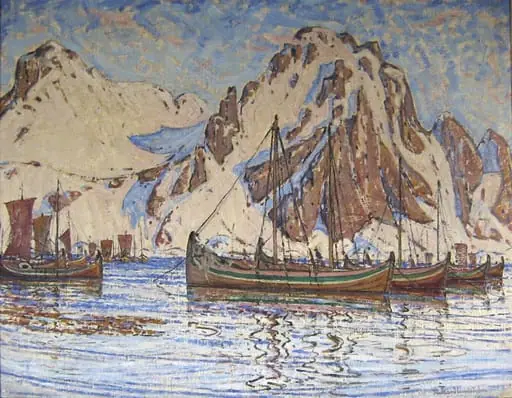
Artist & collection
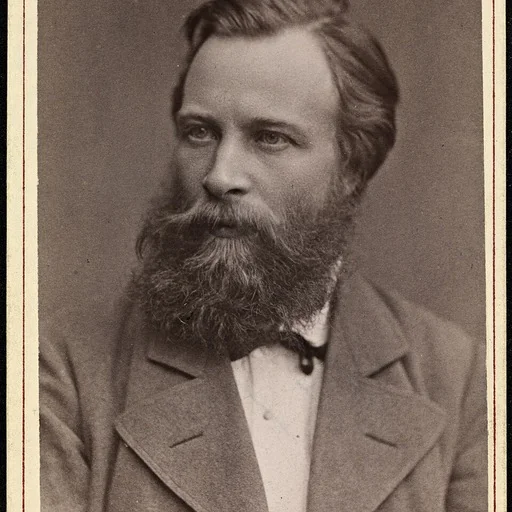
Artist
Otto Ludvig Sinding (20 December 1842 – 22 November 1909) was a Norwegian painter, illustrator, poet and dramatist. Sinding drew on motives from Norwegian nature, folk life and history.

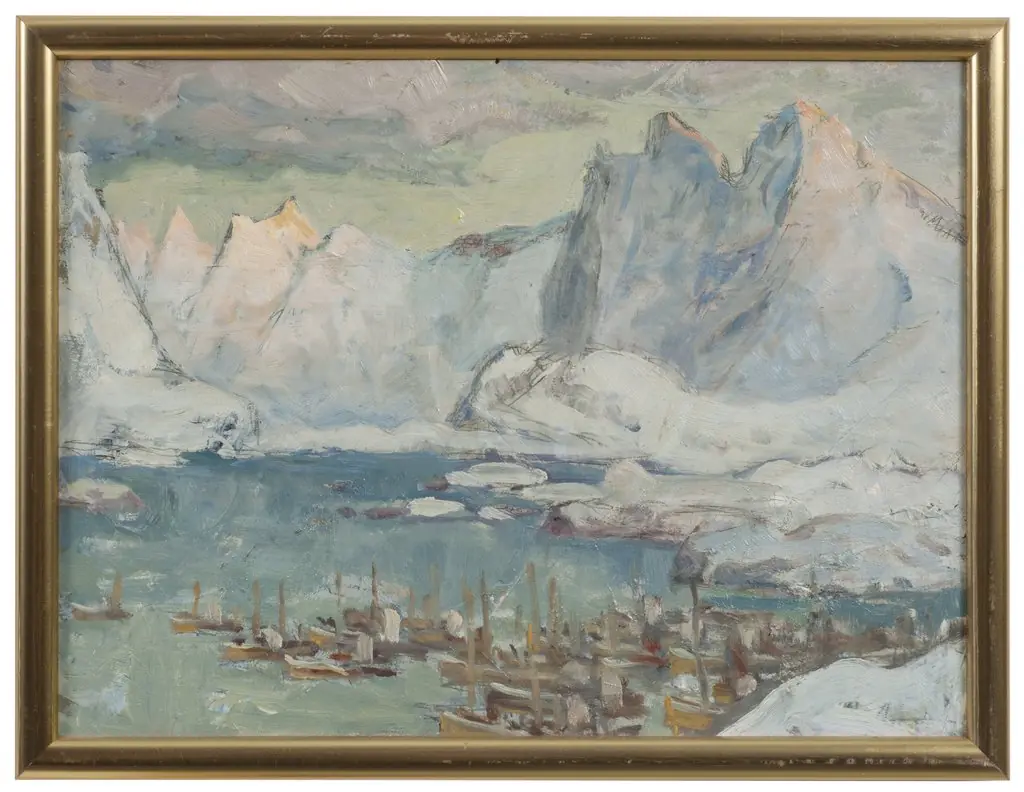 Svolvaer Harbour at the Height of the Fishing Season.Study from Lofoten
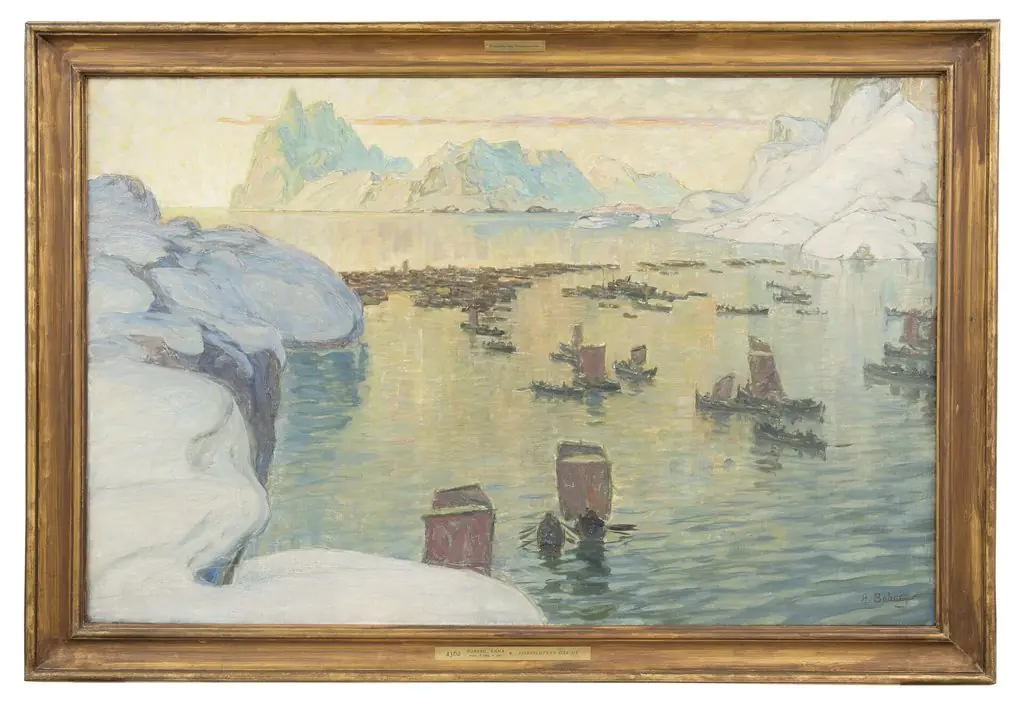 The Fishing Fleet Going Out. Study from North Norway
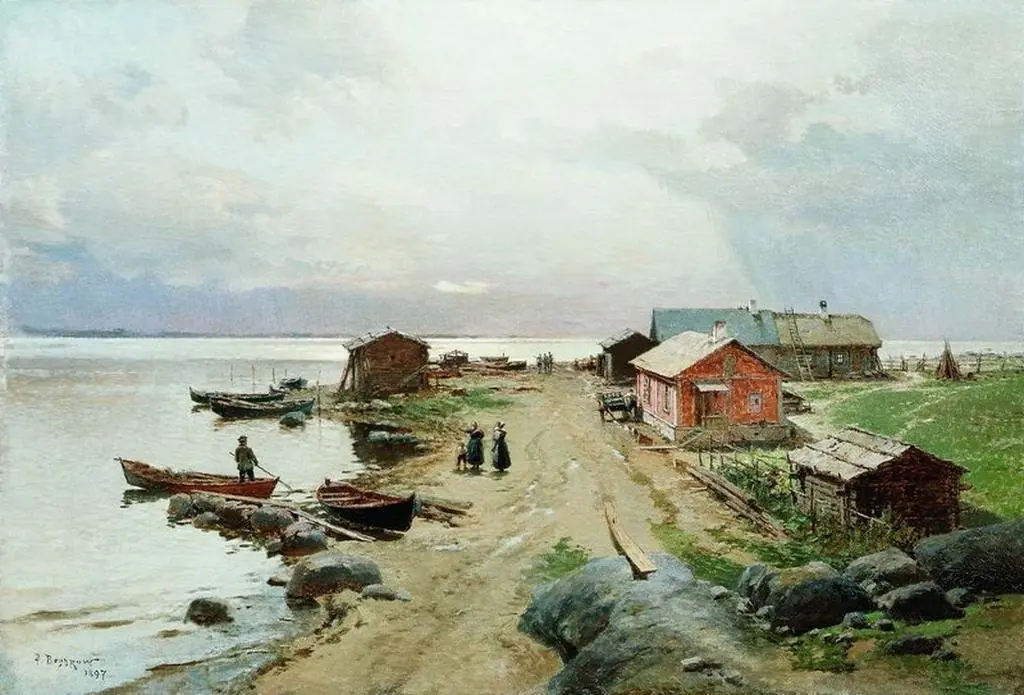 Shore at Hapsal
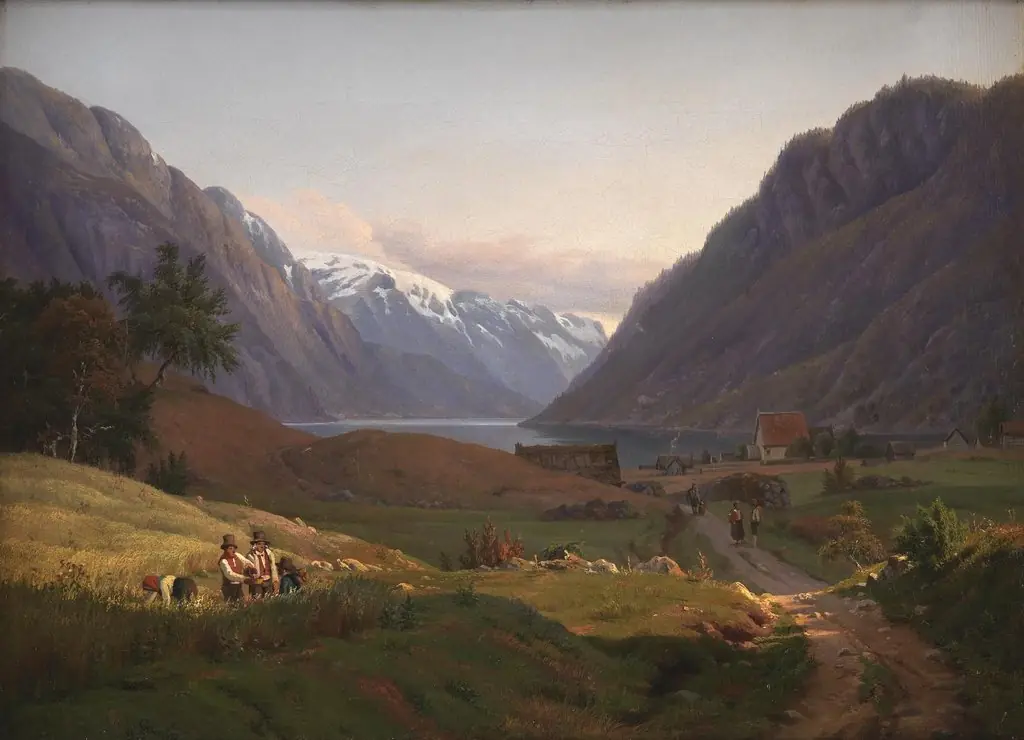 View of Odda at the Sør Fjord in Hardanger, Norway. Morning Light
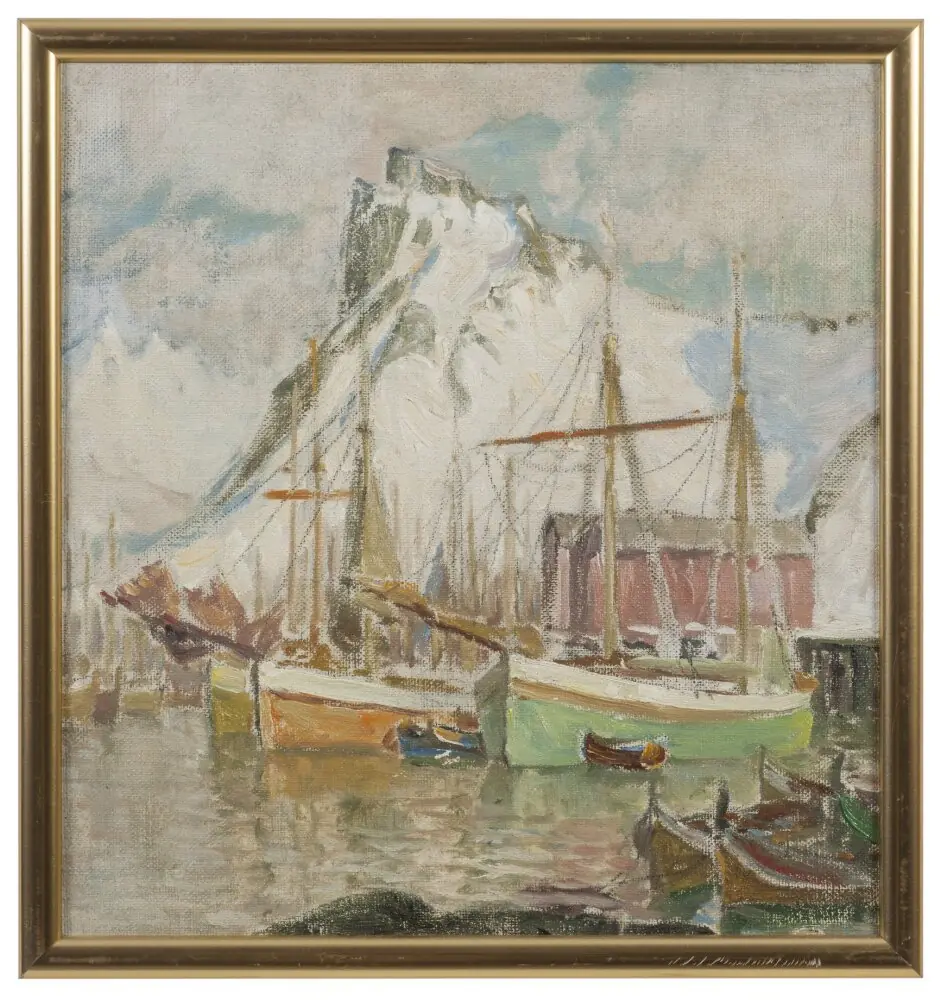 In the Harbour, Svolvaer. Study from Lofoten
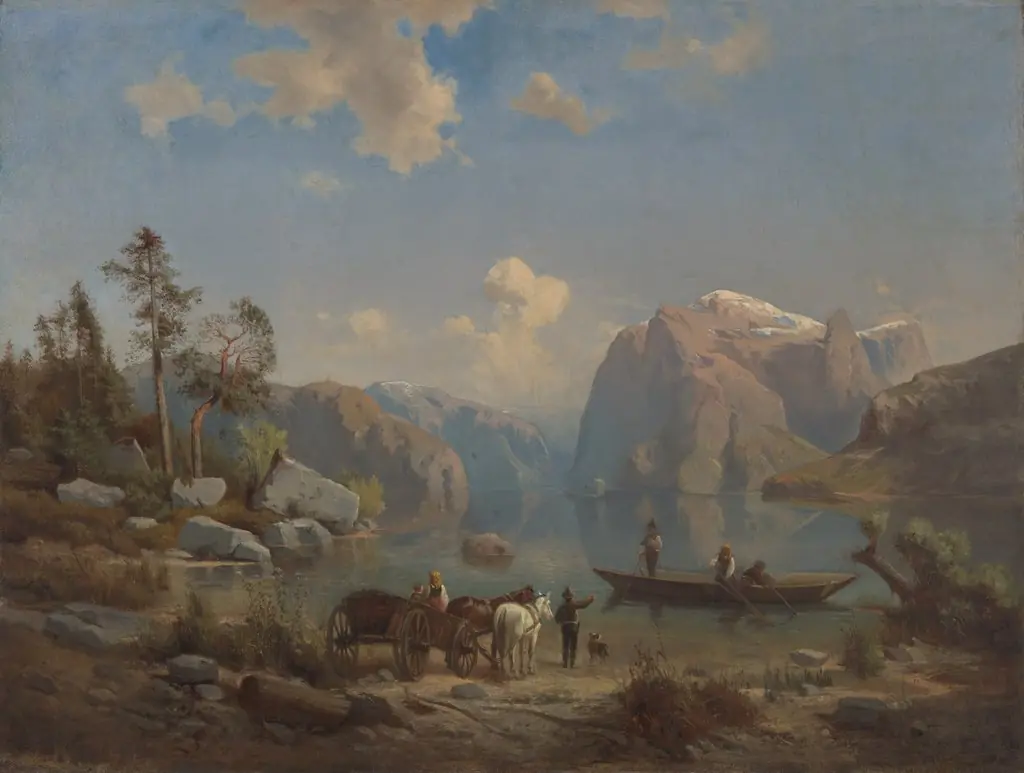 Mountain Landscape with a Lake
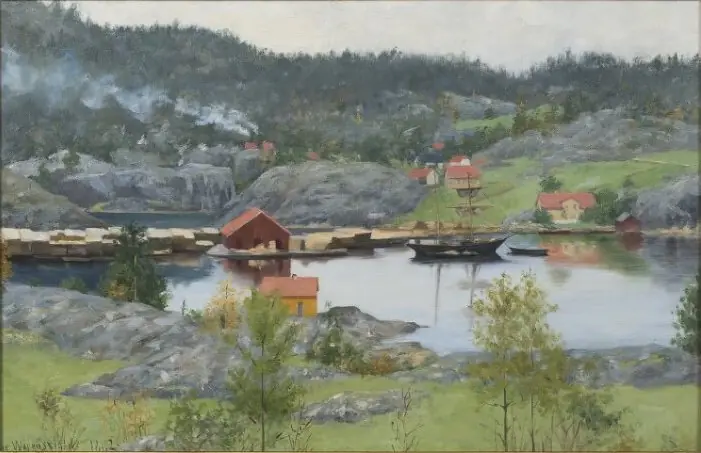 Fiord Landscape
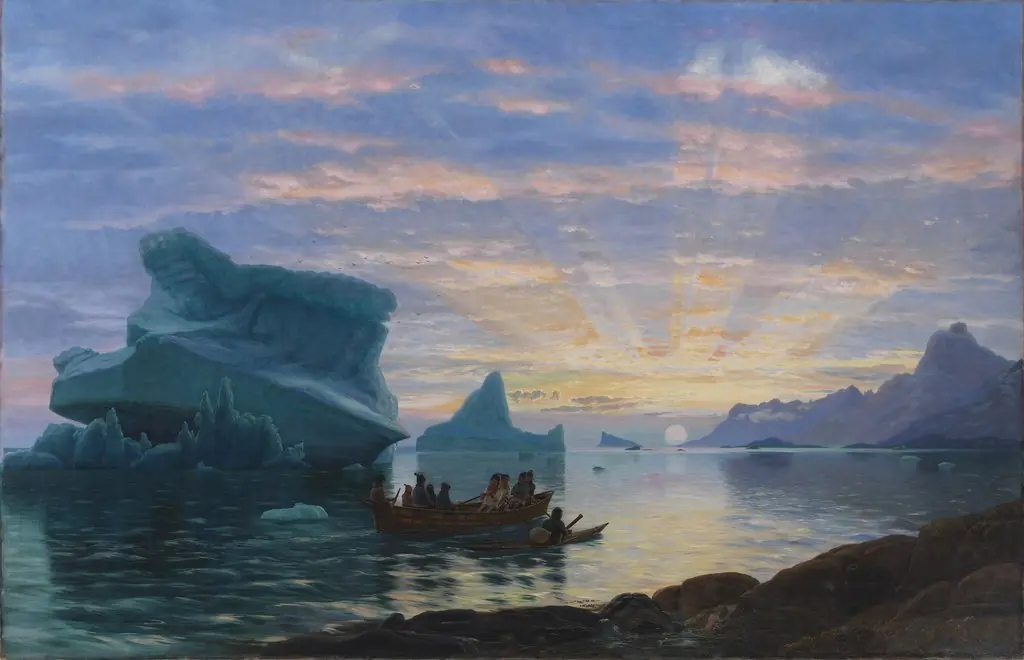 Midnatsstemning ved den grønlandske kyst
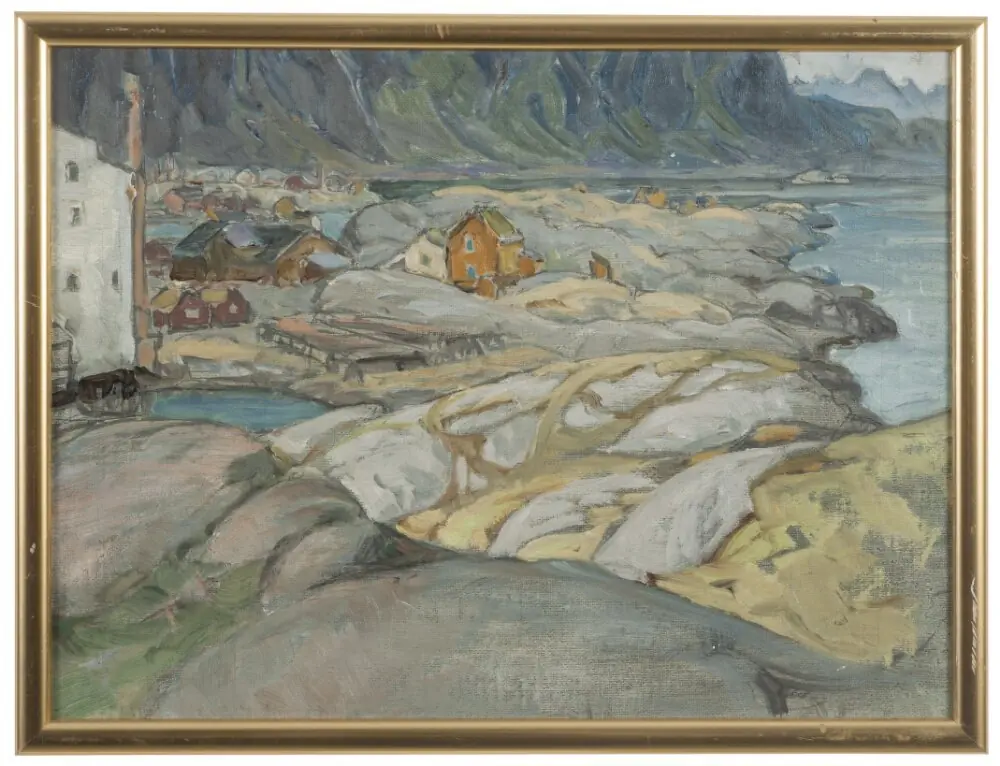 The Village at the Foot of the Mountain. Study from Lofoten
 Off Greenland—Whaler Seeking Open Water