Artwork
Stuf în deltă
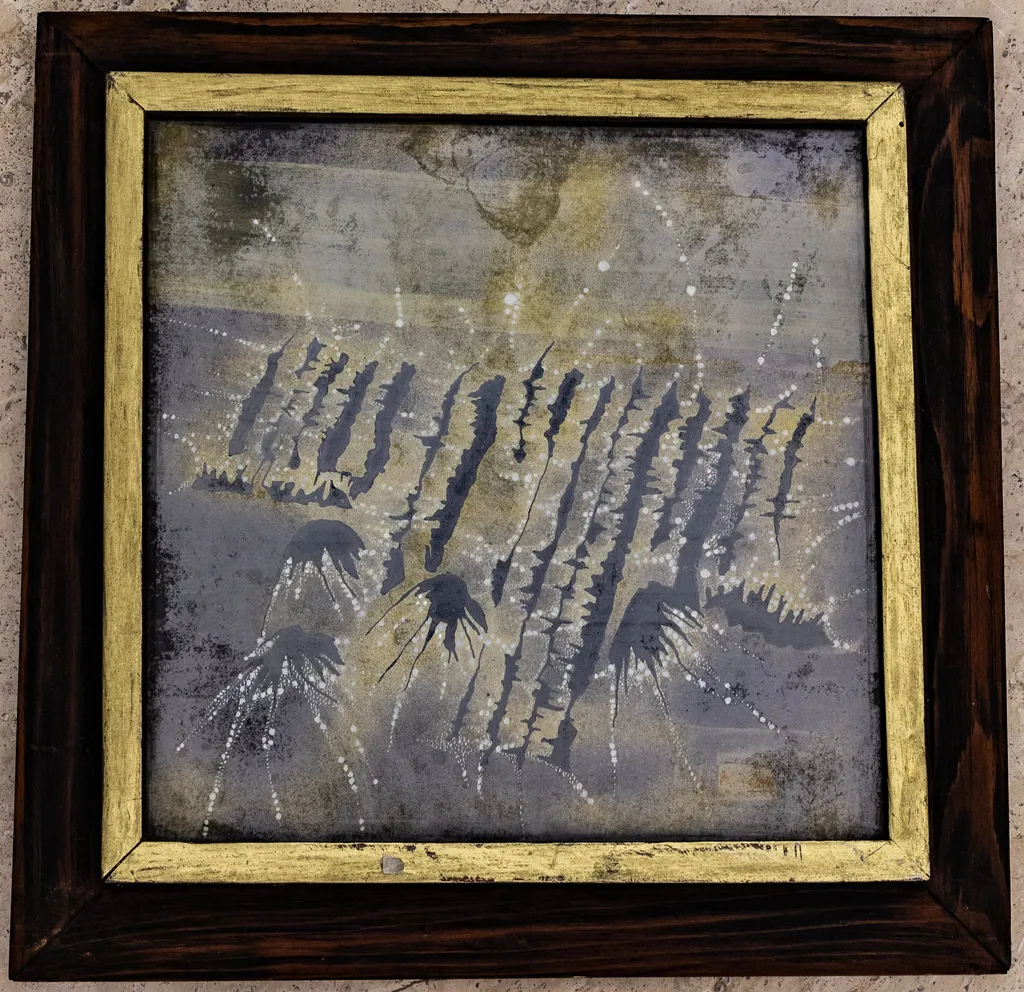
Stuf în deltă is an unspecified painting by Ovejan Nicolae. It is held in the collection of the Gavrila Simion Eco-Museum Research Institute Tulcea.
About this work
Overview
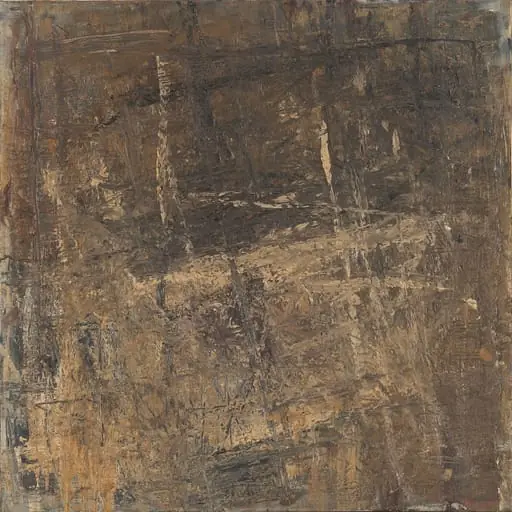
The surface is built with heavy, uneven brushwork that rejects smoothness, creating a tactile, almost visceral texture.
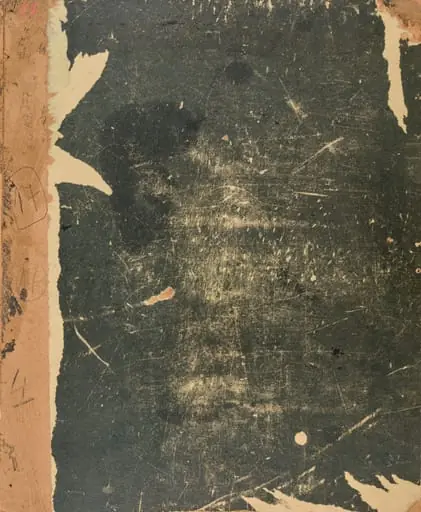
This painting presents a dense, chaotic composition of interwoven branches and rough surfaces, rendered in muted grays, browns, and sparse white accents suggesting frost or snow. The surface is built with heavy, uneven brushwork that rejects smoothness, creating a tactile, almost visceral texture. Its untamed appearance resists conventional refinement, emphasizing materiality over clarity of form.
Subject & Meaning
The title, Stuf în deltă, suggests a natural setting, possibly a marsh or river delta, but the imagery offers no literal depiction. Instead, it evokes a sense of wild, overgrown terrain through abstraction. The lack of clear focal points or recognizable elements invites interpretation rooted in mood rather than narrative, leaving the subject open to the viewer’s perception of decay, resilience, or wilderness.
Technique & Style
The artist employs thick, irregular impasto strokes to build the surface, layering paint with deliberate roughness. Colors are restrained, dominated by earth tones with minimal contrast, enhancing the somber atmosphere. The absence of blending or fine detail reinforces a raw, immediate quality, aligning the work with expressive, non-idealized approaches to landscape.
History & Provenance
No documented exhibition history or ownership record is available for this work. It appears to be an unattributed or lesser-known piece, possibly from a regional or private collection. Its lack of provenance suggests it may not have been widely circulated or formally cataloged during its creation.
Context
Created in a period when many artists were moving away from polished realism, this work reflects a broader interest in material texture and emotional expression over representational accuracy. Its aesthetic aligns with post-war tendencies in Eastern European art that valued rawness and personal gesture, though its specific cultural origins remain unspecified.
Legacy
While not widely recognized in major art historical narratives, the painting exemplifies a quiet but persistent strand of 20th-century painting that prioritized tactile surface and emotional resonance over clarity. It stands as a modest but distinct example of how texture could convey natural forces without direct depiction.
Artist & collection
Artist
Ovejan Nicolae painted quiet Danube scenes and village life in the late 20th century.
Museum
Gavrila Simion Eco-Museum Research Institute Tulcea
Continue through works from the same source collection.