Artwork
Jagdbeute
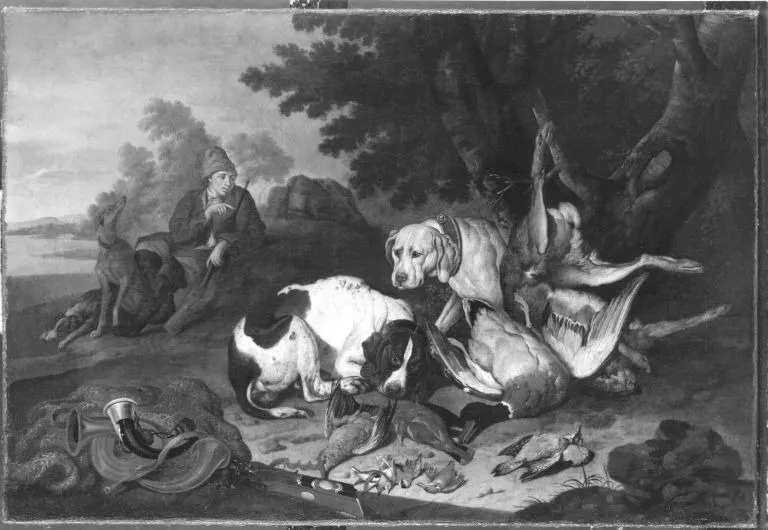
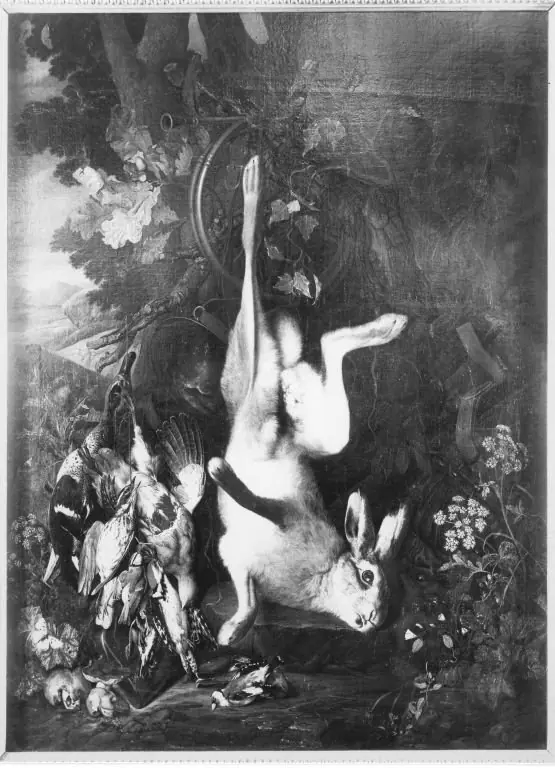
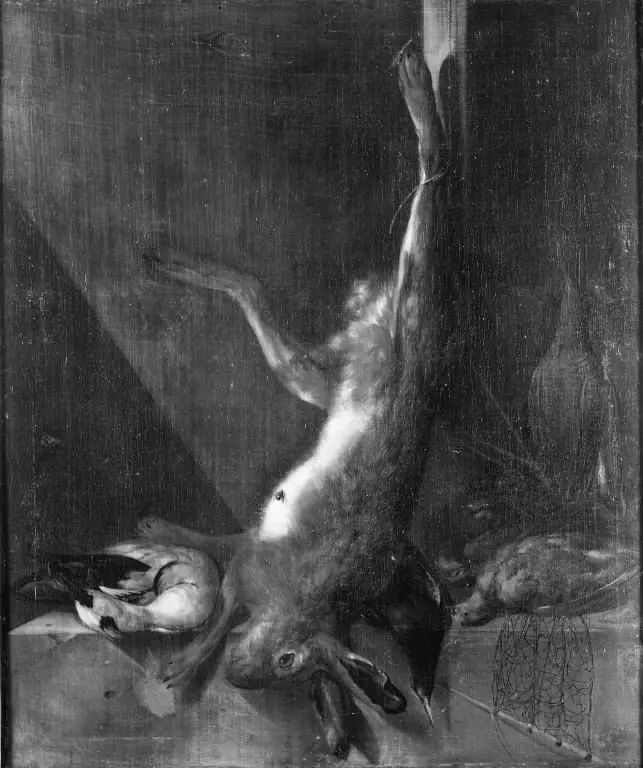
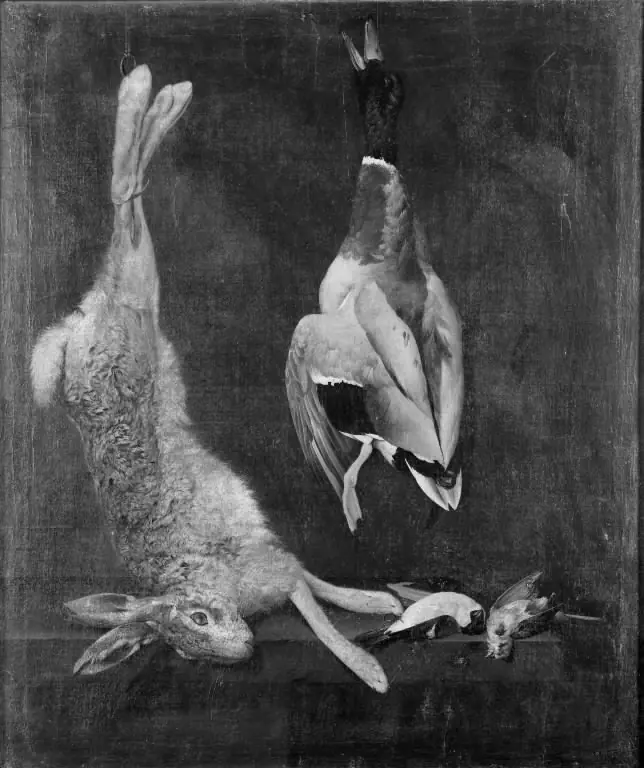
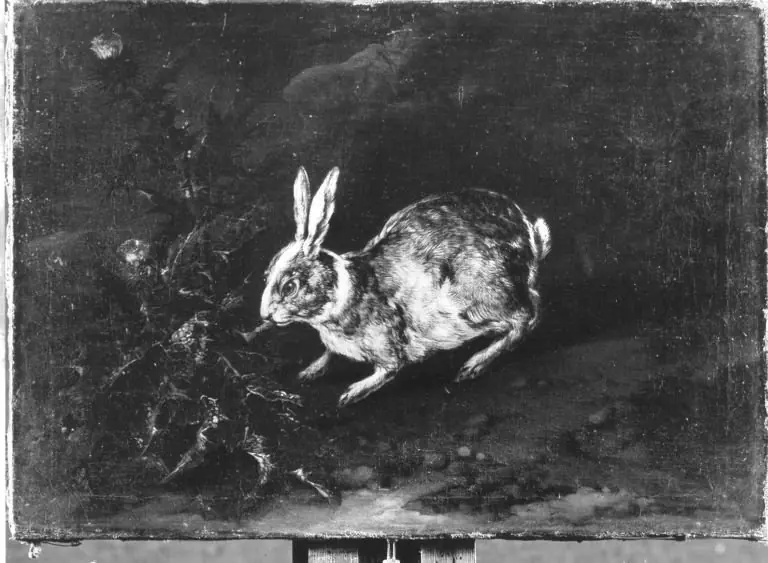
Jagdbeute is an unspecified painting by the Flemish Baroque painting artist Philipp Ferdinand de Hamilton. It dates from 1707 and is held in the collection of the Bavarian State Painting Collections.
About this work
Overview
The scene balances the stillness of death with the subtle motion of animals, creating a contemplative tone rather than one of triumph.
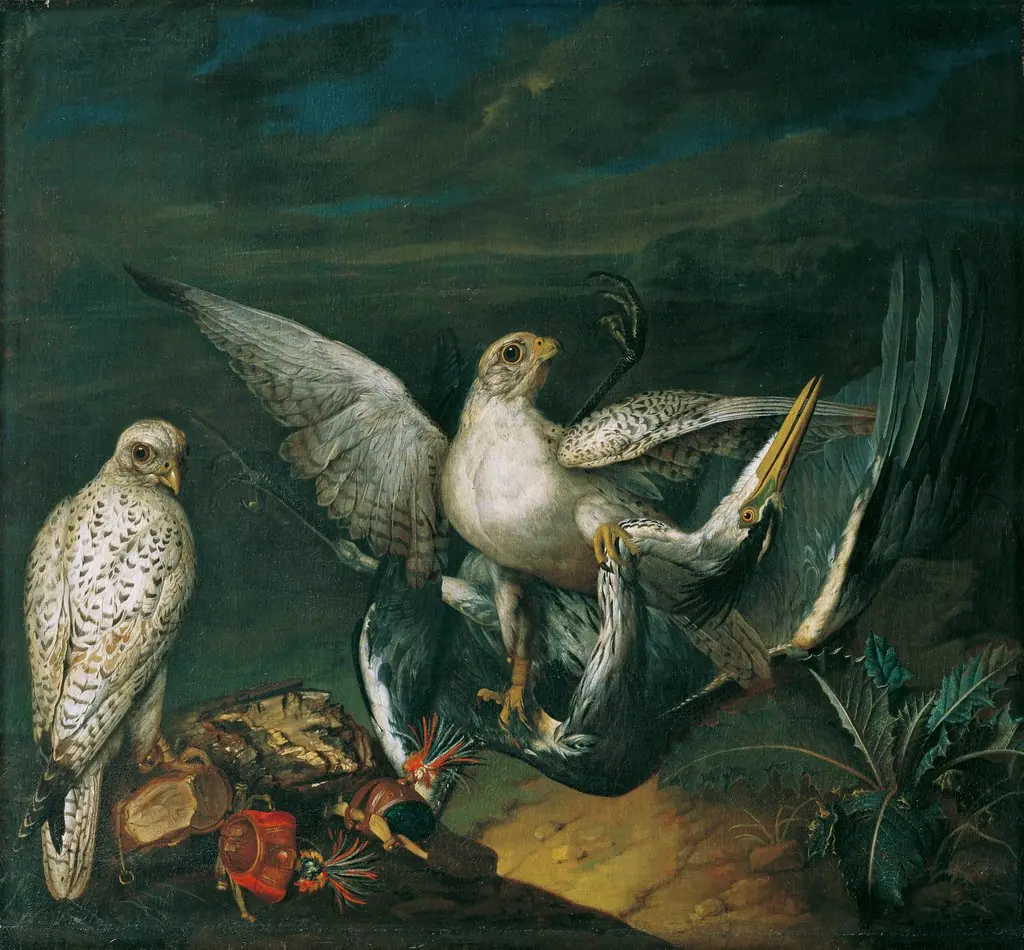
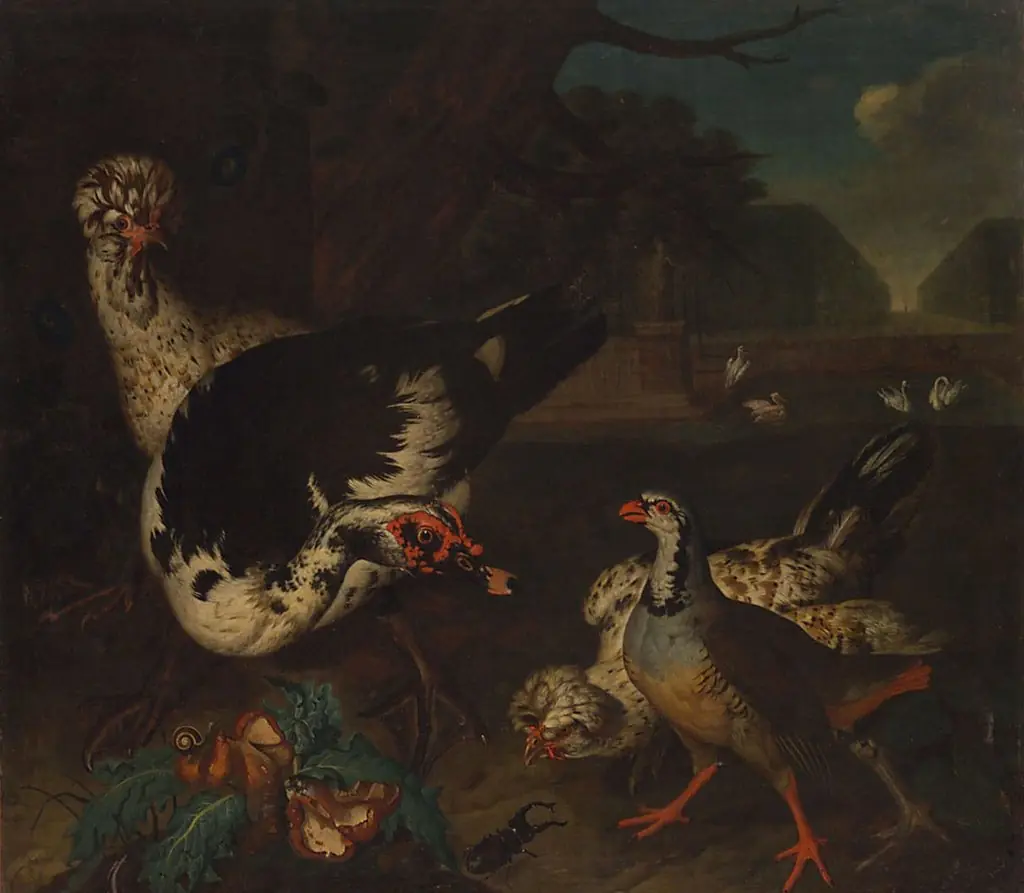
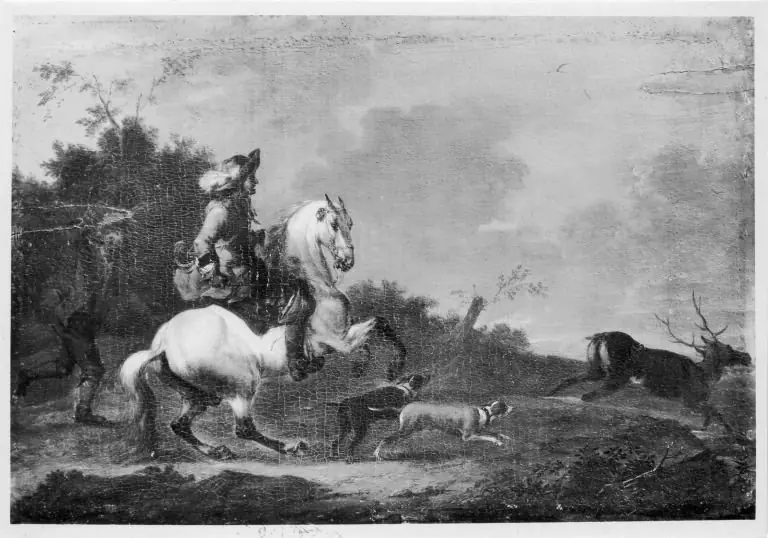
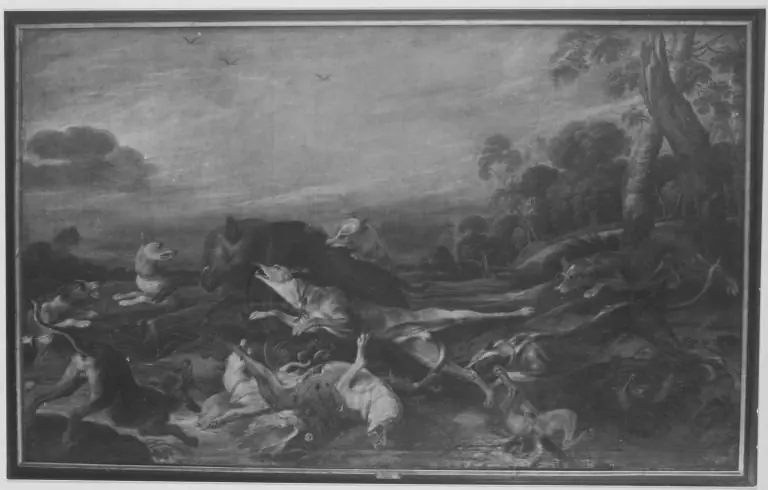
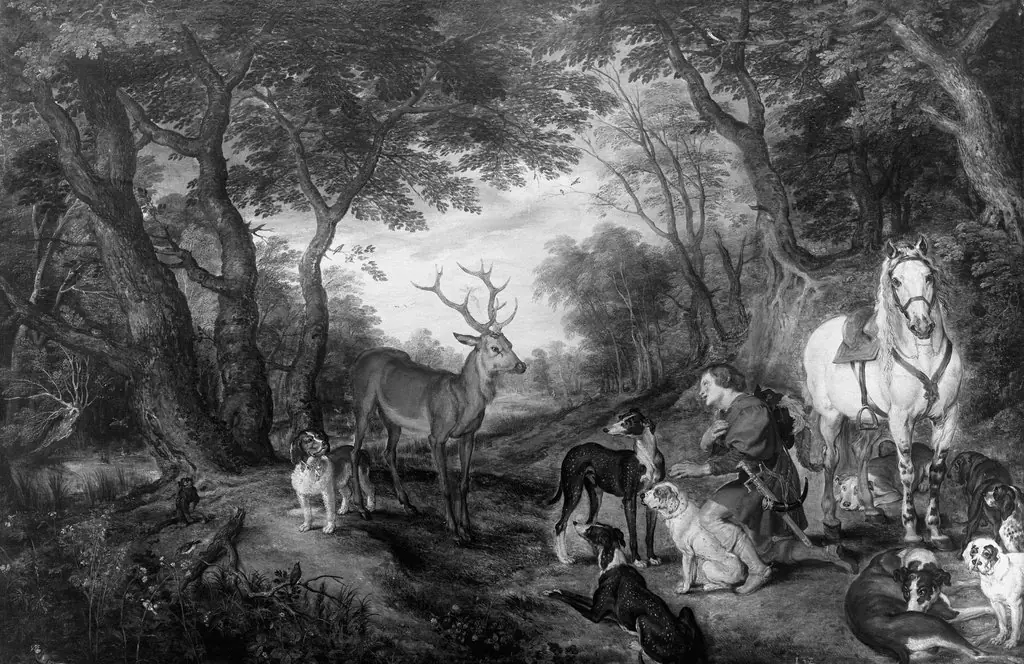
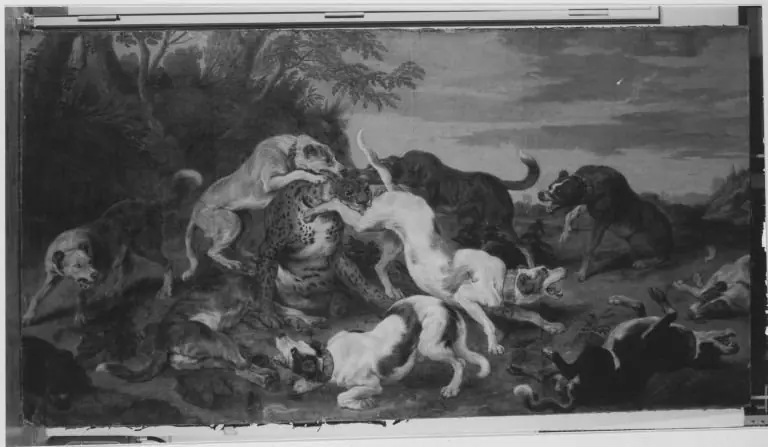
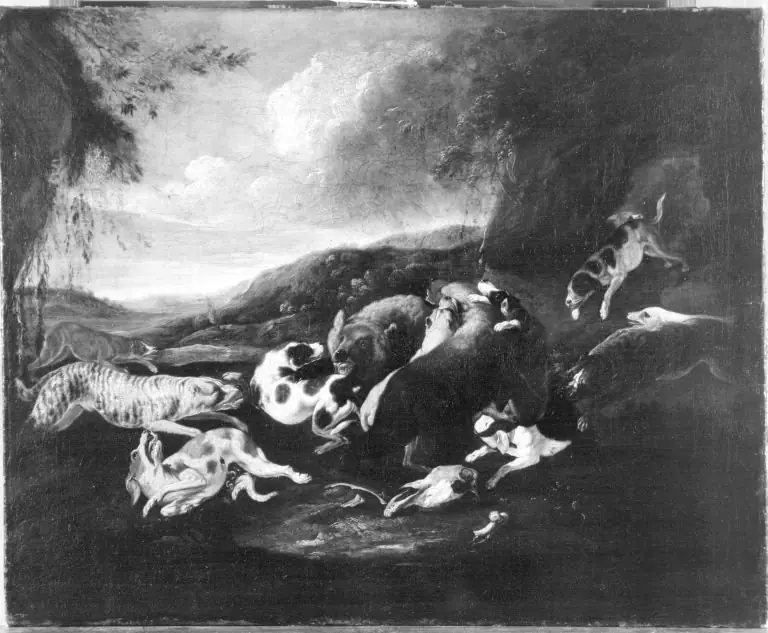
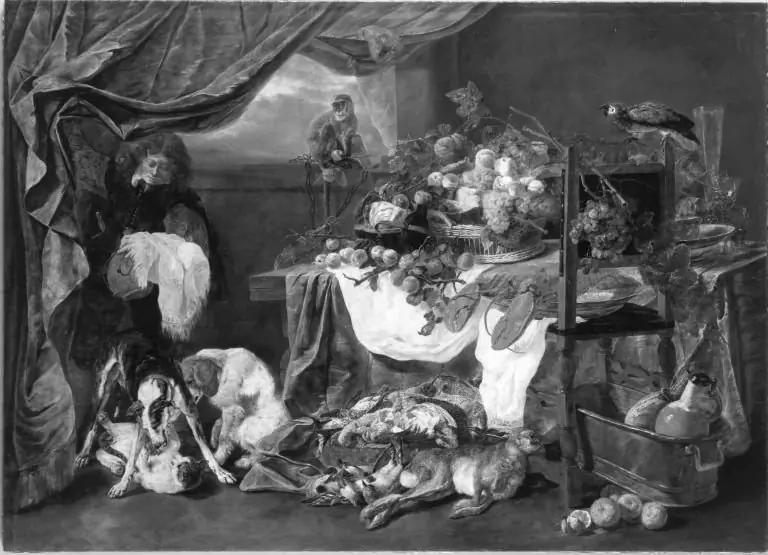
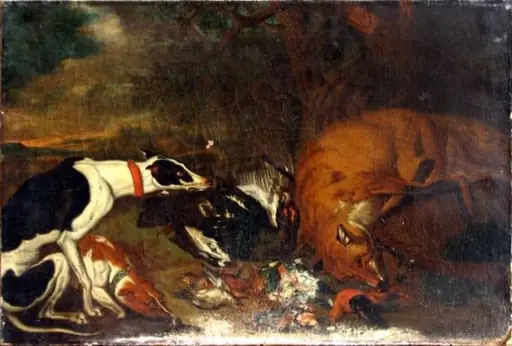
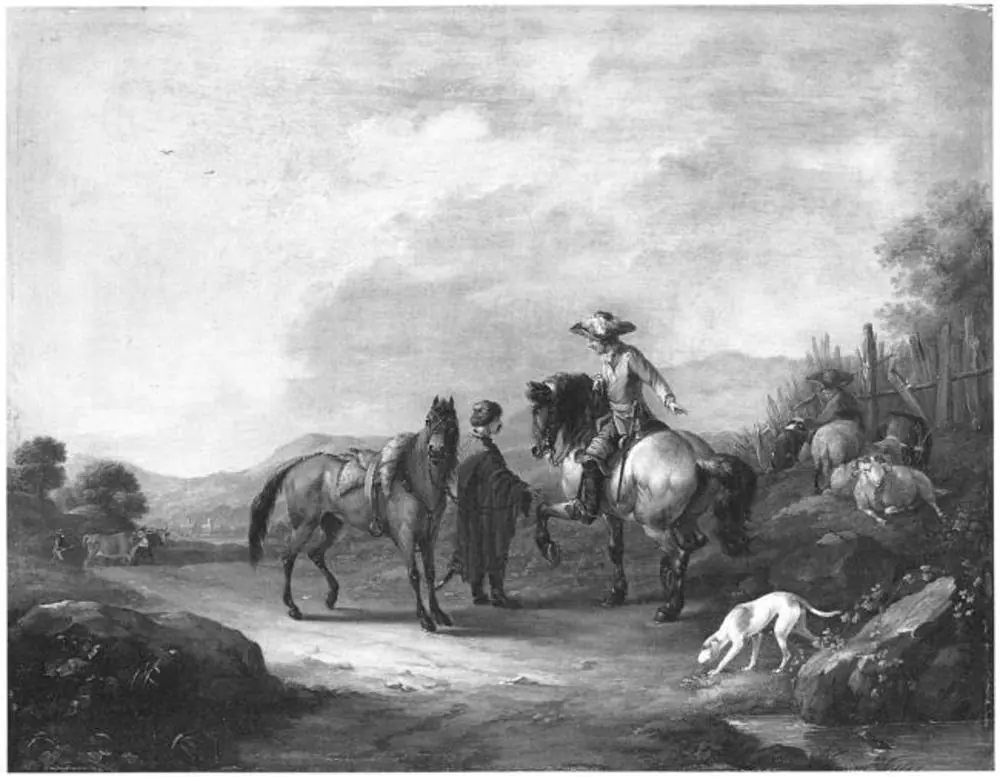
Painted in 1707 by Philipp Ferdinand de Hamilton, Jagdbeute is a still-life composition that captures the aftermath of a hunt. Though rooted in the Flemish Baroque tradition, the work diverges from conventional trophy displays by integrating a human figure and a quiet, atmospheric landscape. The scene balances the stillness of death with the subtle motion of animals, creating a contemplative tone rather than one of triumph.
Subject & Meaning
A woman in dark attire sits calmly amid a group of spotted hounds and fallen game birds. The dogs interact gently with the dead birds, suggesting domestication and familiarity rather than violence. The hanging birds and scattered prey imply a recent hunt, yet the absence of hunters and the subdued lighting shift focus from conquest to quiet reflection, perhaps evoking themes of nature’s cycles or the quiet dignity of rural life.
Technique & Style
Hamilton employed chiaroscuro to model forms with soft contrasts of light and shadow, lending volume to the birds’ feathers, the dogs’ fur, and the woman’s clothing. The brushwork is precise but not overly ornate, favoring naturalistic detail over theatricality. The cloudy sky and distant water are rendered with muted tones, reinforcing the painting’s restrained mood and enhancing its sense of spatial depth without dramatic flair.
History & Provenance
Created during Hamilton’s time in Austria, where he worked after leaving the Southern Netherlands, the painting reflects his transition between regional styles. It entered the Alte Pinakothek’s collection in Munich in the 19th century, likely through royal or aristocratic acquisitions. Its survival in good condition offers insight into the mobility of Flemish artists and the taste for quiet, observational still-life in Central European courts.
Context
While 18th-century Flemish still-life often celebrated abundance and wealth, Jagdbeute stands apart by omitting human hunters and avoiding ostentation. Its serene tone aligns more closely with Dutch genre scenes than with the grandeur of Viennese court art. The inclusion of a female figure in a rural setting also subtly challenges norms of gender and activity in hunting imagery of the period.
Legacy
Hamilton’s Jagdbeute remains a rare example of a hunting still-life infused with psychological quietude. It influenced later 18th-century painters who sought to humanize natural subjects without moralizing. Though not widely reproduced, its presence in the Alte Pinakothek ensures its continued study as a nuanced bridge between Flemish realism and the emerging sensitivity of early Enlightenment visual culture.
Artist & collection
Artist
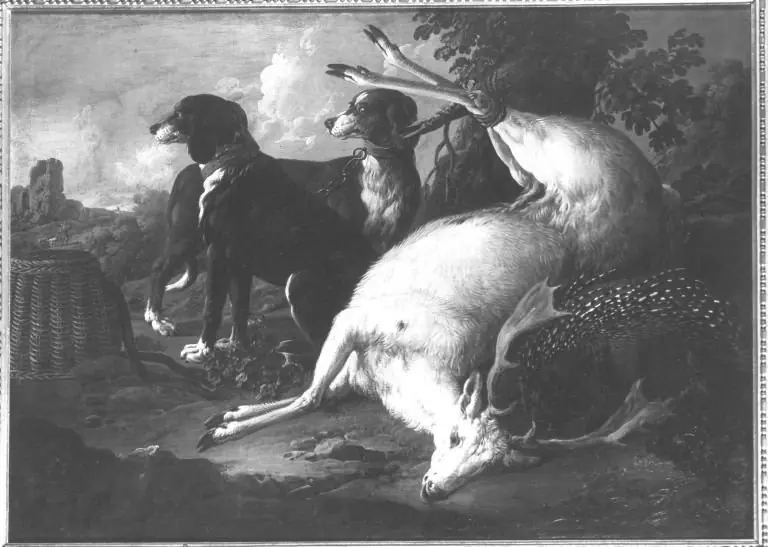
Philipp Ferdinand de Hamilton (c. 1664 – 1750), was an 18th-century painter from the Southern Netherlands active in Austria.