Artwork
Dead Body of Christ
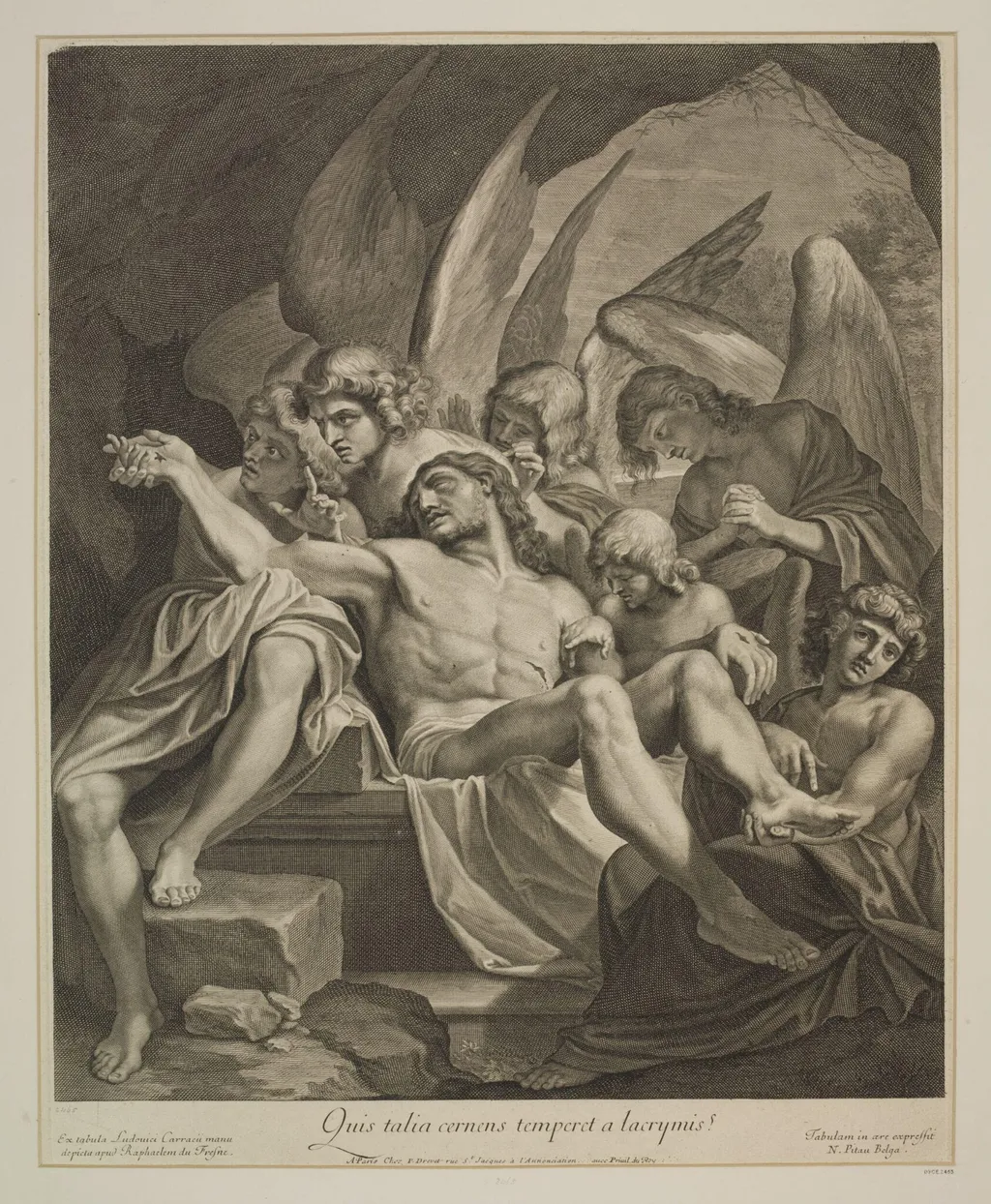
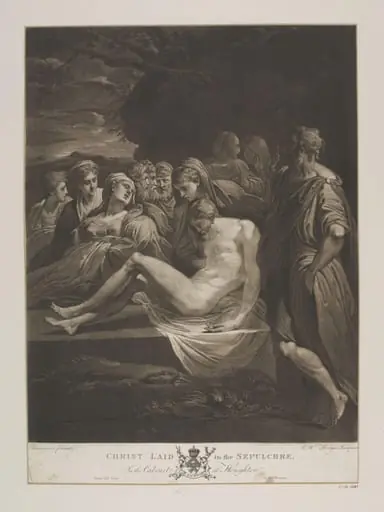
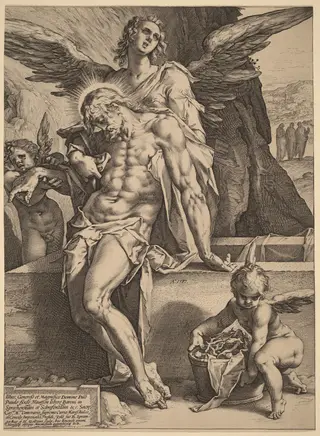
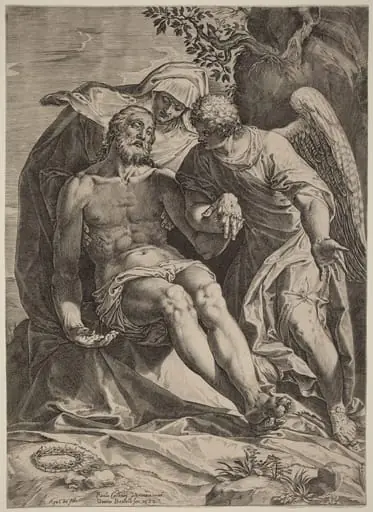
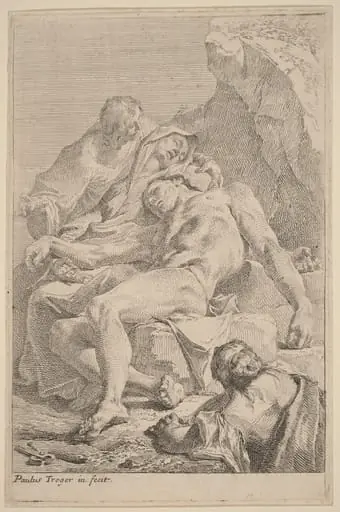
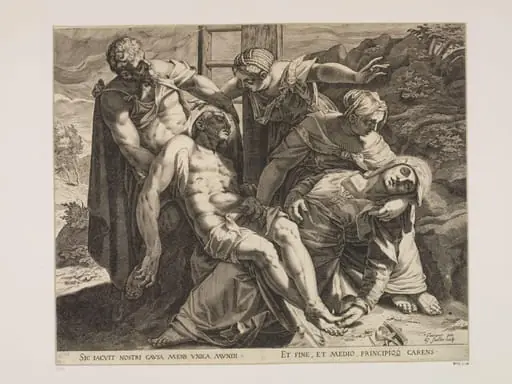
Dead Body of Christ is a print by the Baroque artist Nicolas Pitau. It dates from 1645 and is held in the collection of the Victoria and Albert Museum. This print depicts a somber scene of mourning, centered around the lifeless body of Christ.
About this work
Overview
This print depicts a somber scene of mourning, centered around the lifeless body of Christ. The composition is derived from a work by Lodovico Carracci.
Subject & Meaning
The print shows Christ's body, relaxed yet weighted, surrounded by figures who touch, lean in, or sit in sorrow, their faces turned toward him. The title 'Dead Body of Christ' clarifies the scene's context: a lamentation after Christ's crucifixion.
Technique & Style
The use of shadows creates a dramatic effect, making the figures stand out against a rough background. The emotional intensity and dramatic lighting are characteristic of a particular artistic style.
Context
The print is an example of a religious scene that was common in art, particularly during the Baroque period, known for its dramatic and emotionally charged works.
Own this work as a print
Artist & collection
Artist
Nicolas Pitau, or Pittou the Senior was a Flemish-born French engraver and printmaker.