Artwork
Portrait of Empress Dowager Yelizaveta Alekseevna
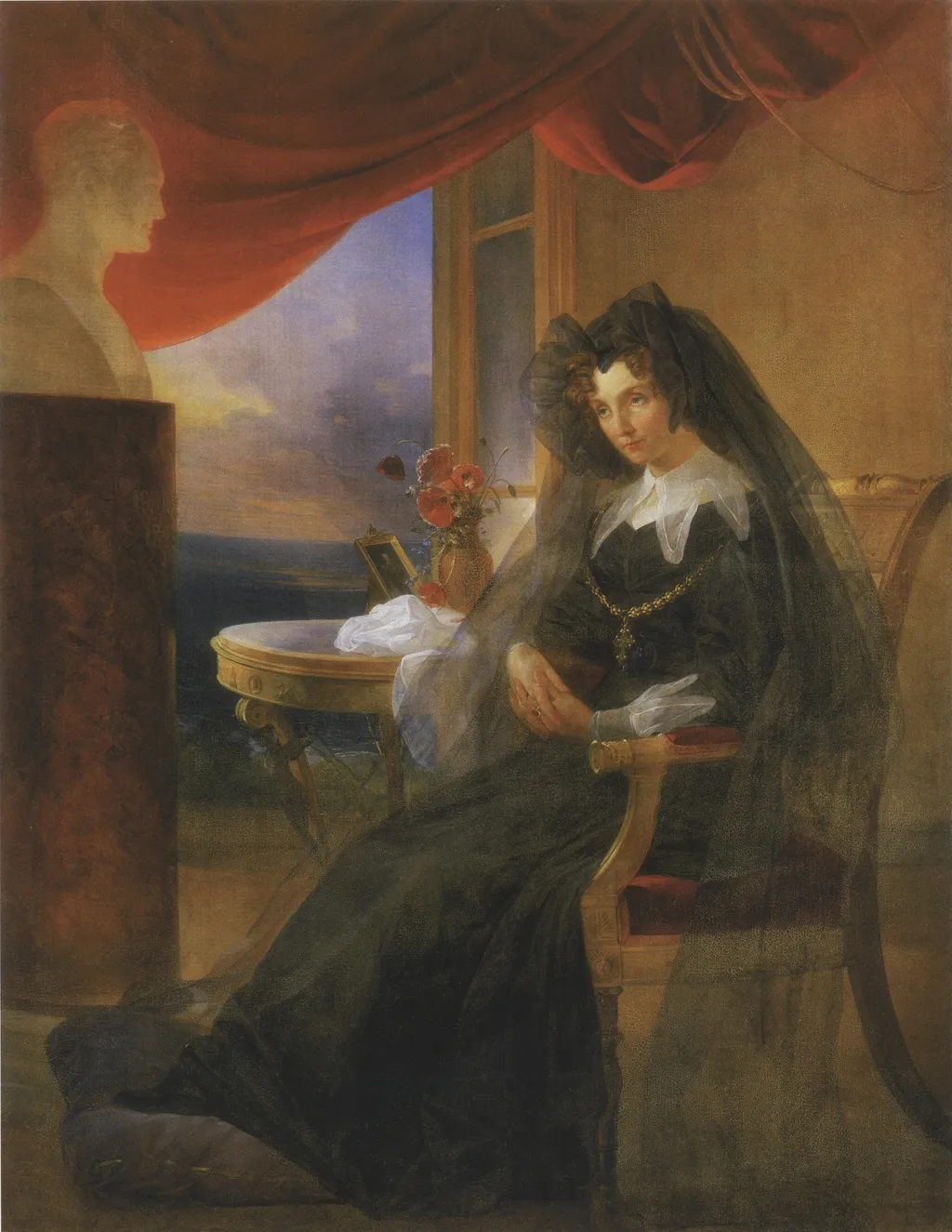
Portrait of Empress Dowager Yelizaveta Alekseevna is an oil painting by the Neoclassicist artist Pyotr Basin. It dates from 1831 and is held in the collection of the Hermitage Museum.
About this work
Subject & Meaning
The portrait depicts Empress Dowager Elizabeth Alexeievna (Yelizaveta Alekseevna), the widow of Emperor Alexander I of Russia.
The portrait depicts Empress Dowager Elizabeth Alexeievna (Yelizaveta Alekseevna), the widow of Emperor Alexander I of Russia. She is shown in mourning dress, wearing a veil that signifies her bereaved status following the emperor's death in 1825. The iconography of mourning attire and veil carries clear symbolic weight, representing both personal grief and the formal obligations of widowhood within the Russian imperial court.
The work thus functions as a state portrait that communicates the empress dowager's continued public role while visibly marking her position as a widow in perpetual mourning.
Technique & Style
The portrait is executed in oil paint on a canvas support measuring 209.5 cm in height by 161 cm in width. The handling emphasizes a smooth, polished surface with careful modeling of the sitter’s facial features and drapery, aligning with the academic portrait conventions of early nineteenth-century Russia. The empress is depicted in mourning attire, including a black veil, rendered with subtle gradations of tone rather than visible brushwork.
The composition is frontal and symmetrical, focusing attention on the subject’s dignified posture and serene expression, while the restrained palette and controlled lighting heighten the gravitas of the imperial image.
History & Provenance
The portrait of Empress Dowager Yelizaveta Alekseevna was commissioned in 1831 and painted by Pyotr Basin, as recorded in the artist’s dated work and confirmed by the Hermitage Museum’s cataloguing of the painting.
The work entered the collection of the Hermitage Museum, where it remains today. Its provenance is tied to the Russian imperial court, reflecting the ceremonial and commemorative function of the portrait. The painting’s inclusion in the exhibition Jewels!
The Glitter of the Russian Court further attests to its institutional presence and thematic relevance within Russian cultural heritage.
The Portrait of Empress Dowager Yelizaveta Alekseevna is held in the collection of the Hermitage Museum in Russia. While the museum's specific inventory or accession number is not provided in the available records, the work is documented as part of its permanent holdings. The painting was featured in the exhibition titled "Jewels! The Glitter of the Russian Court."
Overview
In 1831, Russian artist Pyotr Basin, who taught at the Imperial Academy of Arts, completed an oil portrait of Empress Dowager Yelizaveta Alekseevna. The canvas, now part of the State Hermitage Museum’s holdings, presents the former empress seated in a subdued setting, rendered in a style that aligns with the Neoclassical sensibility of the early nineteenth century.
Context
Executed during the Romantic era, the work nonetheless adheres to Neoclassical conventions, balancing emotional restraint with the period’s fascination with historical and mythological references. The inclusion of maritime elements visible through the window connects the portrait to Russia’s expanding naval presence in the early nineteenth century.
Own this work as a print
Artist & collection
Artist
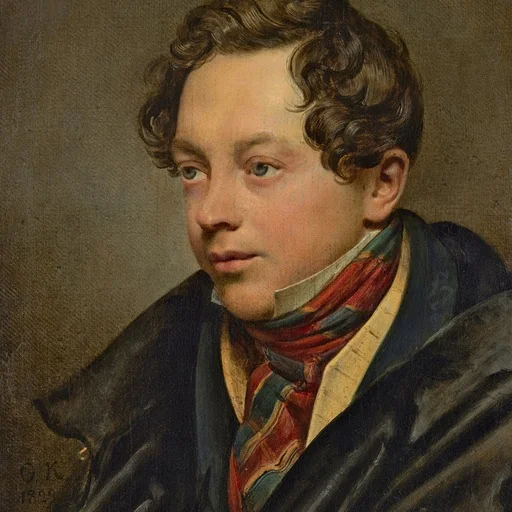
Pyotr Vasilievich Basin (Russian: Пётр Васи́льевич Ба́син; 1793, Saint Petersburg – 1877, Saint Petersburg) was a Russian religious, history and portrait painter during the Romantic period.

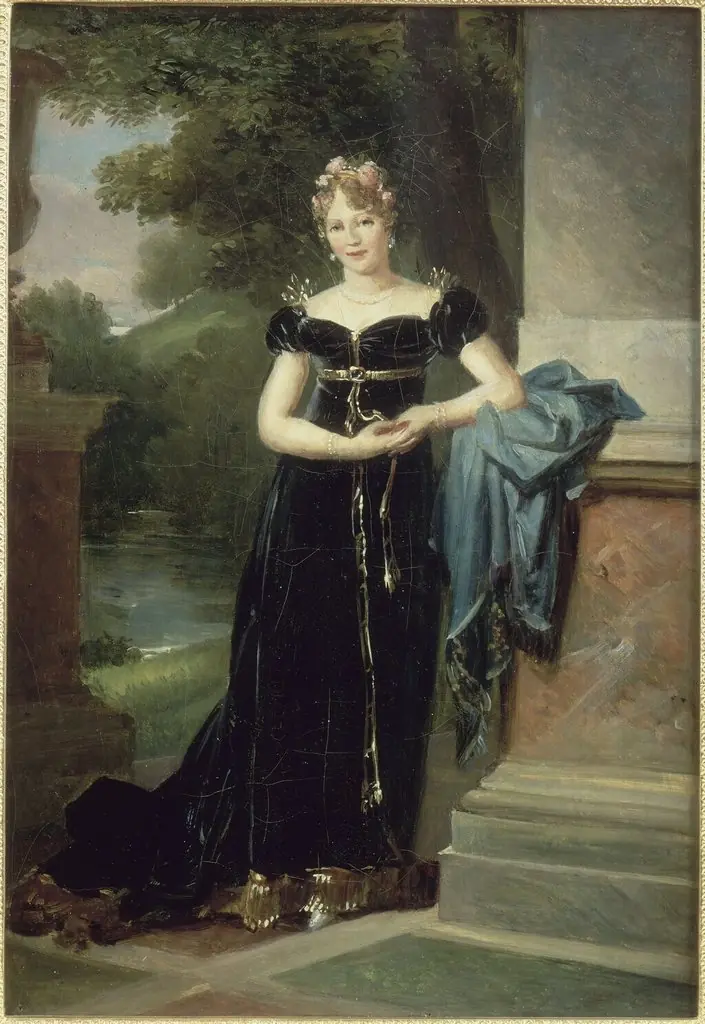
- Portrait of Countess Maria Walewska.
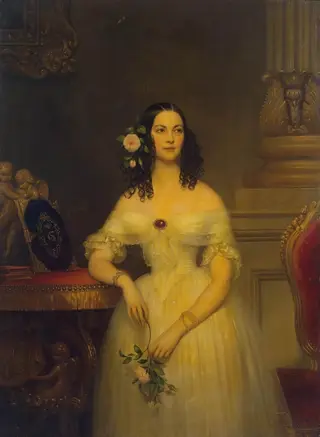 Portrait of Yekaterina Scherbatova
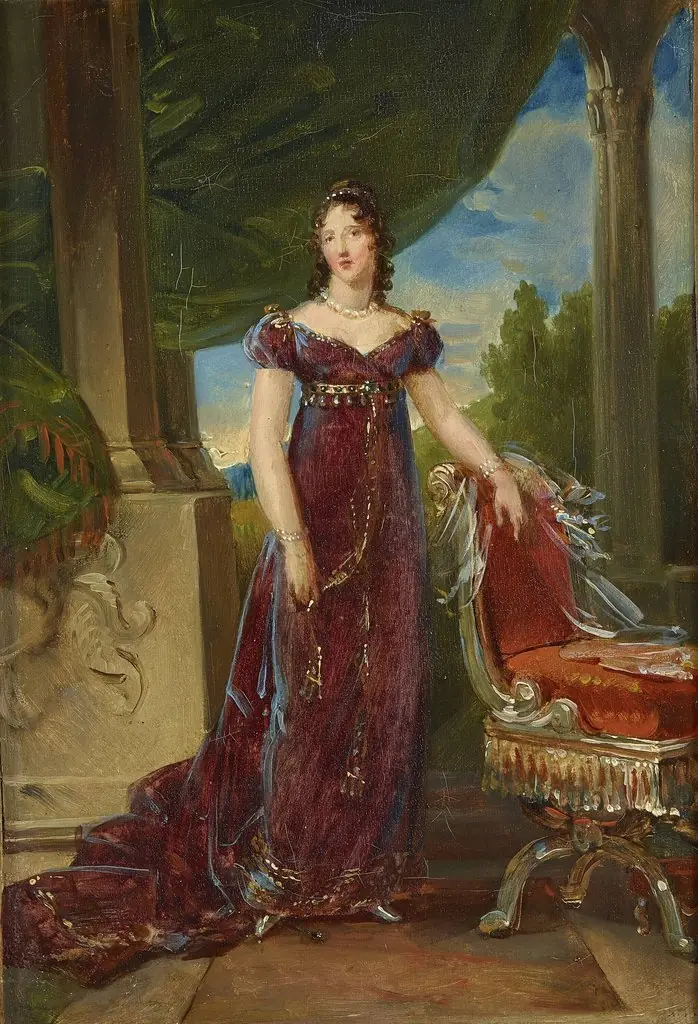 Dorothee, Duchess of Sagan
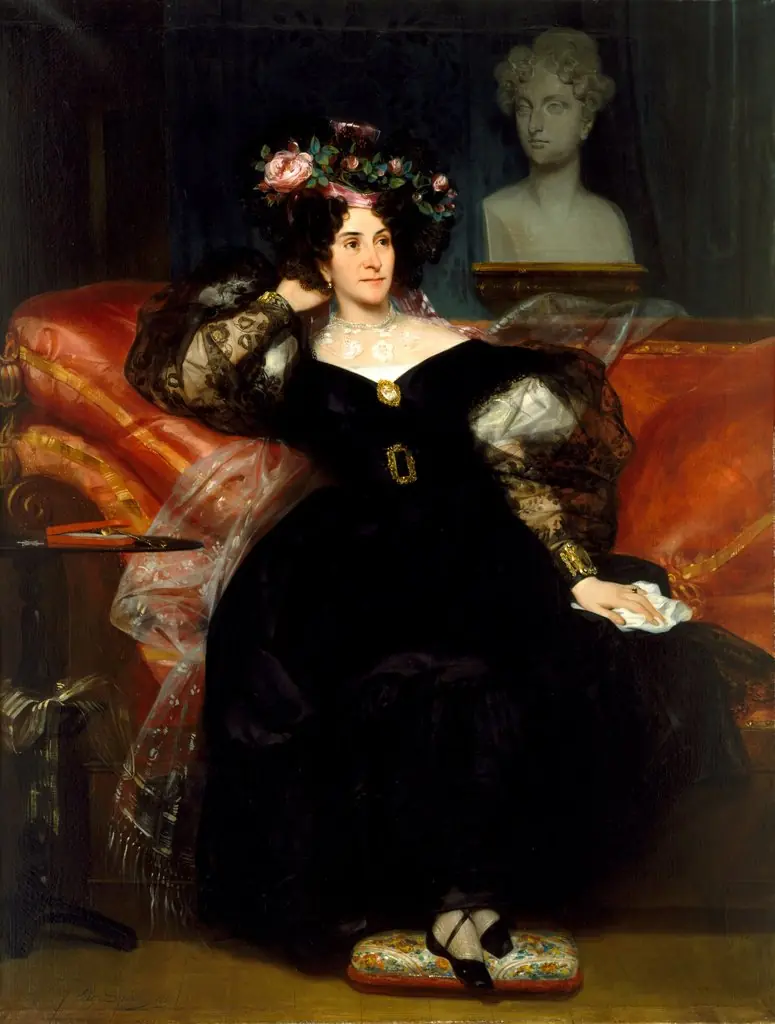 Portrait of Mme. Jule-Antoine Droz
 Portrait of Princess Anna Nikolayevna Golitsyna (?)
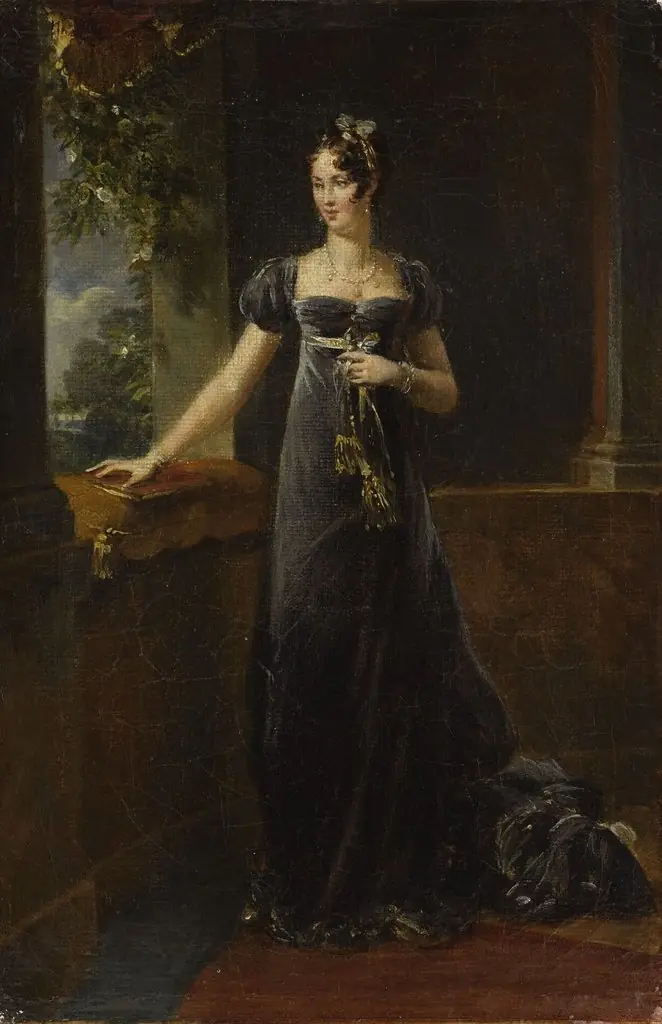 Auguste Amalia von Bayern, Vizekönigin von Italien
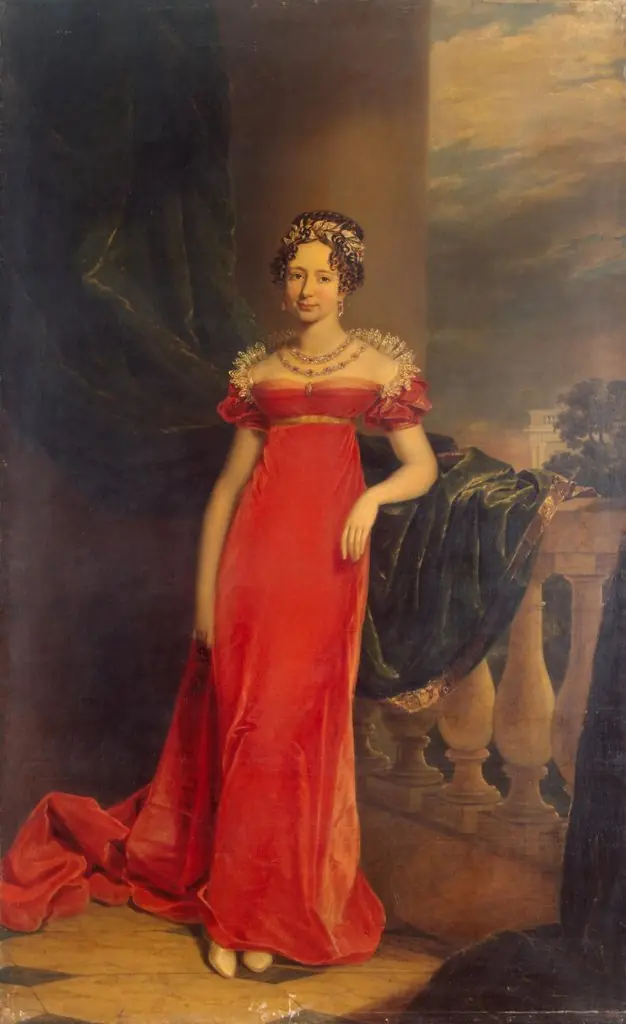 Portrait of Grand Duchess Maria Pavlovna
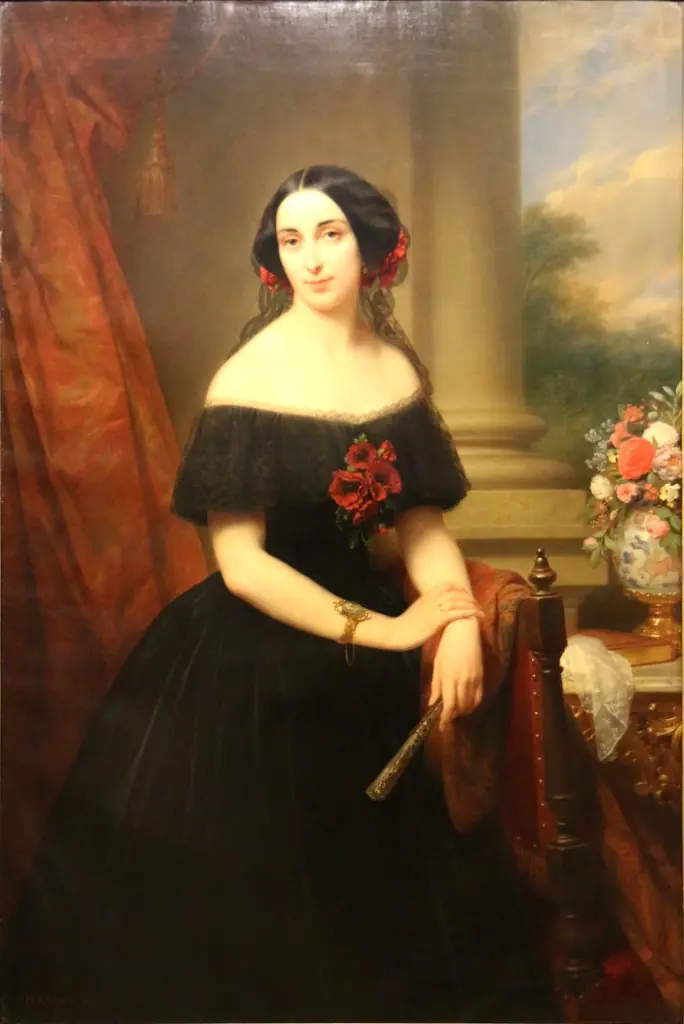 portrait of Louise van Campenhout (Louise-Caroline-Françoise van Campenhout)
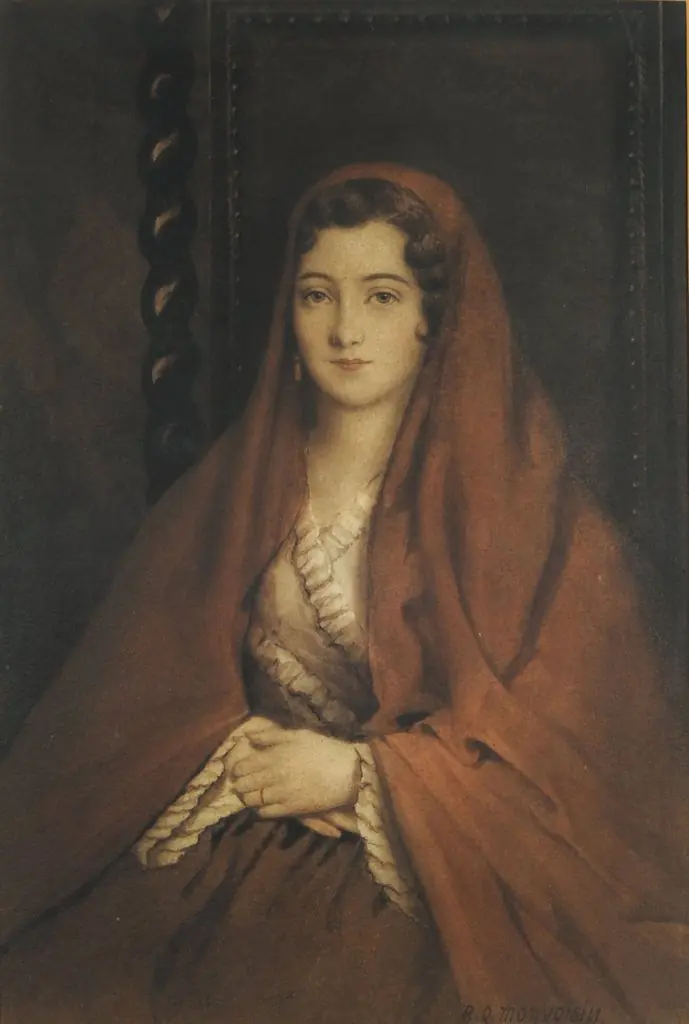 Young Chilean or Portrait of a Chilean Lady
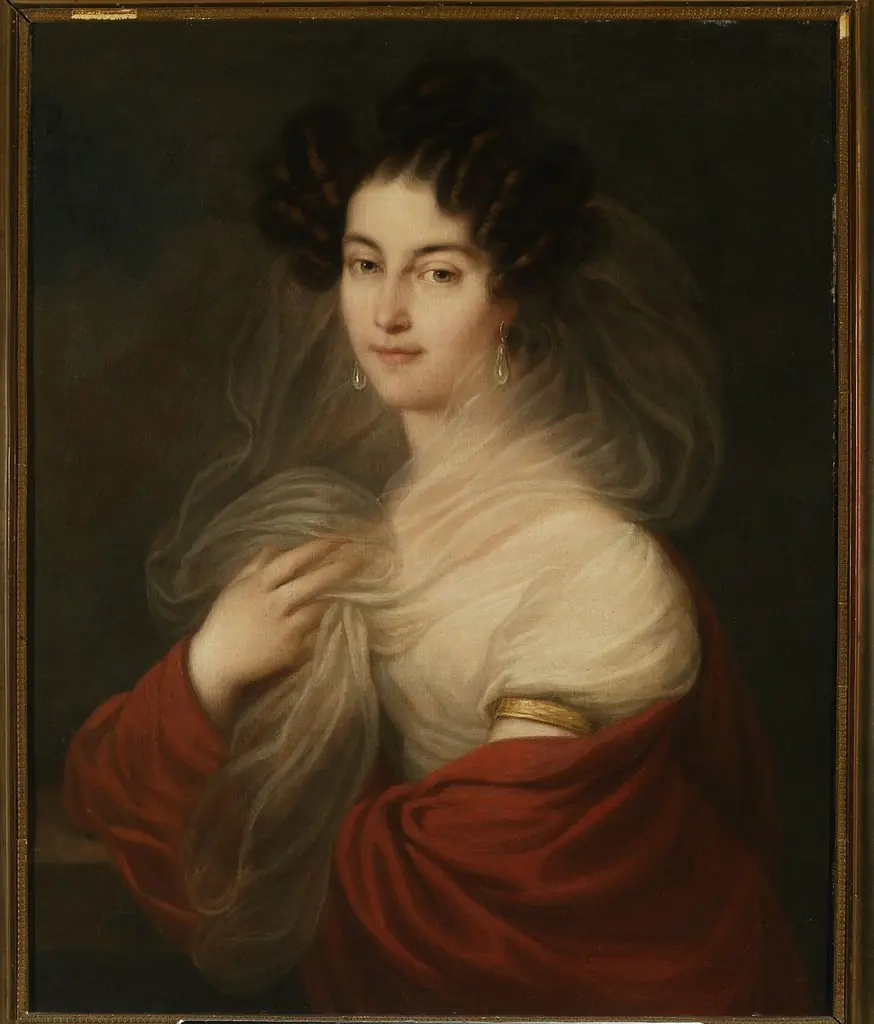 Portrait of Celina Radziwiłł née Sulistrowska (1805–1836)
 Jane Jarvis
 Portrait of Adélaide d'Orléans