Artwork
The John Knox House
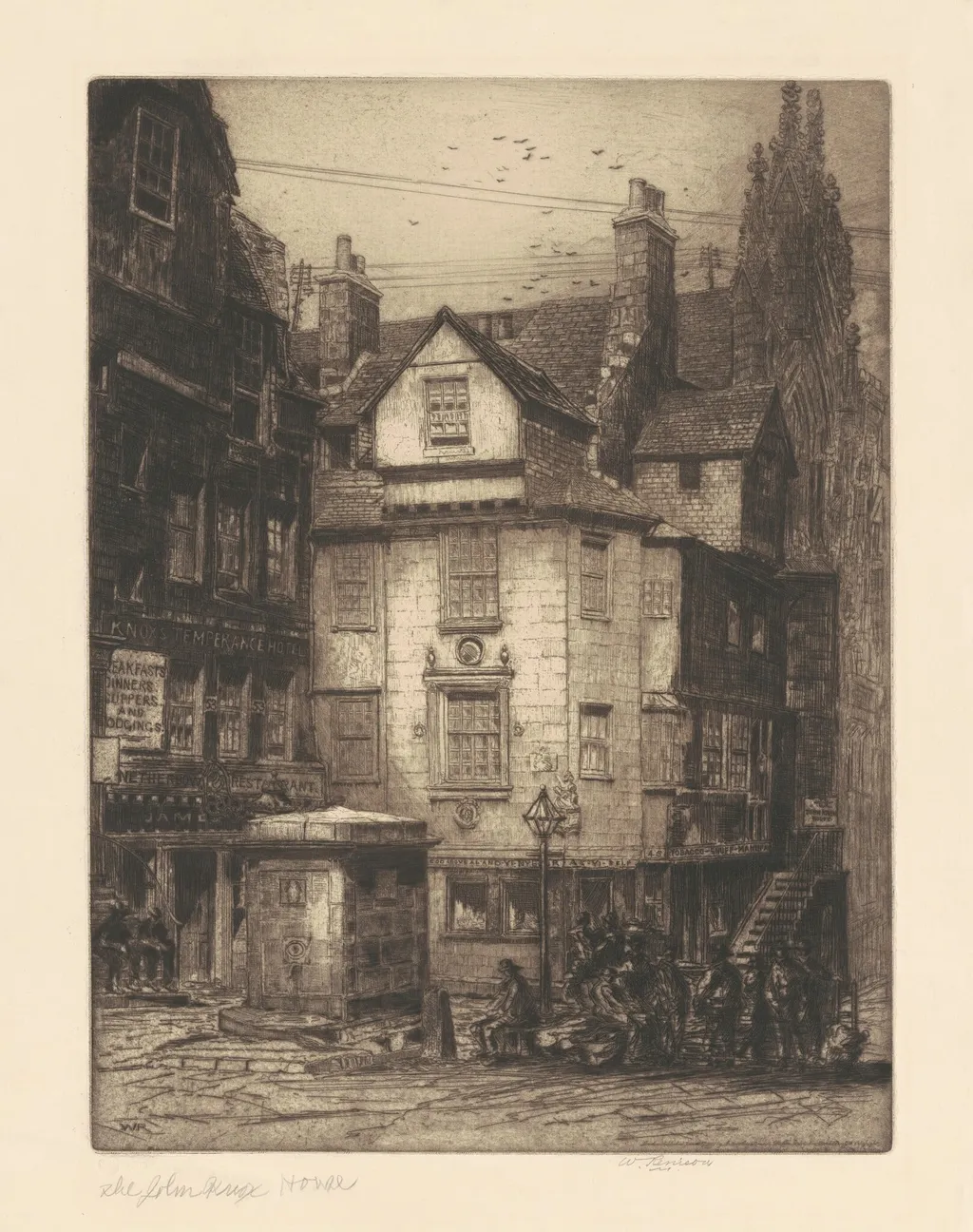
The John Knox House is an ink print by William Renison. It dates from 1917 and is held in the collection of the National Gallery of Art.
- Inscription
- Inscribed:lower left in plate: W.R.; lower right in plate: London Published Jan 15th 1917 by Arthur Greatorex, 14 Grafton Street, New Bond Street W. Copyright; lower left in graphite: the John Knox House; lower right in graphite: W. Renison; lower right corner in graphite by unknown hand: ax4 EvX / HX4X; lower left verso in graphite by unknown hand: 3986
- Markings
- Marked:blindstamped lower left: F / FATG / L / O / T; stamped lower left verso in black ink: F.B.B. [circled]
About this work
Overview
A horse‑drawn carriage rests beside a streetlamp, while a few figures occupy a bench in the foreground, suggesting a moment of everyday urban life.
William Renison’s 1917 etching, titled The John Knox House, presents a narrow, historic street rendered in black on laid paper. The composition centers on a modest building marked “Knox’s Temperance Hotel,” flanked by ancillary signs for lodging and a restaurant. A horse‑drawn carriage rests beside a streetlamp, while a few figures occupy a bench in the foreground, suggesting a moment of everyday urban life.
Subject & Meaning
The print captures a slice of early‑20th‑century street scene, emphasizing the ordinary rhythms of commerce and travel. By foregrounding the temperance hotel, Renison alludes to contemporary social movements advocating abstinence, while the surrounding architecture and passers‑by convey a sense of communal continuity within a changing cityscape.
Technique & Style
Renison employed traditional intaglio etching, incising lines into a metal plate before printing onto laid paper. Fine hatching and cross‑hatching generate tonal variation, rendering the textures of brickwork, timber, and cobblestones. The careful modulation of light and shadow creates depth, while the stark monochrome palette reinforces the atmospheric quiet of the scene.
History & Provenance
Created in 1917, the work reflects Renison’s interest in documenting urban environments during a period of rapid modernization. The etching entered private collections shortly after its production and has since been exhibited in several regional museums focusing on Scottish printmaking, illustrating its continued relevance to studies of early twentieth‑century visual culture.
Context
The depiction of a temperance hotel aligns with broader temperance campaigns that were prominent in the United Kingdom during the late nineteenth and early twentieth centuries. Renison’s choice of subject situates the print within social reform narratives, while the architectural details provide a visual record of the period’s vernacular building styles.
Artist & collection

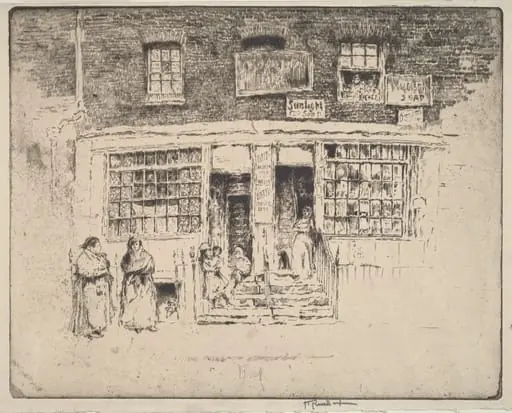 Sunlight Soap
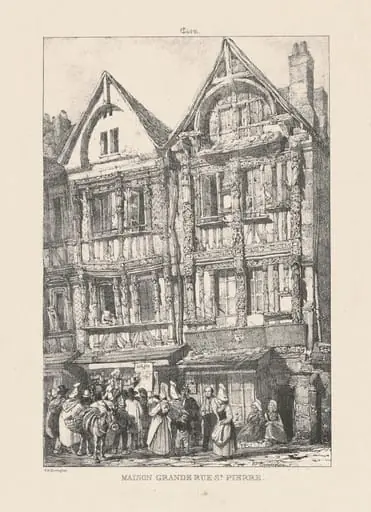 Maison Grande Rue St. Pierre
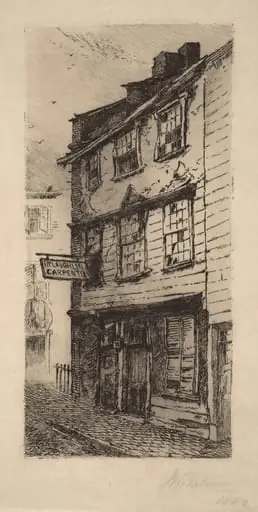 78 Cross Street, Boston, Massachusetts
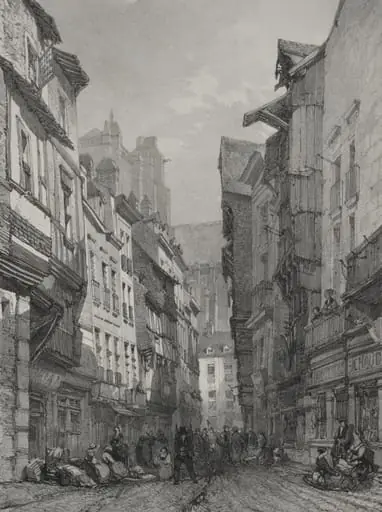 Voyages pittoresques et romantiques dans l'ancienne France. Bretagne: Grande rue vieille à Nantes
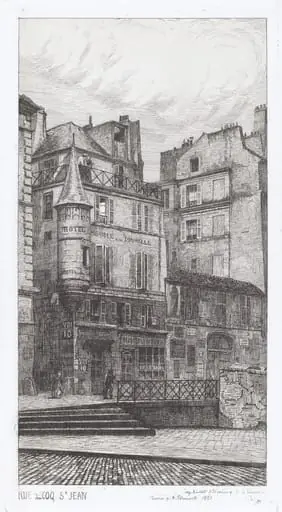 Rue du Coq St. Jean
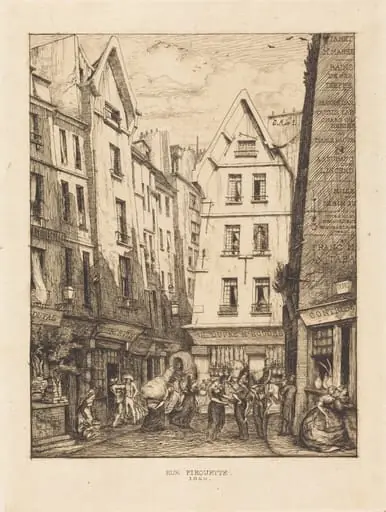 La Rue Pirouette aux halles, Paris (Pirouette Street, Near the Markets, Paris)
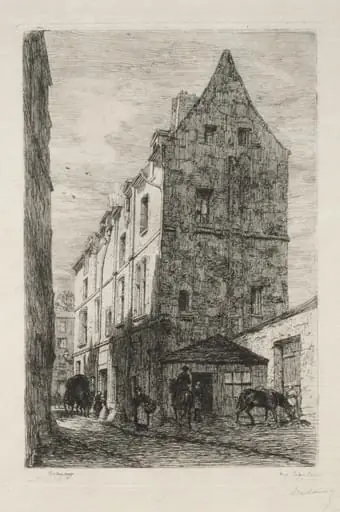 Maison dite de la Reine Blanche, Rue de Marmousets
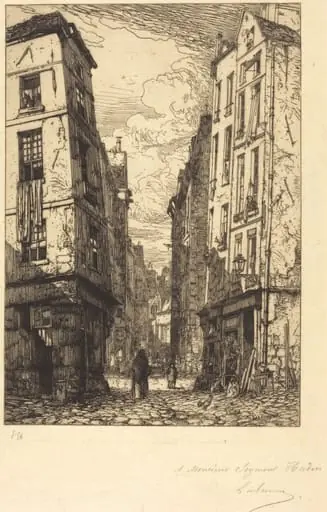 Rue des Marmousets (Quartier de la cite, vieux Paris)
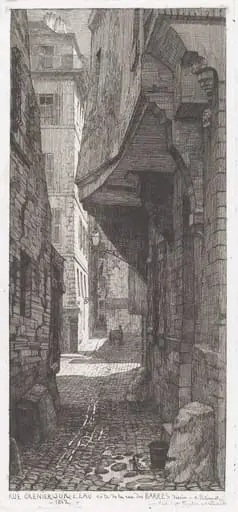 Rue Grenier sur l'eau, côté de la rue des Barres
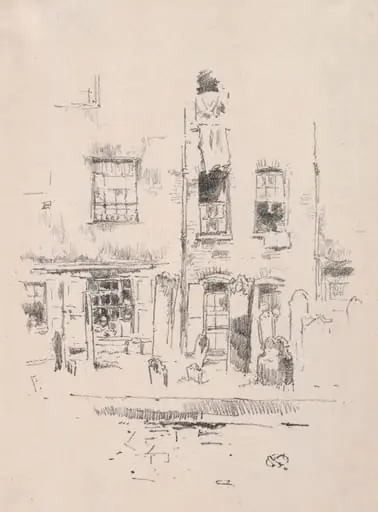 Churchyard