Subject
Architecture
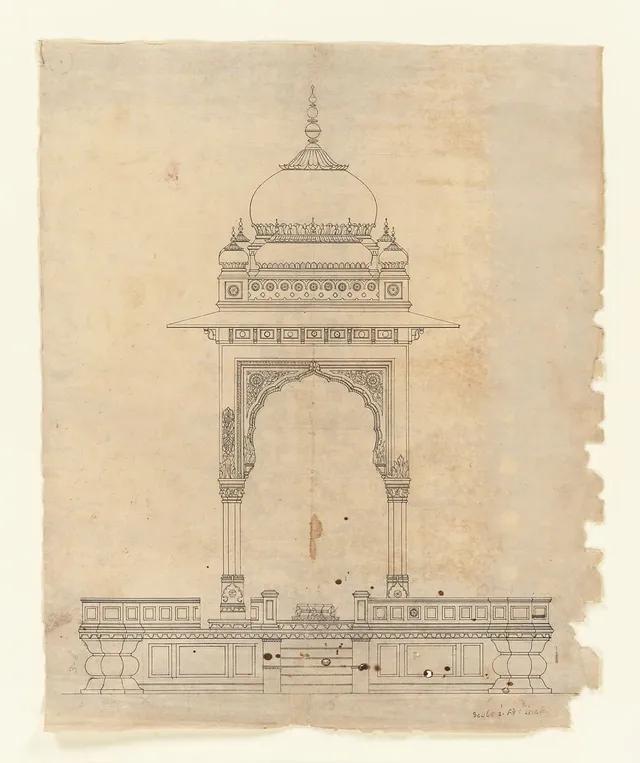
Architecture is a subject in art. The gallery holds 46 works in this subject in art, including works by John Singer Sargent, Florine Stettheimer and Jean Marchand.
Architecture is at once the study and practice of designing habitable structures—drawing on civil engineering yet long counted among the visual arts—and one of the oldest and most enduring subjects to which painters have turned. From the temples and ziggurats of antiquity to the cathedrals of medieval Europe, the built environment expressed the deepest ambitions of a culture, and artists recorded, idealized, and reimagined it in turn. The discipline's intellectual prestige rose sharply in the Italian Renaissance, when Filippo Brunelleschi's demonstration of linear perspective (c. 1415) and Leon Battista Alberti's treatise *De re aedificatura* recast building as a liberal art governed by mathematics, harmony, and humanist theory.
As a pictorial subject, architecture is defined by the rigorous geometry of perspective, the play of light across stone and vaulting, and the tension between documentary accuracy and invention. Two complementary traditions emerged. In the Dutch Golden Age, Pieter Saenredam (1597–1665) produced architecturally faithful, near-empty views of whitewashed Gothic churches, all even light and measured proportion, while his contemporary Emanuel de Witte (1615–1692) peopled his interiors with worshippers and warmer contrasts. In eighteenth-century Venice, the *veduta*—the precise topographical city view—reached its summit with Canaletto (1697–1768) and Francesco Guardi, who also painted the *capriccio*, a fantasy assembling real buildings into imaginary arrangements. Giovanni Battista Piranesi pushed architectural imagination toward the sublime in his etched *Carceri*.
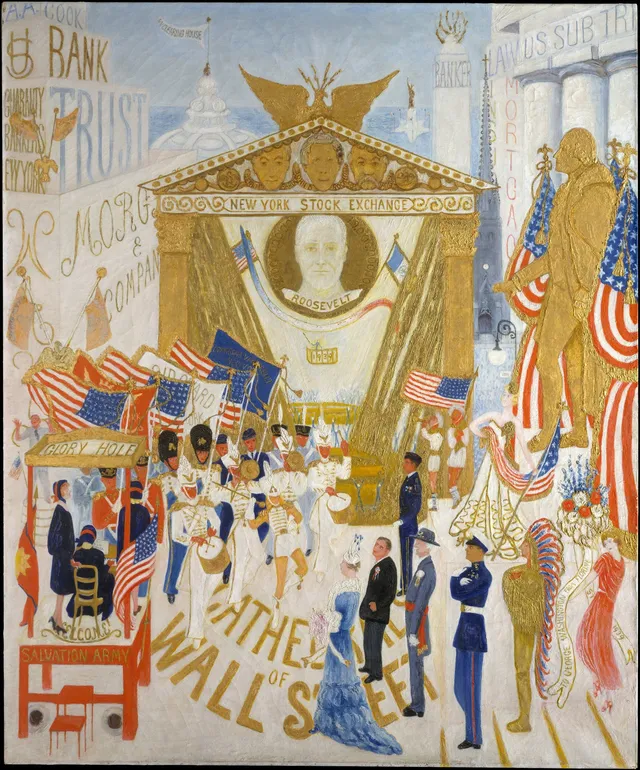
Modernism made the building a vehicle for new visual languages rather than mere setting. Robert Delaunay's *Eiffel Tower* series (1909–1912) fractured the monument through Cubist planes and pure color, helping launch the movement Apollinaire named Orphism; his catalogue work *Stage Design for Cleopatra* extends that architectonic sense of color into theatre. Florine Stettheimer's *The Cathedrals of Wall Street* (1939) treats finance's facades as secular shrines, satirizing how modern America monumentalized commerce.
The theme remains porous to neighbouring genres. John Singer Sargent's *Courtyard, Tetuan, Morocco* shows architecture animating Orientalist watercolour, while Marc Chagall's *Snow, Winter in Vitebsk* and Jean Marchand's *Vence* fold townscape into Expressionist and Post-Impressionist feeling. Across these strands, architecture endures in art as both a subject and a structuring principle—the framework through which painters organize space, light, and the human world.
Key artists


Overview
Architecture, derived from the Latin architectura and the Greek arkhitekton meaning chief builder or master craftsman, is the art and science of designing structures, especially habitable ones. Though it employs civil engineering techniques, it is fundamentally regarded as a visual art, encompassing both the process and the product of sketching, conceiving, planning, designing, and constructing buildings or other structures. The practice, which began in the prehistoric era, has served across all seven continents as a primary means of expressing culture. Historical civilizations are frequently identified with their surviving architectural achievements, and architectural works in their material form are commonly perceived as cultural symbols and as works of art. The earliest surviving text on architectural theory, De architectura by the Roman architect Vitruvius from the 1st century BC, established the three foundational principles of firmitas, utilitas, and venustas, durability, utility, and beauty, that would govern architectural thought for millennia.
Iconography & meaning
The iconography and symbolism of architecture in art are deeply rooted in the classical triad of principles articulated by Vitruvius: firmitas (stability or durability), utilitas (utility or usefulness), and venustas (beauty or grace). These three qualities were understood to be of equal importance, with no single element dominating the others. Vitruvius also defined six fundamental concepts of the discipline: ordinatio (measurement order), dispositio (arrangement), eurythmia (graceful appearance), symmetria (harmony of elements), decor (appropriateness), and distributio (distribution). The proportional systems derived from the idealized human figure, particularly the golden mean, became central to architectural beauty. Leon Battista Alberti later elaborated on these ideas in De re aedificatoria, seeing beauty primarily as a matter of proportion inherent to the object rather than superficially applied. In the 19th century, Louis Sullivan's dictum that form follows function transformed the classical utility into a broader concept encompassing practical, aesthetic, psychological, and cultural dimensions. Architecture thus carries meanings of social order, religious devotion, political power, and cultural identity, with buildings functioning as symbols of the societies that created them.
Across movements & periods
The treatment of architecture in art has evolved substantially across movements and periods. Prehistoric and ancient architecture began as rural, oral vernacular forms developed through trial and error, with early urban architecture focused on religious structures and buildings symbolizing political power. Egyptian antiquity produced pyramids, mastabas, and temples, while Mesopotamia contributed cities and palaces. Greek and Roman architecture shifted focus toward civic virtues, with the Romans introducing arches and vaults and adapting Greek stylistic elements. Indian and Chinese architecture influenced forms throughout Asia, with Buddhist architecture taking diverse local expressions. During the Middle Ages, pan-European Romanesque and Gothic styles emerged for cathedrals and abbeys. The Renaissance favored Classical forms implemented by named architects, marking a shift from anonymous craftsmanship to recognized artistic authorship. The 19th century saw rationalist approaches under industrialization, with theorists like Eugène Viollet-le-Duc analyzing buildings as coherent structural systems. Modern architecture emerged after World War I as an avant-garde movement seeking new forms appropriate for post-war social and economic conditions, emphasizing modern techniques, materials, and simplified geometric forms. This developed into the international style, represented by figures like Le Corbusier with his standardized concrete housing blocks, and Ludwig Mies van der Rohe's contributions to skyscraper design. Postmodern and contemporary architecture subsequently developed in reaction against modernism's perceived ahistorical and anti-aesthetic qualities.
Legacy
The legacy of architecture as both practice and artistic subject continues to resonate in contemporary culture. The discipline's theoretical foundations, from Vitruvius through Alberti to modern practitioners, remain active points of reference. The 20th century saw architecture's expansion through movements such as the Bauhaus, founded by Walter Gropius in 1919, which revolutionized both architectural vision and pedagogical method, and the Prairie School in America led by Frank Lloyd Wright. The introduction of new materials, cast iron, steel, and concrete, alongside technologies such as welding, electric lighting, elevators, and digital electronics, continually transformed architectural possibilities. From the 1960s onward, ecology and sustainability gained increasing importance. Architecture's role as cultural expression persists, with buildings serving as identifiers for civilizations and as subjects for artistic representation. The 200 works in this collection testify to the enduring fascination with built structures, whether as documents of specific places, vehicles for symbolic meaning, or formal compositions in their own right. The field's ongoing debates about definition, between art and science, tradition and innovation, form and function, ensure its continued vitality as both a practical discipline and a subject for artistic exploration.
Works
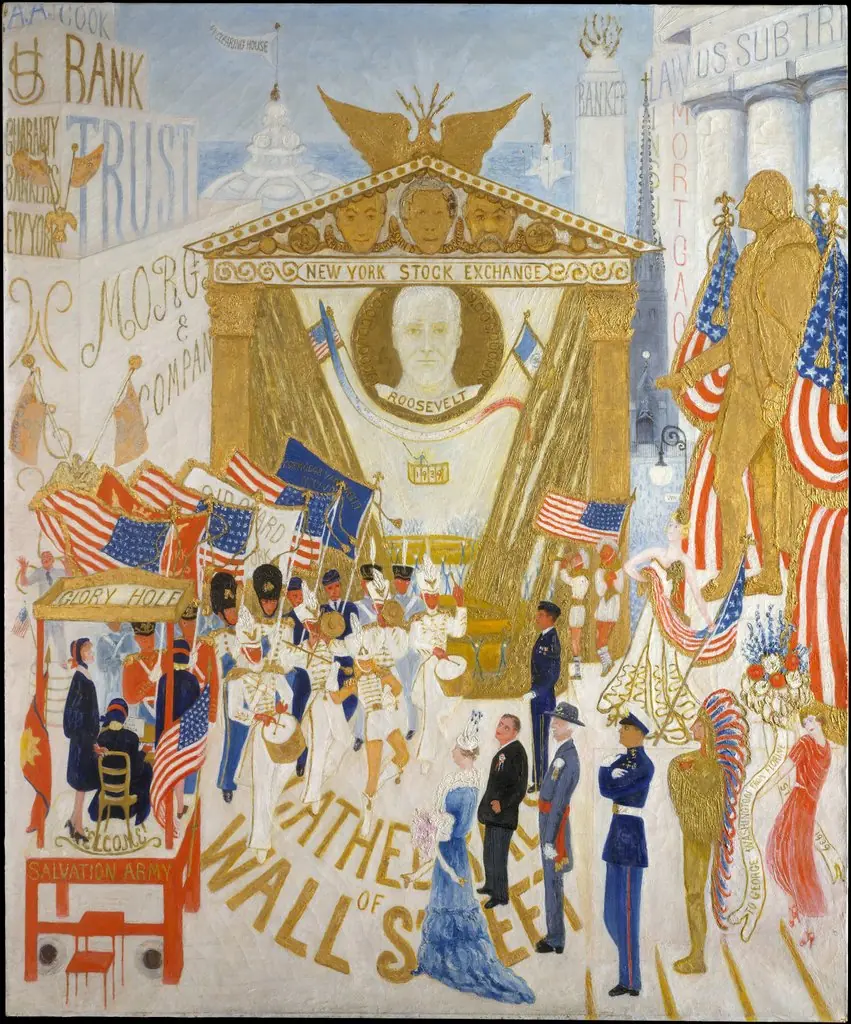 The Cathedrals of Wall Street
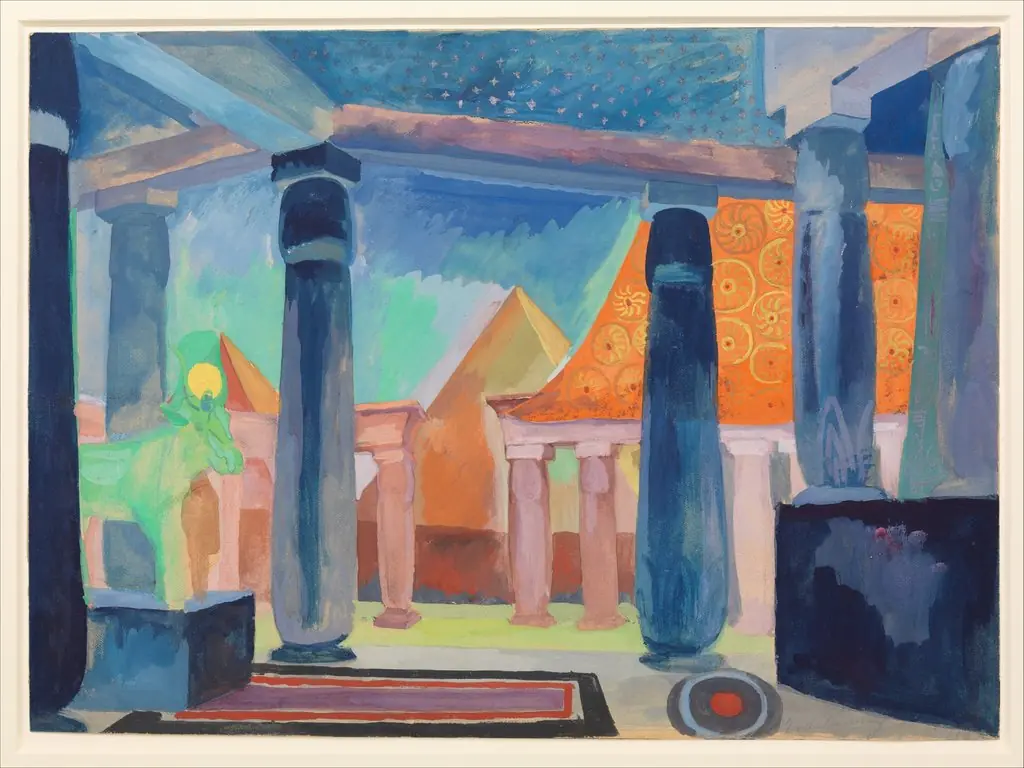 Stage Design for Cleopatra
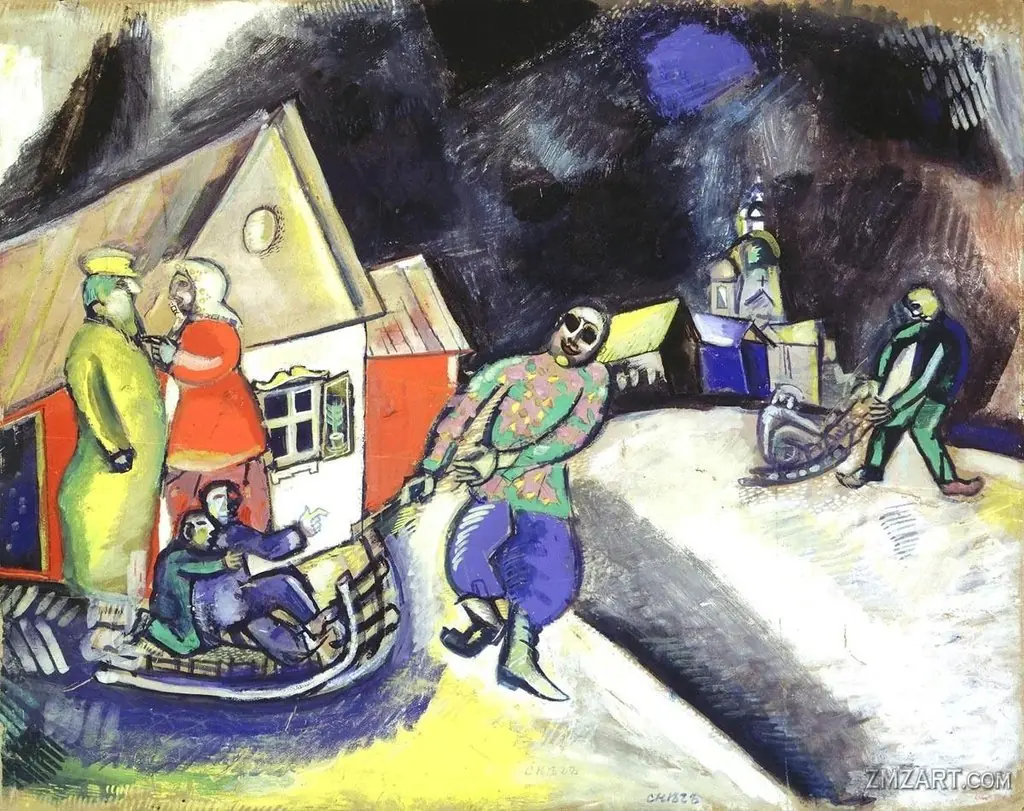 Snow, Winter in Vitebsk
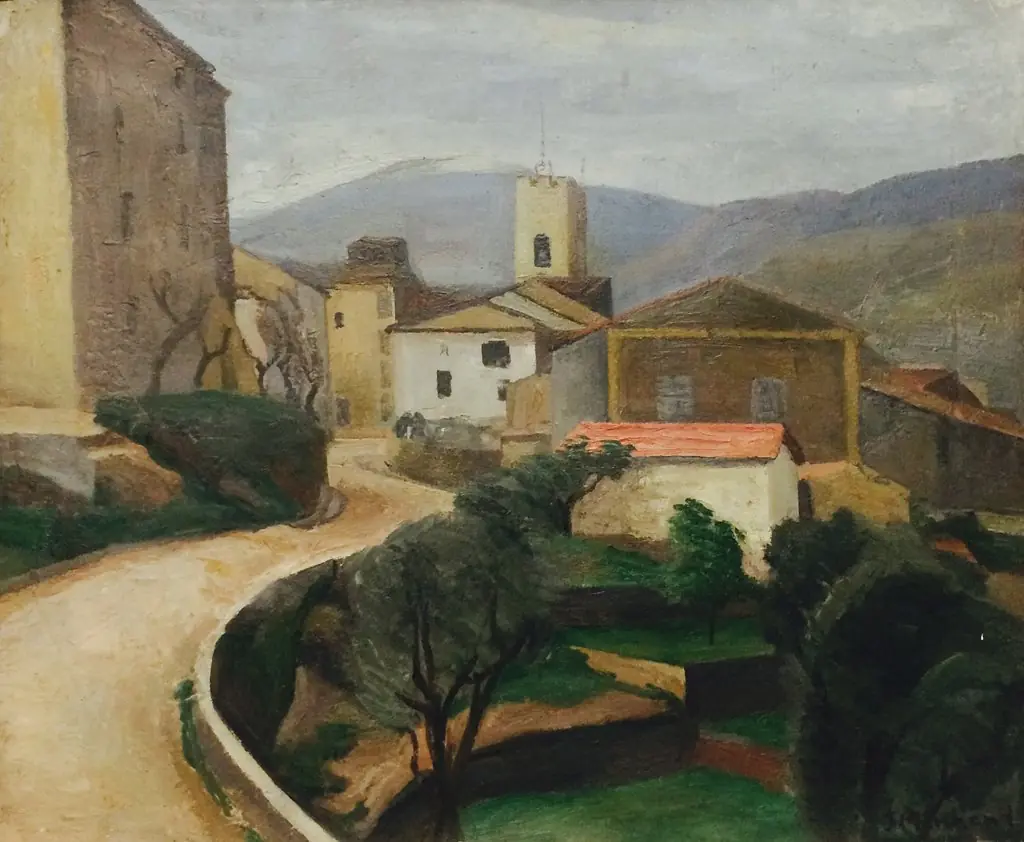 Vence
Vence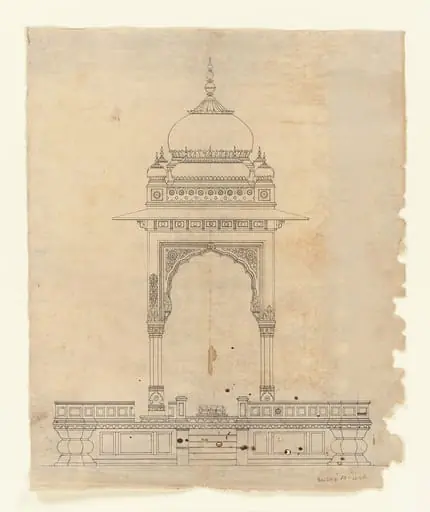 Untitled
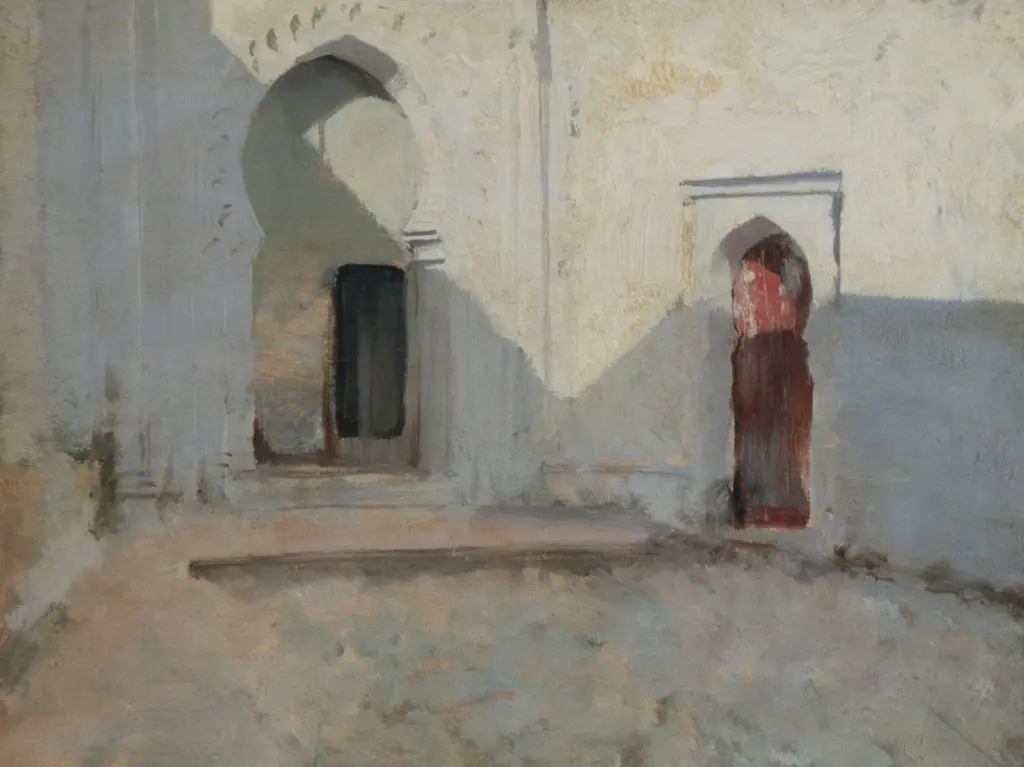 Courtyard, Tetuan, Morocco
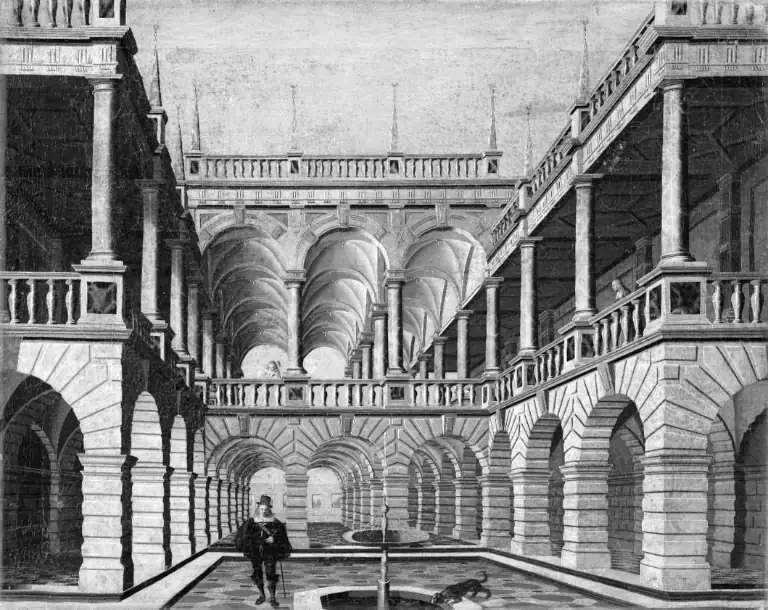 Coutyard with Arcades
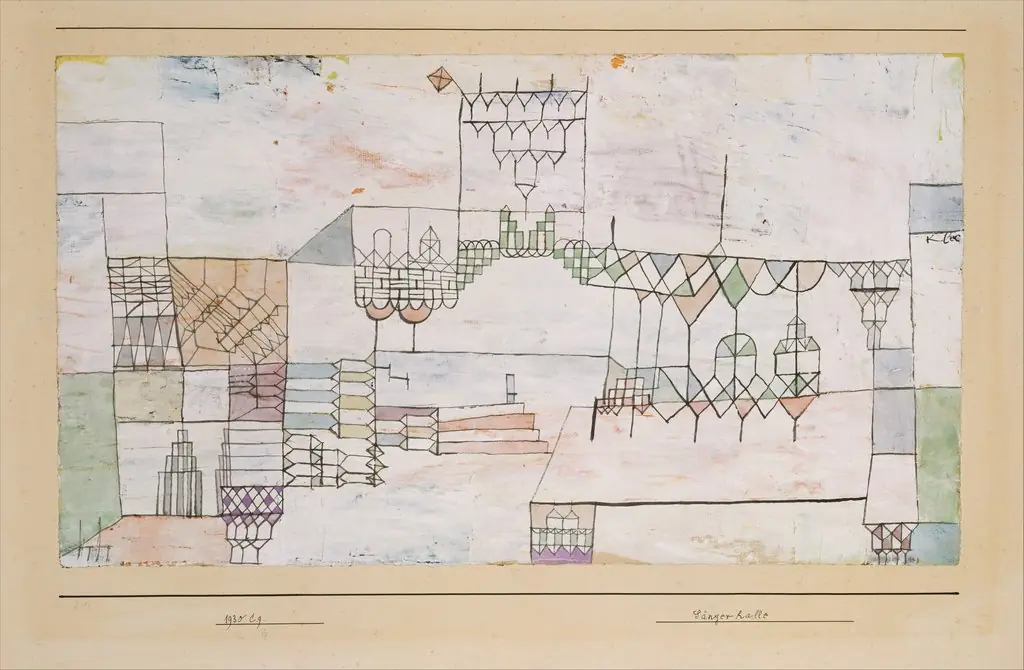 Great Hall for Singers
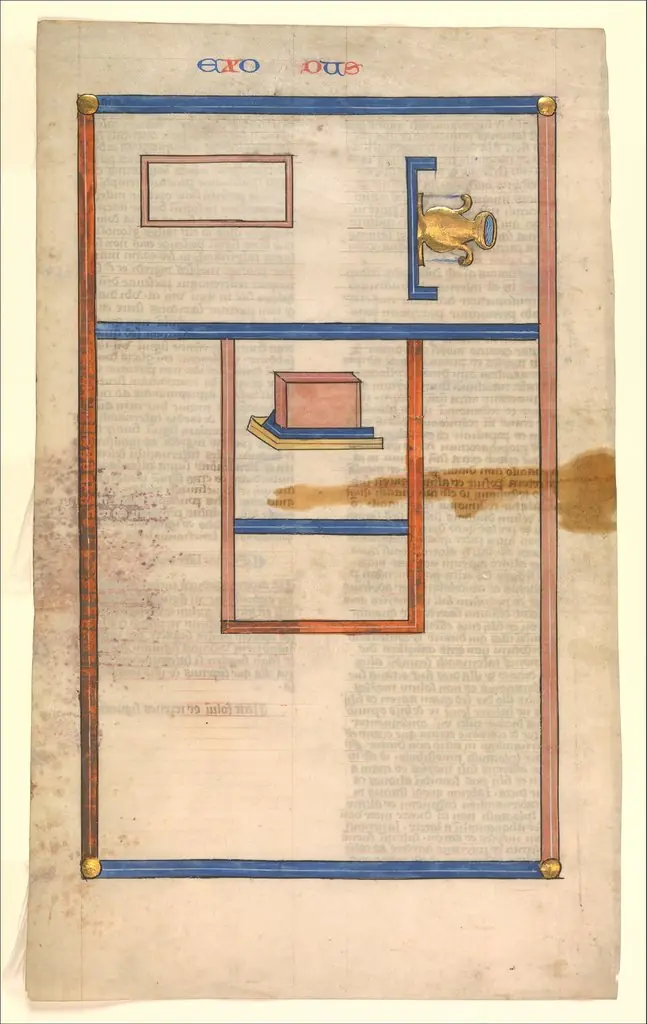 Floor Plan of the Tabernacle, one of six illustrated leaves from the Postilla Litteralis (Literal Commentary) of Nicholas of Lyra
 Allegory of Painting and Architecture
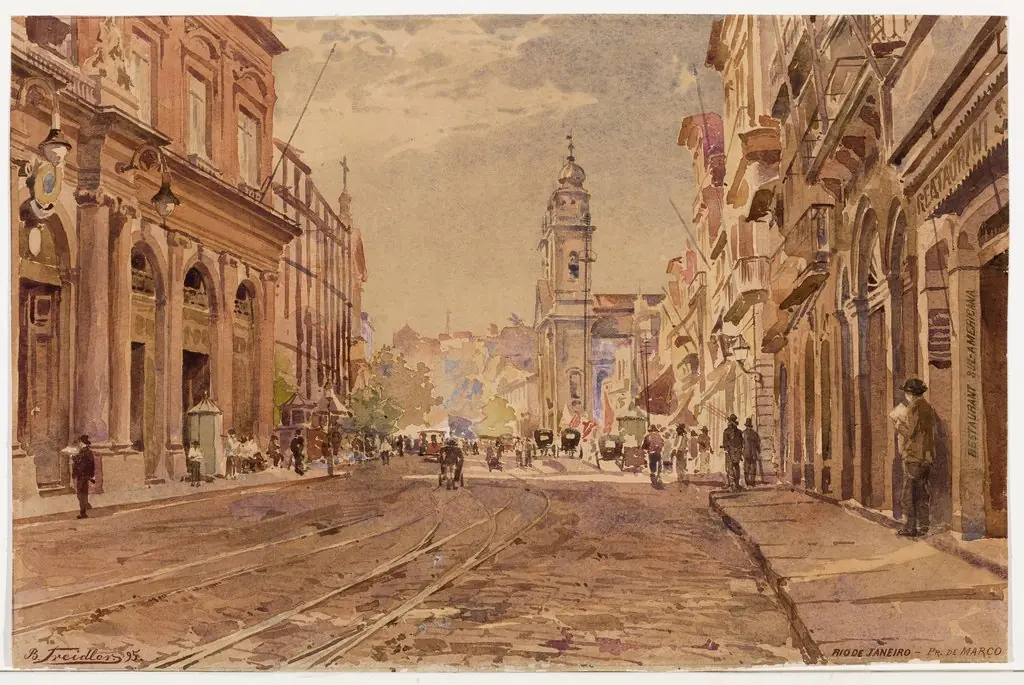 Rio de Janeiro - Pr. de Março
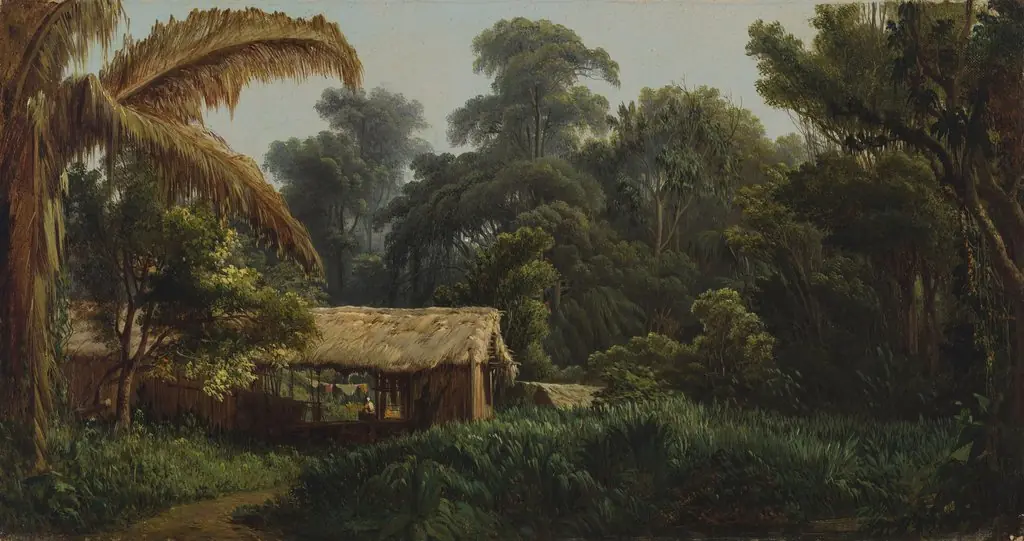 Cases d'indiens dans la forete de Matá-Matá sur le Monjú Pará-Brésil
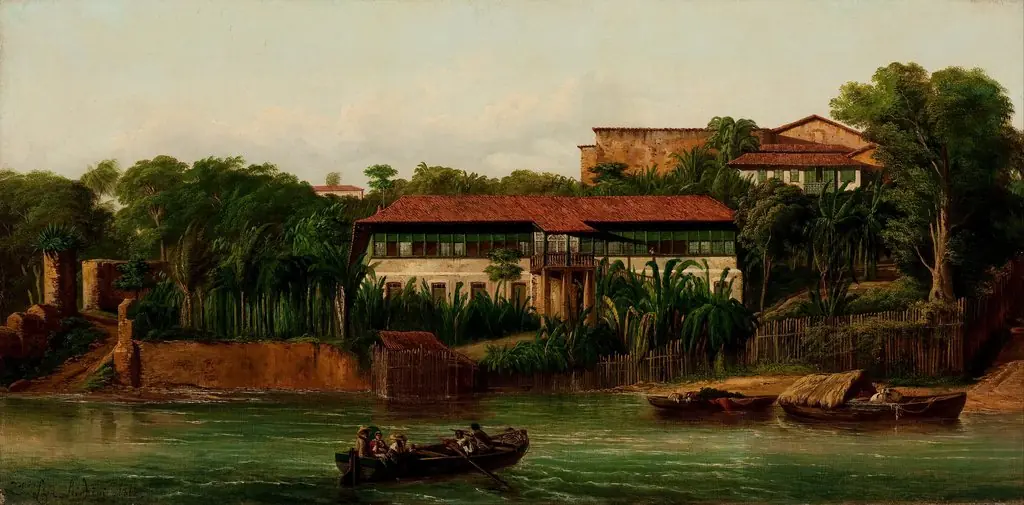 Residence on the Banks of the Anil River
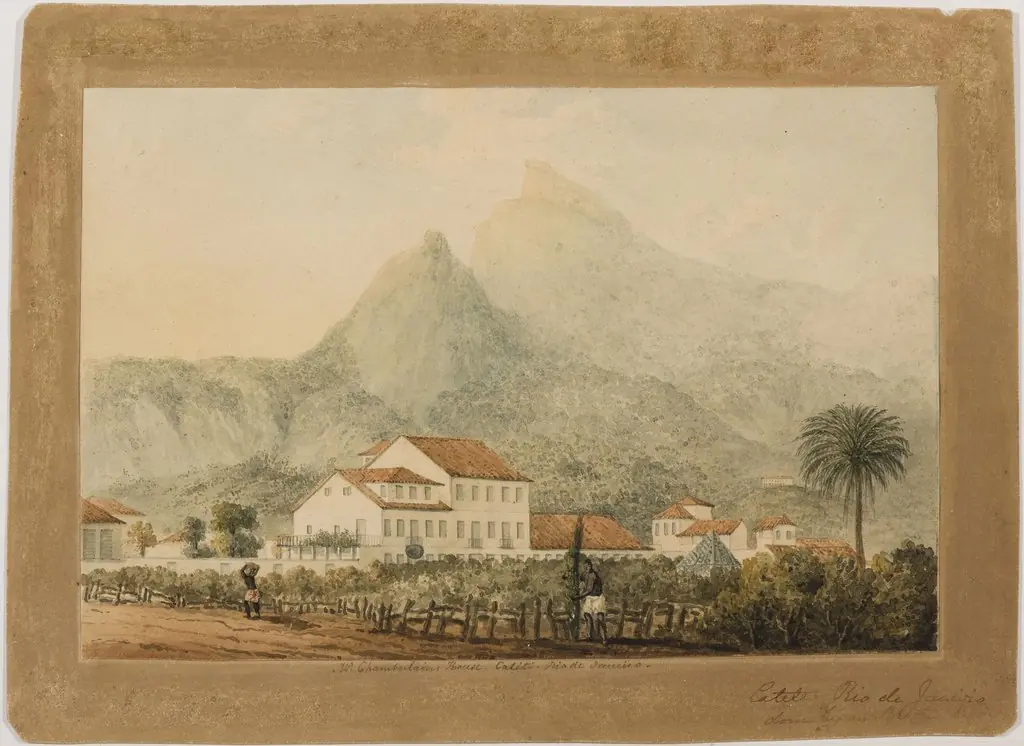 M. Chamberlains House. Catété - Rio de Janeiro
 Bresil. Vue de Rio de Janeiro
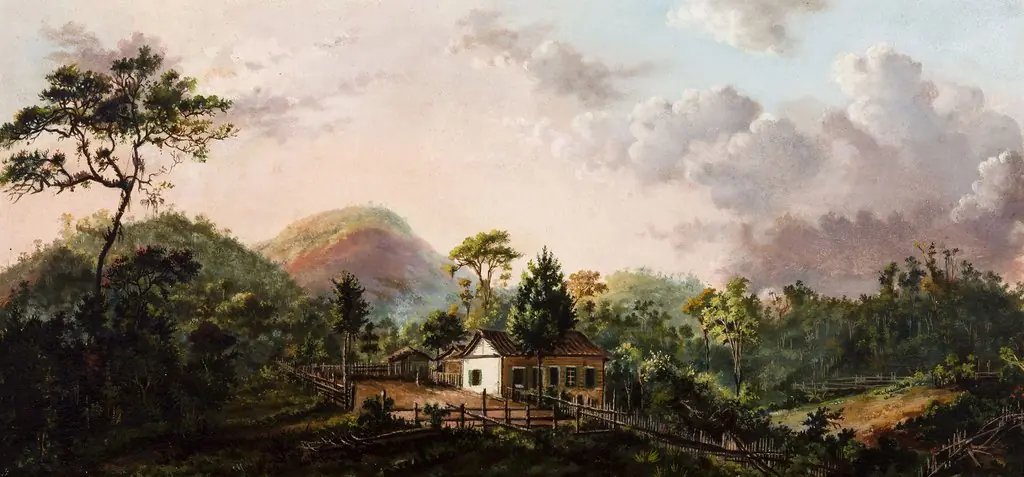 Fazenda em Teresópolis (atribuído)
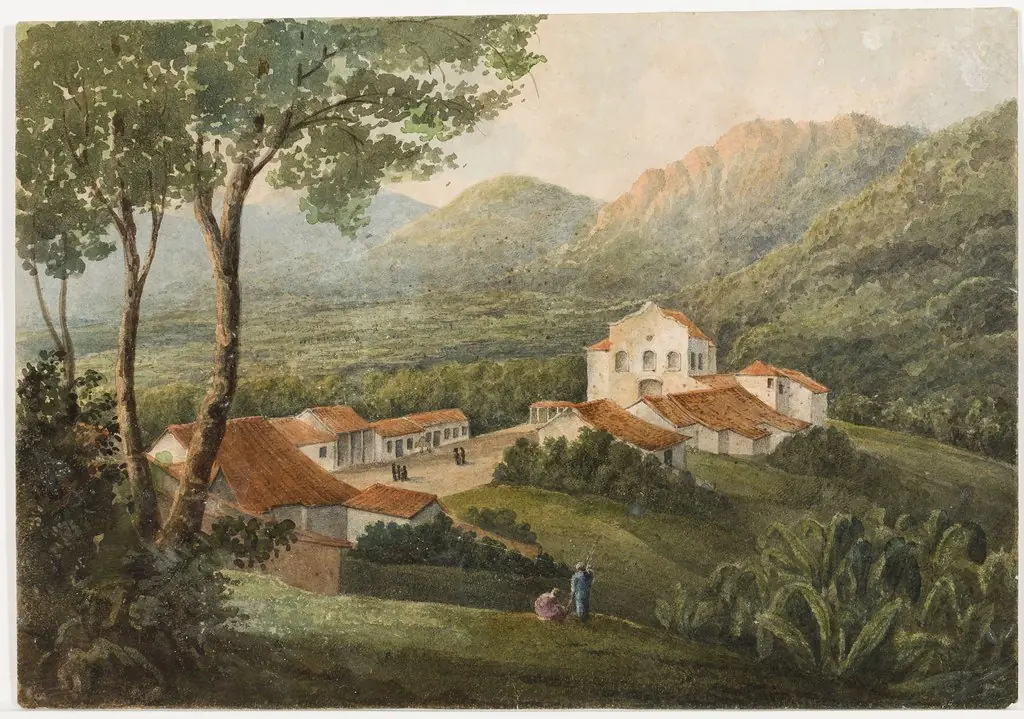 Vila rural e serra (atribuído)
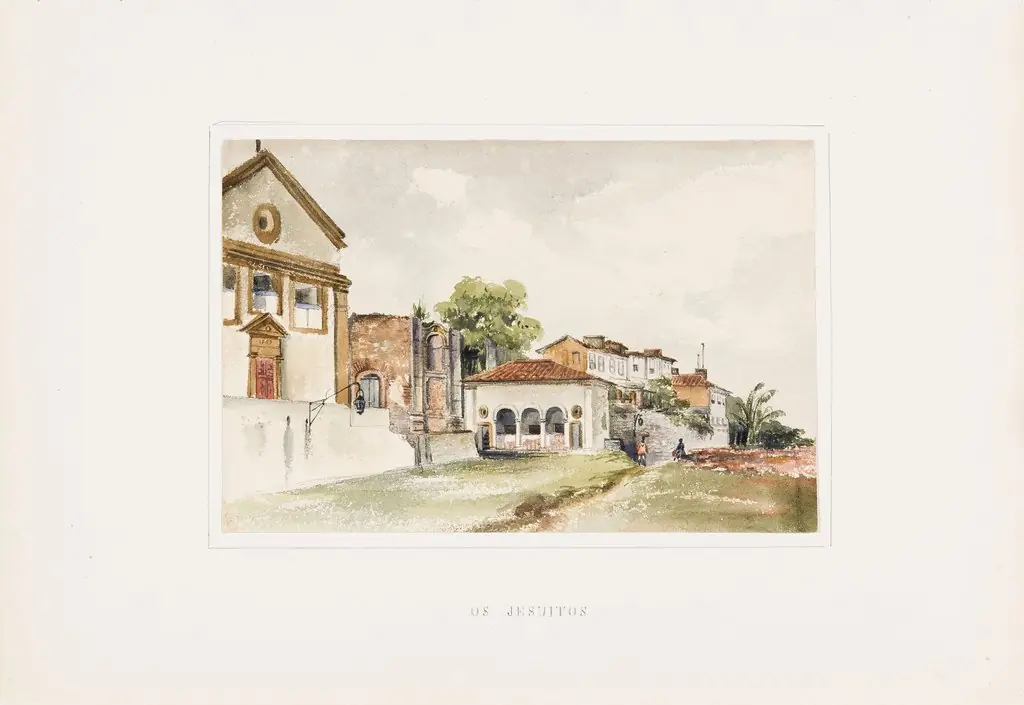 Os Jesuitos
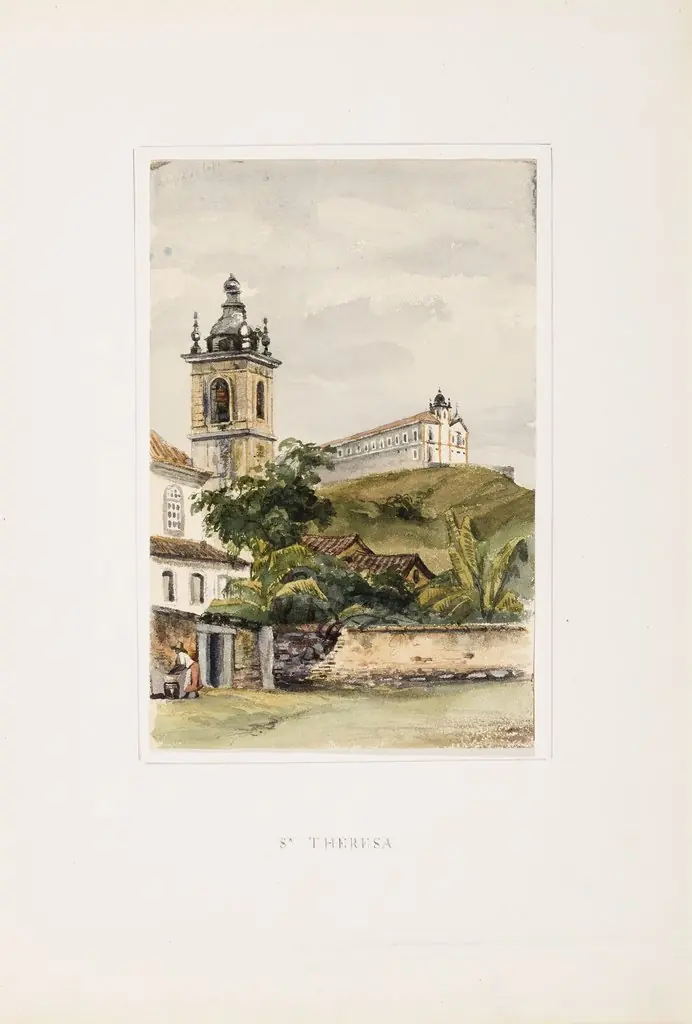 Sa Theresa
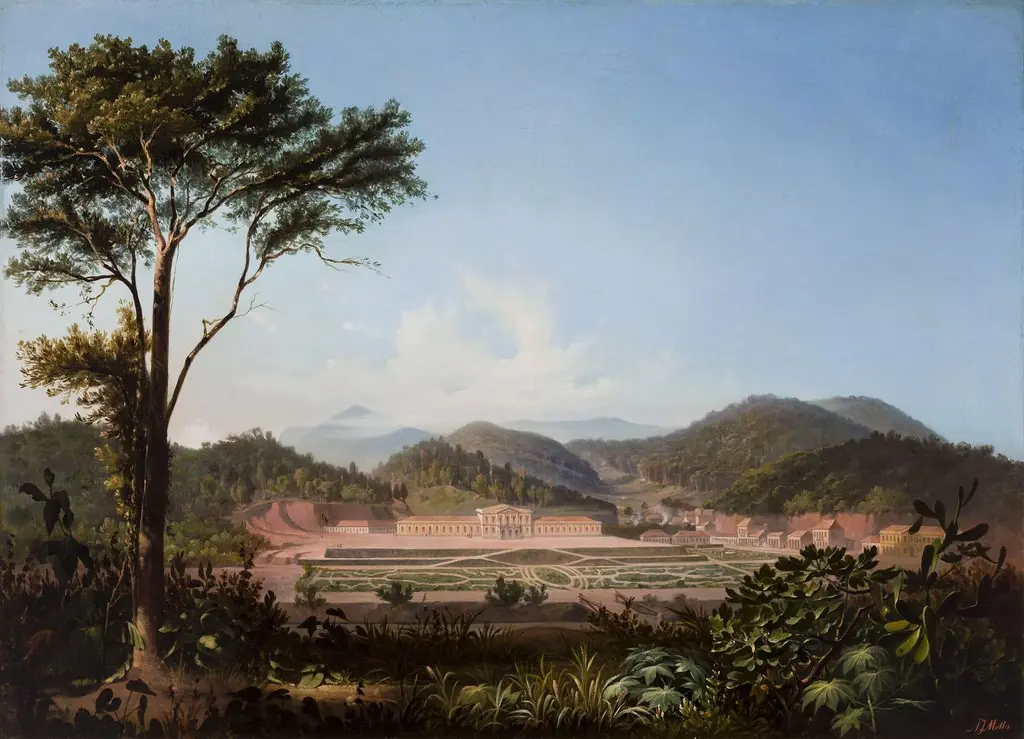 Palácio Imperial de Petrópolis
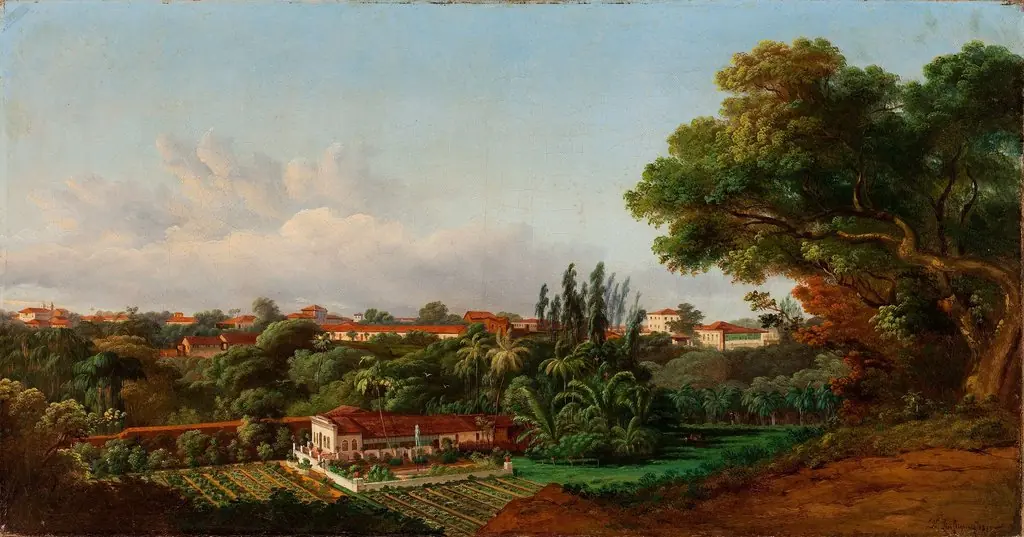 Sítio Sossego, São Luís, Maranhão (atribuído)
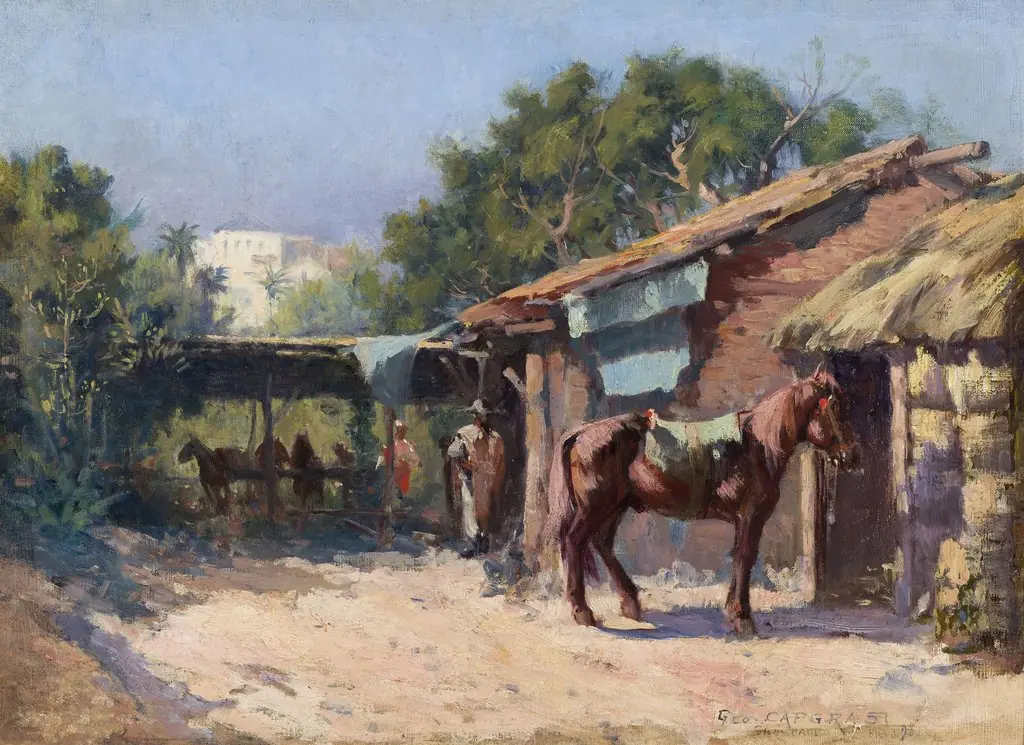 Arredores de São Paulo (atribuído)
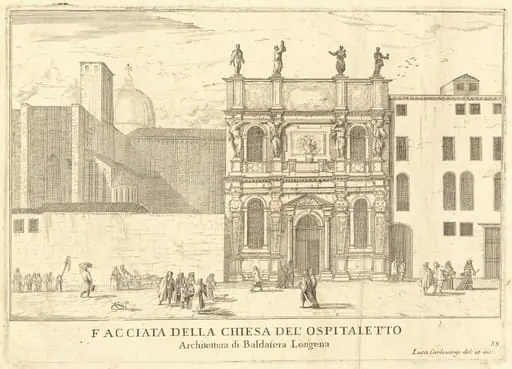 Facciata della Chiesa del'Ospitaletto (plate 33)
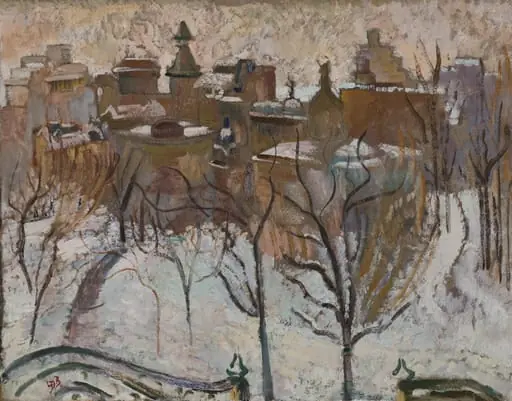 Iarna în Cișmigiu
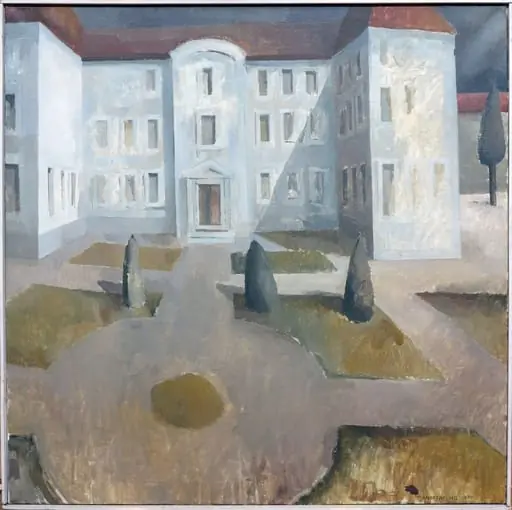 His, Andreas - Malerei, Palais
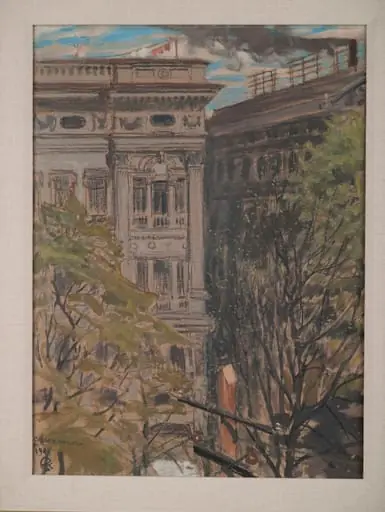 Kevätpäivä Helsingissä, Esplanadi
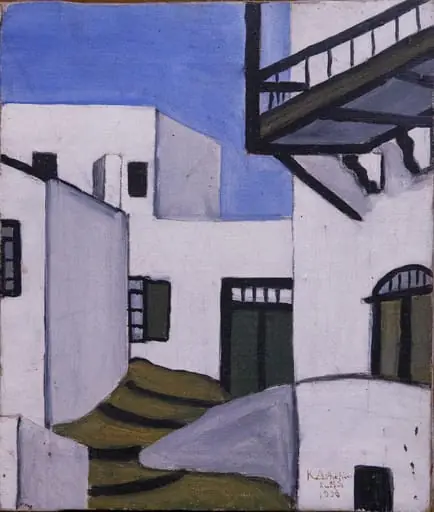 Σκύρος
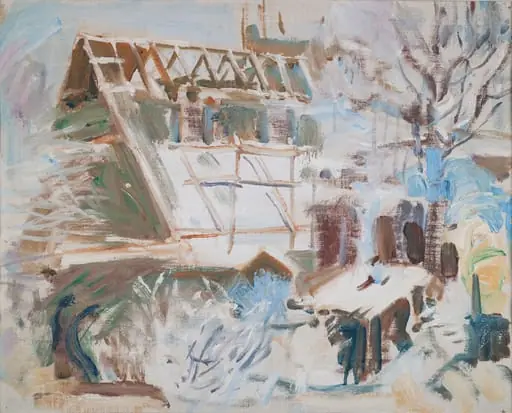 Tarvaspää rakenteilla
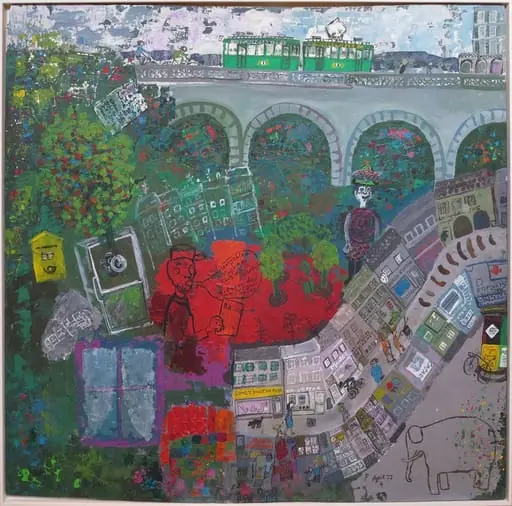 Dellers, Helen - Malerei, Ein Nachmittag in der Stadt
 Calea Moșilor
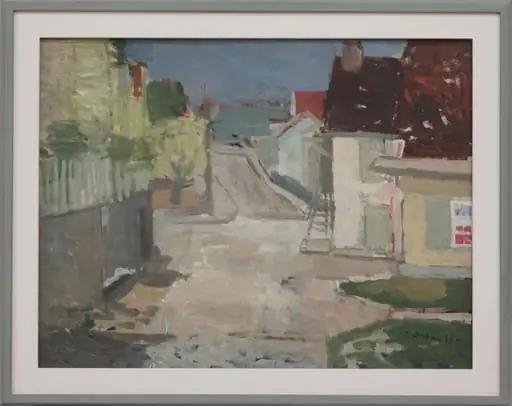 Düblin, Jacques - Malerei, Strasse in Oberwil
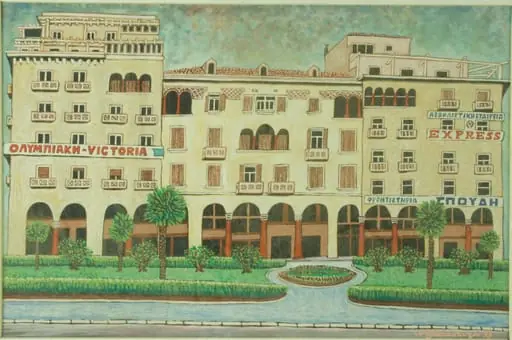 Από την οδό Αριστοτέλους
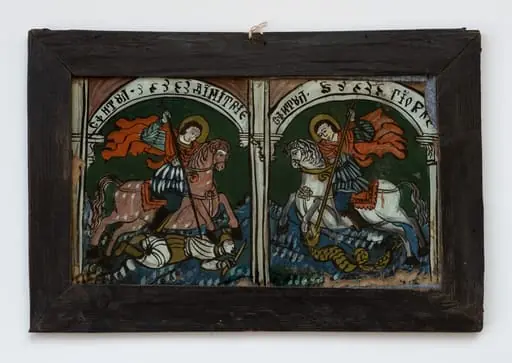 Sfântul Dumitru și Sfântul Gheorghe
 Compoziție cu ruine și păsări
 Cortegiu
 Bazarul
 Începuturile Muzeului Satului Românesc. Troița din Rășinari și gospodăria din Drăguș, jud. Brașov (1936)
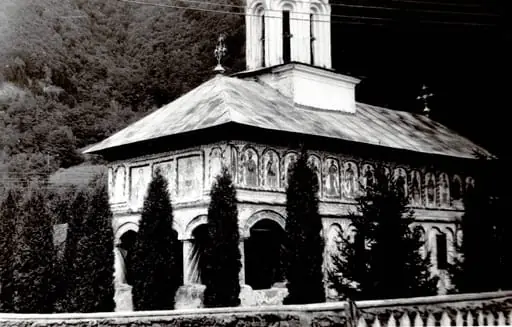 Biserica "Sf. Voievozi", Cîinenii Mici, comuna Cîineni, județul Vâlcea (1981)
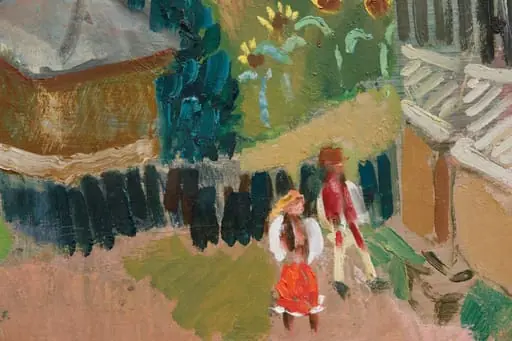 Mănăstirea Văratec
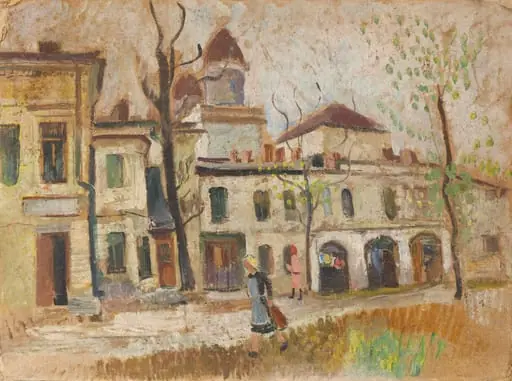 Peisaj citadin
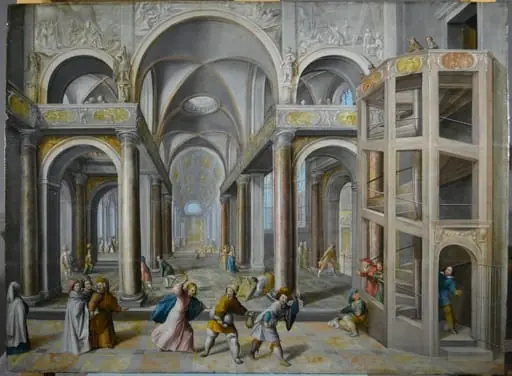 Christos alungă din Templu pe samsari
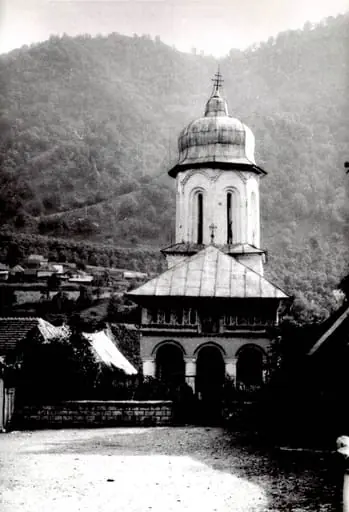 Biserica "Sf. Voievozi", Robești (Cîineni), județul Vâlcea (1981)
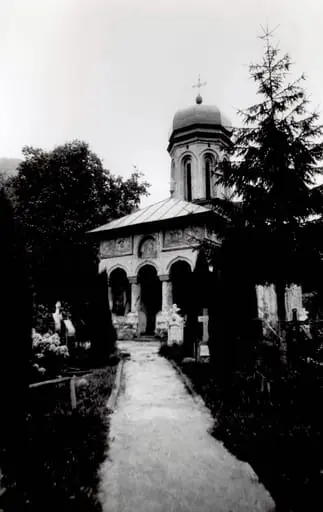 Biserica "Sf. Nicolae", Cîineni Mici, comuna Cîineni, județul Vâlcea (1981)
 Mangalia - Case
 Constanța
 御影堂扇屋図|The Mieidō Fan Shop
Frequently asked questions
What is Architecture?
Architecture is the study and practice of designing structures, especially habitable ones.
How many Architecture works does Artifact World Gallery have?
Artifact World Gallery holds 46 public-domain Architecture works, all free to view and download.
Who are the key Architecture artists?
Key Architecture artists in the collection include John Singer Sargent, Florine Stettheimer and Jean Marchand.
Where can I see Architecture works?
Architecture works in the collection are held by Pinacoteca de São Paulo, Metropolitan Museum of Art and National Museum of Art of Romania.