Artwork
Grappling for the Lost Cable
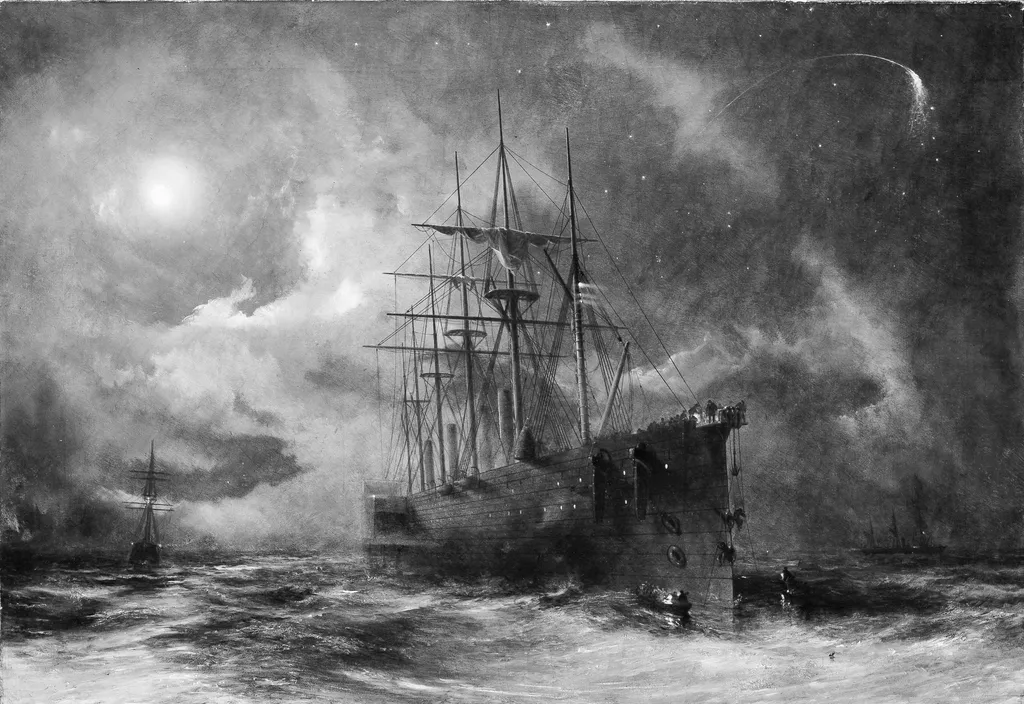
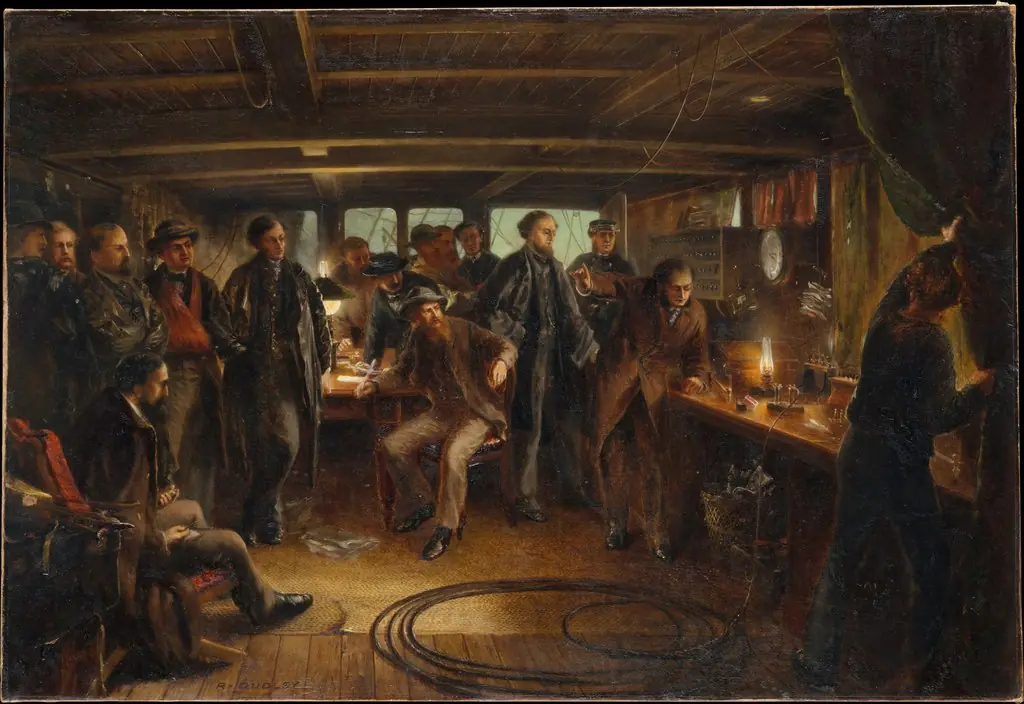
Grappling for the Lost Cable is an oil painting by Robert Charles Dudley. It dates from 1866 and is held in the collection of the Metropolitan Museum of Art.
About this work
Subject & Meaning
Symbolically, the work represents human perseverance in the face of technological failure and the broader Victorian-era ambition to unify global communication.
The painting depicts a moment during the mid-19th-century effort to lay the first transatlantic telegraph cable, specifically the recovery of a lost section of cable from the ocean floor. Dudley's composition shows sailors in a small boat grappling with heavy ropes and equipment, emphasizing the precariousness of the operation and the technological challenge of underwater cable repair.
Symbolically, the work represents human perseverance in the face of technological failure and the broader Victorian-era ambition to unify global communication. The cable itself functions as a metaphor for connection and progress, while the stormy sea underscores the natural forces that threatened early attempts at intercontinental telegraphy.
Technique & Style
Grappling for the Lost Cable is an oil painting executed on canvas, a traditional support suited to the work's narrative maritime subject. The composition measures 57.8 by 84.1 centimeters, a horizontal format that accommodates the depiction of a ship and a transatlantic telegraph cable.
The use of oil paint allows for the layered handling and tonal modulation characteristic of mid-nineteenth-century marine painting, supporting detailed rendering of rigging, sea, and sky. The horizontal orientation and the inclusion of a vessel and cable indicate a focus on the specific industrial-marine episode of cable recovery.
History & Provenance
Robert Charles Dudley created the oil-on-canvas painting Grappling for the Lost Cable in 1866. Measuring 57.8 cm in height and 84.1 cm in width, the work depicts a ship engaged in the recovery of a transatlantic telegraph cable. It is currently held in the collection of the Metropolitan Museum of Art.
The provided sources do not list a specific inventory or accession number for the piece, nor do they document any exhibition history or past loan records.
Overview
Robert Charles Dudley’s 1866 oil on canvas, Grappling for the Lost Cable, presents a dramatic maritime scene that now belongs to the collection of the Metropolitan Museum of Art. The composition centers on a large vessel battling a storm‑tossed sea, while a smaller boat struggles nearby, underscoring a moment of urgent rescue.
Context
During the mid‑1800s, the laying and maintenance of the transatlantic telegraph cable were national priorities, symbolizing the era’s drive toward global communication. Dudley’s depiction aligns with a broader visual culture that celebrated engineering feats while also dramatizing the perils faced by those who serviced them.
Own this work as a print
Artist & collection

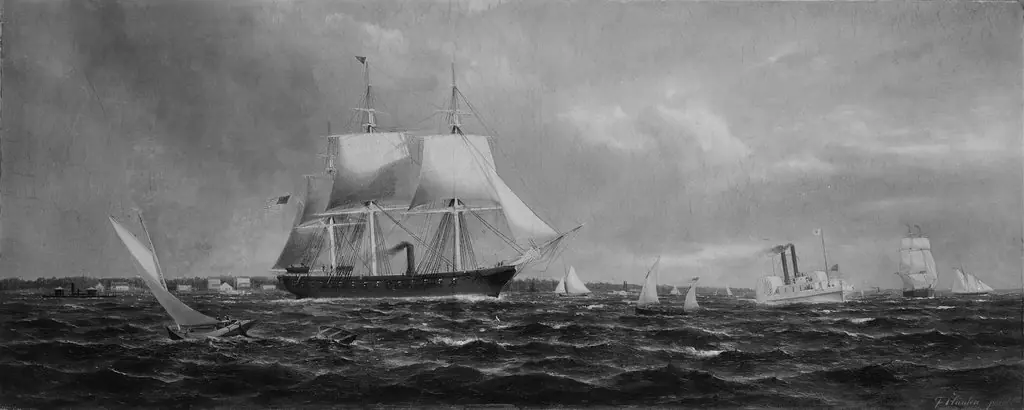 New York Bay
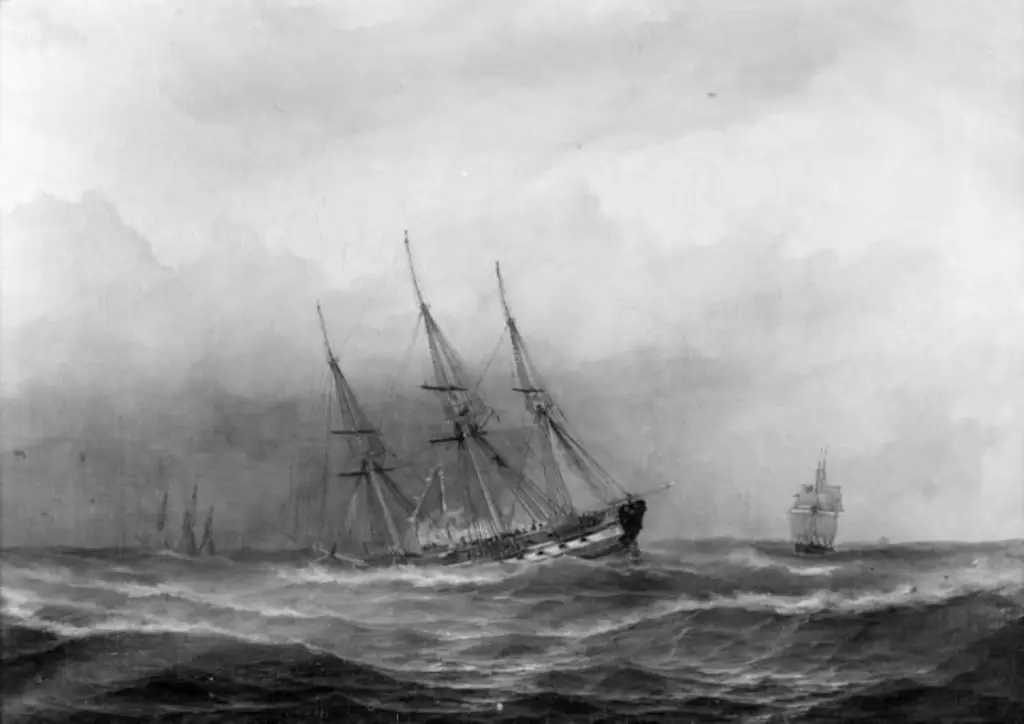 Fregatten "Nymphen" i en storm i året 1832
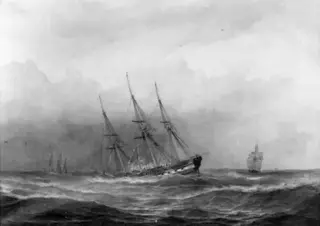 Fregatten "Nymphen" i en storm i året 1832
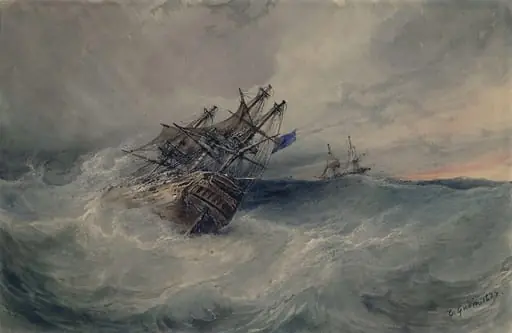 A Storm at Sea
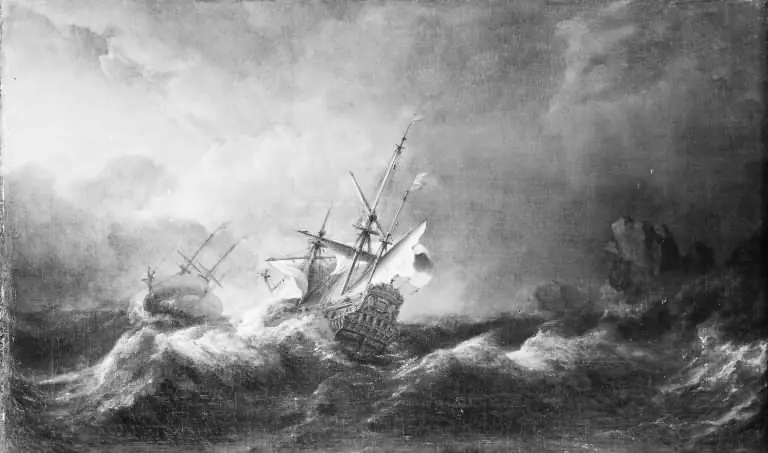 Dutch Men-of-War in a Storm off a Rocky Coast
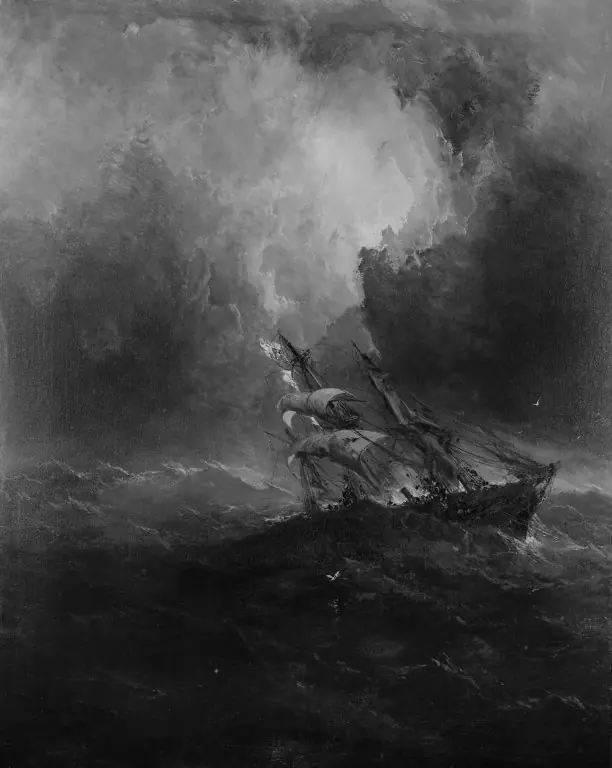 Foundering
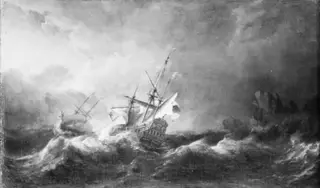 Dutch Men-of-War in a Storm off a Rocky Coast
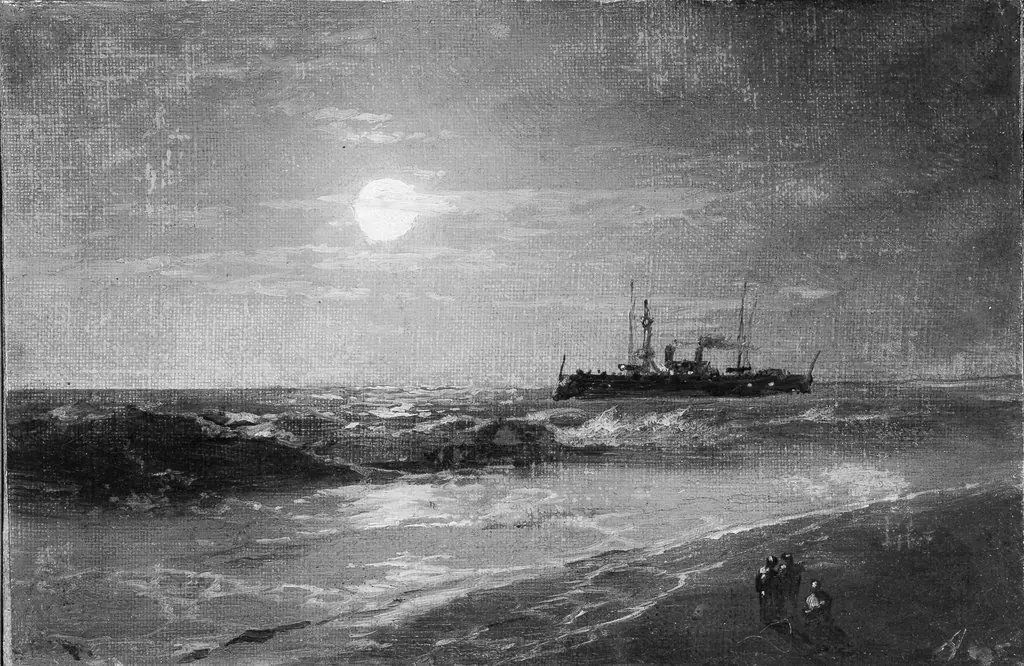 Ship by Moonlight
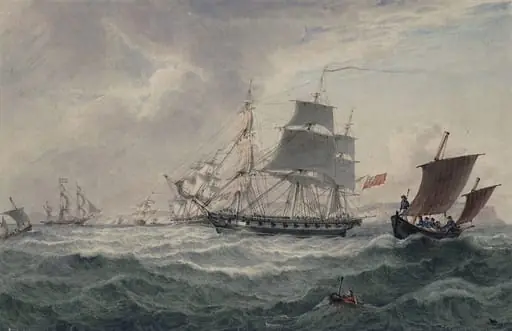 In the English Channel
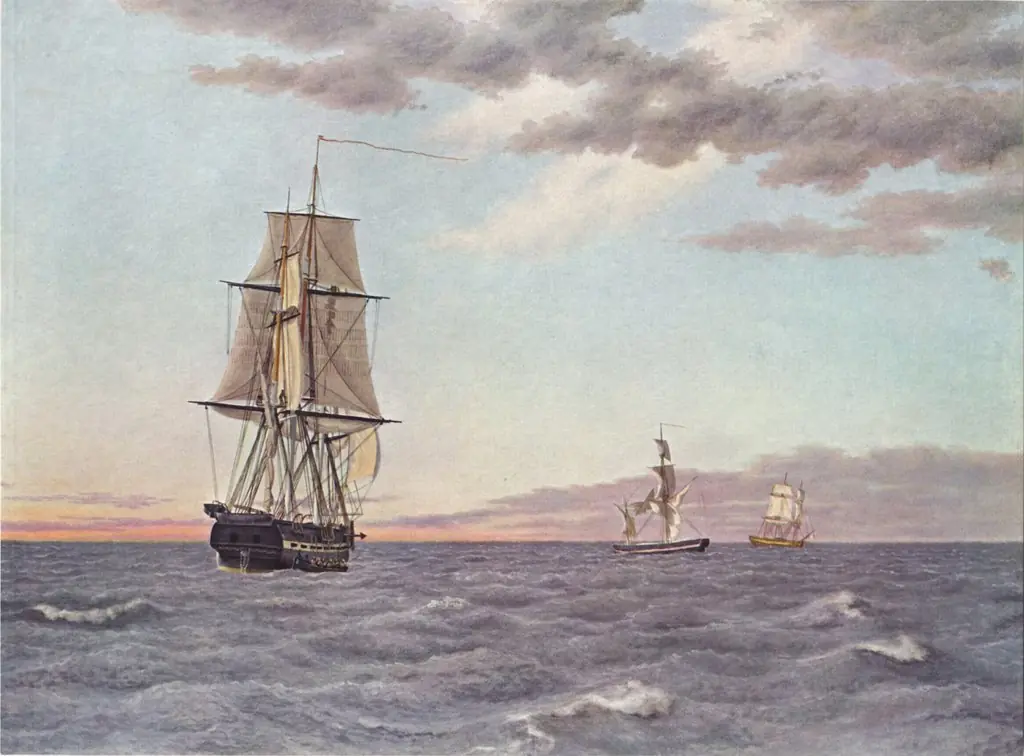 The Corvette "Galathea" Lying to in order to Send Help to the Brig "St Jean"
 View of the Cliffs of Møn and a Corvette