Artwork
A Selection of Hexandrian Plants, belonging to the natural order of Amaryllidae and Liliacae: Tiger Lily
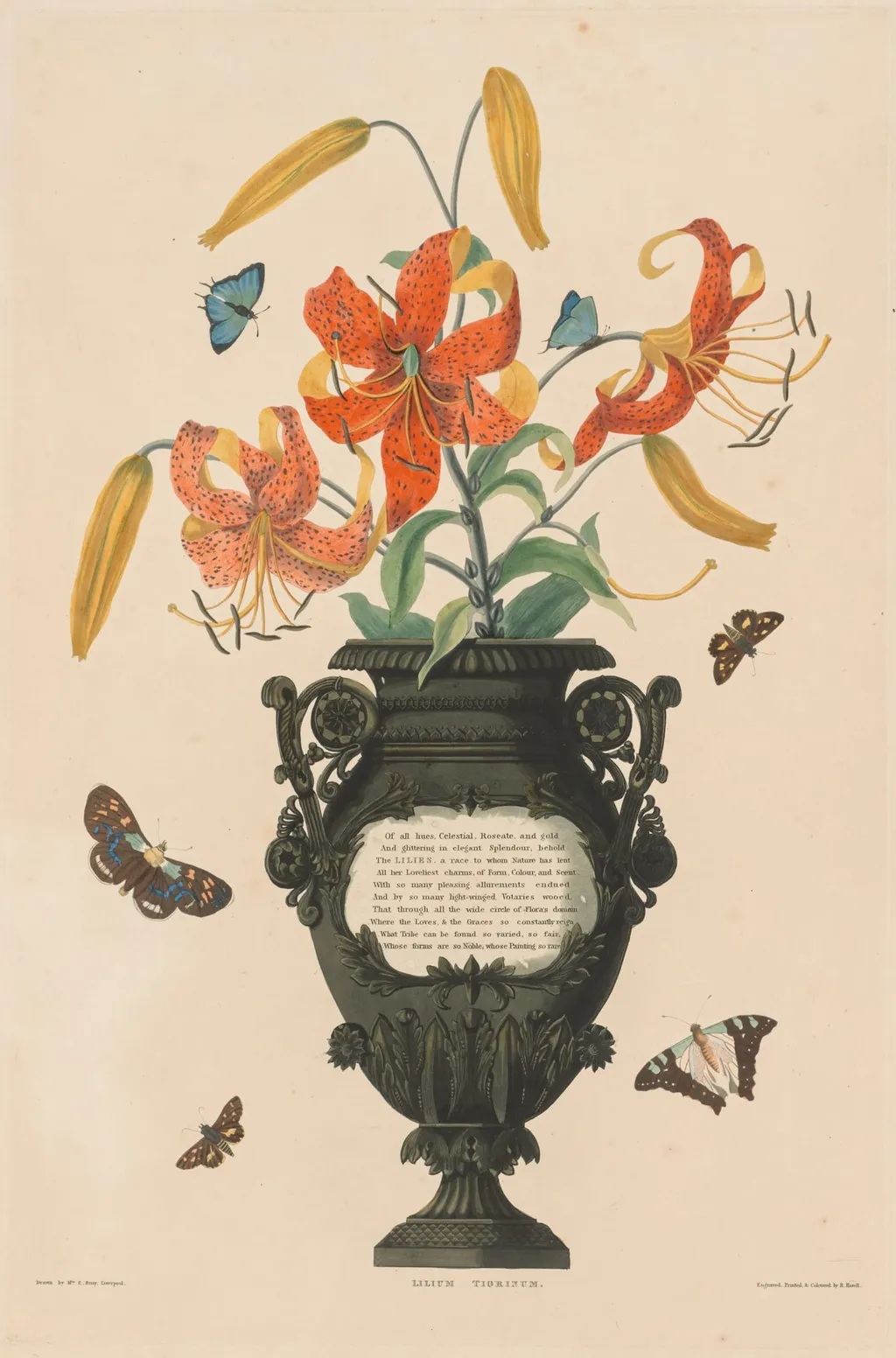
A Selection of Hexandrian Plants, belonging to the natural order of Amaryllidae and Liliacae: Tiger Lily is a print by the Romanticist artist Robert Havell. It dates from 1832 and is held in the collection of the Cleveland Museum of Art. This print is part of a late 18th-century botanical series documenting plants of the Amaryllidae and Liliacae families.
- Accession no.
- 1946.252
- Credit line
- In memory of Mrs. Hermon A. Kelley
About this work
They printed color images in layers, one plate for blue, one for yellow, one for red, and one for black.
This painting shows a single tiger lily in sharp focus. The petals glow against a dark background, each fold of the flower captured in crisp detail. Tiny watercolor touches add extra depth to the reds and greens.
Back then, artists used a tricky method. They printed color images in layers, one plate for blue, one for yellow, one for red, and one for black. Each print got hand-painted after to make it pop.
Try looking up Robert Havell (British, 1769–1832) next.
Overview
This print is part of a late 18th-century botanical series documenting plants of the Amaryllidae and Liliacae families. Produced using early color printing techniques, it combines engraved plates with meticulous hand-applied watercolor. Each hue was printed separately, blue, yellow, red, and black, then refined by hand to enhance botanical accuracy and visual depth, reflecting the era’s fusion of science and artistry.
Subject & Meaning
The tiger lily is rendered as a solitary, sharply focused specimen against a dark ground, emphasizing its structural complexity and vivid coloration. Its inclusion in a scientific catalog suggests a purpose beyond aesthetics: to document botanical form with precision. The isolation of the flower underscores its taxonomic significance, inviting close study rather than decorative appreciation.
Technique & Style
Color was applied through multiple engraved plates, each inked with a single hue, blue, yellow, red, and black, layered to build the final image. After printing, artists added fine watercolor touches to intensify petal tones and leaf veins. This hybrid method balanced mechanical reproduction with artisanal detail, allowing for both consistency and individual variation across impressions.
History & Provenance
Produced during a period of expanding botanical illustration, this print likely originated from a published work intended for scientific audiences. While the specific publisher is not noted, the technique aligns with practices used by British naturalists and engravers of the time, including Robert Havell, whose work similarly merged precision with hand-coloring in botanical publications.
Context
In the late 1700s, advances in color printing coincided with growing interest in Linnaean taxonomy. Botanical texts sought to standardize plant identification, and visual accuracy became paramount. This print reflects that movement, its methodical layering of color and attention to anatomical detail served both scholarly and educational aims within natural history circles.
Legacy
The print exemplifies a transitional phase in scientific imagery, bridging hand-drawn manuscripts and mechanized reproduction. While later photographic methods replaced such labor-intensive processes, these works remain valued for their technical ingenuity and the skilled craftsmanship embedded in each hand-finished impression.
Own this work as a print
Artist & collection
Artist
The Havell family of Reading, Berkshire, England, included a number of notable engravers, etchers and painters, as well as writers, publishers, educators, and musicians.

 Twelve Months of Flowers: July
 Liure de Toutes Sortes de fleurs d'après nature: Vase of Flowers
 Plantae et papiliones rariores: No. 9
 Twelve Months of Flowers: September
 Twelve Months of Flowers: October
 Twelve Months of Flowers: March
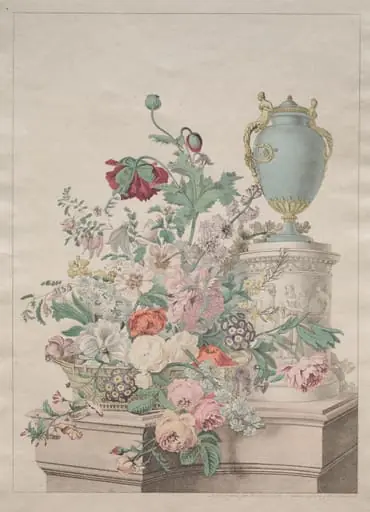 Flore Pittoresque ou Recueil de Fruits et de Fleurs
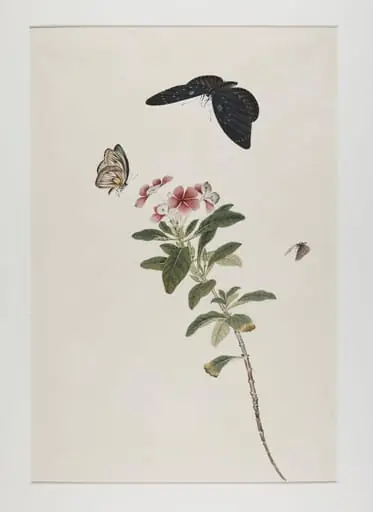 Madagascar periwinkle (catharanthus roseus) and butterflies
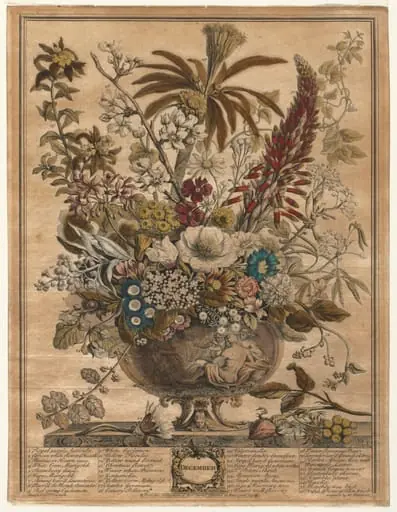 Twelve Months of Flowers: December
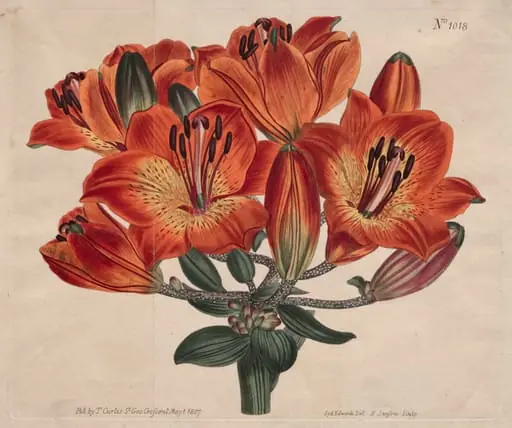 The Botanical Magazine or Flower Garden Displayed: Umbel-Flowering Bulb-Bearing Orange-Lily
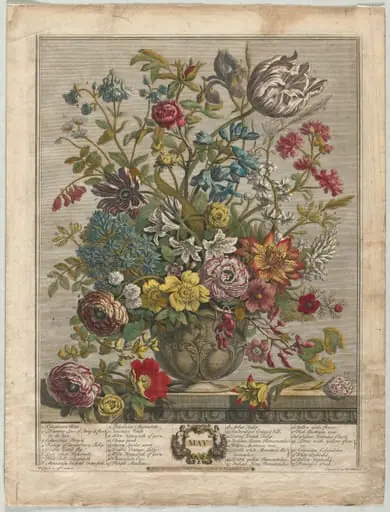 Twelve Months of Flowers: May
- Collection of Flowers and Fruits Painted after Nature: Bouquet of Foxglove, Clematis, Pansy, Peony, Poppy, and Yellow Day Lily