Artwork
Doi feți cu stea în frunte IV-V
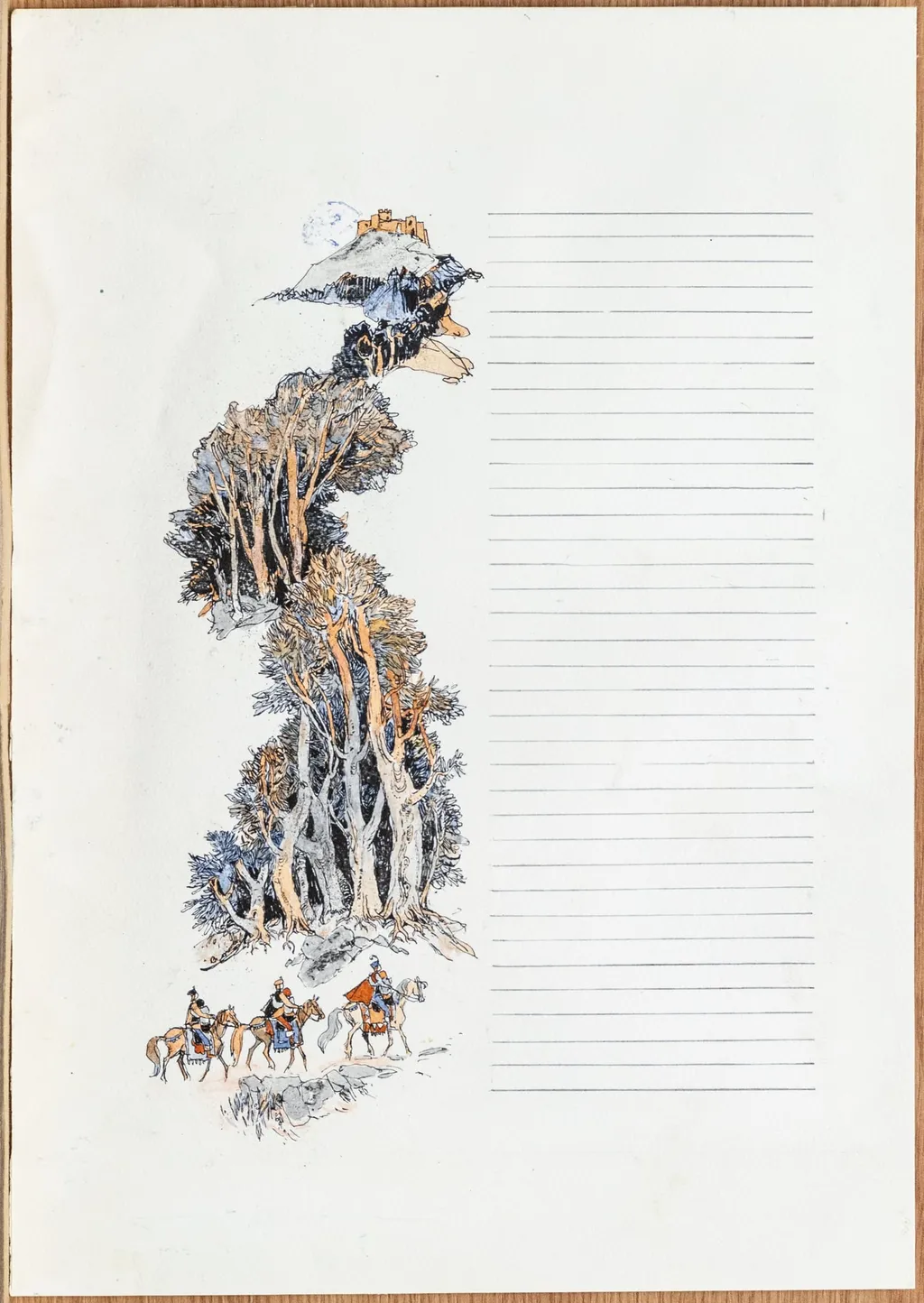
Doi feți cu stea în frunte IV-V is a print by Noel Roni. It dates from 1950 and is held in the collection of the Gavrila Simion Eco-Museum Research Institute Tulcea.
About this work
Overview
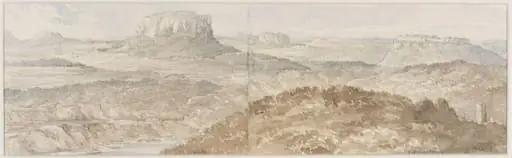
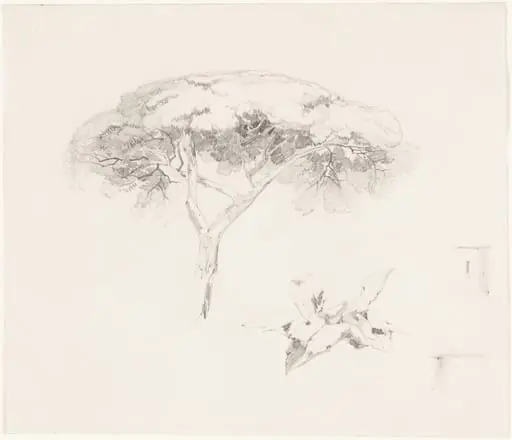
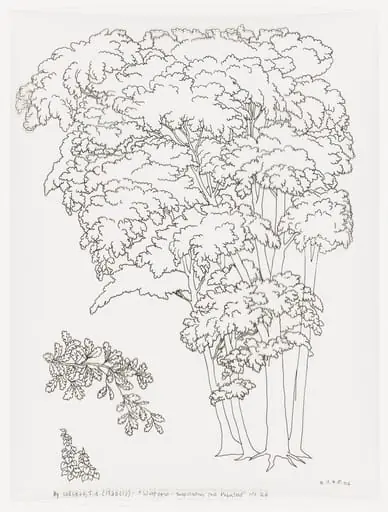
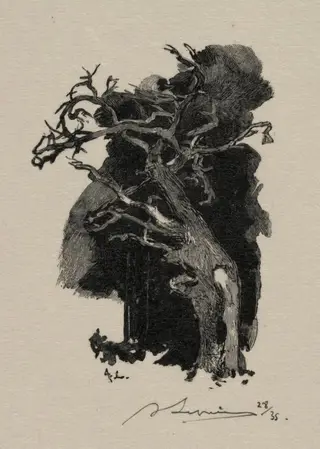
Created around 1950 by Roni, Noel, this drawing is part of a series titled Doi feți cu stea în frunte IV-V. Executed in ink or pencil on paper, it captures a rural landscape with minimal detail and expressive line work. The piece resides in the collection of the Museum of Ethnography, where it is studied as an example of modern Romanian artistic engagement with folk imagery.
Subject & Meaning
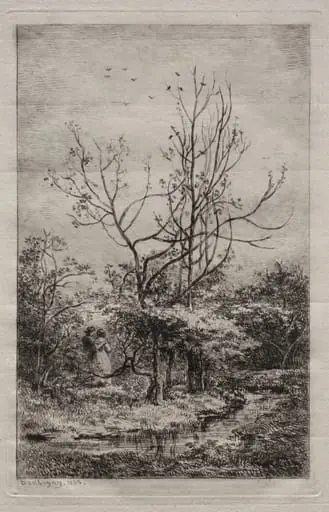
The scene depicts a solitary hill crowned by a small structure, possibly a dwelling or watchtower, surrounded by a gnarled tree whose branches twist upward.
The scene depicts a solitary hill crowned by a small structure, possibly a dwelling or watchtower, surrounded by a gnarled tree whose branches twist upward. Three riders traverse a winding path below, their forms simplified and subtly animated. The title references folk motifs involving children and stars, suggesting a symbolic layer tied to Romanian oral traditions, though the imagery remains abstracted and open to interpretation.
Technique & Style
The artist employs rapid, fluid strokes to convey motion and texture: the tree’s limbs ripple with energy, the riders’ horses suggest galloping through loose contours, and the hillside is rendered in blended washes of blue and brown. There is no attempt at realism; instead, form is distilled to essential lines and tones, emphasizing rhythm over detail, a hallmark of the artist’s interpretive approach to landscape.
History & Provenance
The work entered the Museum of Ethnography’s collection in the mid-20th century, likely acquired during a period of renewed interest in regional artistic expression. Its provenance is tied to the artist’s personal sketches, which were later recognized for their connection to folk narratives. No earlier exhibition or ownership records are documented prior to its institutional acquisition.
Context
This drawing emerged during a time when Romanian artists were re-examining rural life and folklore as sources of cultural identity. Though not directly illustrative of traditional motifs, its composition echoes the symbolic landscapes found in folk tales and embroidery. The artist’s style reflects a modernist impulse to distill folk elements into abstract, emotional forms rather than literal representations.
Legacy
The work contributes to a broader postwar dialogue on Romanian identity in visual art, bridging folk symbolism with modernist abstraction. While not widely reproduced, it remains a reference point in studies of 20th-century Romanian drawing. Its presence in the Museum of Ethnography underscores its role as a cultural artifact rather than a purely aesthetic object.
Artist & collection
Artist
Museum
Gavrila Simion Eco-Museum Research Institute Tulcea
Continue through works from the same source collection.