Artwork
Mumbles lighthouse
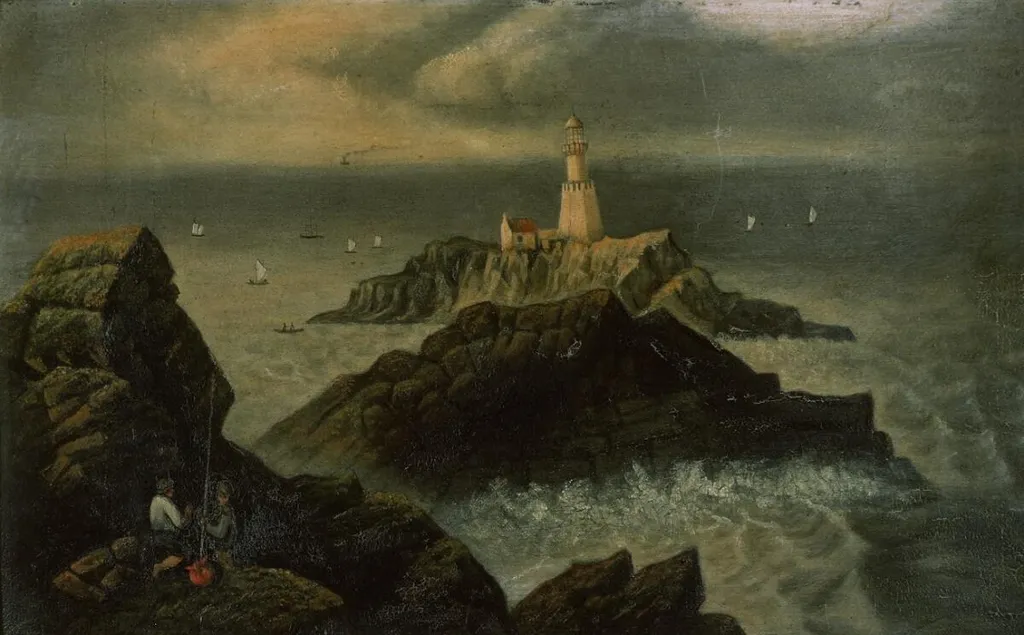
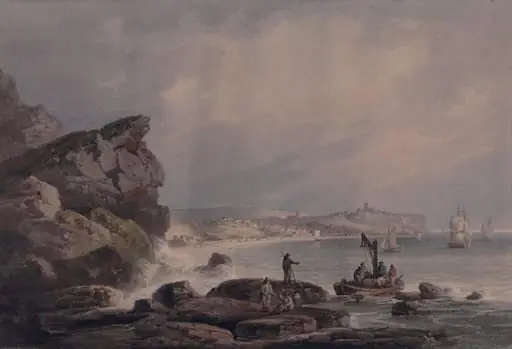
Mumbles lighthouse is an oil painting by the British Romanticist artist Taliesin Williams. It dates from 1800 and is held in the collection of the National Library of Wales.
About this work
Overview
8 centimetres and is held in the National Library of Wales Framed works of art collection in Aberystwyth, where it was accessioned as PE04523.
The Mumbles Lighthouse is a marine painting by the Welsh artist and poet Taliesin Williams (1787-1847), executed in oil paint on cardboard. The work measures 27 by 43.8 centimetres and is held in the National Library of Wales Framed works of art collection in Aberystwyth, where it was accessioned as PE04523. Dated variously to around 1800 and circa 1840 in different sources, the painting depicts the lighthouse of the same name situated off Mumbles Head near Swansea, Wales. It is one of relatively few known visual works by Williams, whose primary reputation rests on his literary and scholarly activities, and it offers rare insight into the artistic practice of a figure better known as a defender of his father Iolo Morganwg's controversial bardic legacy.
Subject & Meaning
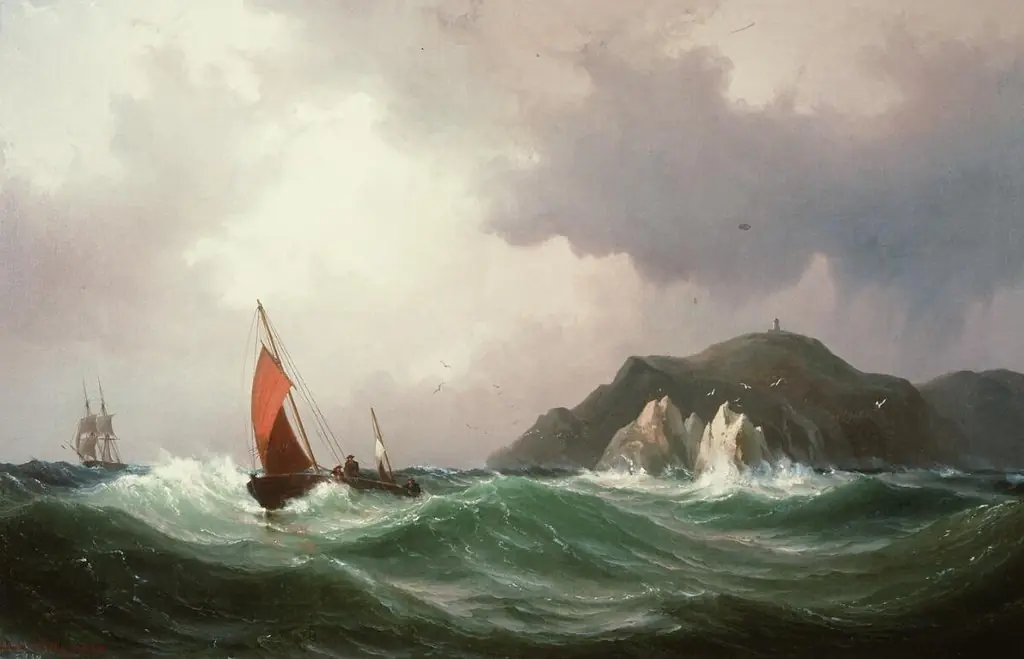
The painting presents a coastal seascape centred on Mumbles Lighthouse, which stands on a rocky island at the right of the composition. The lighthouse itself is rendered as a tall cylindrical tower with an attached building distinguished by a red roof. Dark, jagged rocks fill the foreground and middle ground, against which waves break in white foam. In the lower left corner, two small figures sit upon rocks near a red object, possibly a buoy or container, suggesting the presence of fishermen or maritime workers. Several sailboats with white sails are scattered across the calmer water beyond. The sky is overcast with heavy grey clouds, though a pale yellowish light penetrates in the upper left, creating a subdued atmospheric effect. The subject carries particular resonance given that the real Mumbles Lighthouse, completed in 1794, was a relatively recent structure when Williams painted it, and the depiction of fishermen alongside this modern navigational aid speaks to the intersection of traditional Welsh coastal life and emerging maritime technology. The presence of fisher figures also connects to documented local history, including the heroic actions of the Ace sisters during storms in the area.
Technique & Style
The work is executed in oil paint on cardboard, a support that suggests a degree of informality or portability in its creation. The brushwork appears relatively smooth overall, with some visible texture in the sky and water passages. The palette is dominated by dark greens, browns, greys and muted yellows, producing a dark and atmospheric finish that accords with the overcast conditions depicted. The composition balances the verticality of the lighthouse against the horizontal expanse of sea and sky, with the small human figures and boats providing scale and narrative interest. The handling of light, particularly the breaking of pale yellowish tones through the grey cloud cover, demonstrates a degree of observational sensitivity to transient weather effects. The relatively modest dimensions of 27 by 43.8 centimetres indicate a work of intimate scale, consistent with a sketch-like or study purpose, though its finished appearance suggests it was conceived as a complete statement.
History & Provenance
The dating of the painting remains somewhat uncertain. The corpus source gives a date of 1800, while the Art UK record suggests circa 1840. An inventory from zone47.com also lists a work with the same accession number, PE04523, with dimensions of 27 by 43.8 centimetres and material of oil paint on cardboard, confirming the basic physical facts. The painting was acquired by the National Library of Wales as a gift from Miss O. V. Williams in 1985, entering the institution's Framed works of art collection. The work is now located at the National Library of Wales in Aberystwyth. No extensive exhibition history is recorded in the available sources. The artist Taliesin Williams was born in Cardiff in 1787 and died in 1847, meaning that either dating would place the work within his adult life, though the earlier date of 1800 would make it the product of his teenage years, while the circa 1840 date would place it in his mature period as an established literary figure and schoolmaster in Merthyr Tydfil.
Context
Taliesin Williams occupies an unusual position in Welsh cultural history. The son of Iolo Morganwg (Edward Williams), the controversial antiquarian and creator of the modern Gorsedd ceremony, Taliesin devoted much of his career to defending and disseminating his father's work, including the publication of the Iolo Manuscripts in 1848. He was primarily known as a poet, winning the bardic chair at the Cardiff Eisteddfod in 1834 and the bardic crown at Abergavenny in 1838. His activities as a visual artist are far less documented, making The Mumbles Lighthouse a significant object for understanding the full range of his creative practice. The painting emerges from a period of growing interest in Welsh landscape and coastal scenery, and its subject, the recently constructed Mumbles Lighthouse, represents a specifically Welsh maritime motif. The work's existence complicates the standard narrative of Williams as solely a literary figure, revealing him as engaged with visual observation and the recording of local topography. Critical scholarship has focused overwhelmingly on his literary and antiquarian contributions; the painting awaits substantial art historical analysis.
Legacy
The legacy of The Mumbles Lighthouse is intertwined with the broader assessment of Taliesin Williams's cultural role. As a visual object, it remains relatively little known, housed in the National Library of Wales and accessible as a public domain image through the Art UK platform. Its primary significance lies in its value as documentary evidence of Williams's activity as a painter, expanding understanding of a figure otherwise defined by his literary defence of his father's controversial bardic legacy. The painting also serves as a historical record of the Mumbles Lighthouse and its surrounding maritime environment in the early nineteenth century, complementing the extensive documentation of the lighthouse's structural history. The work's accession into a national collection in 1985 ensured its preservation and public accessibility, though it has not achieved the iconic status of the lighthouse itself, which remains, according to contemporary accounts, the most photographed landmark in the village. For scholars of Welsh art and culture, the painting represents a point of intersection between the antiquarian revival, the documentation of industrial and maritime modernity, and the personal artistic practice of a key, if contested, figure in Welsh cultural nationalism.
Artist & collection
Artist
Taliesin Williams painted Welsh landscapes in oil, focusing on South Wales between 1800 and 1840.