Artwork
fragment dintr-o statuetă antropomorfă feminină, din care se mai păstrează jumătatea inferioară cu membrele inferioare unite și bazinul inferior; ventral și dorsal, membrele sunt despărțite printr-o linie scurtă incizată, verticală; lateralele bazinului sunt punctate prin două mici perforații; vârfurile picioarelor sunt îngustate puternic și modelate lăsând impresia redării încălțărilor; a fost pictată cu roșu, cu linii scurte orizontale și oblice; liniile oblice definesc și triunghiul sexual; la picioare, gambele sunt pictate integral cu culoare; pastă fină, cărămizie, compactă, bine arsă
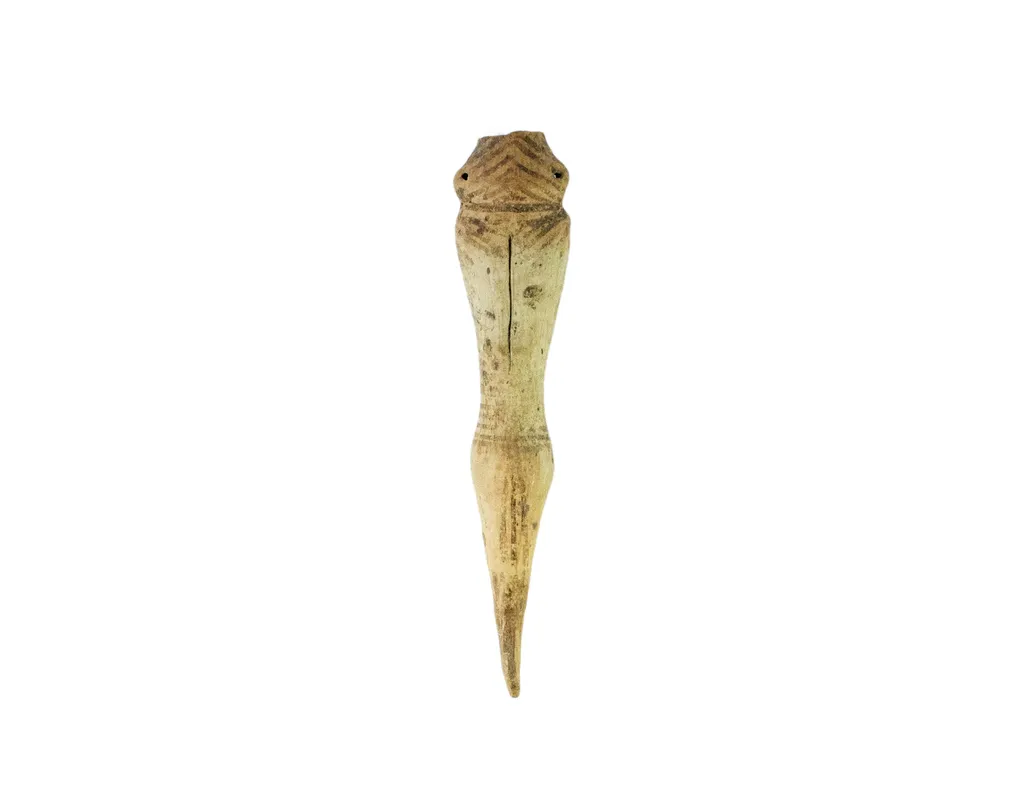
fragment dintr-o statuetă antropomorfă feminină, din care se mai păstrează jumătatea inferioară cu membrele inferioare unite și bazinul inferior; ventral și dorsal, membrele sunt despărțite printr-o linie scurtă incizată, verticală; lateralele bazinului sunt punctate prin două mici perforații; vârfurile picioarelor sunt îngustate puternic și modelate lăsând impresia redării încălțărilor; a fost pictată cu roșu, cu linii scurte orizontale și oblice; liniile oblice definesc și triunghiul sexual; la picioare, gambele sunt pictate integral cu culoare; pastă fină, cărămizie, compactă, bine arsă is a print by Unknown. It dates from 1850 and is held in the collection of the National Museum of Bukovina. This fragment preserves the lower half of a small anthropomorphic clay figure, likely female, with fused legs and a narrowed pelvis.
About this work
Overview
The piece is incomplete, but its remaining form suggests intentional emphasis on the lower torso and legs, possibly for ritual or symbolic purposes.
This fragment preserves the lower half of a small anthropomorphic clay figure, likely female, with fused legs and a narrowed pelvis. The surface is compact and finely fired, exhibiting a brick-red hue. Red pigment, applied in short, uneven strokes, covers the limbs and defines anatomical features. The piece is incomplete, but its remaining form suggests intentional emphasis on the lower torso and legs, possibly for ritual or symbolic purposes.
Subject & Meaning
The figure’s joined legs and the incised vertical line separating them may symbolize duality or transformation. A triangular mark, outlined by slanted red lines near the pelvis, likely denotes genitalia, drawing attention to fertility or reproduction. The pointed feet, resembling footwear, could imply status, movement, or a connection to the earth. These elements suggest the figure was not merely decorative but carried cultural or spiritual significance related to the female form.
Technique & Style
Crafted from fine, well-fired clay, the figure was shaped with deliberate simplicity, focusing on essential contours. Red pigment was applied roughly, using short horizontal and oblique strokes rather than smooth washes. Two small perforations on the hip sides and the incised line between the legs indicate precise, if minimal, carving. The rendering of the feet as narrow, shoe-like tips reflects a stylized approach, prioritizing symbolic clarity over naturalism.
History & Provenance
The fragment originates from a Neolithic settlement in southeastern Europe, likely dating to the fifth or fourth millennium BCE. Similar clay figurines have been found in regions such as the Balkans, often associated with domestic or ritual contexts. Its survival as a partial piece suggests it was broken intentionally or through time, possibly during use or deposition. No detailed excavation record accompanies this specific fragment, limiting precise attribution.
Context
This artifact belongs to a broader tradition of Neolithic anthropomorphic figurines, common in early agrarian societies across Europe. These objects frequently emphasized reproductive anatomy, perhaps linked to beliefs in fertility, lineage, or ancestral veneration. The use of red pigment aligns with symbolic practices in contemporary cultures, where color conveyed vitality or sacredness. The figure’s small size and fragmentary state suggest it may have been handled, carried, or placed in domestic or burial settings.
Legacy
Though isolated and incomplete, this fragment contributes to understanding how early communities represented the human body through abstraction and symbolic emphasis. Its stylistic choices—minimal carving, bold pigment, and focused anatomy—reflect a consistent visual language across Neolithic sites. It stands as evidence of early artistic intent to convey identity, gender, and spiritual concepts through modest, durable materials.
Artist & collection
 Domestic Scene
 Giacomo and Cardinal Marco, investing Andrea, Abbot of San Zeno, with his Benefice
 The Nymph of Fontainebleau
 Portrait of a Woman
 Madonna and Child with Saints in the Enclosed Garden
 Venus and Minerva
 Family Group of Four on Sofa
 Wall painting from Room H of the Villa of P. Fannius Synistor at Boscoreale
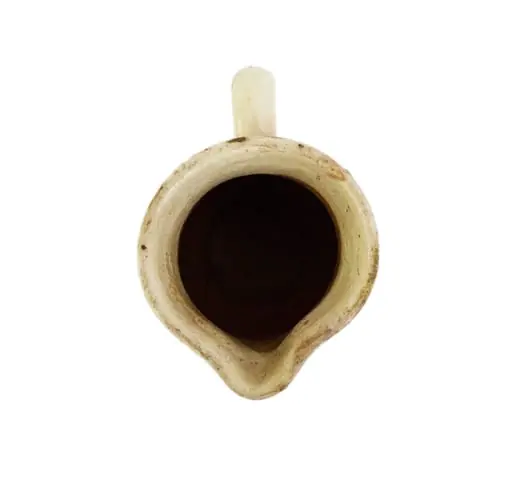 Căniță lucrată în manieră Kuty de formă cilindrică, bombată la mijloc, modelată la roată; prezintă o toartă pentru prindere și lob pentru turnarea lichidelor realizat prin impresiune cu degetele; decor geometrizant organizat în două registre despărțite de linii drepte: cele două registre sunt realizate cu semicercuri, linii curbe și hașuri; spre gura vasului un șir de semiovaluri alternând cromatic; cromatică: fond alb dat de angobă, decor cu verde, galben și cărămiziu.
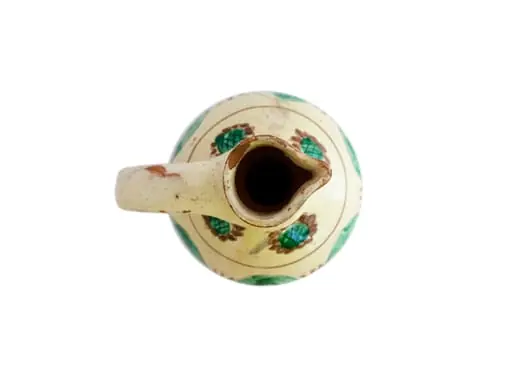 Ulcior lucrat în manieră Kuty, de formă cilindrică bombat la mijloc și cu gât îngust, modelat la roată; prezintă o toartă pentru prindere și un lob pentru turnarea lichidelor realizat prin impresiune cu degetul; decor geometrizat organizat în trei registre, despărțite de linii circulare realizate cu cornul: în registrul inferior apar motive geometrice unghiulare despărțite de grupuri de liniuțe; în registrul din mijloc motive geometrice semicirculare despărțite de grupuri de liniuțe și realizate cu linii curbe și hașuri, spre gâtul vasului un registru cu motive astrale: soare realizate cu cercuri, hașuri și puncte de culoare; cromatică: fond alb dat de angobă, decor realizat cu verde, galben și cărămiziu.
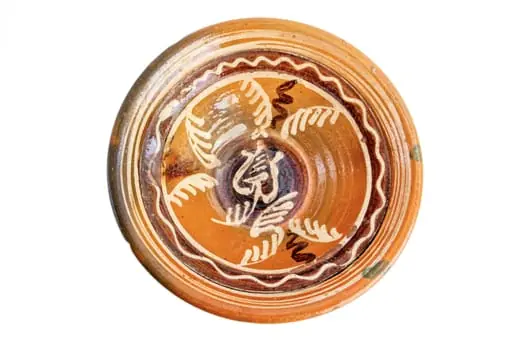 Formă tronconică; fond cărămiziu. În centru vasului este amplasată o lalea albă pe un fond maro închis încadrată de șase frunze de culoare albă și două valuri de culoare maro închis dispuse vertical. Pe peretele vasului dispusă o bandă circulară de culoare maro decorată cu un val de culoare albă. Sub buza vasului sînt trei cercuri concentrice de culoare albă. Compoziția este înscrisă într-un cerc de culoare albă. Folosită la decorarea interiorului țărănesc în așa numita - cameră bună.
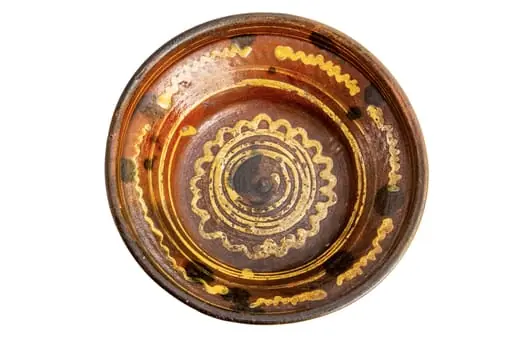 Formă tronconică; fond cărămiziu; culori: galben, verde, brun. În centru este amplasată o spirală de culoare galbenă trasată cu cornul înscrisă într-un val circular de culoare similară care sugerează un soare; pe perete strachinei sînt amplasate șase segmente de linie vălurită de culoare galbenă și pete de culoare brună.
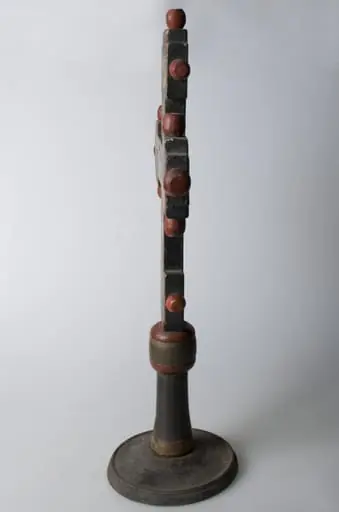 Crucea treflată este realizată din lemn de esență moale cu postament rotund, având câte trei bulbi pe cele trei brațe ale crucii și doi bulbi la bază. Aceasta are două fețe, fiind prelungită cu un mâner. Pe una dintre fețele crucii este pictată scena Botezul Domnului: central este reprezentat Iisus Hristos, iar deasupra un porumbel printre nori reprezentând Duhul Sfânt. În partea stângă este prezent Ioan Botezătorul, iar în dreapta o altă persoană. Pe cealaltă față este ilustrată scena Răstignirea Domnului: în partea centrală este Iisus Hristos, răstignit pe cruce. În partea stângă este pictată Maica Domnului, iar în partea dreaptă este pictat ucenicul iubit, Ioan. În registrul superior sunt reprezentate soarele și luna. Cromatică: alb; roșu; negru; bleumarin.
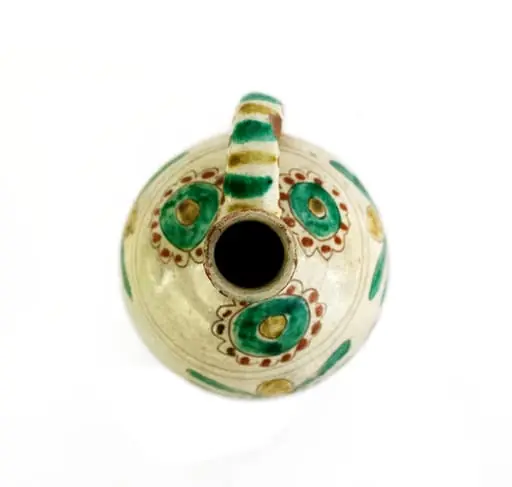 Ulcior de formă cilindrică, bombat la mijloc, lucrat în manieră Kuty, modelat la roată; prezintă o toartă pentru prindere și gât îngust; decor naturalist amplasat pe toată suprafața și organizat în două registre despărțite de linii drepte: la bază un registru cu motive fitomorfe despărțite de semicercuri; registrul superior prezintă motive astrale: soare realizate cu crecuri, linii vălurite și puncte de culoare; pe toartă prezintă puncte și linii colorate; cromatică: fond alb dat de angobă, decor cu cărămiziu, verde, galben.
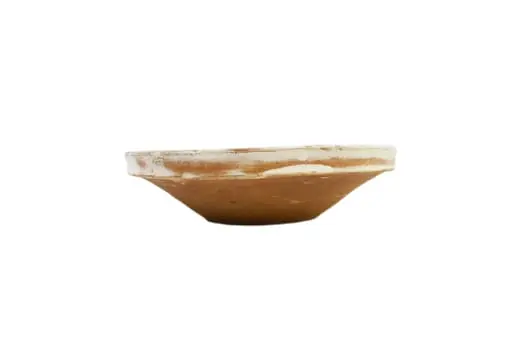 Strachină lucrată în manieră Kuty, de formă tronconică, modelată la roată; decor naturalist amplasat pe toată suprafața vasului organizat în două registre despărțite de linii circulare concentrice realizate cu cornul; central prezintă un motiv avimorf: pasăre; în registrul de la extremitatea vasului sunt desenate motive geometrice semiovoidale realizate cu linii curbe și despărțite de grupuri de trei liniuțe; cromatică: fond alb dat de angobă, decor cu galben, verde și brun. Pe exterior este ștampilat numele meșterului cu majusculă și caractere italice: Colibaba.
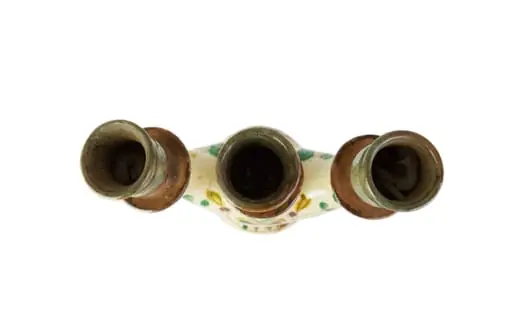 Sfeșnic lucrat în manieră Kuty, cu trei brațe pentru suportul lumânărilor, modelat la roată; prezintă decor naturalist pe cele trei brațe realizat cu motive fitomorfe: floarea soarelui, laleaua și frunze de diferite dimensiuni; pe piciorul sfeșnicului sunt desenate motive geometrice: alveole, linii drepte, triunghiuri și motive astrale: soare; suporturile pentru lumânări sunt trei discuri așezate peste cilindrele din care sunt lucrate brațele sfeșnicului; cromatică: fond alb, decor realizat cu galben, verde, cărămiziu. Pe interiorul piciorului de susținere apare semnătua autorului incizată, cu majusculă și litere de mână: Colibaba C-tin.
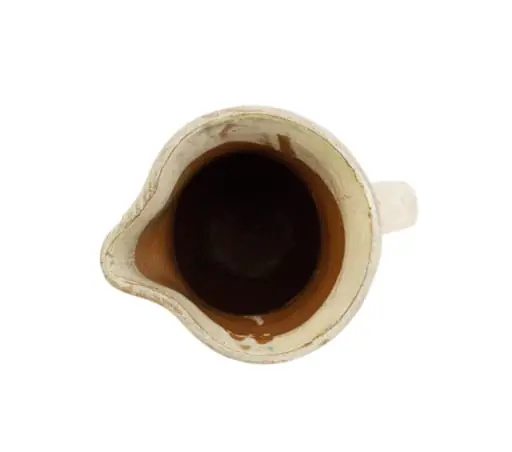 Cană de formă cilindrică, bombată la mijloc, modelată la roată; prezintă o toartă pentru prindere și lob pentru turnarea lichidelor realizat prin impresiune cu degetul; decor geometrizant realizat în registre: spre baza vasului linii circulare întrerupte de linii drepte dispuse perpendicular și puncte, mărginite de un șir de puncte; două șiruri de motive astrale: soare, realizate cu puncte de culoare pe mijlocul și spre extremitatea superioară a vasului, despărțite de o linie vălurită (șarul) în alveolele căreia sunt dispuse puncte; cromatică: fond alb și cărămiziu, decor realizat cu alb, verde, cărămiziu și brun. Pe exteriorul vasului este stampilat numele meșterului cu majusculă și caractele italice: Colibaba.
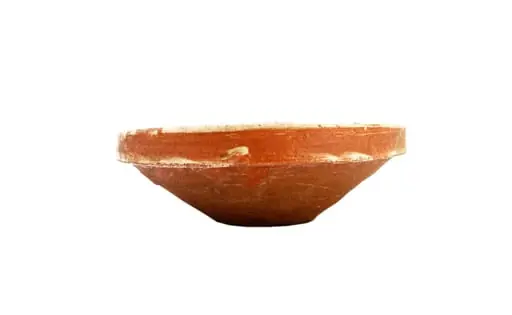 Strachină lucrată în manieră Kuty, de formă tronconică, modelată la roată; decor geometrizat și naturalist organizat în două registre despărțite de linii circulare realizate cu cornul; central prezintă un motiv fitomorf: floare înconjurată de motive geometrice cercuri alternând cromatic delimitate de linii drepte; spre marginea vasului linii drepte circulare și vălurite realizate cu cornul alternând cu linii drepte realizate cu pensonul; cromatică: fond alb dat de angobă, decor realizat cu verde, cărămiziu și galben.
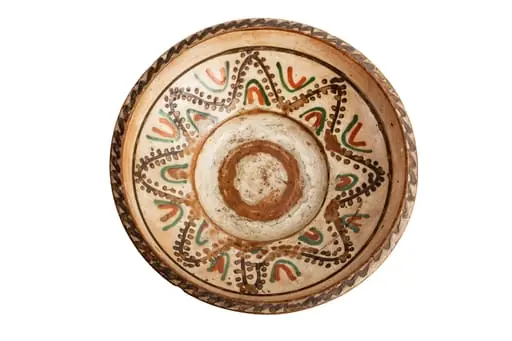 Formă tronconică; fond alb fildeșiu; pe fundul vasului, în centru este amplasată o bandă circulară de culoare cărămizie; pe umerii vasului, este reprezentată o stea cu opt raze, de culoare maro cu contururile dublate de puncte de culoare similară; între razele stelei sînt amplasate unghiuri cu contur dublu: verde și cărămiziu; întreaga compoziție este înscrisă într-un cerc. Buza vasului este decorată cu val circular de culoare brun închis. Piesa reprezintă una dintre primele achiziții ale lui Alexandru Tzigara Samurcaș. Folosită la decorarea interiorului țărănesc în așa numita - cameră bună.
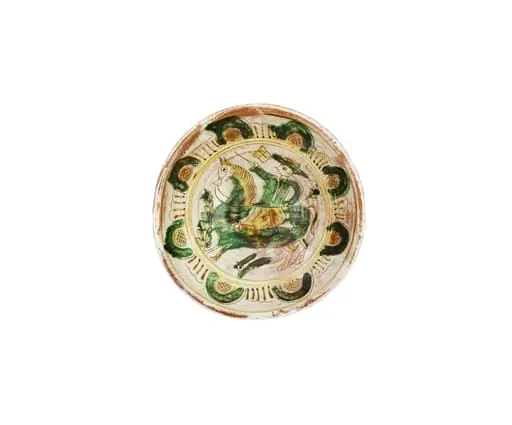 Strachină lucrată în manieră Kuty, de formă tronconică, modelată la roată; decor geometrizat amplasat pe toată suprafața vasului organizat în două registre despărțite de linii circulare concentrice realizate cu cornul; central prezintă un motiv antropomorf: cavaler cu sabia în mână încălecat pe cal; în registrul de la extremitatea vasului sunt desenate motive geometrice semicirculare realizate cu linii curbe și hașuri, despărțite de grupuri de câte patru linii; cromatică: fond alb dat de angobă, decor cu galben, verde, cărămiziu. Pe exterior este ștampilat numele meșterului cu majuscule de tipar: COLIBABA.