Artwork
Krishna with Radha and Two Attendants (recto); Jagannath, Subhadra and Balarama in an Arch (verso)
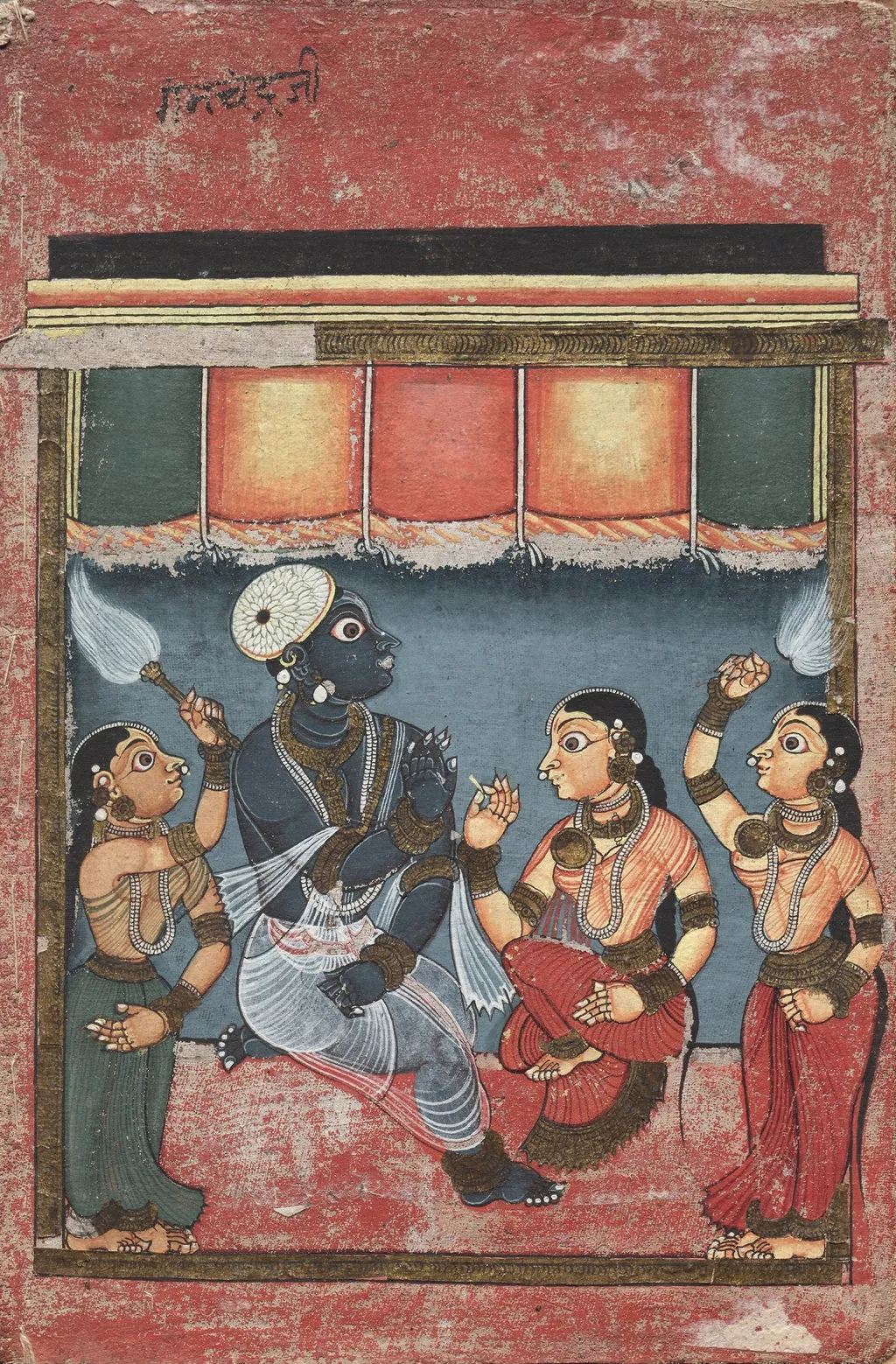
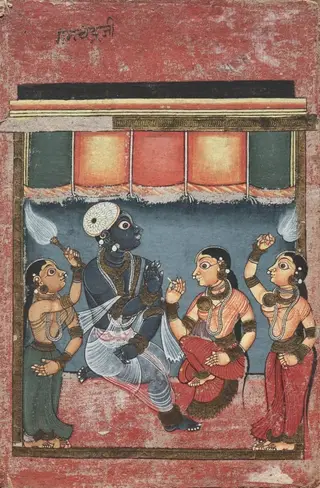
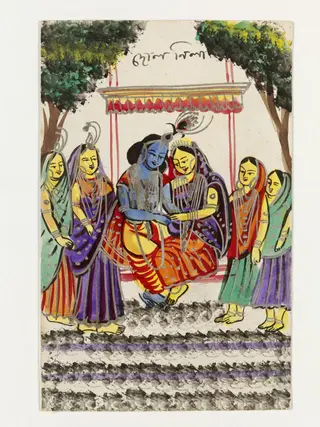
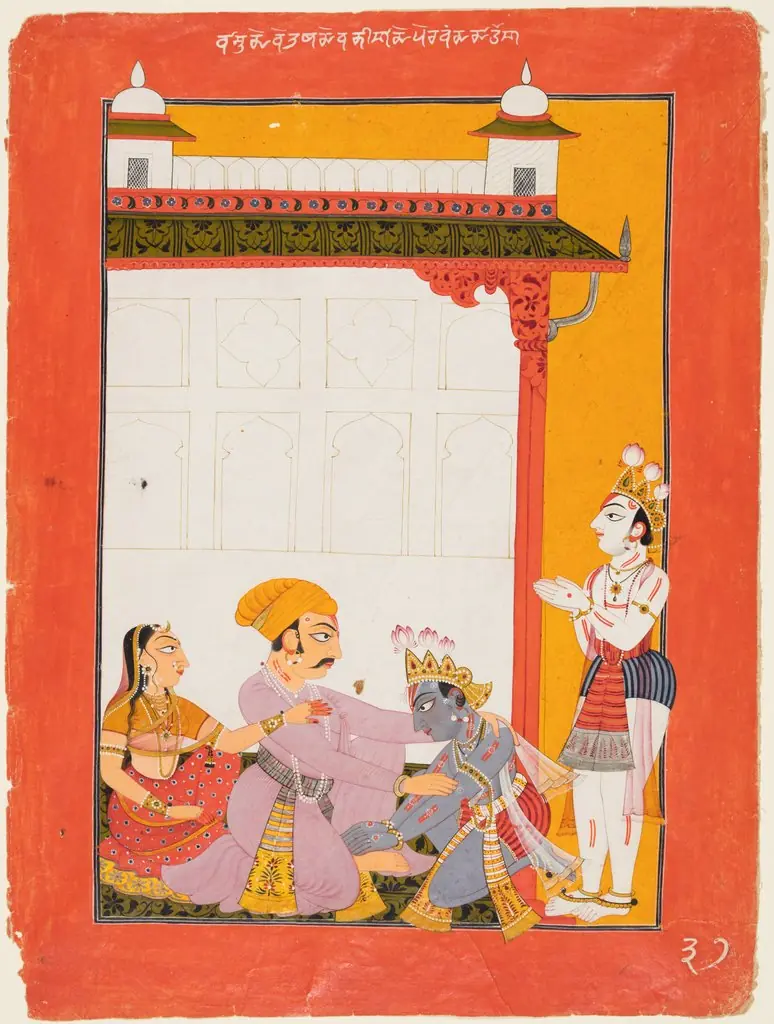
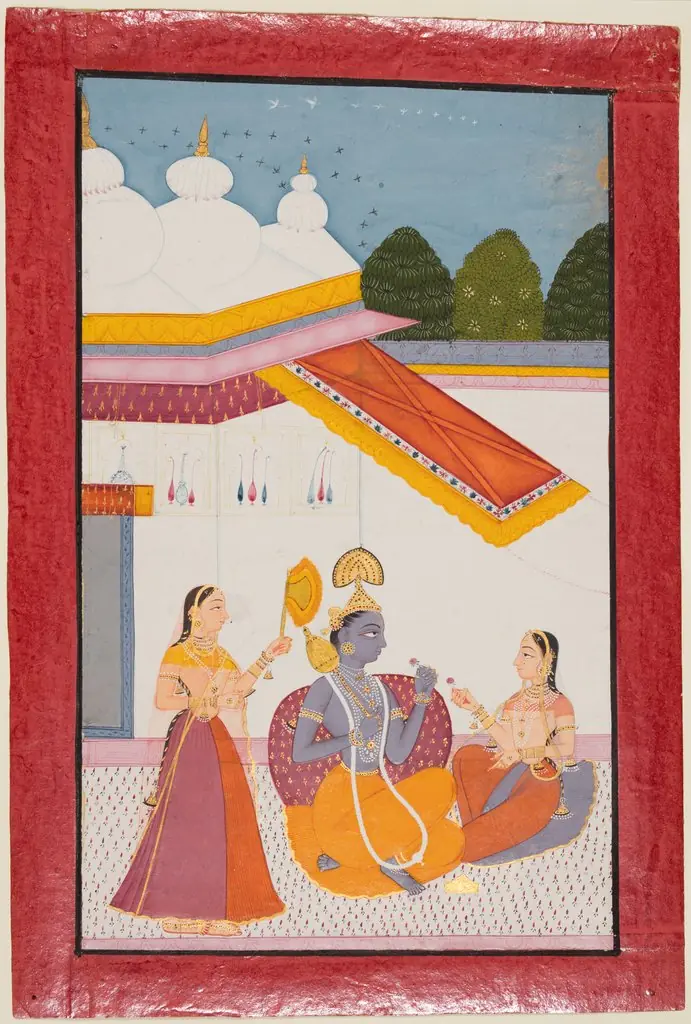
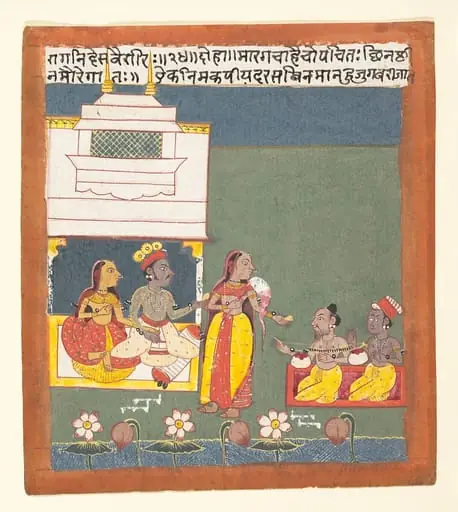
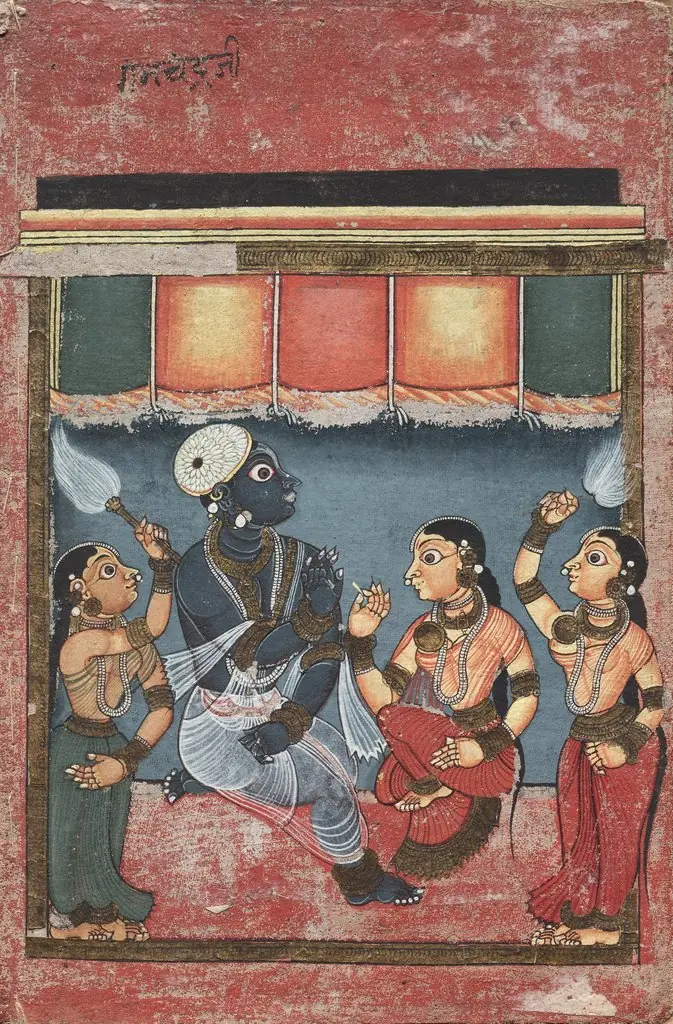
Krishna with Radha and Two Attendants (recto); Jagannath, Subhadra and Balarama in an Arch (verso) is an unspecified painting. It dates from 1750 and is held in the collection of the Cleveland Museum of Art. This painting features Krishna, identifiable by his dark skin and flute, accompanied by Radha and two female attendants.
About this work
Subject & Meaning
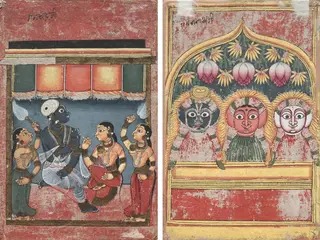
The verso presents the triad of Jagannath, Subhadra, and Balarama framed within an arch, representing a significant form of Vishnu worship centered in Puri.
The recto of the painting depicts the Hindu deity Krishna alongside Radha and two attendants, illustrating a scene of divine companionship. The verso presents the triad of Jagannath, Subhadra, and Balarama framed within an arch, representing a significant form of Vishnu worship centered in Puri. These compositions reflect the devotional traditions of mid-18th-century India, where the pairing of Krishna with Radha symbolizes spiritual love and union.
The inclusion of the Jagannath triad on the reverse further emphasizes the work's connection to Vaishnavite theology, presenting two distinct yet related aspects of the divine on a single sheet.
History & Provenance
Created in 1750 by an unknown artist, this painting depicting Krishna on the recto and the Jagannath triad on the verso is held in the collection of the Cleveland Museum of Art, catalogued under accession number 1973.102. No details regarding the original commission or earlier ownership are documented.
Overview
This painting features Krishna, identifiable by his dark skin and flute, accompanied by Radha and two female attendants. The recto side captures a moment of divine music and devotion, while the verso presents the deities Jagannath, Subhadra, and Balarama within an archway. The artwork showcases vibrant colors, particularly deep blues and reds, which retain their intensity despite some fading at the edges, characteristic of its age and medium.
Technique & Style
The artist employs a striking palette, with deep blues and rich reds dominating the composition, creating a visual impact that draws attention to the main figures. The dark-skinned Krishna, adorned with golden accessories and a tall crown, stands out against his blue attire. The women are depicted in bright red skirts and elaborate jewelry, further enhancing the painting's decorative quality. A simple architectural element with red and green walls forms the backdrop, focusing attention on the figures.
Context
Such devotional paintings were integral to religious practices in India, serving as visual aids for worship and meditation. The depiction of Krishna and Radha's divine romance is a recurring motif in Vaishnava art, reflecting the spiritual relationship between the devotee and the divine. The inclusion of the Jagannath triad on the reverse suggests a broader devotional scope or a specific regional context where these deities held particular significance.
Artist & collection