Artist
Movement
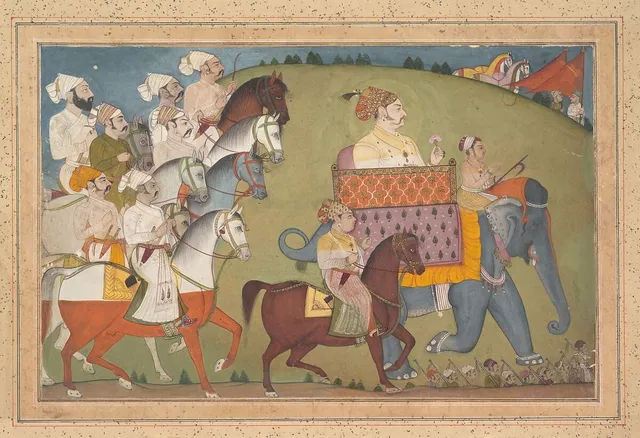
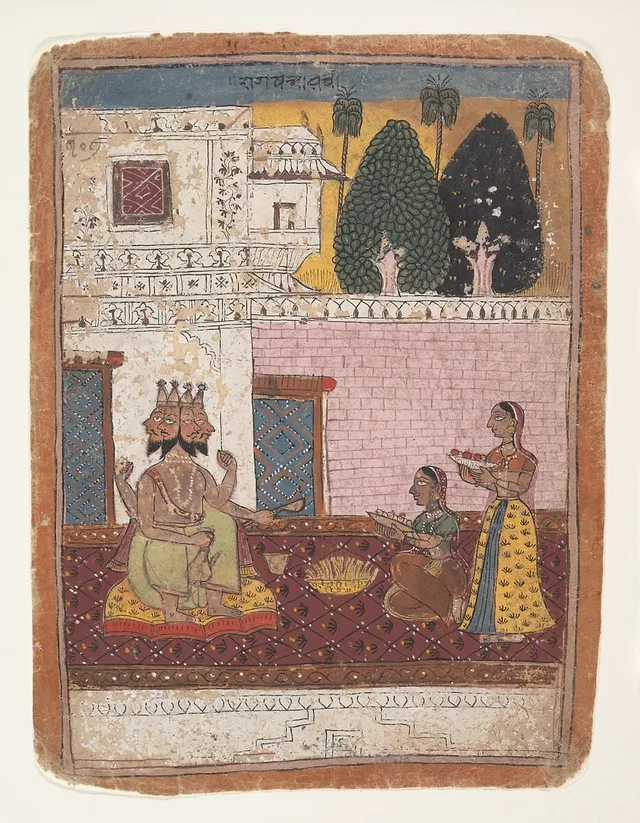
Rajput painting is an art movement of the 1600–1900 period. The gallery holds 153 works in this movement, including works by Sahibdin, Ruknuddin and Nihâl Chand. Browse Rajput painting paintings, portraits, pictures and artworks from the world's public-domain museum collections.
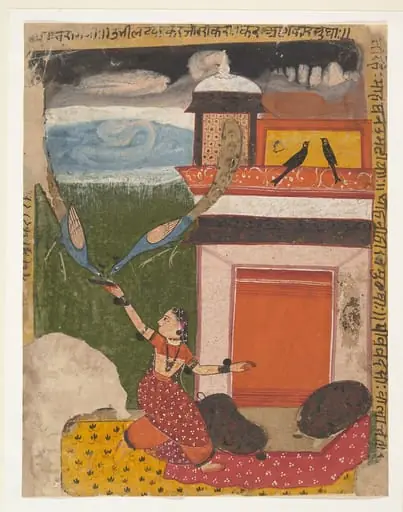
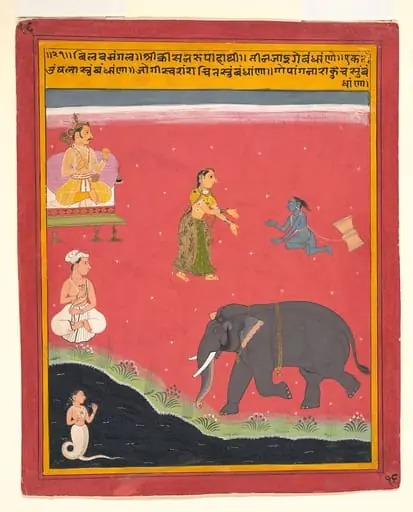
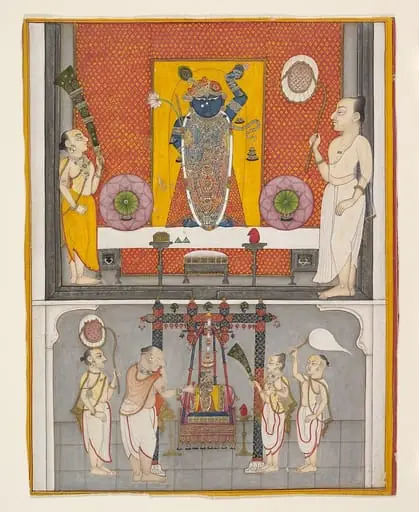
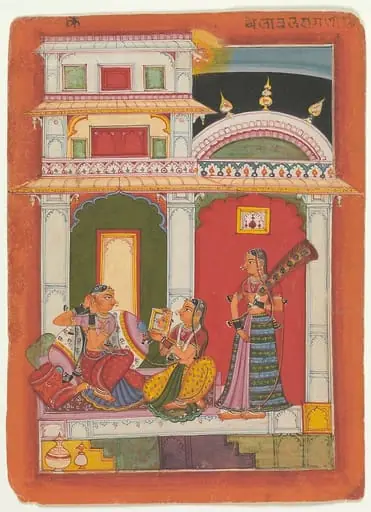
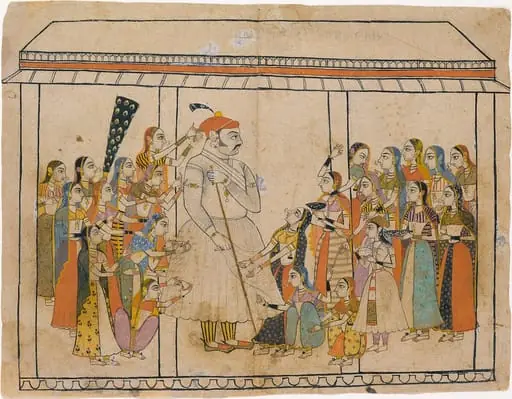
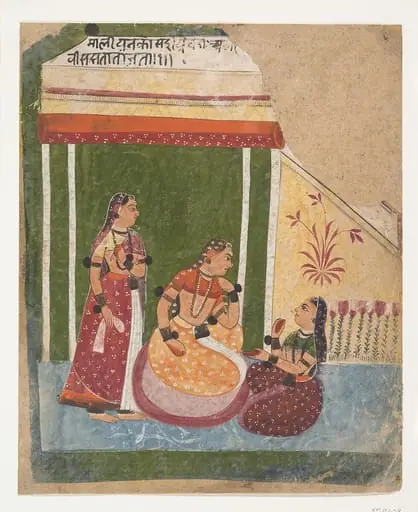
Rajput painting is a tradition of Indian miniature painting that flourished in the royal courts of Rajputana—present-day Rajasthan and adjoining regions—from roughly the late sixteenth century into the nineteenth. The term was coined by the scholar Ananda Coomaraswamy in 1916 to distinguish the art patronized by the Hindu Rajput princes from the imperial Mughal school. The style took root first in Mewar, growing out of earlier western Indian manuscript traditions, especially the bold, angular Chaurapanchasika idiom, before spreading to a constellation of princely ateliers including Bundi, Kota, Bikaner, Marwar (Jodhpur), Kishangarh, Jaipur, Malwa, and Sirohi.
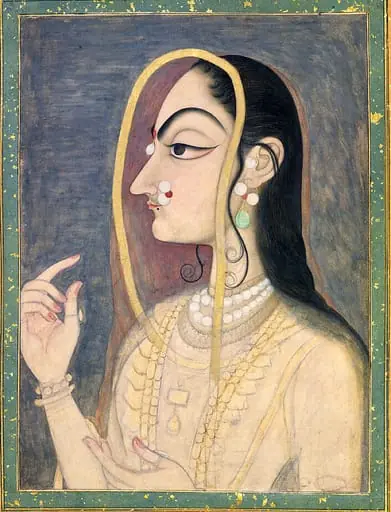
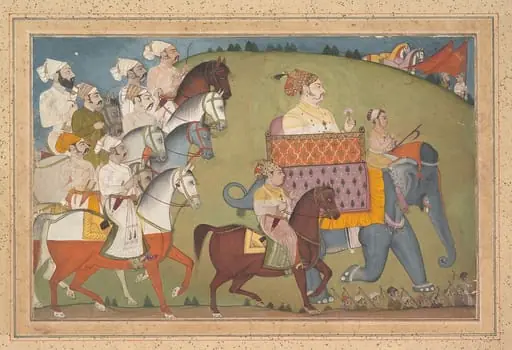
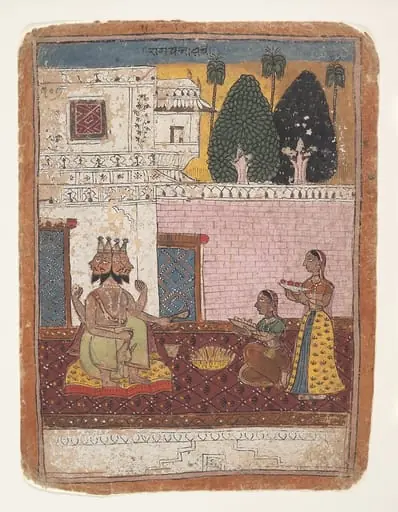
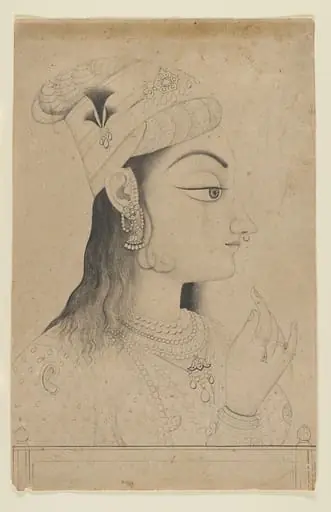
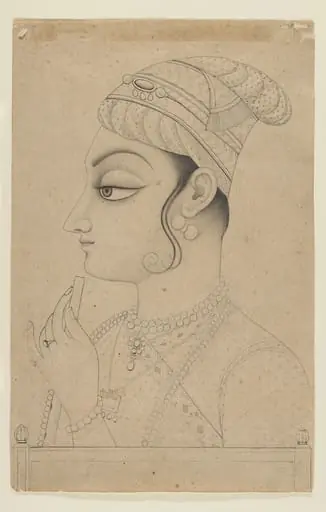
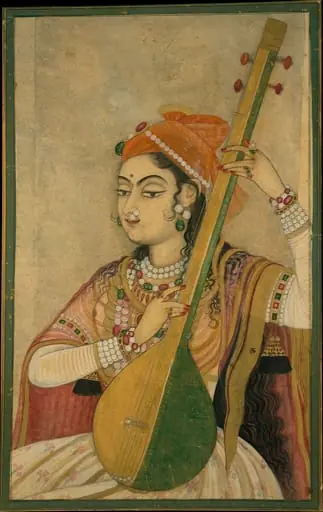
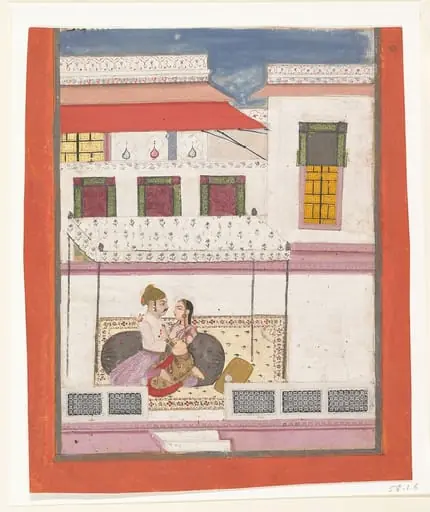
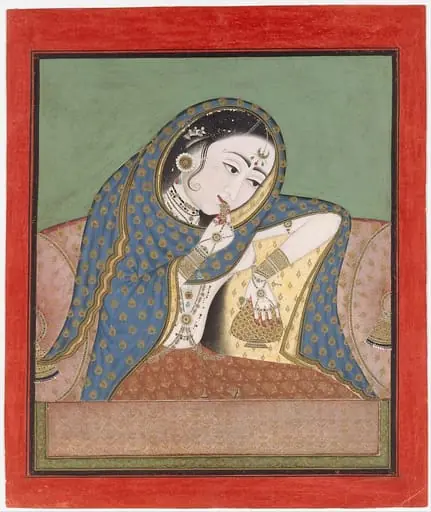
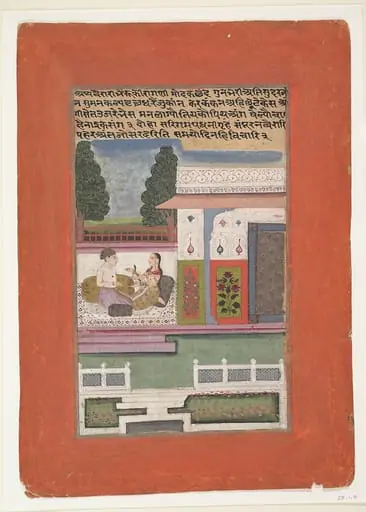
Though each court cultivated its own manner, Rajput painting shares a recognizable visual language: flat planes of brilliant, mineral-derived colour, firm rhythmic outlines, stylized faces shown in profile, and ornamental backgrounds of floral motifs, architectural frames, and lavish gold and silver leaf. Pigments were ground from minerals and metals and burnished to a jewel-like finish. Where Mughal art prized naturalism and individual portraiture, Rajput painters favoured emotional intensity, symbolic colour, and decorative pattern. Contact with the Mughal workshops during the seventeenth century nonetheless refined Rajput drawing, modelling, and spatial depth without dissolving its devotional character. Themes were overwhelmingly Hindu—episodes from the Ramayana, Mahabharata, and Bhagavata Purana, the loves of Krishna and Radha, and the musical-mode "Ragamala" and "Rasikapriya" cycles.
Several named masters anchor the canon. Sahibdin, a Muslim artist wholly fluent in Hindu epic, dominated Mewar in the first half of the seventeenth century, producing a celebrated Ragamala in 1628 for Maharana Jagat Singh I and an ambitious illustrated Ramayana (the Yuddha Kanda, 1652). At Bikaner, Ruknuddin (active c. 1666–97) directed the royal atelier under Maharaja Anup Singh, fusing Mughal elegance with a Deccani-tinged palette. At Kishangarh, Nihal Chand (1710–1782), chief painter to Savant Singh, created the ethereal images of Bani Thani—the elongated, lotus-eyed beauty often called the "Mona Lisa of India" and widely held to be the finest of all Rajasthani miniatures.
Rajput painting is conventionally divided into the Rajasthani schools of the plains and the Pahari schools of the lower Himalayas (Basohli, Guler, Kangra). Sharing devotional subjects but distinguished by lyrical landscape, the Pahari styles form its closest sibling tradition. Together they constitute one of the great achievements of Indian art, sustaining indigenous Hindu pictorial culture alongside, and in productive tension with, the Mughal painting from which they borrowed and against which they defined themselves.
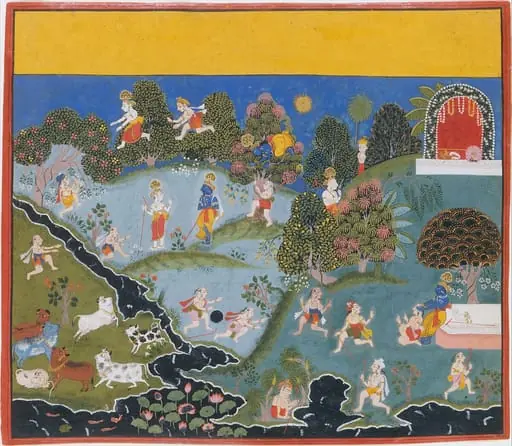 Untitled
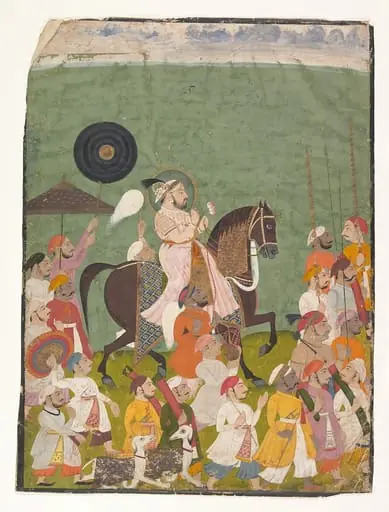 Untitled
 Untitled
 Untitled
 Untitled
 Untitled
 Untitled
 Untitled
 Untitled
 Untitled
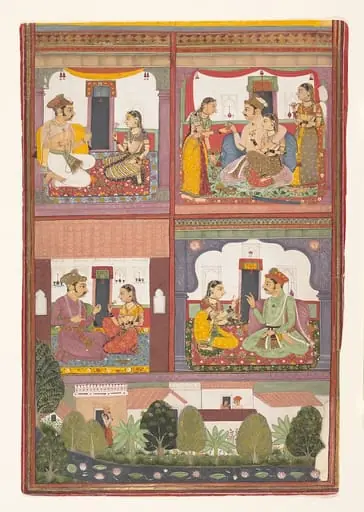 Untitled
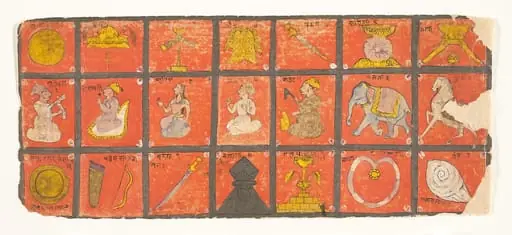 Untitled
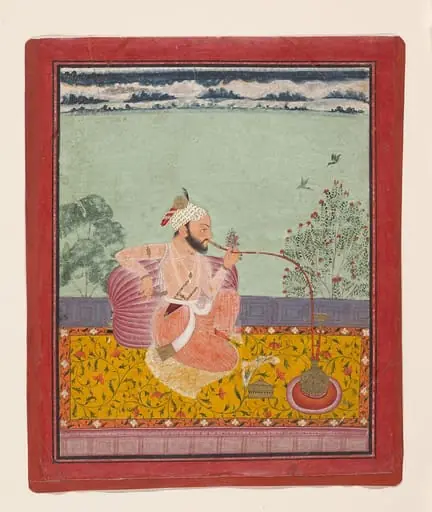 Untitled
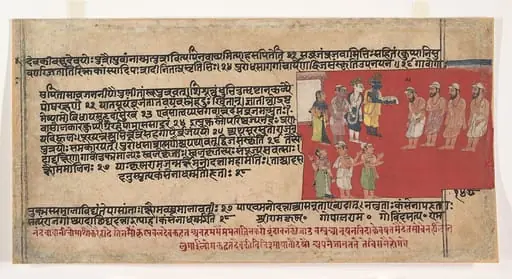 Untitled
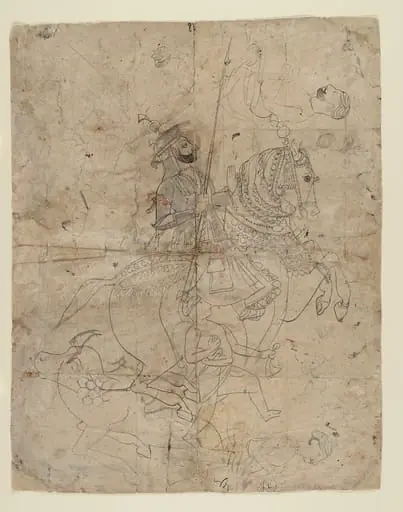 Untitled
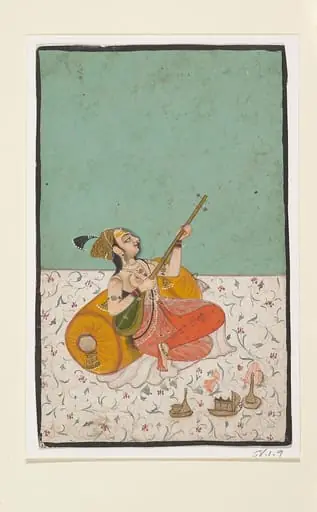 Untitled
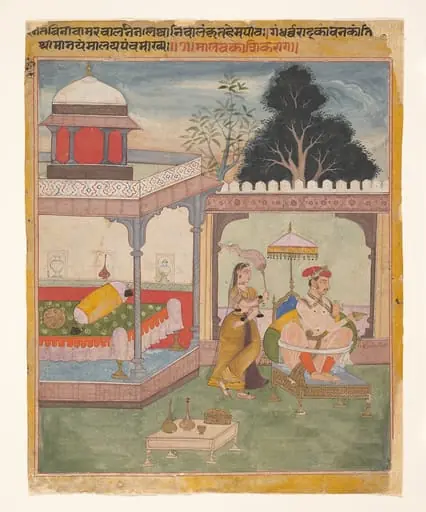 Untitled
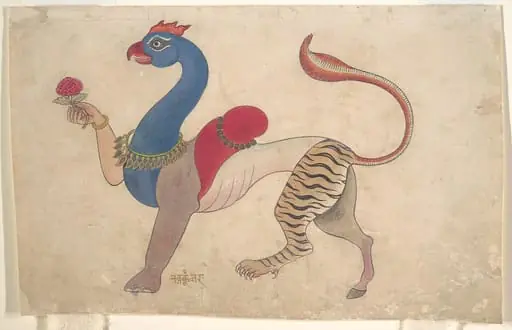 Untitled
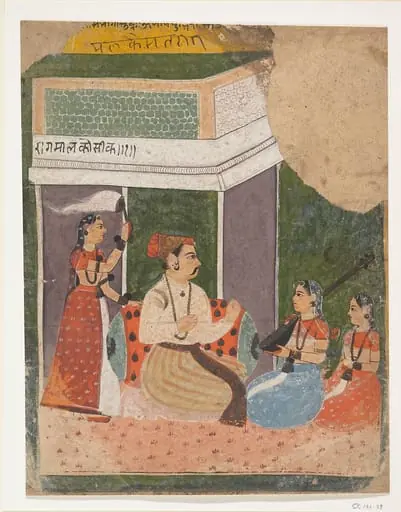 Untitled
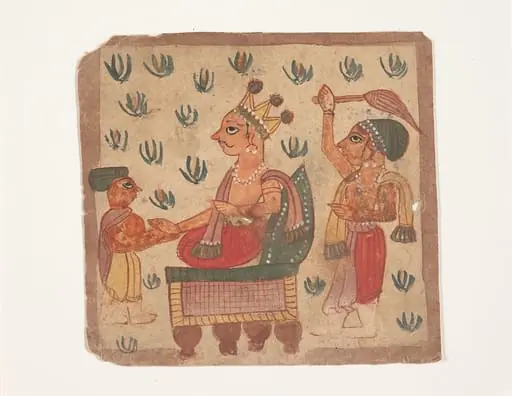 Untitled
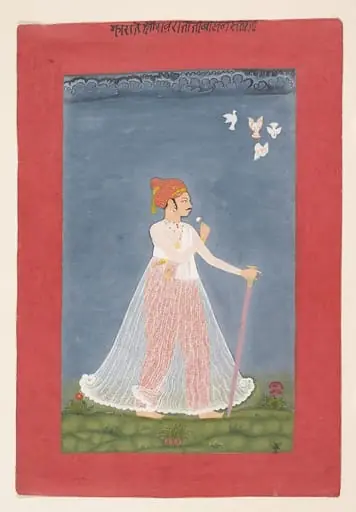 Untitled
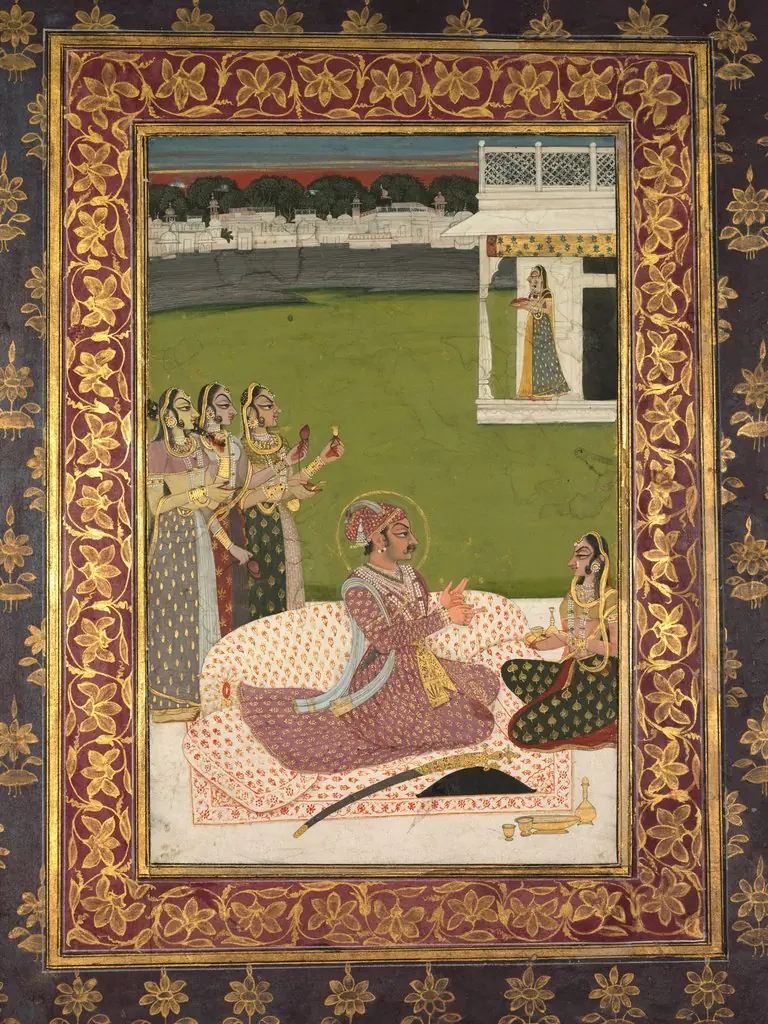 Portrait of Maharaja Savant Singh with Consort, Bani Thani
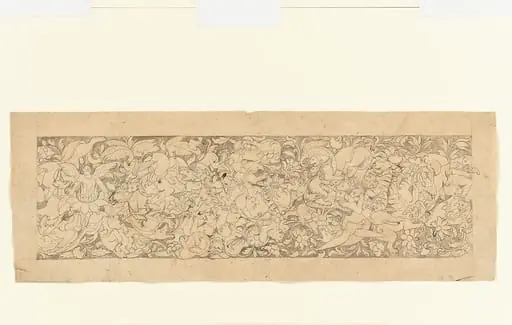 Untitled
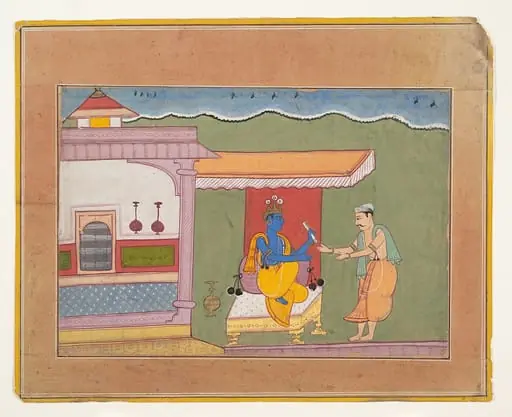 Untitled
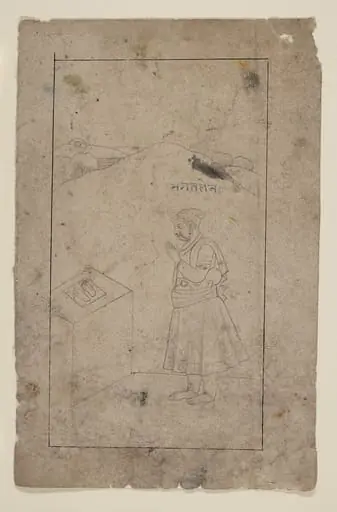 Untitled
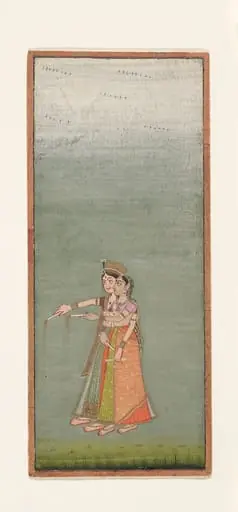 Untitled
 Untitled
 Untitled
 Untitled
 Untitled
 Untitled
 Untitled
 Untitled
 Untitled
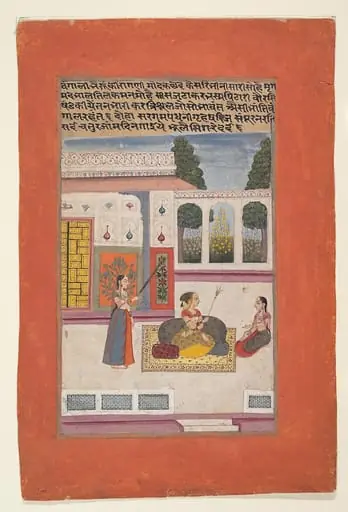 Untitled
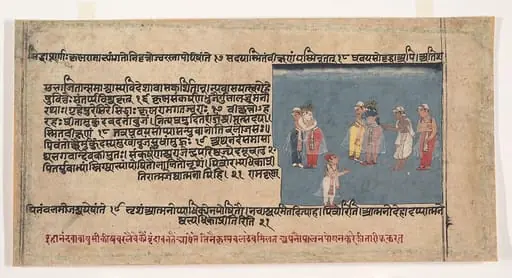 Untitled
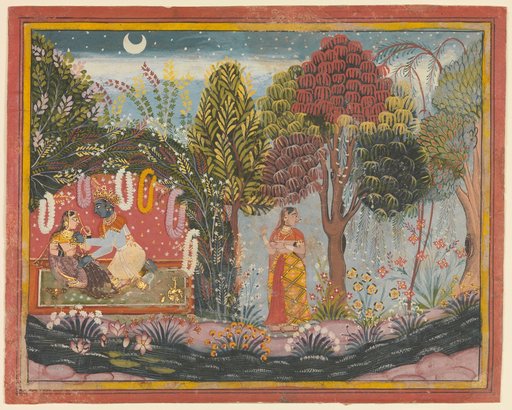
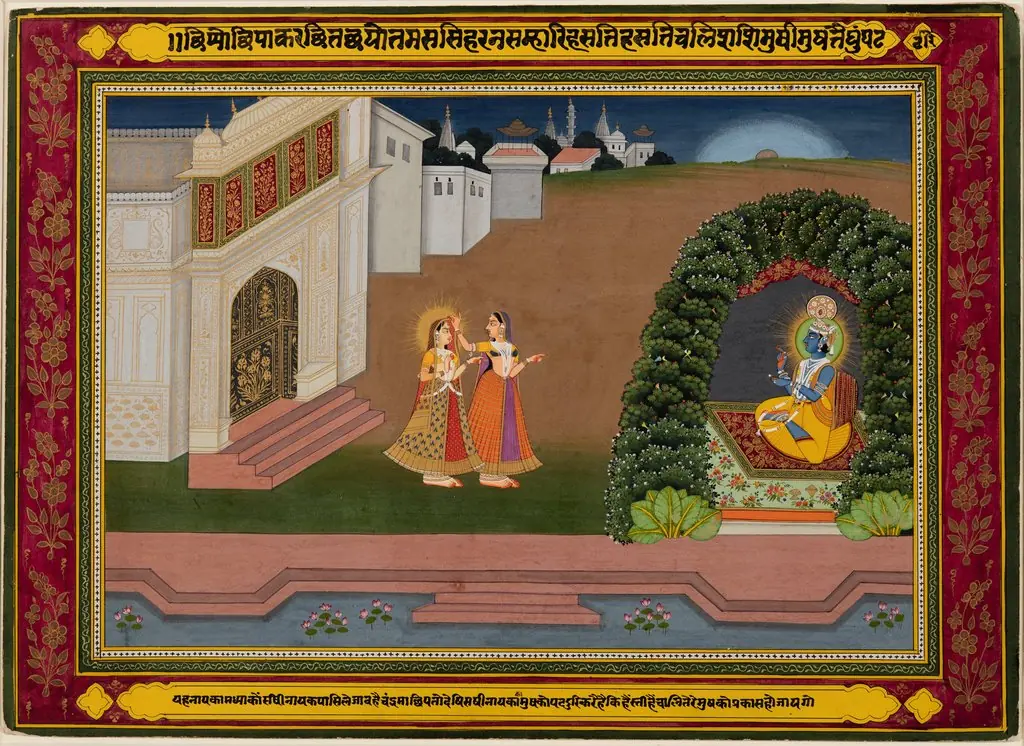 Radha’s Confidante Brings Her to Krishna, based on poetry of Bihari (Indian, 1595–1663)
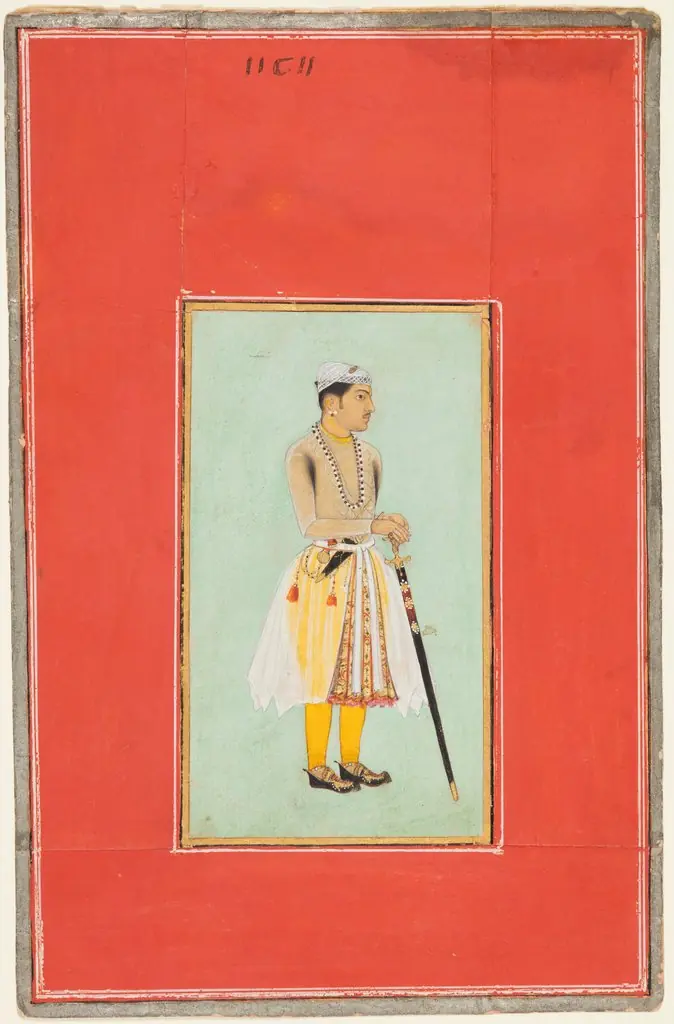 Portrait of Prince Sur Singh Rathor of Bikaner (1594–1631)
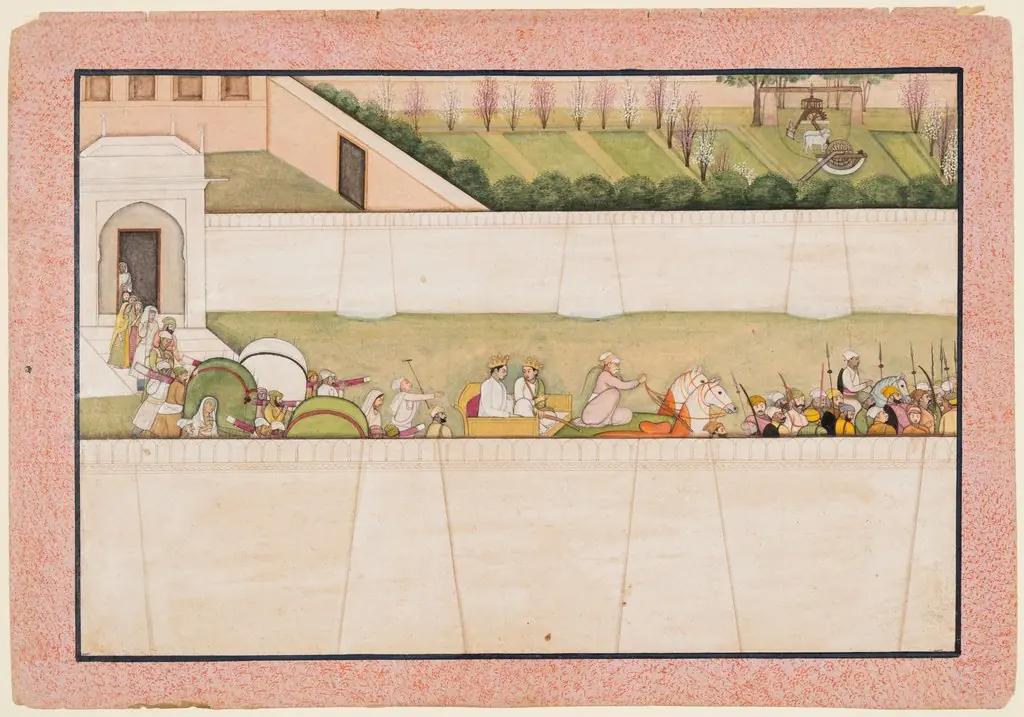 Rama’s brothers Bharata and Shatrughna set out from Ayodhya to find Rama and Lakshmana in the forest to inform them of the death of their father Dasharatha, from Chapter 77 of the Ayodhya Kanda (Book of Ayodhya) of a Ramayana (Rama’s Journey)
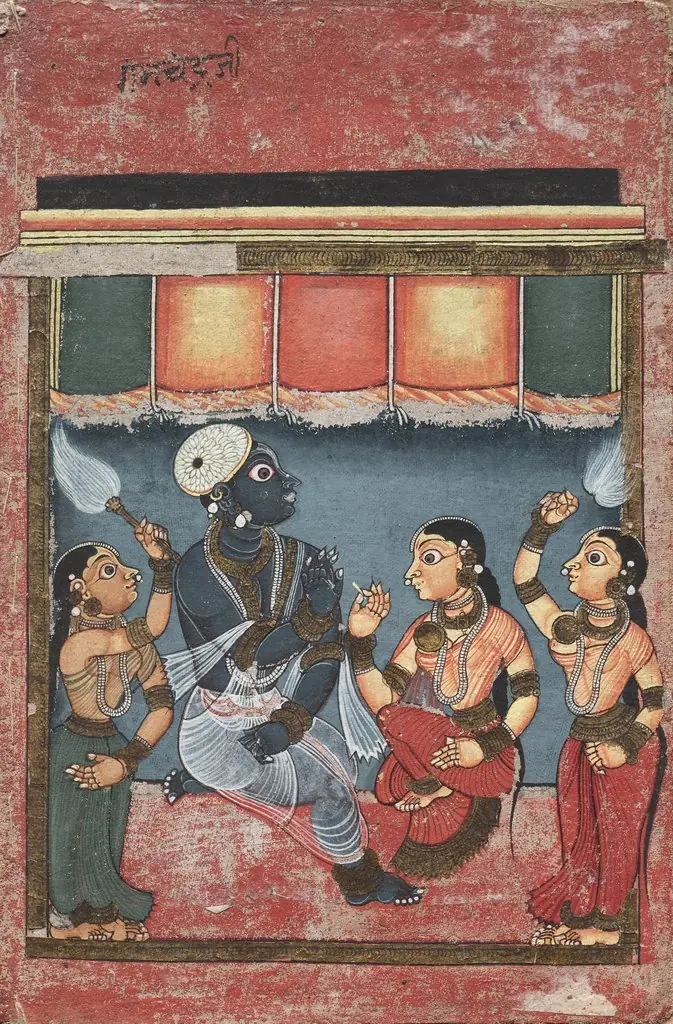 Krishna with Radha and Two Attendants (recto); Jagannath, Subhadra and Balarama in an Arch (verso)
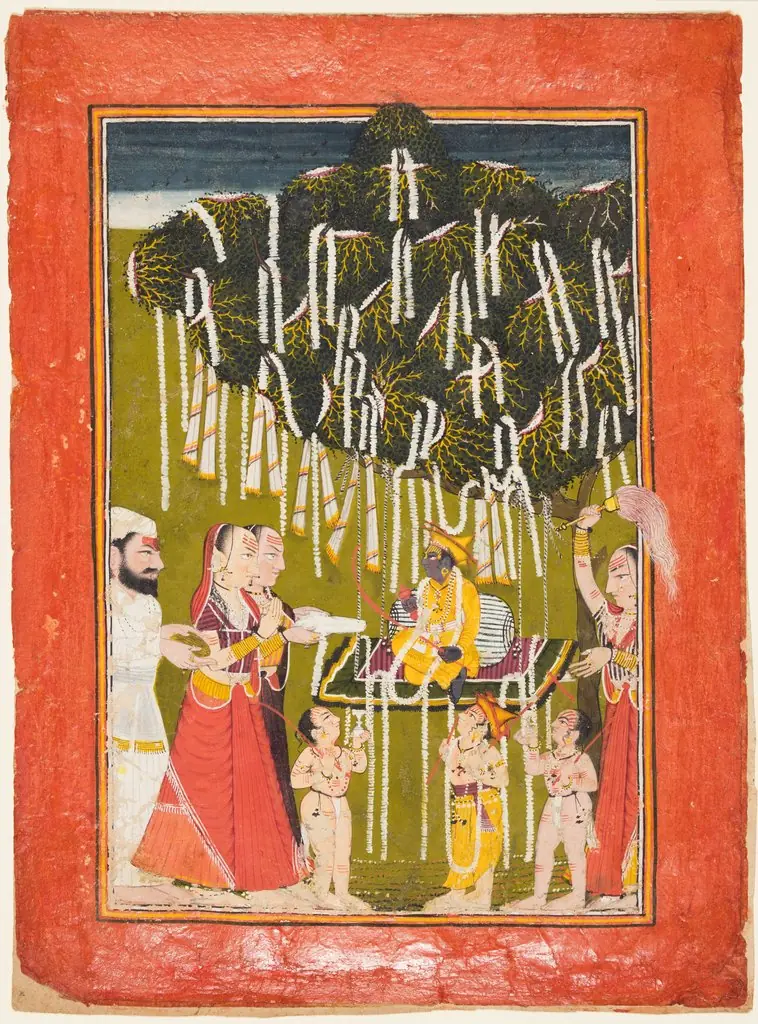 Fertility Worship of Krishna
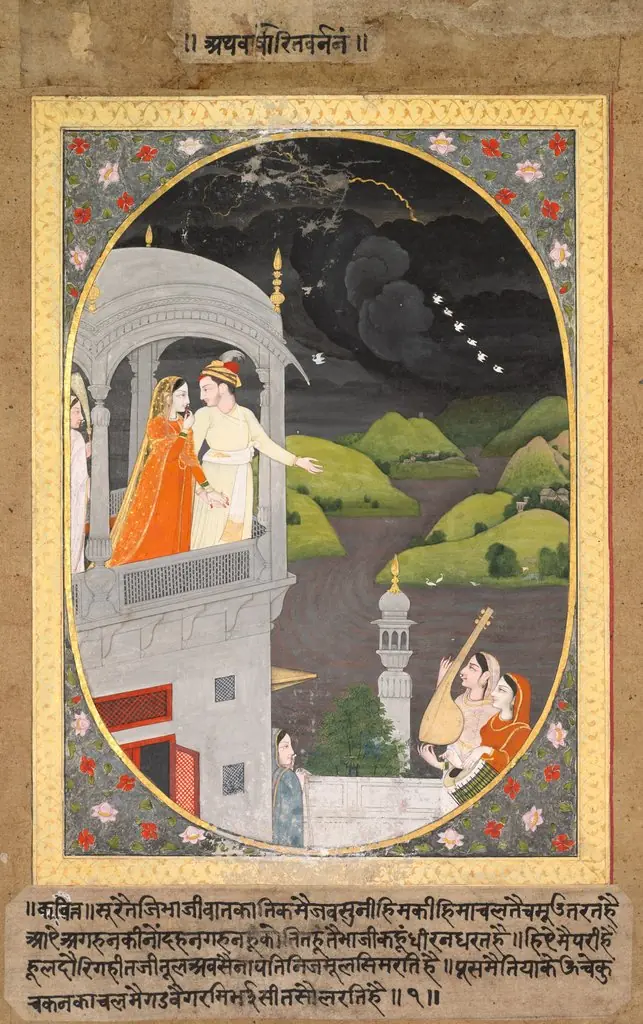 Krishna and Radha Watching Rain Clouds: The Month of Bhadon from Baramasa series
![The Marriage of Rukmini [Mangal], 1775](https://artifactworldgallery.com/img/the-marriage-of-rukmini-mangal--60723f5d8b6d4a1d-w320.webp) The Marriage of Rukmini [Mangal]
The Marriage of Rukmini [Mangal]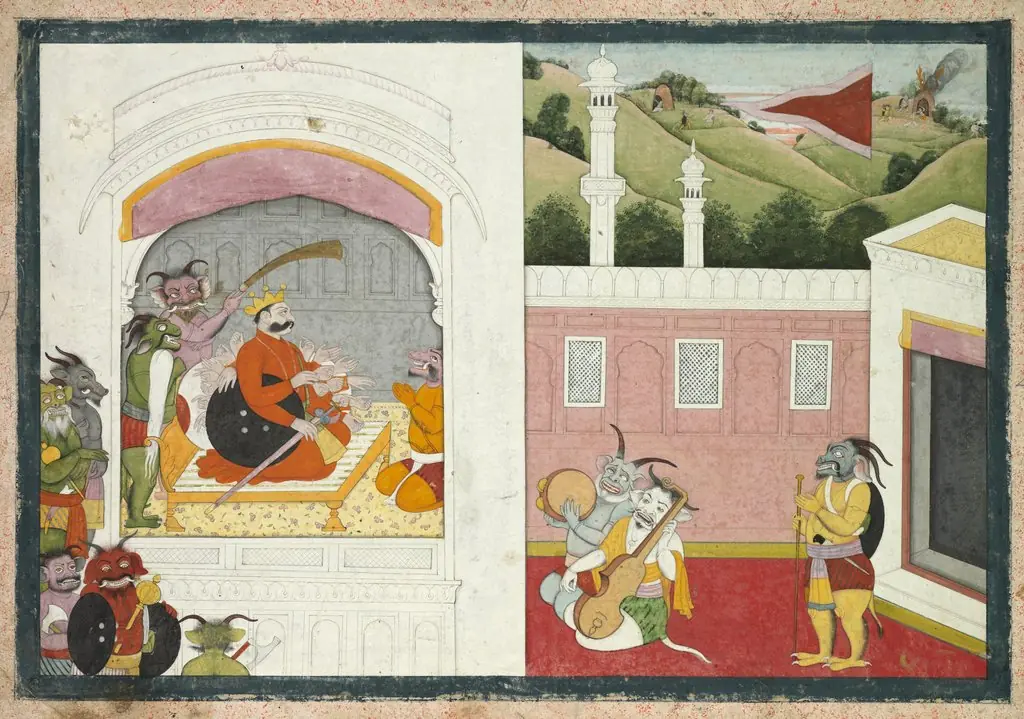 King Bana enjoying music in his court, from the Usha-Aniruddha section of a Krishna Lila
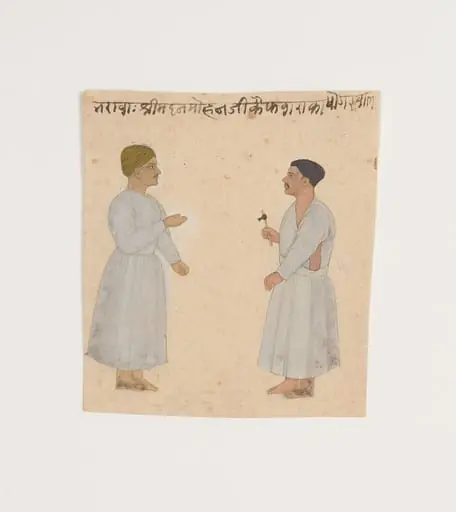 Untitled
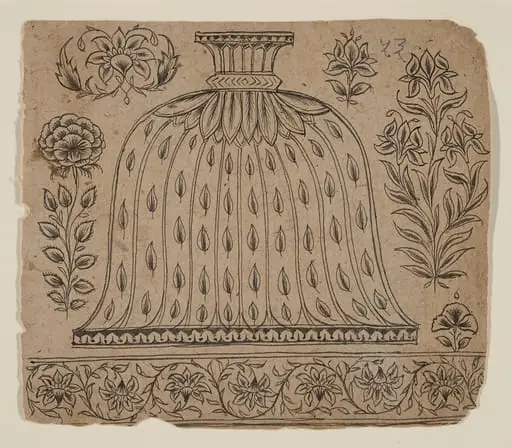 Untitled
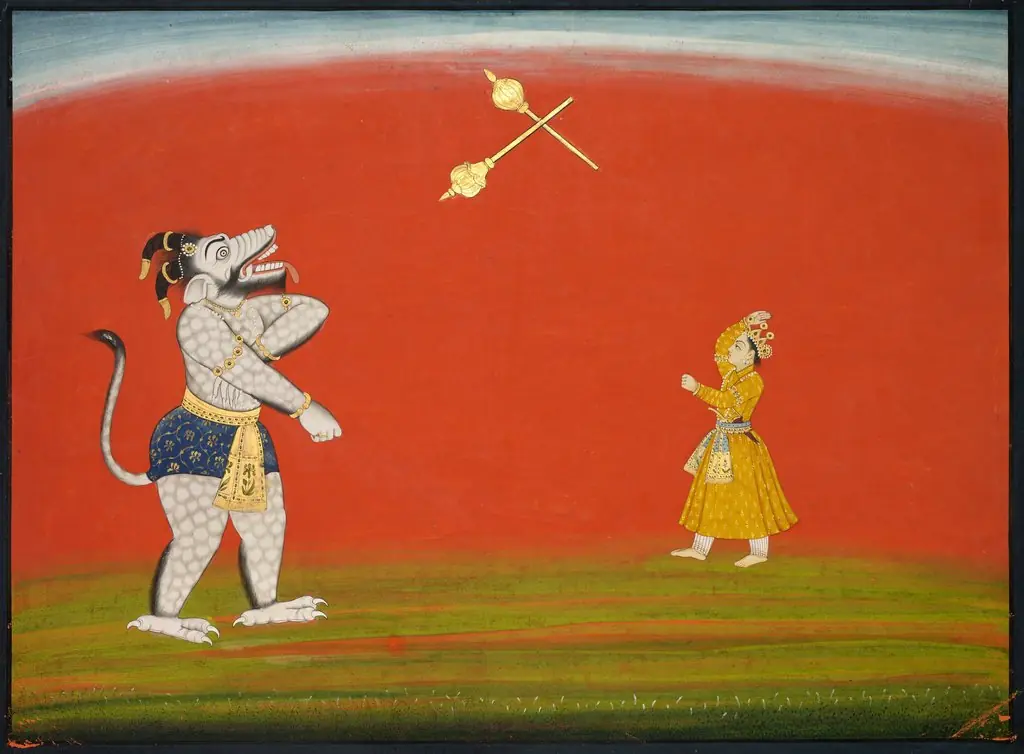 Pradyumna and Samvara fight with maces: Leaf from the "Large Basohli Bhagavata Purana"
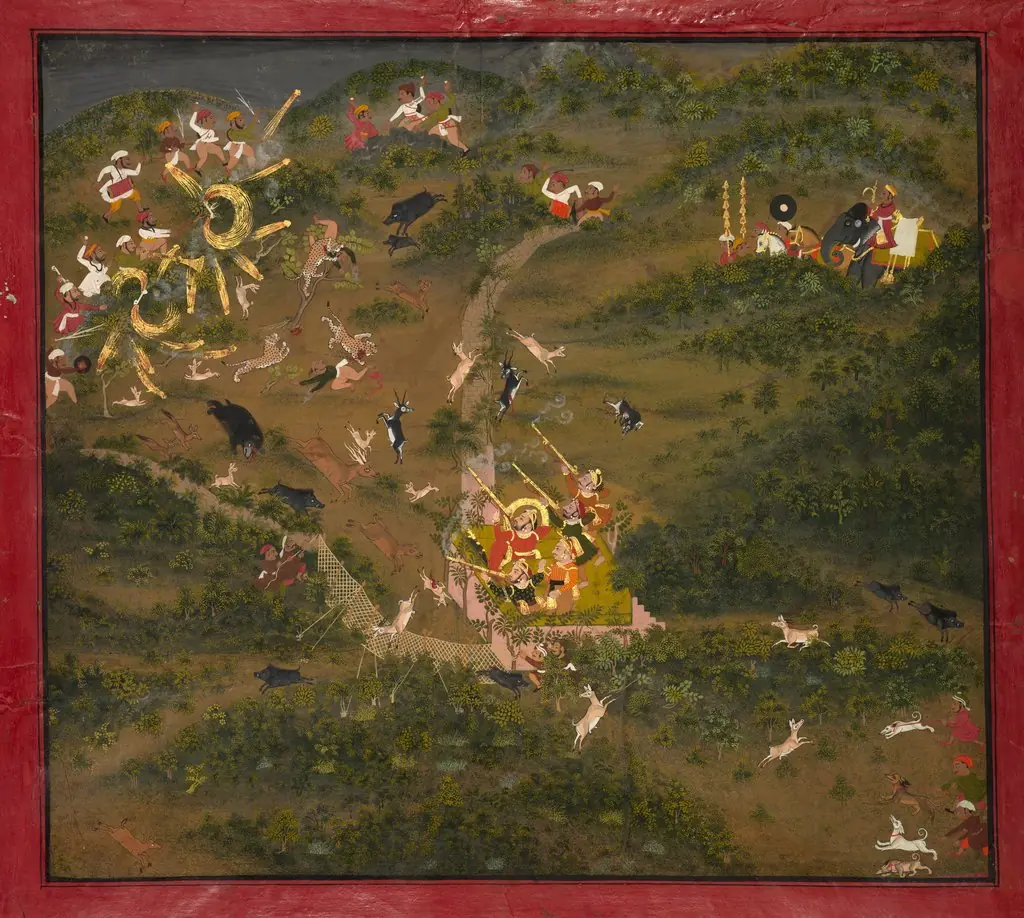 Maharana Jagat Singh II Hunting
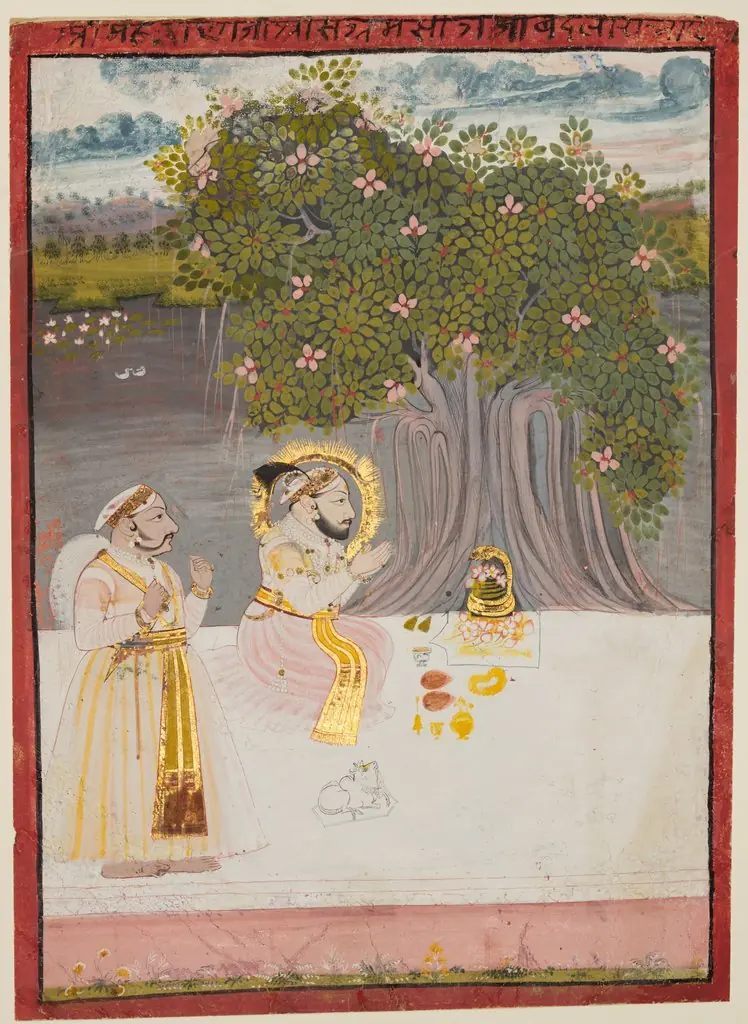 Maharana Sangram Singh II (r. 1710–34) Worshipping a Linga Under a Banyan Tree
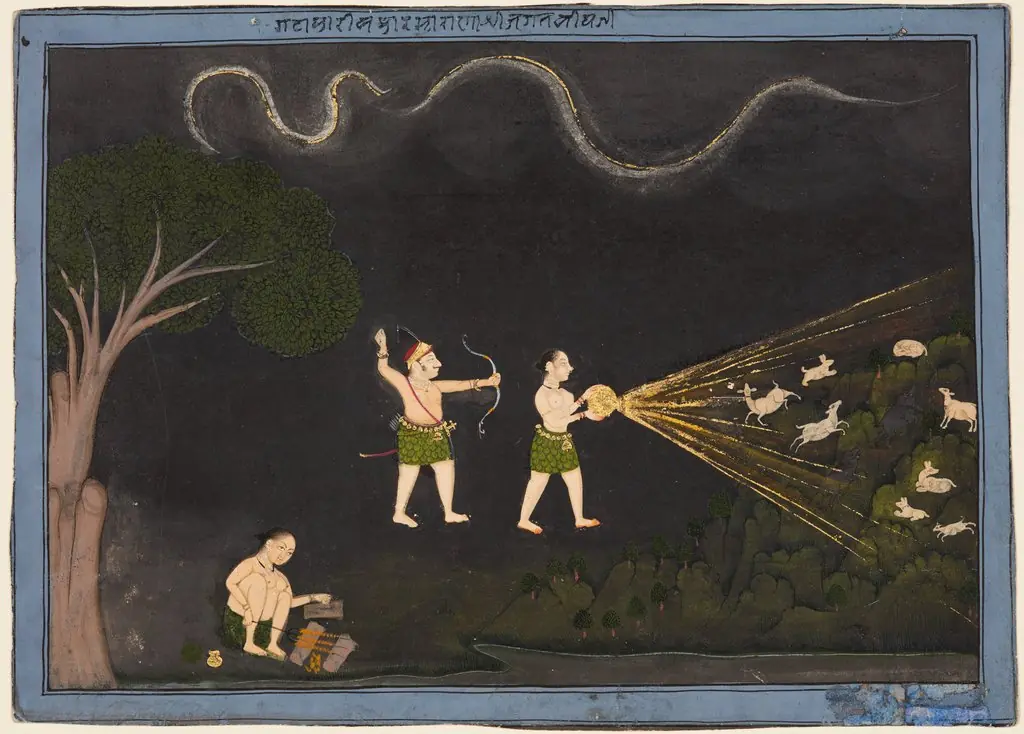 Maharana Jagat Singh II of Mewar (r. 1734–51) Dressed as a Bhil, Hunting Deer at Night
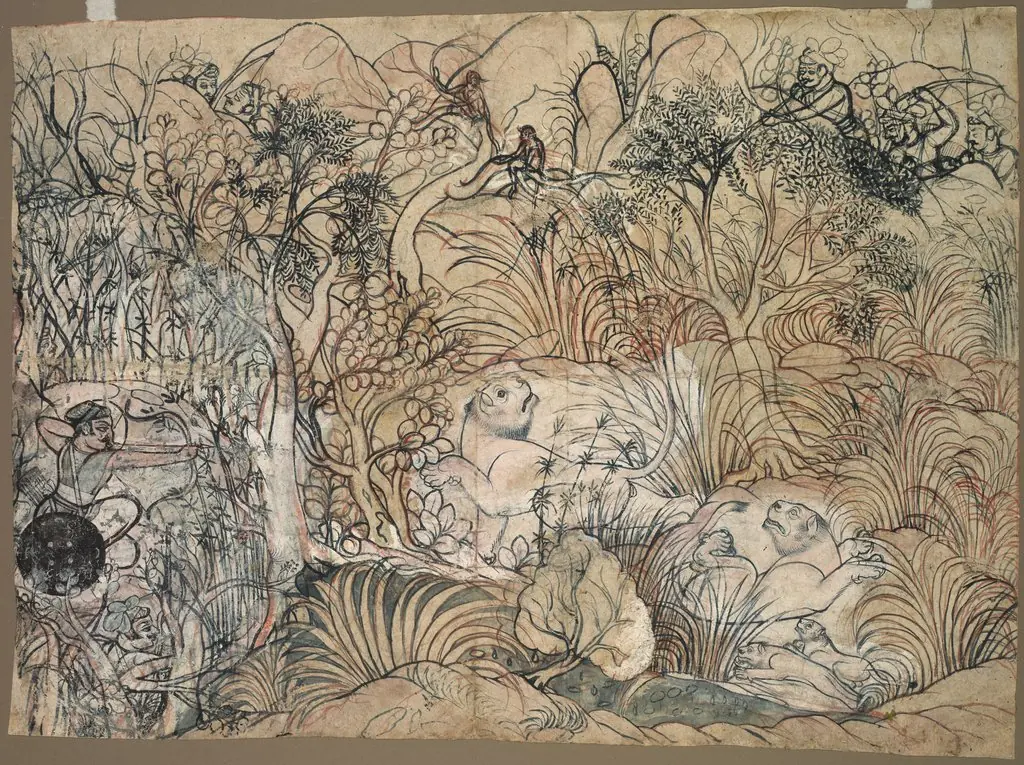 Umed Singh of Kota Hunting Lions
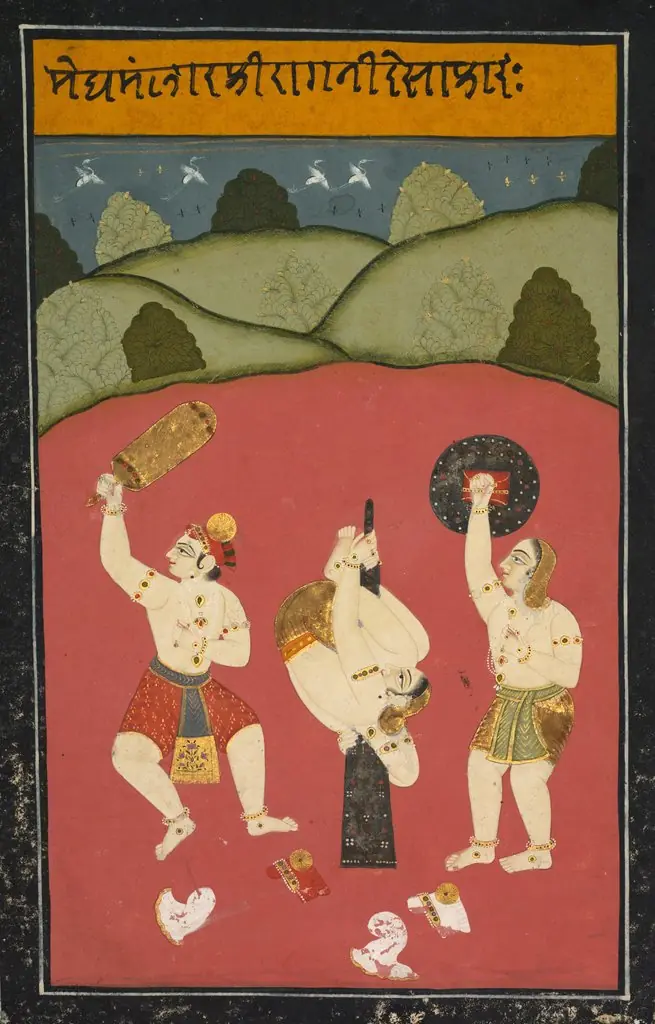 Ragini Desakh of Meghamalhar
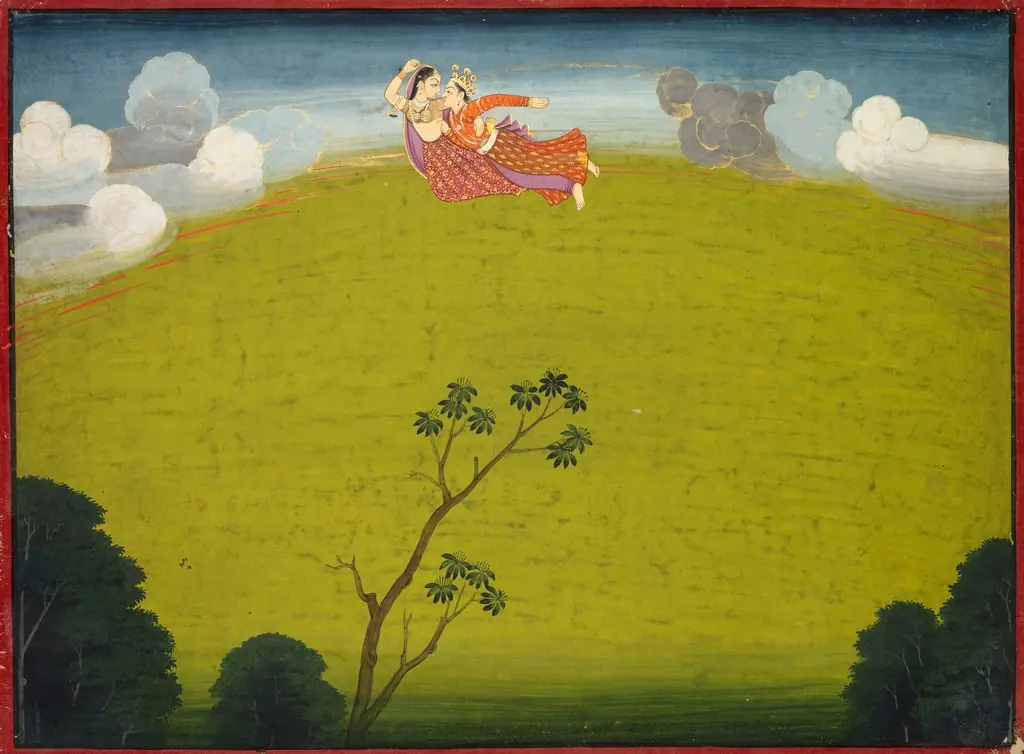 Pradyumna and Mayavati Fly to Dvaraka, from the Large Basohli Bhagavata Purana
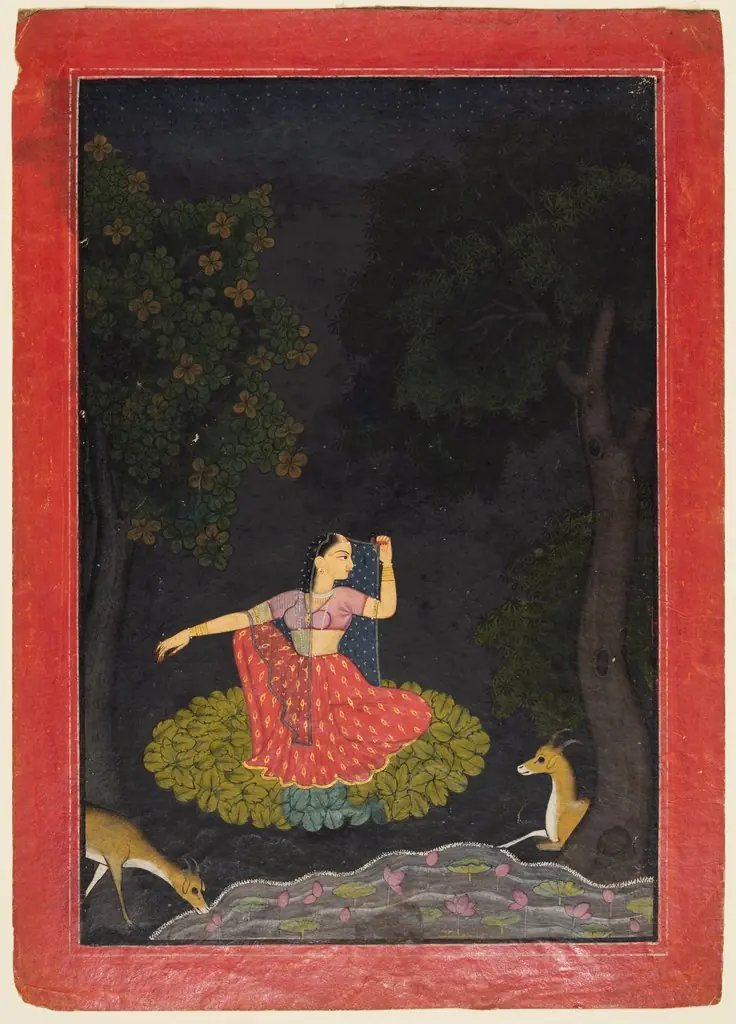 A Heroine Waiting for Her Paramour: Vasakasajja Nayika, from a Nurpur Rasikapriya
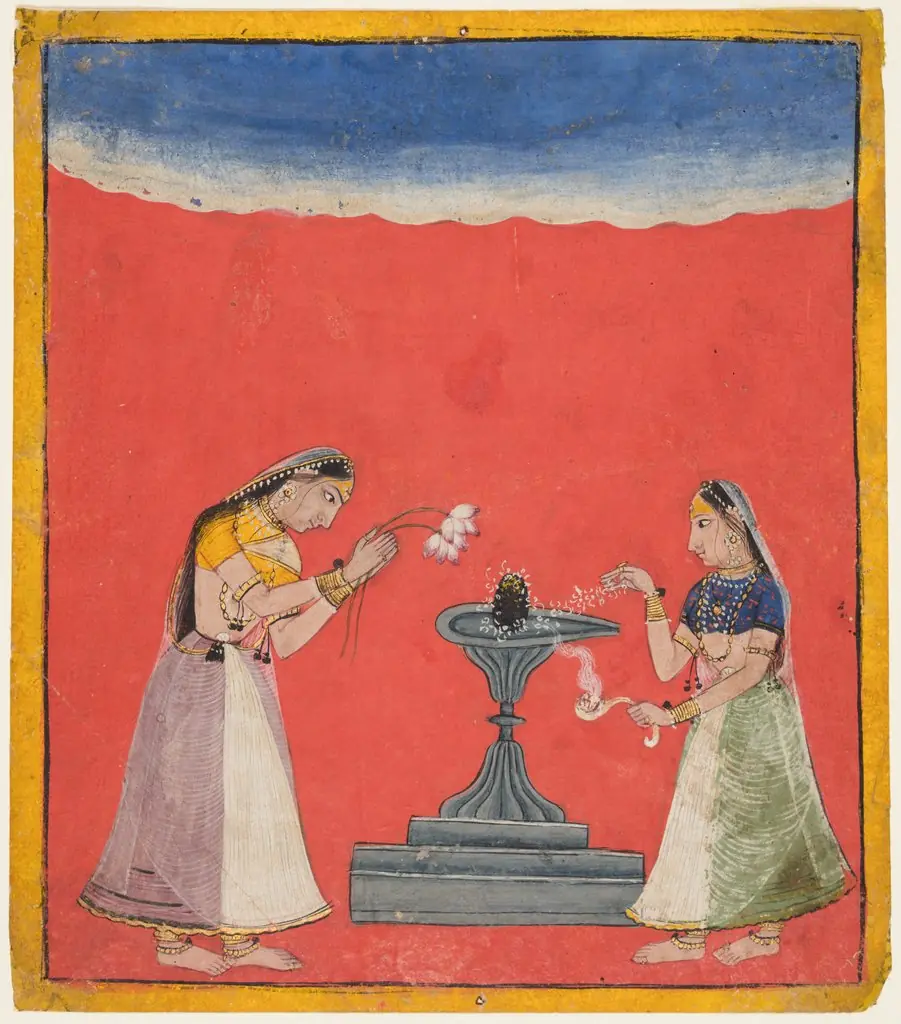 Women Worshipping a Shiva Linga: Devagandhari Ragini of Hindol, from a Chamba Ragamala
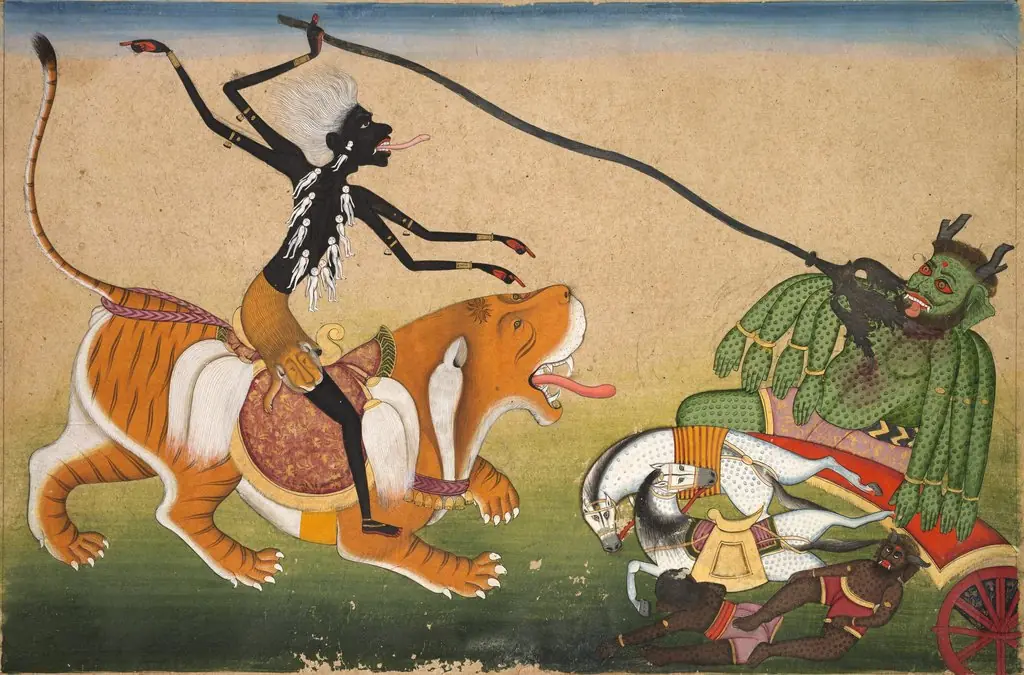 Kali Attacking Nisumbha
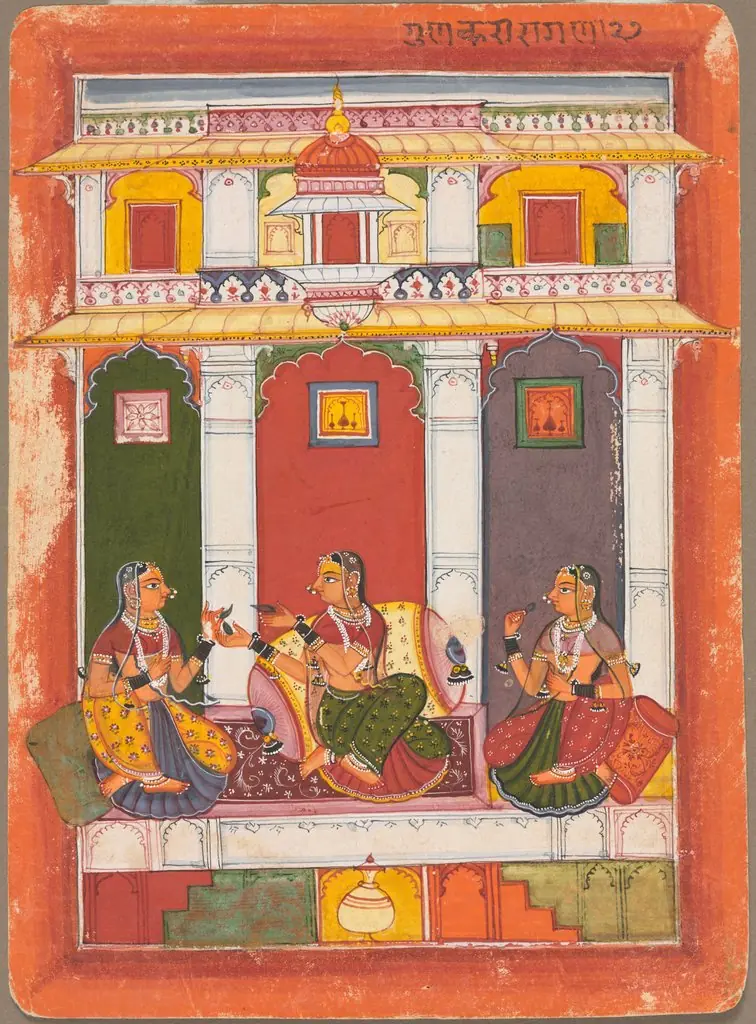 Gunakali Ragini
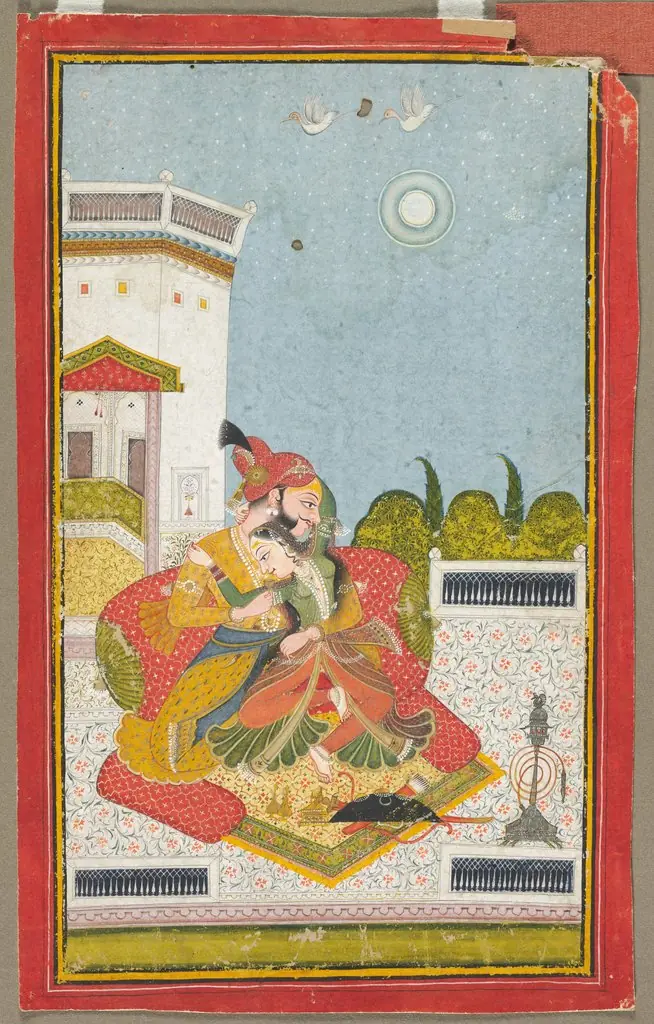 Lovers Embracing (Raga Malkaus)
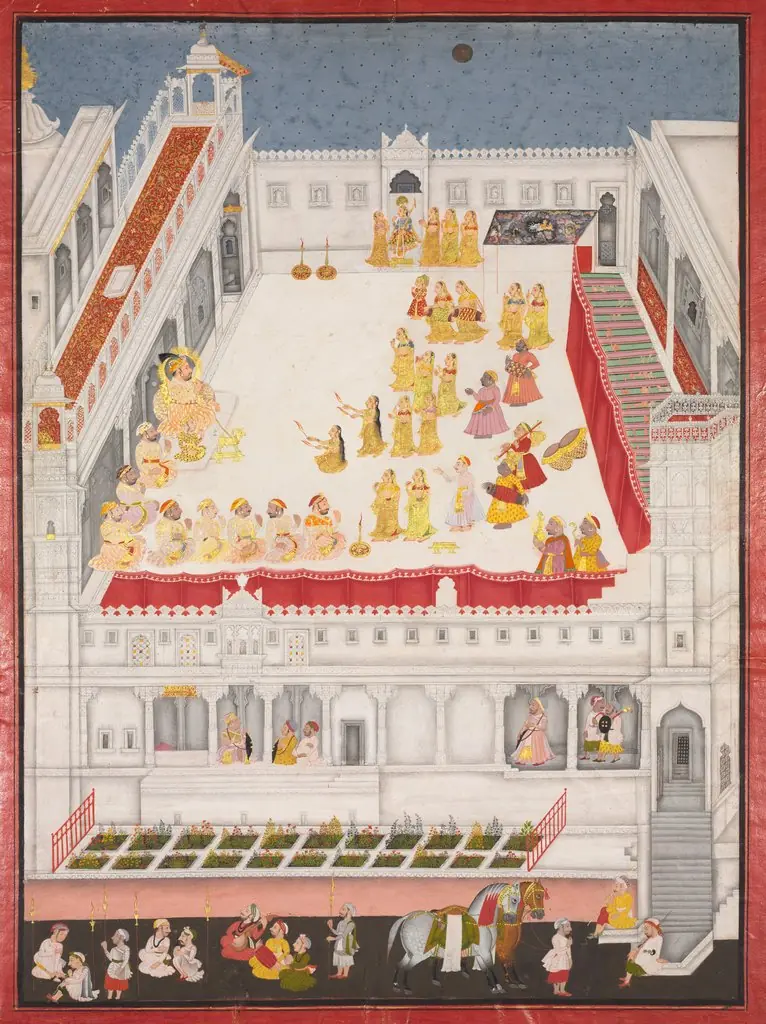 Maharana Jagat Singh Attending the Raslila
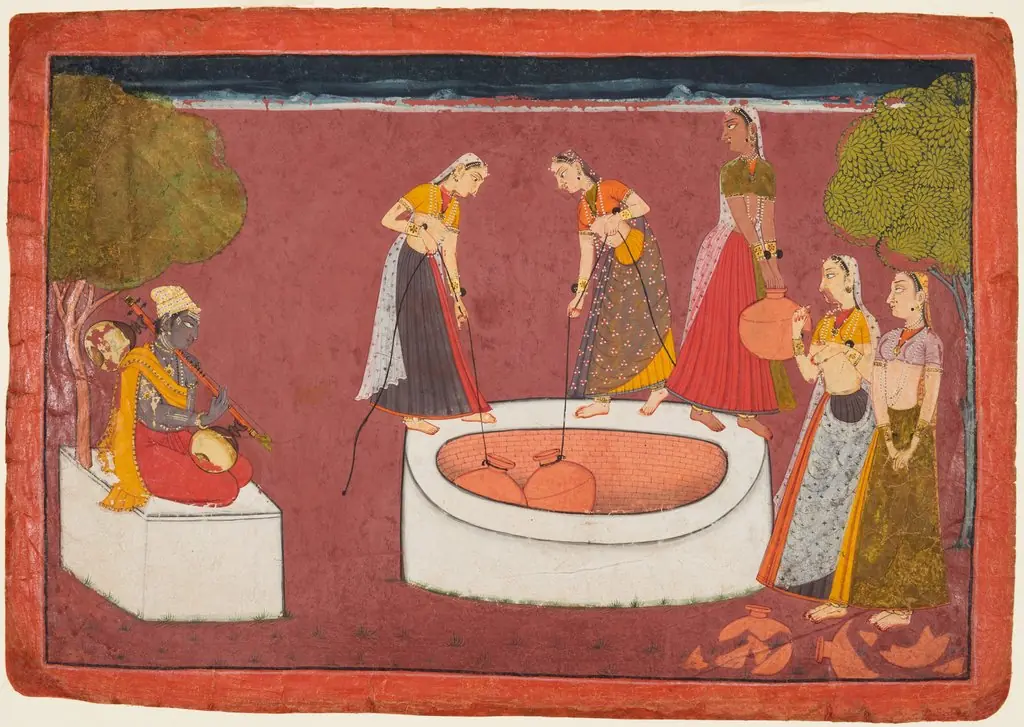 Madhava Plays his Vina before Five Women Drawing Water from a Well, from a Madhavanala Kamakandala
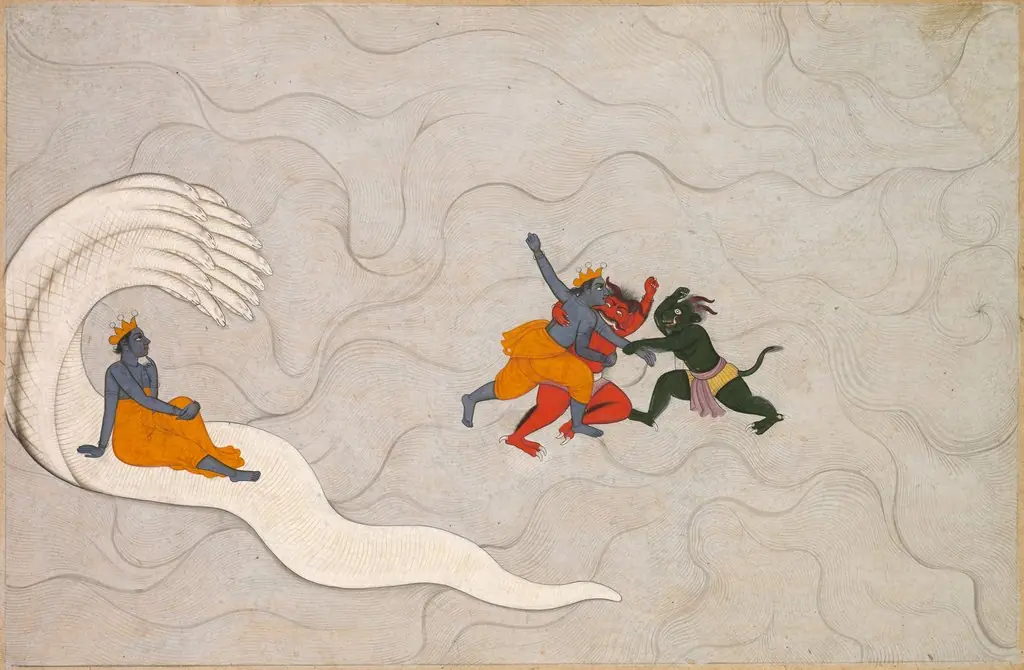 Vishnu Battles Madhu and Kaitabha, from a Markandeya Purana
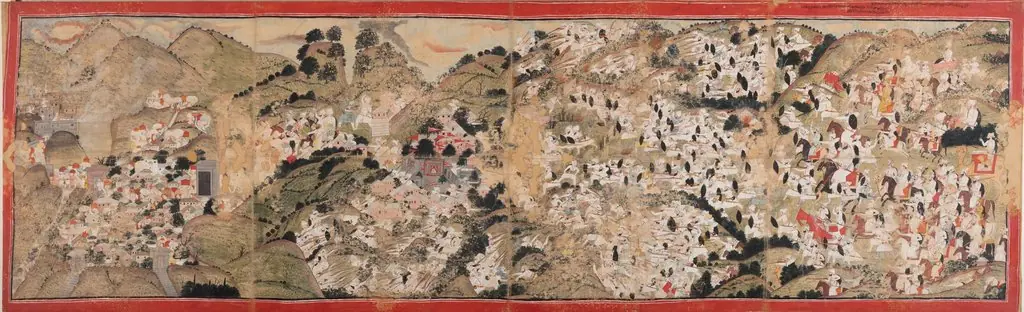 Raja Sansar Chand Attacking Kangra Fort
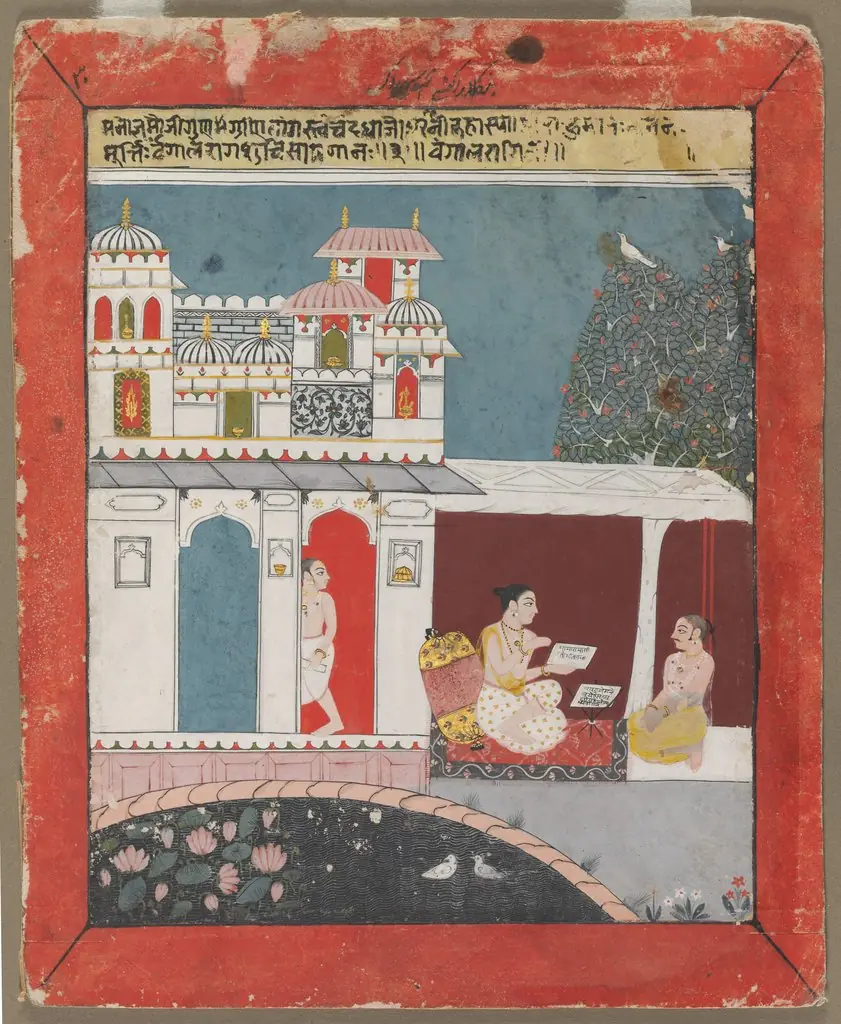 Bangala Ragini
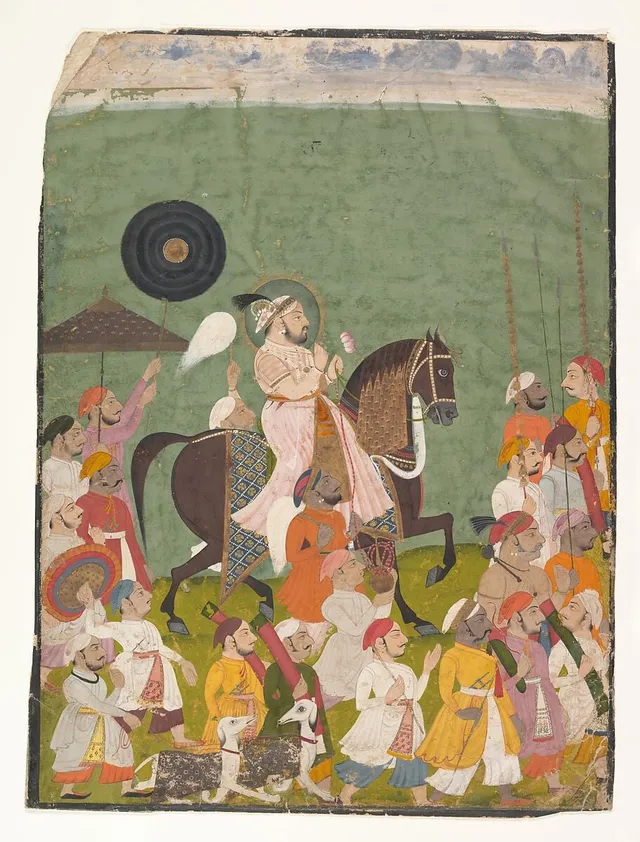
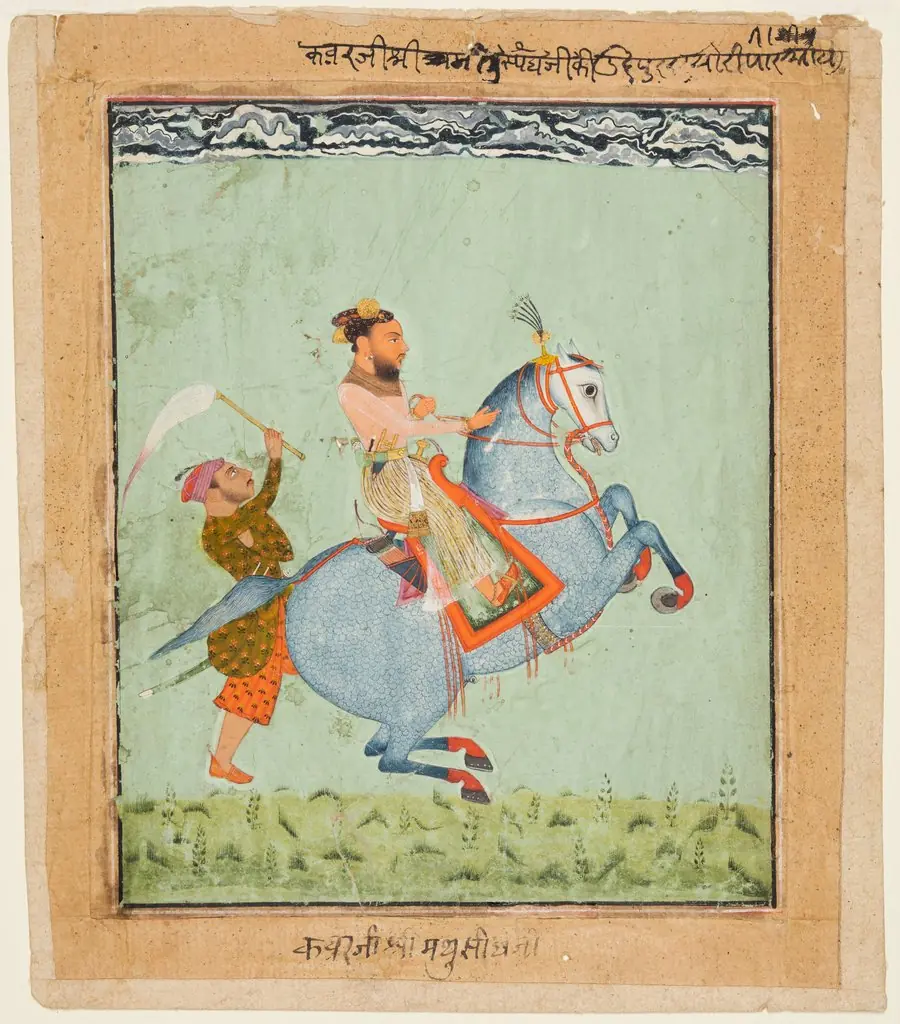 Prince Mathu Singh of Jatoli on a Blue Horse Riding to Udaipur
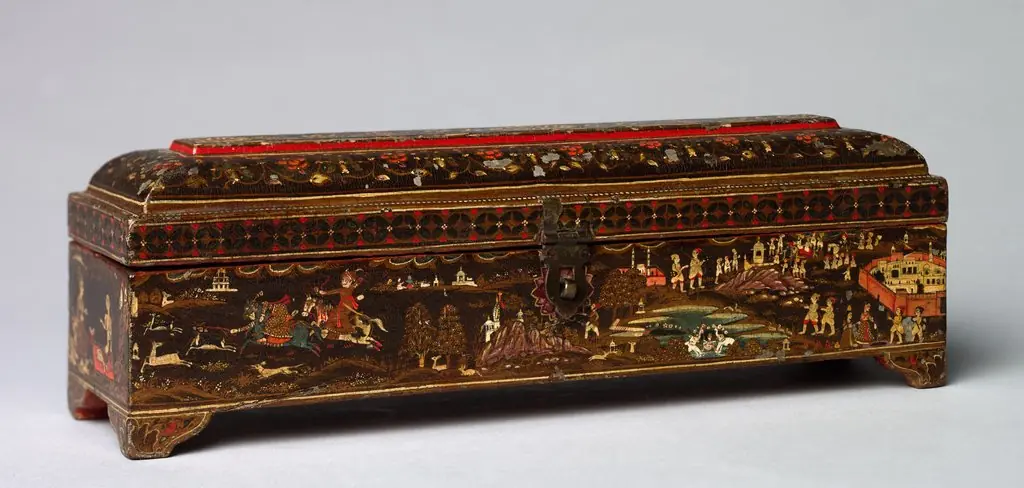 Rajput Box with Various Scenes
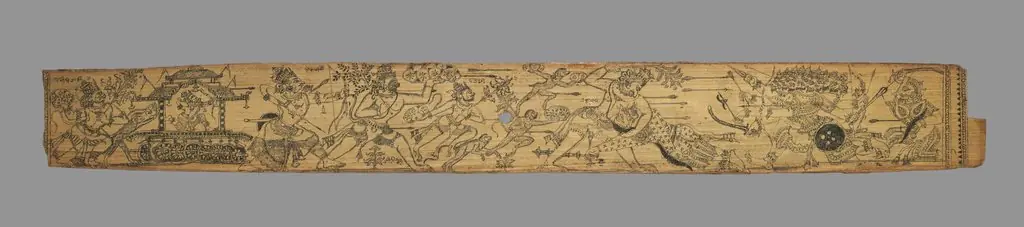 Hanuman Brings the Mountain of Healing Plants; Rama Extracts the Arrow from Lakshmana as Hanuman and a Bear Prepare to Treat Him (recto), from a Romance of Chandrabhanu and Lavanyavati of Upendra Bhanja (Indian, died 1740)
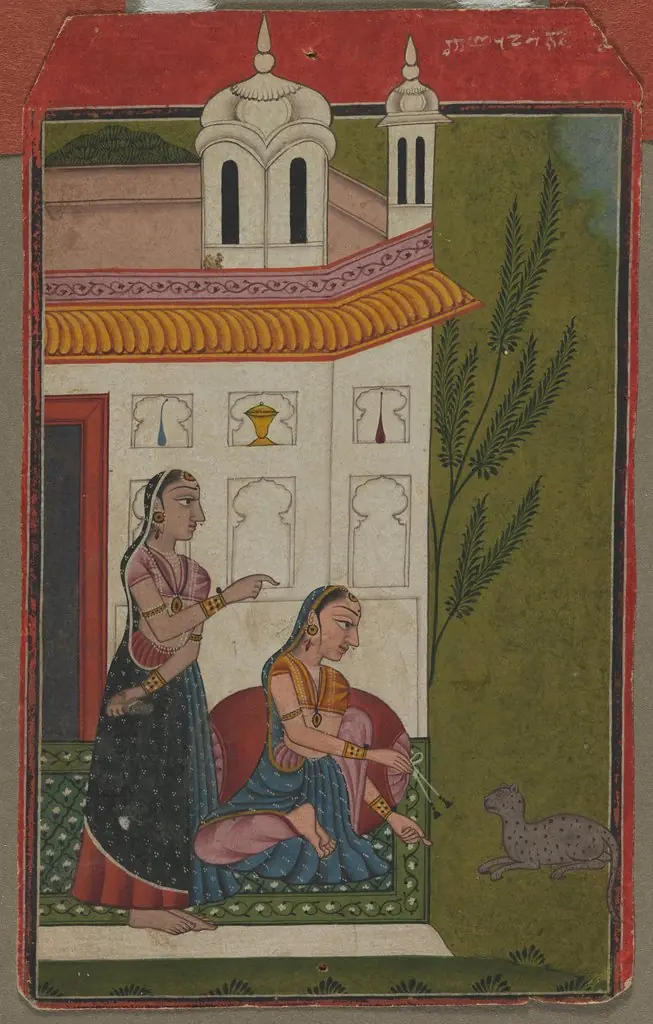 Ragini Patamanjari
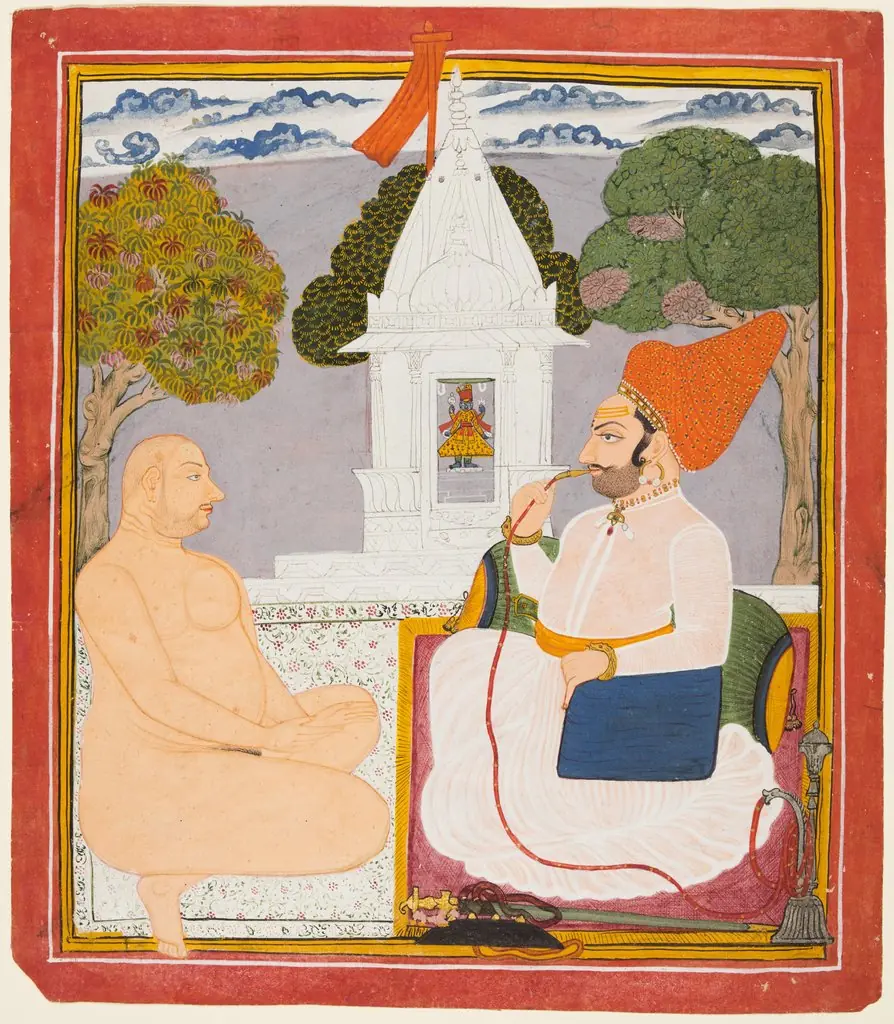 A Rathor Noble Visiting a Holy Man at a Vishnu Shrine
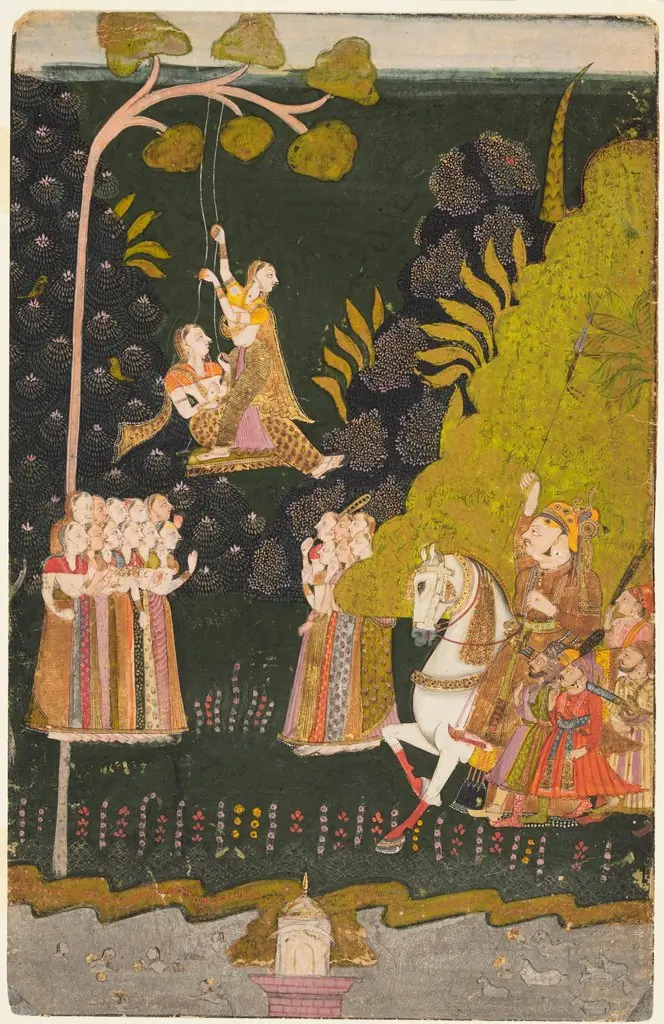 Maharaja Abhai Singh of Marwar (reigned 1724–49), Equestrian, Watching Girls Swinging at the Teej Festival
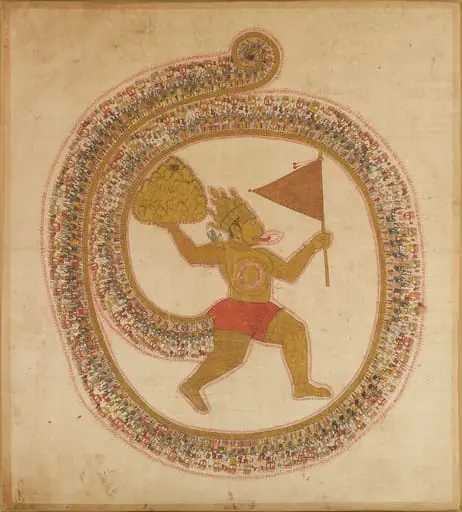 Untitled
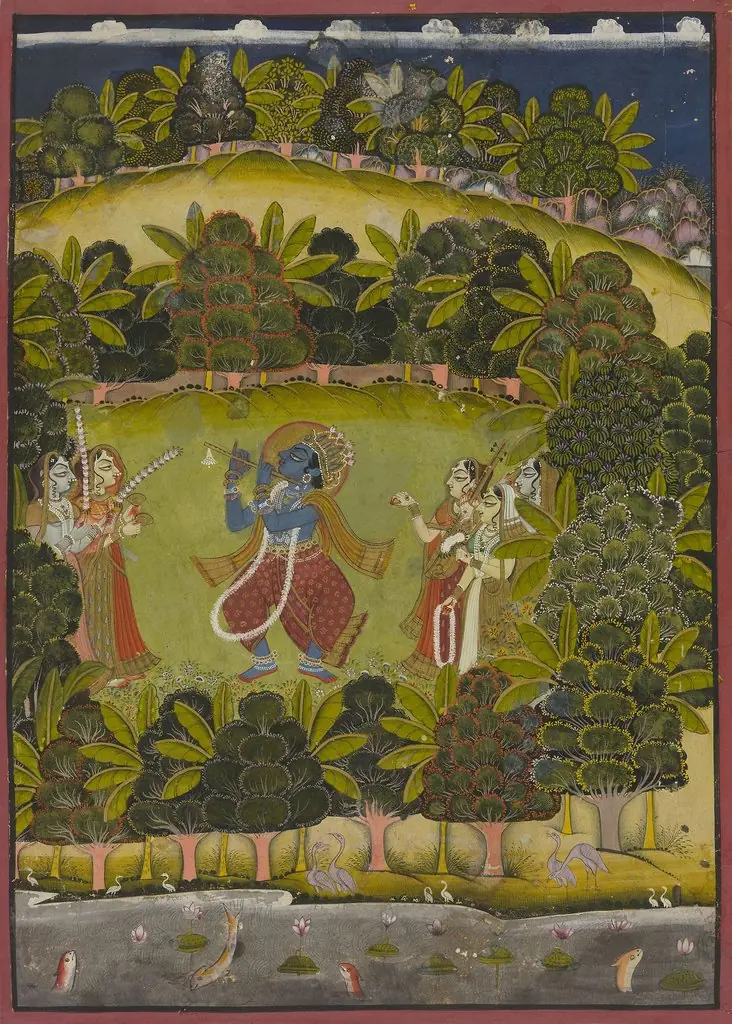 Krishna Fluting for the Gopis
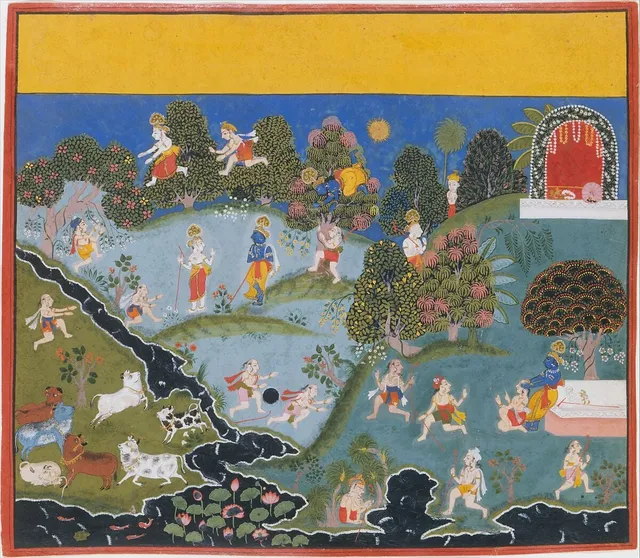
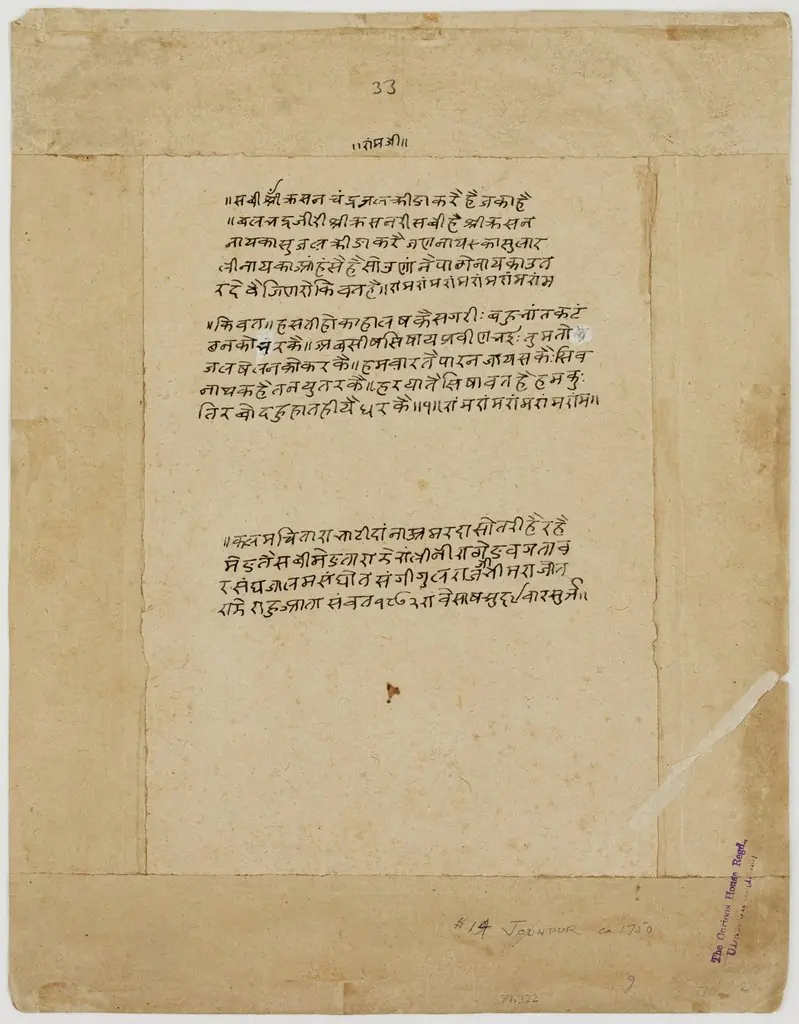 Krishna, Balarama and Gopis Swimming
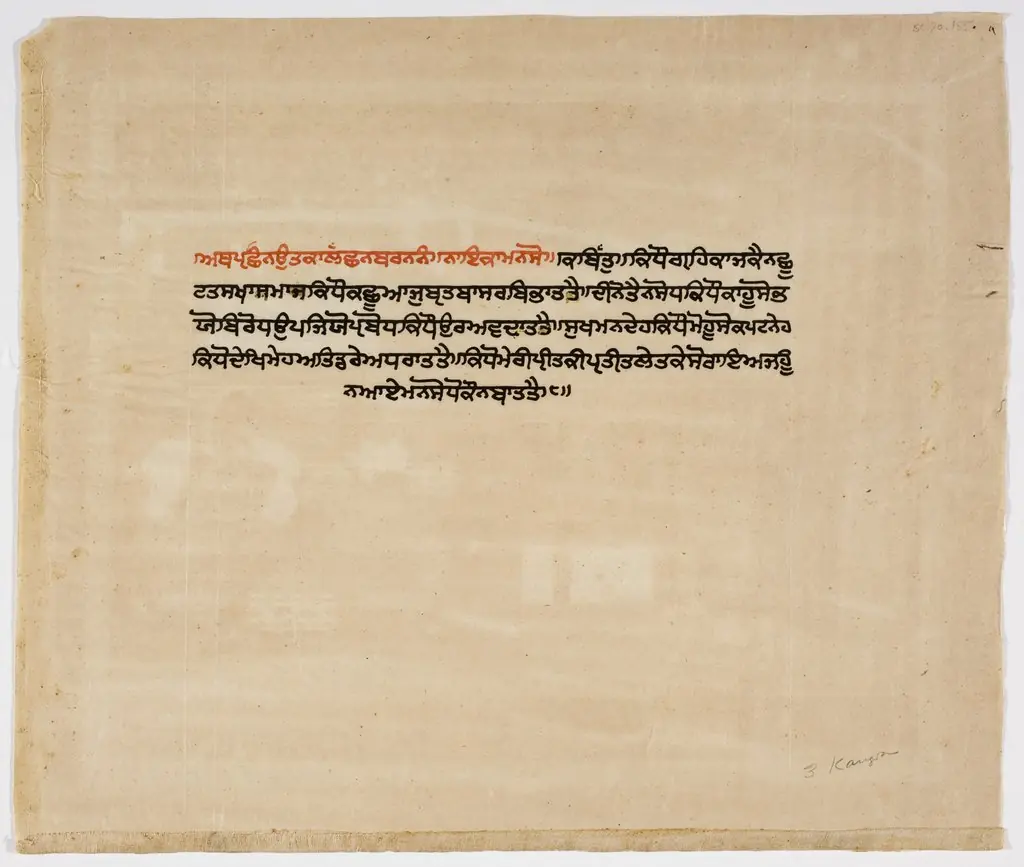 Krishna and Radha in Palace Scene
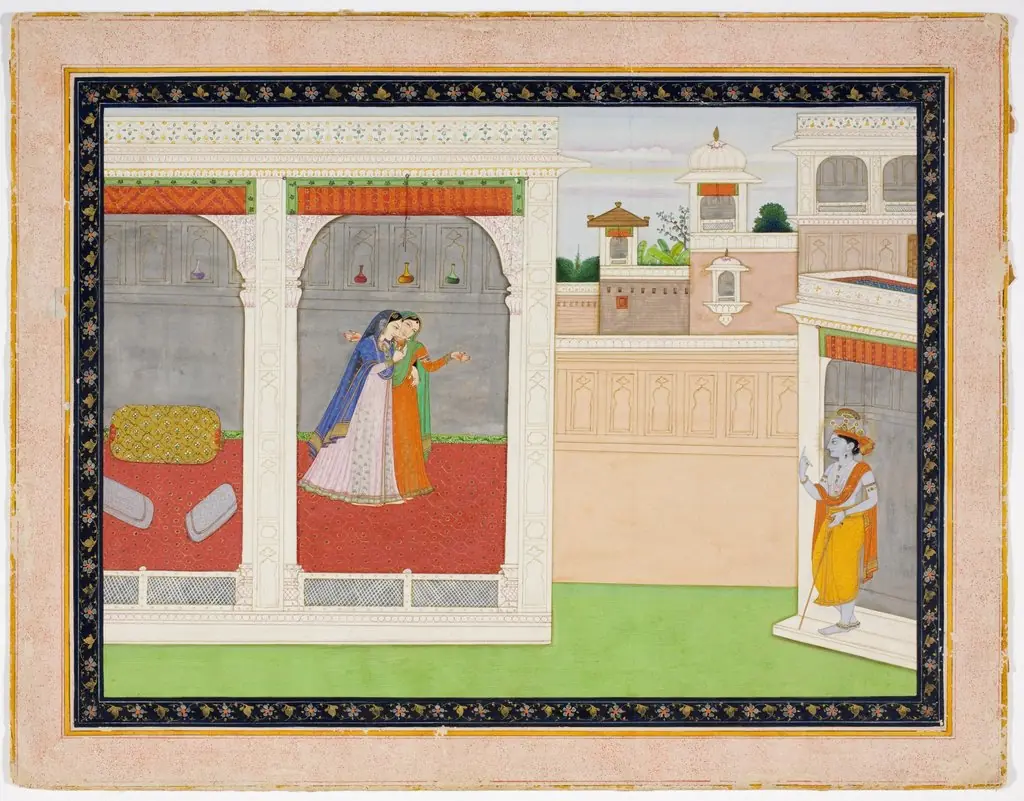 Krishna and Radha: Court Scene
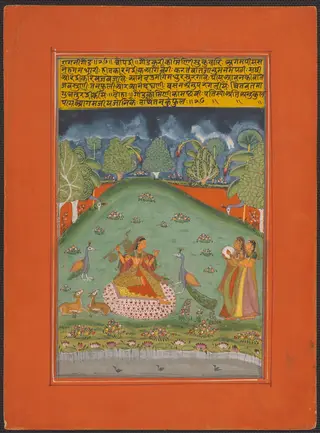 Ragini Gaund, Page from a Jaipur Ragamala Set
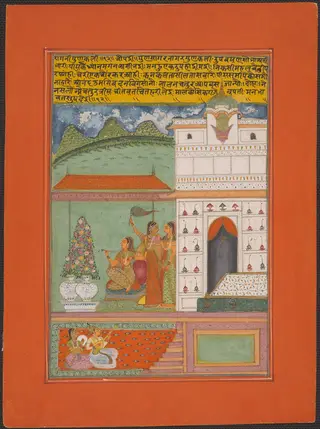 Ragini Gunakali, Page from a Jaipur Ragamala Set
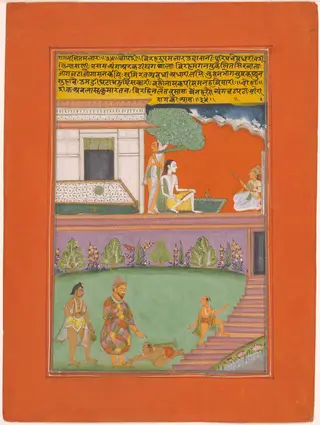 Ragini Setmalar, Page from a Jaipur Ragamala Set
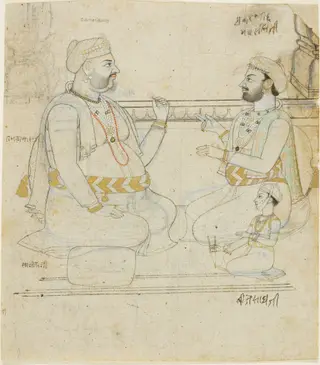 Two Rajput Noblemen with a Child
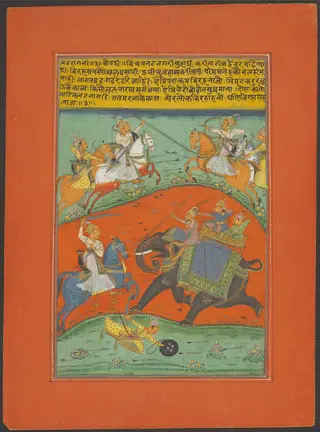 Nat Ragini, Page from a Jaipur Ragamala Set
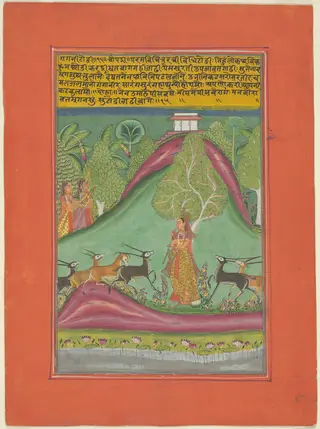 Ragini Todi, Page from a Jaipur Ragamala Set
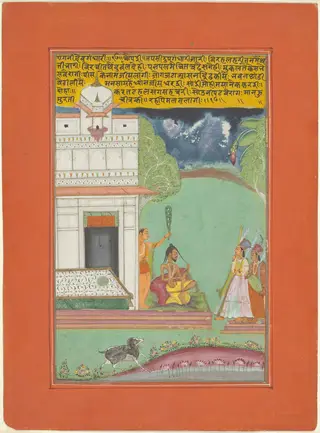 Ragini Devagandhari, Page from a Jaipur Ragamala Set
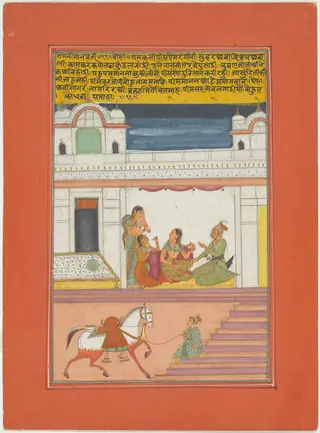 Ragini Manavati, Page from a Jaipur Ragamala Set
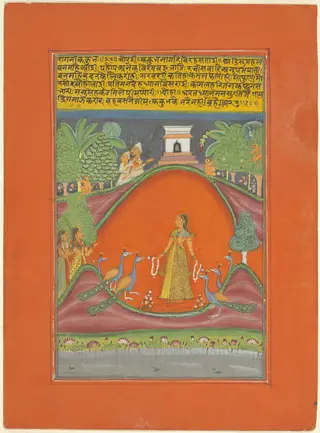 Ragini Kakubha, Page from a Jaipur Ragamala Set
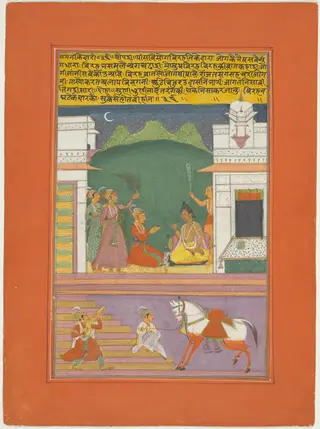 Ragini Kedara, Page from a Jaipur Ragamala Set
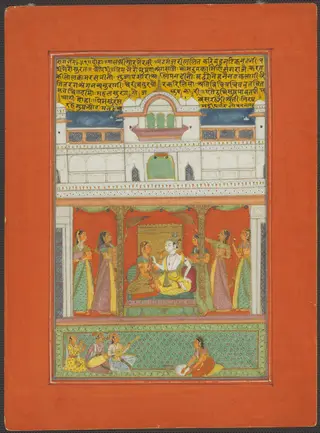 Raga Bhairaon, Page from a Jaipur Ragamala Set
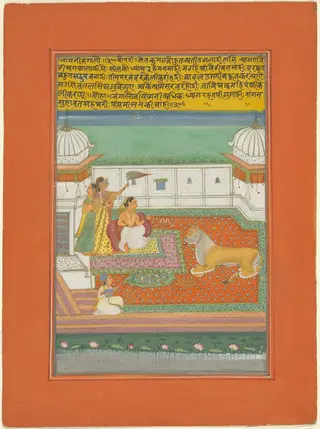 Ragini Bangali, Page from a Jaipur Ragamala Set
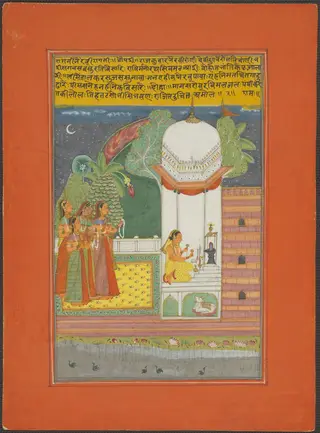 Ragini Bhairavi, Page from a Jaipur Ragamala Set
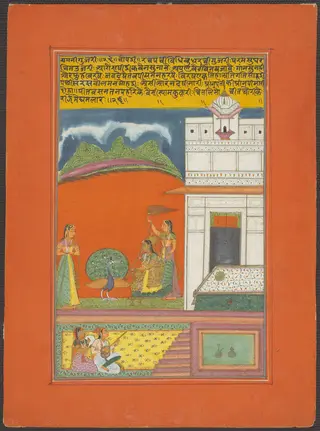 Ragini Gujari, Page from a Jaipur Ragamala Set
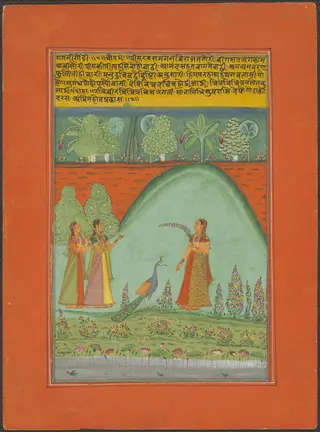 Ragini Gaudi, Page from a Jaipur Ragamala Set
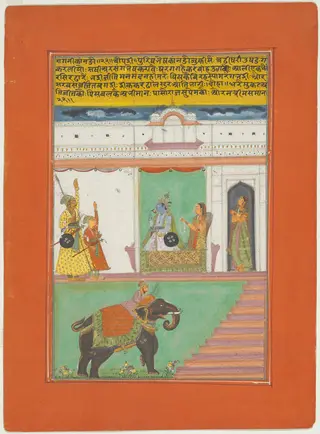 Ragini Kanada, Page from a Jaipur Ragamala Set
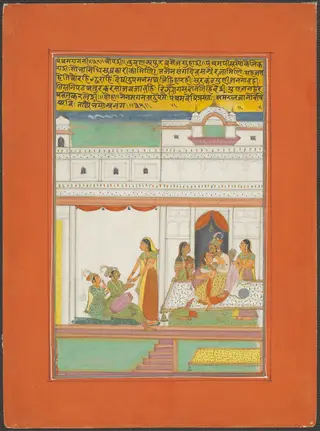 Panchama Ragini, Page from a Jaipur Ragamala Set
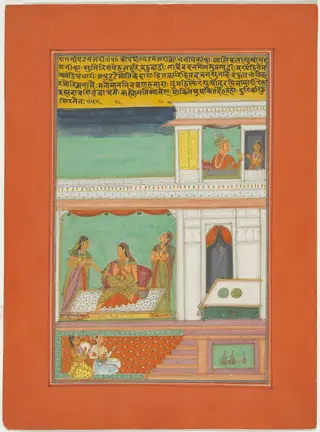 Ragini Patmanjari, Page from a Jaipur Ragamala Set
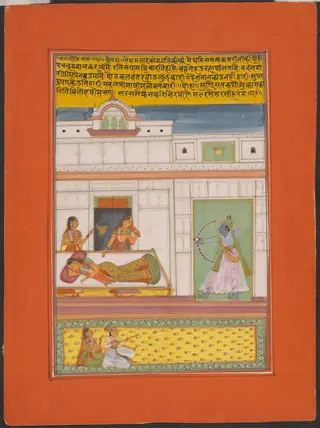 Ragini Vibhas, Page from a Jaipur Ragamala Set
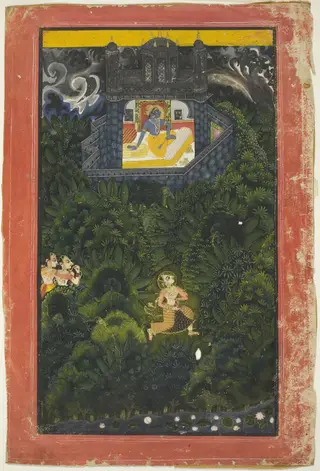 Abhisarika Nayika (Heroine Running to Meet her Lover)
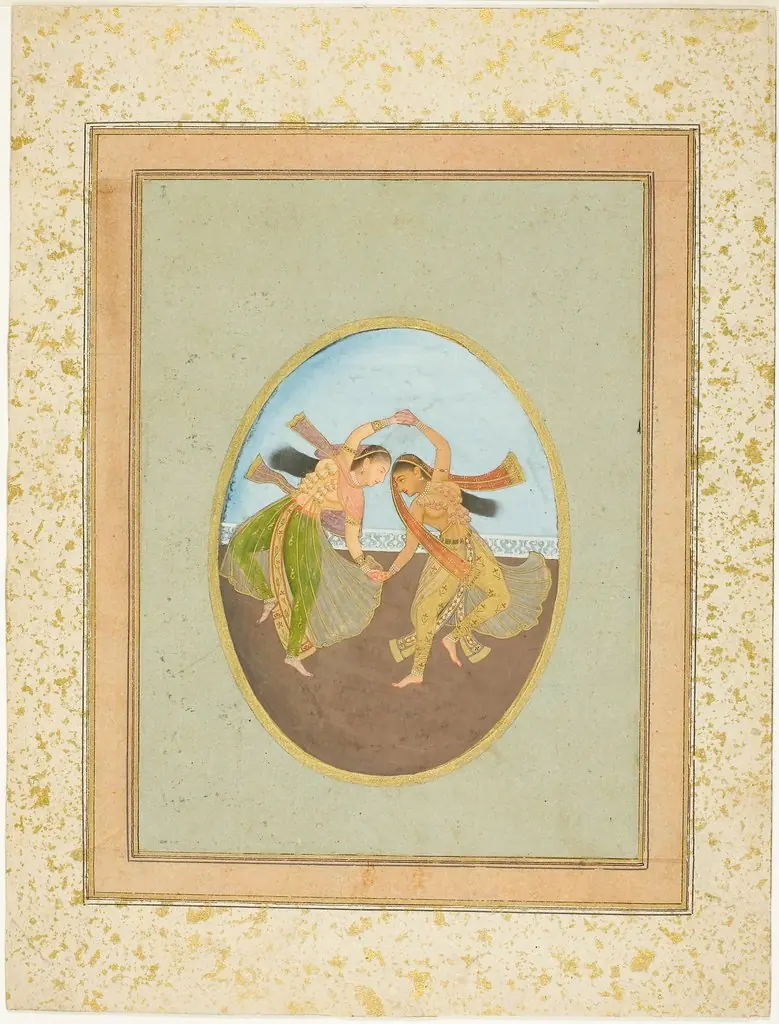 Two Girls Performing Kathak
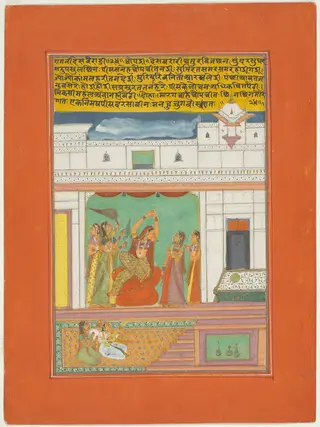 Ragini Desavaradi, Page from a Jaipur Ragamala Set
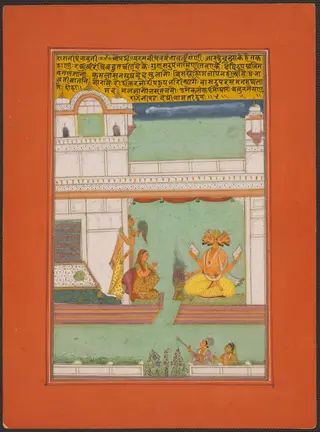 Ragini Khambavati, Page from a Jaipur Ragamala Set
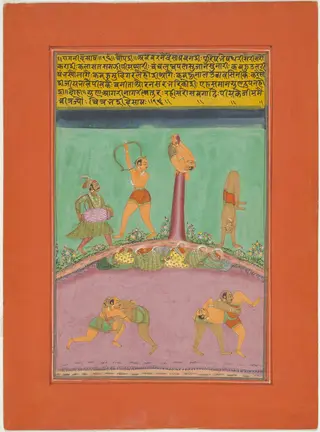 Ragini Desakh, Page from a Jaipur Ragamala Set
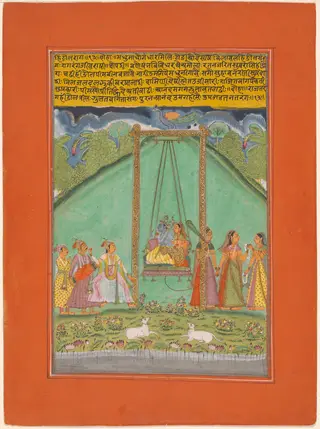 Hindol Raga, Page from a Jaipur Ragamala Set
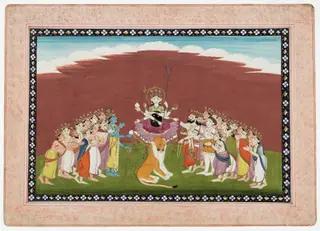 Gods Appeal to Durga for Help
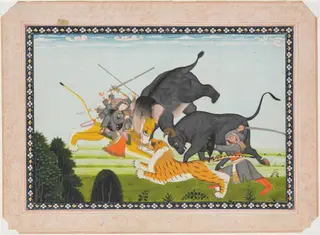 Durga Fighting an Elephant, Bull and Tiger
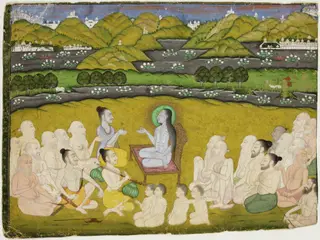 Muni Shri Sukdevji Preaching to the Raja Parikshit
 Muni Shri Sukdevji Preaching to the Raja Parikshit
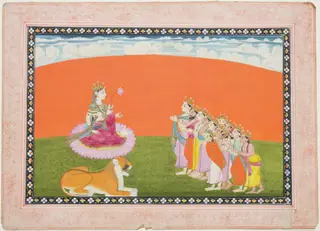 Durga Receives Thanks of Gods
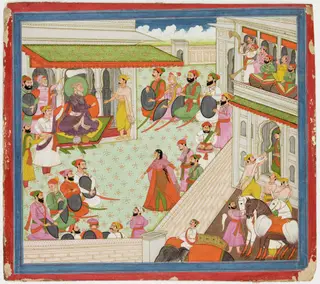 Illustrations to Life of Dhurva Maharaj: #3 Rejoicing and Dancing in Palace
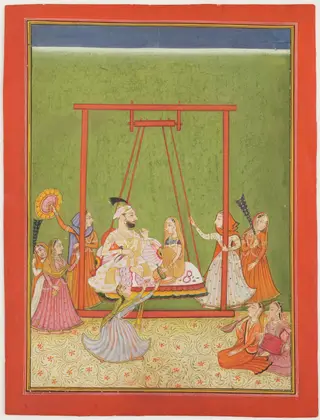 Raja and Rani on Swing with Female Attendants
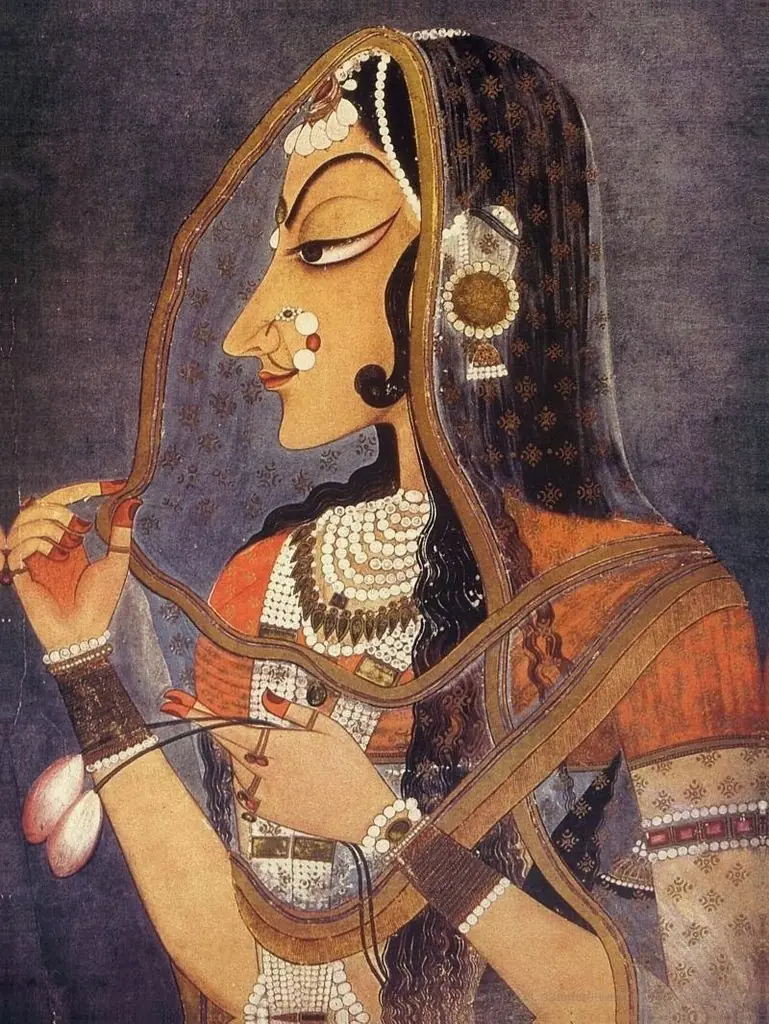 Bani Thani
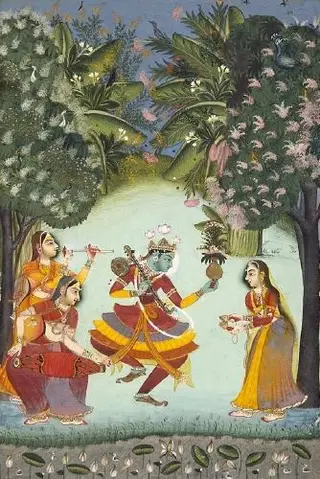 Vasant Ragini
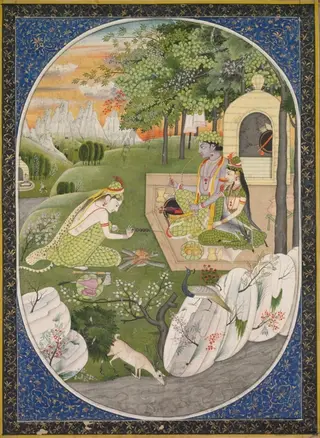 Rama, Sita, and Lakshmana in the forest
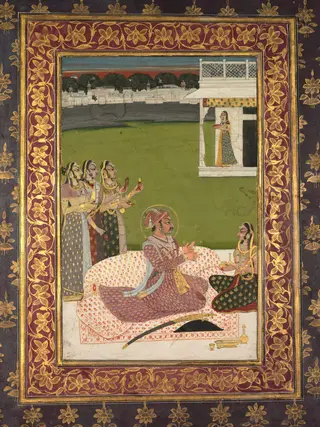 Portrait of Maharaja Savant Singh with Consort, Bani Thani
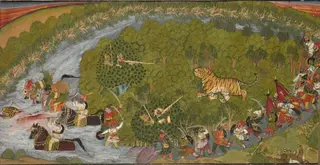 Tiger Hunt
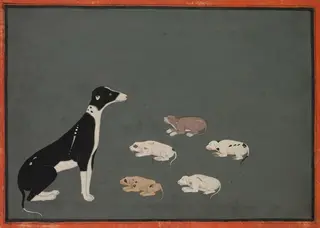 Dog with pups
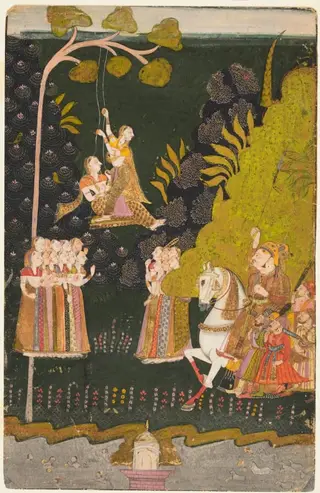 Maharaja Abhai Singh of Marwar (reigned 1724–49), Equestrian, Watching Girls Swinging at the Teej Festival
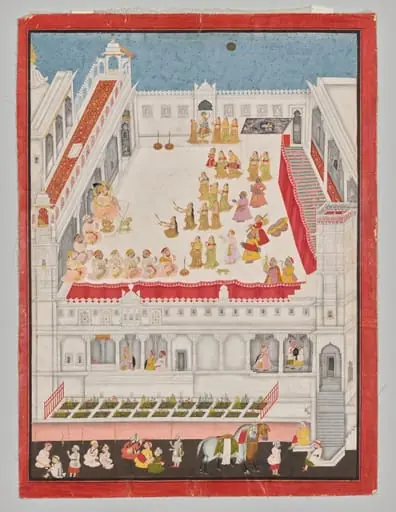 Maharana Jagat Singh Attending the Raslila
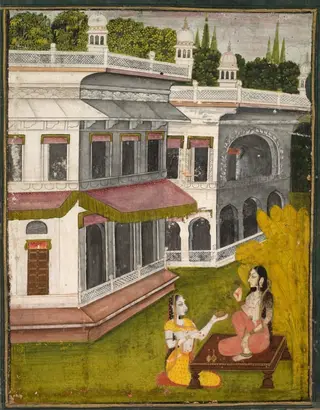 Lady and Her Confidante
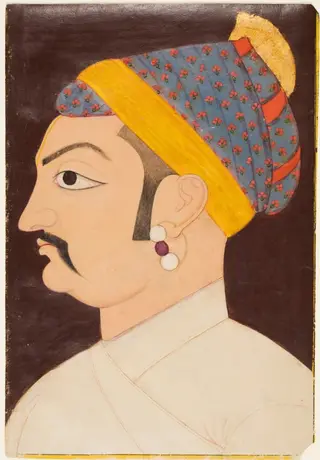 Portrait of Rao Shiv Singh Chandrawat
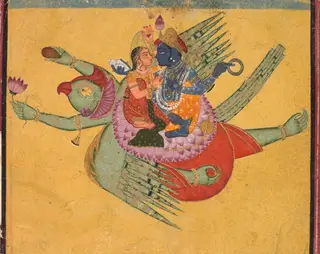 Vishnu and Lakshmi on Garuda
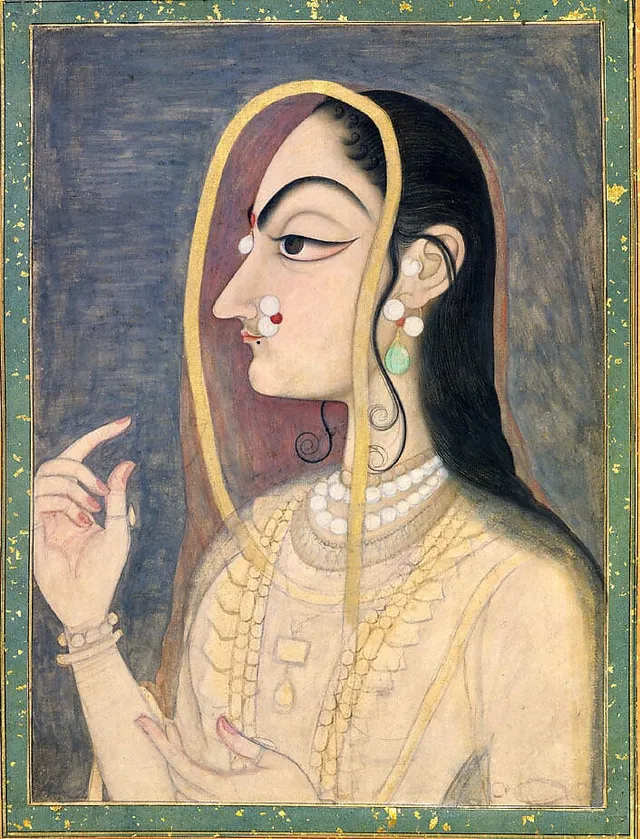
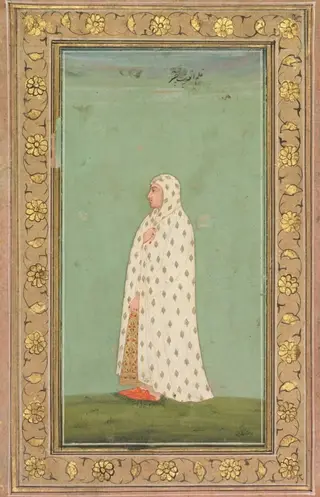 Portrait of a Woman
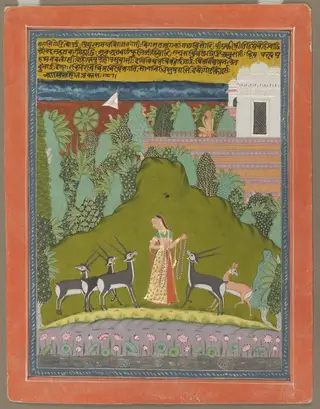 Gaudi Ragini
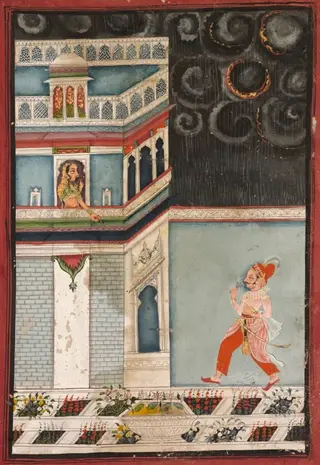 Lover's Tryst
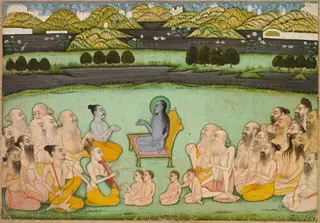 Hindu God Krishna Talking to Elders
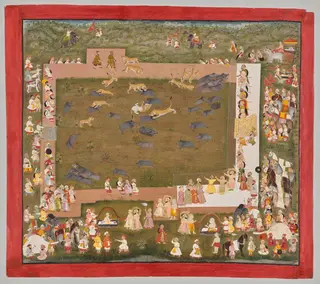 Maharana Sangram Singh II of Mewar (r. 1710–34) and Stages a Boar Hunt with Tigers at Sadri
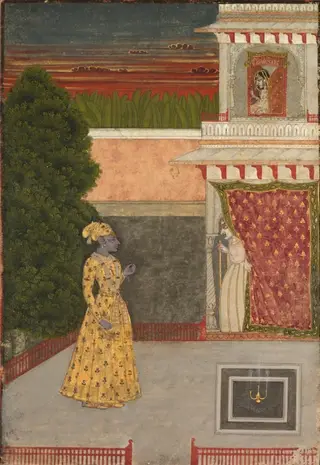 Lovers and an Old Crone
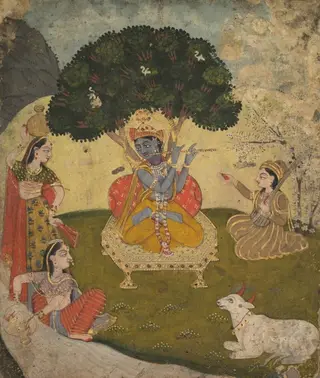 Krishna and Gopis
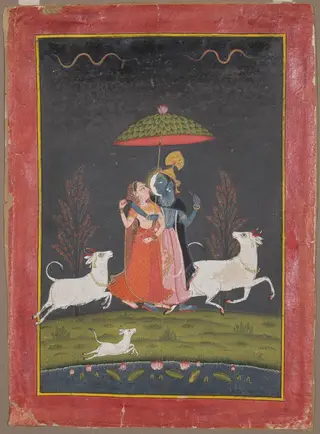 Radha and Krishna in the Rain
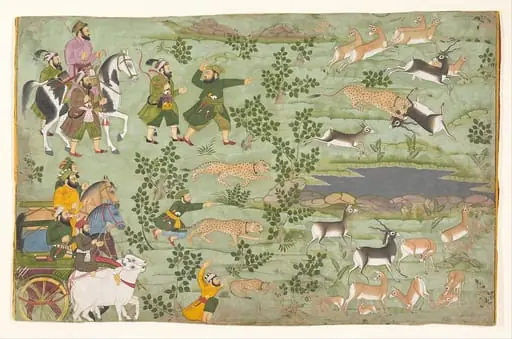 Untitled
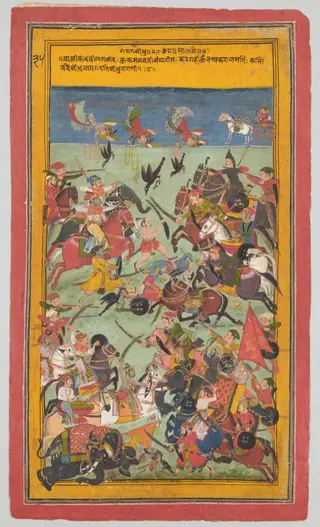 Sindhu Raga
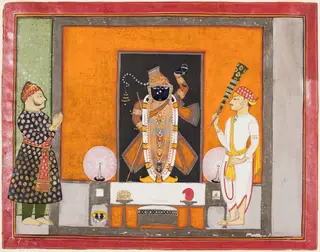 Maharao Ram Singh II of Kota (r. 1828–66) Worships Brij Nathji as the Bridegroom
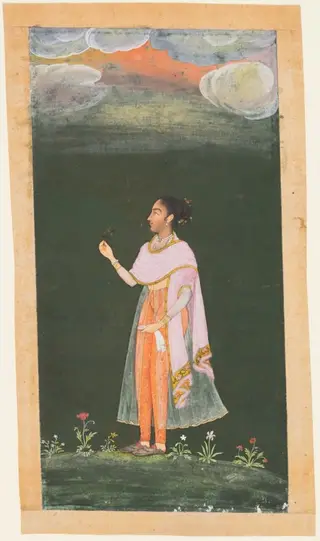 Royal Woman Holding a Flower
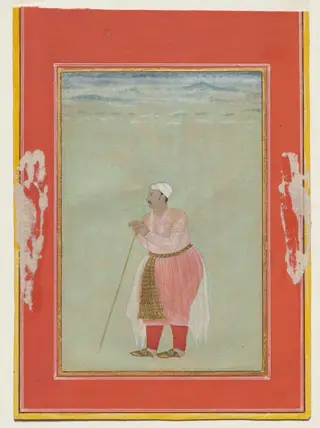 Portrait of Maharaja Rai Singh of Bikaner (reigned 1574–1612)
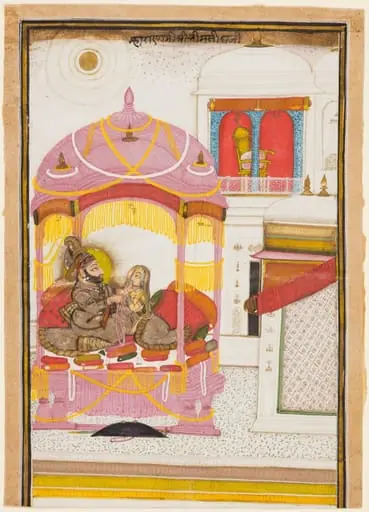 Maharana Bhim Singh of Mewar (r. 1778–1828) with a Consort
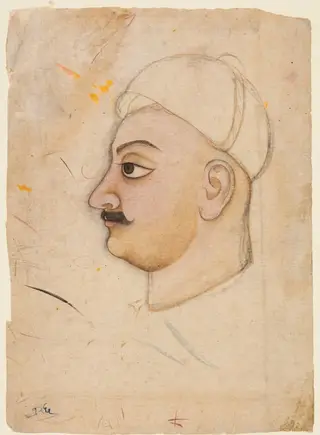 Drawing of a Man’s Head with an Unusual Turban
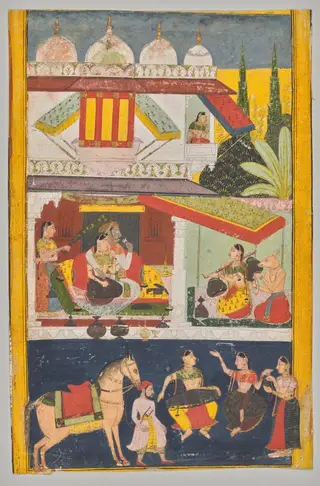 Shri Raga, from a Ragamala
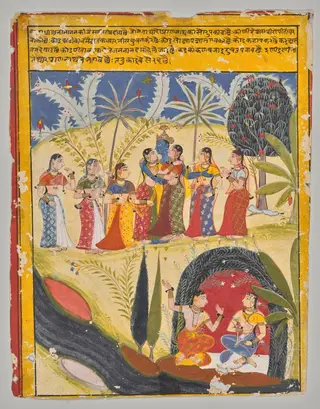 Krishna and Gopis
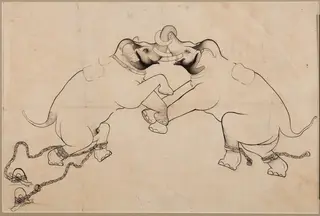 Two Elephants in Combat
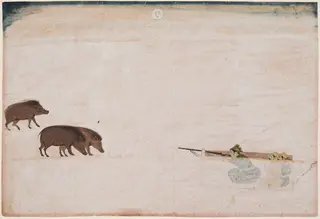 Raja Ram Chand of Amber (r. 1667–88) Hunting Wild Boar
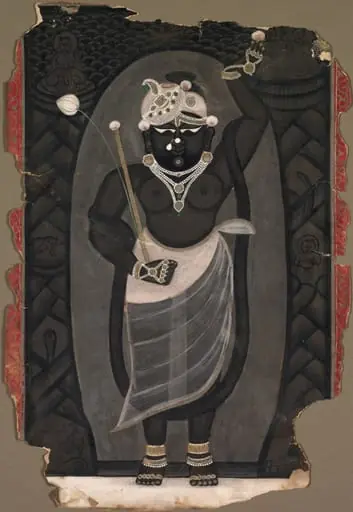 Sri Nathaji
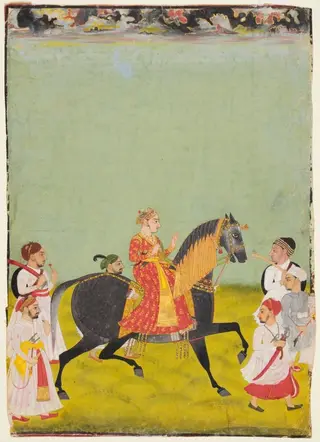 Equestrian Portrait of Maharana Raj Singh II of Mewar (r. 1755–62)
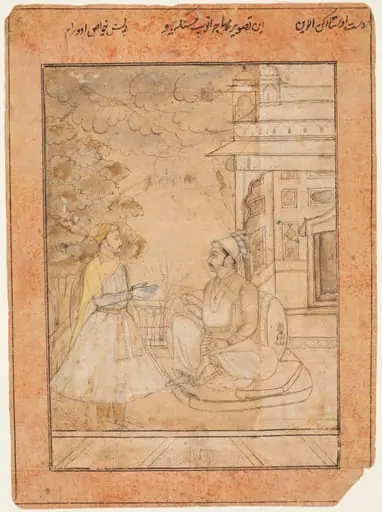 Maharaja Anup Singh of Bikaner (reigned 1669–98) Receives a Courtier
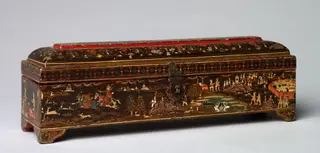 Rajput Box with Various Scenes
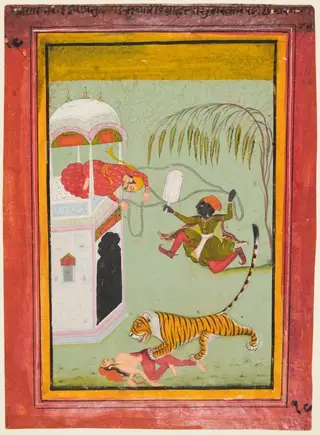 A page from a Punishment series: Punishment for murder
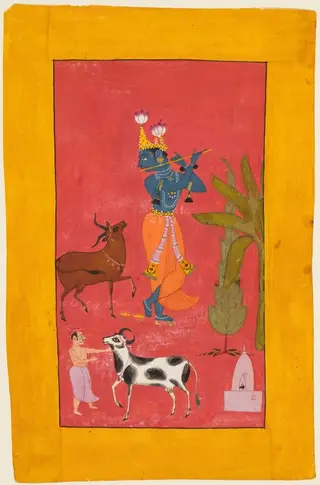 Krishna Fluting
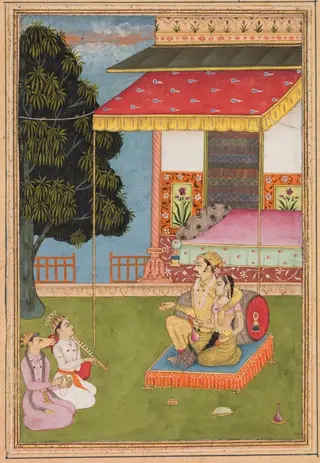 Shri Raga, from a Ragamala (Garland of Melodies)
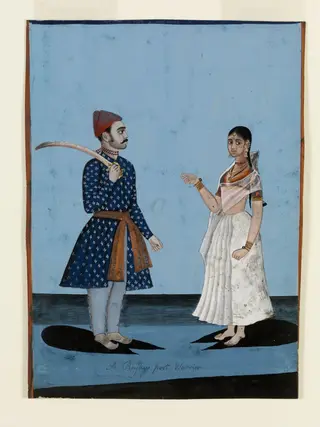 A Rajput warrior and his wife
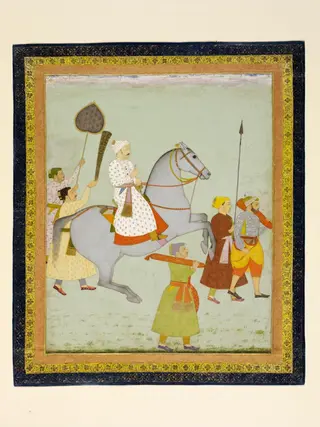 Maharaja Sawai Jai Singh
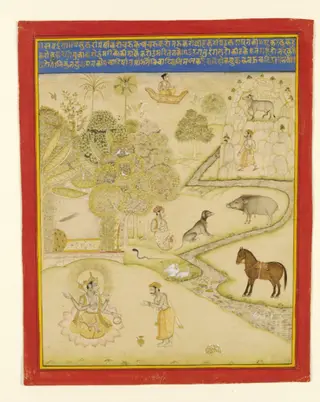 Maharana Amar Singh of Mewar
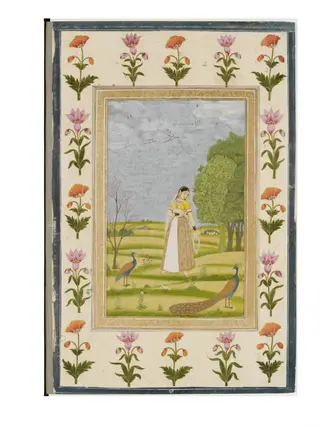 Kakubha Ragini
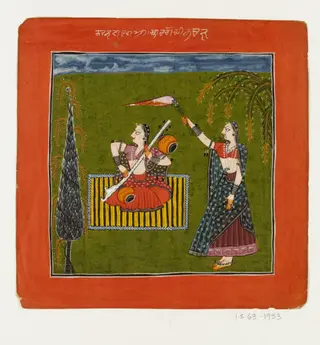 Kamati Ragini
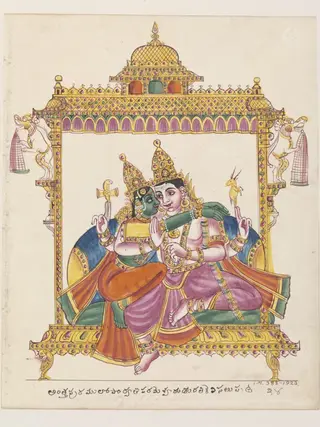 Shiva and his shakti, Uma, embracing.
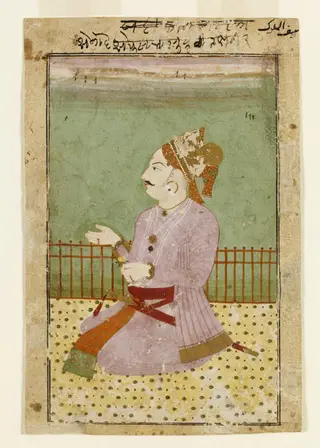 Raja Abhai Singh of Jodhpur
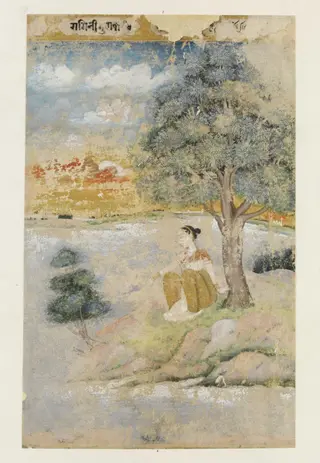 Gunakali ragini
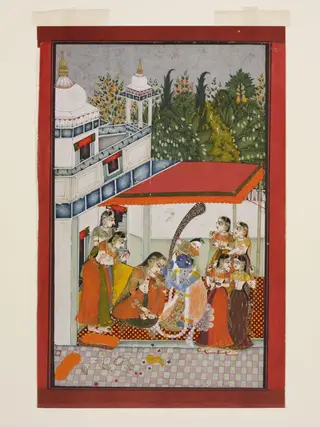 Radha and Krishna
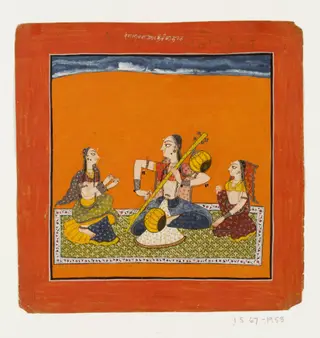 Vangali Ragini
Rajput painting is an art movement. A tradition of court miniature painting from the Rajput kingdoms of northern and western India (16th–19th centuries), related to but distinct from Mughal painting.
Artifact World Gallery holds 153 public-domain Rajput painting works, all free to view and download.
Key Rajput painting artists in the collection include Sahibdin, Ruknuddin and Nihâl Chand.
Rajput painting dates from 1600–1900.
Rajput painting works in the collection are held by Cleveland Museum of Art, Metropolitan Museum of Art and Art Institute of Chicago.
Your cart is empty
Browse artworks →