Artwork
Malar Ragini: Krishna Playing the Flute to Seven Gopis Holding Musical Instruments, from the Ragamala Series
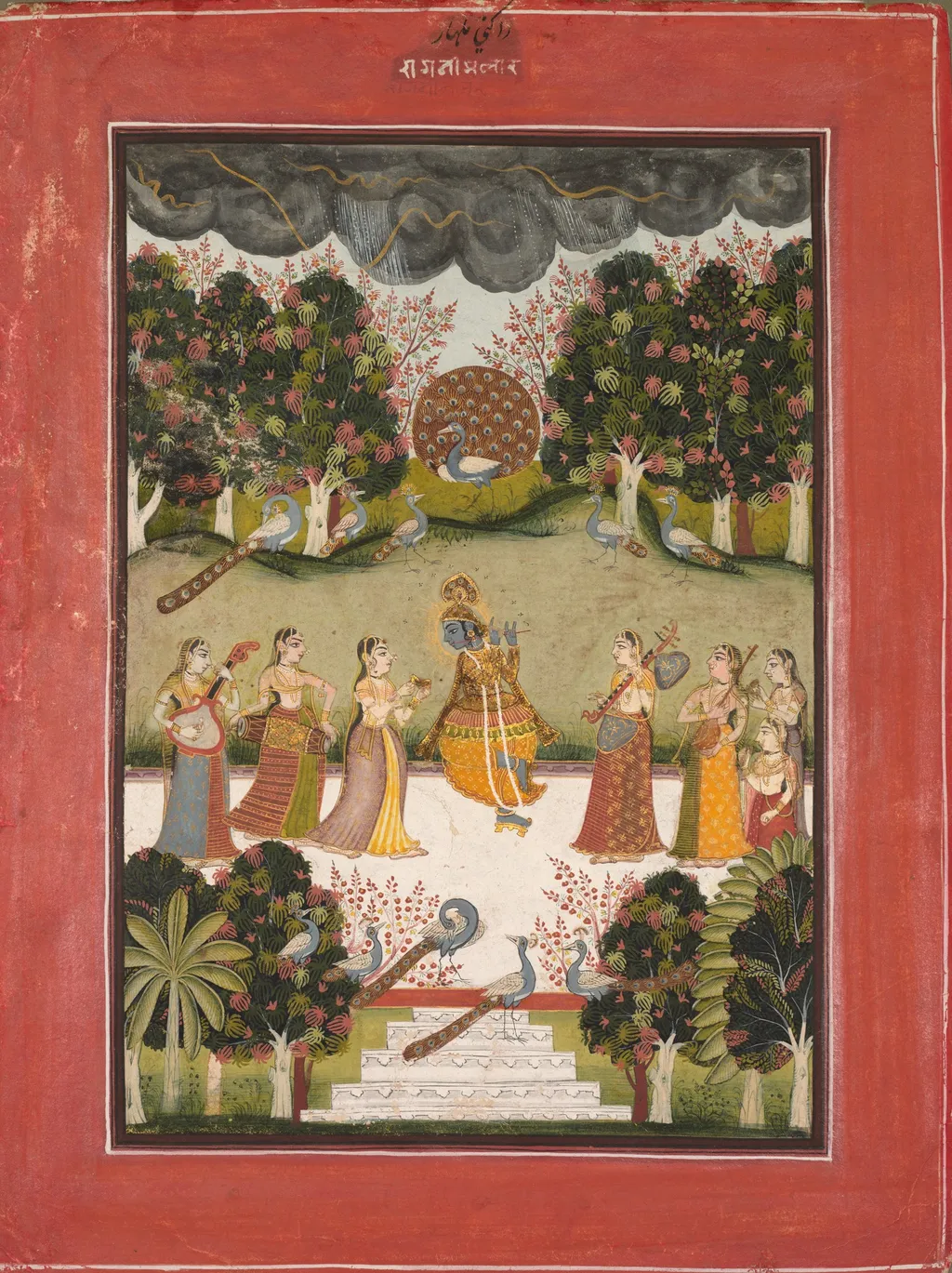
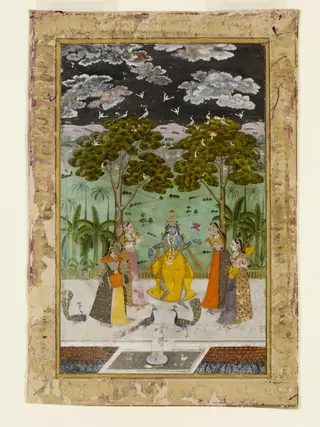
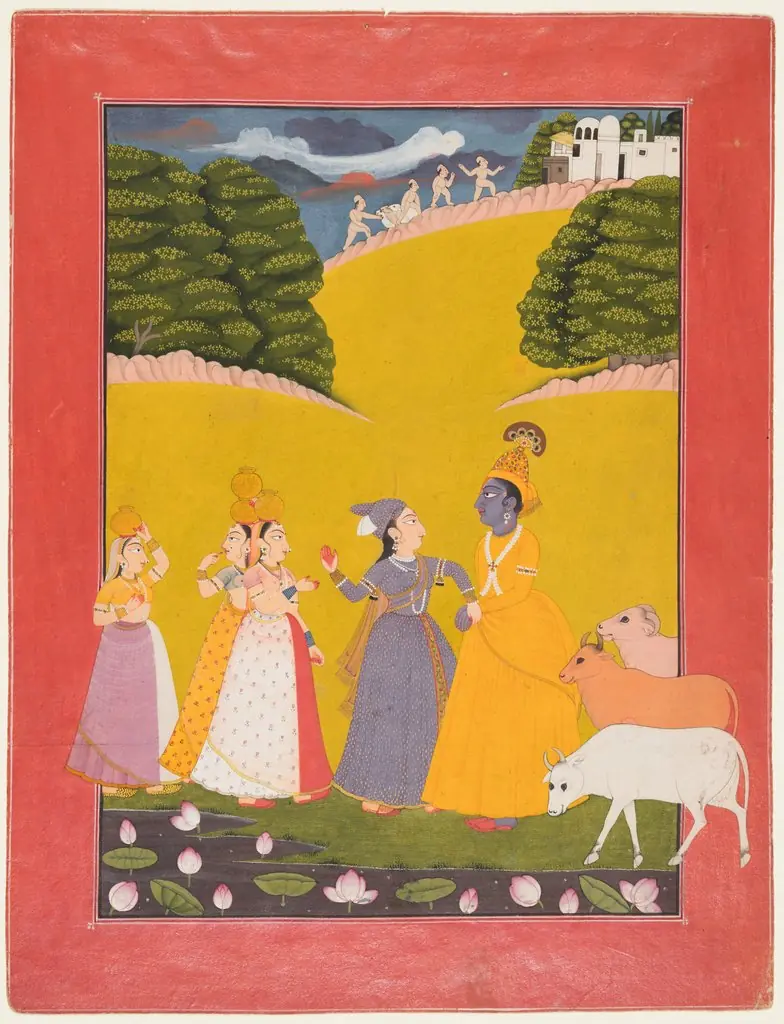
Malar Ragini: Krishna Playing the Flute to Seven Gopis Holding Musical Instruments, from the Ragamala Series is an unspecified painting. It dates from 1760 and is held in the collection of the Cleveland Museum of Art. The work depicts the Hindu deity Krishna, rendered with his characteristic blue skin, seated centrally and playing a flute.
About this work
Subject & Meaning
The painting shows Krishna, a central deity in Hindu tradition, playing his flute to attract seven gopis who each hold a different musical instrument, symbolizing devotion and the divine call that transcends worldly concerns. The scene draws from the Ragamala series, where each ragini embodies a specific musical mode linked to seasonal and spiritual themes, and here the imagery conveys divine love and the harmonious union of the earthly and the sacred.
Technique & Style
Malar Ragini: Krishna Playing the Flute to Seven Gopis Holding Musical Instruments is a 1760 painting on paper, created using traditional Indian artistic materials and techniques. The work depicts the Hindu deity Krishna playing a flute amid seven gopis who hold various musical instruments, reflecting the devotional and narrative focus characteristic of Ragamala series compositions. Its formal execution demonstrates careful draftsmanship and symbolic color application, aligning with stylistic conventions of 18th-century North Indian miniature painting.
The piece was executed on paper support with pigments applied in layered washes, a method typical of manuscript illumination traditions adapted for standalone artworks. Handling of the composition emphasizes rhythmic movement and spatial depth through overlapping figures, while stylistic elements include flattened perspective and ornamental detailing in the figures' attire and accessories.
Condition assessment indicates minor pigment fading and surface wear consistent with the artwork's age and material composition, though structural integrity remains stable. The stylistic qualities convey a synthesis of devotional narrative and aesthetic refinement, underscoring its significance within the broader tradition of Hindu devotional art.
Context
The painting Malar Ragini: Krishna Playing the Flute to Seven Gopis Holding Musical Instruments, from the Ragamala Series, exemplifies 18th-century Indian miniature traditions through its depiction of devotional Krishna-lila scenes. Attributed to an anonymous artist active around 1760, it forms part of the Ragamala genre that visually interprets musical modes within Hindu devotional contexts. The work's composition, showing Krishna surrounded by seven gopis engaged with musical instruments, reflects thematic conventions documented in scholarly analyses of devotional painting.
Its presence in the Cleveland Museum of Art collection underscores institutional recognition of regional artistic practices from this period, situating it within broader discussions of Mughal-influenced Rajasthani school aesthetics.
Overview
The setting unfolds in a verdant landscape populated by trees, flowering plants, birds in flight, and a peacock, all beneath a cloud‑dotted sky.
The work depicts the Hindu deity Krishna, rendered with his characteristic blue skin, seated centrally and playing a flute. He is encircled by seven female figures, each holding a distinct musical instrument, their garments bright and their hairstyles varied. The setting unfolds in a verdant landscape populated by trees, flowering plants, birds in flight, and a peacock, all beneath a cloud‑dotted sky.
Artist & collection