Artwork
Plaque with the Pentecost
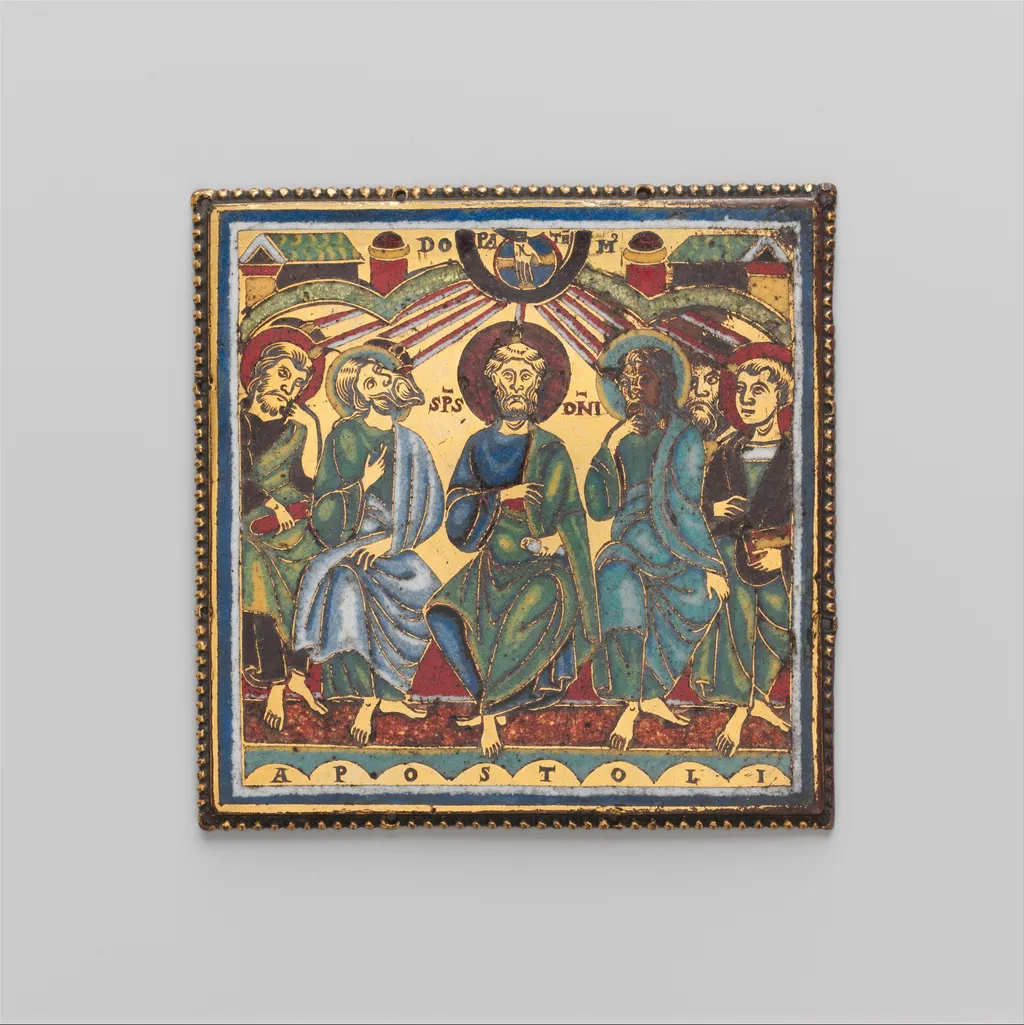
Plaque with the Pentecost is an unspecified painting. It dates from 1162 and is held in the collection of the Metropolitan Museum of Art.
About this work
Subject & Meaning
According to the source record, the composition portrays apostles together with Christ, situating the scene within its standard New Testament iconography.
The plaque depicts the Pentecost, a foundational event in Christian tradition in which the Holy Spirit descends upon the apostles following the Ascension of Christ. According to the source record, the composition portrays apostles together with Christ, situating the scene within its standard New Testament iconography. Executed in champlevé enamel, a technique in which recessed cells carved into a metal base are filled with vitreous enamel and then fired, the work translates the narrative into a luminous, jewel-like surface characteristic of mid-twelfth-century ecclesiastical art.
The date of 1162 inscribed in the record corresponds to the height of champlevé production for devotional and liturgical use, and the Pentecost subject would have served as a visual affirmation of the Church's foundation through the apostles' reception of divine inspiration.
History & Provenance
The Plaque with the Pentecost is a champlevé enamel work dated to 1162. Although the specific artist remains unknown, the piece depicts Christ and the apostles during the Pentecost event. Historical records indicate the work was created in the late 12th century, with a specific inception date of January 1, 1162.
The plaque is currently held within the collection of the Metropolitan Museum of Art in New York. As a significant example of enameling, it represents the artistic production of its era, though no detailed commission records or prior ownership chains are specified in the available documentation. The work's attribution relies on its classification as a painting in enamel rather than a signed piece by a known master.
Context
The Plaque with the Pentecost, dated to 1162, is recognized as a significant example of champlevé enamel work within the Metropolitan Museum of Art's collection. Attributed to an unknown artist, the piece depicts Christ and the apostles during the Pentecost event. As a highlighted work in the museum's holdings, it serves as a key artifact for understanding the development of enamel techniques in the twelfth century.
While specific scholarly debates or critical reception histories are not detailed in the available records, its inclusion in a major institutional collection underscores its established place in art history as a representative piece of its genre and period.
Overview
This painting, titled "Plaque with the Pentecost," presents a religious narrative featuring six robed individuals. A central figure, distinguished by a halo and larger scale, commands attention, encircled by five other distinct characters. A warm, golden background suffuses the composition, contributing to an impression of solemnity and spiritual intimacy. The overall rendering evokes a sense of reverence.
Technique & Style
The artistic approach employed in this plaque reflects characteristics commonly associated with medieval painting. It utilizes bold outlines and a vibrant color palette to define its forms. The figures are rendered with a deliberate formality and a somewhat rigid posture, which contributes to an impression of monumental importance and solemnity within the sacred scene. The golden background further enhances this traditional aesthetic.
Artist & collection

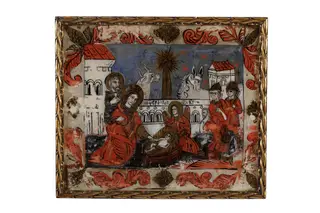
- Icoană pe sticlă reprezentând scena Nașterii lui Iisus Hristos. Are ramă de lemn, aurie, sculptată. Pruncul este prezentat de un înger pe un strat auriu, care îl evidențiază. În stânga apar Iosif și Ana (?), iar în dreapta un bărbat îngenuncheat în roșu și doi soldați cu veșminte roșii și caschete aurii. Fundalul este constituit din clădiri albe, care se detașează pe cerul albastru cu stele roșii, negre și albe. Central se află steaua magilor, aurie, care luminează întreaga scenă și este încadrată de două capete de animale. Pe marginea de sus a clădirii centrale se află inscripția „Nașterea lui Iisus Hristos”. Scena întreagă este încadrată de un chenar cu frunze și flori roșii și aurii, pe fond alb-gri.
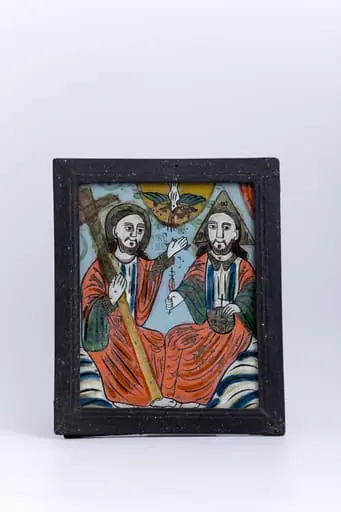 Icoana reprezintă Sfânta Treime. Dumnezeu-Tatăl are globul pământesc albastru pe genunchi și arătă către Fiul Iisus Hristos Binecuvântând lumea. Dumnezeu-Fiul are Crucea galbenă-aurie pe umărul drept și arătă către Dumnezeu-Tatăl. Dumnezeu-Tatăl și Dumnezeu-Fiul sunt înveșmântați în roșu vermillon și verde smarald cu albastru cobalt. Deasupra, în registrul superior este un soare galben, din care pe un mănunchi de raze luminoase, se pogoară Sfântul Duh, sub forma porumbelului alb. Astfel este prezentă întreaga Sfântă Treime. Între Dumnezeu-Tatăl și Fiul este un spațiu luminos de galben. Fondul icoanei este cerul albastru cobalt-regal, înconjurat de lumina galbenă-solară. Cromatica este luminoasă și armonioasă: roșu vermillon, albastru regal și cobalt, galben chihlimbar, verde smarald, gri, alb, negru.Inscripția din româno-chirilică se traduce Treime. Icoana este din Nordul Transilvaniei, Nicula.
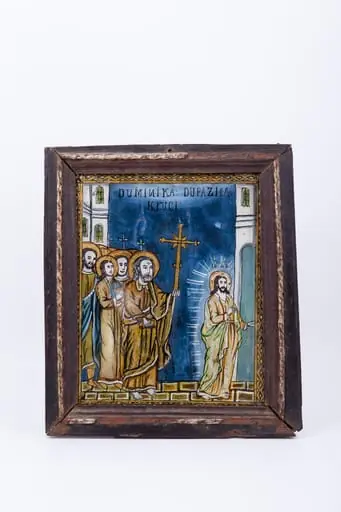 Icoana reprezintă Duminica după Înălțarea Sfintei Cruci - 14 septembrie. Mântuitorul Iisus Hristos este urmat de Apostoli și Sfinți Părinți ridicând Sfânta Cruce. Veșmintele sunt într-o combinație de verde, kaki, brun, olive, gri, ocru. Crucea înălțată este central pictată, iar Mântuitorul Iisus Hristos este înveșmântat și în razele de lumină ale Slavei Harului. Compoziția este foarte echilibrată, relația dintre personaje fiind încadrată de elemente de arhitectură, de o parte și de alta. În registrul inferior, este un caroiaj de kaki-ocru. Fondul este albastrul ceruleum al cerului. Pe lângă crucea aurie, cea mare și centrală, mai sunt încă trei cruci, aduse de cei care Îl urmează pe Mântuitorul Iisus Hristos. Tematica iconografică, mai rară, este încadrată de un chenar decorativ geormetrizant romboidal. Icoana este de Laz, Valea Sebeșului, cu o cromatică armonioasă: albastru ceruleum, verde, brun, kaki, ocru, olive, negru, alb. Icoana este datată 1903. Inscripția din româno-chirilică se traduce Duminica după Ziua Crucii IC XC Iius Hristos.
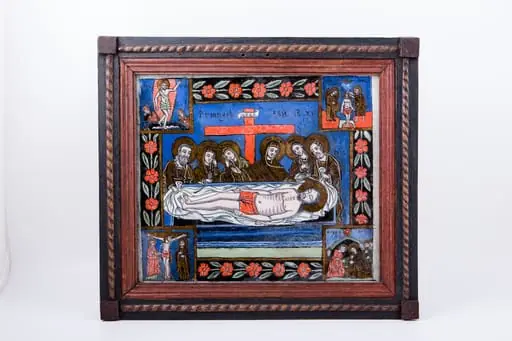 Trupățiș
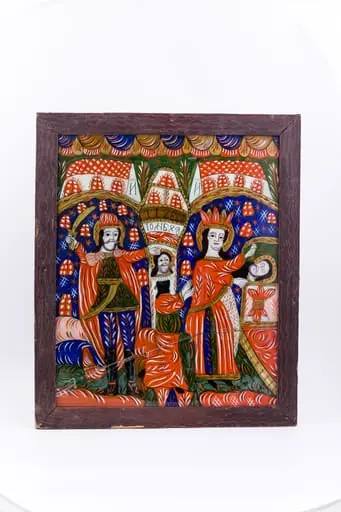 Icoana reprezintă Tăierea capului Sfântului Ioan Botezătorul și Înaintemergătorul Domnului Iisus Hristos. Central este capul Sfântului Ioan tăiat de mâna călăului și dat, prin mâinile Salomeiei în mâinile Irodiadei. În registrul inferior central sunt redate mâinile și poala rochiei dansânde, amintind de dansul Salomeiei, în fața nemilosului împărat Irod. În partea dreaptă este Irodiada, paralelă cu oșteanul călău, având pe tipsie capul Sfântului Ioan Botezătorul. În registrul superior, sunt două dealuri, cu grupuri de elemente de arhitectură - case cu ferestre - formând și alte deschideri-închideri, concavități convexe alternativ cromatizate, cu o bogăție de elemente decorative geometrizante și puncti-fitomorfe. Icoana are o compoziție simetrică și bine-organizată scenografic, cu o cromatică vie, armonioasă, deosebit de picturală: roșu vermillon, înspre trandafiriu, albastru cobalt, verde-brad, de China, roz, kaki, brun, negru, alb, galben citronne. Icoana este pictată de Ana Deji, din Făgăraș, Țara Făgărașului. Inscripția din româno-chirilică se traduce Tăierea Ioan Botez.
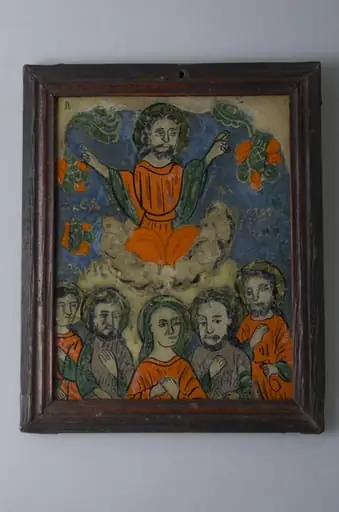 În registrul superior central, este reprezentat Iisus cu brațele larg deschise și binecuvântând, plutind pe norii slavei. În registrul inferior este redată central Fecioara Maria încadrată de grupul apostolilor, în dreapta ei Sfântul Petru cu cheia în mână, alături de un alt sfânt apostol, în stânga ei sfinții Pavel și Ioan. În registrul superior, de o parte și de cealaltă a lui Iisus este redat pe fundalul albastru elemente florale. Icoana are o ramă din lemn de brad cu elemente profilate pe latura interioară, grunduită. Cromatică: albastru; roșu pal; verde; oliv; negru și foiță de aur.
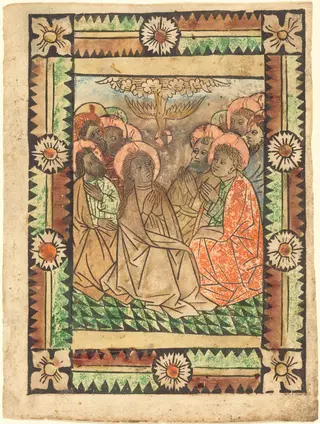 The Descent of the Holy Ghost
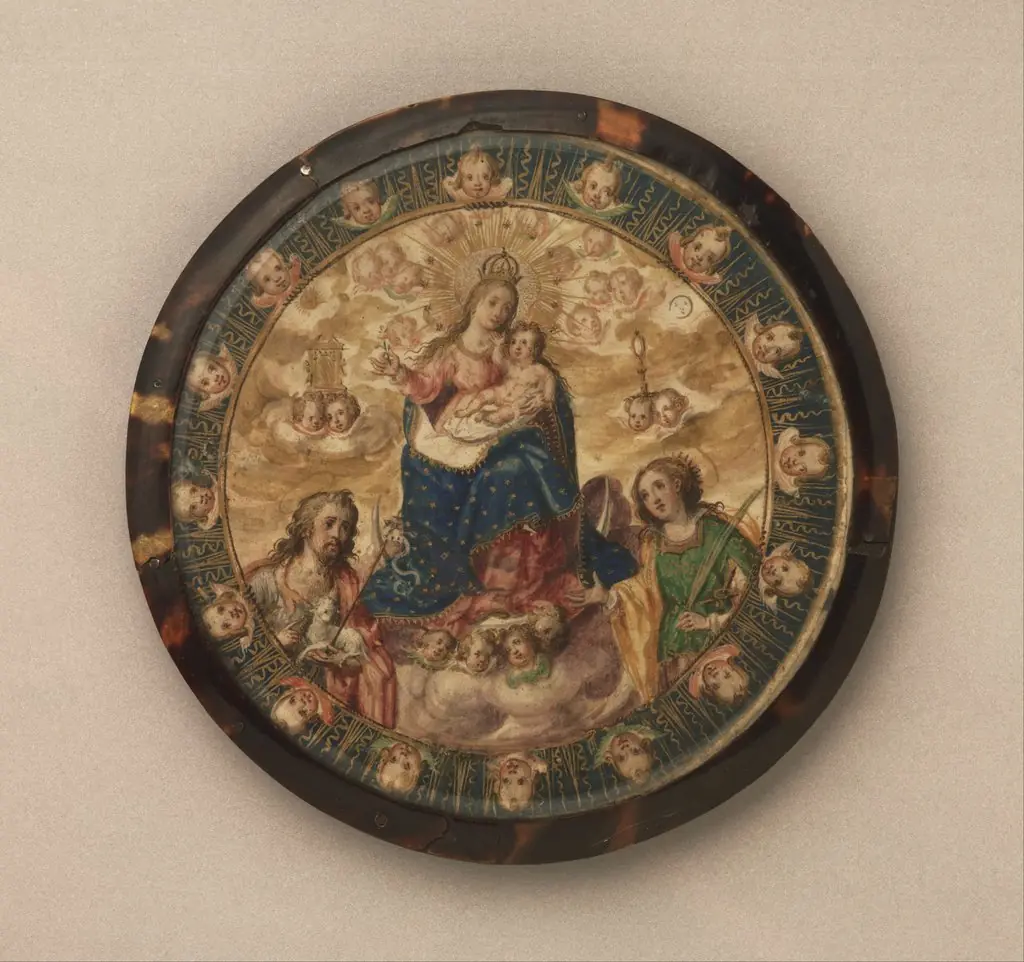 Nun's Shield showing the Virgin and Child with Saints John the Baptist and Catherine of Alexandria
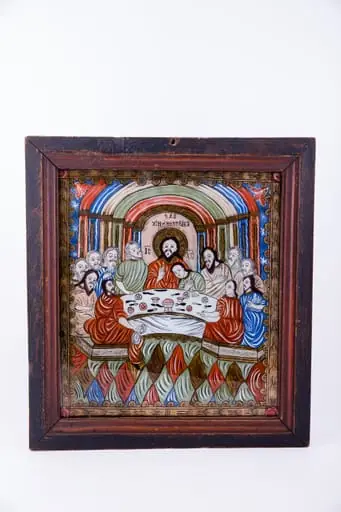 Scena Cinei celei de Taină se desfășoară într-un interior sugerat de elemente arhitectonice, coloane și șase arcade alternativ-cromatic pictate. În centrul icoanei este Mântuitorul Iisus Hristos binecuvântând mâncarea, la masă, alături de ucenici și apostoli. Cu brațul stâng îl ține lipit de piept pe Ioan cel iubit, Sfântul Apostol și Evanghelist Ioan, Teologul. Pe masă sunt așezate un potir pentru vin și tacâmuri și farfurioare mici și pâinici rotunde. Personajele au chipurile expresive, veșmintele personajelor și faldurile feței de masă, cât și draperiile sunt pictate cu măiestrie de pictor. Veșmintele sunt roșii, albastre, vernil și bej, cu liniuțe albe discrete. Cromatica este armonioasă și echilibrată, pornindu-se gradual dinspre exterior înspre interior, de la albastru spre roșu, ajungându-se la albul luminos al mesei celor dăruite. Compoziția este încadrată elemente de arhitectură, draperii, coloane, creându-se, astfel, intimitatea Cinei celei de Taină. Totul este concentric, strângându-se în jurul Potirului. De remarcat este alternanța romboidală din registrul inferior, policromatică. În registrul superior, sunt coloanele și arcadele policrome. Iuda Iscarioteanul este în partea stângă a mesei și se remarcă în mâna lui punga cu cei 30 de arginți, simbolul trădării și vicleniei. Pictura este specifică Țării Făgărașului și datorită compoziției echilibrate, simetrice și circulare. Icoana este pictată de Savu Moga, din Arpașu de Sus, Țara Făgărașului. Inscripția în chirilică se traduce ICXC Iisus Hristos Cina cea de Taină. Cromatica armonioasă este o caracteristică a icoanelor lui Savu Moga: roșu, albastru, vernil, gri, brun, alb, negru. Întreaga narațiune iconografică este încadrată într-un chenar geometrizant, ca de carte veche, asemenea unei dantelării cu colțișori.
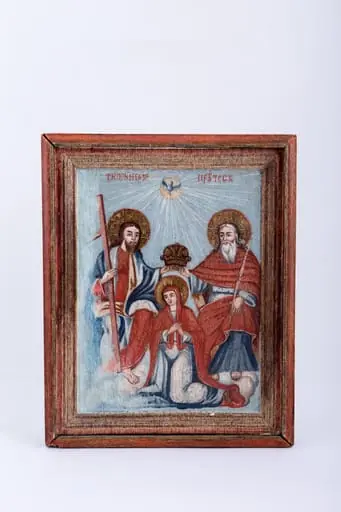 Maica Domnului este ridicată în timpul de rugăciune și ascultare, smerenie și primire de bunăvoie. Dumnezeu-Tatăl, Dumnezeu-Fiul și Maica Domnului sunt înveșmântați în roșu sângeriu, alb și albastru bleu-ciel. În registrul îndepărtat superior este cerul albastru, Dumnezeu-Fiul ține cu brațul drept Crucea, iar Maica Domnului are mâinile împreunate în cruce pe piept. Dumnezeu-Tatăl și Dumnezeu-Fiul așează împreună coroana de împărăteasă a Cerurilor pe capul Fecioarei Maria. Inscripția în chirilică se traduce Încoronarea Maicii Domnului. În registrul superior, este Sfântul Duh pogorându-se sub formă de porumbel alb, printr-un mănunchi de raze luminoase. Cromatica este luminoasă și armonioasă: roșu sângeriu, albastru bleu-ciel, alb, negru. Trăsăturile chipurilor sunt rafinat desenate. Inscripția în chirilică se traduce Încoronarea Maicii Domnului. Desenul, trăsăturile, veșmintele, drapajele sunt realizate într-o manieră pictural-barocă.
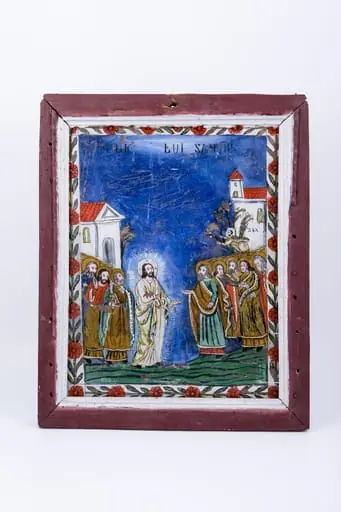 Icoana ilustrează Duminica lui Zaheu vameșul. Central este Mântuitorul Iisus Hristos, urmat de ucenici și locuitorii cetății, având împrejurul Lui mulțime - opt personaje. Într-un smochin este Zaheu, care doritor să-L vadă și să-L cunoască pe Iisus Mesia, se urcă asemenea unui copil, fără de nici o rușine sau constrângere. Mântuitorul îl vede și-i spune să se dea jos, să-L primească în casa lui. Bucurie! În registrul îndepărtat, sunt elemente de arhitectură, cetatea. Fondul este albastru regal înspre cobalt, în degrade. Veșmintele sunt pământii: brun, nisipii, bej, maro, kaki, roșii vermilon. Un personaj, ducându-și mâna la față, râde de copilăria lui Zaheu. Slava Lui Dumnezeu se vede prin Lumina albă de raze luminoase, care Îl înveșmântează. Întreaga tematică iconografică este încadrată de un chenar decorativ fitomorf. Icoana este deosebită, atât prin tematica abordată, cât și prin realizarea picturală, artistică, estetică. Întrega imagine este o altă interpretare a Învierii Domnului Iisus Hristos, prin Bucuria dăruită prin nădejdea mântuirii! Cromatica este dulce-luminoasă și armonioasă: brun, bej, kaki, olive, roșu vermillon, albastru regal, albastru cobalz, alb, negru. Icoana este de Laz, Valea Sebeșului și este datată 1901. Inscripția din româno-chirilică se traduce Duminica lui Zaheu Zah.
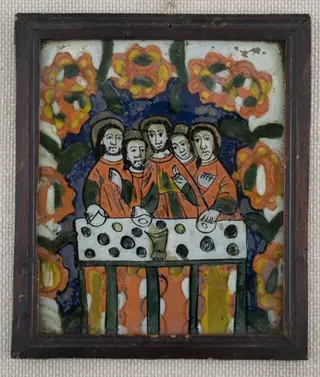 Tema iconografică este "Cina cea de taină", în cadrul căreia are loc instituirea celei mai importante taine a bisericii, Sfânta Euharistie. Este redată într-o manieră populară, naivă, cu un număr redus de personaje(datorită dimensiunilor reduse ale suportului, dar și tendinței de reducere la esențial) Grupul compact, format din Iisus având câte doi apostoli de fiecare parte este plasat central, în spatele unui mese înalte, dreptunghiulare, aflată în prim plan. Isus binecuvintează cu stânga, cu dreapta ia o pâine de pe masa unde se află un vas înalt, diform și mai multe pâini(azime) așezate deasupra unei învelitori albe. Este înveșmântat cu mantie roșie și chiton verde, la fel ca și apostolii, toți au nimburi aurite, trasate cu mâna liberă. Apostolul din stânga lui Isus, cu capul plecat pe umărul Lui, este apostolul Ioan, conform Evangheliilor. Câmpul este împărțit în două zone de un portal semicircular bogat drapat cu flori multicolore(roșu, alb, verde, galben): albastru ultramarin sub portal, alb în rest, creându-se perspectiva cromatică. Compoziția este echilibrată, desenul simplu, stângaci, paleta cromatică dominată de alb, roșu și albastru, culorile pale. Rama este alcătuită din patru stinghii profilate, culoare brun-roșcat, îmbinare oblică la colțuri. Dosul este din lemn subțire de brad.