Artwork
Portret van een Indische prins
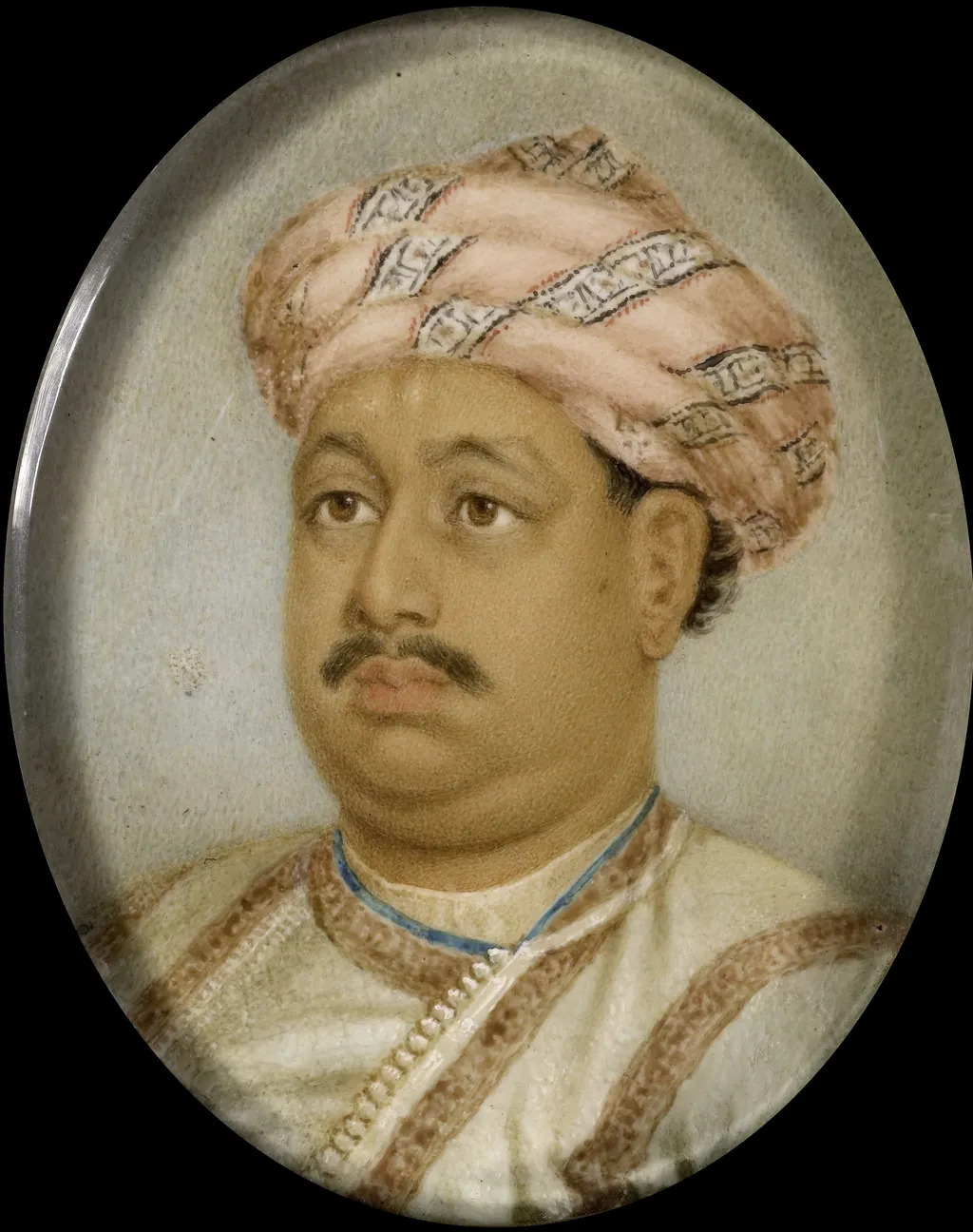
Portret van een Indische prins is an ivory painting. It dates from 1750 and is held in the collection of the Rijksmuseum. The work is a portrait executed on a sheet of ivory, depicting a dark‑skinned man with a moustache.
About this work
Subject & Meaning
Held in the Rijksmuseum collection, the miniature embodies both the sitter's princely status and the era's interest in exoticized depictions of Asian nobility.
The work is a portrait miniature painted on ivory in 1750, depicting a prince. The title "Portret van een Indische prins" identifies the sitter as an Indian prince, situating the subject within the European fascination with South Asian royalty that flourished in the mid-eighteenth century. By portraying an Indian royal figure in the refined medium of ivory portraiture, a format historically reserved for European aristocracy, the work represents a cross-cultural encounter, presenting the Eastern subject through the conventions of Western courtly portraiture.
Held in the Rijksmuseum collection, the miniature embodies both the sitter's princely status and the era's interest in exoticized depictions of Asian nobility.
The compact dimensions (7.5 × 6.2 cm) and ivory support are characteristic of intimate keepsake portraits, suggesting the image may have circulated as a personal memento or curiosity among European collectors rather than as a formal state commission.
Technique & Style
Created in 1750, the work Portret van een Indische prins is executed on a support of ivory, classifying it as a painting despite the unconventional material. The piece measures 7.5 cm in height and 6.2 cm in width, indicating a small-scale format typical for ivory miniatures. Stylistically, it functions as a portrait depicting a prince, originating from France.
The medium of ivory presents distinct formal qualities, requiring the artist to adapt painting techniques to a hard, non-porous surface rather than traditional canvas or panel.
History & Provenance
The portrait was created circa 1750 in France, as indicated by its medium and origin. It entered the collection of the Rijksmuseum, where it remains held. The work depicts an anonymous "Indische prins" (Indies prince), and its small dimensions (6.2 × 7.5 cm) align with the intimate scale of portrait miniatures fashionable in 18th‑century France. No documented commission or original owner is recorded in the available sources.
The ivory portrait titled Portret van een Indische prins, created around 1750, is held in the collection of the Rijksmuseum. While the specific inventory or accession number is not provided in the available records, the work is cataloged as an anonymous painting within the museum's holdings. The piece depicts a prince and was manufactured in France.
No exhibition history or specific display locations within the Rijksmuseum are documented in the provided sources. Consequently, details regarding past or future exhibitions of this artwork cannot be established from the current data.
Overview
The work is a portrait executed on a sheet of ivory, depicting a dark‑skinned man with a moustache. He is dressed in a turban featuring white and brown patterns and a white garment highlighted with brown and blue details. The combination of the subject’s attire and the ivory support points to a cross‑cultural visual language.
Context
Portraits on ivory were relatively uncommon in European collections, often associated with trade routes that brought exotic materials to the continent. The work reflects the broader 18th‑century fascination with Oriental subjects and the incorporation of non‑European media into fine art practice.
Artist & collection

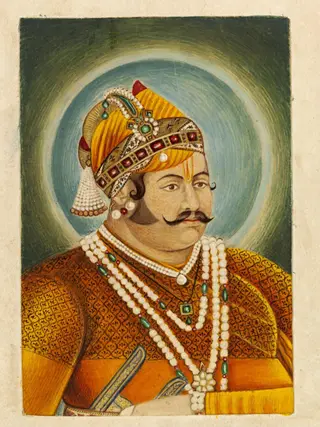
- Madho Singh I
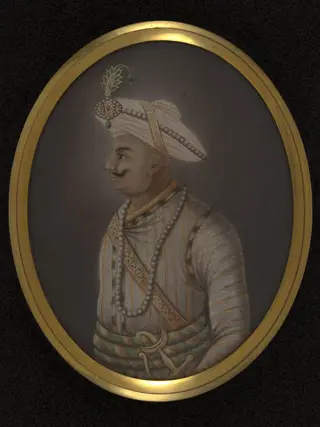 Half-length portrait of Tipu Sultan of Mysore (r.1782-99)
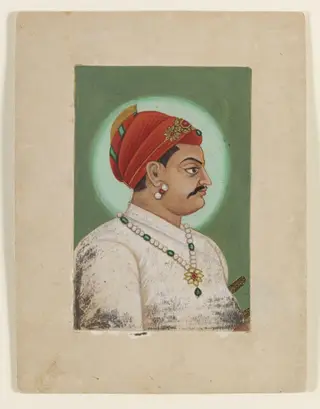 Maharaja Sawai Isri Singh
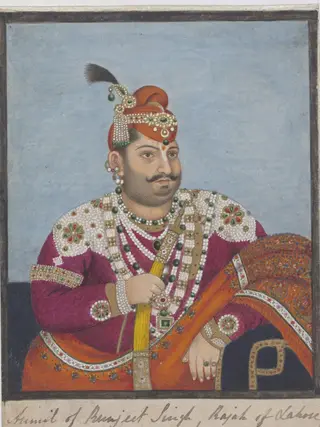 Portrait of Ishwari Sen of Mandi
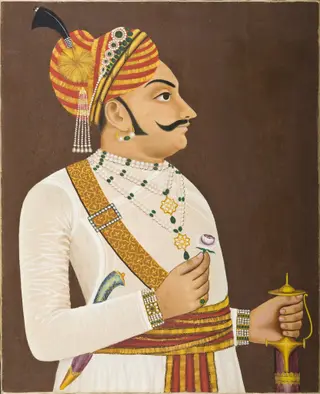 Thakur Yaswanta Singhji (reigned 1688-1707)
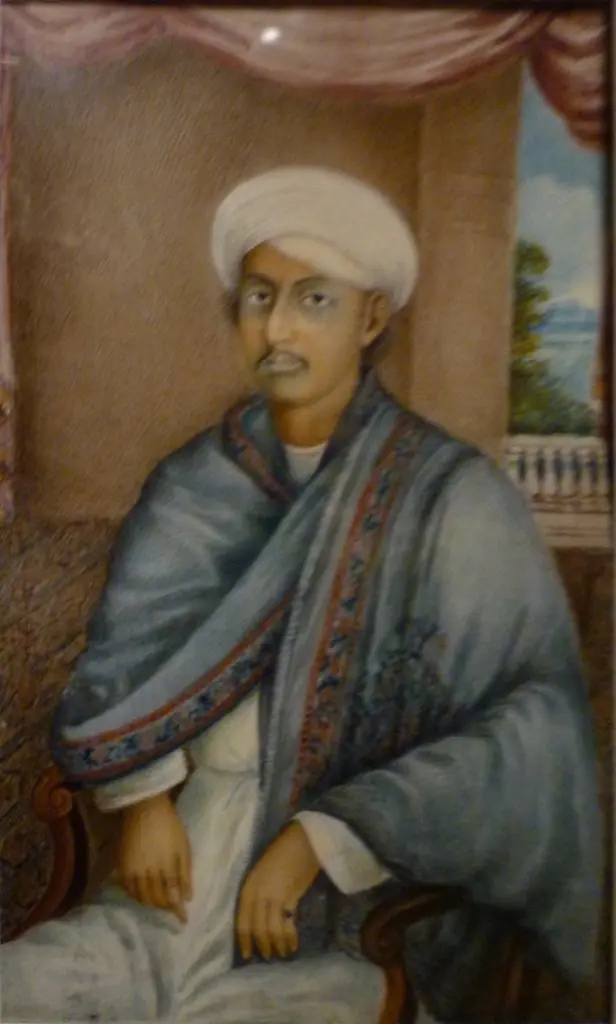 Portrait of Rajinder Dutt
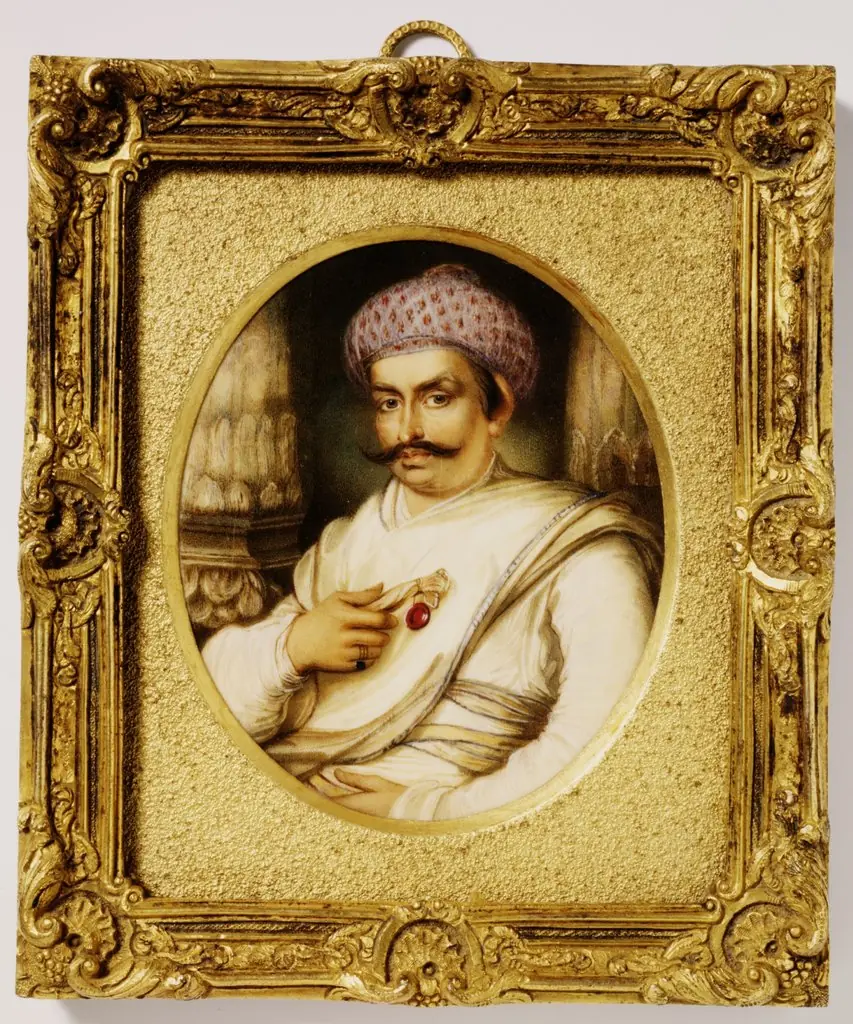 Portrait of Hyder Beg Khan
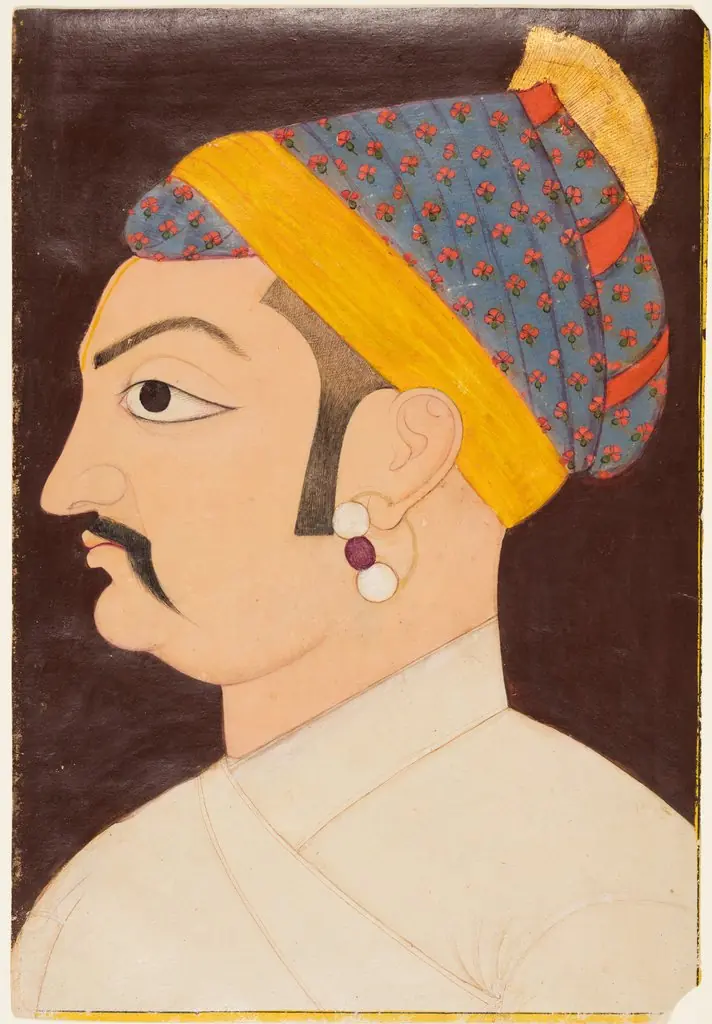 Portrait of Rao Shiv Singh Chandrawat
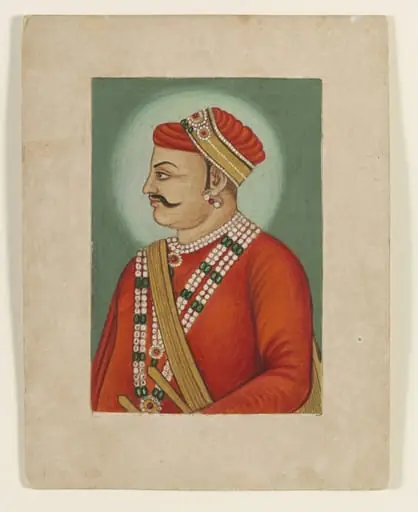 Untitled
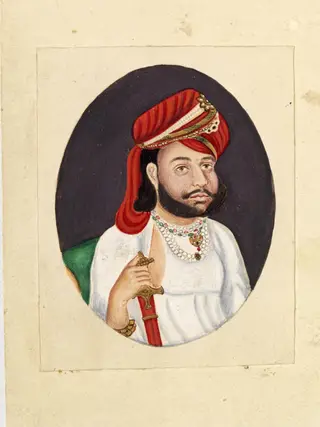 Raja Dalapat Singh
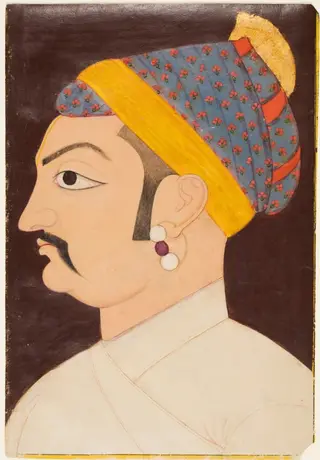 Portrait of Rao Shiv Singh Chandrawat
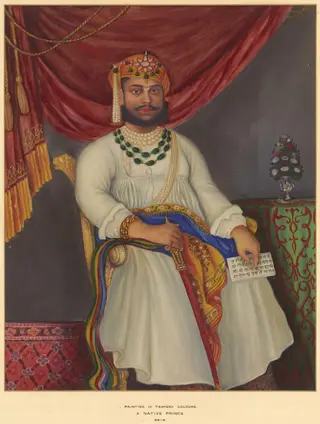 Portrait of Tukoji II, the Maharaja Holkar of Indore, seated under a looped crimson curtain.