Artwork
Posthumous portrait of Emperor Jahangir under a canopy (recto)
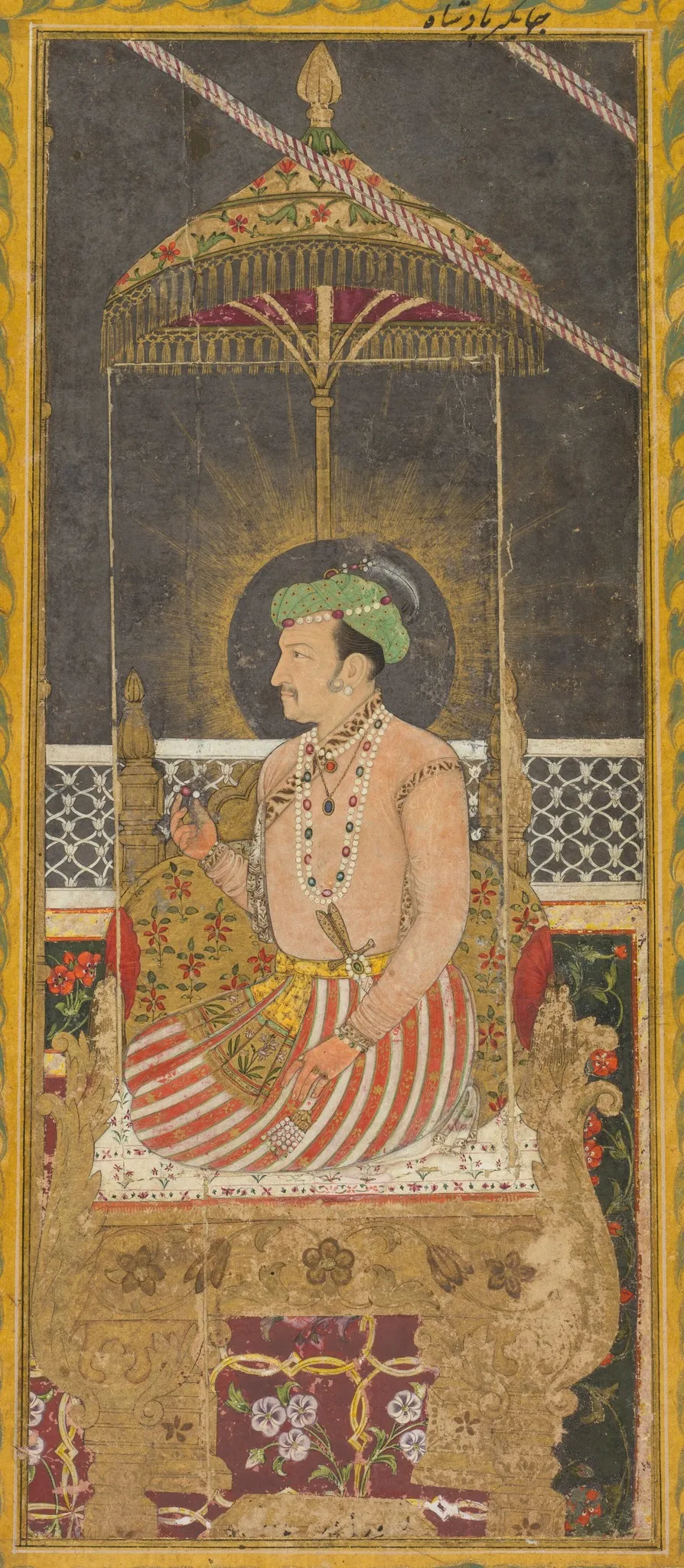
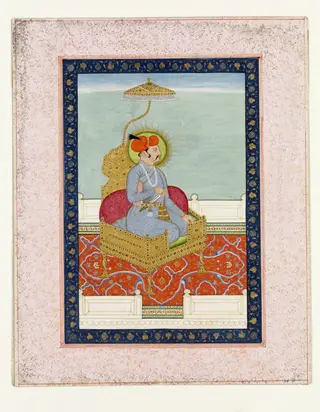
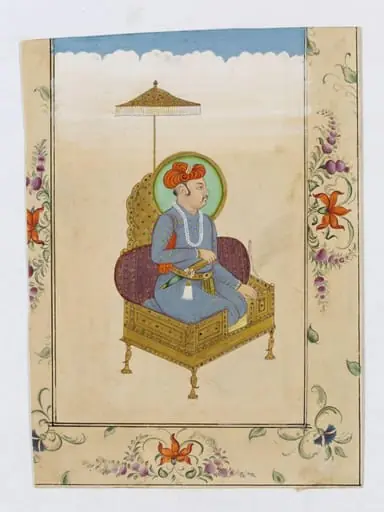
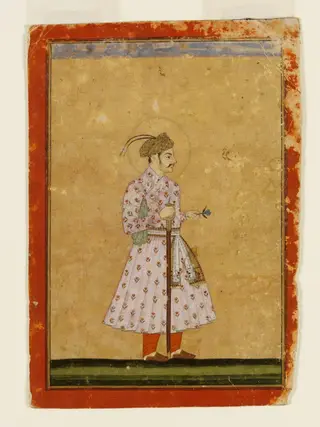
Posthumous portrait of Emperor Jahangir under a canopy (recto) is an unspecified painting. It dates from 1650 and is held in the collection of the Cleveland Museum of Art. This painting depicts a posthumous representation of Emperor Jahangir, seated regally beneath an elaborate canopy.
About this work
Subject & Meaning
Created around 1650 within the Mughal Empire, this painting is a posthumous portrait of the Emperor Jahangir.
Created around 1650 within the Mughal Empire, this painting is a posthumous portrait of the Emperor Jahangir. Its primary subject is the deceased ruler, depicted under a canopy, a compositional element that traditionally signifies royal authority and divine protection in Mughal iconography. By portraying Jahangir after his death, the work serves as a commemorative object intended to preserve the emperor's legacy and assert the continuity of imperial power.
The genre is identified as portrait, focusing entirely on the representation of Jahangir. While the artist remains unknown, the image stands as a formal visualisation of the emperor, likely intended to reinforce the stature of the Mughal dynasty during the mid-seventeenth century.
History & Provenance
The painting, depicting the Emperor Jahangir, was created around 1650 within the Mughal Empire. Classified as a portrait, it was produced by an unknown artist, with no documented patron, commissioner, or workshop association identified in the available records. It is now held in the collection of the Cleveland Museum of Art in Cleveland, Ohio, catalogued under the accession number 2013.329.a.
No intermediate ownership history or acquisition circumstances are detailed in the sources, leaving the provenance between its seventeenth-century creation and its present institutional home untraced, and no exhibition records are noted.
Overview
This painting depicts a posthumous representation of Emperor Jahangir, seated regally beneath an elaborate canopy. The artwork, a formal portrait, captures the ruler in a moment of serene contemplation, adorned in imperial attire. Its creation after his death served to commemorate his reign and enduring legacy within the Mughal Empire. The detailed setting underscores his status and power.
Technique & Style
The artist rendered Jahangir on a richly decorated throne, appearing to be crafted from marble with intricate inlaid designs. He wears a distinctive green turban, a beaded necklace, and a striped robe featuring red and white patterns. The background is embellished with gold motifs and floral elements, creating an opulent setting. While the colors retain their brightness, they exhibit a subtle fading over time.
Artist & collection

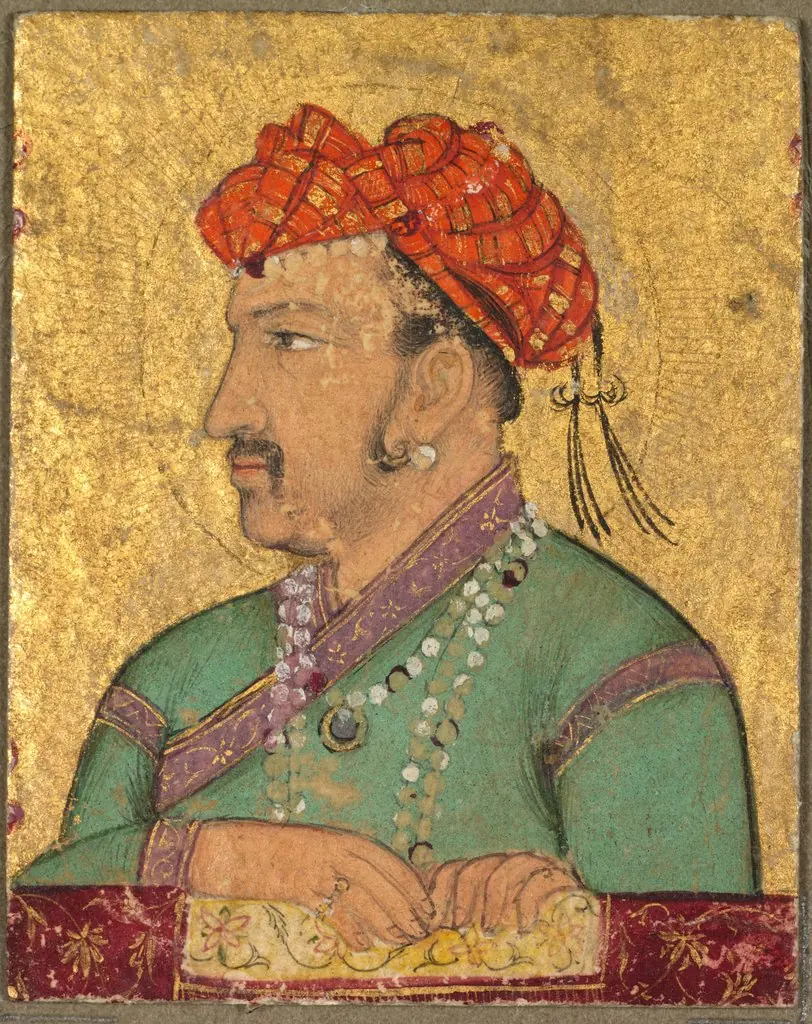
- Portrait Jewel of Emperor Jahangir
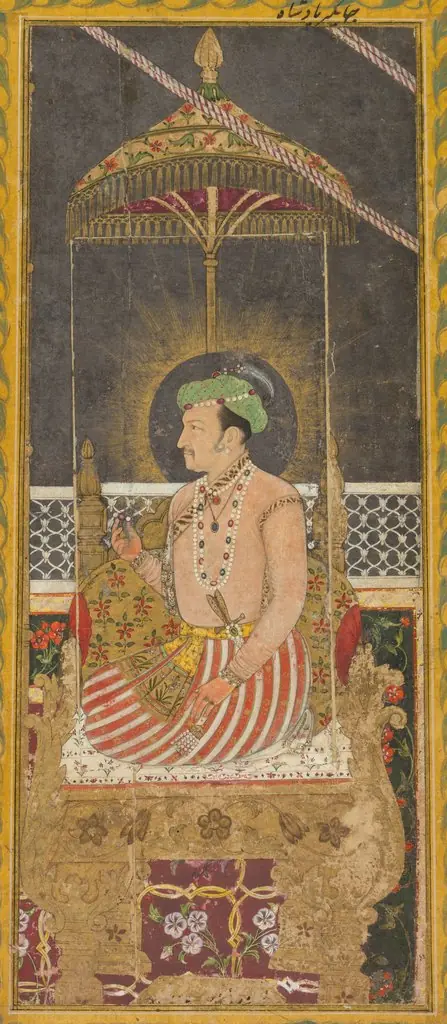 Posthumous portrait of Emperor Jahangir under a canopy (recto); Calligraphy (verso)
 Posthumous portrait of Emperor Jahangir under a canopy (recto)
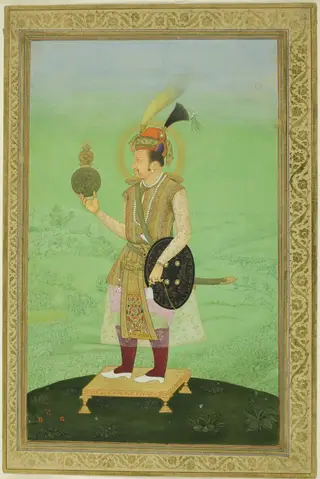 Portrait of Emperor Jahangir
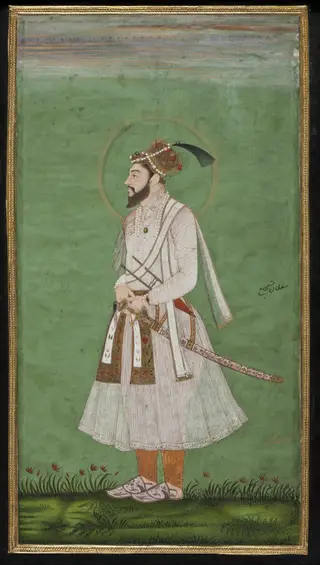 Portrait of a Mughal Prince, possibly a copy of a portrait of Sultan Shuja (1616-1659)
 Emperor Jahangir
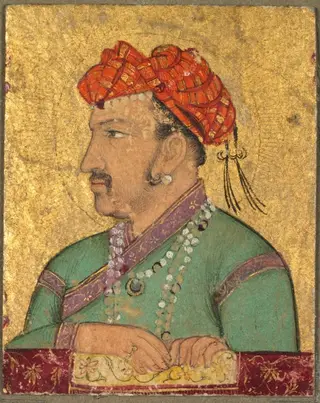 Portrait Jewel of Emperor Jahangir
 Emperor Jahangir