Artwork
Shiva Ravananugrahamurti; woman holding a flywhisk; rearing yali
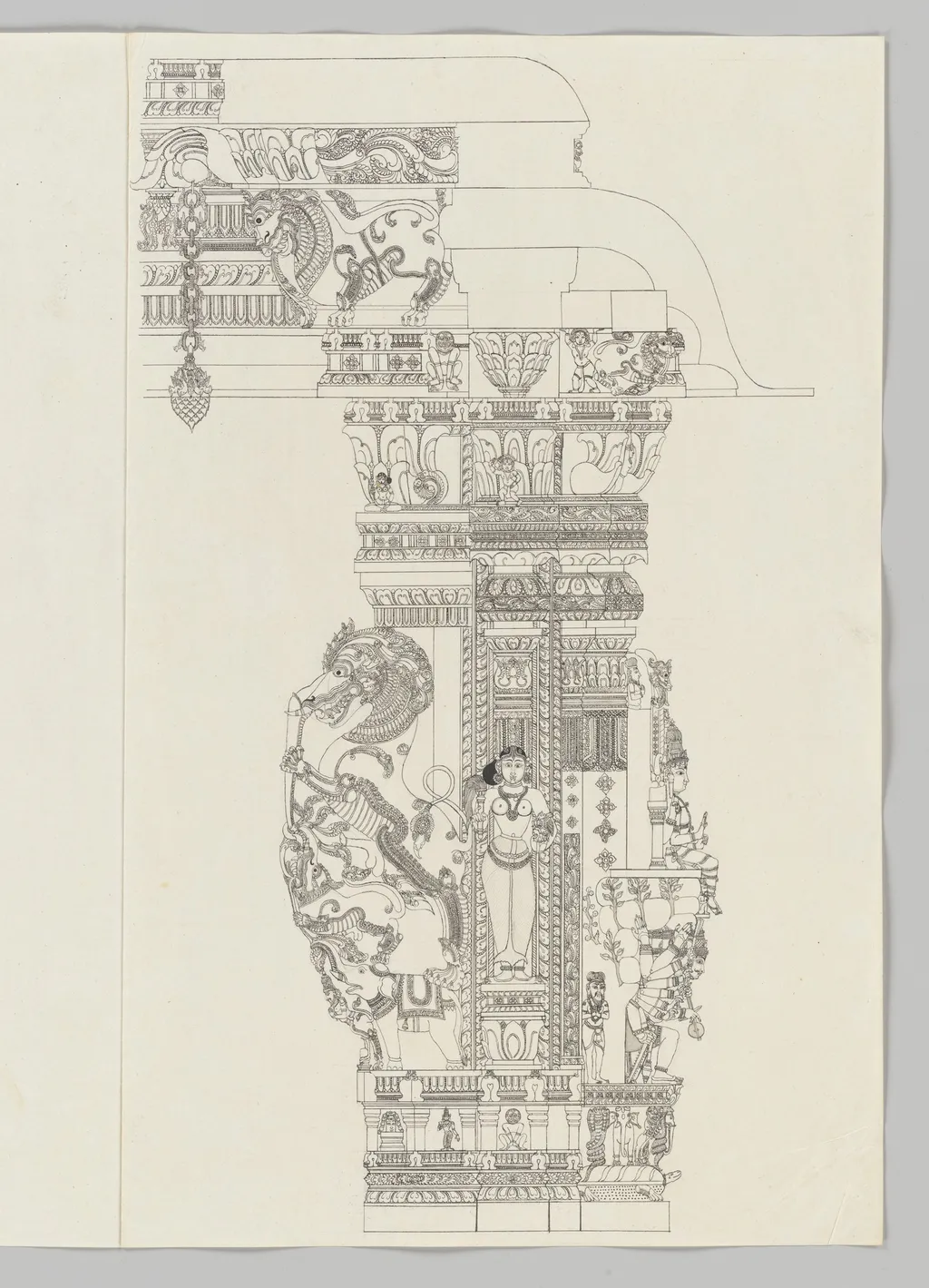
Shiva Ravananugrahamurti; woman holding a flywhisk; rearing yali is an unspecified painting. It dates from 1800 and is held in the collection of the Metropolitan Museum of Art. The work is a drawing that depicts a compact, temple‑like structure densely filled with miniature figures and fantastical beings.
About this work
Subject & Meaning
The iconography reflects Hindu theological themes of divine authority and the subjugation of chaos, resonating with devotional narratives in Shaivite tradition.
The painting portrays Shiva as Ravananugrahamurti, the demon king Ravana lifting Mount Kailash, accompanied by a woman holding a flywhisk and a rearing yali, a mythical lion-like creature. These elements embody Shiva's cosmic power, the triumph over demonic forces, and the protective, dynamic energy associated with his various manifestations. The iconography reflects Hindu theological themes of divine authority and the subjugation of chaos, resonating with devotional narratives in Shaivite tradition.
Technique & Style
The work is an oil painting on canvas, executed in the early nineteenth century in India. It depicts Shiva Ravananugrahamurti with a woman holding a flywhisk and a rearing yali, combining narrative detail with a sculptural compositional approach. The stylistic treatment emphasizes fluid drapery and dynamic pose, characteristic of contemporary Indian artistic practice.
History & Provenance
The painting dates to 1800 and was made in India. It is held in the collection of the Metropolitan Museum of Art, where it remains located. No further details about its commission, prior ownership, or acquisition history are documented in the available sources.
The work is classified as a painting by an unidentified artist, and the sources provide no information on intermediate owners, donors, or transfer of custody prior to its arrival at the Metropolitan Museum of Art.
The painting titled Shiva Ravananugrahamurti; woman holding a flywhisk; rearing yali is held in the collection of the Metropolitan Museum of Art in New York. Created in India around 1800, the work is attributed to an unidentified artist. The museum's records indicate an inception date of January 1, 1800, for this specific piece.
No specific inventory or accession number is provided in the available records, nor is there any documentation regarding the artwork's exhibition history.
Legacy
The painting's presence in the Metropolitan Museum of Art's collection and its documented inception in 1800 have contributed to scholarly attention on the work as an early example of cross-cultural representation in Indian art. Its depiction of Shiva Ravananugrahamurti alongside symbolic elements such as the flywhisk and yali has been referenced in studies of devotional imagery and narrative complexity in 19th-century painting.
Overview
The work is a drawing that depicts a compact, temple‑like structure densely filled with miniature figures and fantastical beings. At its centre stands a woman holding a flywhisk, while a rearing lion‑headed creature, known as a yali, occupies the space beside her. The surrounding walls are covered in intricate carvings of people, animals and swirling motifs that suggest vines or flames.
Context
The inclusion of a yali reflects a broader South Asian artistic tradition in which such mythic beasts guard sacred architecture. The use of a flywhisk, an object associated with ritual purification, situates the female figure within a ceremonial context, suggesting a role as priestess or guardian within the depicted sanctuary.
Artist & collection

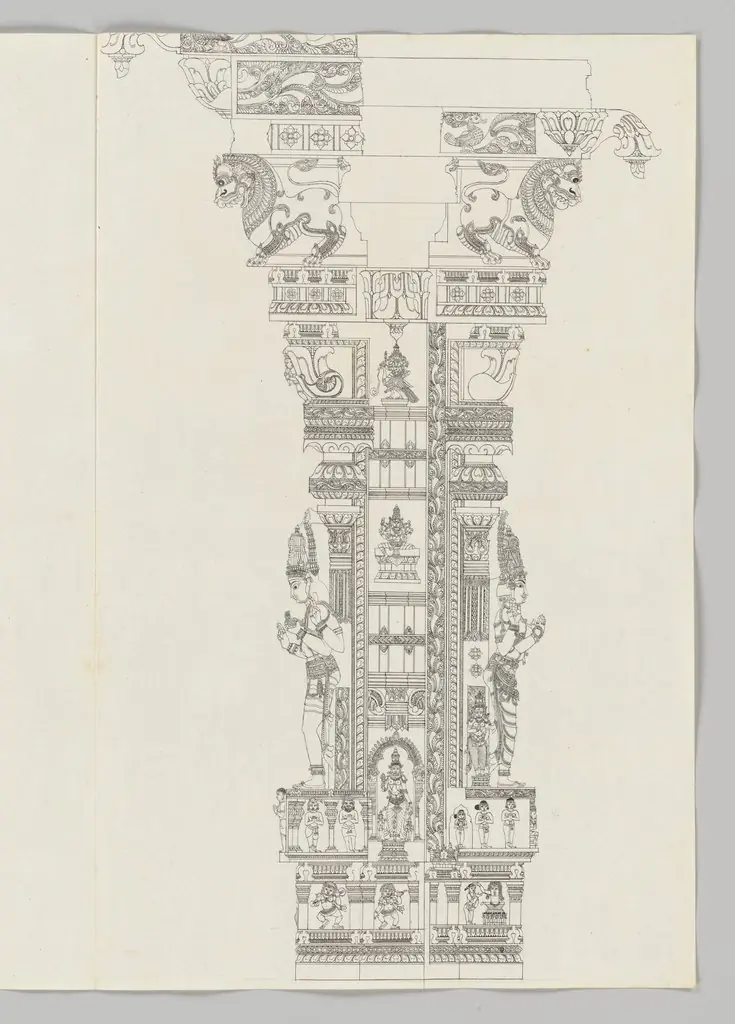 Sundareshvara teaching a bird a mantra; Nandishvara.
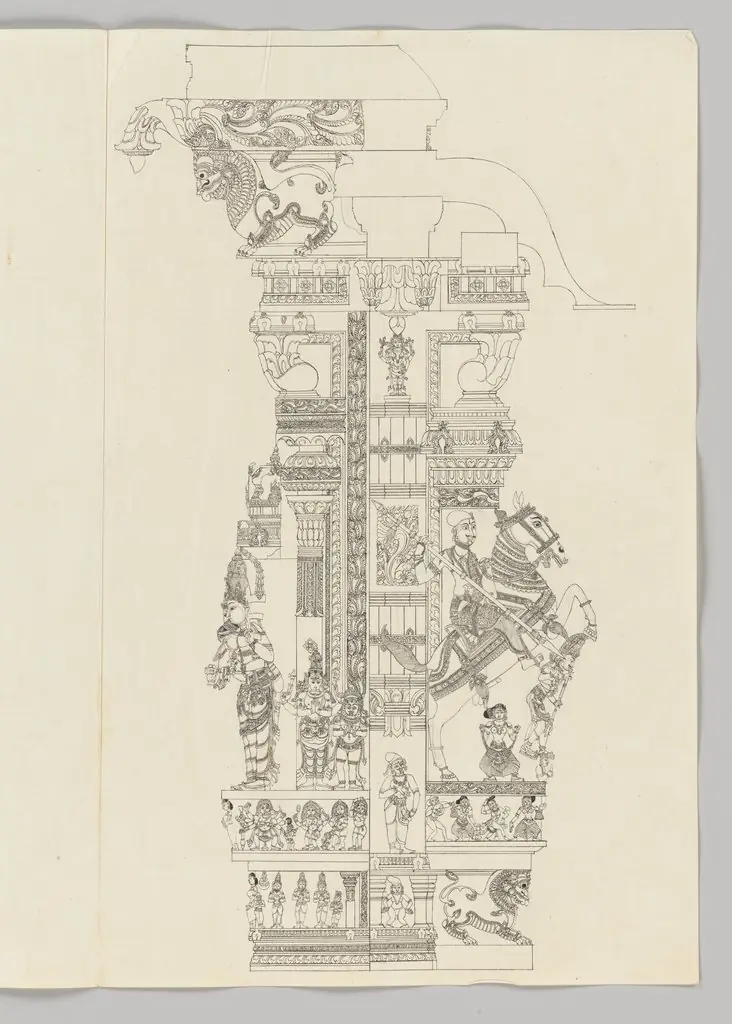 Marriage of Minakshi and Sundareshvara; equestrian warrior with spear
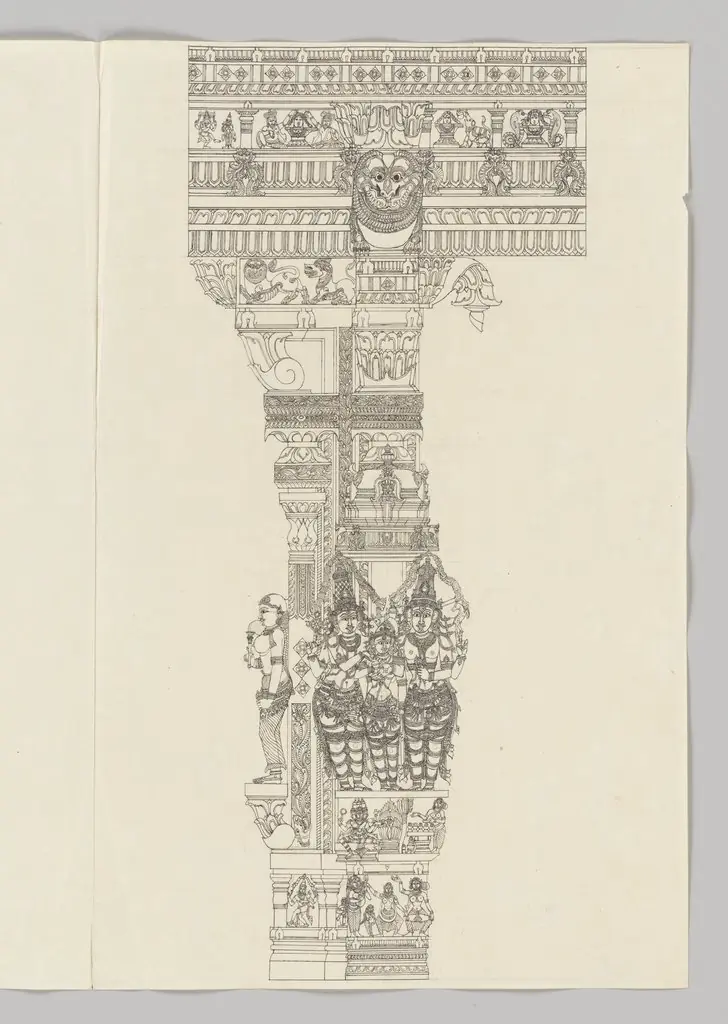 Marriage of Minakshi and Sundarehsvara, attended by Vishnu
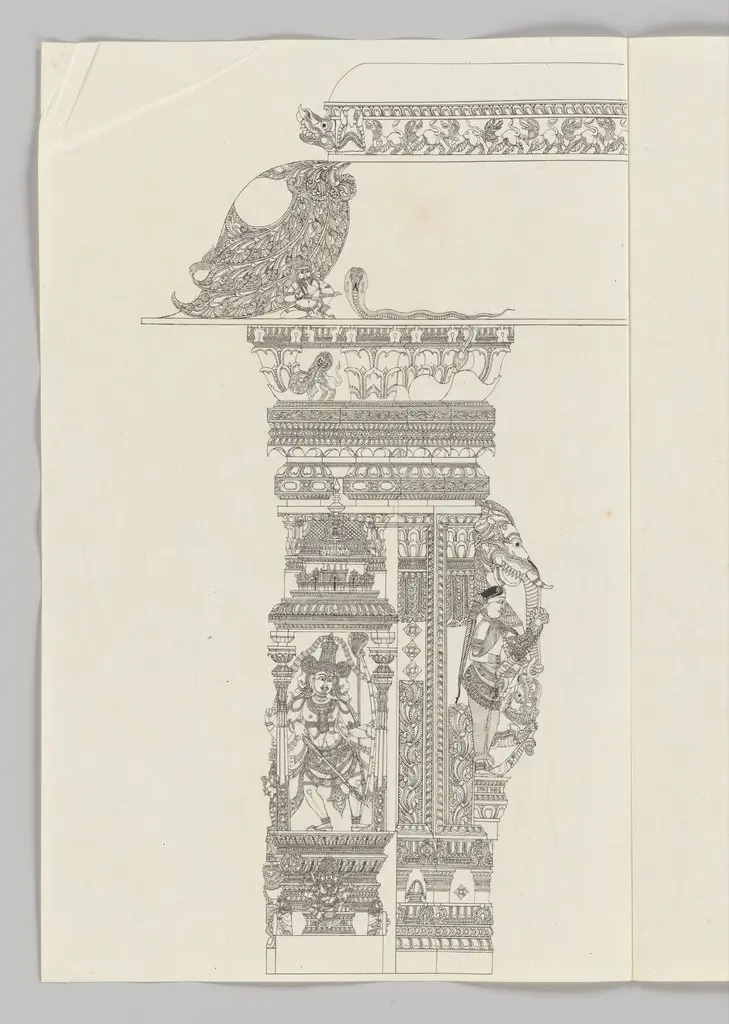
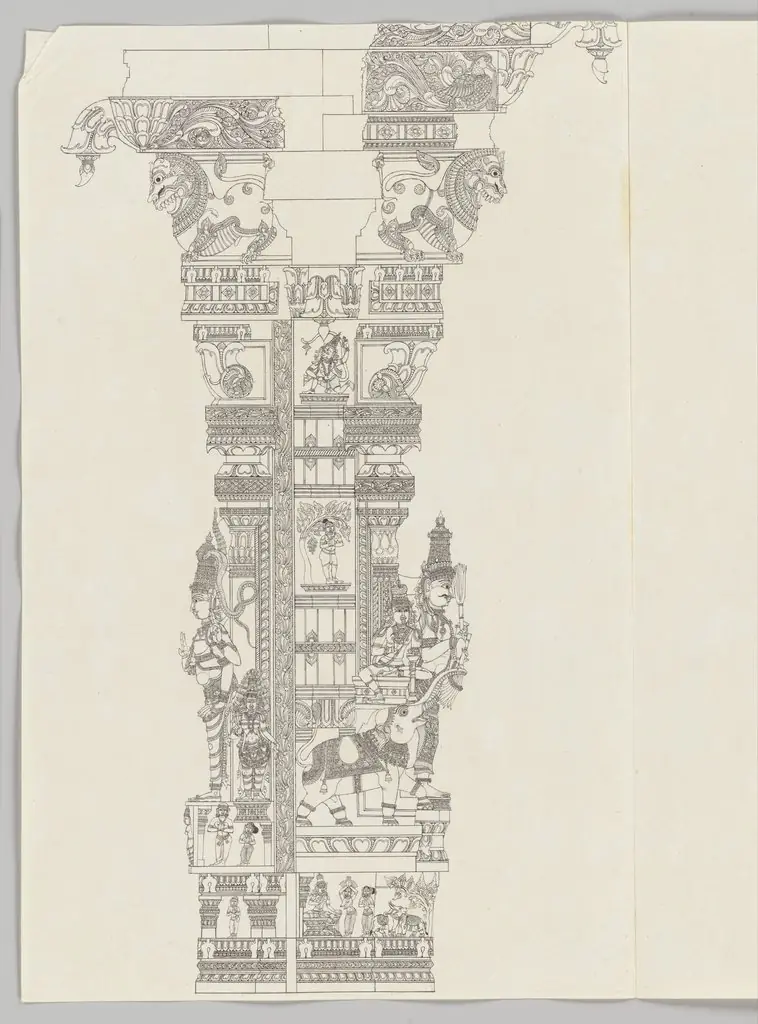 Sundareshvara feeding sugarcane to the elephant
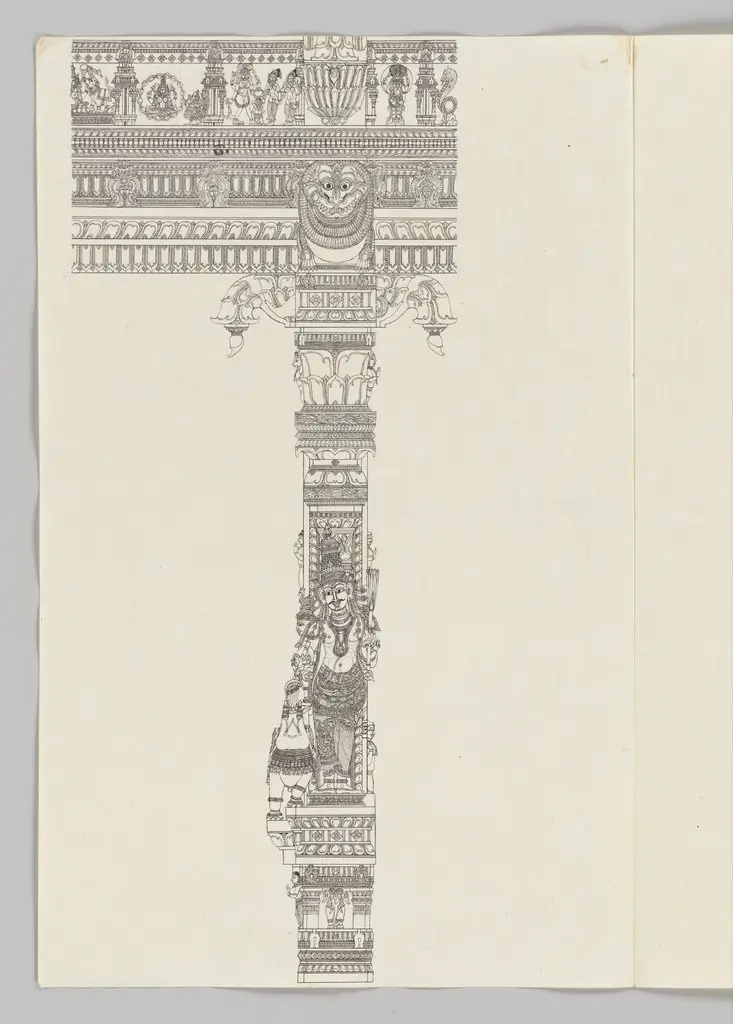 Sundareshvara as a siddha feeding sugarcane to the elephant.
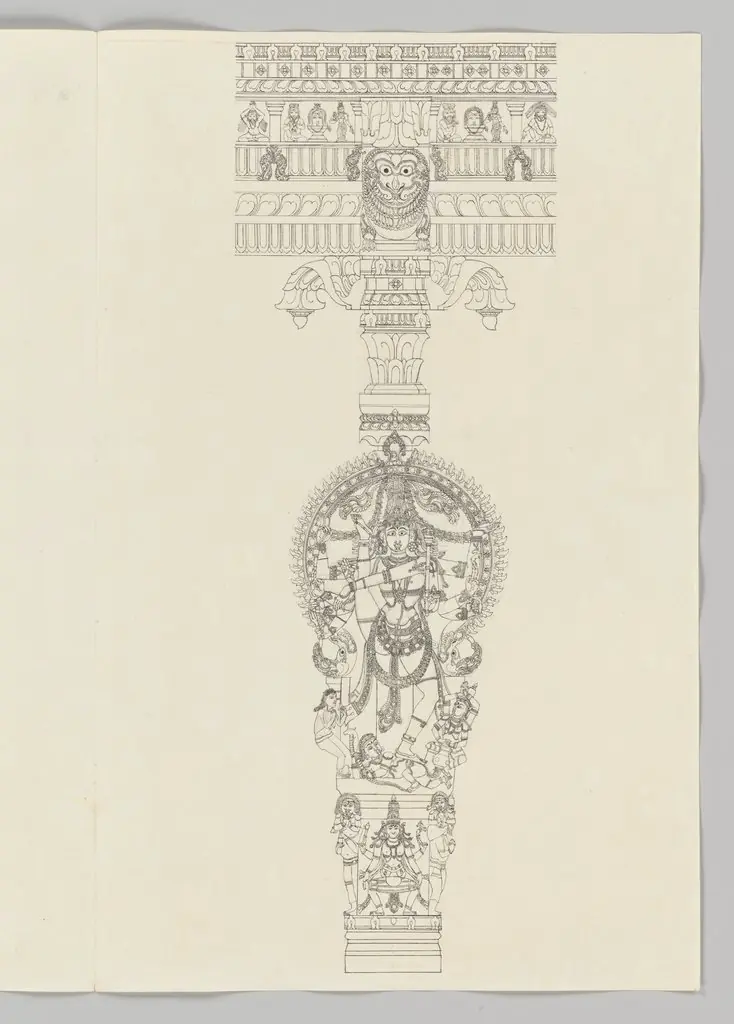 Shiva Urdhvatandava
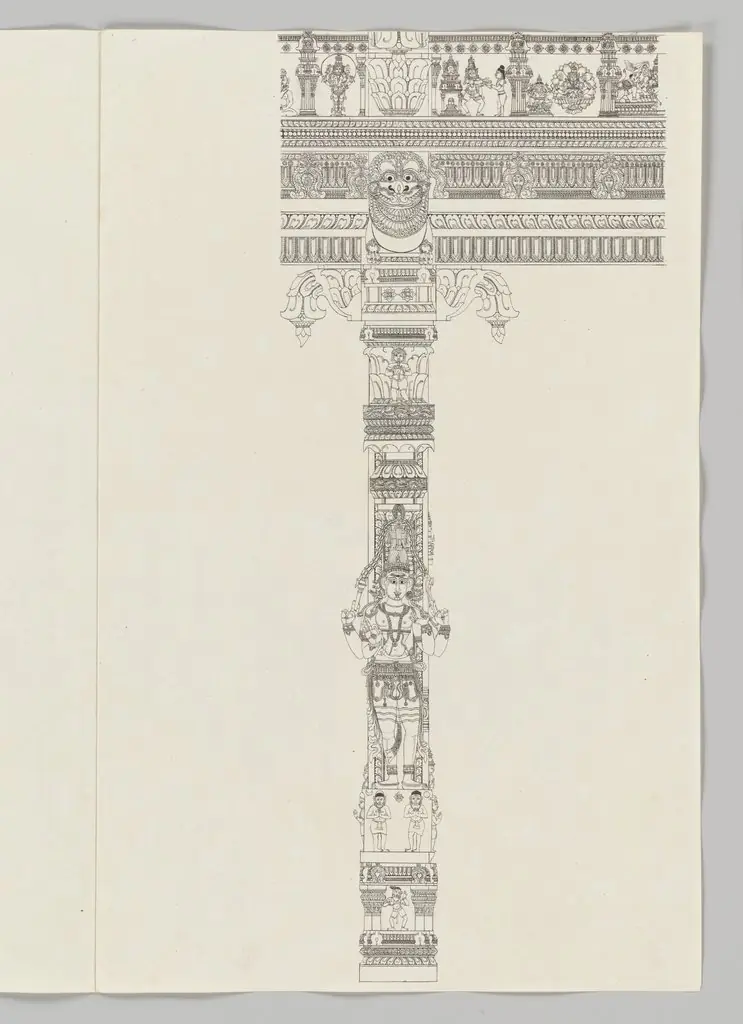 Sundareshvara teaching a bird a mantra
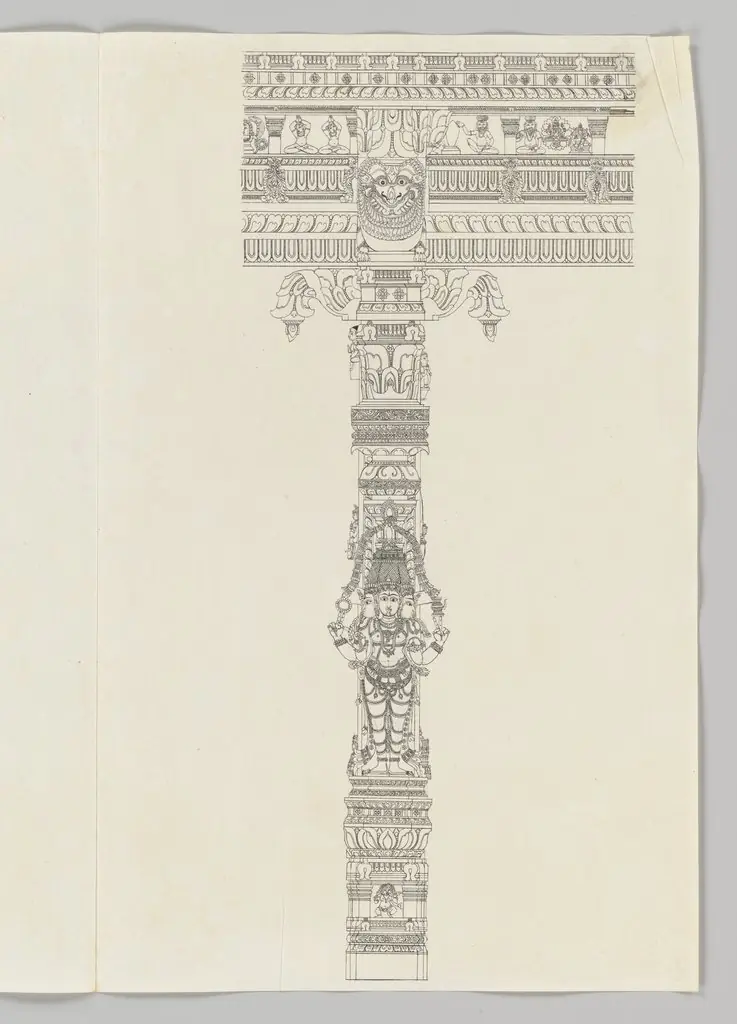 Brahma
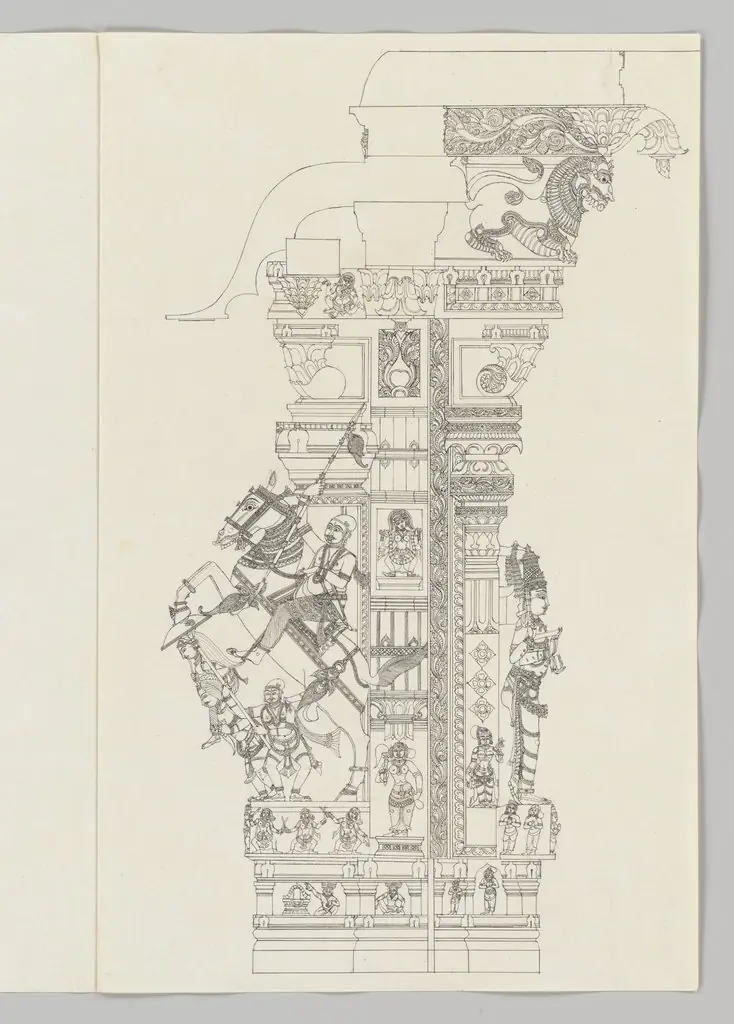 Subramanya: equestrian warrior with raised spear
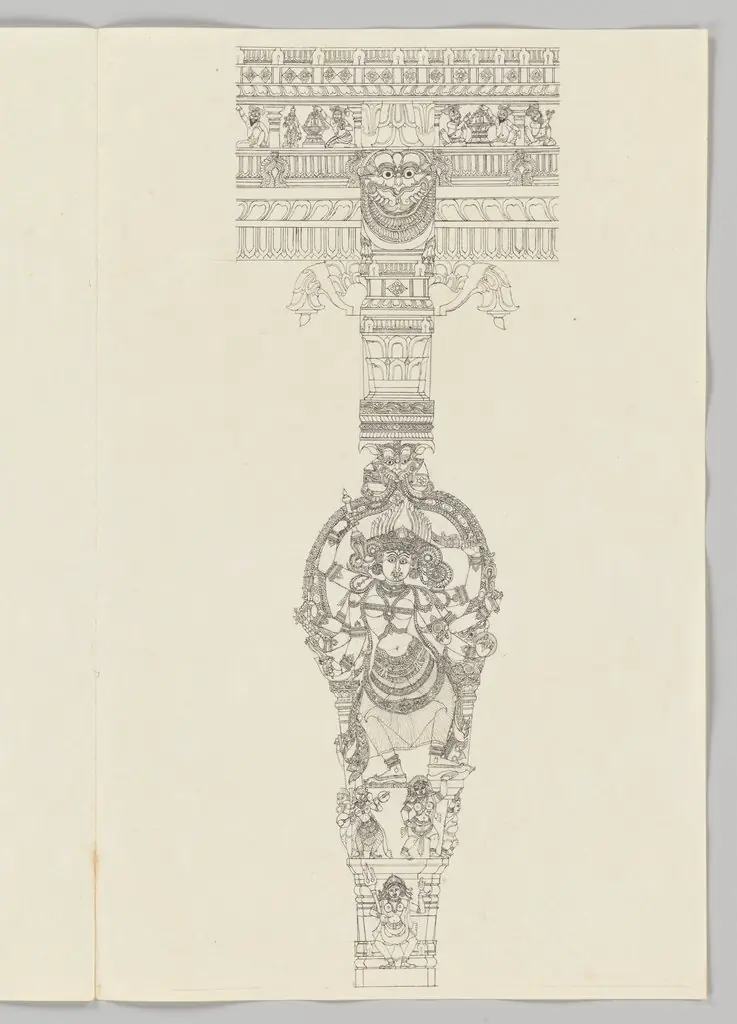 Kali
Kali