Artwork
The Crucifixion
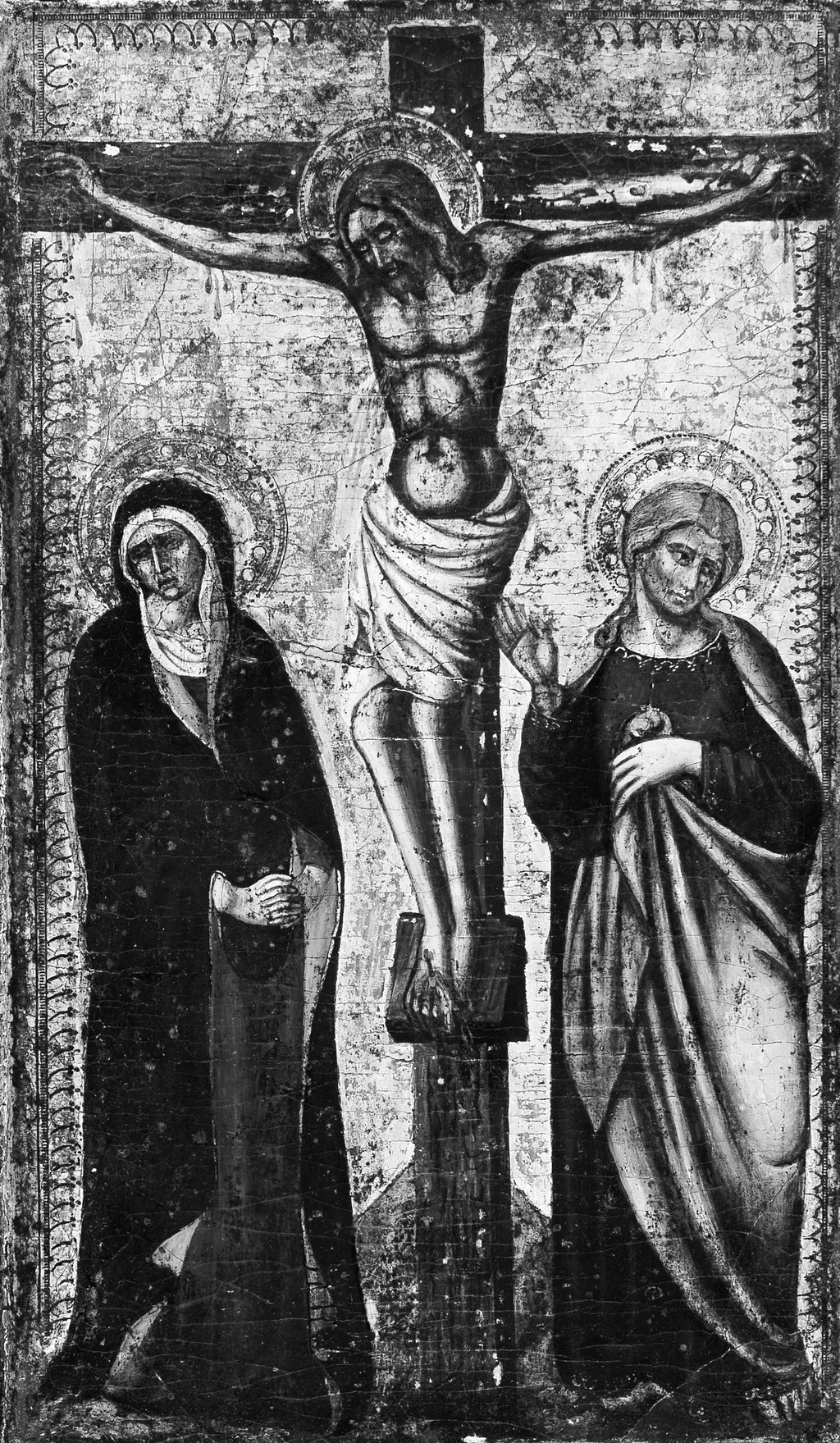
The Crucifixion is an unspecified painting. It dates from 1922 and is held in the collection of the Metropolitan Museum of Art.
About this work
Subject & Meaning
The piece is housed in the Metropolitan Museum of Art, where it is classified as a religious painting.
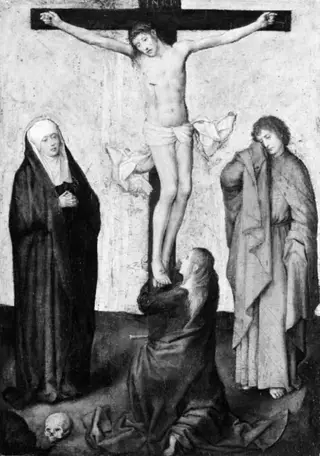
The painting presents the crucifixion of Jesus as its central motif, showing the figure of Christ on the cross alongside the Virgin Mary, a composition typical of Christian religious art. The work, executed in 1922 as a copy after Luca di Tommè di Nuto, follows established iconographic conventions that emphasize sacrifice, suffering, and the promise of redemption. Its subject is therefore the biblical narrative of Christ’s crucifixion, a recurrent symbol in Western visual culture that conveys theological ideas of atonement and divine love.
The piece is housed in the Metropolitan Museum of Art, where it is classified as a religious painting.
History & Provenance
The Crucifixion is a 1922 painting classified as a religious work, created as a copy after the 14th‑century painter Luca di Tommè di Nuto. Its inception is recorded as 1 January 1922, with documented dimensions of 35.2 × 21.3 cm. The work depicts the crucifixion of Jesus, featuring Christ and the Virgin Mary. Following its execution, the piece entered the collection of the Metropolitan Museum of Art, where it remains on view in the European paintings galleries. No earlier owners or commissioning details are recorded in the available documentation.
Context
The Crucifixion, painted in 1922, is recorded as a religious work by a copying artist who modeled the composition after Luca di Tommè di Nuto; the piece measures 35.2 × 21.3 cm and depicts the crucifixion of Jesus together with Mary, reflecting traditional iconography. Its classification as a painting within the genre of religious art is documented in both the internal catalogue and the Metropolitan Museum of Art’s collection records. Scholars studying the work note its role as a 20th‑century reinterpretation of a Renaissance subject, illustrating continued patronage of devotional imagery in modern museum contexts.
The painting’s provenance to the Met highlights its significance within the historiography of religious art and its influence on contemporary understandings of early‑modern copying practices.
Overview
This painting presents a somber depiction of the crucifixion, centering on a male figure affixed to a cross. Two women stand on either side, observing the scene. The composition directs attention to the central event, conveying a sense of gravity and emotional weight through its focused arrangement of figures against a simple backdrop.
Technique & Style
The painting's visual character is marked by a softened appearance, particularly evident in the facial details, which suggest the effects of age on the pigment. The background remains unadorned, serving to isolate the three figures and intensify their presence. This deliberate simplicity, combined with the interplay of light and shadow, enhances the dramatic and emotional impact of the scene.
Artist & collection

- The Crucifixion
 The Crucifixion
 The Crucifixion
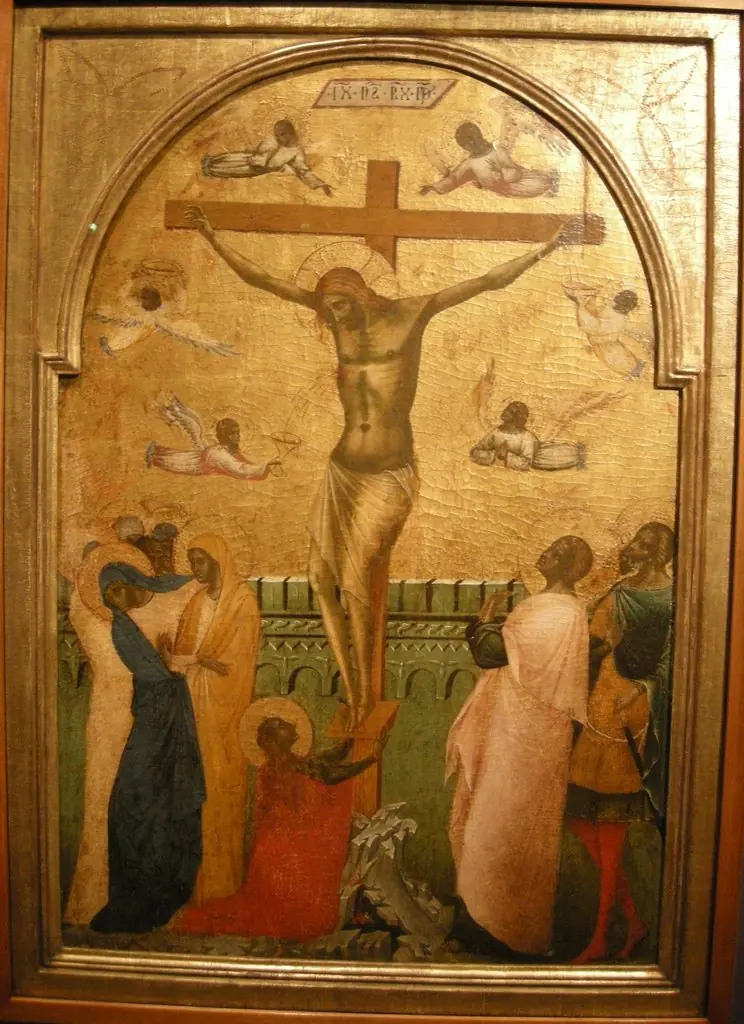 The Crucifixion
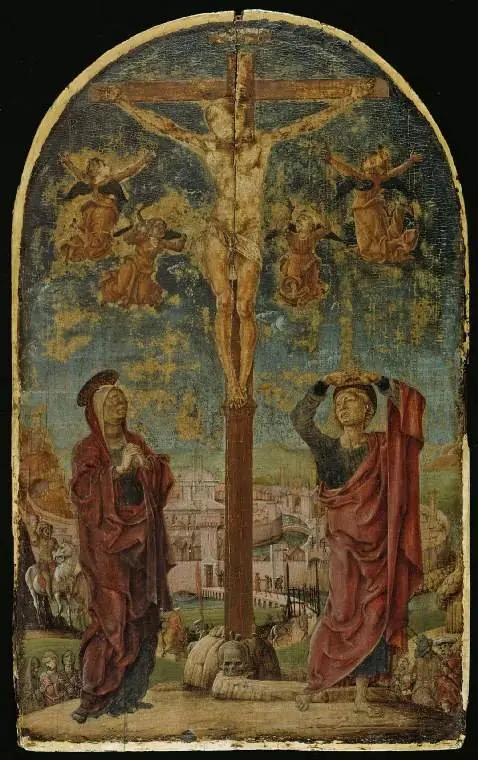 The Crucifixion
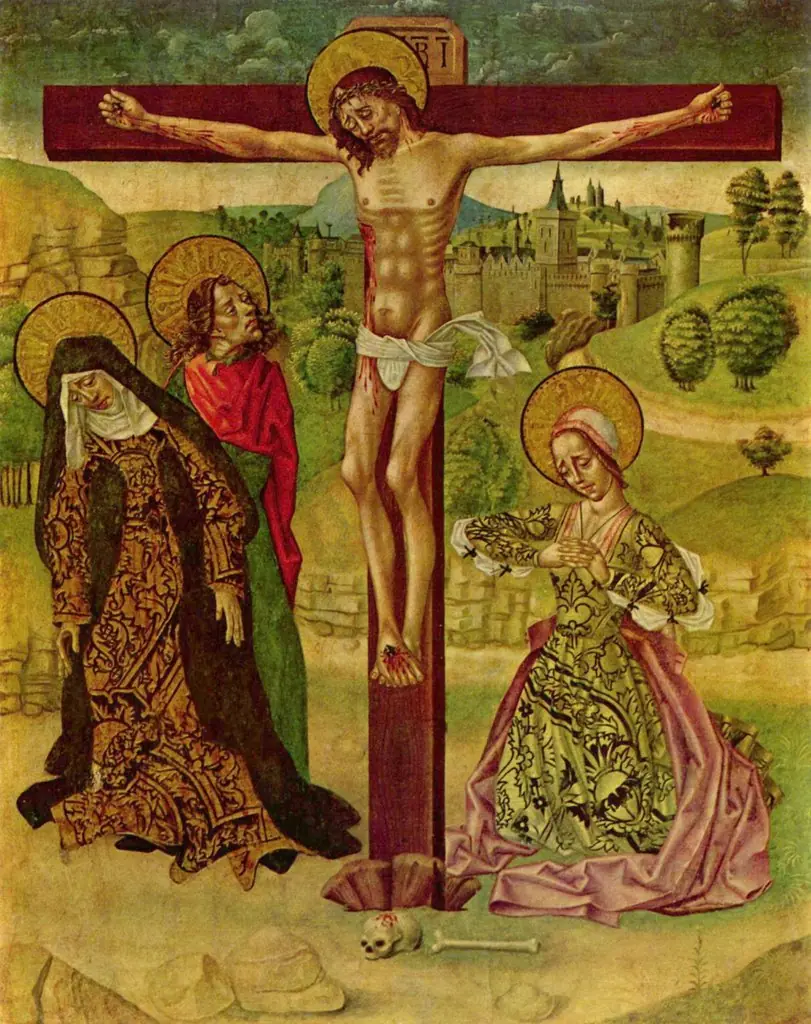 The Crucifixion
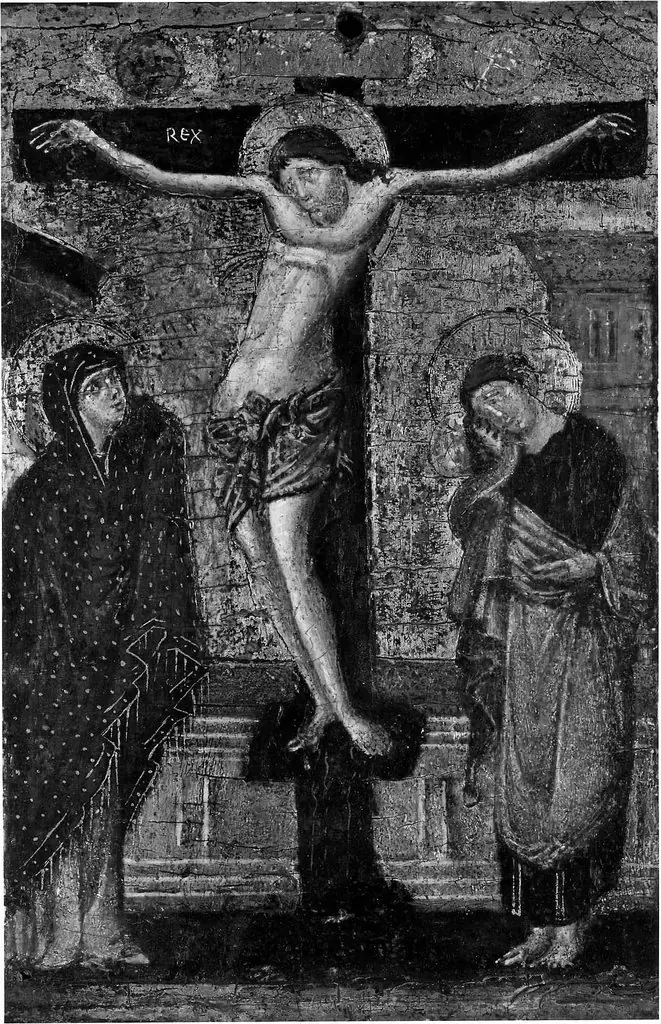 Christ on the Cross with the Virgin and Saint John the Evangelist
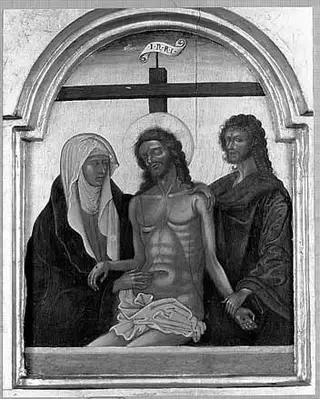 Lamentation of Christ
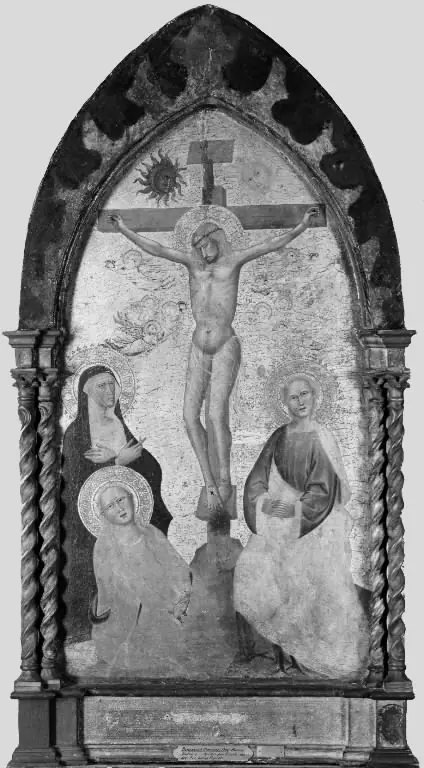 Christ on the Cross mourned by the Virgin Mary and Saints Mary Magdalene and John
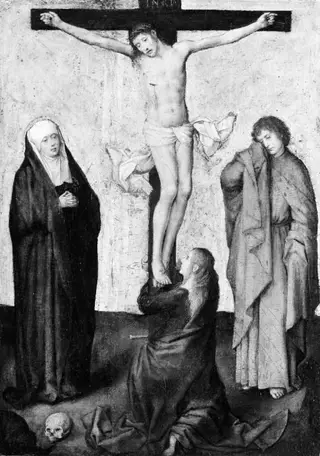 Christ on the Cross between the Virgin Mary and St John
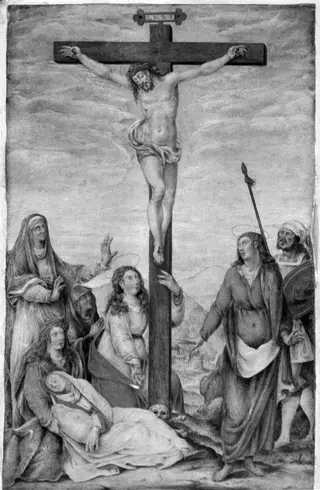 Crucifixion
 Christ on the Cross between the Virgin Mary and St John