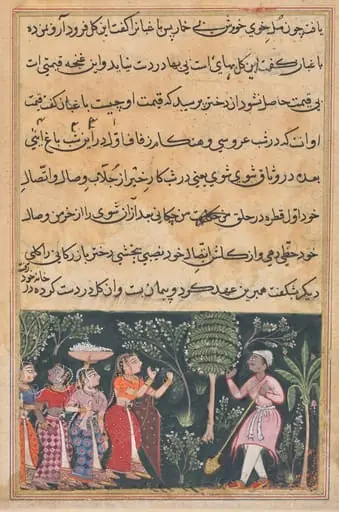
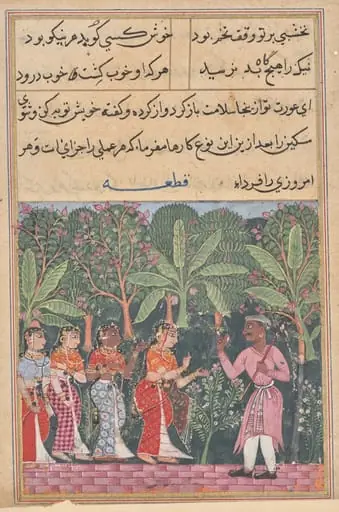
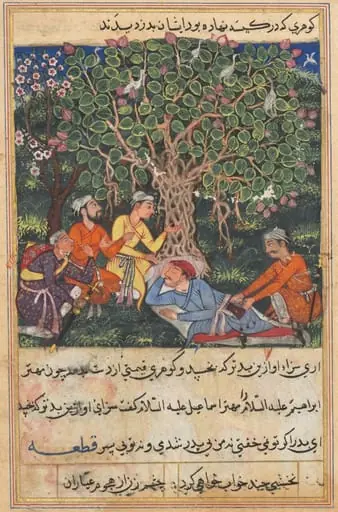
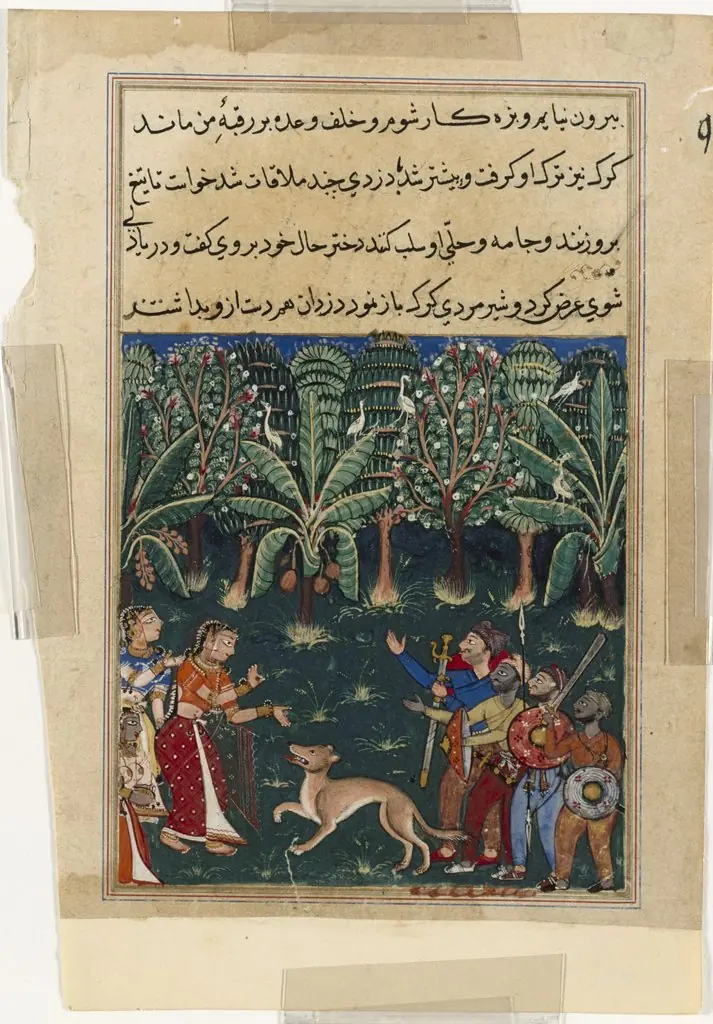
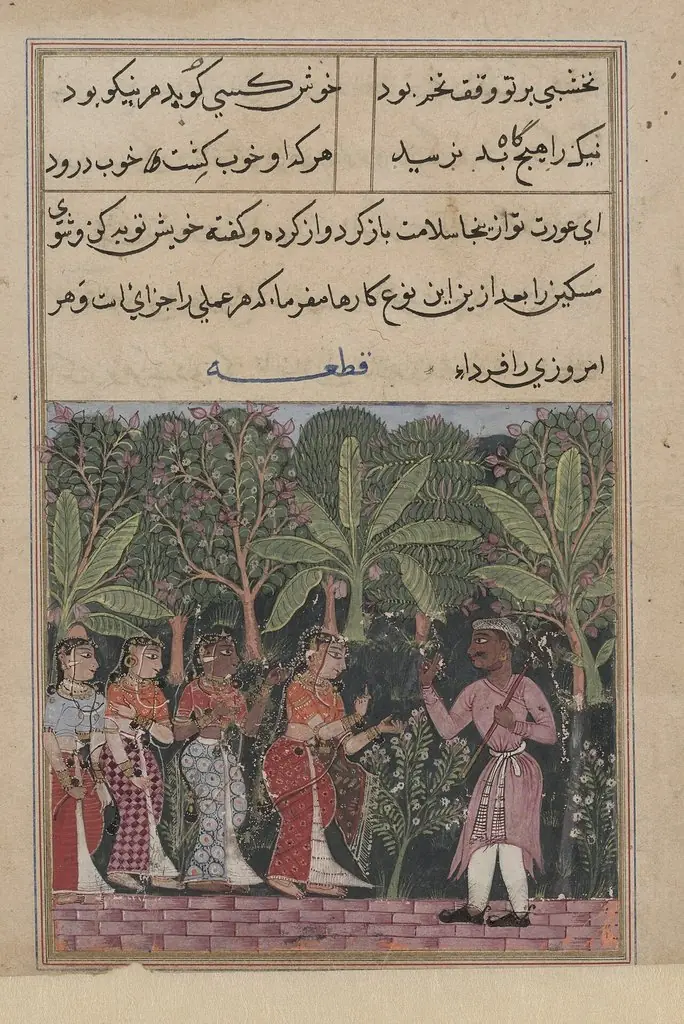
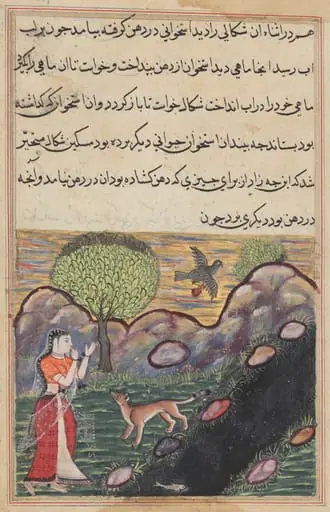
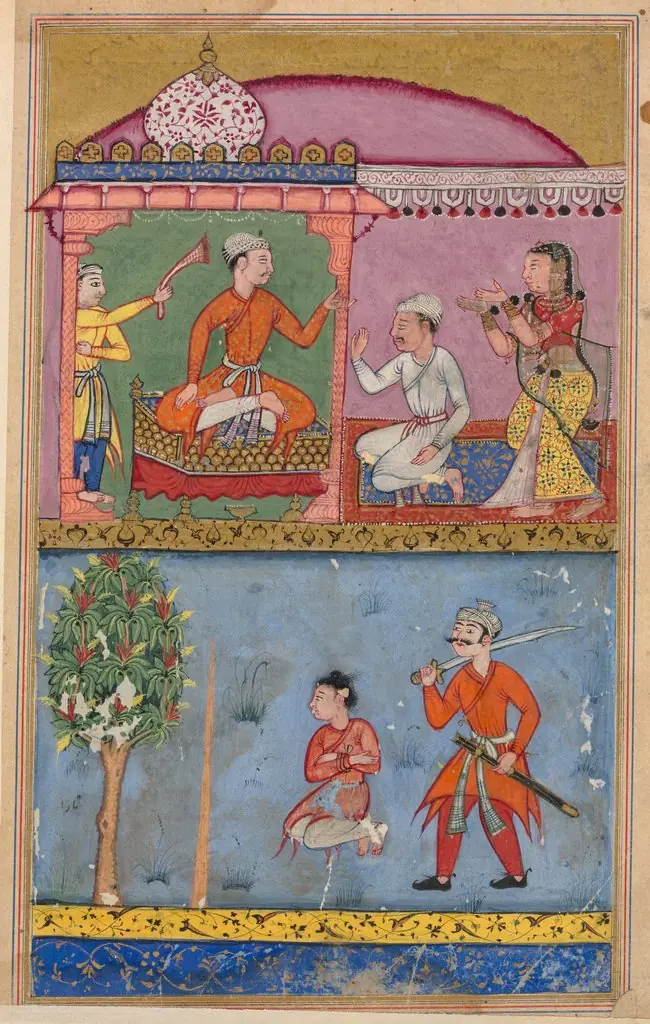
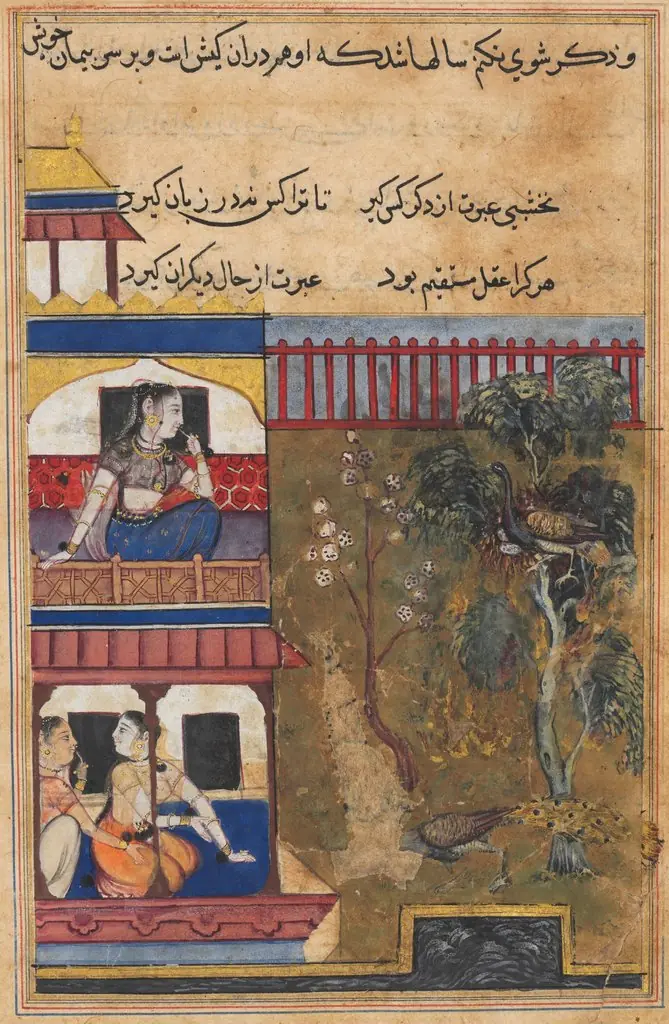
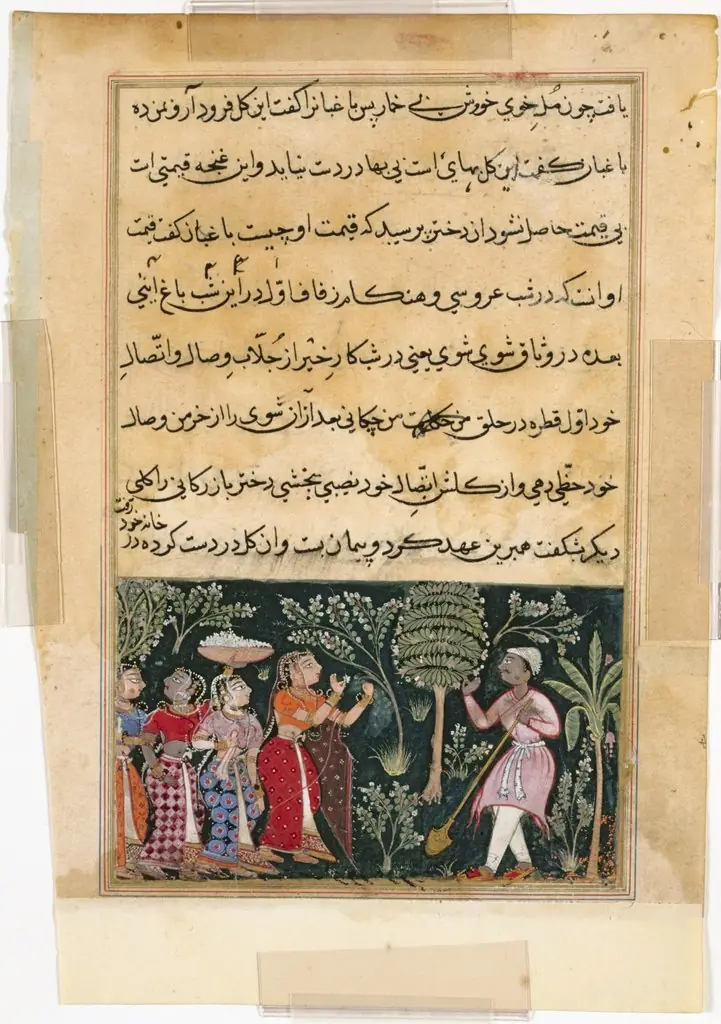
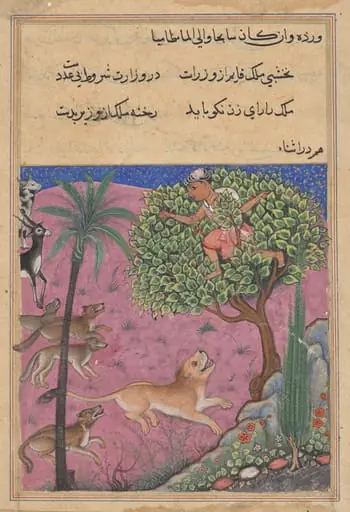
The merchant’s daughter encounters a wolf and bandits on her way to meet the gardener in order to keep her promise, from a Tuti-nama (Tales of a Parrot): Twelfth Night
1560
unspecified
From the collection of Cleveland Museum of Art
1560
unspecified
From the collection of Cleveland Museum of Art
The merchant’s daughter encounters a wolf and bandits on her way to meet the gardener in order to keep her promise, from a Tuti-nama (Tales of a Parrot): Twelfth Night is a 1560 unspecified by Unknown, a Mughal Painting work, held at Cleveland Museum of Art.
You see a girl in a bright red dress walking through a dark forest, a wolf and two bandits creeping behind the trees. The painting is one page from a 52-night storybook read right to left. The trees look like cut-out shapes, and everyone stands in a single flat line—no depth, just clear action. The women’s clothes stick out stiffly, a style from before the Mughal court took over. To see more paintings like this, look up mughal india, court of akbar (reigned 1556–1605).
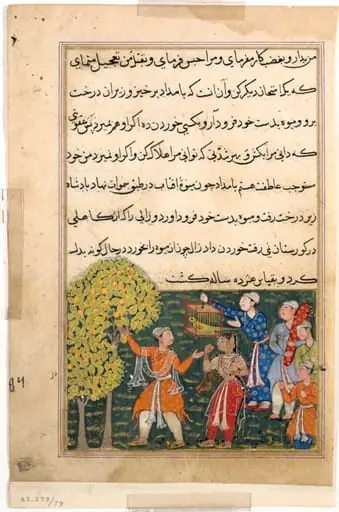
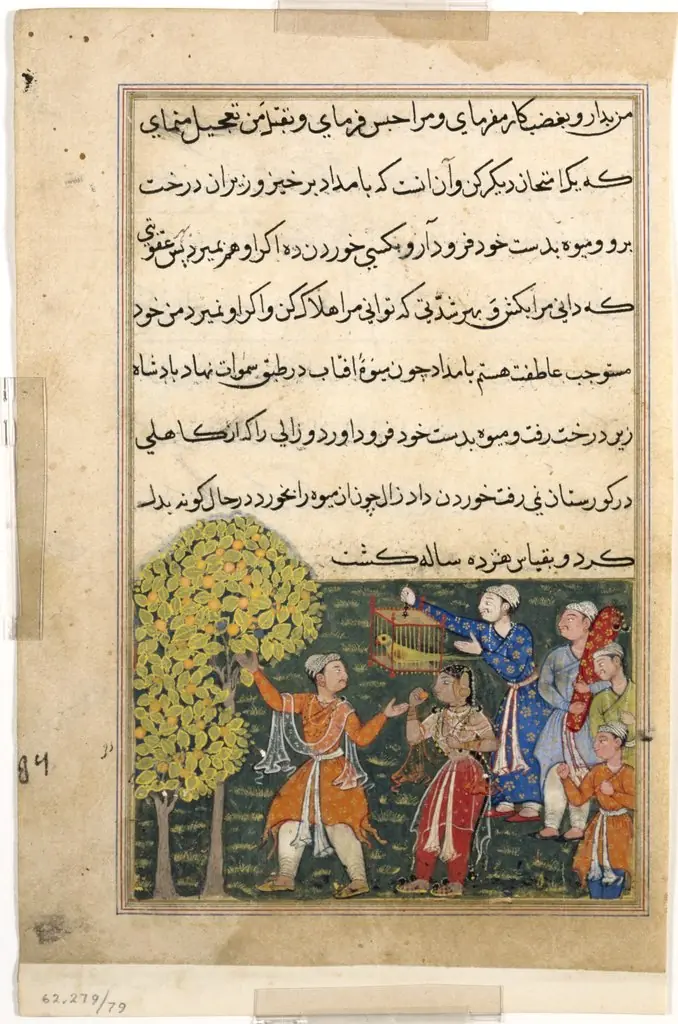
Persian books are read from right to left. One artist illustrated the three scenes from one of the 52 stories of the Tuti-nama , retaining many pre-Mughal traits. Trees stand out as bold shapes, and figures are arranged in a single register, or horizontal spatial band, and have angular and expressive gestures. The figures of the women are closely related to pre-Mughal types, shown always in profile and wearing garments that stand stiffly and sharply out before them. In leaves from the Tuti-nama , Mughal artists adapted the colors, compositions, and figure types of the earlier style.
The highly decorative way of painting trees did not continue into later Mughal painting traditions.
Read the full account in the museum source.
Your cart is empty
Explore artworks →