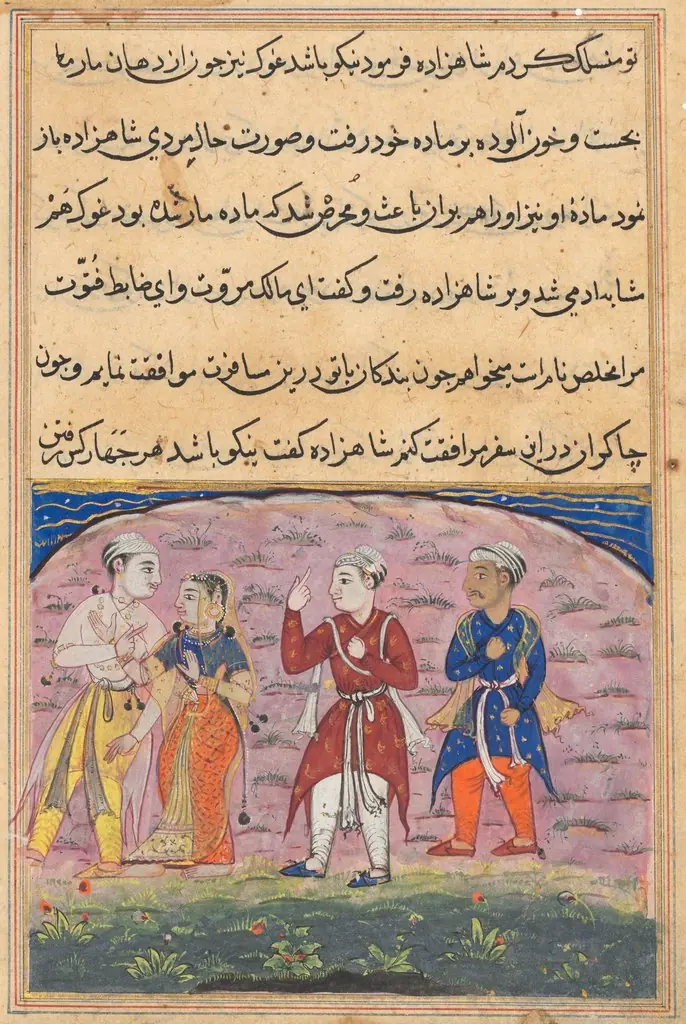
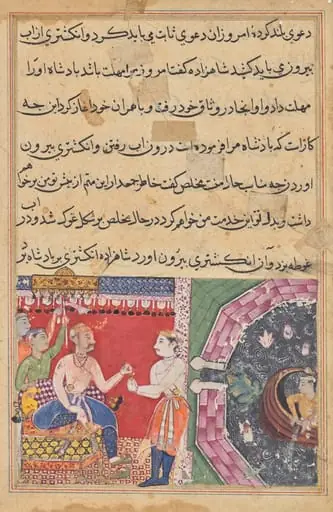
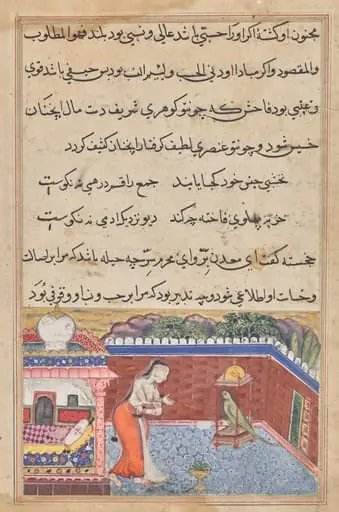
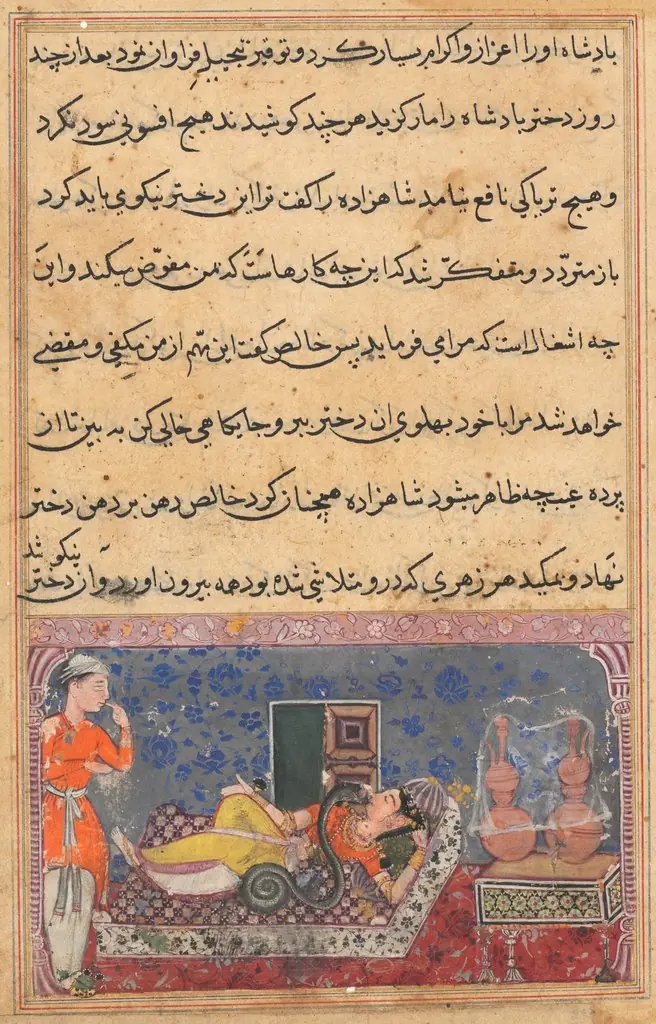
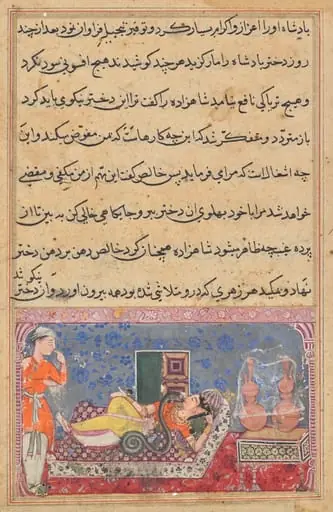
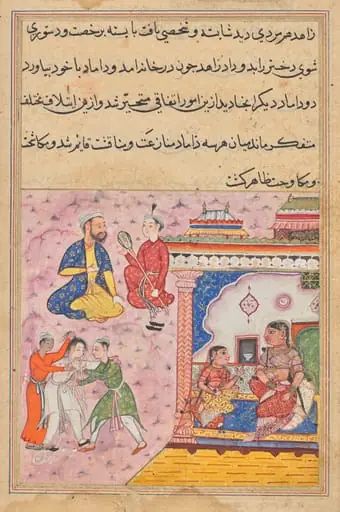
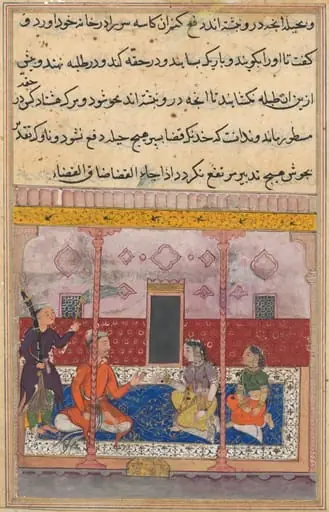
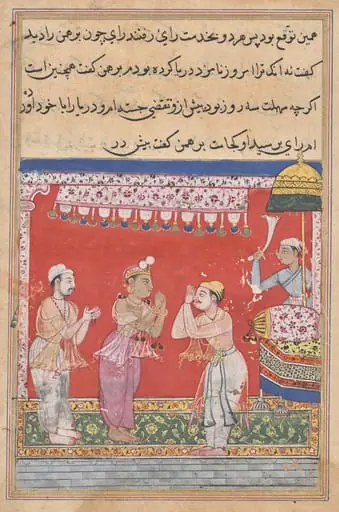
The prince and Nikfal are joined by Khalis and the Mukhlis who are the grateful snake and frog in human form, from a Tuti-nama (Tales of a Parrot): Eighteenth Night
1560
unspecified
From the collection of Cleveland Museum of Art
1560
unspecified
From the collection of Cleveland Museum of Art
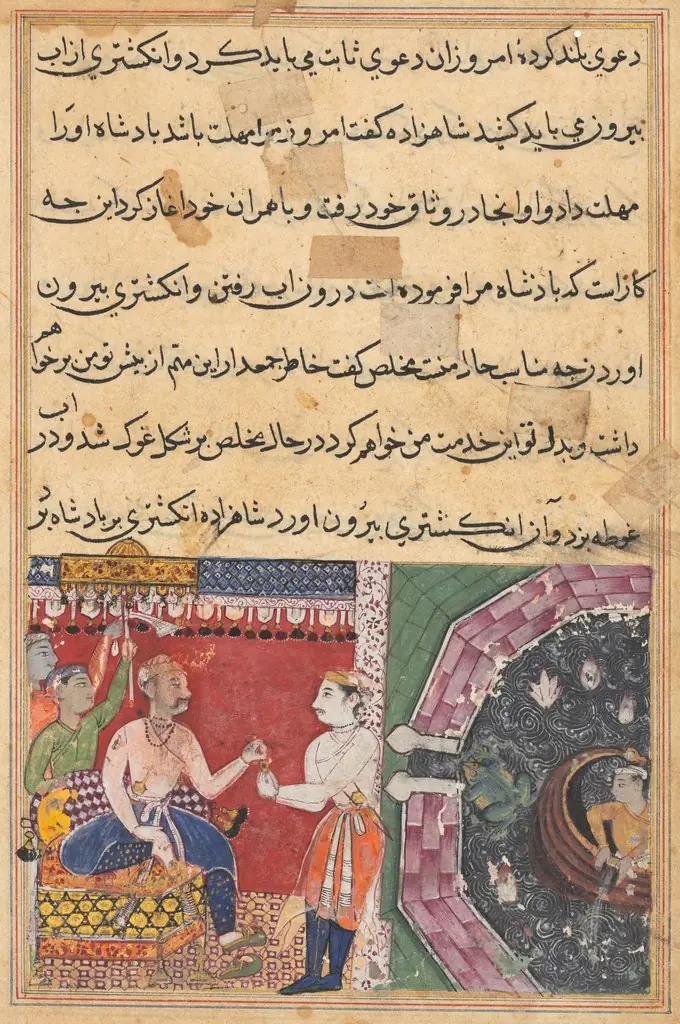
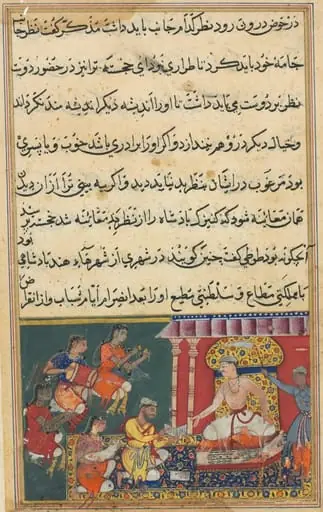
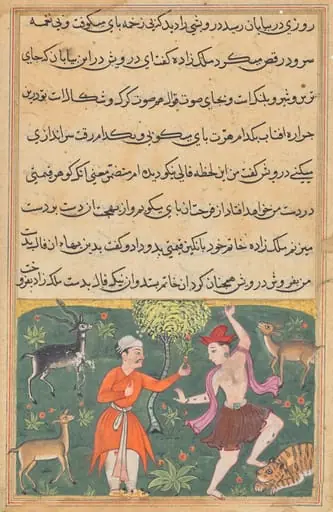
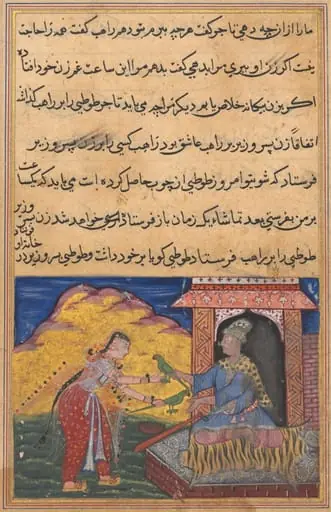
The prince and Nikfal are joined by Khalis and the Mukhlis who are the grateful snake and frog in human form, from a Tuti-nama (Tales of a Parrot): Eighteenth Night is a 1560 unspecified by Unknown, a Mughal Painting work, held at Cleveland Museum of Art.
A prince in yellow pants sits with a woman while two men bow before them. The men are actually a snake and a frog the prince once helped—they’ve taken human form to thank him. This painting comes from a book of parrot tales told to Emperor Akbar. The silver pool at the bottom has darkened over time, but you can still see the poppies and grass along its edge. The story feels like a fable, but the details—like the prince’s clothes—make it feel real. To see more paintings like this, look up Mughal India, court of Akbar (reigned 1556–1605).
The prince, wearing yellow pants, with Nikfal (Good Fortune) by his side, looks back to see two men approaching. They introduce themselves as the cobra, whom the prince fed from his own flesh, and the frog, whose life he saved. They took on human forms and pledged to be his servants until they have returned the favor of his kindness. At the bottom of the page is the edge of a pool painted in silver paint that has tarnished black. Grass and poppies grow on its banks. The otherwise arid landscape has been painted pink with sparse grassy tufts.
The men wear Central Asian pants and tunic, while the woman wears Indian dress.
Read the full account in the museum source.
Your cart is empty
Explore artworks →