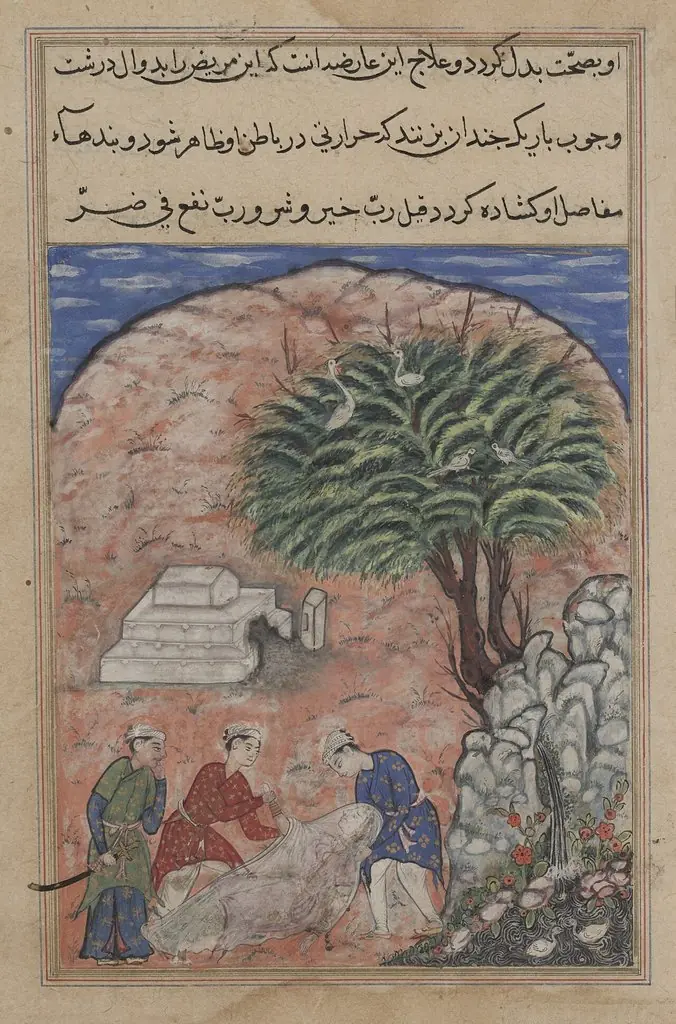
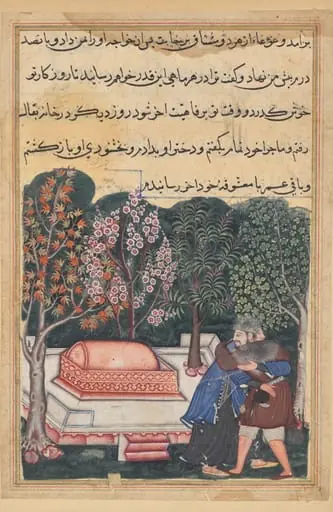
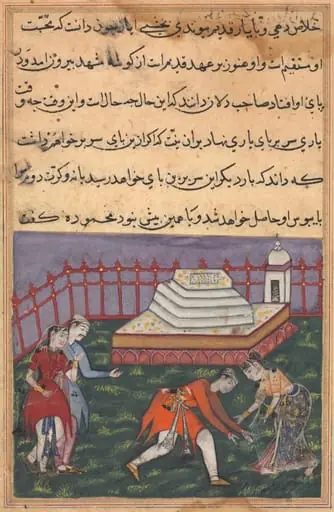
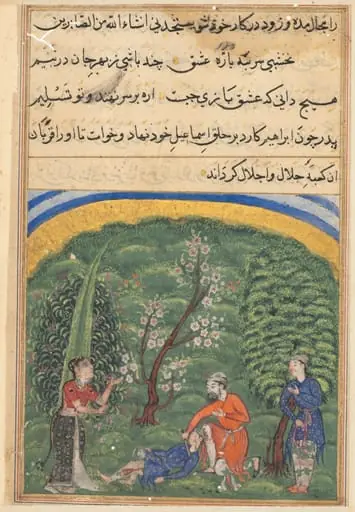
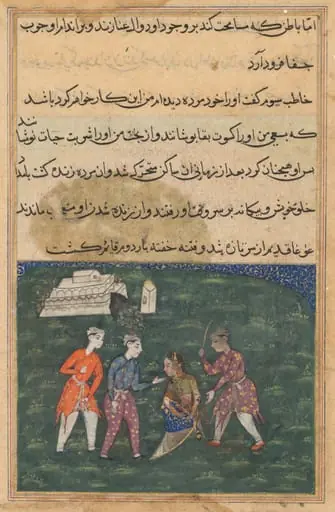
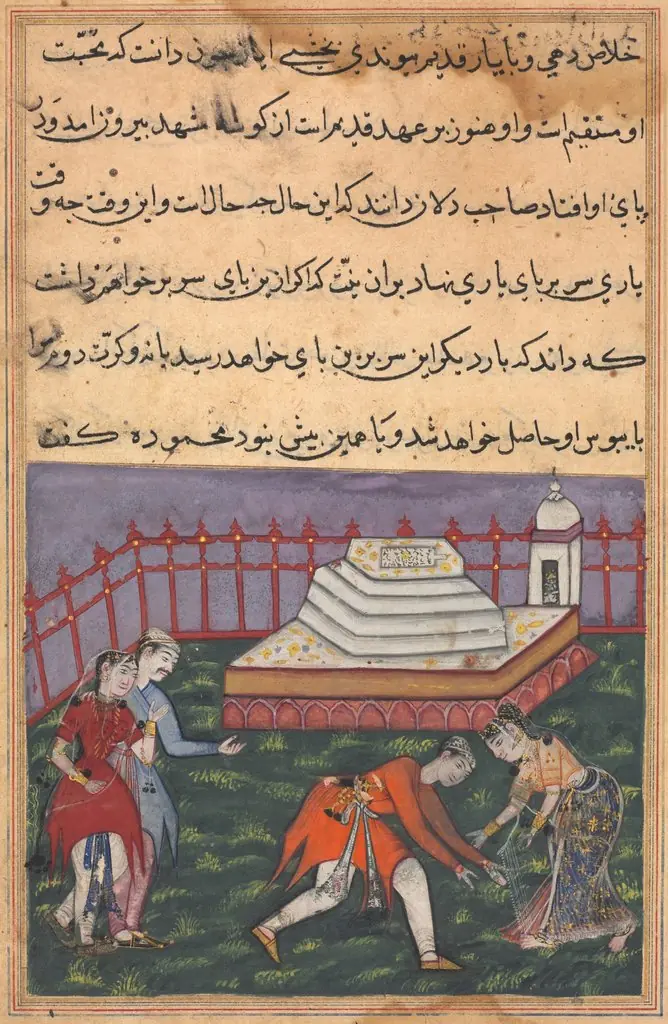
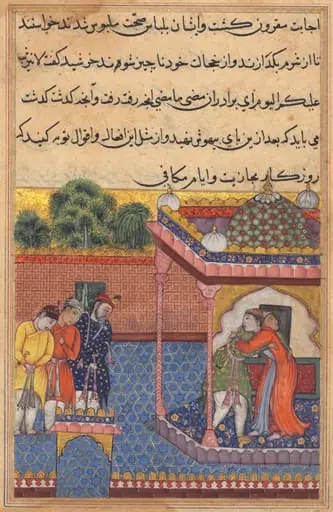
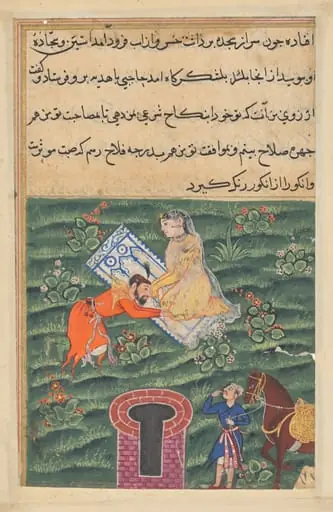
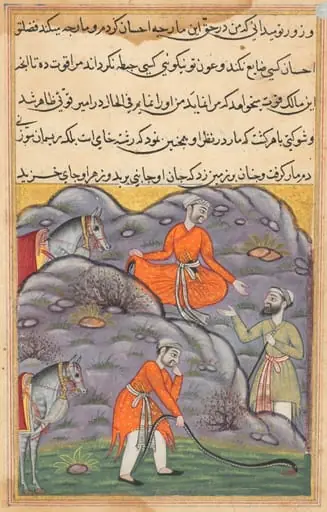
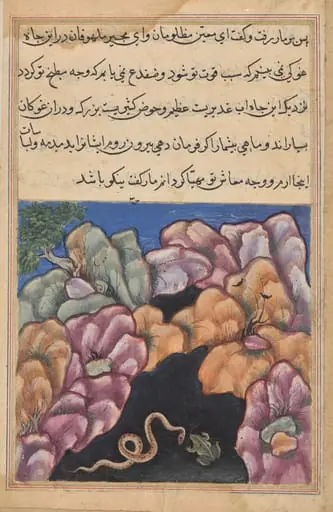
The suitors take the devotee’s daughter out of her tomb after breaking it open, when the physician discovers she is still alive, from a Tuti-nama (Tales of a Parrot): Twentieth Night
1560
unspecified
From the collection of Cleveland Museum of Art
1560
unspecified
From the collection of Cleveland Museum of Art
The suitors take the devotee’s daughter out of her tomb after breaking it open, when the physician discovers she is still alive, from a Tuti-nama (Tales of a Parrot): Twentieth Night is a 1560 unspecified by Unknown, a Mughal Painting work, held at Cleveland Museum of Art.
Three men lift a woman from a broken tomb, her body limp in a thin white shroud. The tomb’s stone lid lies cracked on the ground behind them. A doctor kneels nearby, checking her pulse. This scene comes from a *Tuti-nama*, a book of parrot tales told to Emperor Akbar. The story is dark: the suitors thought she was dead, but the doctor finds she’s still alive. The painting shows the moment of shock—hands frozen mid-air, faces half-hidden in shadow. To see more stories like this, look up Mughal India, court of Akbar (reigned 1556–1605).
The three suitors hold the lifeless body of the woman they intended to marry. She is wrapped in a diaphanous burial shroud, and her tomb stands empty in the background. When the suitors realize that the woman is not dead, they proceed to attempt to revive her.
The three pairs of birds in the tree and pond allude to the three suitors.
Read the full account in the museum source.
Your cart is empty
Explore artworks →