Artwork
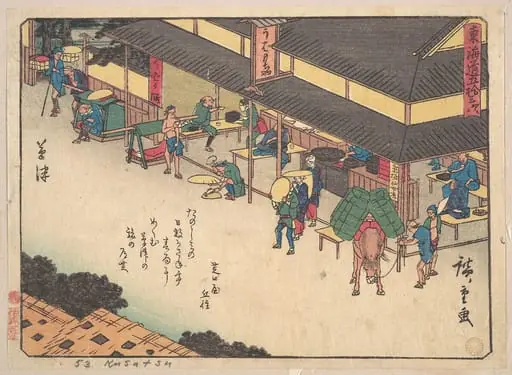
東海道五十三次之内 草津 名物立場|Kusatsu: Famous Post House (Kusatsu, Meibutsu tateba), from the series Fifty-three Stations of the Tōkaidō Road (Tōkaidō gojūsan tsugi no uchi)
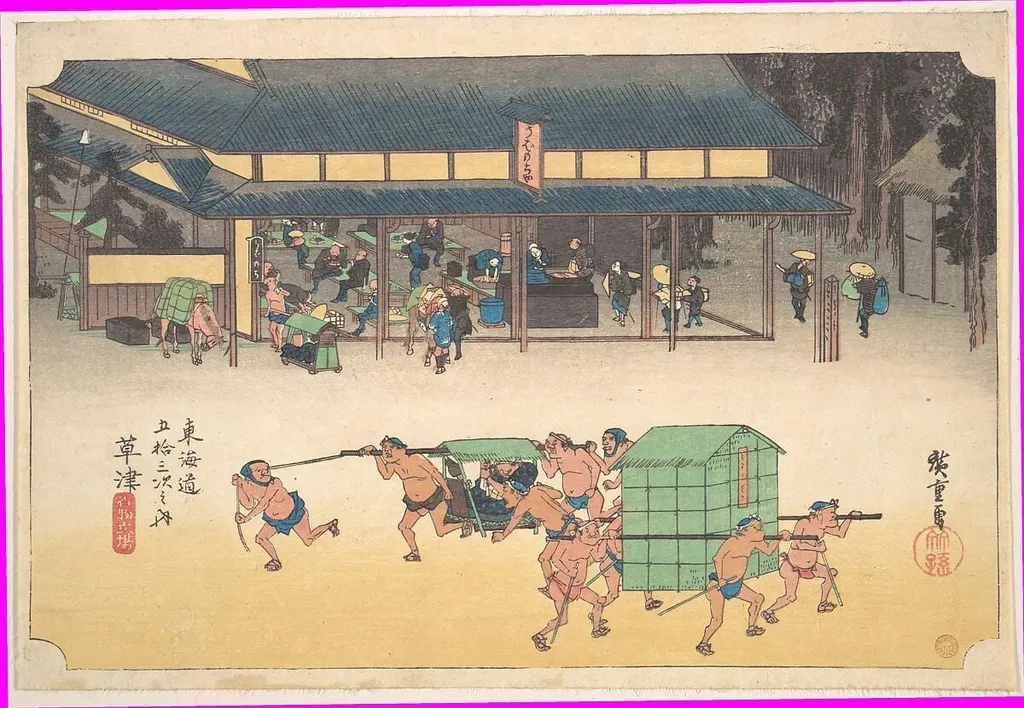
東海道五十三次之内 草津 名物立場|Kusatsu: Famous Post House (Kusatsu, Meibutsu tateba), from the series Fifty-three Stations of the Tōkaidō Road (Tōkaidō gojūsan tsugi no uchi) is an ink print by the Romanticist artist Utagawa Hiroshige. It dates from 1834 and is held in the collection of the Metropolitan Museum of Art.
About this work
Overview
Created around 1834 by Utagawa Hiroshige, this woodblock print is one of fifty-three scenes from the Tōkaidō Road, a major travel route linking Edo and Kyoto.
Created around 1834 by Utagawa Hiroshige, this woodblock print is one of fifty-three scenes from the Tōkaidō Road, a major travel route linking Edo and Kyoto. Executed in ink and color on paper, it belongs to a horizontal-format series that redefined ukiyo-e by emphasizing natural and human landscapes over traditional urban themes. The print is part of The Metropolitan Museum of Art’s collection and exemplifies Hiroshige’s focus on everyday life along the road.
Subject & Meaning
The scene captures the bustling activity of Kusatsu, a post station known for its relay services. Below, laborers transport a large wooden crate—likely a palanquin or cargo—on poles, their exertion evident. Above, a crowded veranda hosts travelers and locals, suggesting the station’s role as a rest stop. The contrast between physical toil and social pause reflects the rhythm of travel in Edo-period Japan, where movement and rest were intertwined.
Technique & Style
Hiroshige employed fine woodblock carving to render detailed figures and textures, using muted colors and subtle gradations to suggest atmosphere. The composition divides the scene vertically, balancing the grounded labor below with the elevated social space above. Perspective is flattened, typical of ukiyo-e, yet spatial depth is implied through overlapping forms and scale variation, guiding the viewer’s eye across the layered activity.
History & Provenance
The print was produced during Hiroshige’s early rise as a landscape artist, following the success of his first Tōkaidō series. It was widely distributed as a commercial print, popular among travelers and urban dwellers fascinated by distant places. The Metropolitan Museum of Art acquired it as part of its broader collection of Japanese prints, preserving its role as a cultural artifact of Edo-period visual culture.
Context
The Tōkaidō was the most traveled road in Japan, lined with post stations that supported official messengers, merchants, and pilgrims. Kusatsu was notable for its relay system and river crossing. Hiroshige’s depiction avoids idealization, instead portraying the practical realities of travel—labor, crowds, and transient hospitality—offering a grounded view of a nation in motion.
Legacy
Hiroshige’s Tōkaidō series influenced later artists in Japan and abroad, including French Impressionists who admired its compositional clarity and everyday subject matter. This print, like others in the series, helped shift perceptions of Japanese art from decorative novelty to a serious record of social and environmental life. Its enduring presence in museum collections underscores its role in shaping global understandings of Edo-period visual culture.
Artist & collection
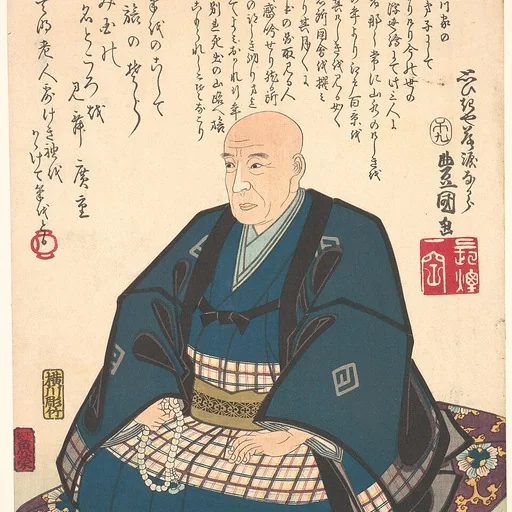
Artist
Utagawa Hiroshige (歌川 広重) or Andō Hiroshige (安藤 広重), born Andō Tokutarō (安藤 徳太郎; 1797 – 12 October 1858), was a Japanese ukiyo-e artist, considered the last great master of that tradition.

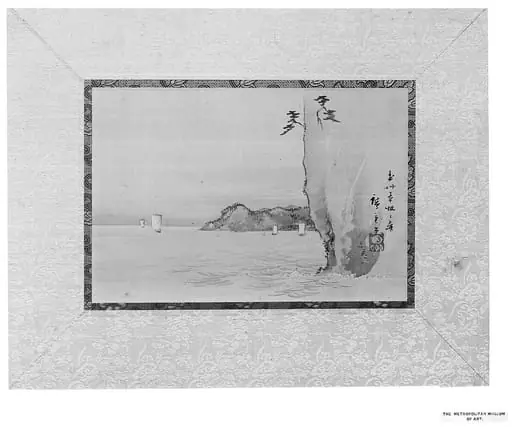
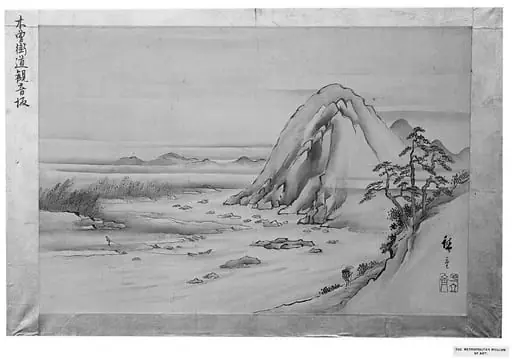
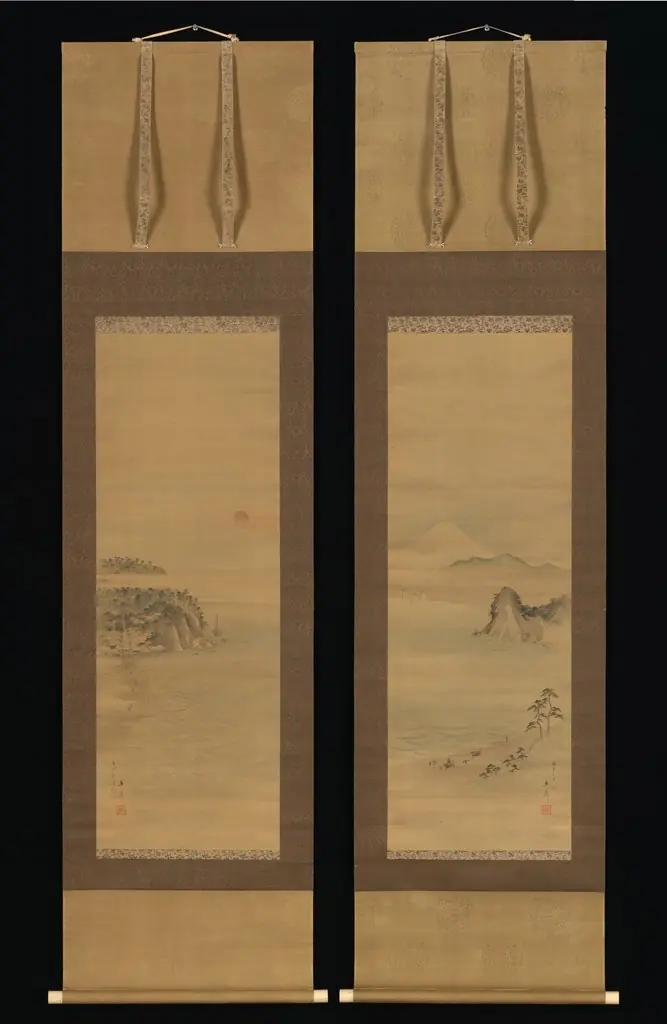
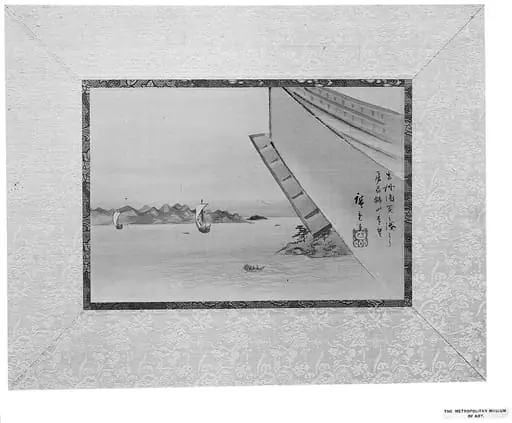
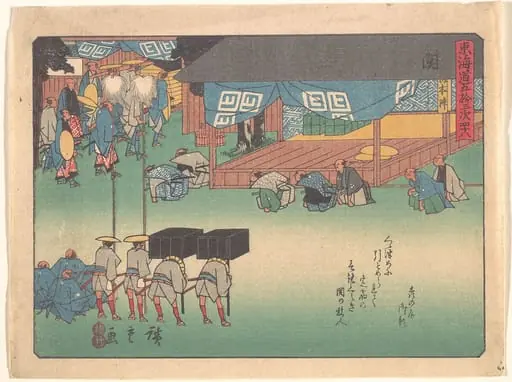 東海道五十三次 関|Seki, from the series The Fifty-three Stations of the Tōkaidō Road
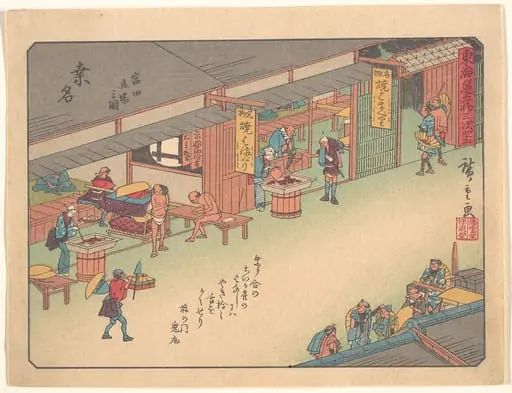 東海道五十三次 桑名|Kuwana, from the series The Fifty-three Stations of the Tōkaidō Road
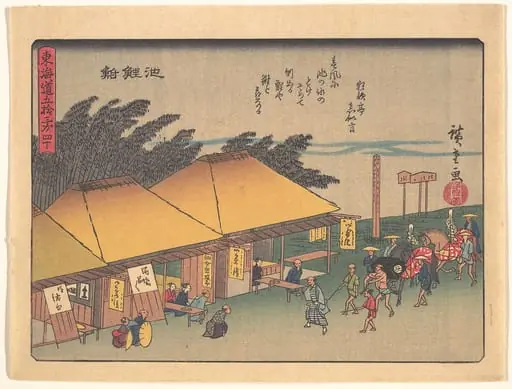 東海道五十三次 池鯉鮒|Chiryūshuku, from the series The Fifty-three Stations of the Tōkaidō Road
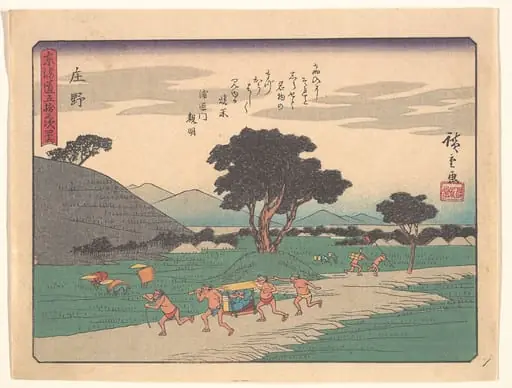 東海道五十三次 庄野|Shōno, from the series The Fifty-three Stations of the Tōkaidō Road
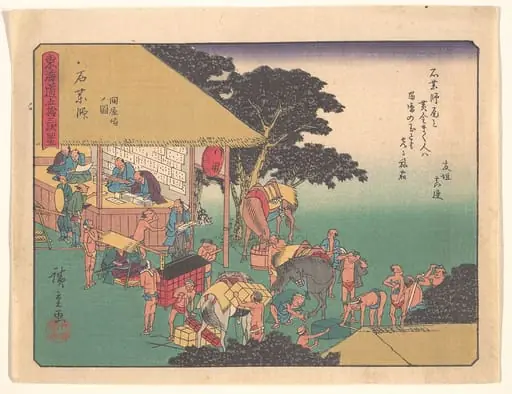 東海道五十三次 石薬師|Ishiyakushi, from the series The Fifty-three Stations of the Tōkaidō Road
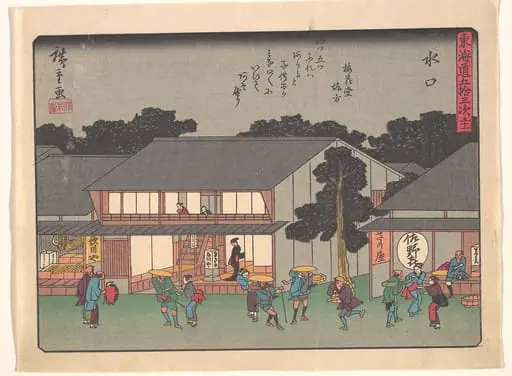 東海道五十三次 水口|Mizukuchi, from the series The Fifty-three Stations of the Tōkaidō Road
 東海道五十三次 草津|Kusatsu
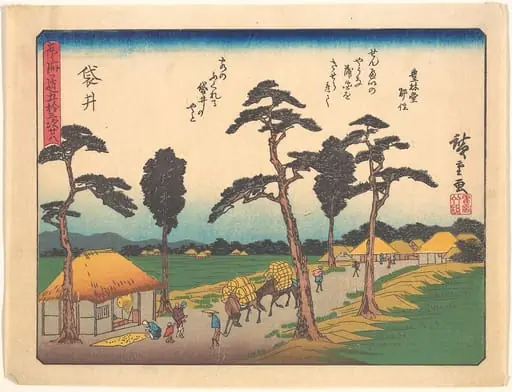 東海道五十三次 袋井|Fukuroi, from the series The Fifty-three Stations of the Tōkaidō Road