Artwork
Olympic Games
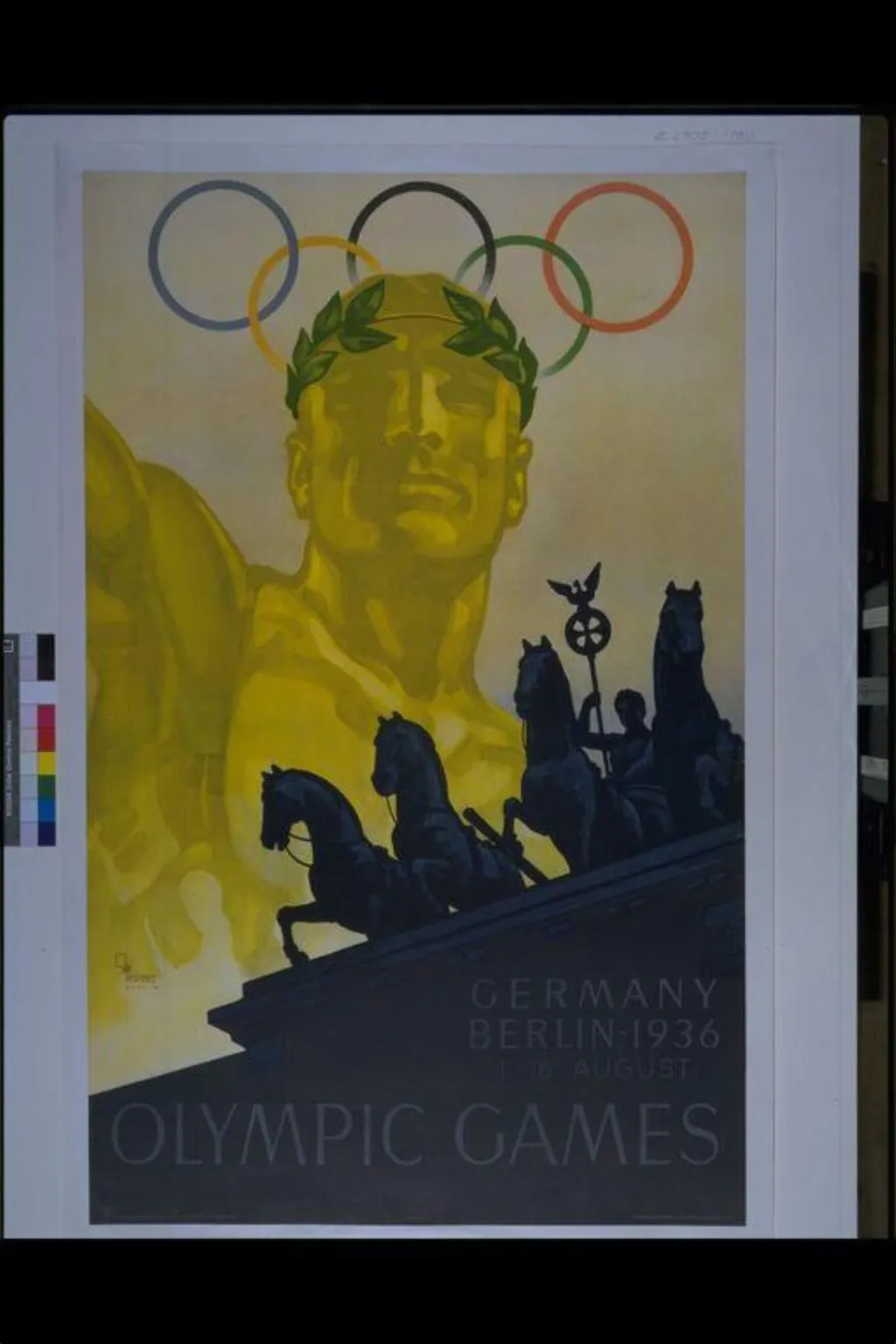
Olympic Games is a poster by Werner Würbel. It dates from 1936 and is held in the collection of the Victoria and Albert Museum.
About this work
Overview
This 1936 poster promoted the Summer Olympics in Berlin, produced jointly by Germany’s state railway tourism office and the official Olympic propaganda committee. It was part of a broader visual campaign designed to project national strength and cultural continuity under Nazi rule, using state-sponsored artists to shape public perception both domestically and abroad.
Subject & Meaning
The poster features a stylized, laurel-crowned head and sculptural elements drawn from Berlin’s Brandenburg Gate, evoking classical antiquity to imply a link between ancient Greek ideals and the Nazi vision of Aryan superiority. The imagery subtly conflates athletic excellence with racial ideology, presenting the Games as a stage for national prestige rather than international camaraderie.
Technique & Style
Rendered in a disciplined form of classical realism, the design employs sharp contours, muted tones, and idealized forms to convey order and permanence. The composition avoids modernist abstraction, aligning with Hitler’s preference for traditional aesthetics that emphasized symmetry, monumentality, and heroic physiognomy over innovation or expression.
History & Provenance
Commissioned by the Nazi regime’s Olympic propaganda apparatus, the poster was created by artists commissioned for state projects, including Ludwig Hohlwein and Würbel. It was widely distributed across Europe and beyond, serving as both travel advertisement and political tool, with the German Railways acting as a key dissemination channel.
Context
The 1936 Berlin Olympics occurred amid rising international tension and Nazi efforts to legitimize their regime through global spectacle. While many nations participated, the Games were scrutinized for their use as propaganda. Posters like this one were central to constructing an image of Germany as culturally refined and racially unified, masking underlying persecution.
Legacy
The poster remains a documented artifact of how state power co-opted cultural symbols for ideological ends. Today, it is studied not for its artistic innovation but as evidence of the instrumentalization of sport and visual culture in totalitarian regimes, offering insight into the manipulation of public perception through design.
Artist & collection
Artist
German graphic designer Werner Würbel made bold, poster-style prints in the 1930s.

 Untitled
 Mask of Napoleon
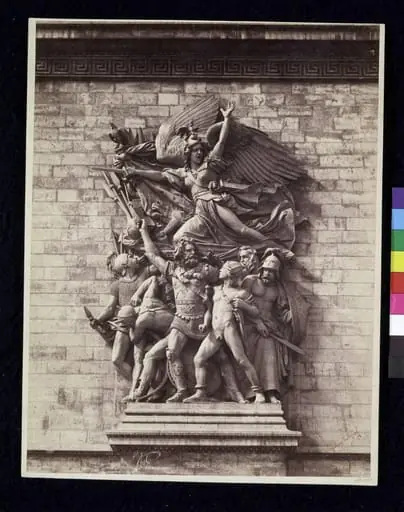 The Marseillaise (The Departure of the Volunteers of 1792), by François Rude, 1833–36, Arc de Triomphe de l’Etoile, Paris
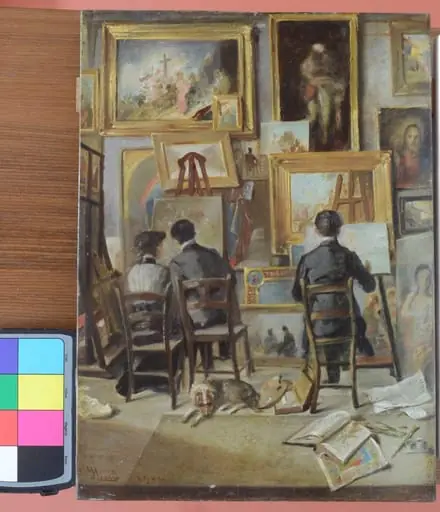 Interior de atelier
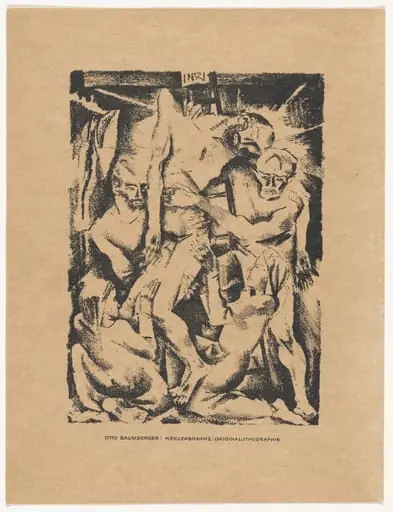 Untitled
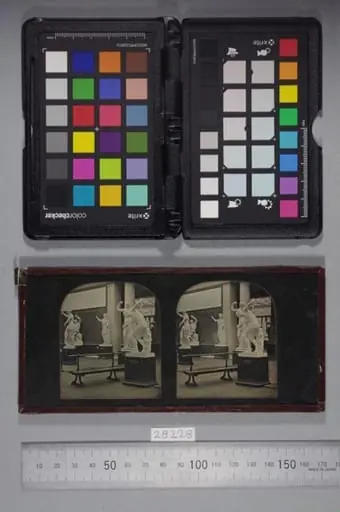 Sculpture Court at Crystal Palace, including the Discobolus
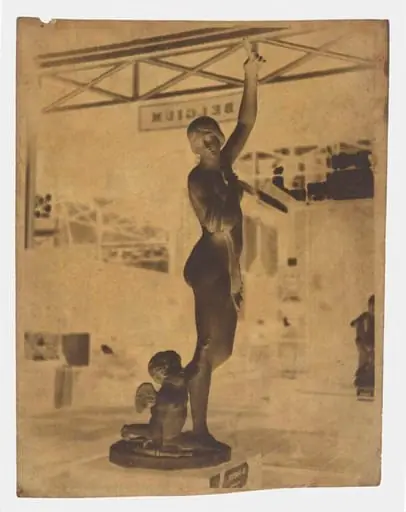 Statue of Female Nude with Cherub, Great Exhibition 1851
 'Bacchante' by Jean-August Barré exhibited at Crystal Palace
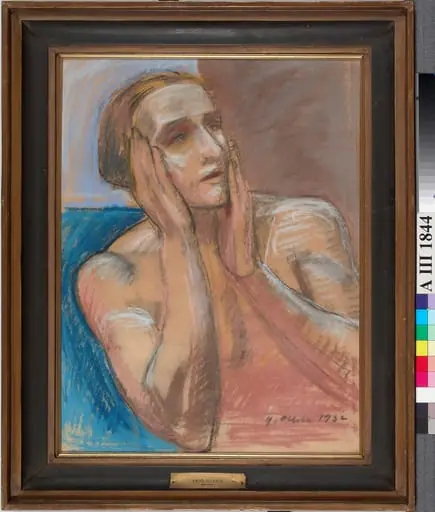 Runoilija, harjoitelma Kansallisteatterin kattomaalaukseen
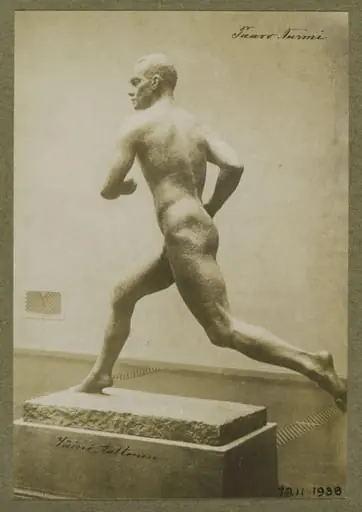 Untitled
 Sheet with Seven Antique Medals
- Untitled