Artwork
Eve Tempts Adam
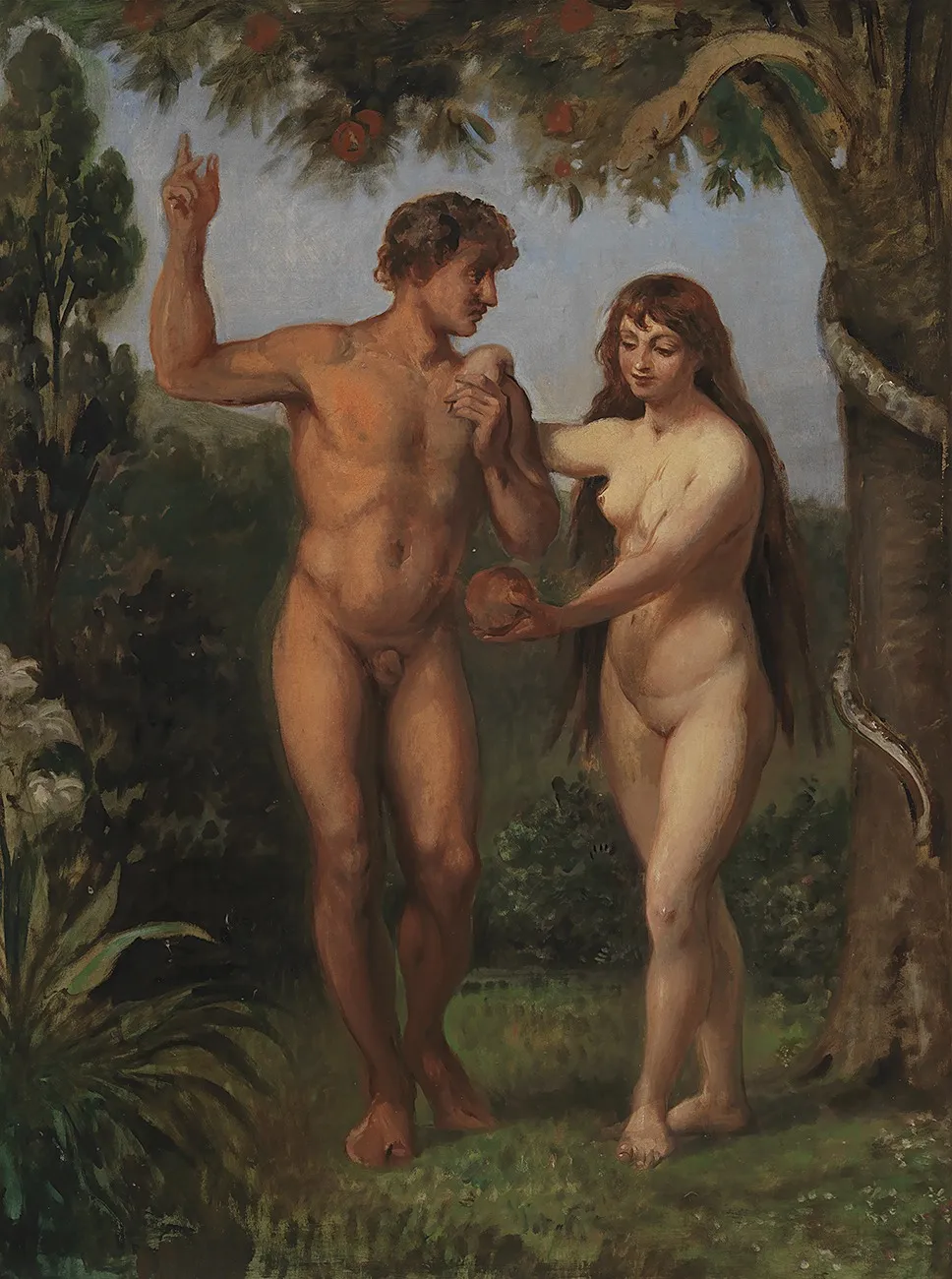
Eve Tempts Adam is an oil painting by Wilhelm Marstrand. It dates from 1849 and is held in the collection of the Statens Museum for Kunst.
About this work
Subject & Meaning
As a work of religious art, the piece visually narrates the moment of temptation that leads to humanity's expulsion from paradise.
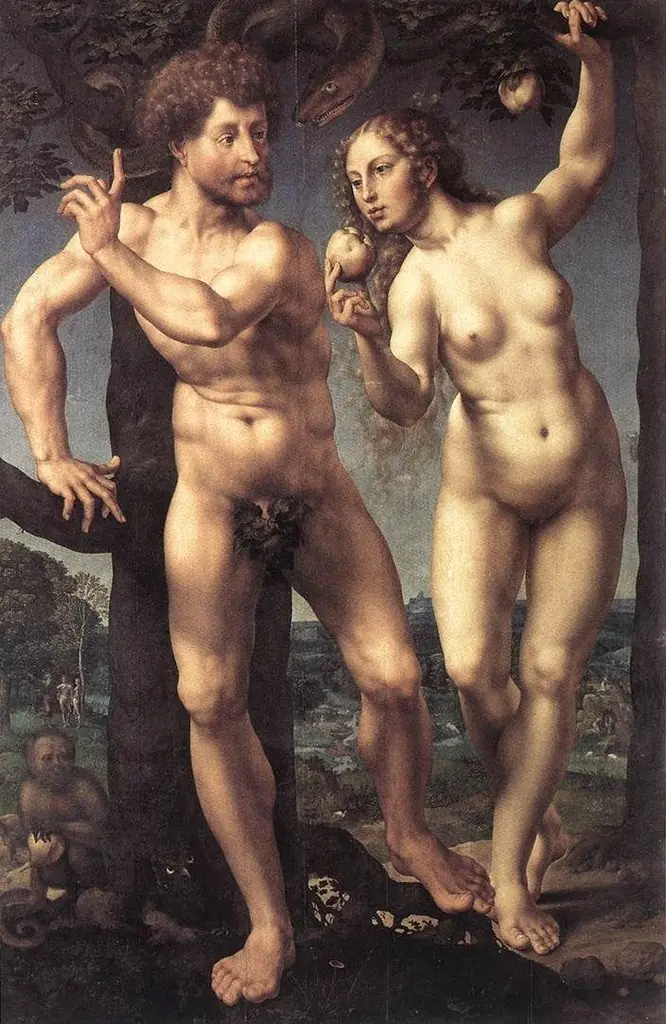
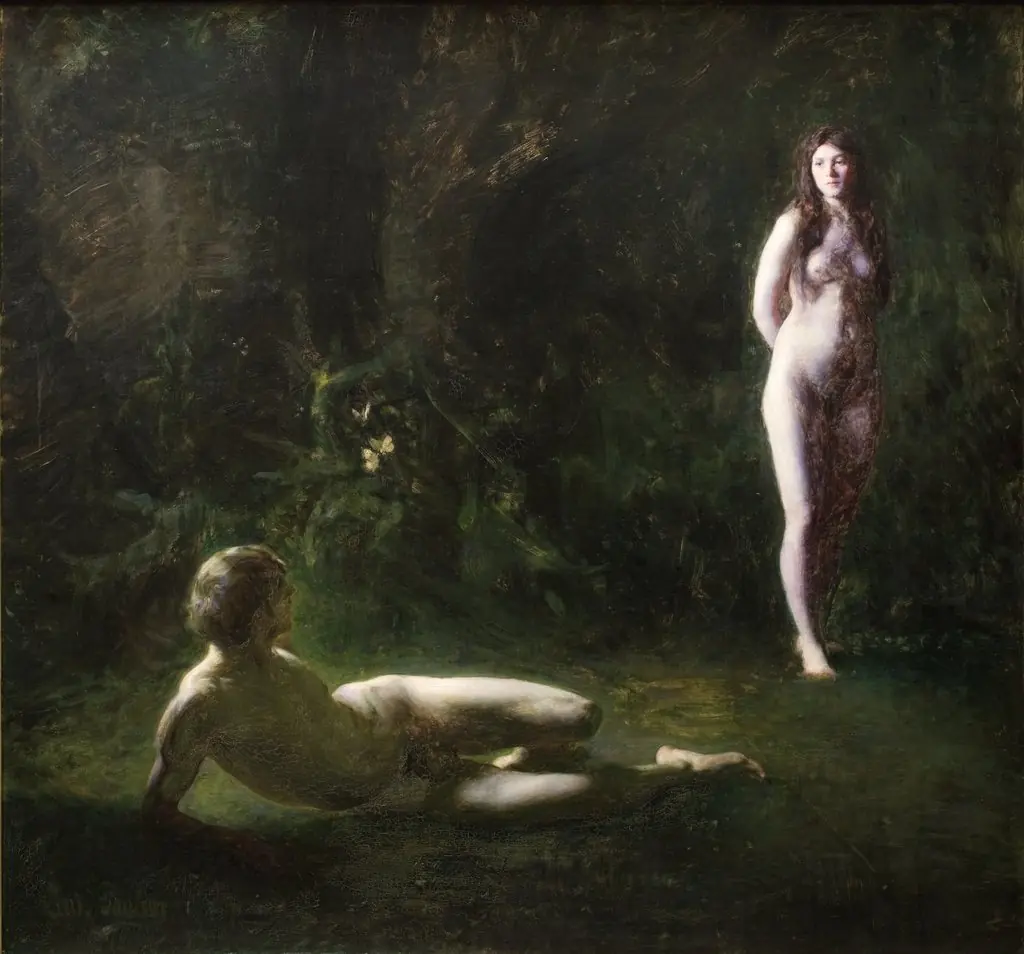
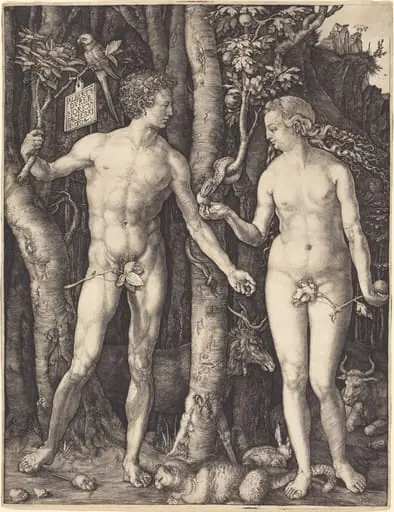
Wilhelm Marstrand's 1849 oil painting, Eve Tempts Adam, illustrates the biblical narrative of the fall of man. The composition centers on the Garden of Eden, depicting the key figures of Adam and Eve alongside the serpent. As a work of religious art, the piece visually narrates the moment of temptation that leads to humanity's expulsion from paradise.
The inclusion of the snake and the setting of the Garden of Eden anchors the work in its specific scriptural context, representing the pivotal transition from innocence to knowledge.
Technique & Style
Eve Tempts Adam is executed in oil paint on canvas, a standard support for mid-nineteenth-century Danish academic painting. The work measures 91 cm in height by 67 cm in width, a relatively modest vertical format suited to a single-figure-group composition depicting the fall of man in the Garden of Eden. Classified as a religious painting, it treats the biblical subject of Adam, Eve, and the serpent through a traditional oil medium that allowed Marstrand to build up layered glazes and detailed modeling of flesh and drapery characteristic of the genre.
No source addresses the painting's present condition, surface handling, or specific stylistic attributes such as brushwork or palette, so those aspects are not described here.
History & Provenance
Eve Tempts Adam is an 1849 oil painting by Wilhelm Marstrand depicting the biblical fall of man with Adam, Eve, the snake, and the Garden of Eden. The work measures 91 by 67 centimeters and belongs to the religious art genre. It was created in Copenhagen and entered the collection of the Statens Museum for Kunst, where it remains on display.
The painting was commissioned as part of the museum's acquisition of major religious works and has been part of the Statens Museum for Kunst's holdings since its creation, maintaining continuous ownership by the institution.
Eve Tempts Adam is held at Statens Museum for Kunst in Copenhagen, accessioned under the museum's collection inventory. The painting was created in 1849 by Wilhelm Marstrand and first exhibited at the Charlottenborg Palace exhibition that same year. It has been part of the museum's permanent display since its acquisition, featured in later retrospectives of Danish Golden Age art.
Legacy
The painting Eve Tempts Adam by Wilhelm Marstrand influenced Romantic religious art through its dramatic portrayal of the biblical Fall of Man, emphasizing sensual tension and theological narrative. Marstrand's use of chiaroscuro and dynamic composition shaped subsequent religious works in Northern Europe, particularly in Danish academic circles where it became a reference for narrative depth in devotional painting. The work's depiction of Eve's pivotal moment of temptation contributed to evolving visual interpretations of Genesis narratives in 19th-century European art.
Overview
Wilhelm Marstrand’s 1849 oil painting Eve Tempts Adam presents a quiet moment from the Genesis narrative. The canvas shows the first humans standing nude amid a verdant garden, with a serpent coiled nearby. The composition balances the figures centrally, emphasizing their interaction while the surrounding foliage creates a tranquil, enclosed space.
Artist & collection
Artist
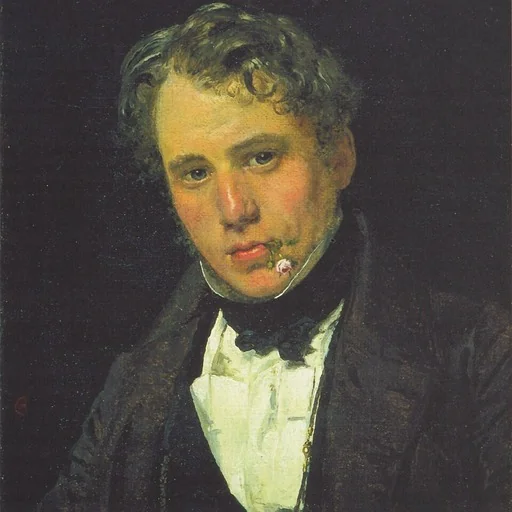
Nicolai Wilhelm Marstrand (24 December 1810 – 25 March 1873), painter and illustrator, was born in Copenhagen, Denmark, to Nicolai Jacob Marstrand, instrument maker and inventor, and Petra Othilia Smith.