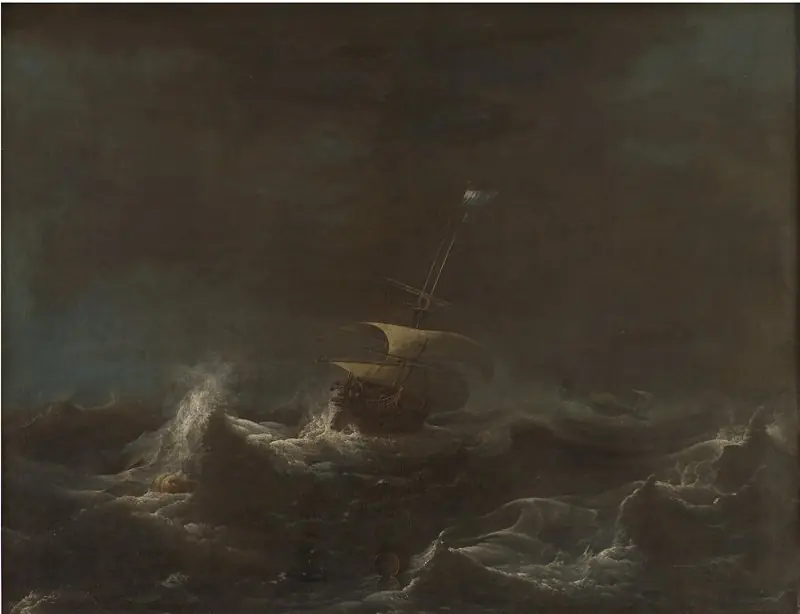
Artwork
A Ship on the High Seas Caught by a Squall, Known as ‘The Gust’
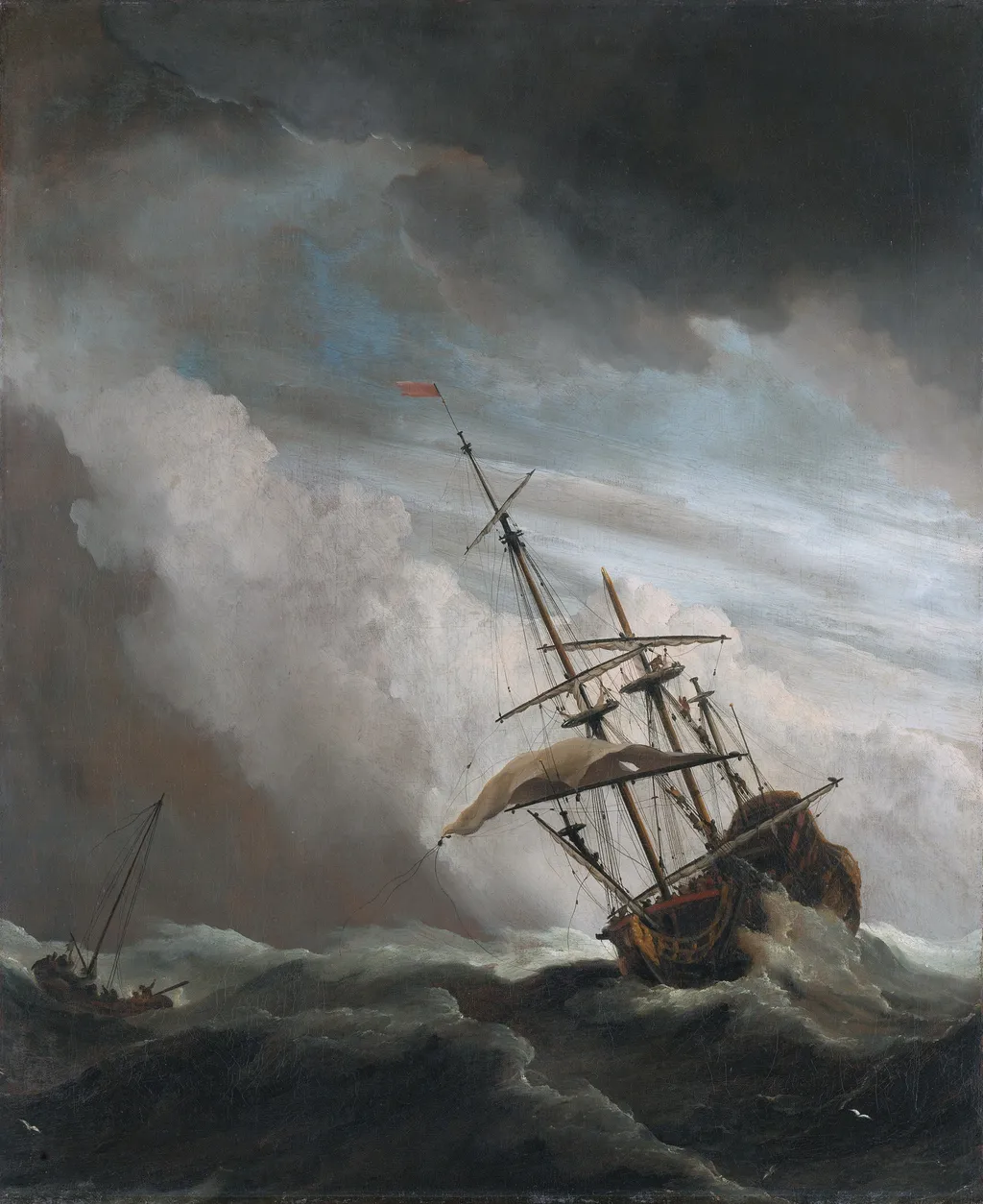
A Ship on the High Seas Caught by a Squall, Known as ‘The Gust’ is an oil painting by the Dutch Golden Age artist Willem van de Velde the Younger. It dates from 1690 and is held in the collection of the Rijksmuseum.
About this work
Subject & Meaning
The painting depicts a British warship of seventy guns caught in a violent storm, its sails torn and hull straining under the force of the squall.
The painting depicts a British warship of seventy guns caught in a violent storm, its sails torn and hull straining under the force of the squall. The vessel is shown heeling sharply, its rigging and deck cluttered with sailors working to control the foundering ship, while a small craft hovers nearby in the churning sea.
Scholars identify the vessel as a seventy-gun English man-of-war, aligning it with Willem van de Velde the Younger’s earlier representations of the HMS Resolution from 1676 and 1678, suggesting a deliberate continuity in the depiction of this specific warship. The turbulent weather and precarious condition of the ship contrast with the calm atmosphere of its pendant, A Cannon Shot, reinforcing the theme of nature’s overwhelming power over human engineering.
Technique & Style
Created in 1680, the work is an oil painting executed on a canvas support measuring 77 cm in height and 63.5 cm in width. The artist employed a meticulously realistic technique, maintaining an extreme precision in the depiction of the subject matter that distinguishes him from other marine painters. The handling of the medium reflects a commitment to the faithful reproduction of the elements, likely grounded in preparatory sketches made from nature before the artist's relocation to England.
Stylistically, the painting is recognized for its high quality of composition and coloristic skill, capturing a warship tossed by a squall on a chaotic sea. This dramatic scene contrasts sharply with the peaceful atmosphere of its pendant piece, demonstrating the master's ability to render dynamic maritime conditions with detailed accuracy.
History & Provenance
Willem van de Velde the Younger painted this oil on canvas around 1680, likely during his tenure in England after joining his father at the court of King Charles II circa 1672. The work was created alongside a companion piece, 'The Gun Salute,' and the pair remained associated for centuries. By the eighteenth century, both paintings belonged to the collection of Sir Philip Stephens, 1st Baronet of Horsford.
At a later date, the artwork entered the ownership of Charles Sedelmeyer before becoming part of the Rijksmuseum's holdings in Amsterdam.
The painting is held in the collection of the Rijksmuseum in Amsterdam. Historically, the work belonged to Sir Philip Stephens, 1st Baronet of Horsford, during the eighteenth century, and was later owned by Charles Sedelmeyer. It forms a paired entity with another marine painting by the same artist, also housed in the Rijksmuseum, with which it has long been associated.
The sources do not provide specific inventory numbers or a detailed list of exhibition appearances for this individual work.
Context
La Rafale, known in Dutch as De Windstoot, is a marine painting by Willem van de Velde the Younger, completed around 1680 and housed in the Rijksmuseum in Amsterdam. Depicting a 70-gun British warship battling a storm, the work measures 77 cm in height and 63.5 cm in width. Originally part of the collection of Sir Philip Stephens, it was later acquired by Charles Sedelmeyer and entered the Rijksmuseum’s holdings.
The painting forms a thematic pair with Le Coup de canon, another van de Velde work showing a salute from the HMS Resolution, reflecting the artist’s shift from Dutch to English patronage after 1672. Van de Velde the Younger is celebrated for his precise realism and mastery of marine subjects, with critics regarding his works as seminal to the genre. The Rijksmuseum identifies the vessel as a seventy-gun British warship, and scholars link its composition to earlier studies of the Resolution, underscoring the artist’s synthesis of observational detail and dramatic narrative.
Legacy
The painting is recognized as a seminal contribution to marine art, noted for its dramatic depiction of stormy seas and precise realism, influencing later interpretations of naval subjects. It was acquired by Charles Sedelmeyer and is now part of the Rijksmuseum's collection, where it is displayed alongside its companion work, Le Coup de canon, as part of a significant group of marine paintings that shaped European maritime art traditions. The work's technical mastery and thematic focus on natural forces have cemented its reputation as a masterpiece within the genre, frequently cited in art historical discussions of 17th-century marine painting.
Overview
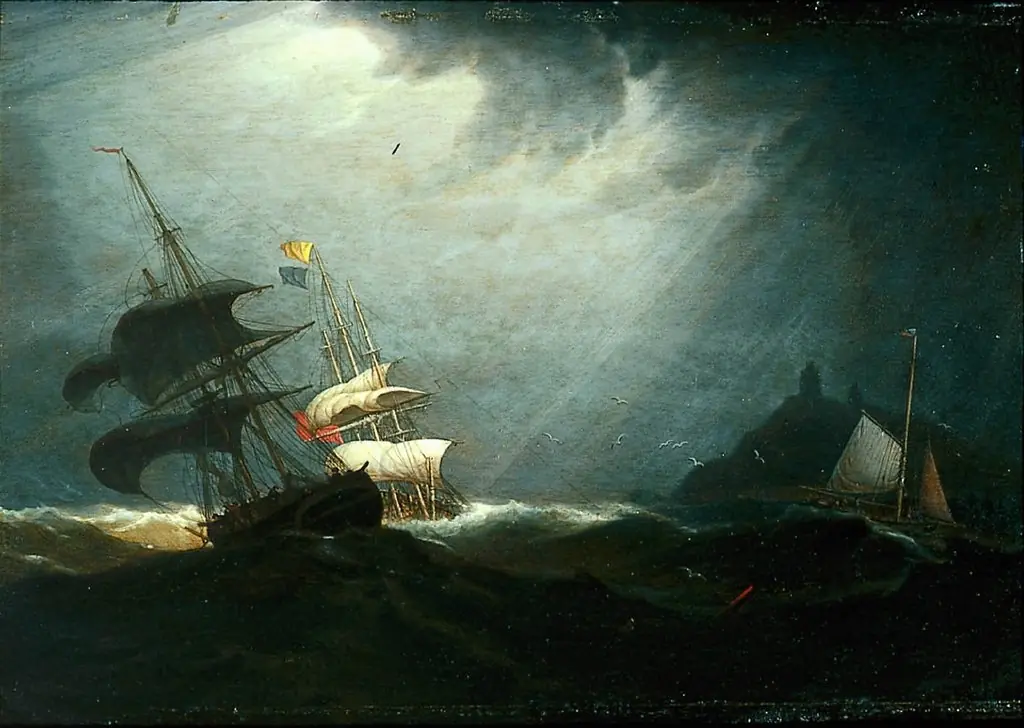
Willem van de Velde the Younger’s oil painting A Ship on the High Seas Caught by a Squall, Known as ‘The Gust’ was executed in 1690. The canvas captures a large sailing vessel battling a violent storm, its partially unfurled sails and a red pennant whipping in the wind. A smaller boat appears in the distance, while the sea is rendered in churning, frothy waves beneath a dark, swirling sky.
Own this work as a print
Artist & collection
Artist
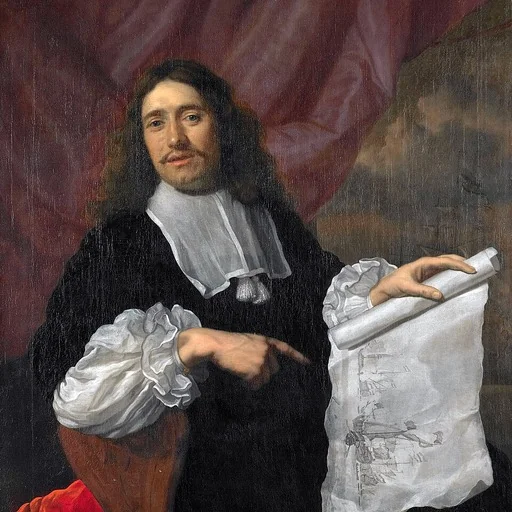
Willem van de Velde the Younger
Willem van de Velde the Younger (18 December 1633 (baptised) – 6 April 1707) was a Dutch painter who specialised in marine art.

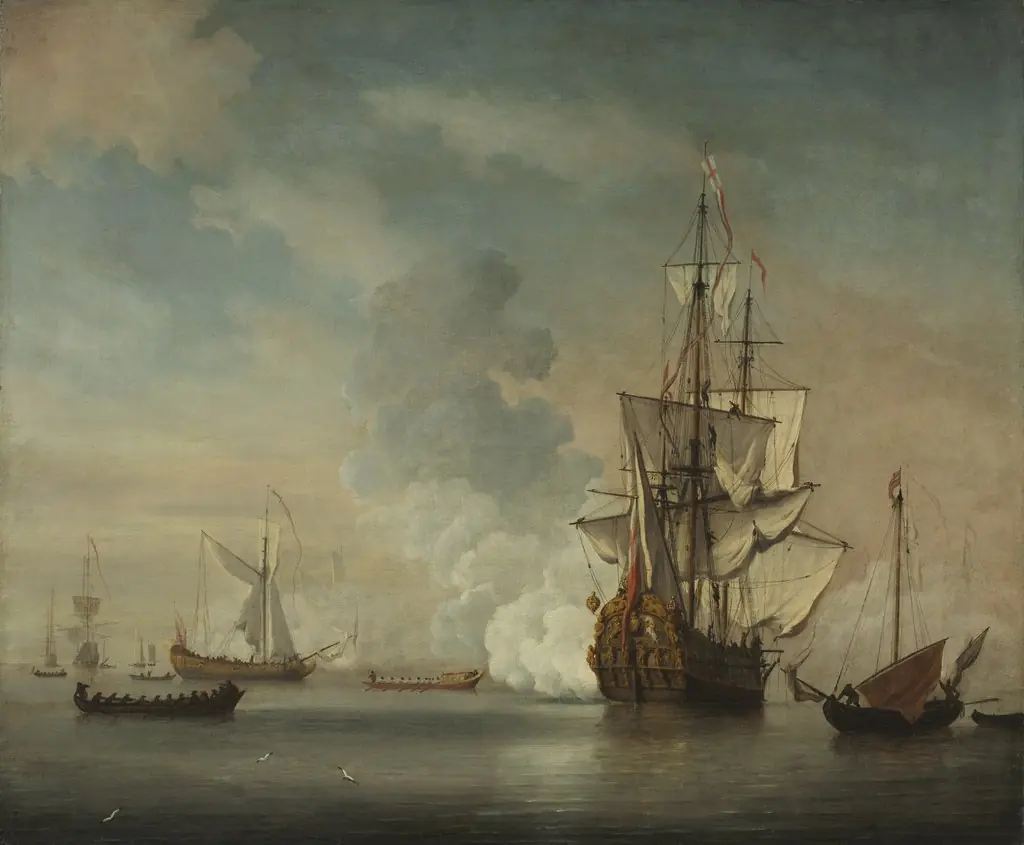 English Warship Firing a Salute
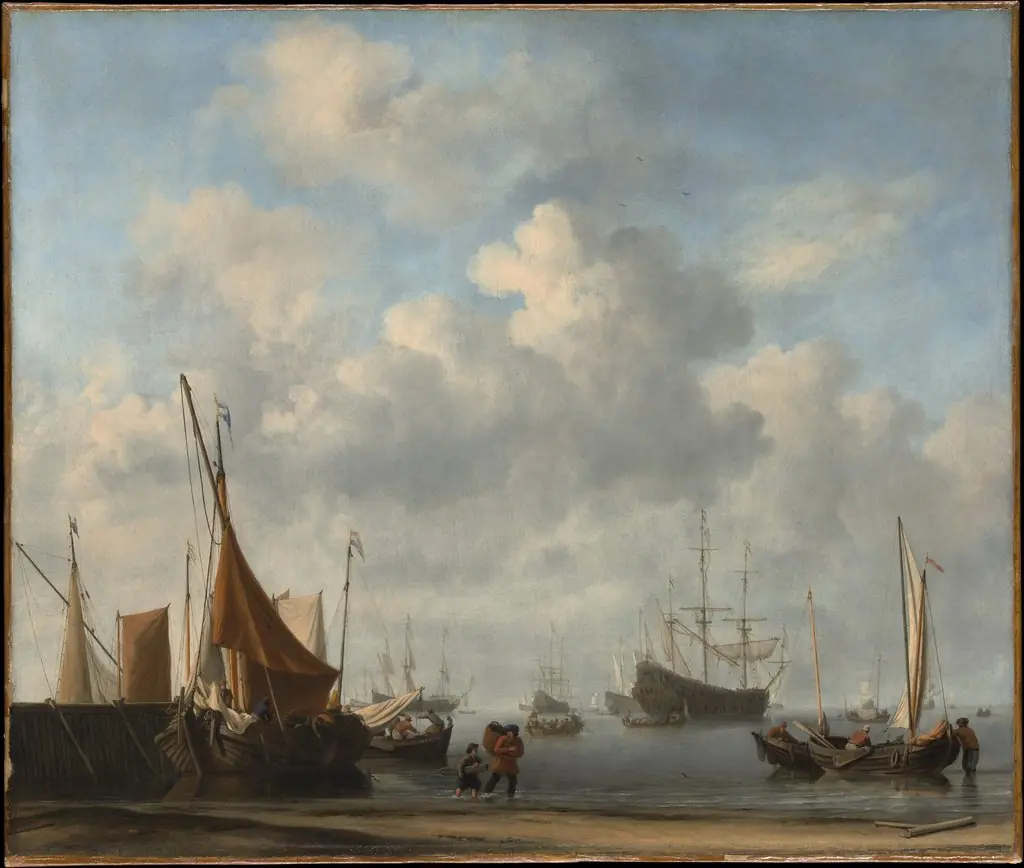 Entrance to a Dutch Port
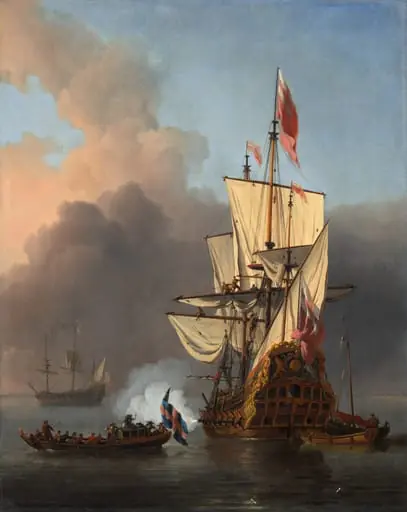 An English Warship Firing a Salute
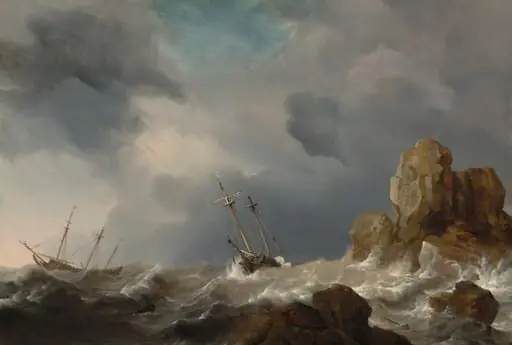 Ships in a Gale
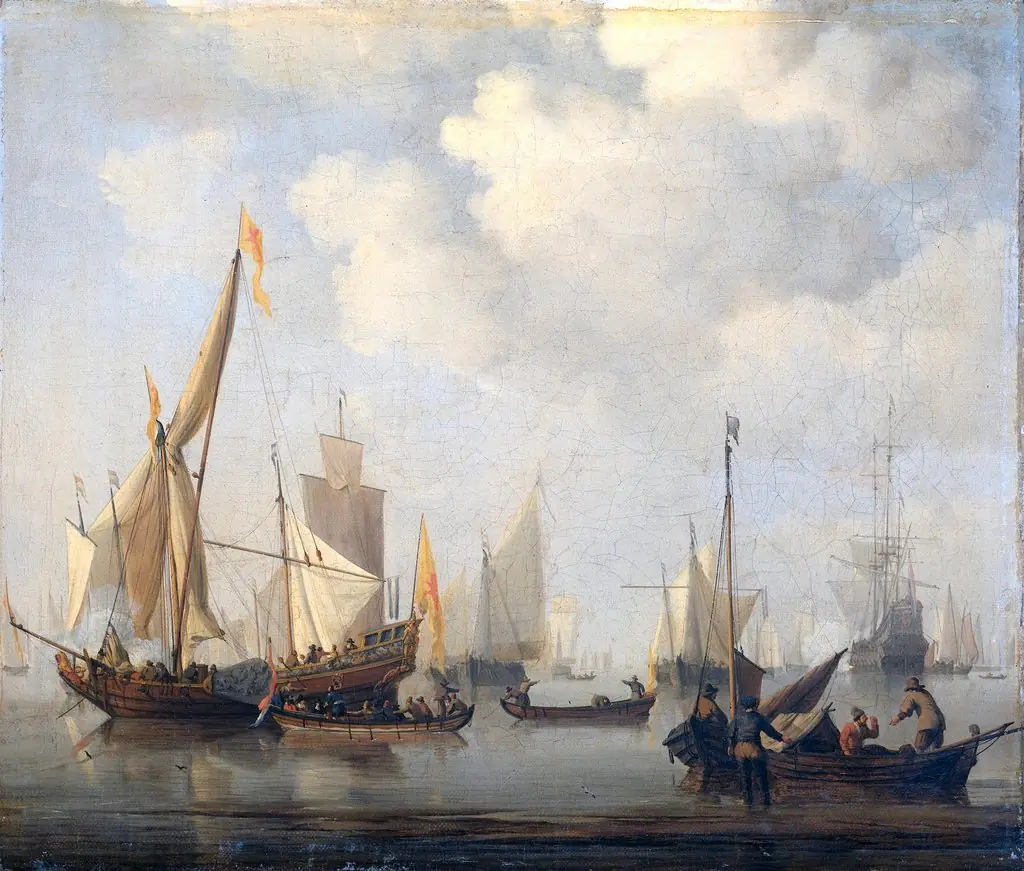 Ships in a calm
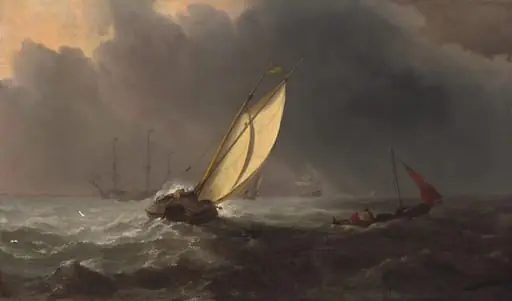 After the Storm
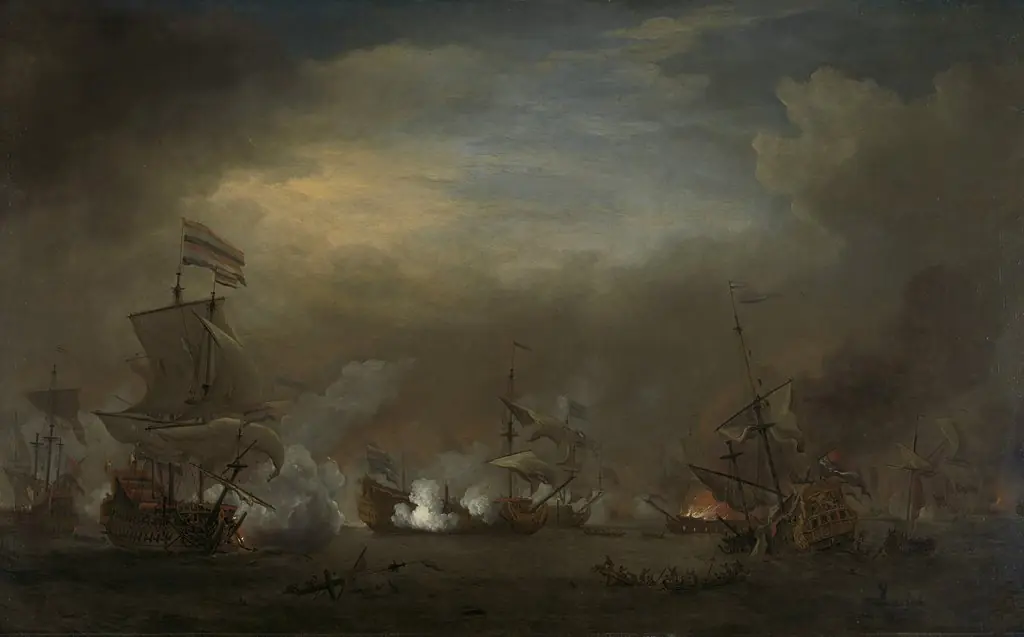 Encounter during the Battle of Kijkduin
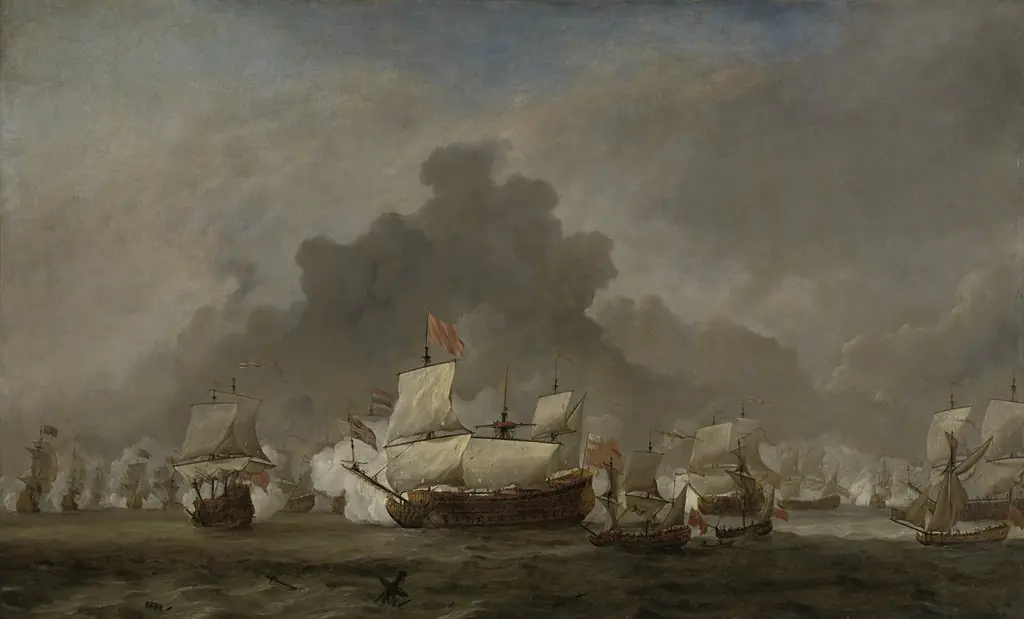 The skirmish of Michiel Adriaensz de Ruyter against the duke of York, commanding the 'Royal Prince'during the Battle of Solebay, 7 June 1672: episode from the Third Anglo-Dutch War (1672-74)