Artwork
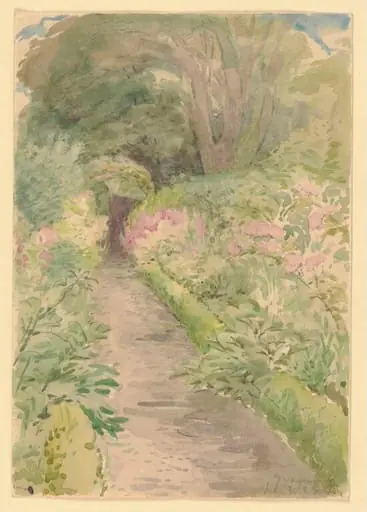
Steps in a Garden
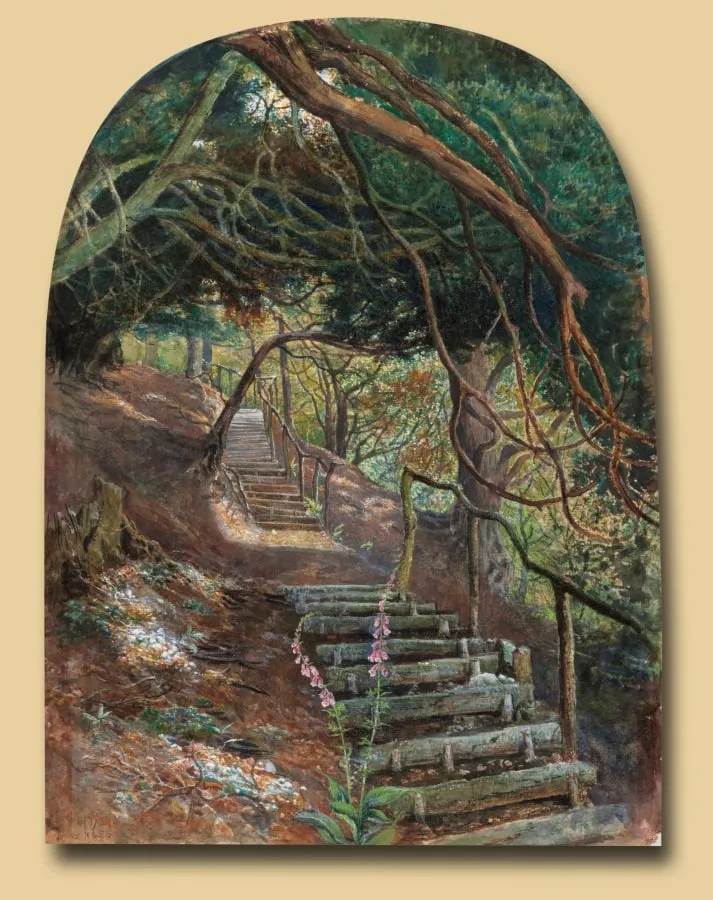
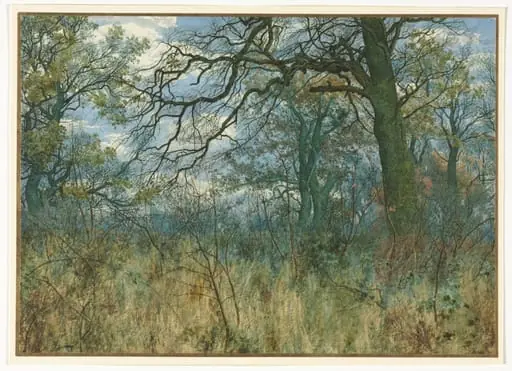
Steps in a Garden is a drawing by the Impressionist artist William Henry Millais. It dates from 1860 and is held in the collection of the Cleveland Museum of Art.
- Accession no.
- 2013.240
- Credit line
- Gift in memory of Helen Borowitz
About this work
Millais painted this quiet corner in 1860, when artists often worked outdoors to catch real light and texture.
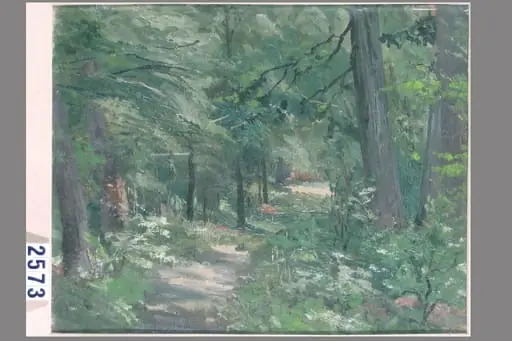
You see mossy stone steps climbing a shadowy garden hill, with foxgloves glowing in patches of sunlight.
Millais painted this quiet corner in 1860, when artists often worked outdoors to catch real light and texture. The ivy and rotting stump feel unplanned, like a snapshot of nature winning over order.
If you like this quiet mood, look up the subject of England, 19th century for more garden scenes.
Overview
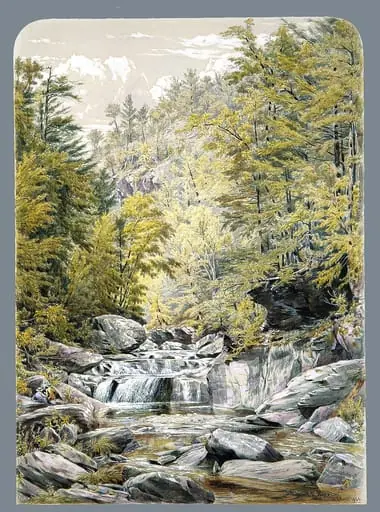
Created in 1860, this drawing by William Henry Millais captures a secluded garden slope marked by weathered stone steps. The composition is dominated by a dark canopy through which shafts of light break, illuminating clusters of foxgloves in the foreground. Ivy clings to the hillside, a decayed stump lies nearby, and the moss‑covered steps convey a sense of gradual decline.
Subject & Meaning
The work presents a quiet, almost forgotten corner of a garden, emphasizing the subtle tension between human‑made order and natural reclamation. The limited flora, primarily foxgloves, highlights the resilience of certain plants in shaded, moist conditions, while the overgrown stonework suggests the passage of time and nature’s slow encroachment on cultivated space.
Technique & Style
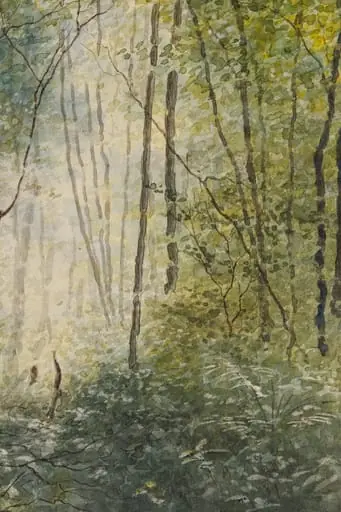
Executed during a period when plein‑air practices were gaining prominence, Millais employed fine, observational sketching to render texture and light. Delicate hatching conveys the mossy surface of the steps, and careful modulation of tone captures the interplay of shadow and the dappled sunlight filtering through the trees, reflecting a restrained, naturalistic aesthetic.
History & Provenance
William Henry Millais, closely linked to the founders of the Pre‑Raphaelite Brotherhood, produced this piece amid his extensive early‑1850s studies of natural settings. The drawing remained in private collections before entering a public museum inventory in the late twentieth century, where it has been displayed as an example of Victorian garden studies.
Artist & collection