Artwork
Untitled
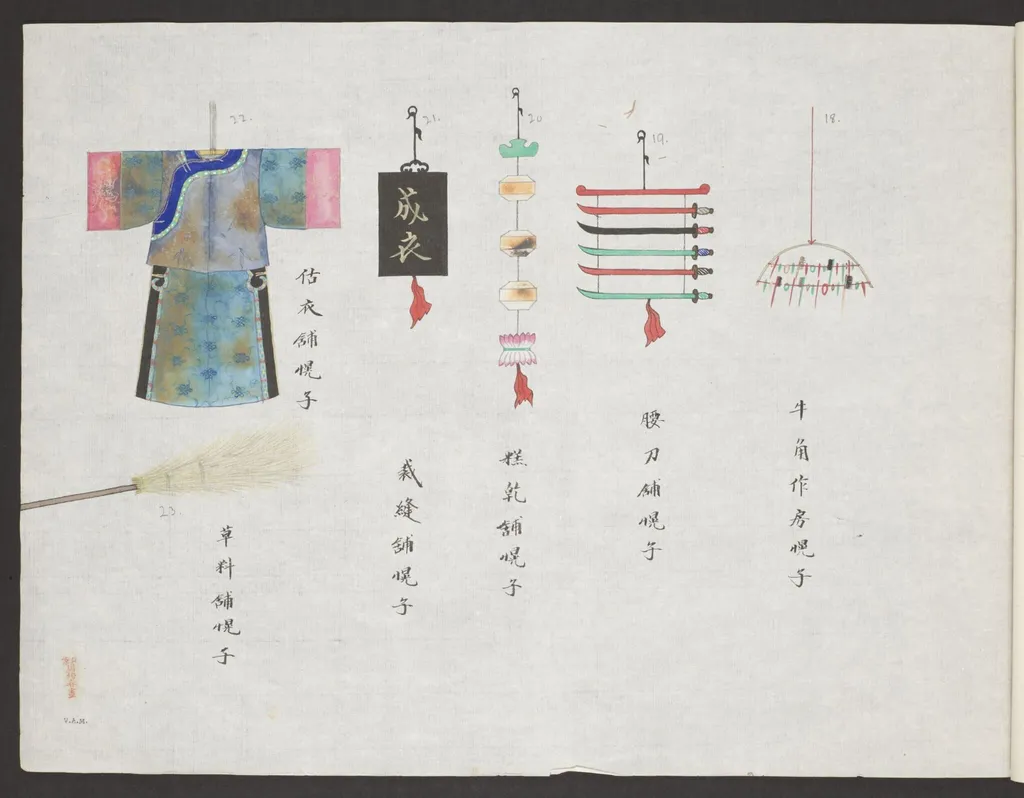
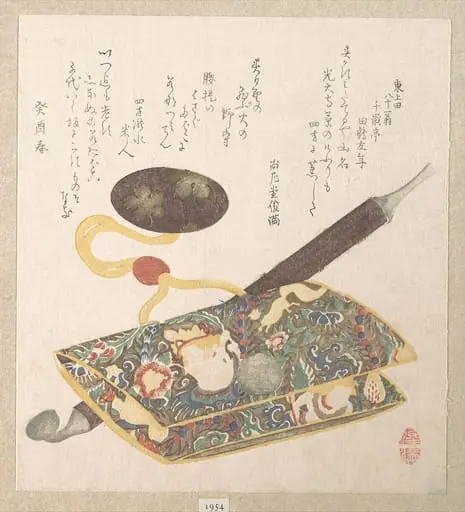
Untitled is a paint painting by Workshop of Zhou Peichun. It dates from 1900 and is held in the collection of the Victoria and Albert Museum.
About this work
Overview
This painting, created by the Workshop of Zhou Peichun around 1900, is one of 155 sheets in a systematic visual catalog of everyday items.
This painting, created by the Workshop of Zhou Peichun around 1900, is one of 155 sheets in a systematic visual catalog of everyday items. Rendered on a plain white ground, it presents six distinct objects with precise ink labeling. Each item is rendered in flat, vibrant colors and accompanied by handwritten Chinese characters.
A red seal in the lower left identifies its origin. The work belongs to a larger collection acquired by the Victoria and Albert Museum in 1910 from Mrs. Amherst-Law.
Subject & Meaning
The painting documents utilitarian and decorative household objects, including a patterned robe, a lantern, ornamental items, and a broom. These were likely common in domestic or commercial settings, possibly linked to shop displays or tailoring practices. The accompanying labels suggest an intent to record and classify, perhaps for inventory, training, or cultural preservation. The absence of human figures emphasizes the objects themselves as subjects of observation.
Technique & Style
The objects are painted with bold, unmodulated colors against a neutral background, enhancing their clarity. Outlines are crisp, and details like tassels and embroidery are simplified but legible. Ink inscriptions are neatly placed beside each item, functioning as both identification and annotation.
The style is methodical rather than expressive, prioritizing accuracy over ornamentation, reflecting a documentary approach common in craft and trade records of the period.
History & Provenance
The work was part of a collection of 18 sheets (E.3159–E.3176) assembled as a visual archive of commercial signage and daily paraphernalia. It entered the Victoria and Albert Museum’s holdings in 1910 through acquisition from Mrs. Amherst-Law, who likely obtained it during her time in China. The series was never intended for public display but served as a reference tool, possibly for artisans or merchants.
Context
In late Qing China, such visual catalogs were produced by artisan workshops to preserve designs, standardize production, or train apprentices. Similar records exist in textile and metalwork traditions, where pattern replication was essential. This group reflects a transitional moment, when traditional craft documentation began intersecting with emerging systems of cataloging, influenced by both indigenous practices and Western museum methods.
Legacy
Though originally functional, these sheets now serve as rare ethnographic records of early 20th-century material culture. Their preservation offers insight into the visual language of everyday commerce and domestic life in China. As artifacts of craft documentation, they provide a counterpoint to fine art traditions, highlighting the value placed on utility, repetition, and clarity in pre-modern artisanal systems.
Own this work as a print
Artist & collection
Artist
This handscroll from around 1900 shows a quiet riverside scene with willows and a distant bridge, painted by the Zhou Peichun Workshop.

- Untitled
 Untitled
 娘道成寺図の錦絵|Print of a Kabuki Dancer from the Maiden of the Dōjōji Temple (Musume Dōjōji)
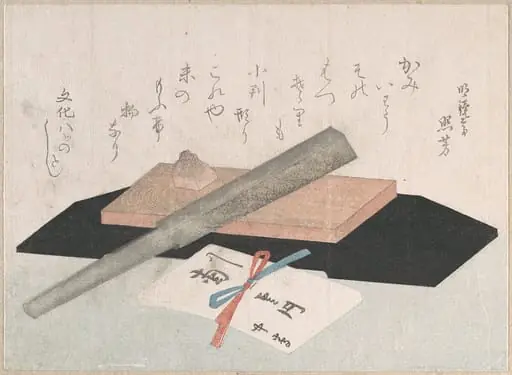 Untitled
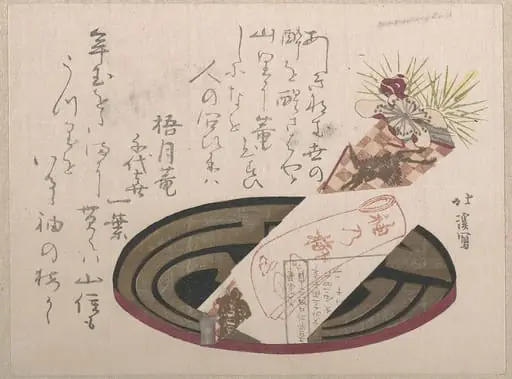 Untitled
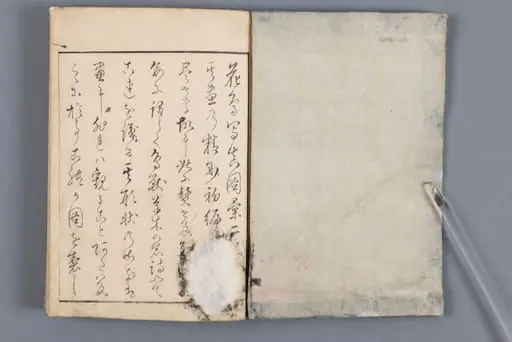 Atlas kwiatów i ptaków rysowanych z natury
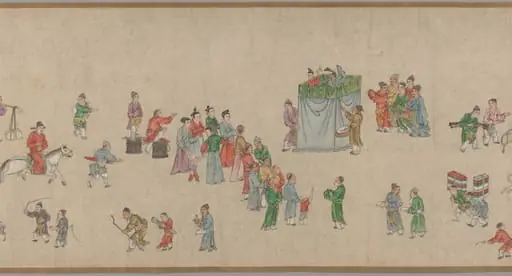 Street Scenes in Times of Peace 太平風會圖
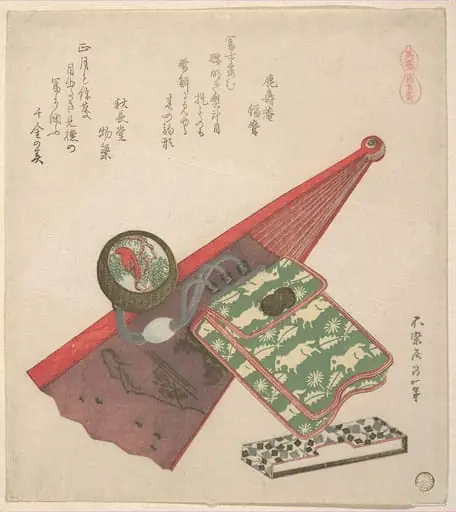
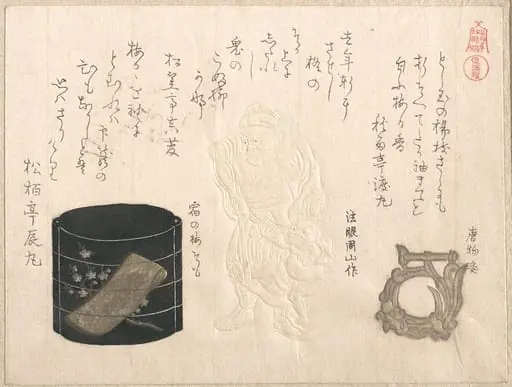 『名物革仝印籠仝根付』 印籠根付『春雨集』 摺物帖|“Inrō and Netsuke,” from the series Famous Leathers, Inrō, and Netsuke (Meibutsu kawa, inrō, netsuke)From the Spring Rain Collection (Harusame shū), vol. 2
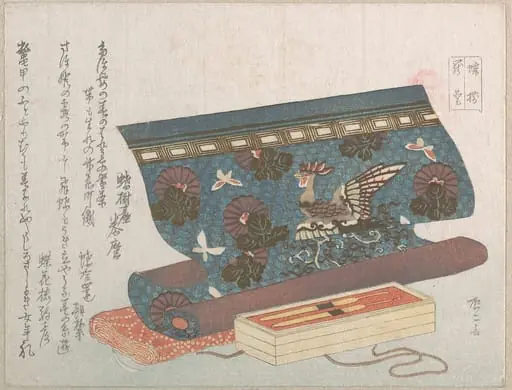 『蝶揃・寵愛』帯と簪|Roll of Cloth for an Obi and Tortoise-shell Hair Ornaments (“Presents for One’s Beloved”), from the Butterfly Series, from Spring Rain Surimono Album (Harusame surimono-jō, vol. 3)
 Untitled
 Untitled
 Untitled