
Movement
Native American Ledger Art
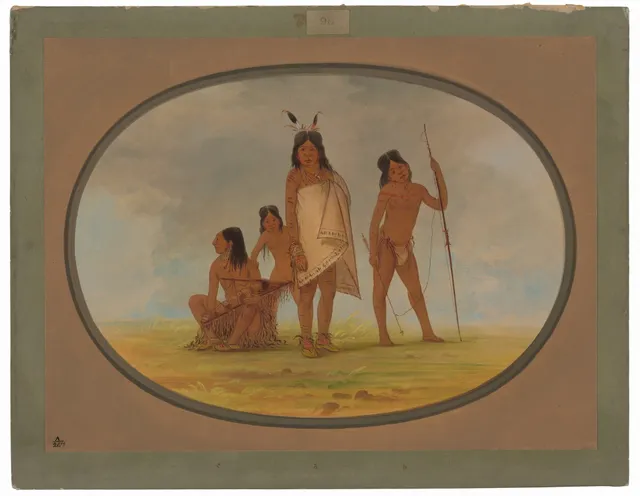
Native American Ledger Art is an art movement of the 1860–1930 period. The gallery holds 2 works in this movement, including works by George Catlin. Browse Native American Ledger Art paintings, portraits, pictures and artworks from the world's public-domain museum collections.
Native American ledger art is the Plains Indian tradition of narrative drawing that flourished in the second half of the nineteenth century, when warriors of the Cheyenne, Kiowa, Lakota, Arapaho, and Comanche adapted their older practice of painting deeds on buffalo hides to the paper that reached them through traders and military posts. The lined accountants' ledgers that gave the form its name became common during the reservation period, roughly after 1860, as the bison herds—and the hides they supplied—vanished. Working in graphite, ink, colored pencil, crayon, and watercolor, artists recorded what hide painting had always recorded: success in battle, the horse raid, the hunt, courtship, ceremony, and above all the act of "counting coup," touching an enemy in combat.
The medium was transformed by captivity. After the Red River War of 1874–1875, seventy-two southern Plains prisoners were interned at Fort Marion in St. Augustine, Florida, from 1875 to 1878 under Captain Richard Henry Pratt, who supplied them with drawing books. The Fort Marion drawings remain the form's most concentrated body of work. Stylistically, ledger art favors flat, sharply observed profile figures, precise rendering of regalia, weapons, and horse gear, and identifying name-glyphs that tie a deed to its doer; some artists also drew "winter counts," calendrical records of the years.
The acknowledged master is Howling Wolf (Cheyenne), the only artist known to have worked in all three phases—pre-reservation, Fort Marion, and reservation. Other canonical hands include Making Medicine, later the Episcopal deacon David Pendleton Oakerhater; the Cheyenne Bear's Heart; the Kiowa Wohaw and the long-lived professional Silver Horn (1860–1940); Black Hawk (Sans Arc Lakota), whose roughly seventy-six drawings of 1880–1881 document ritual life; and Amos Bad Heart Bull (Oglala), tribal historian, whose some 415 drawings form A Pictographic History of the Oglala Sioux.
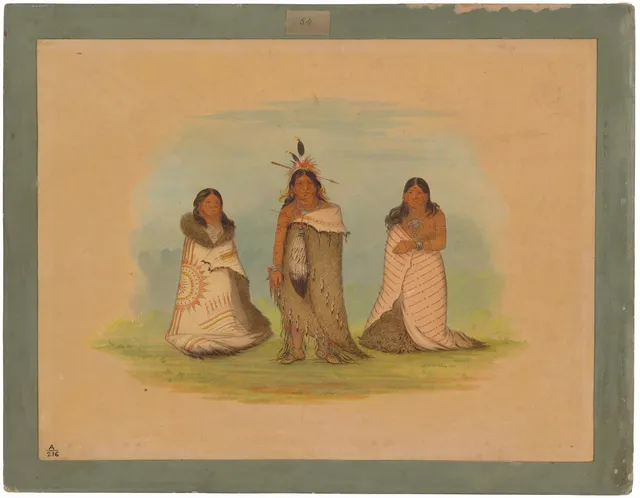
Ledger art is the Indigenous, first-person counterpart to the outsider documentation of painters such as George Catlin, whose 1830s portraits of Plains peoples—including works held here—recorded the same warrior society from without. The tradition never truly ended: it directly informs the vigorous contemporary ledger-art revival, in which artists draw on antique ledger pages to address present-day Native experience.
Key artists
Works
Frequently asked questions
What is Native American Ledger Art?
Native American Ledger Art is an art movement. Plains Indian narrative drawing of the late 19th century, made on the lined paper of accountants' ledgers.
Who are the key Native American Ledger Art artists?
Key Native American Ledger Art artists in the collection include George Catlin.
When did Native American Ledger Art take place?
Native American Ledger Art dates from 1860–1930.
Where can I see Native American Ledger Art works?
Native American Ledger Art works in the collection are held by National Gallery of Art.