February 10 in Art History
9 real events recorded on February 10, the earliest from 1660. 2 artists were born , 1 died on this date.
The day's biggest moments
Born on this day 2
- 1791 Born
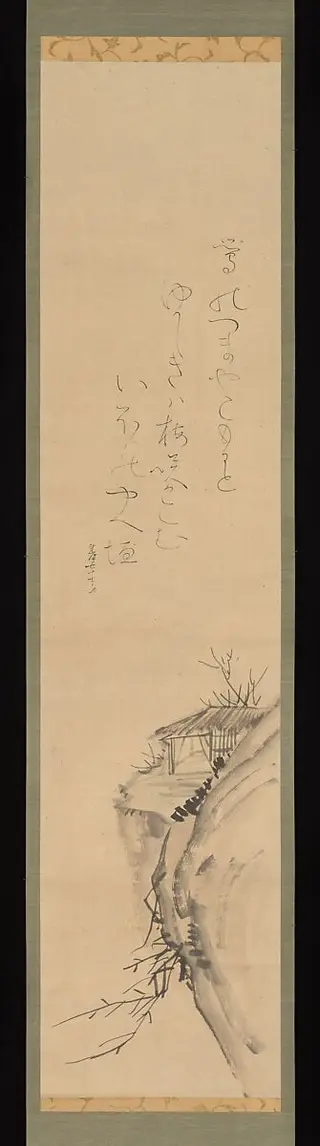
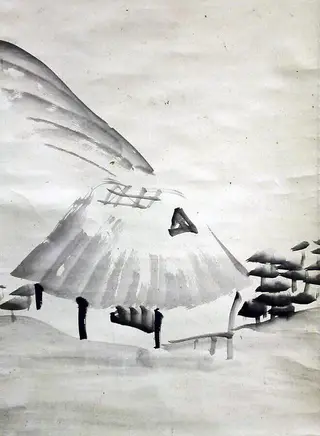
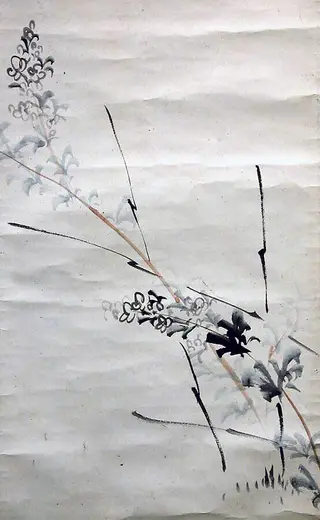
Born this day: Ōtagaki Rengetsu
Ōtagaki Rengetsu was a Japanese artist born on February 10, 1791, known for her work within the 19th-century Japanese and Buddhist movements. Her art reflects the intersection of traditional Japanese culture and spirituality.
Rengetsu's legacy lies in her unique contributions to Japanese art as a female artist of her time.
- 1795 Born
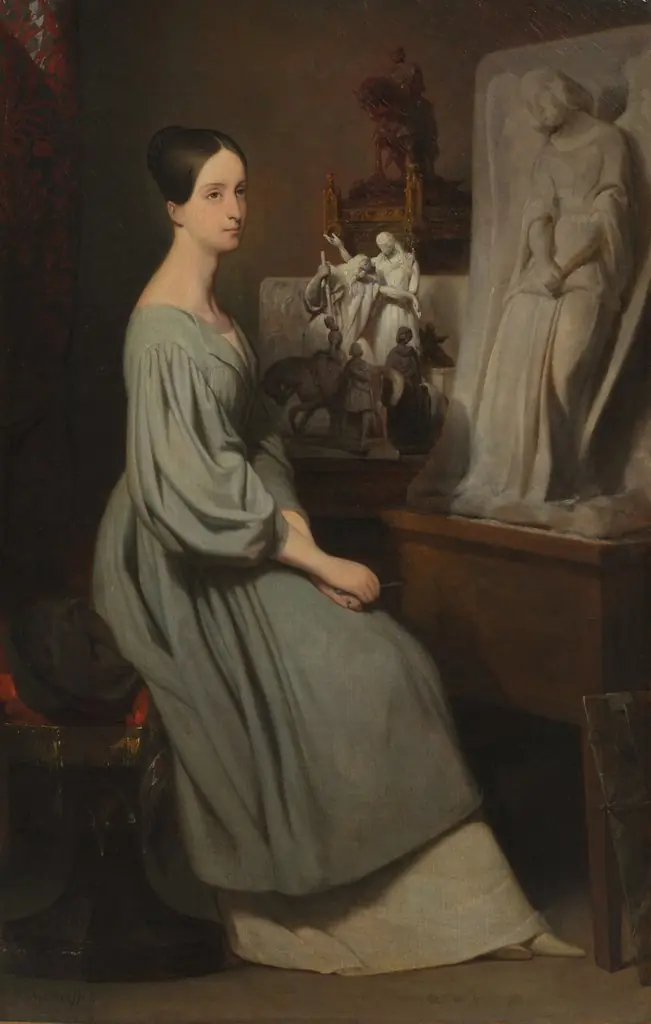
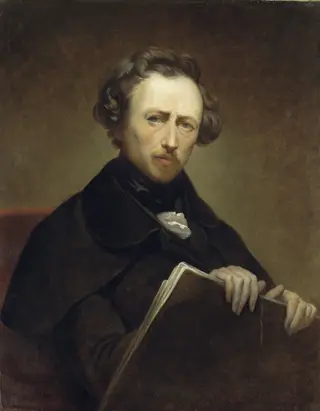
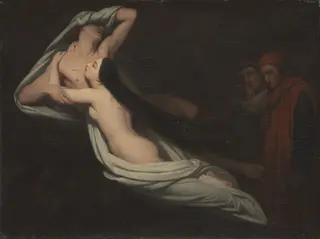
Born this day: Ary Scheffer
Ary Scheffer, a Dutch-French Romantic painter, was born on February 10, 1795. He is known for his literary-inspired works, such as those based on Dante and Goethe, as well as his portraits of influential figures. His artistic style reflects the Romantic era, with a focus on emotion and imagination.
Ary Scheffer's work continues to represent the Romantic movement's emphasis on literature and emotion in art.
Died on this day 1
- 1660 Died
Died this day: Judith Leyster
Judith Leyster, a pioneering Dutch painter, defied conventions by running her own studio and out-earning male peers in 17th-century Haarlem. Her lively brushwork and warm lighting characterize her work, as seen in pieces like Self-Portrait and Young Boy in Profile.
She paved the way for future female artists, leaving a lasting impact on the art world despite being overlooked for centuries.
Exhibitions & salons 5
- 1884 Salon Landmark
Opening of the Salon des Indépendants
On February 10, 1884, the Société des Artistes Indépendants held its first exhibition at the Palais des Tuileries in Paris. Founded by artists including Albert Dubois-Pillet, Odilon Redon, and Georges Seurat, the group established a radical alternative to the official Salon, operating under the principle of 'no jury, no prizes.' This inaugural show featured over 4,000 works and provided a crucial platform for the emerging Neo-Impressionists and Symbolists who were rejected by the academic establishment.
It institutionalized the 'no jury' model that defined modern independent art movements for decades.
- 1884 Exhibition Landmark
First Exhibition of the Société des Artistes Indépendants
While the society was founded earlier, the specific opening day of their first major public exhibition occurred on February 10, 1884. This event marked the first time the public could view works by artists like Seurat and Redon outside the constraints of the Académie des Beaux-Arts. The exhibition was notable for its sheer volume and the diversity of styles, ranging from Pointillism to Symbolism, challenging the rigid aesthetic standards of the time.
It legitimized avant-garde movements and paved the way for future independent exhibitions like the Salon d'Automne.
- 1962 Exhibition
Roy Lichtenstein's first Castelli solo show
Roy Lichtenstein's first solo exhibition at Leo Castelli Gallery in New York opened on February 10, 1962 and ran through March 3. The show included works such as Look Mickey, Blam, Engagement Ring and The Refrigerator, placing comic-book imagery, speech balloons and Ben-Day-dot effects in the arena of high modernist painting. Sources describe the exhibition as sold out before opening, a sign of the rapid market and critical traction Pop art was gaining in New York. Look Mickey in particular became a hinge work between Lichtenstein's abstract-expressionist training and his mature Pop vocabulary, using mass-culture sources to test ideas about reproduction, authorship and the museum.
The show helped establish Lichtenstein as a central figure in American Pop art.
- 1970 Exhibition
22 Realists opens at the Whitney
The Whitney Museum of American Art opened 22 Realists on February 10, 1970, with the exhibition continuing to March 29. Curated by James K. Monte, it assembled painters associated with renewed figurative and realist practice at a moment when postwar abstraction, Pop, Minimalism and Conceptual art dominated much critical discussion. The participant list ranged from photorealist and sharp-focus painters to artists pursuing more psychological or constructed forms of representation. By putting Chuck Close, Audrey Flack, Richard Estes, Malcolm Morley, Philip Pearlstein, Robert Bechtle and others under one institutional frame, the exhibition helped clarify that realism in the late 1960s was not a simple return to tradition but a contested contemporary position.
It gave museum visibility to several artists who shaped later debates around Photorealism and postwar figuration.
Chuck Close , John Clem Clarke , Robert Bechtle , Jack Beal , William Bailey Whitney Museum of American Art, Manhattan
- 2005 Exhibition
Africa Remix reaches the Hayward Gallery
Africa Remix: Contemporary Art of a Continent opened its Hayward Gallery presentation in London on February 10, 2005, after debuting at Museum Kunstpalast in Dusseldorf. Curated by Simon Njami with an international team, the touring exhibition brought together more than eighty artists from Africa and the diaspora, organized around themes including identity, history, the body, the city and the land. It was widely discussed as the largest contemporary African art exhibition staged in Europe and as a successor, in ambition if not method, to Magiciens de la Terre. Its London presentation foregrounded artists such as Samuel Fosso, El Anatsui, Wangechi Mutu, Romuald Hazoume and Goncalo Mabunda while drawing criticism over whether a continental survey could avoid simplifying its subject.
The exhibition expanded museum audiences for contemporary African art while sharpening debates about global survey shows.
Auctions, prizes & heists 1
- 2008 Heist
Buehrle Collection masterworks stolen
On February 10, 2008, armed robbers stole four paintings from the Foundation E. G. Buehrle Collection in Zurich: Paul Cezanne's Boy in the Red Vest, Edgar Degas's Count Lepic and His Daughters, Claude Monet's Poppies near Vetheuil and Vincent van Gogh's Blossoming Chestnut Branches. The works were valued at roughly CHF 180 million, making the robbery one of the largest art thefts by value in Europe. Two paintings, the Monet and Van Gogh, were found days later in a parked car; the Cezanne and Degas were recovered in Serbia in 2012, with the Degas reportedly damaged. The case exposed the vulnerability of private-museum collections holding internationally famous Impressionist and Post-Impressionist works.
The theft became a reference point for security risks around small high-value collections.