February 18 in Art History
7 real events recorded on February 18, the earliest from 1823. 2 artists were born , 1 died on this date.
The day's biggest moments
Born on this day 2
- 1823 Born
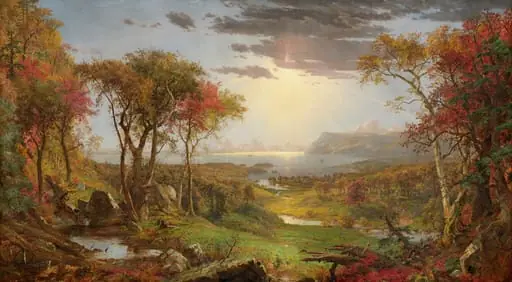
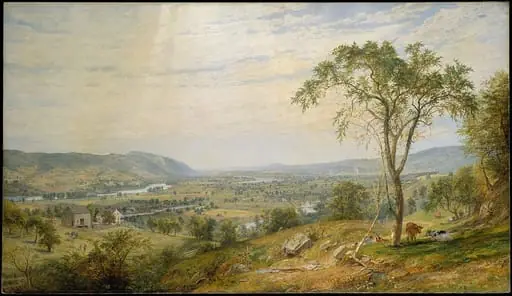
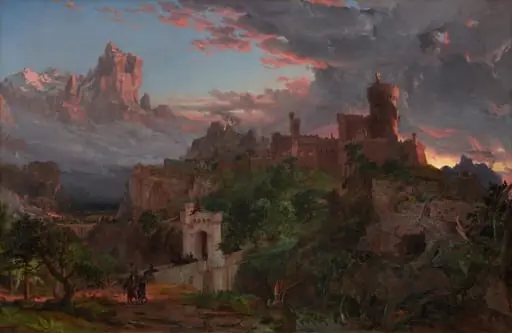
Born this day: Jasper Francis Cropsey
Jasper Francis Cropsey, born on February 18, 1823, was an American architect and artist known for his landscape paintings, particularly as a key figure in the Hudson River School movement. His works often captured serene and idyllic American landscapes, reflecting his interest in architecture and the natural world.
Cropsey's legacy lies in his contributions to the Hudson River School, shaping the way Americans perceived and appreciated their natural landscape through art.
- 1860 Born
Born this day: Anders Zorn
Anders Zorn, a Swedish artist, was born on February 18, 1860. He is known for his society portraits, outdoor nudes, and etchings, which showcase his mastery of capturing light and texture. Zorn's work often featured prominent figures, including three American presidents and European royalty.
Anders Zorn's legacy lies in his contributions to the development of Swedish art, particularly in the realms of portrait painting and etching.
Died on this day 1
- 1902 Died
Died this day: Albert Bierstadt
Albert Bierstadt was an American painter known for his landscapes that often featured the American West, exemplified in works like 'The Last of the Buffalo' and 'Mount Corcoran'. His use of light and color captured the grandeur of nature. On February 18, 1902, Bierstadt passed away, leaving behind a body of work that continues to inspire with its serene and powerful depictions of the natural world.
Bierstadt's legacy remains in his captivating and detailed landscapes that contributed significantly to the American art movement.
Exhibitions & salons 2
- 1893 Exhibition
Grafton Galleries' First London Exhibition Opens
The first London exhibition of the Grafton Galleries opened on February 18, 1893, at the newly established Mayfair venue on Grafton Street, with rooms extending toward Bruton Street. The opening mattered less for a single named artist than for the exhibition infrastructure it created. Over the next two decades, the Grafton became a major London platform for commercial, society, and avant-garde display. It later hosted Paul Durand-Ruel's 1905 Impressionist exhibition and Roger Fry's two Post-Impressionist exhibitions of 1910 and 1912, events that helped shift British encounters with modern French painting. The February 18 opening therefore marks the start of a venue that became an important hinge between the late Victorian art market and modernist exhibition culture.
The gallery became one of London's key gateways for Impressionism and Post-Impressionism.
- 2016 Exhibition
Munch and Expressionism Opens at Neue Galerie
Neue Galerie New York opened "Munch and Expressionism" on February 18, 2016, presenting Edvard Munch as a decisive source for German and Austrian Expressionism. Organized with the Munch Museum in Oslo and curated by Jill Lloyd with Reinhold Heller, the exhibition centered on the formal and psychological routes by which Munch's prints and paintings shaped artists such as Ernst Ludwig Kirchner, Emil Nolde, Oskar Kokoschka, and Egon Schiele. Its public draw included the 1895 pastel version of The Scream, but the show's art-historical claim was broader: it reframed Munch not as an isolated Symbolist icon but as an active precursor whose handling of anxiety, sexuality, and modern urban life helped define Expressionist language.
The exhibition strengthened Munch's position as a transnational catalyst for Expressionism.
Ernst Ludwig Kirchner , Emil Nolde , Oskar Kokoschka , Edvard Munch
Unveilings & commissions 1
- 1889 Unveiling
Lewis Cass Statue Unveiled in the U.S. Capitol
Daniel Chester French's marble statue of Lewis Cass was unveiled in the United States Capitol on February 18, 1889, after Michigan donated it as the state's first contribution to the National Statuary Hall Collection. French modeled the work in Paris and had it carved in marble before shipping it to Washington. The public ceremony placed a young American sculptor's work inside one of the country's most visible civic art settings, decades before French's Lincoln Memorial figure made him canonical. Although the subject was political, the event belongs to the history of public sculpture: it shows how state memory, portraiture, and federal display were consolidated through commissioned marble monuments in the late nineteenth century.
The statue helped establish French's national reputation and remains part of debates over whom public art should commemorate.
Auctions, prizes & heists 1
- 1897 Heist Landmark
Benin Expedition Concludes and Benin Court Art Is Taken
The British Benin Expedition is dated in fetched sources to February 9-18, 1897; art-historical accounts of Benin specifically mark February 18, 1897, as the arrival of British forces in Benin City, after which the Oba's court objects became spoils of war. Thousands of brass plaques, ivory carvings, altar heads, and other court works were removed with little record of their original ritual or architectural contexts. The objects later entered the British Museum, private hands, auctions, and museums across Europe and North America. The event is central to the history of African art because the so-called Benin Bronzes became proof of the technical and historical sophistication of Benin visual culture while also becoming emblematic of colonial plunder.
The dispersal created one of the most consequential restitution debates in modern museum history.