January 18 in Art History
7 real events recorded on January 18, the earliest from 1573. 2 artists were born , 1 died on this date.
The day's biggest moments
Born on this day 2
- 1573 Born
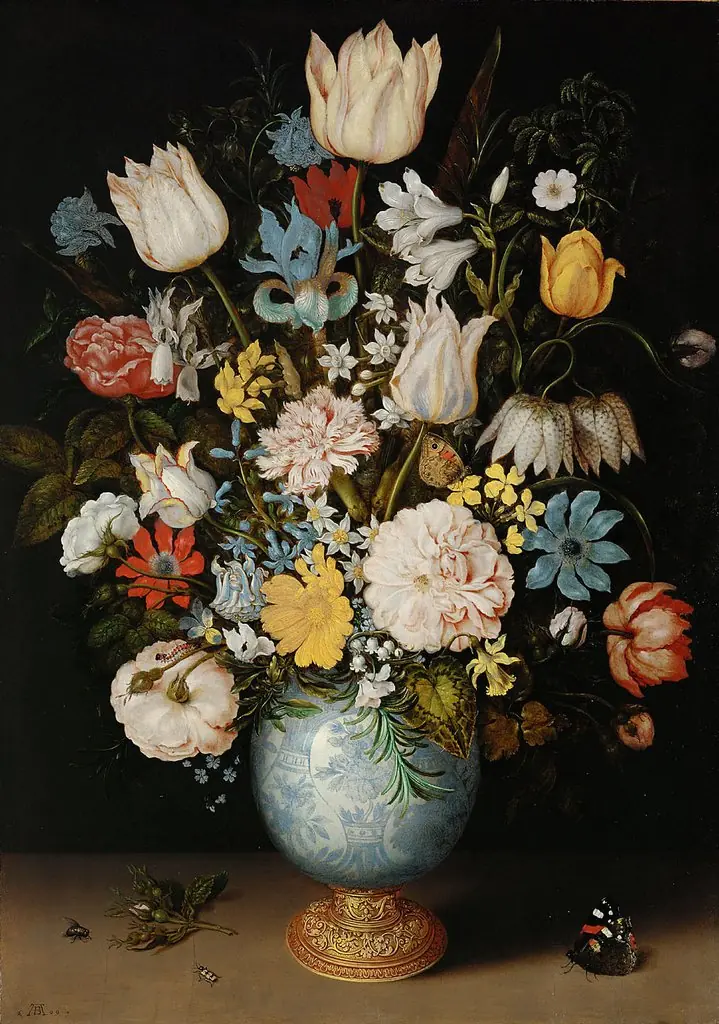
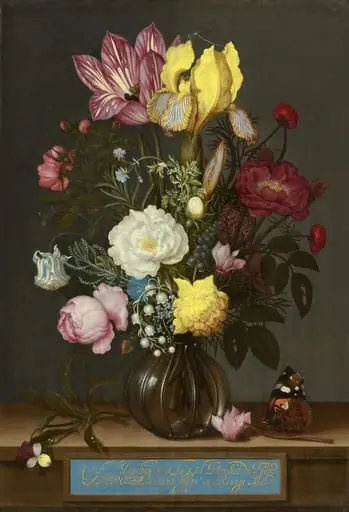
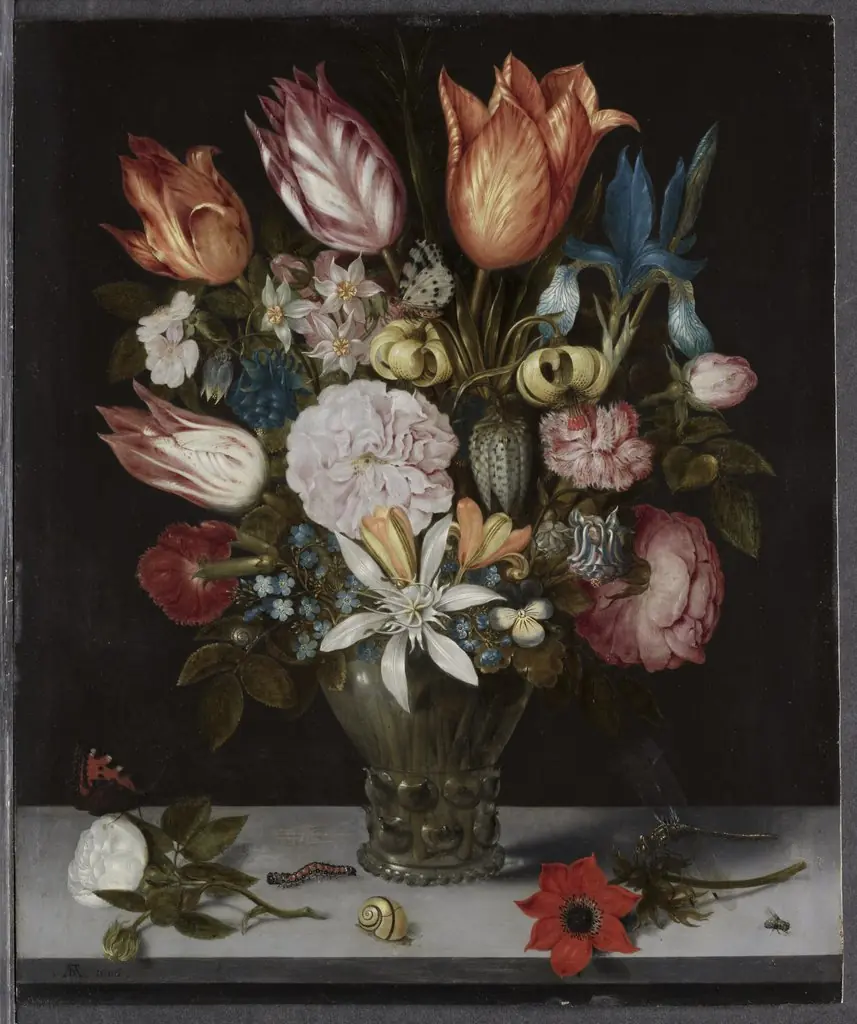
Born this day: Ambrosius Bosschaert
Ambrosius Bosschaert, a Flemish-born Dutch painter, is celebrated for pioneering floral still lifes as a distinct genre. His works, such as 'Flowers in a blue and white porcelain vase', showcase exquisite arrangements and masterful technique. As a founder of a painting dynasty, he influenced the development of still life art.
He remains a pivotal figure in the history of Dutch still life painting, particularly in the realm of floral art.
- 1852 Born
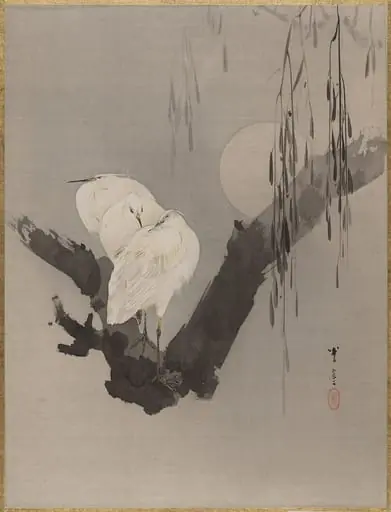
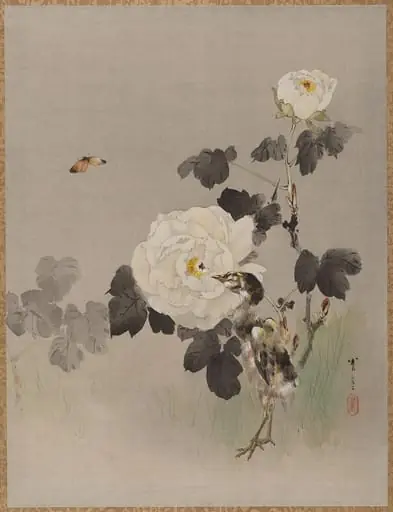
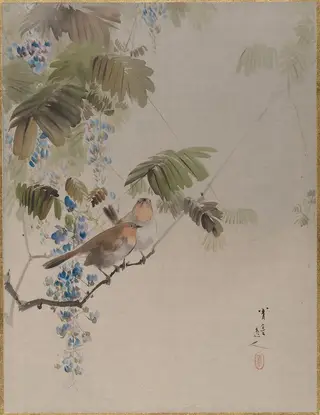
Born this day: Watanabe Seitei
Watanabe Seitei, a Japanese artist, was born on January 18, 1852. His work is characterized by traditional Japanese techniques and styles. As a Japanese artist, he contributed to the country's rich cultural heritage.
Watanabe Seitei's legacy lies in his contributions to Japanese art, blending traditional and modern elements.
Died on this day 1
- 1930 Died
Died this day: George Gardner Symons
American artist George Gardner Symons, born in Chicago in 1861, is known for his captivating landscapes, as seen in works like An Opalescent River and The Winter Sun. His art often conveyed a sense of serene natural beauty.
Symons' serene and opalescent landscapes continue to inspire contemporary artists and art lovers alike.
Exhibitions & salons 2
- 1890 Exhibition Landmark
Van Gogh shown at Les XX
The seventh annual exhibition of Les XX opened in Brussels with six paintings by Vincent van Gogh, including two Sunflowers, Ivy, Flowering Orchard, Wheat Field, Sunrise, and The Red Vineyard. The invitation from Octave Maus placed Van Gogh inside one of Europe's most alert avant-garde circles while he was still alive and largely unrecognized by the public. The opening dinner became notorious after Henry de Groux attacked the works, prompting Henri de Toulouse-Lautrec and Paul Signac to defend Van Gogh. The exhibition also produced the sale of The Red Vineyard to Anna Boch, often cited as the only painting Van Gogh sold during his lifetime.
The Brussels showing became a crucial marker of Van Gogh's recognition by avant-garde peers before his posthumous fame.
- 1916 Exhibition
John Marin watercolors open at 291
Alfred Stieglitz's gallery 291 opened Recent water colors by John Marin in New York. The exhibition came late in the life of 291, after the gallery had helped shift American modernism from pictorial photography toward experimental painting, sculpture, and works on paper. Marin had been part of Stieglitz's circle for years, and recurring exhibitions at 291 helped frame his watercolors as modernist statements rather than secondary studies. The January 1916 show was followed that season by exhibitions of Abraham Walkowitz, Paul Strand, Marsden Hartley, and Georgia O'Keeffe, indicating how compactly 291 was presenting the core of an emerging American avant-garde before it closed in 1917.
The show reinforced Marin's place in the Stieglitz circle and in early American modernism.
Openings & foundings 1
- 1907 Founding
Women's Guild of Arts first gathers
The first gathering of the Women's Guild of Arts was held in Mary Sargant Florence's Chelsea studio. The group was formed by women artists, designers, and craftworkers who needed a professional alternative to the Art Workers' Guild, which excluded women. Present at the initial meeting were figures including Christiana Herringham, Mary Batten, Grace Christie, Florence Kate Kingsford, Feodora Gleichen, Mary Lowndes, and Sargant Florence. May Morris became the leading force in the guild's early years, and the organization quickly built a network for lectures, studio visits, exhibitions, and professional support. Its overlap with suffrage activism made it an important node in the relationship between British Arts and Crafts practice and first-wave feminism.
The guild gave women art workers a professional network parallel to male-dominated arts institutions.
Auctions, prizes & heists 1
- 2013 Heist
John Mark Tillmann arrested
Canadian police arrested John Mark Tillmann of Fall River, Nova Scotia, after investigations involving the RCMP, Interpol, the FBI, and the U.S. Department of Homeland Security. The arrest opened one of the largest cultural-property recovery cases by volume: authorities eventually connected Tillmann to more than 10,000 stolen antiques, artworks, rare books, documents, and artifacts from museums, galleries, archives, shops, and institutions. Early seizures included thousands of objects, and the investigation later required special storage for the recovered material. Tillmann was sentenced later in 2013. Although the case was not the largest art crime by market value, it became notable for the scale, variety, and duration of the thefts.
The case highlighted the difficulty of detecting long-running, low-profile theft across many cultural institutions.