Artwork
Untitled
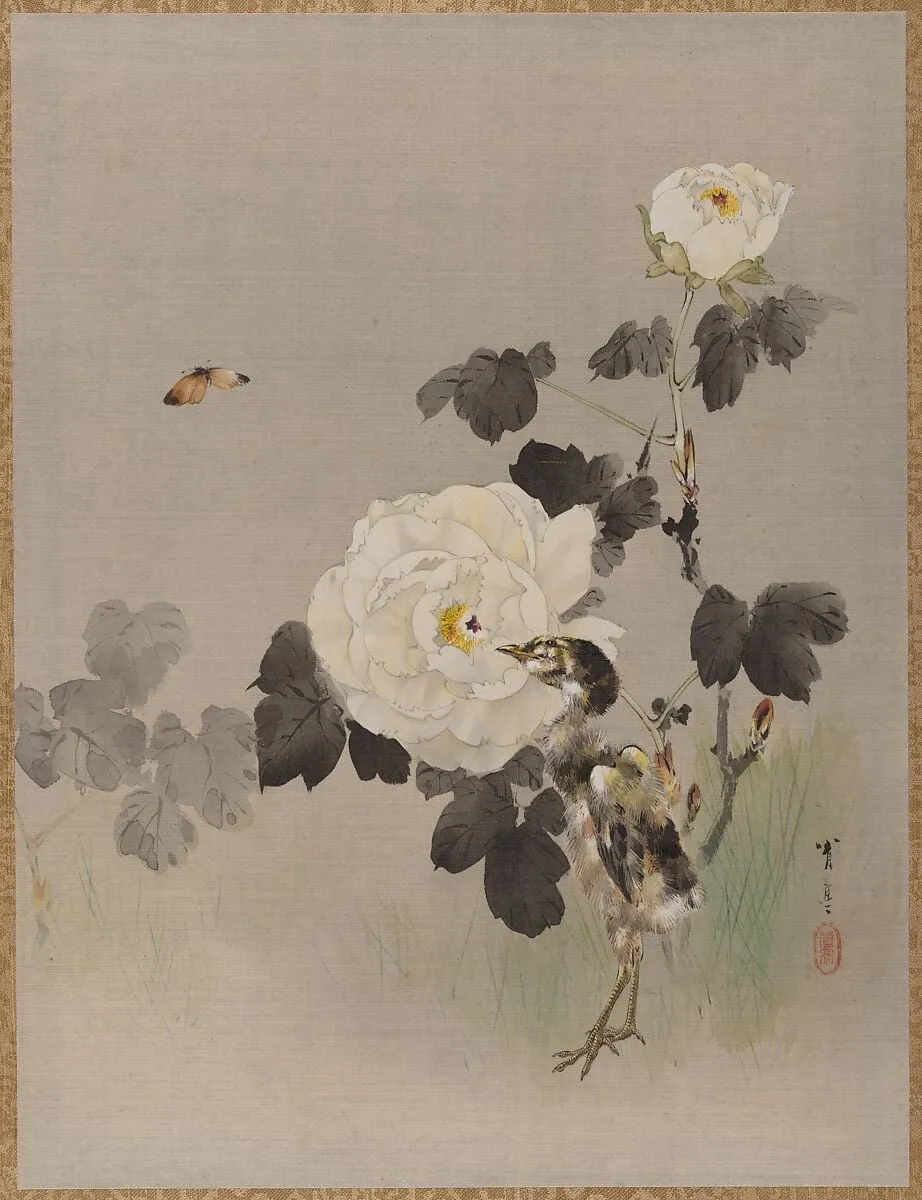
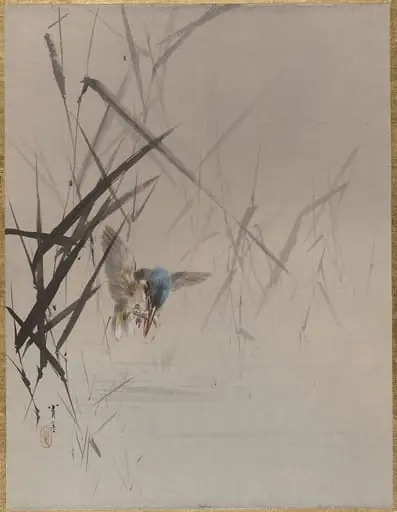
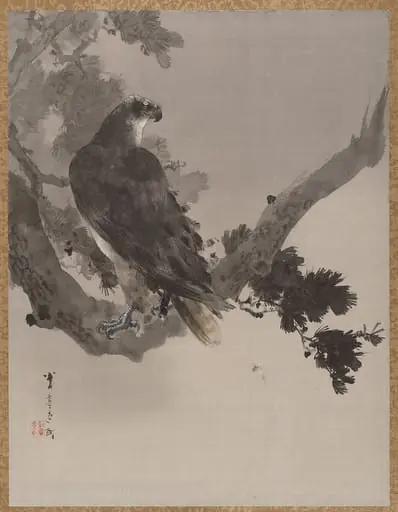
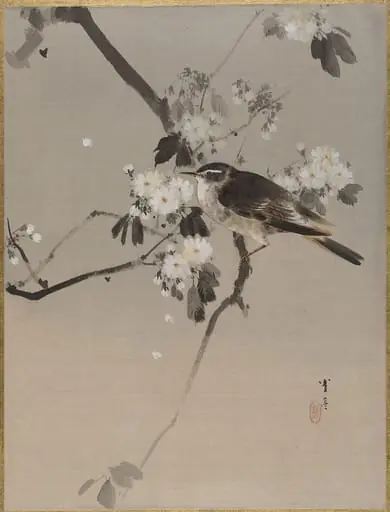
Untitled is an ink painting by the Impressionist artist Watanabe Seitei. It dates from 1887 and is held in the collection of the Metropolitan Museum of Art.
About this work
Subject & Meaning
The painting features a bird perched on a rose stem, with a butterfly in flight nearby, rendered in delicate ink and color on silk.
The painting features a bird perched on a rose stem, with a butterfly in flight nearby, rendered in delicate ink and color on silk. The composition centers on the still-life arrangement of a single rose, its blooming form rendered with naturalistic precision. The bird’s presence suggests a moment of quiet interaction with the blossom, while the butterfly introduces a transient, ephemeral element, evoking themes of beauty and transience common in East Asian art.
The delicate handling of the rose petals and the bird’s feathers emphasizes the harmony between living creatures and nature, reflecting a contemplative, observational approach to the natural world.
Technique & Style
Created in 1887, this album leaf by Watanabe Seitei is executed in ink and color on a silk support. The work exemplifies the artist's mastery of traditional Japanese painting techniques, utilizing delicate brushwork to render natural motifs. The composition features a still-life arrangement depicting a bird, a butterfly, and a rose, blending precise observation with stylistic elegance.
Measuring 35.6 cm in height and 26.7 cm in width, the piece reflects the refined aesthetic of late 19th-century Japanese art. The silk medium allows for subtle gradations of tone and color, characteristic of the period's approach to album leaf formats. Held within the Metropolitan Museum of Art collection, the artwork remains a significant example of Seitei's contribution to the fusion of Japanese and Western artistic sensibilities during the Meiji era.
History & Provenance
The painting was created in 1887 by the Japanese artist Watanabe Seitei, executed as an album leaf in ink and color on silk depicting a bird, butterfly, and rose. According to Wikidata records, the work was produced in Japan and entered the collection of the Metropolitan Museum of Art, where it remains held. The sources do not provide additional details regarding the original commission, intermediate ownership, or chain of custody prior to the museum's acquisition, nor do they specify a more precise creation date than the year 1887.
The work Untitled (1887) by Watanabe Seitei is part of the Metropolitan Museum of Art’s collection. According to the museum’s catalogue entry, the piece is recorded as an album leaf executed in ink and color on silk, depicting a bird, butterfly and rose. The sources do not provide an explicit inventory or accession number for the work.
No exhibition history is documented in the referenced materials, indicating that the artwork’s public display record is not detailed in the available documentation.
Context
Watanabe Seitei's 1887 album leaf, Untitled, holds a significant position within the Meiji-era synthesis of Japanese and Western artistic traditions. Created during a period of intense cross-cultural exchange, the work exemplifies the artist's ability to adapt traditional nihonga techniques to subjects familiar to Western audiences, such as the rose, while maintaining meticulous attention to natural detail seen in the depicted bird and butterfly. Housed in the collection of the Metropolitan Museum of Art, this piece serves as a critical artifact for understanding the evolution of Japanese painting in the late nineteenth century.
Scholarship often highlights Seitei's role as a bridge between Edo-period aesthetics and modern international exhibition practices, with this specific work demonstrating the refined brushwork and compositional balance characteristic of his mature style. Its preservation in a major Western institution underscores its historical importance as a testament to the global reception of Japanese art during the Meiji restoration.
Overview
Created in 1887, this album leaf by Watanabe Seitei depicts a still life of two white birds perched on a branch of pink roses, accompanied by two fluttering butterflies. Executed in ink and color on silk, the work exemplifies Seitei's innovative synthesis of traditional Japanese painting techniques with Western influences during the Meiji era. The artist employs delicate ink brushwork to define the birds and foliage, softened by translucent watercolor washes that lend a sense of atmospheric depth and volume uncommon in earlier Nihonga.
This approach reflects Seitei's training in Western-style oil painting, which he integrated into his silk works to create a naturalistic yet distinctly Japanese aesthetic. The composition balances the static elegance of the birds with the dynamic movement of the butterflies, capturing a fleeting moment of nature. As a product of the late 19th century, this piece illustrates the broader artistic shift in Japan toward yōga (Western-style) elements while maintaining the materials and sensibilities of the nihonga tradition.
Seitei's ability to merge these distinct visual languages made him a pivotal figure in the modernization of Japanese art, bridging the gap between Edo-period conventions and the emerging international style.
Artist & collection

- Myriad Longevities in an Everlasting Spring
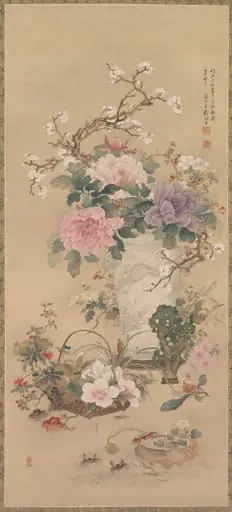 Vase of Flowers with Grasshopper, Marine Life, and Garden Rock
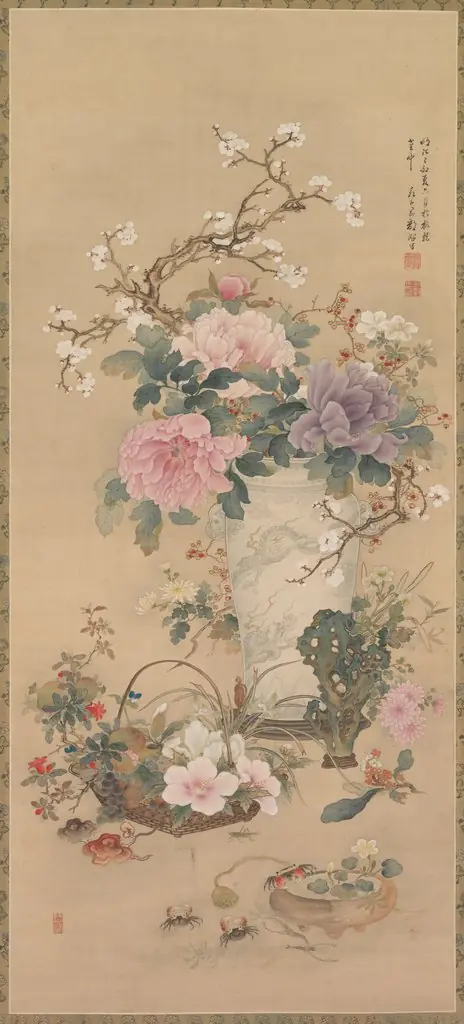 Vase of Flowers with Grasshopper, Marine Life, and Garden Rock
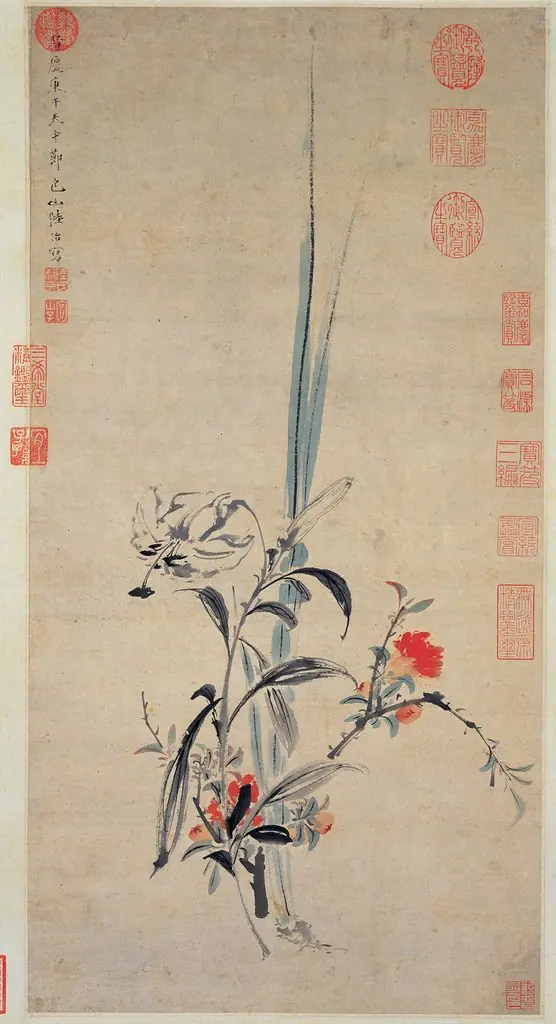 Intimate Scenery of Pomegranate Blossoms
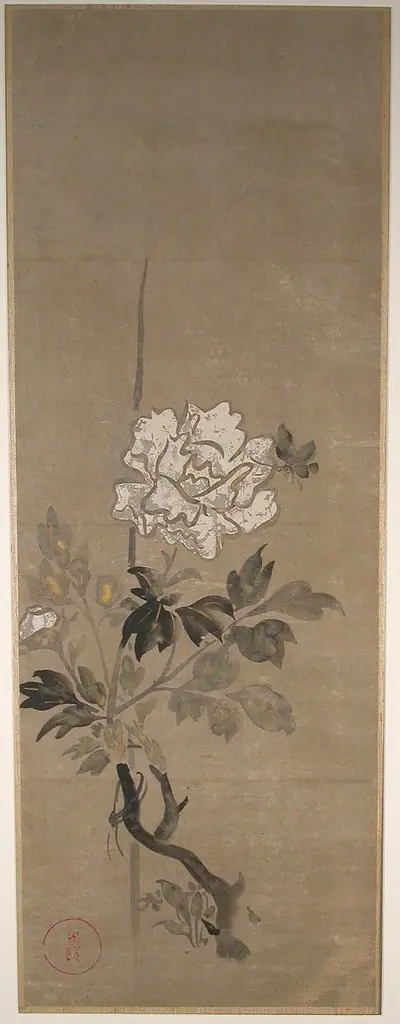 Flowers
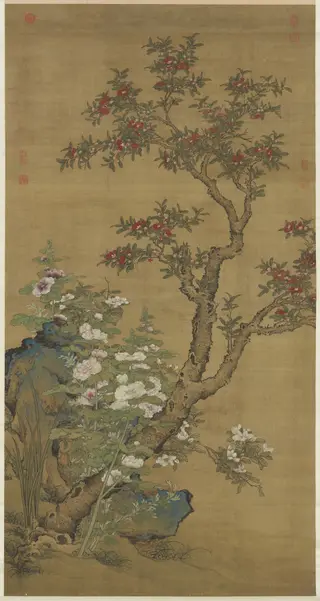 Auspicious Flowers
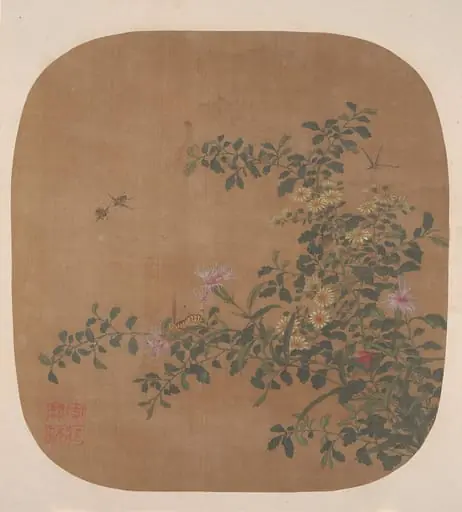 清 佚名 蜂舞花叢 册頁|Flowers and Bees
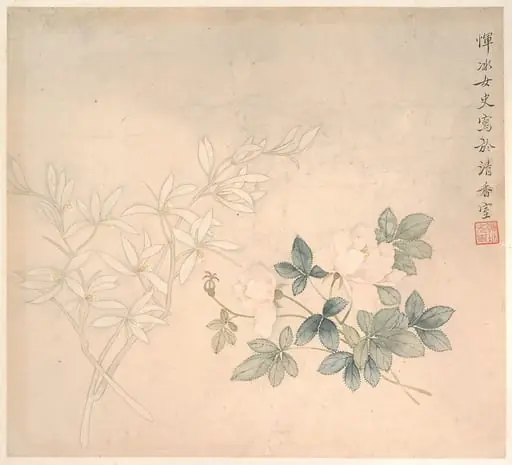 清 惲冰 花卉圖 册页|Flower Study
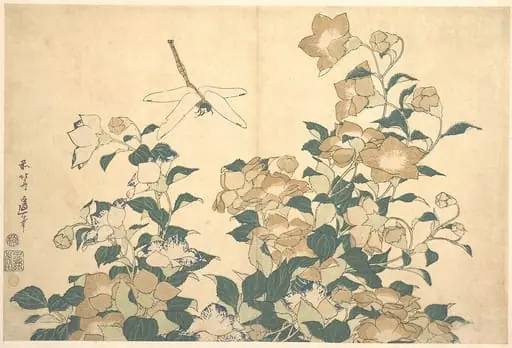 葛飾北斎画 桔梗に蜻蛉|Dragonfly and Bellflower
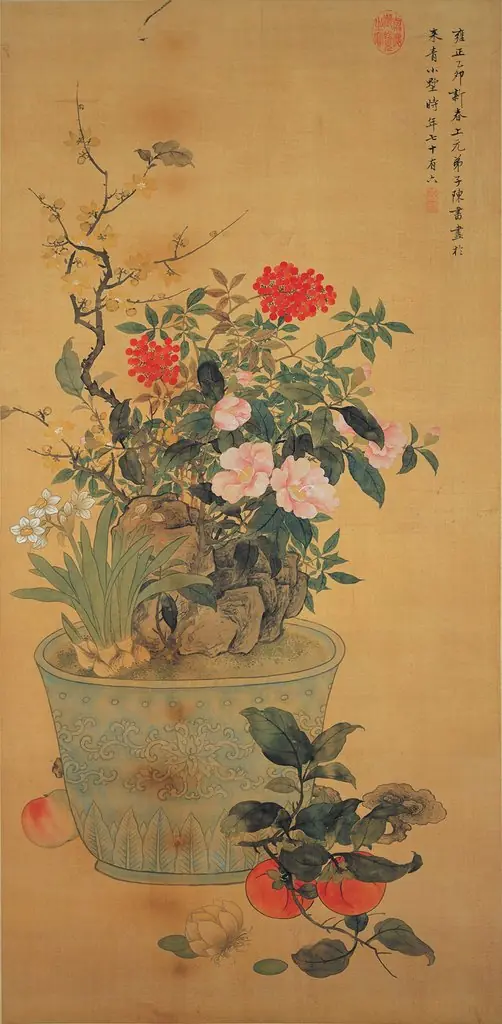 Painting for the New Year
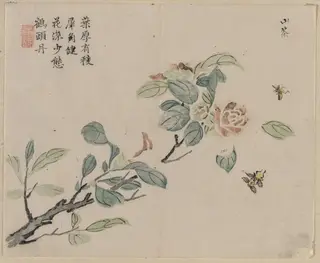 Flowering Branch with Bees
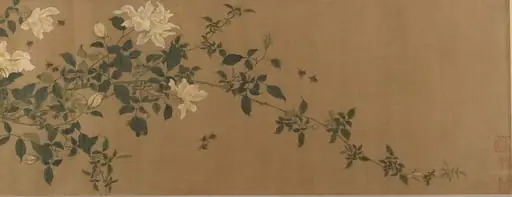 清 佚名 趙昌(僞款) 蜂王圖 卷|Yellow Roses and Bees, Pink Roses and Wasps